
Review · MOUNT ETNA TOURS
Etna: Craters of the 2002 Eruption Trekking Experience
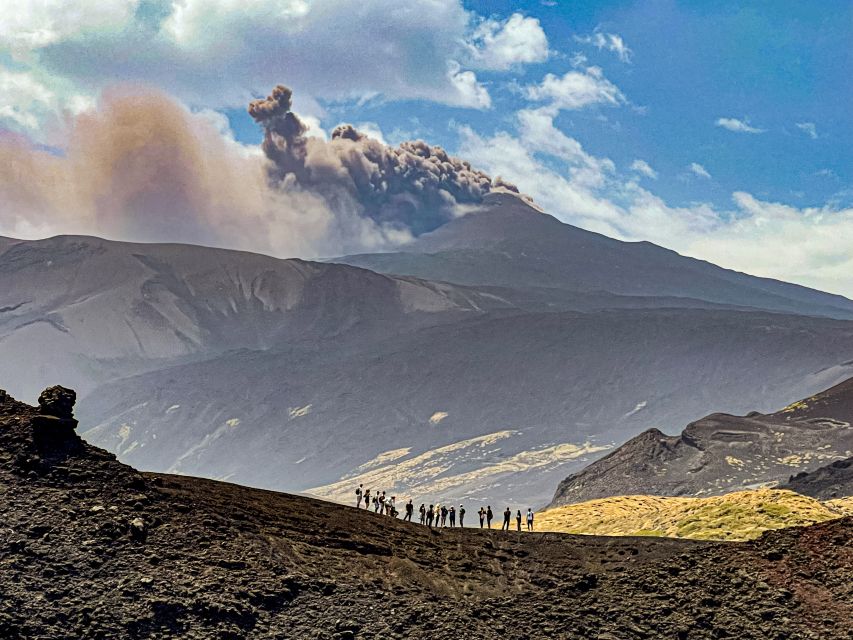
Etna’s north side gives you a close look at volcanic power without sending you into a long, punishing expedition. The route passes the 2002 eruption craters, black lava streams, eruptive fractures, and the ruins of Hotel dell Betulle, while the high ground opens toward the Calabrian Coast. I like the strong mix of scenery and science, and I like that the guide turns a walk into a proper lesson in how Etna works. The main drawback is that this is not a casual stroll: loose volcanic soil, wind, steep sections, and crater edges can make the three hours tiring.
I also like the personal touch offered by guides such as Daniele, Davide, and Vincenzo, who use humor, photos, and clear explanations to bring the eruption to life. You should still arrive prepared. Hiking shoes, water, a windbreaker, and warm layers matter here, and winter snow may mean an extra €12 rental for snowshoes.
In This Review
- Key points at a glance
- Starting at Piano Provenzana on Etna’s north side
- The dirt road toward the 2002 eruption
- Hotel dell Betulle and the force of the lava
- Hornitos, fractures, and cinder cones
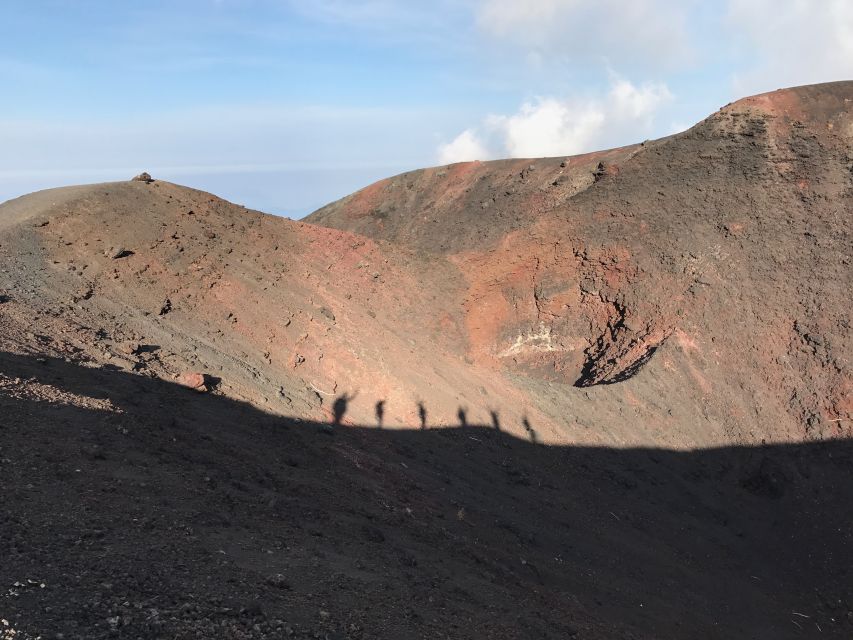
- Reaching the crater rims
- How hard is this three-hour trek?
- What to wear and what to rent
- What the $41 price really covers
- Guide quality and the feel of the outing
- Weather, safety, and changing conditions
- Who will enjoy this Etna outing?
- Should you book the 2002 craters trek?
- FAQ
- How long does the Etna 2002 craters trek last?
- Where does the trek start?
- Is transportation from my accommodation included?
- What does the $41 price include?
- Can I rent hiking shoes or snowshoes?
- What languages are available?
- Who should not take this trek?
Key points at a glance
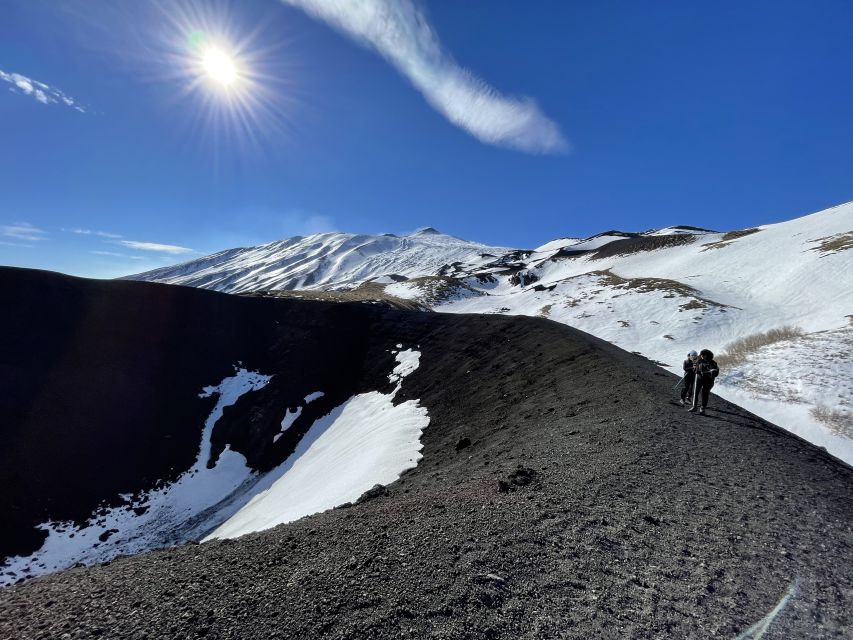
- The 2002 eruption zone: See the lava flow that destroyed Piano Provenzana and the ruins of Hotel dell Betulle.
- A volcanic classroom: Learn to identify hornitos, cinder cones, eruptive fractures, and other volcanic forms.
- Big north Etna views: Look across the eruptive theater toward the Calabrian Coast.
- A three-hour outing: The route returns to the starting point and includes stops for explanations.
- A real hiking requirement: Medium fitness, steady footing, and proper shoes are needed.
- Simple base price: The tour costs $41 per person, with parking, footwear, water, and cold-weather rentals extra.
Starting at Piano Provenzana on Etna’s north side
Your meeting point is the Chiosco Bar Mareneve at Piano Provenzana. Be careful here: this is not the Chiosco Bar Etna Nord in the lower parking area. The correct spot is near the winter ski chairlift and is the second house among the four buildings in the parking lot.
You pay €3 for all-day parking after the excursion. That is a small extra cost, but knowing it in advance makes arrival easier. The activity begins and ends at this same meeting point, so you do not need to arrange a separate pickup after the walk.
There is no transport from your accommodation. You must reach Piano Provenzana yourself, and the booking information does not include a transfer service. Check your route and allow enough time to arrive dressed and ready, rather than trying to sort out shoes or warm clothing at the last moment.
The tour requires at least four participants in total. Starting times vary, so you need to check availability before booking. The guide speaks Italian, French, or English, depending on the departure and guide assigned.
More Hiking Tours in Sicily
- Mount Etna: Guided Volcano Summit Hiking Tour with Cable Car
★ 4.7 · 3,784 reviews - Mount Etna: Trek to 3000m with cable car and jeep
★ 4.7 · 1,978 reviews - Mount Etna: Summit Crater Trek with Cable Car
★ 4.8 · 1,875 reviews
The dirt road toward the 2002 eruption
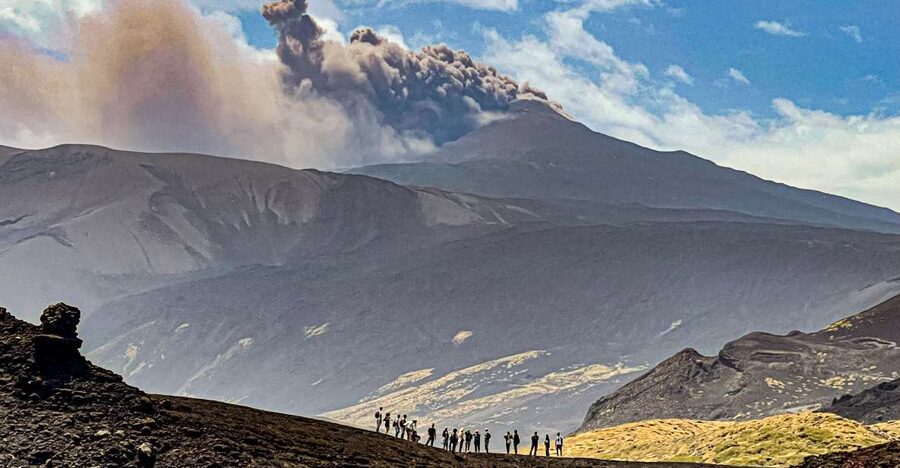
The trek follows the dirt road from Piano Provenzana toward Etna’s summit craters. The road gives you a clear sense of scale as you move through terrain shaped by repeated flank eruptions on the north side.
This is a useful route for understanding that Etna is not only a cone with smoke at the top. Lava can break out lower on the mountain, cutting across forests and ski areas. The north side shows those changes in a direct, physical way, with old flows and broken ground under your feet.
Your guide pauses to explain the volcanic forms along the route. That pacing is important. The walk is not simply a three-hour push uphill, and you have time to stop, look closely, and ask questions. The total duration can change with the group’s pace and with weather or volcanic conditions.
Guides including Daniele, Davide, Vincenzo, and Niko have been singled out for combining science with humor and practical explanations. Daniele has used photos and videos from the eruption, while Vincenzo has guided in French as well as Italian and English. The quality of the experience depends partly on the individual guide, but the official volcano guide is included.
Hotel dell Betulle and the force of the lava
One of the most striking stops is the ruin of Hotel dell Betulle. It is the only visible structure left from the 2002 lava flow, which reached and destroyed Piano Provenzana.
A building ruin can make the eruption easier to grasp than a lecture alone. You see where human activity once took place, then look at the black volcanic material that replaced it. The setting gives the 2002 event a clear local meaning, especially when the guide explains how the eruption threatened Linguaglossa.
This stop also shows why Etna is both a natural attraction and a living hazard. The volcano is not a museum piece. Its eruptions have altered roads, forests, buildings, and tourist facilities within recent memory.
The 2002 event is described as the most powerful eruption in recent years. You will see its physical remains rather than just hearing dates and technical terms. That makes this part especially worthwhile for anyone interested in geology, local life, or the way communities live near an active volcano.
Hornitos, fractures, and cinder cones
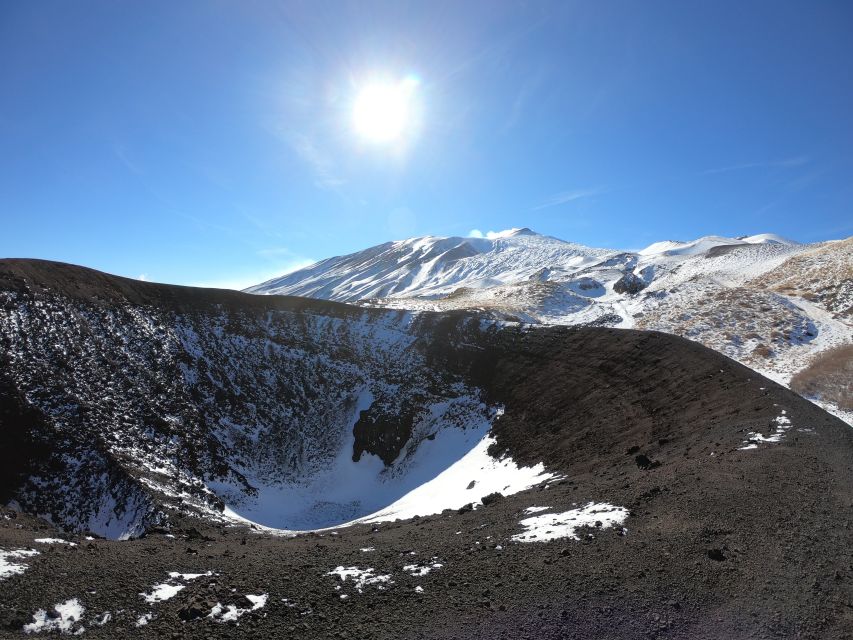
As you continue, the guide points out several volcanic forms linked to eruptions over time. The most unusual are hornitos, a name that means small ovens. These small structures form around openings where lava and volcanic gases have escaped.
You also go up along cinder cones. Their loose, dark material makes the footing less certain, and this is where proper shoes become more than a suggestion. Volcanic soil can shift under pressure, so you need to place your feet carefully and follow the guide’s instructions.
Eruptive fractures add another piece to the story. These cracks and openings show how magma can force its way through the side of a volcano instead of traveling only through a central vent. The guide helps you connect what you see on the ground with the larger pattern of Etna’s activity.
I like this part because it rewards attention. At first, black rocks and gray ash can look much alike. Once someone explains the difference between a lava flow, a cinder cone, a hornito, and a fracture, the ground becomes a record of separate eruptions rather than one broad patch of volcanic material.
More Mount Etna trips worth a second look
- Etna Volcano: South Side Guided Summit Hike
★ 4.7 · 1,545 reviews - Catania: Mount Etna Trekking Trip off the Tourist Path
★ 4.9 · 1,351 reviews - From Taormina: Etna Tour with Hiking, Cave Visit, & Tastings
★ 4.7 · 518 reviews - From Taormina: Half-Day Mount Etna Morning Trek
★ 4.9 · 504 reviews
Reaching the crater rims
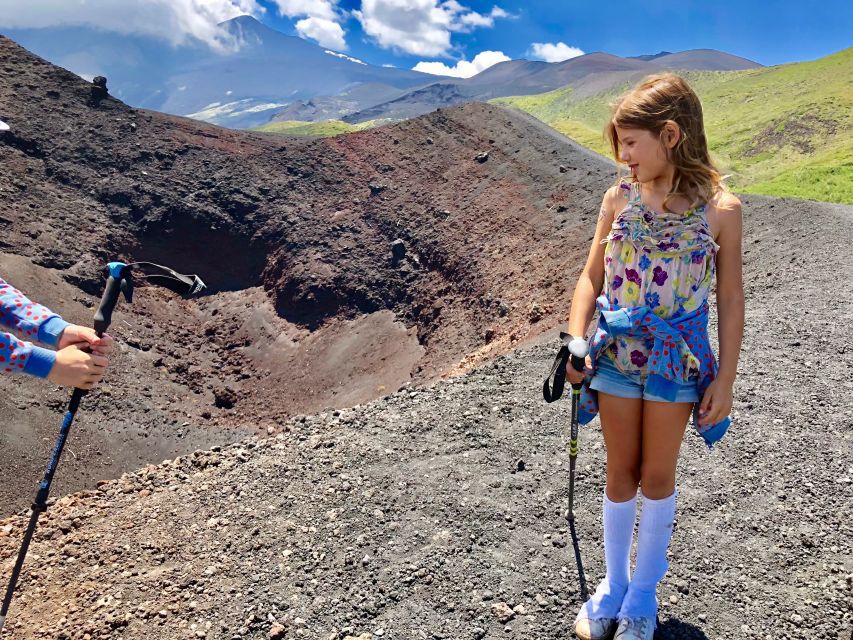
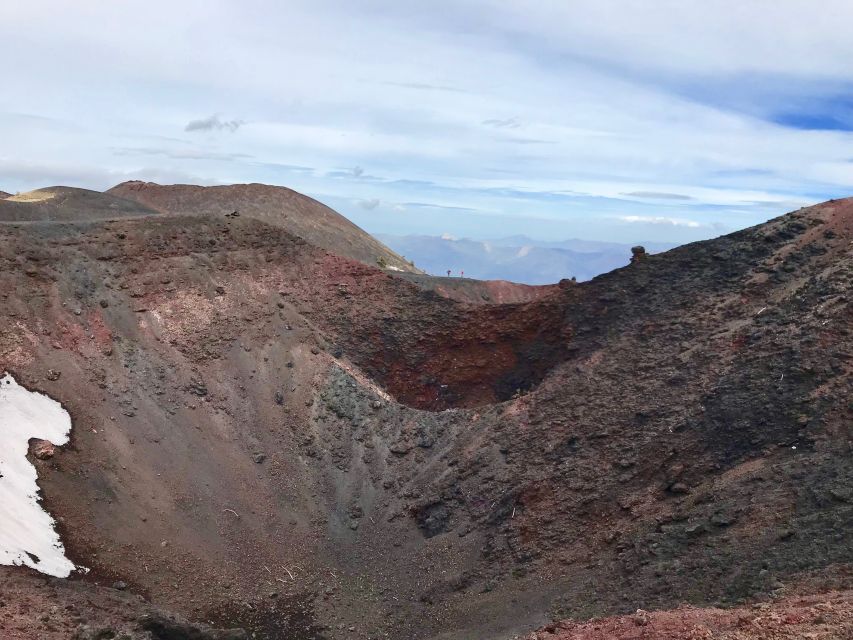
The route eventually reaches the summit crater area, where you look over the edges of the craters. You then descend through a sandy channel to return to the starting point.
Crater edges are the most dramatic part of the outing, but they are also the section where you must stay alert. The ascent and walking near the rims may cause dizziness, especially if you are prone to vertigo. People afraid of heights should choose another Etna activity.
The views reward the effort. From the eruptive theater, you can look across the volcanic terrain toward the Calabrian Coast. Wind can be strong at this height, and one guide specifically dealt with very windy conditions. A windbreaker is essential, even if the weather feels mild at lower elevations.
The sandy descent may feel easier than the climb for some people, but loose ground still demands care. The guide can adjust the route if the conditions become unsafe. Environmental, climatic, or volcanic changes can alter or interrupt the outing, and that flexibility is sensible on an active mountain.
How hard is this three-hour trek?
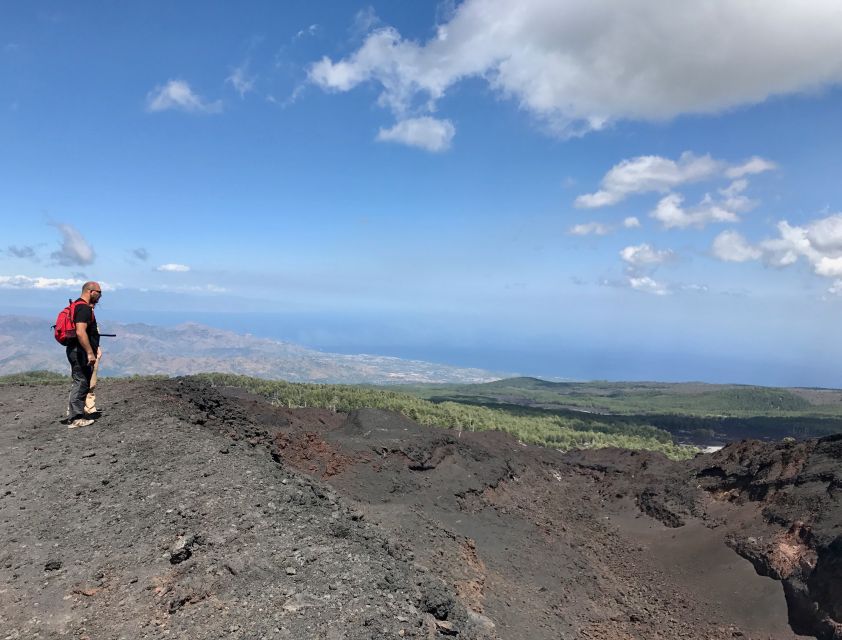
The activity is intended for hikers with medium training. It is not recommended if you do no regular physical activity, and you should expect an ascent, uneven ground, crater edges, and a changing pace.
You do not need to treat it like a technical mountaineering trip, but calling it an easy walk would be misleading. One experienced guide described the outing as slow and easy, with regular pauses, while another participant in their late 60s found it hard going but worthwhile. That is a fair picture: the pace can be gentle, yet the surface and incline still ask something of your legs.
Reports of young children and older adults completing the route show that age alone does not decide suitability. The more useful question is whether you can walk uphill on unstable volcanic ground and remain comfortable near crater edges.
The activity is not suitable for children under six, pregnant women, or people with back, heart, respiratory, or mobility problems. It is also unsuitable for people with epilepsy, vertigo, or a fear of heights. If any of those concerns apply to you, do not rely on the guide to make the route safe.
What to wear and what to rent
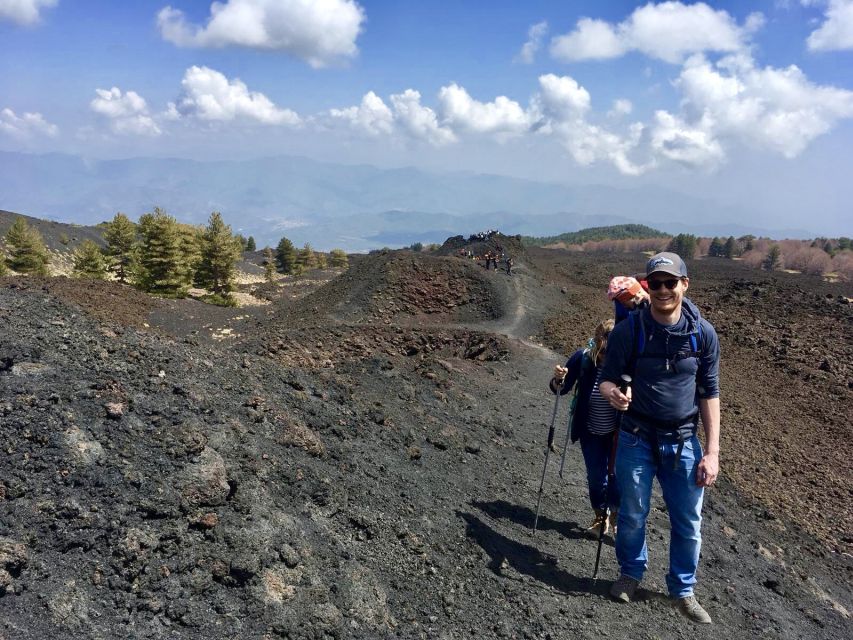
Bring hiking shoes, a windbreaker, sunglasses, sunscreen, water, snacks, a jacket, comfortable clothing, weather-appropriate layers, and a daypack. Etna’s conditions can change quickly, and the higher sections may feel cold or exposed.
Trekking sticks are not included. Trekking shoes can be rented from authorized rentals on site for €5 per pair. Snowshoes are recommended when snow is present and cost €12 per person during the winter months of December through March.
Gloves and hats are not included, especially important in winter, spring, and autumn. Bring your own rather than assuming a rental or spare item will be available. One guide did help when a participant forgot to rent a jacket, but that should be treated as a lucky exception, not part of the service.
Sandals, flip-flops, slippers, high heels, skirts, strollers, luggage, and large bags are not allowed. Proper shoes are also tied to insurance coverage: without adequate footwear, you are not covered by the accident insurance included with the activity.
What the $41 price really covers
At $41 per person, the price is reasonable for a three-hour guided outing with an official volcano guide and accident insurance. The value is strongest if you want explanations and a focused route through the 2002 eruption zone, rather than simply walking around Piano Provenzana alone.
The extras are modest but should be included in your budget. Parking costs €3 for the day, shoes cost €5 to rent if needed, and snowshoes cost €12 when required. Water, snacks, trekking sticks, a windbreaker, gloves, and hats are also your responsibility.
You are paying for interpretation as much as for walking. The volcanic forms are easier to understand when a guide explains what you are seeing, and the eruption photos and videos used by some guides can connect the present terrain to the 2002 event.
The price does not include transport from your accommodation. If you are staying elsewhere in Sicily, the time and cost of reaching Piano Provenzana are separate from the tour fee. That makes this outing best for people already planning to visit Etna’s north side or able to arrange their own transport.
Guide quality and the feel of the outing
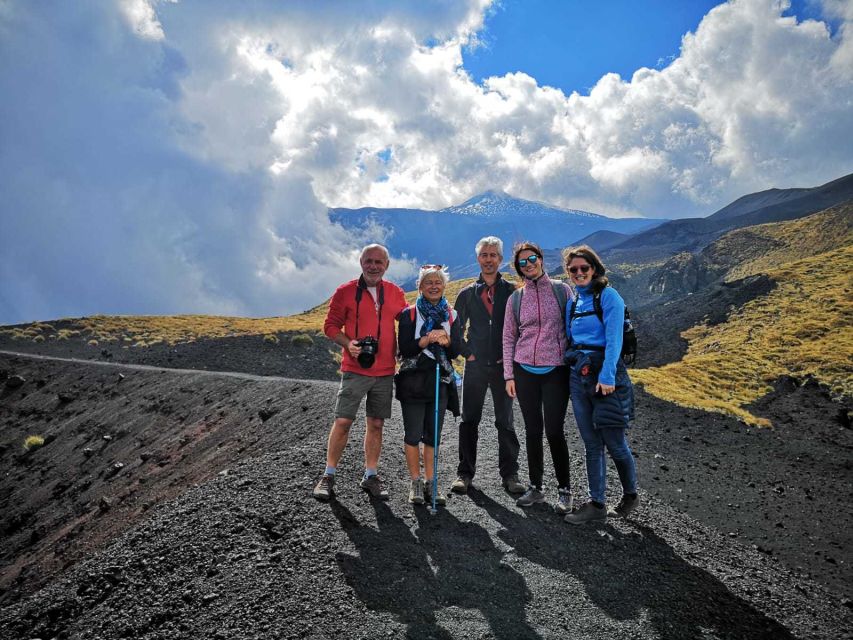
The guide is central to this experience. Daniele has been praised for patience, humor, and creative explanations, including drawing pictures in the dust. Davide is known for mixing scientific information with jokes and varying the pace of the presentation. Vincenzo has been described as professional and especially effective in French, while Niko brings long experience with Etna and volcanoes more generally.
Those details matter because volcanic geology can become dry if it is delivered as a list of terms. A good guide helps you connect each feature to an eruption, a flow, or a change in the mountain. You also get a safer walk when someone points out unstable soil and manages the group near the crater rims.
The minimum group size is four, but the maximum group size is not specified. You should not assume a private tour or a tiny party. Still, the route is designed away from the largest concentrations of tourists, which gives it a quieter feel than the busiest Etna access points.
The excursion is described as educational and suitable for a broad range of hikers who meet the fitness requirements. It is not designed as a fast athletic challenge. Pauses for explanations are part of the point.
Weather, safety, and changing conditions
Etna controls the schedule more than any brochure can. Wind, snow, visibility, volcanic activity, and other environmental conditions can lead the guide to change or stop the route.
You should arrive ready for cold and wind, even if the day begins pleasantly. Sunglasses and sunscreen protect you from strong light and reflected glare, while a jacket and windbreaker help with exposure near the craters.
Loose soil is the main physical concern. Keep your footing steady, avoid rushing downhill, and stay close to the guide’s instructions. Crater edges deserve the same care as any exposed viewpoint, particularly for anyone who experiences dizziness.
The included accident insurance is useful, but it does not replace suitable equipment. Inadequate shoes remove your insurance coverage, so renting proper footwear is a better choice than trying to manage in casual shoes.
Free cancellation is available up to 24 hours before the activity for a full refund. You can also reserve and pay later, which helps if your Etna plans depend on the weather forecast.
Who will enjoy this Etna outing?
I would choose this trek if you want a compact introduction to Etna’s volcanic side and prefer an informed walk to a sightseeing stop. It suits adults and older children over six who are comfortable with a moderate uphill hike and uneven ground.
It is especially good for you if the 2002 eruption interests you. Seeing the Hotel dell Betulle ruins, lava streams, fractures, hornitos, and cinder cones in one route gives the outing a clear theme.
You may prefer a different activity if you want a relaxed family walk, a cable-car experience, or a strenuous summit expedition. This tour focuses on the north side and the 2002 craters, not on every major Etna attraction.
Allow extra time for your own transport, parking, and equipment rentals. Check the forecast before leaving, but pack for colder conditions than you expect. On this mountain, preparation directly affects how much you enjoy the views and the explanations.
Should you book the 2002 craters trek?
Book it if you want to understand Etna through the ground beneath your feet. For $41, you get a focused three-hour route, a volcano guide, accident insurance, and access to the most meaningful remains of the 2002 eruption.
Do not book it as an effortless walk. The combination of ascent, unstable soil, wind, crater edges, and possible snow requires medium fitness and sensible clothing. If you can manage that, this is a practical and memorable way to see Etna’s north side without committing to a much longer hike.
FAQ
How long does the Etna 2002 craters trek last?
The activity lasts three hours. The exact time can vary with the group’s general pace and with environmental or volcanic conditions.
Where does the trek start?
Meet at Chiosco Bar Mareneve in the Piano Provenzana parking area. It is near the winter chairlift and is the second house among the four buildings in the parking lot. Do not go to Chiosco Bar Etna Nord in the lower parking area.
Is transportation from my accommodation included?
No. Transport from your accommodation to Piano Provenzana is not included. The activity begins and ends at the meeting point.
What does the $41 price include?
The price includes an official volcano guide and accident insurance. Parking, food, water, equipment rentals, and transport to the starting point are not included.
Can I rent hiking shoes or snowshoes?
Yes. Trekking shoes can be rented from authorized rentals on site for €5 per pair. Snowshoes are recommended in snowy conditions and cost €12 per person during December, January, February, and March.
What languages are available?
The live guide service is available in Italian, French, and English.
Who should not take this trek?
The activity is not suitable for children under six, pregnant women, or people with back, heart, respiratory, or mobility problems. It is also not suitable for people with epilepsy, vertigo, a fear of heights, or those who do not take part in regular physical activity.
Recently reviewed around Mount Etna
- Etna, Wine and Alcantara Tour – From Taormina★ 5.0 · 464 reviews
- Etna and Alcantara Gorges Excursion★ 4.5 · 256 reviews
- Etna Tour in 4×4★ 5.0 · 583 reviews
- Etna Morning Jeep Tour★ 4.5 · 241 reviews
- Mt. Etna and Taormina village full day tour from Catania★ 5.0 · 1,155 reviews
- Mt Etna and Wine tasting tour from Catania★ 5.0 · 282 reviews
- Etna Volcano: South Side Guided Summit Hike★ 5.0 · 311 reviews
- From Catania: Mt. Etna, Wine and Alcantara Tour★ 4.8 · 370 reviews
Mount Etna Tours, compared.
Mount Etna Morning or Sunset Day Trip with Tasting
Read our review →
Mount Etna: Guided Volcano Summit Hiking Tour with Cable Car
Read our review →
Sunset Jeep Tour of Mount Etna and Lava Flow Caves
Read our review →
Mount Etna: Trek to 3000m with cable car and jeep
Read our review →
Mount Etna: Summit Crater Trek with Cable Car
Read our review →
Etna and Alcantara Gorges Full-Day Tour with Lunch
Read our review →
Mount Etna: Roundtrip Cable Car and 4×4 Bus Ticket
Read our review →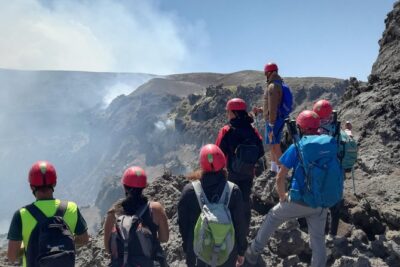
Browse the lists this tour appears in