
Review · MUSEUMS
Florence: Leonardo Interactive Museum Entry Ticket
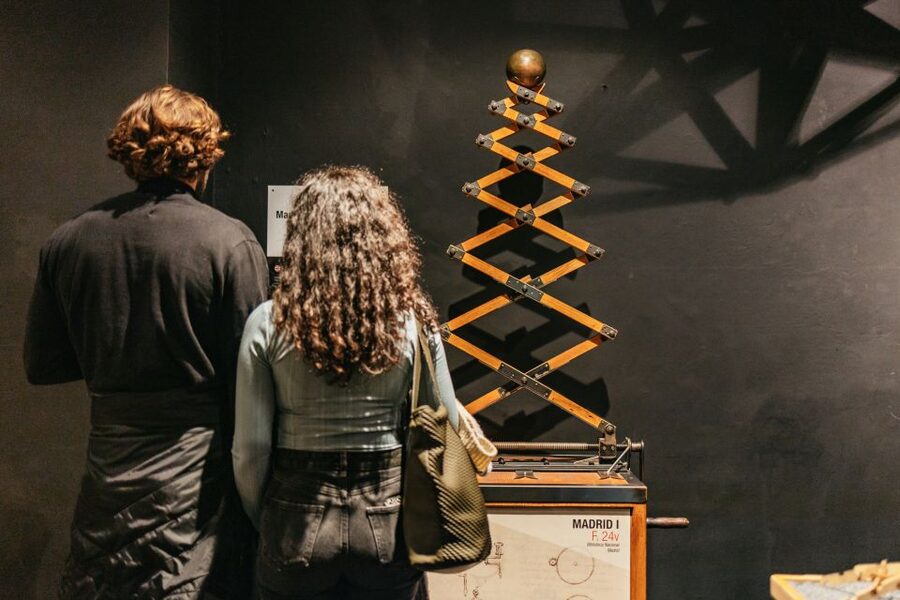
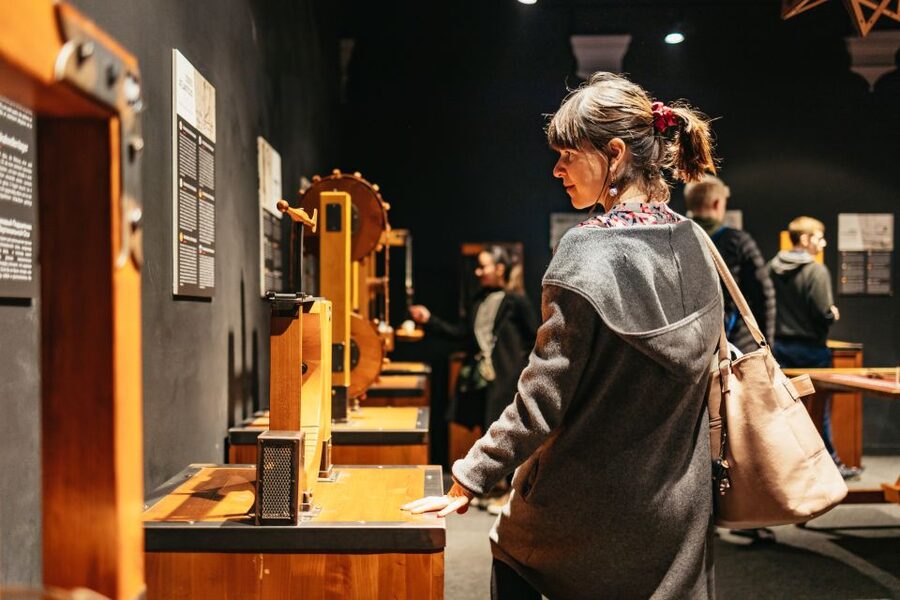
Leonardo’s sketches can look like clever ideas trapped on old paper. Here, many of them become working wooden and mechanical models that you can test yourself. You can turn gears, examine mechanisms, and try designs linked to engineering, physics, anatomy, and painting.
I like the hands-on format, especially after a day of museums where every sign says do not touch. I also like the low price and central location, just steps from the Duomo and Accademia Gallery. The main limitation is size: one hour is a realistic visit, so this is a focused stop rather than a full-scale art museum.
In This Review
- Key points to know before you go
- Why Leonardo’s machines work better in three dimensions
- At the entrance near the Duomo and Accademia Gallery
- The first rooms: Leonardo the engineer and problem solver
- Trying the tank, catapult, screws, and hydraulic saw
- Workshops with bridges, domes, and polyhedrons
- A useful change of pace for families in Florence
- What the audio guide adds, and what it cannot do
- Price, timing, and overall value at $9
- Small practical details that can save frustration
- Who should book this Leonardo museum visit?
- FAQ
- How long does the Leonardo Interactive Museum visit last?
- Where is the museum located?
- Is there a live guide?
- What languages are available for the audio guide?
- What machines can you try?
- Is the museum suitable for children?
- Should you book it?
Key points to know before you go
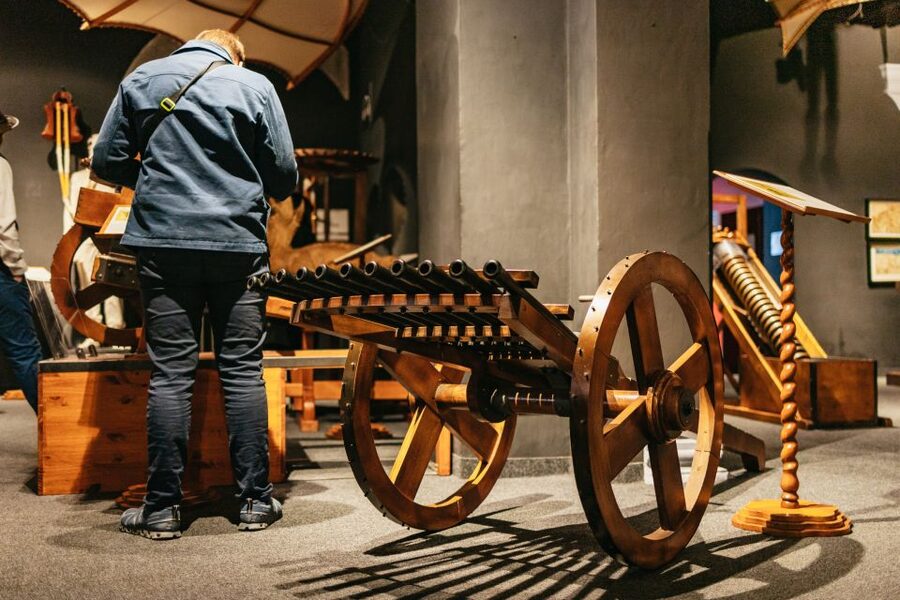
- Test Leonardo’s machines yourself: Try replicas of the tank, catapult, worm screw, vertical screw, hydraulic saw, and printing press.
- Build as well as observe: Interactive workshops let you work with bridges, domes, and polyhedrons.
- Plan for about one hour: Some families and older children spend 90 minutes or more, but the stated duration is one hour.
- Bring your own earphones: The audio guide works through your smartphone and is available in six languages.
- Find the correct entrance: The museum is near the Duomo and Accademia Gallery, but a red Da Vinci Museum sign can point you the wrong way.
- Best for curious children and adults: The museum is designed for people aged about 7 or 8 and older, with enough mechanical detail to interest teenagers and adults.
Why Leonardo’s machines work better in three dimensions
The appeal here is simple: you do not just look at a picture of a machine. You get a chance to understand how the parts relate to one another.
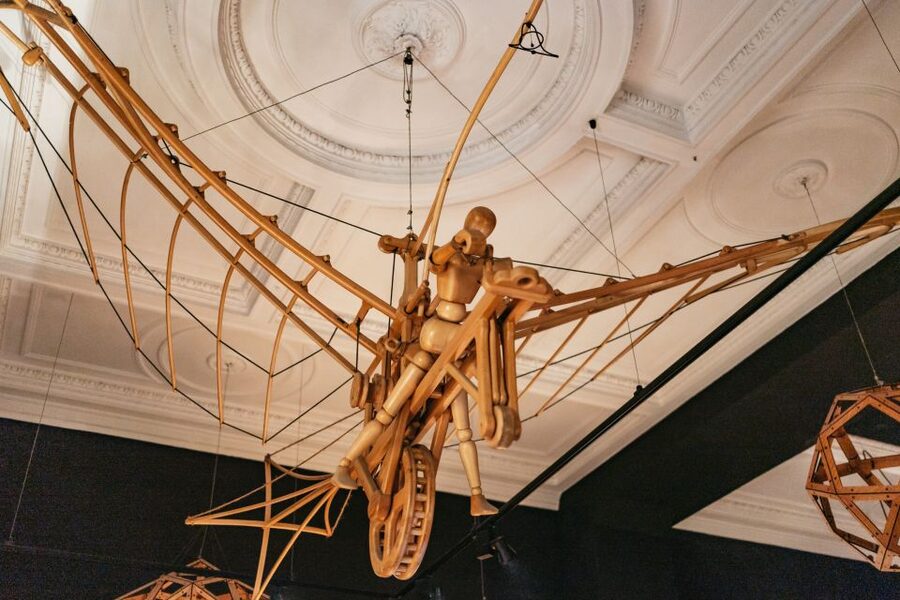
Leonardo filled his codexes with studies of motion, water, flight, construction, weapons, tools, and the human body. A sketch of a gear or screw can be hard to read at a glance. A physical replica gives you a clearer answer. You can see what turns, what lifts, what pushes, and what fails to move unless the parts line up correctly.
That makes the museum useful for different kinds of learners. If you understand ideas best through touch and motion, the displays give you something to work with. If you already know Leonardo as a painter, the machines show another side of his curiosity. He was not confined to one subject. He moved between art, anatomy, engineering, physics, and observation.
I especially like the way this changes the pace for families. Florence can ask children to stand quietly in front of paintings and sculptures for much of the day. Here, they can solve small mechanical problems and see the result immediately. Parents still get an introduction to Renaissance-era ideas, while children get a reason to stay engaged.
The displays are replicas, of course, not Leonardo’s original machines. That is also the point. The value comes from seeing how a drawing was interpreted and then trying its basic action yourself.
More Museum Tours in Florence
- Florence: Skip-The-Line Uffizi Gallery Timed Entry Ticket
★ 4.5 · 27,832 reviews - Florence Accademia Gallery Tour with Entrance Ticket Included
★ 4.5 · 6,148 reviews - Uffizi Gallery Small Group Tour with Guide
★ 4.5 · 4,923 reviews
At the entrance near the Duomo and Accademia Gallery
The museum sits in central Florence, only a few steps from two of the city’s biggest sights: the Duomo and the Accademia Gallery.
That makes it easy to add before or after Michelangelo’s David, a visit to the cathedral area, or a walk through the historic center. You do not need a separate trip across town. For a short attraction, location matters a lot, and this one fits neatly into a busy sightseeing day.
You choose a visit day and time online because tickets are sold online only. The timed entry is intended to help avoid a line at the door, so arrive with your booking details ready.
Take care with the signs. If you approach from the Duomo, you may see a red vertical advertisement with Da Vinci Museum written on it and arrows pointing right. The instructions specifically warn that these arrows do not lead to this museum’s entrance. Use the address and booking information rather than following the first sign you see.
There are two museums in Florence with very similar Leonardo names. This experience is identified as the Leonardo Interactive Museum, and the original location is near the Duomo and Accademia. Check the name and address carefully before setting out. A visit to the wrong building is an avoidable annoyance, especially when your entry time is fixed.
The first rooms: Leonardo the engineer and problem solver
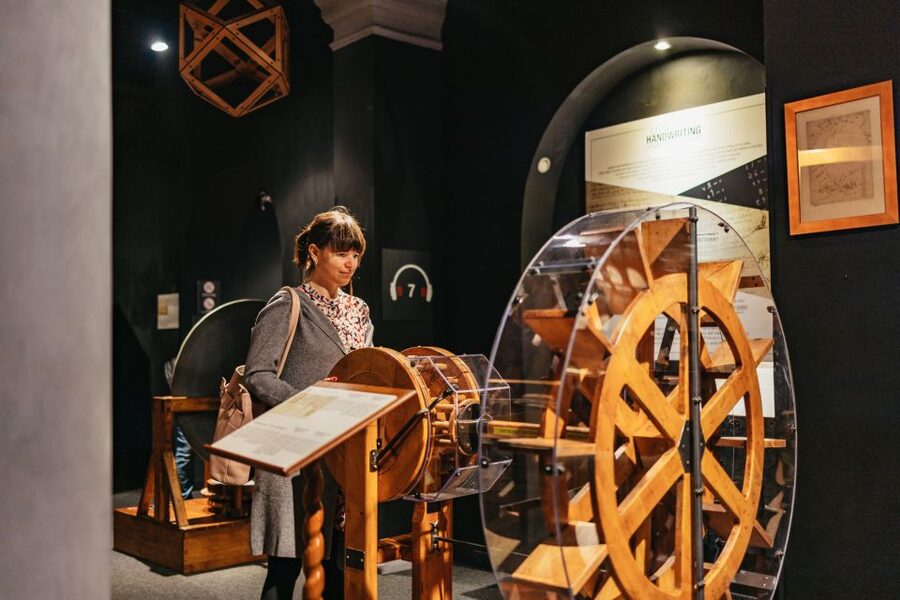
Inside, you begin a self-paced visit rather than joining a live tour. There is no guide leading a group from room to room. Instead, you use the exhibits and the audio guide on your smartphone.
The audio guide is available in Italian, English, French, Spanish, German, and Portuguese. Bring earphones, since the audio is designed for you to listen on your own phone. Free Wi-Fi is included, which is useful if you need to connect or access the guide without using much mobile data.
The opening displays introduce Leonardo’s work across several fields. You will encounter his studies in engineering, physics, anatomy, and painting. This broad range helps explain why the machines matter. They are not random inventions displayed for novelty. They reflect Leonardo’s habit of watching how the world works and then trying to represent it on paper.
You may want to move slowly through the introductory material instead of rushing straight to the mechanical displays. The context helps you understand why a particular screw, gear, bridge, or lifting device was worth studying.
At the same time, this is not a museum built around long labels. The main attraction is the chance to use the models. If you arrive with children, let them try the mechanisms while you read or listen. If you are visiting as an adult, do not assume the interactive sections are only for youngsters. Working through a design can make Leonardo’s drawings much easier to grasp.
Trying the tank, catapult, screws, and hydraulic saw
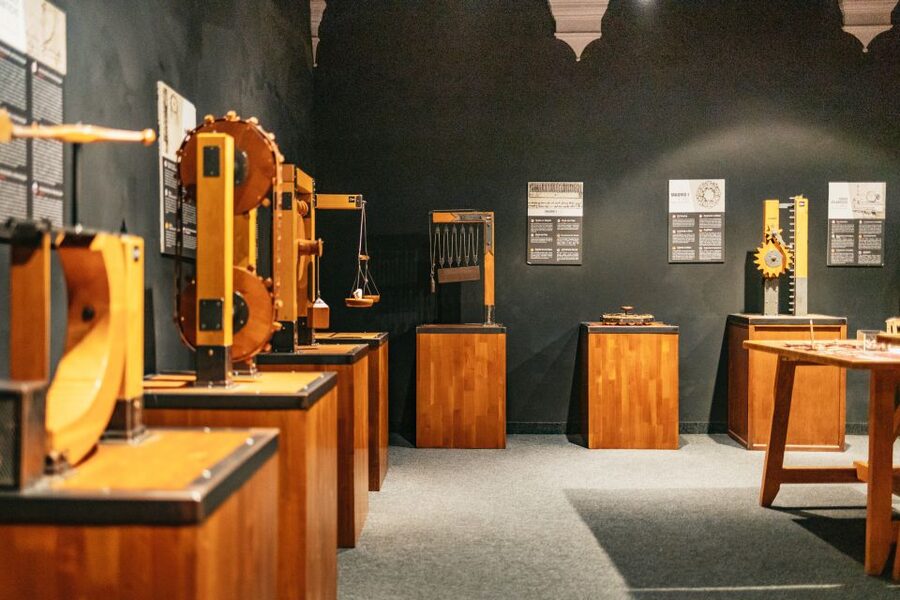
The machine displays are the heart of the visit. You can freely try many of them, using caution as you operate the models.
The tank offers a chance to think about movement, protection, and mechanical power. The catapult makes force more visible. Instead of reading an explanation about leverage, you can see how a design is meant to store and release energy.
The worm screw and vertical screw introduce a different lesson. These mechanisms show how rotation and lifting can be connected. The hydraulic saw brings water and machinery into the same picture, while the printing press points to the practical side of Leonardo’s interest in tools and communication.
You should not expect every model to feel like a modern interactive science center exhibit. The point is not fast action or digital effects. It is the basic pleasure of moving a mechanism and watching a centuries-old idea take shape.
Some machines may require patience. Others may be in use when you arrive, particularly during a busy period. That is one reason a timed ticket does not guarantee a completely private visit. You can circle back to a popular display after looking at another section.
The instructions ask you to use the machines with caution. Follow that advice, especially with young children. The models are made to be handled, but they are still mechanical objects, not toys to yank or force.
More Florence museums and collections:
- Florence: Accademia Gallery Guided Tour
★ 4.6 · 4,156 reviews - Florence: Accademia Gallery Guided Tour with Entry Ticket
★ 4.6 · 2,253 reviews - Golf Cart Tour to Fiesole Roman Theatre and Museum
★ 4.5 · 2,039 reviews - Florence: Uffizi Gallery and Accademia Gallery Guided Tour
★ 4.8 · 2,028 reviews
Workshops with bridges, domes, and polyhedrons
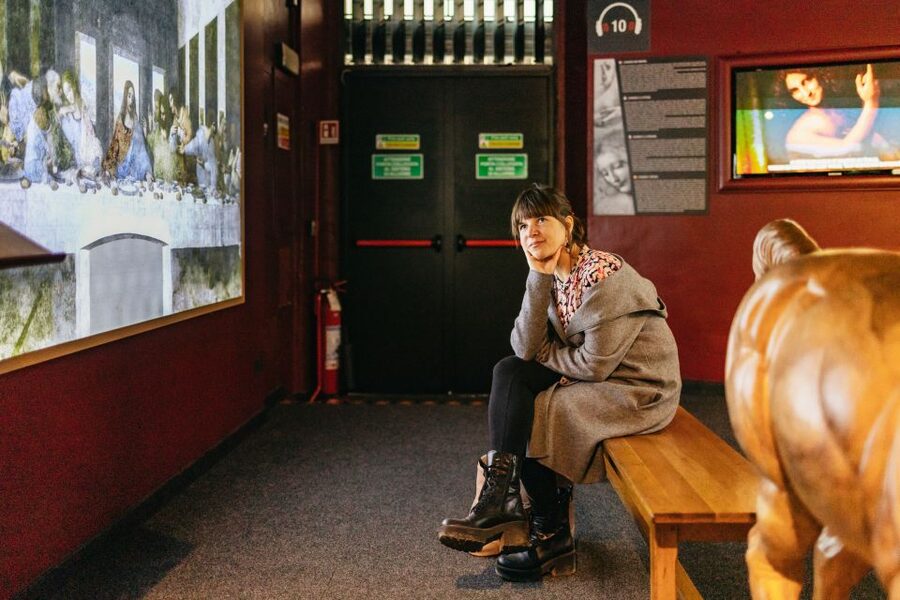
The building activities add another useful layer. You can take part in workshops involving bridges, domes, and polyhedrons.
These projects help turn abstract geometry into something you can hold. A bridge is not only an engineering drawing. It becomes a question of balance, support, and arrangement. A dome reveals how separate pieces can create a larger structure. Polyhedrons connect geometry with the shapes Leonardo studied and drew.
For children, this is often the part that feels most like play. For adults, it offers a quick reminder that Renaissance art and science were not as separate as modern school subjects can make them seem.
I would allow extra time if your child likes puzzles or building. The advertised duration is one hour, but some families, teenagers, and engineering-minded adults can easily spend longer testing the machines and solving the hands-on challenges. You do not need to complete every activity to get value from the museum, but rushing through the room can undercut its main purpose.
A useful change of pace for families in Florence
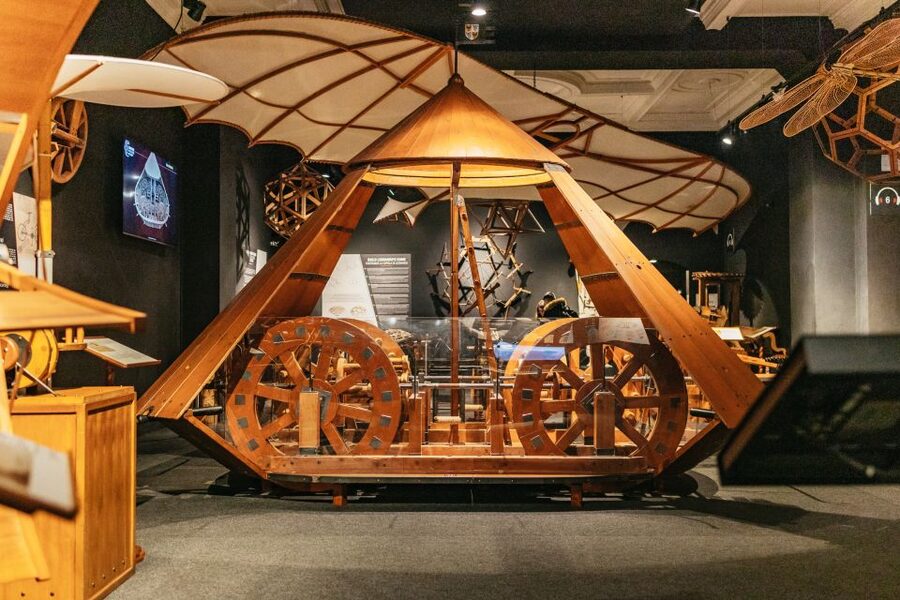
This museum works particularly well in a family itinerary. Children aged about 7 or 8 and older are the stated audience, and the exhibits give them something active to do.
Younger children may still enjoy the models, but the museum does not promise a program designed for toddlers. One family reported enjoying it with children aged four and seven, yet the official guidance places the suitable age at around seven or eight and above. I would use that as your planning baseline.
Teenagers can also be a good match. The machines offer more substance than a simple children’s attraction, and the historical connection gives older students a way to think about invention, observation, and design. Teenagers who normally tire quickly in traditional museums may find it easier to stay interested when they can test the ideas.
Adults without children should not skip it automatically. The price is modest, the central location is convenient, and the machines provide a different experience from Florence’s churches and galleries. If you enjoy engineering, drawing, puzzles, or the practical side of Renaissance culture, you can get plenty from a short visit.
The museum also works well after several formal sights. After spending hours looking at masterpieces behind barriers, the permission to handle selected mechanisms feels like a welcome change.
What the audio guide adds, and what it cannot do

The audio guide gives you information in six languages, but it is not a live guided tour. That difference matters.
With a live guide, you could ask why a model works, request more detail about one machine, or move through the exhibits in a set order. Here, you control the pace. You can spend longer with a favorite mechanism, skip a section, or let children explore while you listen.
That self-paced design is a strength for families and mixed-interest groups. One person can focus on anatomy, another on engineering, and everyone can meet at the next hands-on display.
Use earphones so you can hear clearly without disturbing others. Free Wi-Fi is included, but you still need a smartphone and your own earphones for the audio guide.
The guide should be treated as support, not the entire experience. The machines explain themselves best when you operate them. Listen to enough background to understand the idea, then give yourself time to test it.
Price, timing, and overall value at $9
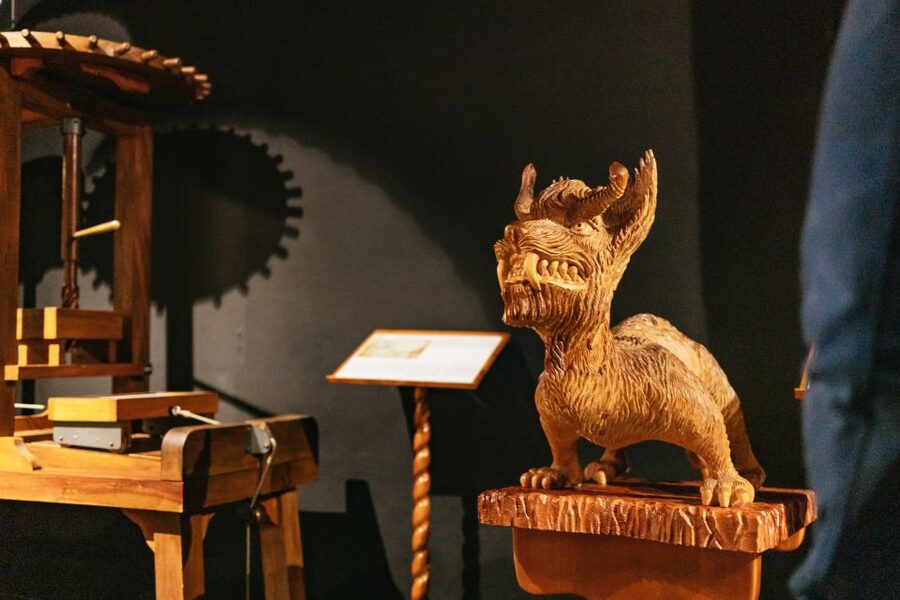
At about $9 per person, this is one of the easier Florence attractions to add without stretching your museum budget. The price is especially fair if you use the full hour and take time with several machines rather than making a quick pass through the rooms.
The value is strongest for families. A child who can build, turn, lift, and test is getting a different kind of museum visit, and adults can take part rather than simply supervise. It is also a useful choice when you need a short indoor activity near the Duomo.
For solo adults or couples, the calculation is more personal. If you want original Renaissance paintings, this is not a replacement for the Uffizi or Accademia. If you want to see Leonardo’s original notebooks, this is not that either. You are paying for accessible replicas and a chance to understand the designs through interaction.
The official duration is one hour. I would schedule 60 to 90 minutes if your group enjoys hands-on exhibits. Going early may help keep the rooms quieter, though no time can guarantee a crowd-free visit.
Tickets are sold exclusively online, and you can cancel up to 24 hours before the visit for a full refund. The reserve-now, pay-later option can also help if your Florence plans are still changing.
Small practical details that can save frustration
Bring earphones for the smartphone audio guide. Without them, you may not get the full benefit of the included commentary.
Double-check the exact museum name and location. The existence of two similarly named museums has caused confusion, and the red sign near the Duomo may not point to this entrance.
Photography rules are not clearly promised in the experience details, so ask before taking pictures. Do not assume that every display can be photographed or handled in any way you choose.
Use caution with the machines. The museum invites you to try them, but the models still need gentle hands. If you are visiting with children, show them how to operate one exhibit before allowing them to move on independently.
The activity ends at the museum, so there is no transport or return transfer to arrange. You simply finish back at the same central meeting point.
Who should book this Leonardo museum visit?
I would book it for families with school-age children, curious teenagers, and adults who like engineering, puzzles, or practical history.
It is also a smart add-on if you are already near the Duomo or Accademia Gallery. The short duration makes it easy to fit between larger sights, and the low price limits the risk if your schedule is tight.
I would think twice if your main goal is original art, a formal lecture, or a quiet gallery experience. The museum is built around handling selected replicas and trying mechanisms, so it can feel less satisfying to someone who wants a traditional collection.
For most visitors, the decision comes down to what you want from Leonardo. If you want to see how his ideas might have worked, this museum offers a clear and enjoyable answer. If you only want a quick portrait of Leonardo the painter, Florence has stronger choices elsewhere.
FAQ
How long does the Leonardo Interactive Museum visit last?
The stated duration is one hour. You may want to allow up to 90 minutes if you plan to try many machines and spend time on the building activities.
Where is the museum located?
The entrance is in central Florence, just a few steps from the Accademia Gallery and the Duomo.
Is there a live guide?
No. A live guide is not included. The ticket includes an audio guide that you listen to on your smartphone with your own earphones.
What languages are available for the audio guide?
The audio guide is available in Italian, English, French, Spanish, German, and Portuguese.
What machines can you try?
The displays include replicas of Leonardo’s tank, catapult, worm screw, vertical screw, hydraulic saw, printing press, and other machines and mechanisms based on his codex designs.
Is the museum suitable for children?
The museum is described as suitable for visitors aged 7 or 8 and older. Its hands-on machines, puzzles, and workshops involving bridges, domes, and polyhedrons make it a practical choice for many families.
Should you book it?
Book this experience if you want an active look at Leonardo’s inventions, not another room of paintings and labels. At $9, it offers good value, especially for families, and its location makes it easy to fit into a day around the Duomo and Accademia.
Just check the entrance carefully, bring earphones, and allow more than an hour if your group enjoys building and testing. If you prefer original artworks or a live historical explanation, choose a larger Florence museum instead.
Recently reviewed around Florence
- Walking Food Tour of Florence with Tastings and Wine★ 5.0 · 518 reviews
- Florence Sunset Food Tour with Wine & Dine at a Tuscan farmhouse★ 5.0 · 194 reviews
- Wine Experience In Chianti Hills from Florence★ 4.5 · 195 reviews
- Uffizi Gallery Timed Entry Admission Tickets★ 4.0 · 392 reviews
- Val d’Orcia Brunello Wine Tour with Montalcino and Montepulciano★ 4.5 · 359 reviews
- Wine Tasting Experience in Ponte Vecchio: Best Tuscany selection!★ 5.0 · 197 reviews
- Uffizi Gallery Small Group Tour with Guide★ 4.5 · 879 reviews
- Early Access Guided Uffizi Gallery Tour Skip-the-Line Small Group★ 4.5 · 707 reviews
Museums, compared.
Vatican: Museums & Sistine Chapel Entrance Ticket
Read our review →
Vatican Museums & Sistine Chapel Tour with Optional Basilica
Read our review →
Vatican Museums, Sistine Chapel & St Peter’s Basilica Guided Tour
Read our review →
Skip-The-Line Uffizi Gallery Timed Entry Ticket
Read our review →
Vatican Museums, Sistine Chapel & Basilica Tour
Read our review →
Vatican Museums & Sistine Chapel Skip-the-Line Entry Ticket
Read our review →Vatican Museums, Sistine Chapel & Basilica Tour
Read our review →
Vatican Museums & Sistine Chapel Guided Tour
Read our review →Browse the lists this tour appears in