Review · FULL-DAY
From Civitavecchia: Full-Day Panoramic Bus Tour of Rome
Rome in one day is a grand, slightly breathless sampler, and this $64 Civitavecchia shore excursion packs in the city’s biggest sights without asking you to master Italian buses or trains. You’ll see St. Peter’s Basilica, the Colosseum, Trevi Fountain, the Pantheon, and Piazza Navona, with a tour leader supplying the stories and keeping the clock moving.
I like the air-conditioned coach from the port, which removes a major transport headache, and I like the blend of sightseeing from the bus with short walks and free time. The catch is pace: Rome’s stone streets, crowds, heat, and traffic can make this a tiring day, especially for older visitors or anyone who needs a leisurely lunch.
In This Review
- Key points to know before booking
- Why this tour works for a one-day port call
- From Civitavecchia to the Palazzaccio
- Castel Sant’Angelo and the view of St. Peter’s
- The panoramic coach route through ancient Rome
- The Colosseum photo stop
- Capitoline Hill, the Imperial Forums, and the Altar of the Fatherland
- Trevi Fountain and your Roman coin toss
- Lunch, gelato, and the practical rhythm of the day
- Inside the Pantheon
- Piazza Navona and Bernini’s Four Rivers Fountain
- How the guides affect the experience
- Who will get the most from the $64 price
- Should you book this Rome day trip?
- FAQ
- How long is the tour?
- Is transportation from Civitavecchia included?
- Can I enter the Colosseum?
- Is the Roman Forum included?
- Can I go inside St. Peter’s Basilica?
- What languages are available?
- What should I bring?
Key points to know before booking
- A full Roman sampler: Cover St. Peter’s Square, Castel Sant’Angelo, the Colosseum, the Imperial Forums, Trevi Fountain, the Pantheon, and Piazza Navona in eight hours.
- Colosseum views only: The tour includes a 20-minute photo stop outside, but not admission to the Colosseum or Roman Forum.
- A smart cruise-port option: Pickup and return in Civitavecchia are included, helping you avoid the risk and hassle of arranging separate transport.
- Expect a brisk walking day: Several stops involve uneven Roman paving, stairs, and fast movement through crowded streets.
- Guides vary by departure: Daniel, Andrea, Andre, Maddie, and Patricia are among the guides associated with this experience, with service offered in English, French, Spanish, or German.
- Language groups may be mixed: The tour can be bilingual, and some departures have combined English and Spanish or other language groups.
Why this tour works for a one-day port call
Civitavecchia sits roughly an hour from Rome by road, depending on traffic. That makes independent sightseeing possible, but it also makes timing important. Miss your train, misjudge a taxi, or linger too long over lunch, and your ship will not wait.
This excursion takes care of the long transfer in an air-conditioned coach and returns you to Civitavecchia at the end of the day. That is the main value. You are not paying for deep access to individual monuments. You are paying for transport, a planned route, a live guide, and a day built around getting back to port.
The four-star rating reflects that trade-off fairly. The tour delivers a lot for the price, but it is not a small private group experience. Departures can include large numbers, sometimes close to 100 people, and one guide may need to keep everyone moving together. In Rome, that can mean listening through an earpiece, hurrying across a square, and choosing between taking another photo and keeping up.
For a first look at Rome, that compromise makes sense. For a second visit, or if you already know the city and want long museum visits, it will feel too broad.
More Rome trips worth a second look
- Tivoli Full Day Trip from Rome: Hadrian’s Villa and Villa D’Este
★ 4.5 · 1,730 reviews - Rome: Full-Day Colosseum, Vatican Museums & City Center Tour
★ 4.8 · 563 reviews - Tivoli Villas Full Day Trip From Rome with Lunch
★ 4.0 · 443 reviews
From Civitavecchia to the Palazzaccio
Your day begins at the Civitavecchia port, where you meet the tour leader and board the coach. The exact meeting point can vary by booking option, so check your confirmation carefully rather than assuming every departure uses the same spot.
The ride gives you time to rest before the walking begins. The coach is described as spacious and air-conditioned, although one departure had an air-conditioning problem on the way into Rome before it was fixed for the return. That sounds like an exception, but Rome’s summer heat makes ventilation more than a small comfort.
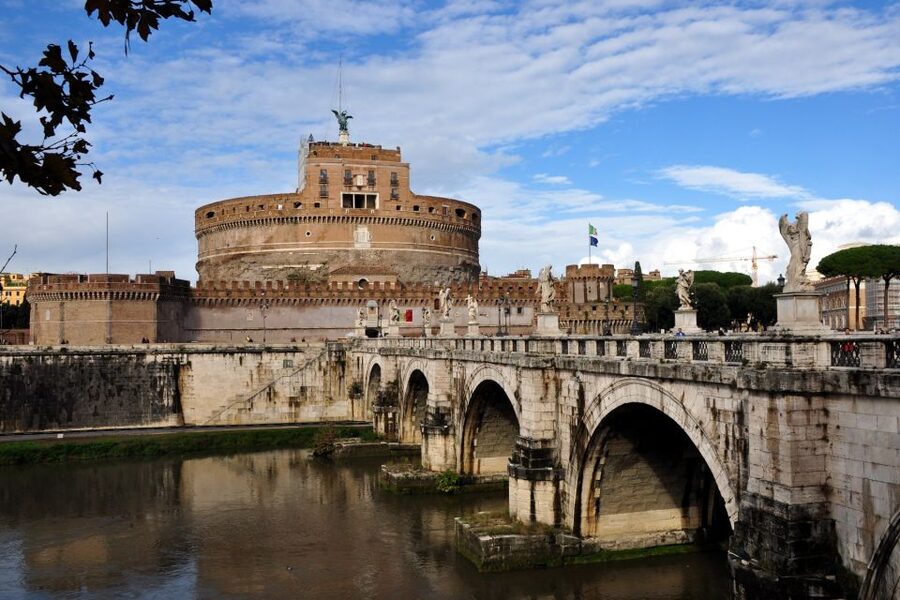
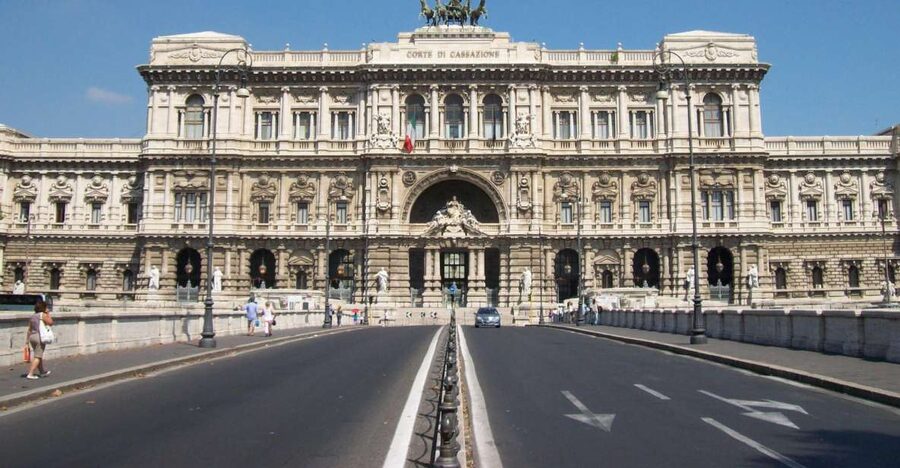
The first Rome stop is near Piazza dei Tribunali and the Palazzaccio, the nickname for the Palace of Justice. This area puts you close to the Tiber and within reach of Castel Sant’Angelo, an enormous cylindrical fortress with a long, complicated past.
Castel Sant’Angelo and the view of St. Peter’s
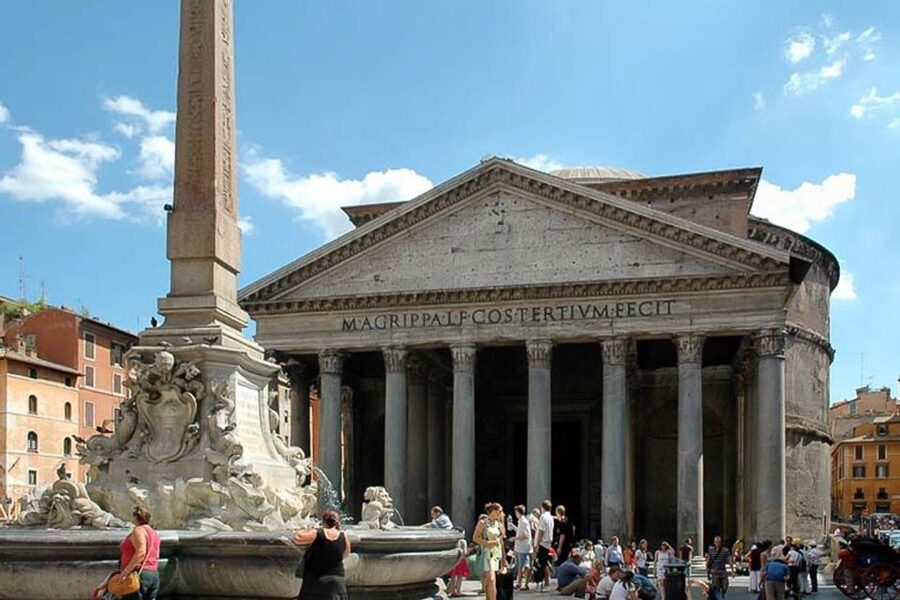
Castel Sant’Angelo is one of Rome’s best outdoor sights because it looks powerful from almost every angle. Built as a mausoleum for the emperor Hadrian and later turned into a fortress, it guards the approach to St. Peter’s across the Tiber.
You do not have admission to the castle on this tour, so think of it as a visual introduction rather than a museum visit. Your guide can point out its role in the city and lead you toward Via della Conciliazione.
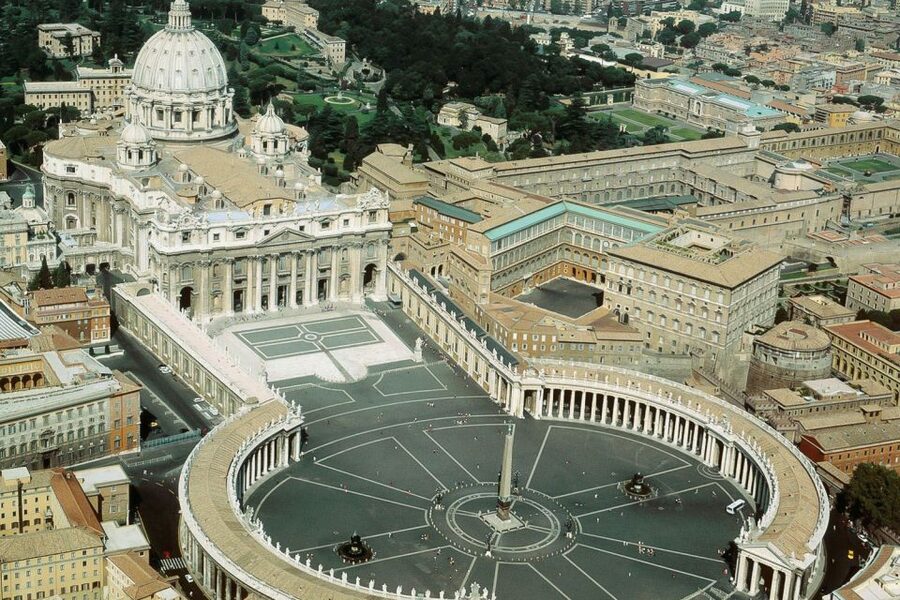
That broad avenue opens toward St. Peter’s Basilica. From the top of the street, you get a strong view of the basilica and Bernini’s sweeping colonnades around St. Peter’s Square. The design is meant to feel like open arms embracing the faithful, and it is one of those Roman scenes that works even when you have only a few minutes.
This is an exterior visit. Priority admission to St. Peter’s Basilica is not included, and the schedule does not give you time for a full Vatican visit. If entering the basilica is your main reason for coming to Rome, choose a dedicated Vatican tour instead.
The panoramic coach route through ancient Rome
After the first section, you meet your guide at a designated point and board the coach again. This ride is useful because Rome’s major sites are spread across the center, and walking between all of them would consume much of your day.
The route crosses the Tiber near Tiber Island and continues past the Pyramid of Cestius. The pyramid is a striking reminder that ancient Rome absorbed foreign styles and ideas. Nearby, the Baths of Caracalla provide another glimpse of the city’s imperial scale. They were among the largest public bath complexes in Rome, built for bathing, exercise, social life, and political display.
You see these monuments from outside or from the coach. That distinction matters. The panoramic portion gives you orientation and a sense of Rome’s layers, but it cannot replace time inside the archaeological sites.
Traffic can slow this part of the day. The coach helps you cover ground, but it cannot make Roman traffic disappear. Keep your expectations realistic: this is a sightseeing route, not a private drive with unlimited stops.
A different way to spend the day, same part of Italy:
- Vatican: Museums & Sistine Chapel Entrance Ticket
★ 4.5 · 144,003 reviews - Vatican Museums & Sistine Chapel Tour with Optional Basilica
★ 4.3 · 67,413 reviews - Colosseum, Roman Forum & Palatine Guided Tour
★ 4.7 · 63,148 reviews - Vatican Museums, Sistine Chapel & St Peter’s Basilica Guided Tour
★ 4.5 · 39,149 reviews
The Colosseum photo stop
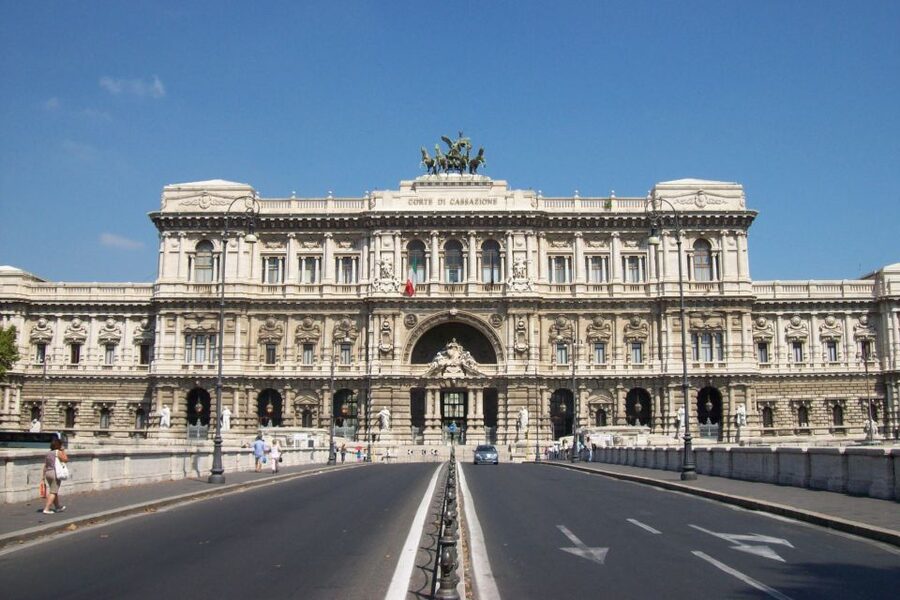
The Colosseum is the day’s clearest photo moment. The stop lasts about 20 minutes, giving you time to see the exterior, take pictures, and hear the basic story of the amphitheater.
The Colosseum was built under the Flavian emperors and used for public spectacles, including gladiatorial contests. Its sheer size is still hard to grasp from photographs. Even with crowds around you, the curved tiers and surviving arches convey the scale of the original building.
You will not enter. Colosseum and Roman Forum admission are excluded, so do not expect an arena-floor visit or a walk through the Forum. The photo stop is best for first-time visitors who want a proper view without spending several hours on one archaeological area.
If you want to explore the Colosseum inside, book a tour that includes entry. Adding an interior visit to this itinerary would likely force you to lose several other stops.
Capitoline Hill, the Imperial Forums, and the Altar of the Fatherland
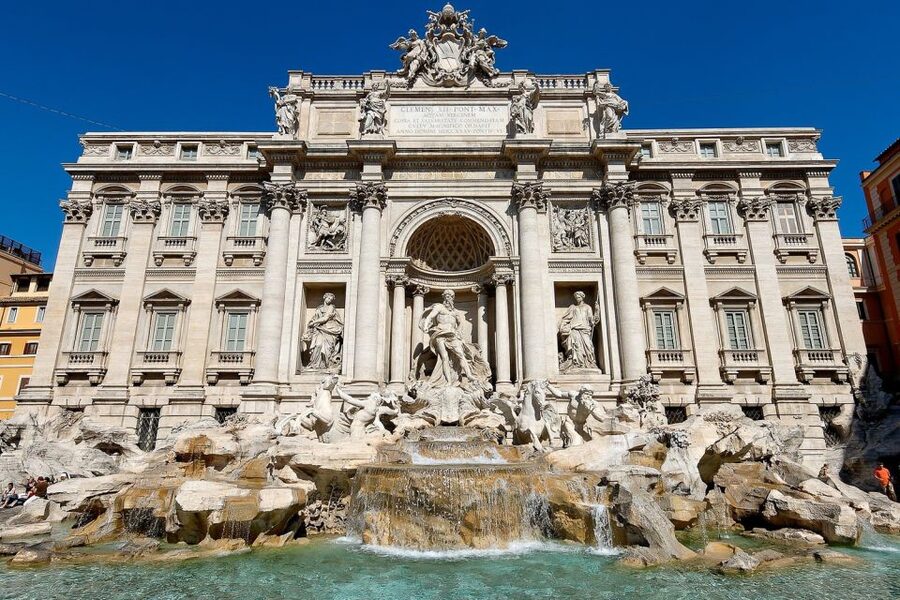
The coach ride ends near Via Petroselli, close to the Theatre of Marcellus. From here, you continue on foot toward Capitoline Hill.
Michelangelo designed the elegant Cordonata staircase and the Piazza del Campidoglio at the top. The approach is more than a way to reach a viewpoint. It shows how Renaissance planners reshaped an ancient hill into a formal civic center.
You then reach the Altar of the Fatherland in Piazza Venezia. This huge white monument honors Victor Emmanuel II, the first king of unified Italy. Romans have given it several nicknames over the years, but its size and bright marble make it impossible to miss.
From this area, you can look along the Via dei Fori Imperiali toward the Colosseum and see the ruins of Trajan’s Forum. These remains mark the center of ancient political and commercial Rome, where emperors built grand public spaces to display their power.
The area is excellent for photographs, but it can also be crowded and noisy. Listen closely to your guide’s meeting instructions. In a large group, the most common problem is not getting lost in Rome, but losing sight of the person leading your group.
Trevi Fountain and your Roman coin toss
Trevi Fountain is one of the tour’s most familiar stops, and the visit gives you time to toss in a coin. The custom says that a coin thrown over your shoulder ensures a return to Rome.
The fountain itself is a Baroque theater of stone, water, gods, horses, and movement. It was designed by Nicola Salvi and completed in the eighteenth century. The narrow surrounding streets make the fountain feel even more dramatic, though they also concentrate crowds around the basin.
You should expect limited personal space here. Keep your belongings secure, follow the guide’s meeting instructions, and take your photograph without lingering too long in the main flow of people. If you want a quiet, contemplative fountain experience, this is not the stop for it. If you want the classic Rome memory, it delivers.
Lunch, gelato, and the practical rhythm of the day
Lunch is not included, so you pay for your own food and drinks. The schedule allows a quick break, which is enough for a casual meal or gelato but not a long Roman lunch with several courses.
One useful tip is to eat around the middle of the day if your timing permits. Leaving lunch until the final part of the tour can make the afternoon feel rushed, especially when you still have the Pantheon and Piazza Navona ahead.
Your guide may suggest a restaurant, but you should treat that as a convenience rather than a required part of the tour. A quick meal keeps the day on schedule. Bring water, especially in warm weather, though drinks are not included.
Comfortable shoes matter more than stylish ones. Rome’s paving can be uneven, and the route includes a good deal of walking between outdoor monuments. Even visitors who manage the distance comfortably may find the day tiring because the stops come one after another.
Inside the Pantheon
The Pantheon is the tour’s most rewarding interior sight. Unlike the Colosseum and St. Peter’s Basilica, the itinerary takes you inside this exceptionally preserved Roman temple.
Look up at the enormous concrete dome and its central opening, the oculus. Sunlight enters from above, and rain can fall through the opening onto the floor. The engineering remains impressive because the dome becomes lighter as it rises, with coffers reducing its weight.
The building also contains the tomb of Raphael, one of Italy’s great Renaissance artists, and the tomb of Victor Emmanuel II. This is a useful stop for understanding how Rome repeatedly gave old buildings new lives. A pagan temple became a Christian church, while its architecture continued to shape European design.
The Pantheon can be crowded, and the time available is limited. Still, even a short visit inside gives you more than another exterior photograph. It is worth using your time here to look upward before rushing back outside.
Piazza Navona and Bernini’s Four Rivers Fountain
The tour ends in Piazza Navona, a long, elegant square built over the footprint of an ancient stadium. Its shape is a clue to the site’s original use.
At the center is Bernini’s Fountain of the Four Rivers, representing the Nile, Ganges, Danube, and Rio de la Plata. The sculpture reflects the Baroque taste for movement, drama, and theatrical water displays.
Piazza Navona is a good final stop because it gives you a little room to absorb the day. Depending on the schedule, you may have time to look around the square before meeting the group for the return journey.
The tour then heads back to Civitavecchia by coach. The ride can take about an hour, but traffic affects the exact timing. The return-to-port structure is reassuring for cruise passengers, though you should still follow the guide’s departure time carefully. A bus cannot wait for one person who has wandered off for one last photograph.
How the guides affect the experience
The guide is central to this tour. Guides such as Daniel, Andrea, Andre, Maddie, and Patricia have led departures, and the tour operates in English, French, Spanish, and German.
Strong guides make the rapid schedule work. Daniel has been particularly associated with clear explanations, friendly group management, and the ability to handle a large party. Andrea and Andre have also led departures, while Maddie has combined the Rome sights with a recommended lunch stop. Your actual guide depends on the date and language option, so do not book expecting one specific person.
Large groups can create sound problems. Some departures use earphones, but street noise, traffic, and crowd noise can make explanations difficult to hear. A bilingual tour can also slow the commentary because the same information may be repeated in two languages.
The upside is that the guide gives you context while you move. You are not simply dropped beside a monument with a name and a meeting time. The downside is that you have less freedom to set your own pace.
Who will get the most from the $64 price
At $64, this is strong value for a cruise passenger who wants transport and a broad introduction to Rome. A cruise-company excursion may cost much more, while an independent day requires separate transport planning and careful attention to return times.
The price does not cover monument admissions, lunch, or drinks. That keeps the base cost low, but it also means you need to budget for food and understand that the Colosseum and Roman Forum are photo stops only.
I would choose this tour if you:
- Have never seen Rome and want the major sights in one day
- Prefer a guide and organized transport
- Need a planned return to Civitavecchia
- Can walk quickly over uneven streets
- Are happy with outside views of several major monuments
I would look elsewhere if you:
- Want long visits inside the Colosseum or Vatican
- Need a wheelchair-accessible route
- Prefer a small group
- Dislike bilingual commentary
- Need frequent bathroom breaks or a slow walking pace
The experience is not suitable for wheelchair users or people with mobility impairments. It is also not suitable for pets.
Should you book this Rome day trip?
Book it if your goal is to see Rome’s famous sights in a single port day and return without arranging the transport yourself. The route is broad, the guide adds useful context, and the price is reasonable for an eight-hour excursion with port pickup and drop-off.
Do not book it expecting a relaxed Roman holiday. You will walk a lot, move quickly, and see most major monuments from outside. For a first visit from a cruise ship, I think that is a fair and useful bargain. For a deeper visit, spend a full day at the Colosseum and Forum or devote separate time to the Vatican.
FAQ
How long is the tour?
The tour lasts eight hours, including travel between Civitavecchia and Rome.
Is transportation from Civitavecchia included?
Yes. Pickup and drop-off in Civitavecchia are included, with transfers in an air-conditioned coach.
Can I enter the Colosseum?
No. Colosseum admission is not included. The tour provides an exterior photo stop lasting about 20 minutes.
Is the Roman Forum included?
No. Admission to the Roman Forum is not included, and the panoramic route provides exterior views.
Can I go inside St. Peter’s Basilica?
Priority admission to St. Peter’s Basilica is not included. The itinerary provides an exterior view of the basilica and Bernini’s colonnade from Via della Conciliazione and St. Peter’s Square.
What languages are available?
The live tour guide service is available in English, French, Spanish, and German. The panoramic tour may be bilingual.
What should I bring?
Bring comfortable shoes. The tour involves substantial walking on Rome’s uneven streets.
Recently reviewed around Rome
- Ancient Rome at Twilight Walking Tour★ 5.0 · 276 reviews
- Domus Aurea Guided Tour: The Golden House of Nero★ 4.5 · 199 reviews
- Early Vatican Museums & Sistine Chapel Small Group Tour★ 4.5 · 314 reviews
- Early Vatican Museums Tour: The Best of the Sistine Chapel★ 4.5 · 900 reviews
- Jewish Ghetto & Piazza Navona: Food, Wine & Sightseeing Rome Tour★ 5.0 · 460 reviews
- 3 Days in Sorrento, Capri & Pompeii: la Dolce Vita★ 4.0 · 595 reviews
- Tivoli Villas Full Day Trip From Rome with Lunch★ 4.0 · 443 reviews
- Cook With Us in Rome: A Hands-On Cooking Experience 09:20AM class★ 5.0 · 234 reviews
Full-Day, compared.
Sorrento, Positano and Amalfi Full-Day Tour
Read our review →
Naples or Sorrento: Full-Day Pompeii and Mount Vesuvius Tour
Read our review →
Full-Day Tour to Camogli, San Fruttuoso & Portofino
Read our review →
La Maddalena Archipelago Full-Day Trip by Boat
Read our review →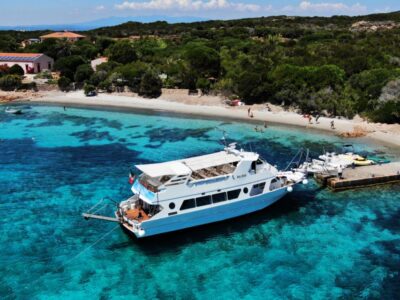
From Palau: La Maddalena Islands Full-Day Trip by Boat
Read our review →