
Review · CRUISES & BOAT TOURS
Genoa: Pelagos Sanctuary Whale Watching Cruise
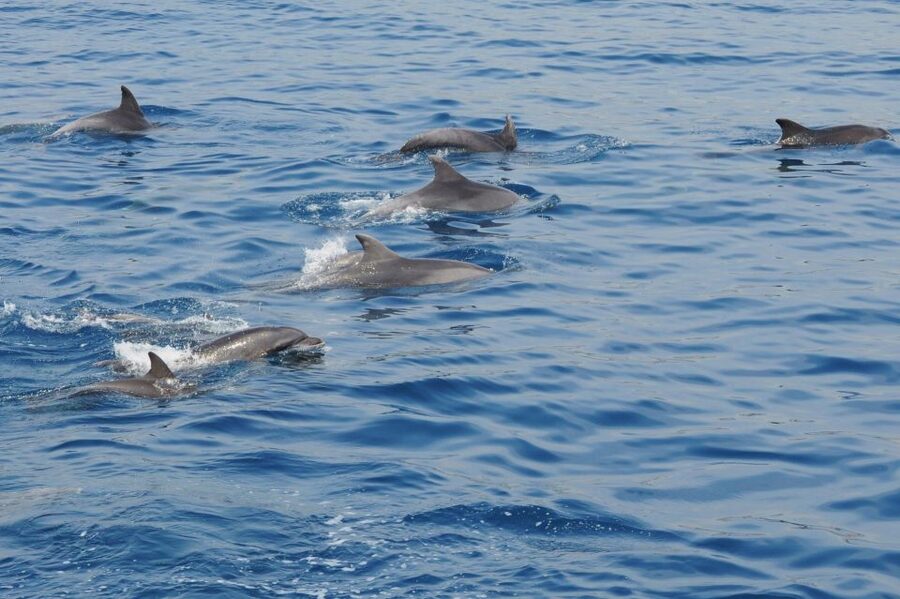
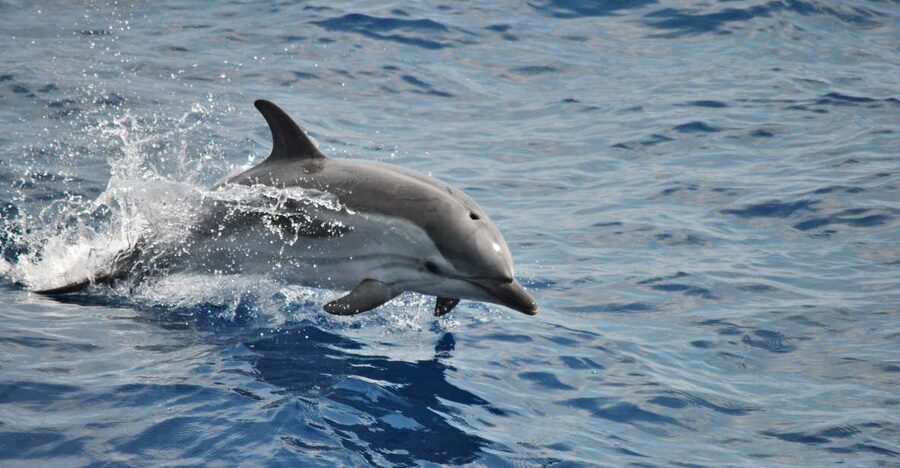
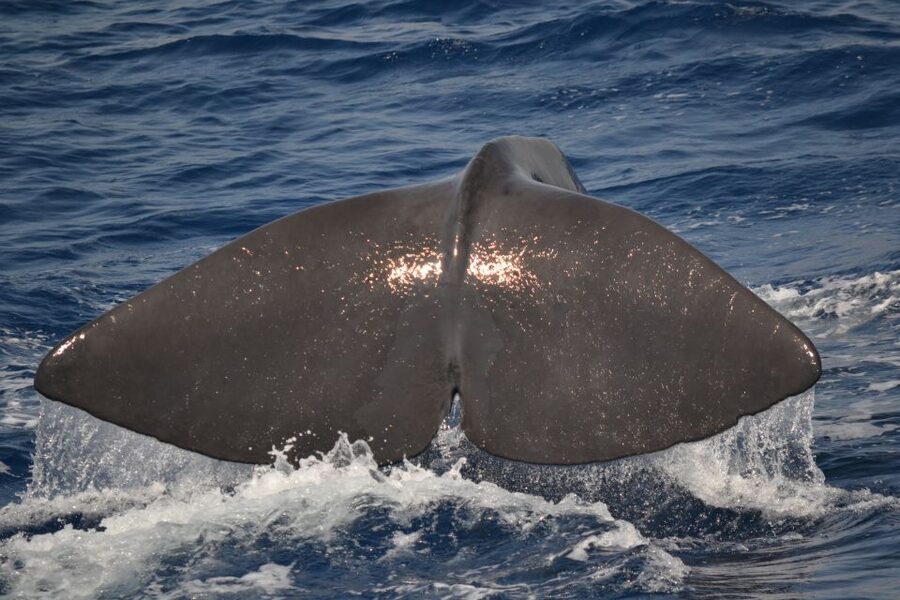
The thrill here is the search itself. After about 30 minutes, the boat reaches open water between 1,000 and 1,500 meters deep, where the crew begins scanning for wild dolphins and whales. Striped dolphins, sperm whales, Cuvier’s beaked whales, and fin whales have all appeared on recent trips, though nature sets the schedule.
I like two things in particular: the crew uses a patient, wildlife-friendly approach, and a biologist guides every cruise. I also like the fair safety net: if you see no cetaceans at all, you can return once for free within a year. The catch is simple: this is four hours at sea, not a quick boat ride, and calm conditions make a big difference.
In This Review
- Key points to know before booking
- From Genoa’s Porto Antico to open water
- Why the Pelagos Sanctuary search requires patience
- The animals you might see
- What the biologist adds to four hours at sea
- The boat ride, comfort, and group feel
- The strongest moments on the water
- When to book for the best chance
- Is $51 a fair price?
- Who will enjoy this cruise most
- Should you book the Pelagos Sanctuary cruise?
- FAQ
- Where does the whale-watching cruise depart?
- How long does the cruise last?
- What time does the boat leave?
- What animals might I see?
- Are whale sightings guaranteed?
- What happens if I see no animals?
- What languages are available?
- Is the cruise suitable for people with mobility impairments?
- Can I cancel or pay later?
Key points to know before booking
- The search starts in 1,000 to 1,500 meters of water: The boat spends about 30 minutes reaching the open sea before the main wildlife search begins.
- A biologist leads the experience: You can ask about animal behavior, breathing patterns, and the species you see. English and Italian are offered, with German and English support possible if requested.
- Sightings can be excellent: Recent trips have included large pods of striped dolphins, sperm whales, Cuvier’s beaked whales, fin whales, turtles, and seabirds.
- Wildlife is never guaranteed: You may spend long stretches watching empty water. That patience is part of the experience, not a flaw in the itinerary.
- Calm weather matters: April through October is chosen for better conditions, while April, May, and October may have less ship traffic.
- The $51 price is strong value: Four hours on the water with a guide, boat cruise, and a free second attempt if nothing is seen makes this a sensible choice for wildlife fans.
From Genoa’s Porto Antico to open water
Your meeting point is Calata Mandraccio in Genoa’s Porto Antico, near the Bigo and the Genoa Coast Guard patrol boats. This is a handy spot in the old harbor, but give yourself time to find the exact boarding area. The Bigo is the clearest landmark.
Departure is at 1 p.m. The first half hour is mostly a change of scene. You leave the harbor, pass into the open Tyrrhenian Sea, and watch Genoa recede as the boat heads toward deeper water. This part is not the main wildlife portion, but it helps you understand why the trip takes four hours.
Once the boat reaches water roughly 1,000 to 1,500 meters deep, the crew begins its search. That depth is important because the excursion is designed around open-sea species, not animals that reliably gather beside the harbor.
You should expect a moving boat, changing speed, and periods when the crew scans without any clear result. The crew may accelerate when an animal is spotted, then slow down or wait as it surfaces and disappears again. This can feel thrilling one minute and quiet the next.
More Boat Tours in Genoa
- La Spezia: Cinque Terre Tour by Boat
★ 4.4 · 2,611 reviews - From La Spezia: Round-Trip to Pisa Cruise Shore Excursion
★ 4.5 · 978 reviews - Cinque Terre Hybrid Boat Tour from Monterosso
★ 5.0 · 951 reviews
Why the Pelagos Sanctuary search requires patience
The cruise is not built around fixed stops. The crew watches the surface and looks for the brief signs that give a whale or dolphin away: a blow, a fin, a back, or a group moving through the water.
That means you should not expect a guaranteed sighting at a particular place or time. The staff are looking for wild animals, so nobody can promise that a whale will appear on cue. You may spend a long stretch with nothing visible, then suddenly see a pod racing beside the boat.
This is the main difference between a wildlife cruise and a standard sightseeing trip. The reward depends on conditions, luck, and persistence. If you prefer a tightly timed tour with constant activity, this may test your patience. If you enjoy watching a professional search unfold, the waiting has a purpose.
The best conditions are calm seas and little or no wind. Smooth water makes it easier to spot animals as they come up to breathe. The operator runs from April through October because the weather is generally more suitable, not because cetaceans are guaranteed only in those months.
April, May, and October may offer a quieter sea with less ship traffic. From June through September, departures are scheduled on Wednesdays, Fridays, and Sundays. In April, May, and October, the regular departure is on Sundays.
The animals you might see
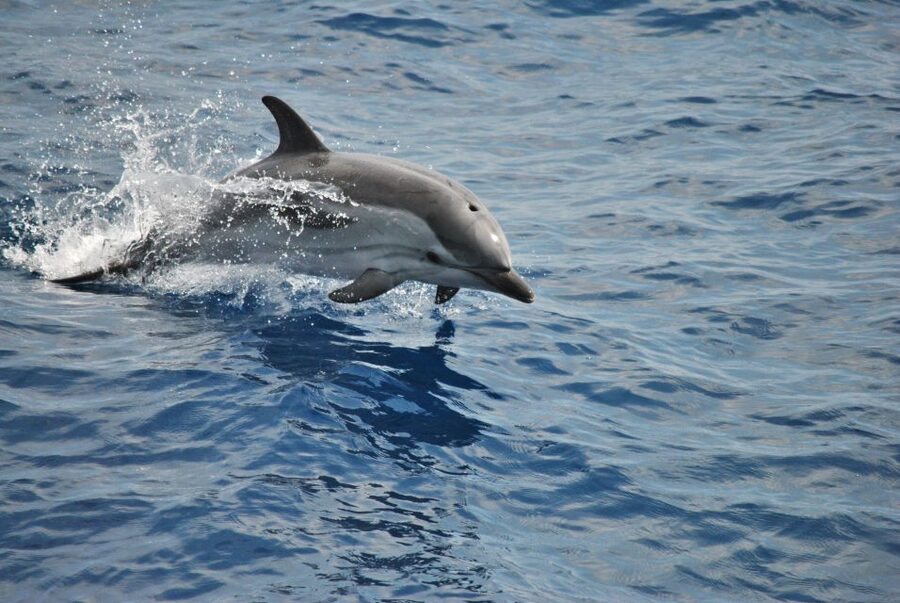
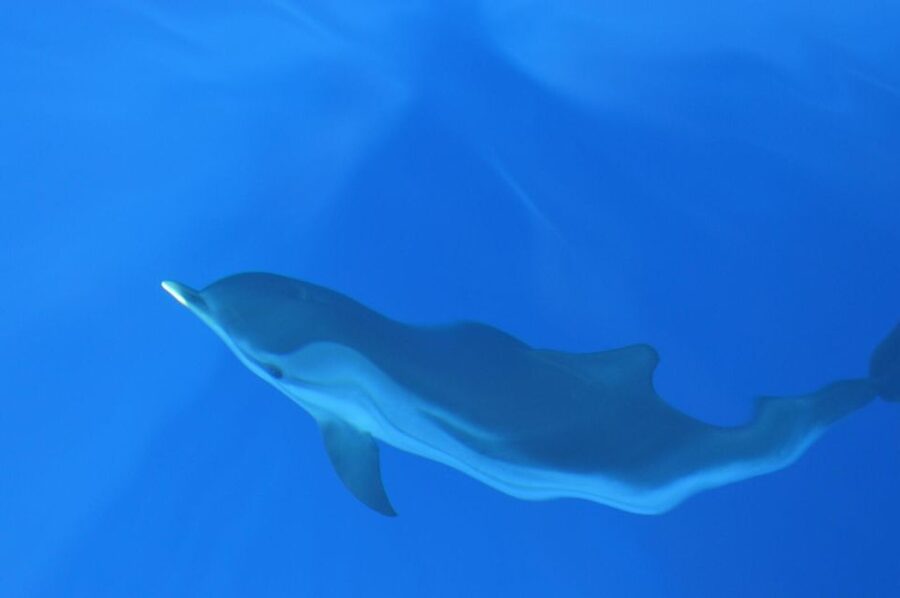
The species list gives you a good sense of the range of this outing. Striped dolphins are among the most exciting possibilities, especially when several groups travel together. Recent sightings have included pods of more than 25 dolphins, with animals swimming under the boat and racing alongside it.
You might also see mothers with calves. That is a special sight, but it is important to remember that the boat’s approach remains controlled. The crew’s role is to find animals without treating them like a performance.
Whale sightings have included sperm whales, fin whales, mink whales, Cuvier’s beaked whales, and other Mediterranean whales. One trip produced four sperm whales. Another included a juvenile mink whale and four adults. Cuvier’s beaked whales are particularly unusual to see because they spend much of their time below the surface and may appear only briefly.
The cruise can also bring encounters with pilot dolphins, sea turtles, and seabirds. Loggerhead turtles have appeared on several outings. These animals are not the main target, but they add interest when the whale search is quiet.
You should judge success realistically. One trip produced several dolphin groups, a beaked whale, and a sea turtle. Another found dolphins and turtles but no whale. Both can be worthwhile afternoons because the animals are wild and the crew cannot control which species appears.
What the biologist adds to four hours at sea
A biologist guides each excursion, giving the search a stronger educational side than a basic harbor cruise. You can ask questions about habits and behavior, and the guide explains what you are seeing as the crew works.
The guide also helps you understand why a brief sighting matters. A large whale may surface only long enough for a few glimpses. A dolphin pod may pass quickly, then move away. Without context, you might miss the significance of a small fin or a distant blow.
English and Italian are listed languages. German and English support may also be available when requested, but it is sensible to confirm language needs before booking. One practical point from the experience is that English explanations can sometimes be difficult to follow when the guide is speaking over the activity and the movement of the boat.
The crew also uses binoculars and keeps watch throughout the trip. This matters more than a long scripted talk. The staff are not simply waiting for an animal to come close. They are actively scanning and responding when something appears.
A different way to spend the day, same part of Italy:
- Genoa: Aquarium of Genoa Entry Ticket
★ 4.5 · 10,075 reviews - Genoa: Full-Day Tour to Camogli, San Fruttuoso & Portofino
★ 4.4 · 3,295 reviews - Genoa: Hop-on Hop-off Tour Ticket
★ 4.0 · 1,524 reviews - Genoa: Aquarium of Genoa with Lunch
★ 4.3 · 1,449 reviews
The boat ride, comfort, and group feel
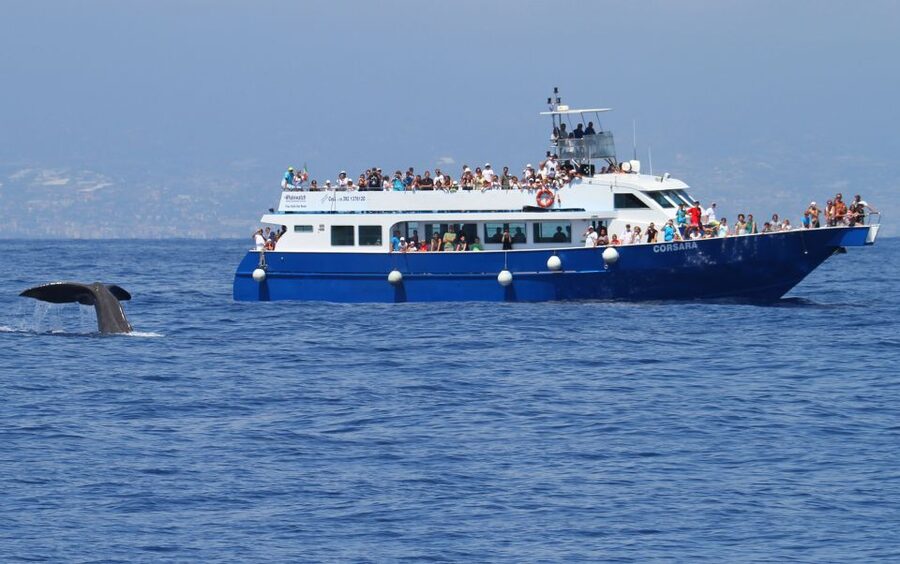
The boat has toilets onboard, and drinks can be purchased during the cruise. Those are modest details, but they matter on a four-hour trip. You are not limited to a short loop around the harbor.
The boat has been described as clean and comfortable, but it can also feel busy. One practical criticism is that the vessel may be full, which can make it harder to speak directly with the biologist or find an unobstructed view.
That is worth considering if you want a small-group outing. This cruise is better suited to people who are happy to share the experience and move around the boat when a sighting is called. Your viewing position may change quickly when dolphins or whales appear.
The boat may drift or spend time waiting while the crew watches an area. Even people who do not usually feel seasick can become uncomfortable late in the trip. If you are sensitive to motion, take your usual personal precautions before departure. I would also avoid making a tight train connection afterward, since the trip can run longer when a sighting is underway.
The experience is not suitable for people with mobility impairments. The operator does not provide enough detail to assess every access need, so ask before booking if you have a specific concern.
The strongest moments on the water
The best part of the outing comes when the waiting suddenly pays off. Dolphins may appear in several groups, cutting across the surface or moving beneath the boat. Their speed and coordination can turn a quiet afternoon into a memorable one within seconds.
Whales bring a slower, more dramatic kind of excitement. You may see a back rise, a blow, or the animal surface again at a distance. Several trips have included more than one whale, including adults with calves and pairs of whales close together.
One especially fortunate outing found multiple Cuvier’s beaked whales. The guide explained that these animals are rare to see at the surface because they spend so much time at great depth. That kind of explanation gives meaning to what might otherwise look like a brief, distant appearance.
The crew’s attitude is another strength. The search is persistent, but the approach is intended to respect the animals. The boat does not simply chase wildlife for a closer photograph. That restraint is valuable, especially when you are watching mothers, calves, or animals that surface only briefly.
You should bring a flexible attitude toward photography. A phone may capture a memorable moment, but you are unlikely to have a second chance if an animal appears on the far side of the boat. Watching first is often wiser than spending the whole cruise staring at a screen.
When to book for the best chance
The operator says the chance of a sighting is similar throughout the year, but trips run from April to October because sea and weather conditions are generally better. That distinction is useful: the season improves comfort and visibility, but it does not create a guarantee.
Calm, windless days are best. With less chop, you can see the surface more clearly, and the animals are easier to notice when they breathe. The early and late months may also bring lower shipping traffic, which can make the search feel less crowded.
Summer offers more scheduled departures, with Wednesday, Friday, and Sunday trips from June through September. The warmer months may fit a typical Genoa holiday more easily, but the sea can still vary from one day to the next.
I would choose the date with the best forecast rather than chasing a particular species. If your schedule allows, leave room for a second attempt. The free return option applies when no sighting of any kind occurs, and you must contact the provider to arrange it within one year of the first cruise.
The policy does not mean you can return because you did not see a whale. Dolphins, turtles, or other cetaceans count as wildlife sightings, so keep your expectations clear before you board.
Is $51 a fair price?
At $51 per person, this is a good value for a four-hour cruise with a biologist guide and the chance to reach serious open-sea habitat. You are paying for time, crew effort, and access to a search area that a short harbor ride cannot provide.
The value is strongest if you enjoy wildlife even when the main target does not appear. A day with large dolphin pods, turtles, and seabirds can still feel successful. Several outings have produced that mix, and dolphins alone can provide repeated action.
The price is less appealing if you want a guaranteed whale encounter or a small, quiet boat. You may share the vessel with a sizeable group, wait through long blank stretches, and return without a whale. That is not a failure by the crew. It is the basic risk of looking for wild marine animals.
The no-sighting return option improves the deal. It gives you another chance if the first cruise produces nothing at all. Still, you should not book solely for the refund protection. The real value comes from treating the afternoon as a marine wildlife expedition, not as a guaranteed show.
Free cancellation up to 24 hours before departure and the reserve-now, pay-later option make planning easier. Keep in mind that the departure time is 1 p.m., and the trip can run beyond the advertised four hours.
Who will enjoy this cruise most
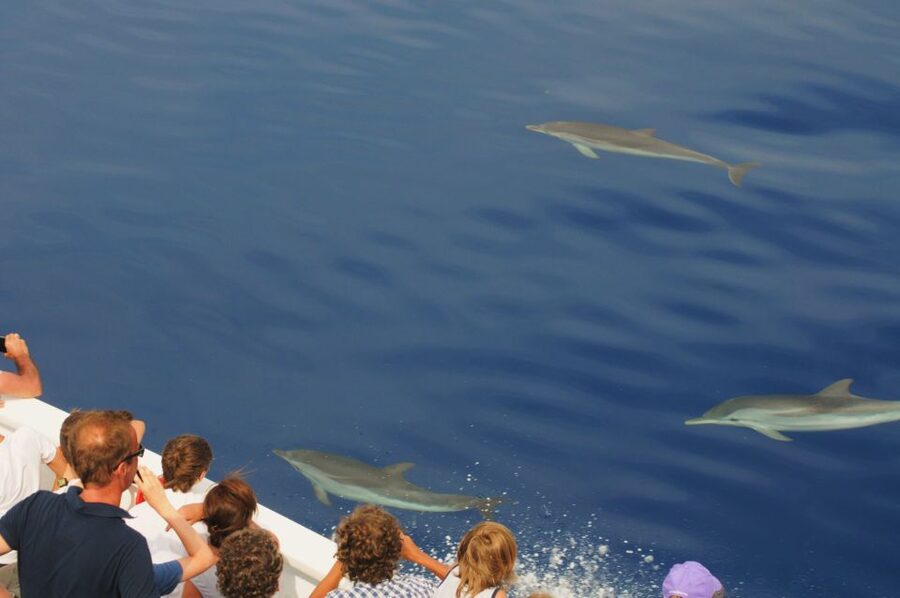
I would recommend it to anyone who gets excited by a distant whale blow, a fast-moving dolphin pod, or the simple act of watching open water for signs of life. Families can enjoy it, and the educational guide gives children something useful to focus on between sightings.
It is also a strong pick for a Genoa stay if you want a day away from the city. The Porto Antico meeting point is easy to combine with time around the harbor before or after the cruise, though you should not plan a close train departure.
This is less suitable if you have limited mobility, severe motion sensitivity, or only a short window in Genoa. It is also not ideal for anyone who needs guaranteed entertainment every few minutes.
The most important mental preparation is patience. You could see several whales and dolphins, or you could spend much of the afternoon scanning quiet water. The crew can improve your chances, but it cannot control nature.
Should you book the Pelagos Sanctuary cruise?
Book it if you want a serious wildlife search at a reasonable price and can accept uncertainty. The repeated sightings of striped dolphins, sperm whales, beaked whales, fin whales, turtles, and seabirds show what the trip can deliver, while the biologist and wildlife-sensitive approach add real value.
I would choose a calm-weather date, arrive ready for four hours at sea, and bring protection from sun and motion. If the sea is rough or your schedule is tight, wait for another day. If you are open to patience and surprise, this can become one of the most memorable parts of a Genoa visit.
FAQ
Where does the whale-watching cruise depart?
It departs from Genoa’s Porto Antico at Calata Mandraccio, near the Bigo and the Genoa Coast Guard patrol boats.
How long does the cruise last?
The excursion lasts about four hours. The boat spends roughly 30 minutes reaching the open sea before the wildlife search begins.
What time does the boat leave?
The departure time from Genoa Porto Antico is 1 p.m.
What animals might I see?
Possible sightings include dolphins, striped dolphins, pilot dolphins, sperm whales, Cuvier’s beaked whales, fin whales, mink whales, other Mediterranean whales, sea turtles, and seabirds.
Are whale sightings guaranteed?
No. The animals are wild, and there are no fixed times or locations for sightings. Calm seas and little wind make animals easier to spot.
What happens if I see no animals?
If there is no sighting of any kind, you can return for a second excursion free of charge within one year of the first trip. You must contact the activity provider to arrange the additional booking.
What languages are available?
The regular languages are English and Italian. German and English support may also be possible if requested.
Is the cruise suitable for people with mobility impairments?
No. The experience is listed as unsuitable for people with mobility impairments.
Can I cancel or pay later?
You can cancel up to 24 hours in advance for a full refund. A reserve-now, pay-later option is also available.
Recently reviewed around Genoa & Cinque Terre
- Rafting Sesia★ 5.0 · 304 reviews
- Cinque Terre Sunset Cruise with Aperitif from Monterosso★ 5.0 · 258 reviews
- Cinque Terre Sunset Boat Tour Experience★ 5.0 · 402 reviews
- Kayak experience with Carnassa Tour in Cinque Terre + Snorkeling★ 5.0 · 359 reviews
- Cinque Terre Small Group or Private Day Tour from Florence★ 4.5 · 1,248 reviews
- Cinque Terre Private Boat Tour★ 5.0 · 202 reviews
- Private Tour to Cinque Terre from Florence★ 5.0 · 343 reviews
- Cinque Terre Sunset Tour by Boat★ 5.0 · 274 reviews
Cruises & Boat Tours, compared.
Boat Trip: Glimpse of Murano, Torcello & Burano Islands
Read our review →
Burano, Torcello & Murano Boat Tour w/Glassblowing
Read our review →
Como & Bellagio with Private Lake Como Cruise
Read our review →
Murano & Burano Islands Guided Small-Group Tour by Private Boat
Read our review →
Murano & Burano Panoramic Boat Tour w/ Glassblowing
Read our review →

Browse the lists this tour appears in