Review · ROME TOURS
Jewish Ghetto and Trastevere Tour Rome
Rome’s Jewish Ghetto gives this walk its heart. You’ll move from Palazzo Venezia through one of Rome’s oldest neighborhoods, then cross toward Tiber Island and Trastevere, picking up stories that are easy to miss between the Colosseum and Trevi Fountain. The focus is not just on grand monuments, but on the people and events that shaped these streets.
I like the low price and the smart route. For roughly $4.62 per person, you get a guided introduction to three historic areas without paying museum-level prices. I also like the flexible start times, plus guides such as Axel, Caitlin, Lulu, Fabiana, and Yousef, who are repeatedly praised for clear storytelling and practical Rome tips.
The main consideration is the tour’s free-tour structure. The booking charge reserves your place, but the guide is paid by tips, and food, drinks, museum entry, and synagogue entry are not included. One guide may give a fuller explanation of the Jewish Ghetto than of Trastevere, and some walks have no headsets, so a group of up to 30 can make it harder to hear.
In This Review
- Key points to know before you book
- Why this walk belongs on a first Rome itinerary
- Palazzo Venezia to the Jewish Ghetto
- Campo de’ Fiori and Piazza Farnese
- Crossing toward Tiber Island
- Ending at Santa Maria in Trastevere
- Guide style makes the biggest difference
- Price, tips, and the real value
- Timing, weather, and walking comfort
- Who should book this Rome walk?
- Should you book the Jewish Ghetto and Trastevere Tour?
- FAQ
- How long does the Jewish Ghetto and Trastevere Tour last?
- Where does the tour begin and end?
- What neighborhoods and sights are included?
- Is the synagogue entrance included?
- Is this a free tour?
- Can I cancel for a full refund?
Key points to know before you book
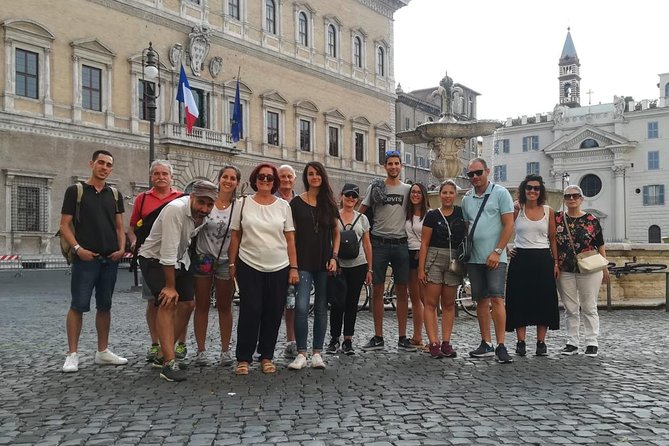
- The Jewish Ghetto is the main event: Allow about 40 minutes for the neighborhood and its powerful Jewish history.
- The route ends in Trastevere: You finish at Piazza Santa Maria in Trastevere, well placed for dinner or further wandering.
- It is a real bargain: The advertised price is about $4.62 per person, but tips are expected because the guide works on a pay-what-you-wish basis.
- The walk links three districts: You see the Jewish Ghetto, Campo de’ Fiori, and Trastevere in one efficient outing.
- Start times are flexible: Morning, afternoon, and early evening departures make this easy to fit around major Rome sights.
- Expect a moderate city walk: Most people can take part, but wear sensible shoes and be ready for all-weather conditions.
Why this walk belongs on a first Rome itinerary
If this is your first visit to Rome, the city can feel like a stack of disconnected wonders. A ruin appears beside a church, a medieval lane opens onto a market square, and a neighborhood’s most important story may be marked by something as small as a plaque in the pavement.
This walk helps connect those pieces. It begins at Palazzo Venezia, a central meeting point near Piazza Venezia, and heads into the Jewish Ghetto before moving through Campo de’ Fiori and Piazza Farnese. From there, you cross toward Tiber Island and finish in Trastevere.
That route is useful because it gives you a clear sense of Rome’s historic center without spending the whole day on foot. The stated duration is about 90 minutes to two hours. The stops themselves account for roughly 90 minutes, but the actual timing can vary with the guide, the group, questions, and the pace of the walk.
I would not treat this as a replacement for a Colosseum or Vatican visit. Instead, use it as a companion. It shows you a side of Rome that major-ticket sights do not explain well: neighborhood life, religious history, food-market culture, and the way the Tiber shaped the city.
Other Rome days travellers weigh against this one:
- Vatican: Museums & Sistine Chapel Entrance Ticket
★ 4.5 · 144,003 reviews - Vatican Museums & Sistine Chapel Tour with Optional Basilica
★ 4.3 · 67,413 reviews - Colosseum, Roman Forum & Palatine Guided Tour
★ 4.7 · 63,148 reviews
Palazzo Venezia to the Jewish Ghetto
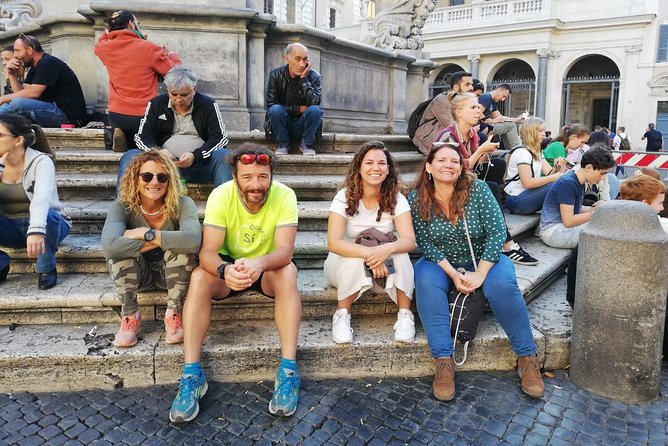
The starting point is in front of Palazzo Venezia at Piazza di San Marco, 48. This is a practical location, but it is also a good place to begin thinking about Rome’s layers. You are starting among major central sights, then turning away from the most obvious tourist path.
The Jewish Ghetto receives the longest stop, about 40 minutes. That tells you where the tour’s attention lies. This is not a quick photo stop before a generic walk through Trastevere. The guide’s main job is to explain Rome’s Jewish community, its long connection to the city, and the difficult chapters that affected its residents.
You should expect the guide to point out key places and explain the setting around the Great Synagogue, described as one of Europe’s largest. The tour does not include synagogue admission, and the itinerary does not promise an interior visit. If seeing the synagogue or Jewish Museum matters to you, plan to visit them separately and check their opening arrangements.
The neighborhood is especially worthwhile for anyone who has already seen Rome’s famous ancient monuments. The Ghetto adds a human and religious dimension to the city’s story. It also gives you a chance to ask questions, which is one reason guide quality matters so much here.
Several guides receive especially warm praise for their presentation. Axel is described as friendly, upbeat, and happy to answer questions. Caitlin is praised for combining warmth with strong historical explanations. Yousef is singled out for making the story of Rome’s Jewish community memorable, while Lulu is noted for detailed explanations and useful restaurant advice.
Those names do not guarantee who will lead your departure. The important point is that the experience depends heavily on the individual guide. Most comments describe guides who are open, engaging, and well prepared, but the occasional uneven experience is possible with any rotating guide team.
Campo de’ Fiori and Piazza Farnese
After the Jewish Ghetto, the walk continues to Campo de’ Fiori. The scheduled stop here is about 10 minutes, so keep your expectations in check. You will get an introduction to the square and its market setting, not a full food tour or a long browsing session.
Campo de’ Fiori is useful in this route because it changes the mood. The Jewish Ghetto section deals with community, faith, and persecution. Campo de’ Fiori brings you into a public square associated with daily commerce and Roman street life.
Food and drinks are not included. You can buy something if time allows, but I would not count on sitting down for a snack during the guided portion. If you want to explore the market properly, return later with more time and an appetite.
Piazza Farnese follows, with another roughly 10-minute stop. The square gives the guide a compact setting in which to point out architectural details and explain how Rome’s public spaces fit together. Since the walk moves through several districts, this brief stop works more as a bridge than as a major attraction.
One strength of the route is this variety. You are not standing in one neighborhood for two hours listening to a lecture. You shift from the Jewish quarter to a market square, then toward the river and Trastevere. The tradeoff is that some stops are necessarily short, and the guide cannot provide a complete explanation of every place you pass.
Crossing toward Tiber Island
The route then heads over one of Rome’s oldest bridges toward Tiber Island. This is one of the walk’s best transitions. You are not simply taking a taxi from one sightseeing zone to another. You see how the river links the city’s historic quarters.
Tiber Island also helps explain the geography of Rome. Even without a long formal stop, the crossing gives you a sense of how close the Jewish Ghetto and Trastevere are, while still feeling distinct in character.
This part of the walk is also where practical group details matter. One person specifically noted that the tour used no headsets and included stretches of walking without commentary about every passing site. If you are in a group near the maximum of 30 people, stay close to the guide and position yourself where you can hear.
The lack of headsets is not automatically a problem on a small departure. It can make the walk feel more personal, and several people appreciated being able to ask questions directly. But if your hearing is limited, or if you dislike crowding around a guide, this is worth considering before booking.
A different way to spend the day, same part of Italy:
- Vatican Museums, Sistine Chapel & St Peter’s Basilica Guided Tour
★ 4.5 · 39,149 reviews - Rome: Colosseum, Palatine Hill and Roman Forum Guided Tour
★ 4.8 · 32,814 reviews - Rome: Guided Tour of Colosseum, Roman Forum & Palatine Hill
★ 4.7 · 27,897 reviews - Rome: Colosseum & Forum with Audio Guide App -Optional Arena
★ 4.2 · 24,770 reviews
Ending at Santa Maria in Trastevere
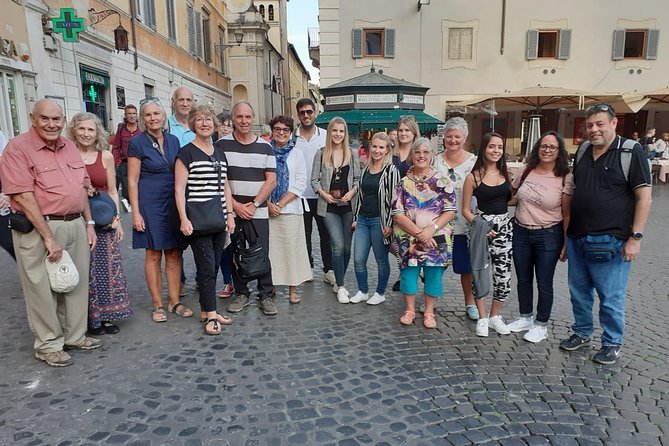
The tour ends at Piazza Santa Maria in Trastevere, in front of the church. The planned stop at the square is about 10 minutes, followed by around 20 minutes in the Trastevere neighborhood.
This is a convenient ending. You are not dropped beside a transport depot or sent back to the starting point. Instead, you finish in one of central Rome’s best areas for continuing on foot, finding a restaurant, or simply exploring at your own pace.
The title promises both the Jewish Ghetto and Trastevere, but the balance may lean toward the Jewish Ghetto. One guest found the Jewish quarter especially well explained but expected more attention to Trastevere. Another felt there was little reason to go to Trastevere at the end. I see this as a useful warning: book the walk mainly for the Jewish Ghetto and the route between neighborhoods, not as a full Trastevere tour.
You will get an introduction to Trastevere rather than a detailed neighborhood study. The final section gives you orientation and a few points of interest, then leaves you in a good position to continue independently. If Trastevere is a major priority, save time after the tour to walk beyond the endpoint.
Guide style makes the biggest difference
The strongest part of this experience is the human element. Guides including Fabiana, Etienne, Camilla, Luara, Arkaprovo, and Katelyn are praised for different strengths, from storytelling and historical detail to patience with slower walkers.
Fabiana is described as holding attention throughout the walk with strong storytelling. Etienne is noted for adjusting the pace for someone with mobility limits. Luara is praised for a friendly, easygoing manner and a comfortable rhythm. Camilla is appreciated for history and small fun facts.
That range matters because this is a spoken walking tour. You are not receiving an audio guide or a printed historical booklet. The guide decides how much detail to give, how often to stop, and how to balance the main subject with passing sights.
The overall rating is 4.6 from 1,729 ratings, with 90 percent recommending the experience. That is a strong record, though it should not make you expect a perfectly identical tour every time. The departure may be led by a different person, and the size of the group can change the feel.
A small group can be excellent for questions and conversation. The maximum is 30, so it is not always intimate. If only a few people book, the guide may be able to tailor the pace and discussion more closely. There has also been at least one cancellation when the minimum number of participants was not met, with another date offered instead.
Price, tips, and the real value
The advertised cost is about $4.62 per person, which is remarkably low for a guided walk in central Rome. But you need to understand the payment structure before booking.
This is presented as a free or pay-what-you-wish tour. The amount paid at booking is a reservation or processing charge, not a conventional admission ticket, and tips are not included. The guide relies on tips for payment, so you should budget an additional amount if the walk serves you well.
This structure can be excellent value. You get a route, a local guide, and a focused introduction for less than the cost of many short paid activities. It also lets you decide what the guide’s work was worth.
It can also create confusion. If you assume the booking fee is the guide’s full payment, you may be surprised when tipping is explained at the start or end. Read the payment terms carefully and bring enough money for a tip if you plan to participate in the pay-what-you-wish model.
For a family, the low advertised rate can make this an easy addition to a Rome itinerary. Group discounts are available, though the exact discount is not specified. You are paying for guidance and context, not entry into attractions or a food experience.
Timing, weather, and walking comfort
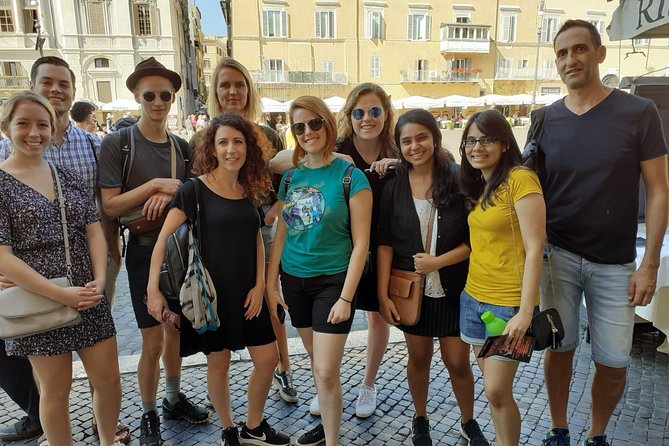
The choice of morning, afternoon, or early evening departure is one of the tour’s practical strengths. A morning walk can work before a museum visit. An afternoon start fits well after a major sightseeing stop. An early evening departure can lead naturally into dinner in Trastevere.
Rome’s streets are not controlled indoor corridors, so dress for the forecast. The tour operates in all weather conditions. Comfortable shoes are sensible, and you should be ready for a city walk rather than a seated presentation.
The route is described as easy by several people, and the total distance is not presented as extreme. Still, you will be on your feet for 90 minutes to two hours, with city streets, bridges, and changing surfaces. If you need a slower pace, tell the guide at the beginning. Etienne’s handling of a mobility concern suggests that guides may be willing to adapt, but this should not be treated as a guarantee of step-free access.
Service animals are allowed, the route is near public transportation, and most people can participate. No special equipment is provided, and there is no promise of headsets, so arrive early enough to find the group and stand where you can hear.
Who should book this Rome walk?
I would choose this tour if you are visiting Rome for the first time and want a quick orientation beyond the major monuments. It is also a strong choice for anyone who has already seen the Colosseum, Pantheon, and Trevi Fountain and wants a different historical angle.
It suits you especially well if you enjoy:
- Neighborhood history rather than only famous sights
- Guided storytelling and chances to ask questions
- Short walks that fit around a busy itinerary
- Budget activities with flexible start times
- Ending near restaurants and further sightseeing
I would be more cautious if you want a detailed Trastevere tour, a synagogue interior visit, a food tasting, or commentary on every street along the route. You should also think twice if you dislike tip-based tours or prefer a private guide with a guaranteed small group.
The tour is offered in English. Confirmation arrives at booking, and free cancellation is available up to 24 hours before the start time. Cancellations inside 24 hours are not refunded, and changes during that period are not accepted.
Should you book the Jewish Ghetto and Trastevere Tour?
Yes, if you want an inexpensive, short introduction to Rome’s Jewish Ghetto and a useful walk toward Trastevere. The Jewish Ghetto is the clear center of the experience, and the best guides bring its story to life with care, detail, and strong personal presentation.
Book it with realistic expectations. You are not buying a museum ticket, a meal, or a full Trastevere tour. You are reserving a place on a tip-supported English walking tour, with a route that links several important neighborhoods and leaves you in a good part of Rome for the rest of your evening.
For the price, the risk is small. Just understand the tipping system, wear comfortable shoes, stay close enough to hear, and plan extra time in Trastevere if you want more than a brief introduction.
FAQ
How long does the Jewish Ghetto and Trastevere Tour last?
The experience lasts approximately 1 hour 30 minutes to 2 hours. The scheduled stops total about 90 minutes, but the final length can vary with the guide, group pace, and questions.
Where does the tour begin and end?
The tour begins at Palazzo Venezia, Piazza di San Marco 48, in Rome. It ends at Piazza Santa Maria in Trastevere, in front of the church.
What neighborhoods and sights are included?
The route includes Rome’s Jewish Ghetto, the area around the Great Synagogue, Campo de’ Fiori, Piazza Farnese, Tiber Island, and Trastevere.
Is the synagogue entrance included?
No. The tour stops at the Jewish Ghetto and the area around the synagogue, but admission is not included. Food, drinks, and tips are also not included.
Is this a free tour?
It is a free or pay-what-you-wish tour, but a booking or processing fee is charged to reserve your place. The guide is paid through tips, so plan to tip separately if you choose to do so.
Can I cancel for a full refund?
Yes. You can cancel at least 24 hours before the local start time for a full refund. Cancellations or changes made less than 24 hours before the start time are not refunded or accepted.
Recently reviewed around Rome
- Ancient Rome at Twilight Walking Tour★ 5.0 · 276 reviews
- Domus Aurea Guided Tour: The Golden House of Nero★ 4.5 · 199 reviews
- Early Vatican Museums & Sistine Chapel Small Group Tour★ 4.5 · 314 reviews
- Early Vatican Museums Tour: The Best of the Sistine Chapel★ 4.5 · 900 reviews
- Jewish Ghetto & Piazza Navona: Food, Wine & Sightseeing Rome Tour★ 5.0 · 460 reviews
- 3 Days in Sorrento, Capri & Pompeii: la Dolce Vita★ 4.0 · 595 reviews
- Tivoli Villas Full Day Trip From Rome with Lunch★ 4.0 · 443 reviews
- Cook With Us in Rome: A Hands-On Cooking Experience 09:20AM class★ 5.0 · 234 reviews
Rome Tours, compared.
Vatican: Museums & Sistine Chapel Entrance Ticket
Read our review →
Vatican Museums & Sistine Chapel Tour with Optional Basilica
Read our review →
Colosseum, Roman Forum & Palatine Guided Tour
Read our review →
Vatican Museums, Sistine Chapel & St Peter’s Basilica Guided Tour
Read our review →
Colosseum, Palatine Hill and Roman Forum Guided Tour
Read our review →
Guided Tour of Colosseum, Roman Forum & Palatine Hill
Read our review →
Colosseum & Forum with Audio Guide App -Optional Arena
Read our review →