
Review · MILAN TOURS
Milan: Gray Line Milan Open Tour Hop-On Hop-Off Bus Tour
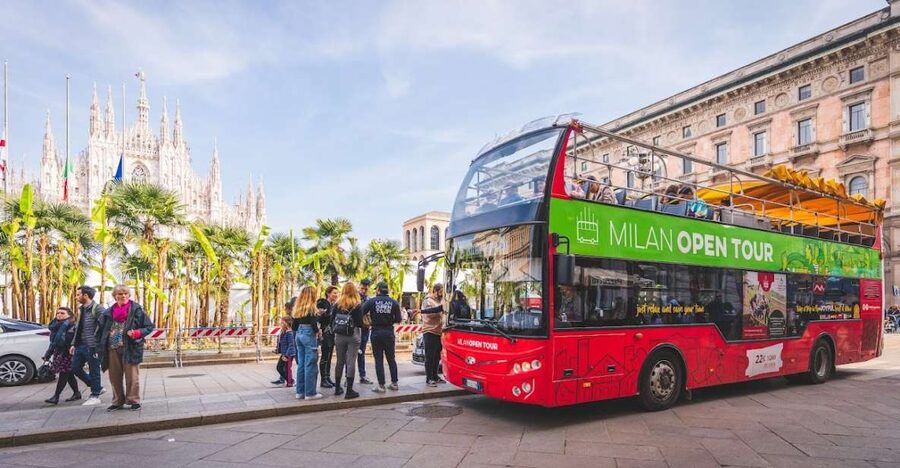
Milan’s hop-on hop-off bus is most useful when you want a quick read on a large, spread-out city. One route links the Duomo, La Scala, Brera, and Castello Sforzesco with modern districts such as City Life and Porta Nuova. The other reaches Cenacolo, Sant’Ambrogio, Navigli, the Science and Technology Museum, and the old basilicas south of the center.
I like the freedom to start at any stop and combine sightseeing with short walks. I also like the multilingual audio guide, USB sockets, WiFi, and covered seating for rainy weather. The main tradeoff is waiting time: buses may not come as often as competing services, and some passengers wait 20 to 30 minutes after getting off.
In This Review
- Key points
- A practical way to meet Milan before you walk it
- The two routes and how to choose between them
- Duomo and La Scala: the best place to begin
- Brera, Castello, and Parco Sempione
- Porta Nuova, Monumentale, and City Life
- Cenacolo and the western center
- Sant’Ambrogio, science, and Navigli
- What the audio guide adds, and where it falls short
- Riding comfort in sun and rain
- Timing, frequency, and the cost of convenience
- Who will get the most from this bus tour
- Should you book the Milan Open Tour?
- FAQ
- How long is the Milan Open Tour ticket valid?
- What are the main stops on the tour?
- How many routes are included?
- Can I get on and off at any stop?
- Is the audio guide included?
- Is commentary available for children?
- Does the bus run in bad weather?
- Is the tour wheelchair accessible?
- Can I cancel the booking?
Key points
- Two useful routes: One covers fashion, design, parks, and modern Milan; the shorter Highlights route focuses on central sights.
- Strong first-day orientation: A full circuit can take more than two hours, giving you a broad look before you choose where to return.
- Best stops for major sights: Duomo, La Scala, Brera, Castello Sforzesco, Cenacolo, Navigli, and Sant’Ambrogio are all included.
- Audio in 11 languages: Choose from Spanish, Chinese, Dutch, English, French, German, Italian, Japanese, Arabic, Portuguese, and Russian.
- Helpful onboard extras: You get a paper map, disposable earphones, WiFi, USB sockets, and a dedicated hostess.
- Plan around traffic and weather: Commentary can arrive after a sight, while rain may fog the upper-deck windows.
A practical way to meet Milan before you walk it

At $29 per person, the Gray Line Milan Open Tour is priced as an easy introduction rather than a full substitute for Milan’s public transport. The ticket lasts one to three days, so the value depends on how actively you use it. On a one-day visit, one full circuit may justify the fare by showing you districts that would take much longer to connect on foot.
I would use the bus in two ways. First, take a complete ride to get your bearings. Then get off at one or two places that fit your interests. Art lovers can focus on Cenacolo and the Triennale. Architecture fans can compare the Duomo area with Porta Nuova and City Life. For an evening stroll, Navigli is the obvious choice.
The service accepts a phone voucher directly on the bus, and you can board at any listed stop. You do not need to treat the advertised meeting point as your only entrance, though the exact starting point can depend on the ticket option you choose. Staff are available in English, Italian, Spanish, and German, and a dedicated hostess may help with boarding and route questions.
Other Milan days travellers weigh against this one:
- Milan: Cathedral and Duomo’s Terraces Entrance Ticket
★ 4.6 · 61,054 reviews - Milan: Da Vinci’s Last Supper Guided Tour
★ 4.7 · 10,143 reviews - Milan: Science and Technology Leonardo da Vinci Museum Entry
★ 4.5 · 7,169 reviews
The two routes and how to choose between them
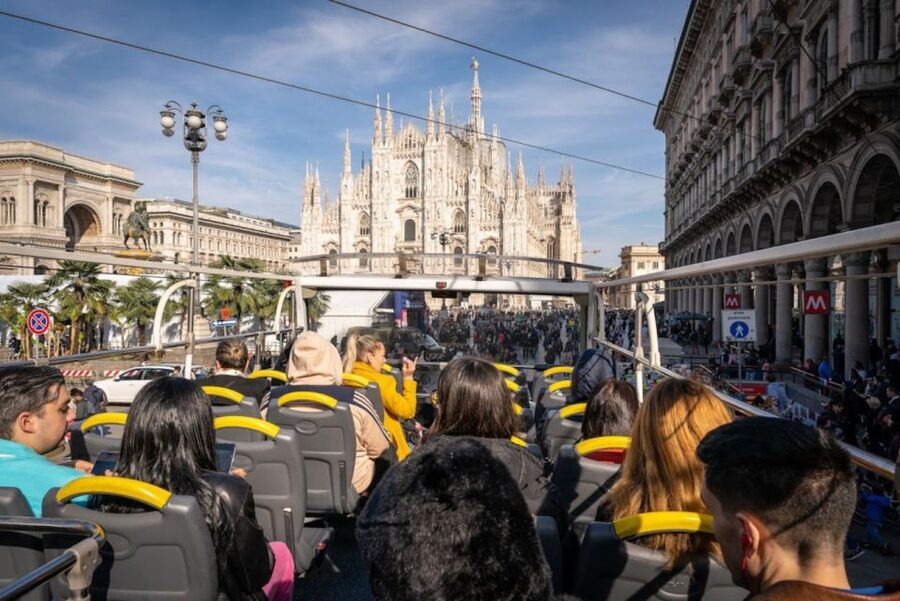
The longer Fashion, Design & Leisure route has 27 stops. It is the route to choose when you want to see more than the historic center. It connects the Duomo and La Scala with the Central Station area, Porta Nuova, Monumentale, Parco Sempione, City Life, Sant’Ambrogio, Navigli, and the Basilica Park area.
The shorter Milan Highlights route has 10 stops. It concentrates on the Duomo, La Scala, San Marco, Brera, Lanza, Castello, Cairoli, Cadorna, Cenacolo, and Litta. If you have only a few hours, this is the easier route to manage.
The routes overlap around the center, but they do different jobs. The Highlights route gives you the classic Milan picture. The longer route adds the city’s modern face and several museums and neighborhoods that you would likely miss on a short walk.
Allow plenty of time if you want to ride a whole circuit and still get off. A complete ride from the Duomo can take more than two hours, especially in heavy traffic. That long ride is relaxing, but it can squeeze your sightseeing time on a one-day visit.
Duomo and La Scala: the best place to begin
The Duomo stop puts you at Milan’s grandest focal point. Piazza Duomo is a natural place to begin because it gives you immediate access to the cathedral, the Galleria, and several central streets. The bus is useful here as an orientation tool, but this is also the stop where you are most likely to want a proper walk.
La Scala, on Via Manzoni, offers a different side of Milan. The opera house is tied to the city’s musical life, while the surrounding streets show the polished shopping and cultural center. The audio commentary helps connect the sights, though you should keep your eyes on the street and not expect every detail to arrive exactly as the bus passes the building.
The central stops work well for first-time visitors. You can ride from the Duomo to La Scala, continue toward Brera and Castello, then return later to spend more time on foot. Sitting on the right side of the bus may give you better views at several points, though the best side changes as the route turns.
Brera, Castello, and Parco Sempione
The Brera stop places you near one of Milan’s most attractive old districts. The route calls at Via Bontaccio on the Highlights line and continues through Lanza and Castello. This is a good section for getting off because the sights are close enough to connect with a walk, but you still save energy by riding between districts.
Castello Sforzesco is one of the route’s major anchors. From Piazza Castello, you can explore the castle area and move toward Parco Sempione. Cairoli and Cadorna offer nearby alternatives, so you have several ways to leave the bus if the first stop is crowded or inconvenient.
The Aquarium stop and the Triennale stop add interest for families, design fans, and anyone who wants a break from churches and grand squares. The Triennale is particularly well matched to Milan’s design reputation. The commentary may point out nearby places worth visiting, but the tour is not a replacement for admission tickets or a guided museum visit.
A different way to spend the day, same part of Italy:
- Milan: City Sightseeing Hop-On Hop-Off Bus with Audio Guide
★ 4.0 · 6,256 reviews - Milan Cathedral: Duomo Terraces Ticket (No Church Access)
★ 4.6 · 6,111 reviews - Milan: Milan Cathedral Direct Entrance – Terrace Excluded
★ 4.5 · 5,782 reviews - Milan: Guided Walking Tour & Last Supper Visit with Ticket
★ 4.7 · 5,409 reviews
Porta Nuova, Monumentale, and City Life
The longer route earns its keep by reaching Milan’s newer districts. Stops at Repubblica, Central Station, Regione, Gae Aulenti, and Monumentale show how quickly the city’s character changes outside the oldest center.
Gae Aulenti represents contemporary Milan, with modern buildings and open public spaces. Monumentale brings you to a very different setting, while City Life offers another look at recent urban development. These stops are valuable because they prevent your picture of Milan from becoming only cathedrals, opera, and old stone streets.
This section is best viewed from the bus if your time is short. Get off when a district matches your interests, but do not assume every stop needs a long visit. The point is to see the range of the city, then spend your limited walking time where you care most.
The Central Station stop is practical for people arriving by train. It may be a convenient boarding point, and it gives you a direct link between your arrival and the sightseeing route. One important practical detail: there are no toilet facilities at the stated meeting point near Milan Central Railway Station, so plan ahead.
Cenacolo and the western center
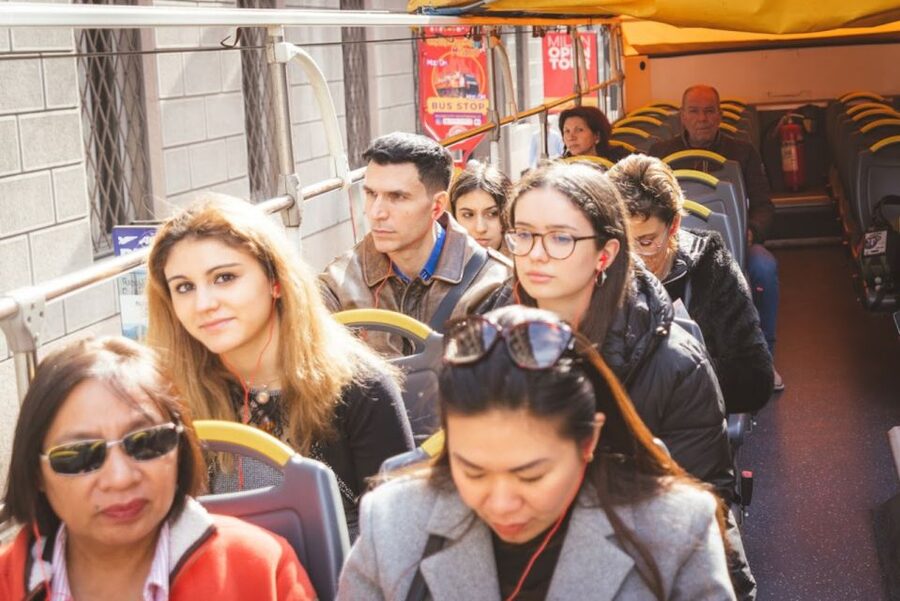
Cenacolo appears on both routes, at Via Caradosso. This is the stop for Leonardo da Vinci’s Last Supper, housed at the Church of Santa Maria delle Grazie. The bus can get you close to the site, but you need a separate timed admission to see the painting. The hop-on hop-off ticket does not include that entry.
Cadorna, Conciliazione, Paleocapa, Pagano, and Buonarroti give you several ways to explore Milan’s western center. The route also passes the Triennale and Arco della Pace, making this a strong stretch for a half-day of mixed sightseeing.
If Cenacolo is a priority, plan that visit first and use the bus around the reservation time. Do not count on jumping off at the last minute and finding an immediate bus back. The service is flexible, but the schedule can require patience.
Sant’Ambrogio, science, and Navigli
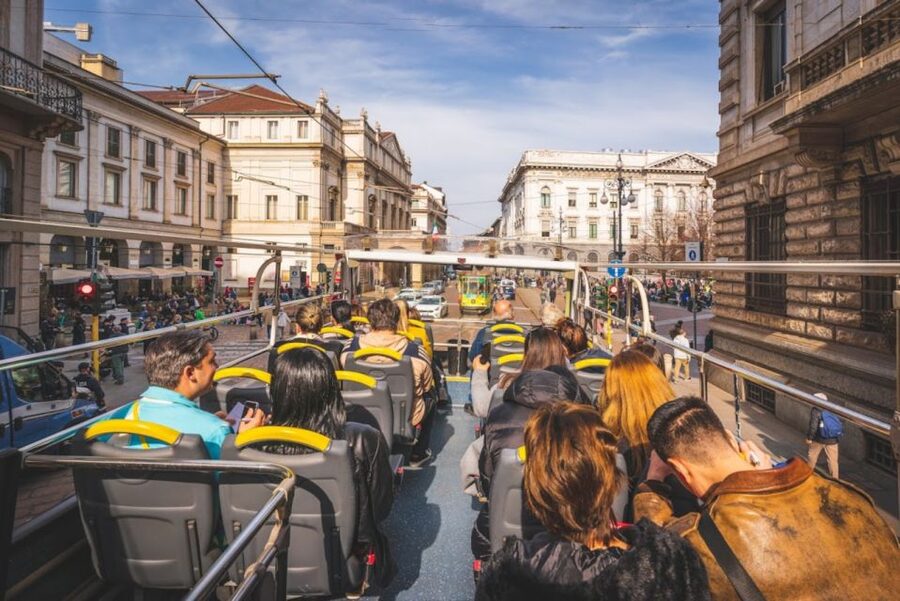
The Sant’Ambrogio stop is a good choice for one of Milan’s important early Christian churches. The Basilica of Sant’Ambrogio feels different from the Duomo, and seeing both helps you understand the city’s changing architecture and religious history.
The Museo della Scienza e della Tecnologia, listed as Museo Scienza, gives families and science fans a clear reason to choose the longer route. It adds a hands-on museum option to a day otherwise filled with buildings and streets. Admission is not included, so check your available time before getting off.
Further south, Navigli gives the route a neighborhood feel. Piazza XXIV Maggio is the stop for the canal district, where you can leave the bus and walk. Parco Basiliche and Università Studi continue the route through areas that connect Milan’s historic churches, university quarter, and southern center.
This is one of the best sections for breaking up a long bus ride. Ride from the center to Navigli, get off for a walk and a meal, then rejoin the route if the next bus fits your schedule. Drinks and snacks are not included, although they may be available to buy on the bus.
What the audio guide adds, and where it falls short
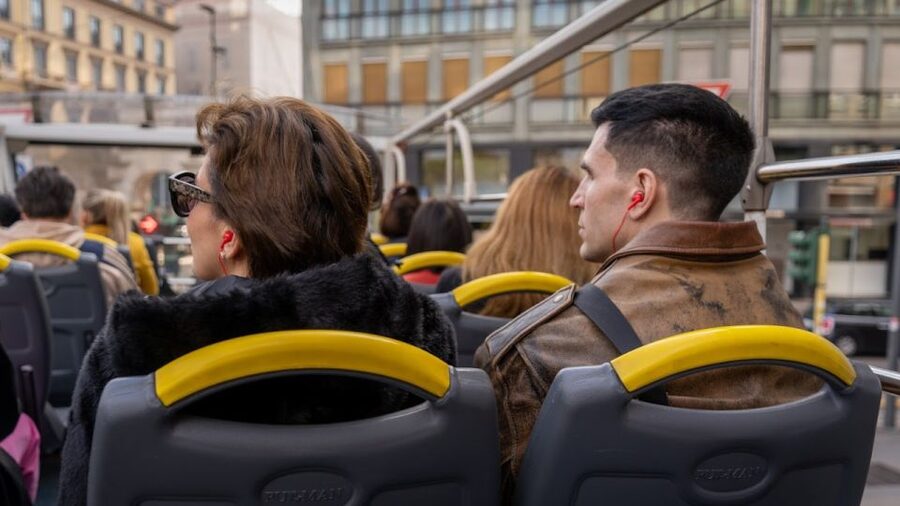
The audio guide comes in 11 languages: Spanish, Chinese, Dutch, English, French, German, Italian, Japanese, Arabic, Portuguese, and Russian. You receive disposable individual earphones, and children’s commentary is available in English, Italian, and Spanish.
The narration is generally a useful layer of context. It gives you facts about the buildings and points out places to visit near each area. I especially value that on the first circuit, when you are still learning how Milan fits together.
The system is not perfect. Audio points may fail, commentary can cut out, and the timing can be late enough that you hear about a sight after the bus has passed it. Heavy traffic makes this worse. Keep the paper map in hand and use the audio as a guide, not as a precise walking direction.
Some passengers also find the commentary a little expected and wish for more local stories. That is fair. You get information and orientation, but not the feel of a small walking tour led by a local storyteller.
Riding comfort in sun and rain
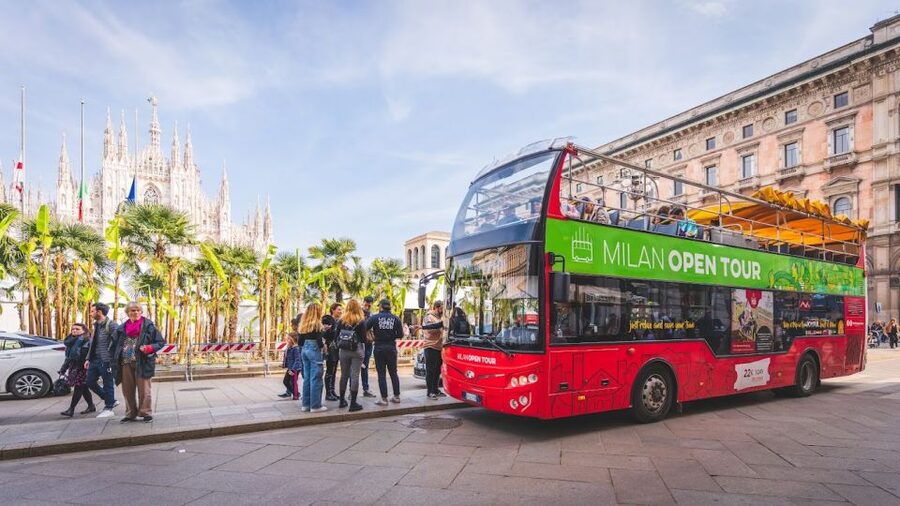
The buses operate rain or shine, which is a real advantage in Milan. On a wet afternoon, the upper deck gives you shelter and a way to keep sightseeing without trudging between distant stops. The buses are described as wheelchair accessible and pet friendly.
Weather affects the ride. Rain can fog the windows upstairs, making it hard to see the buildings. Staff may provide paper towels to wipe condensation, but the problem can return. On warm days, the upper deck can become hot, while the lower deck may feel stuffy if the air conditioning is not working.
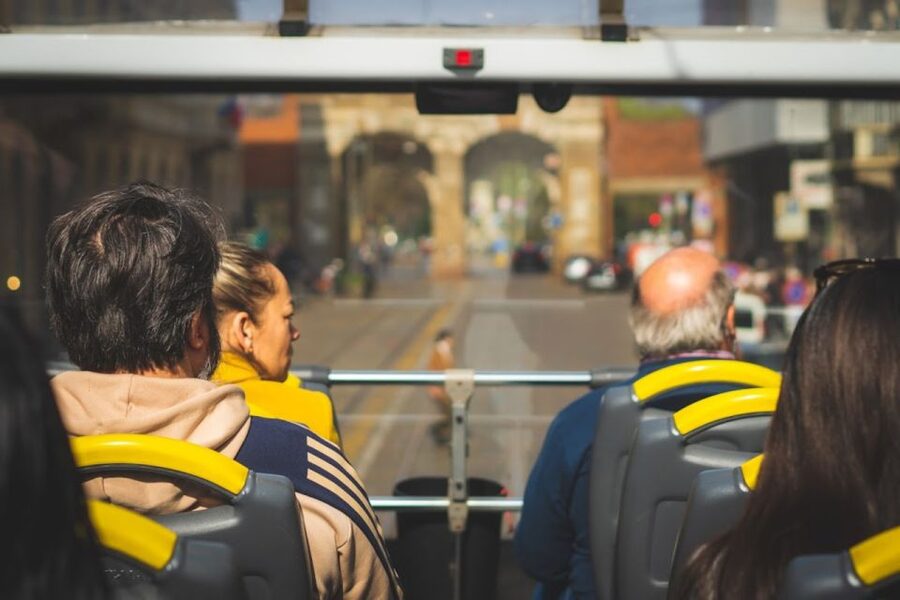
Choose your seat with the forecast in mind. The covered section is the safer pick on a hot day, even if the open top looks more appealing. In rain, a clear window matters more than an open view. The upper deck is fun for children, but comfort should take priority on a long circuit.
WiFi and USB sockets are welcome on a day when your phone is working hard for maps, tickets, photos, and translations. They do not solve every comfort issue, but they make the bus a more practical base between stops.
Timing, frequency, and the cost of convenience
The ticket costs $29 per person and can cover one to three days. For a single day, the value is strongest when you complete a circuit and get off several times. If you only ride a few stops that public transport or walking could cover, the price is harder to justify.
For two or three days, you have more room to use the bus as a sightseeing shuttle. You can ride the long route one day, return to the central sights another day, and use the bus when your feet need a rest. Still, you should compare the ticket length with your actual plans. A packed museum schedule may leave little time for repeated rides.
The biggest limitation is bus frequency. You may wait 20 to 30 minutes after getting off, and this service may have fewer buses running than another operator. Some stops do not display a timetable, which makes waiting less predictable. Ask the hostess or staff at a central stop when the next bus is expected.
Milan traffic also changes the plan. Drivers handle narrow streets and busy roads, but a long ride can stretch beyond two hours. The bus is a good sightseeing platform, not a fast taxi.
Who will get the most from this bus tour
I would recommend it most to first-time visitors with one full day, families who want a low-effort way to see many districts, and people who prefer not to navigate unfamiliar streets. It also suits anyone arriving in Milan with limited energy or a need for wheelchair-accessible transport.
The tour is useful for older children because the ride adds novelty, while the kids’ commentary keeps the experience from becoming a string of silent buildings. Design fans should choose the longer route. First-time visitors focused on classic sights may prefer the Highlights route.
It is less useful if you want a tightly timed itinerary. Waiting for the next bus can make a short visit harder to manage. It is also not ideal as your only way to visit Cenacolo, museums, or the Duomo, since those sights need time and, in some cases, separate admission.
Should you book the Milan Open Tour?
Book it if you want a broad first look at Milan, need a break from walking, or have one day to connect the center with Navigli, Sant’Ambrogio, City Life, and Porta Nuova. Start early, ride a full circuit if possible, and mark two or three stops for a longer visit.
Skip it if your plans already center on a small area or if you need exact point-to-point timing. The audio can be uneven, buses may require a wait, and bad weather can fog the windows. At $29, it is good value when you use the routes as a city overview and walking aid, not when you treat it as simple transportation.
FAQ
How long is the Milan Open Tour ticket valid?
You can choose a ticket valid for one, two, or three days. Starting times and availability depend on the option selected.
What are the main stops on the tour?
Major stops include the Duomo, La Scala, Brera, Castello Sforzesco, Cenacolo, Sant’Ambrogio, the Science and Technology Museum, Navigli, Gae Aulenti, City Life, and Arco della Pace.
How many routes are included?
The tour includes the Fashion, Design & Leisure route with 27 stops and the Milan Highlights route with 10 stops.
Can I get on and off at any stop?
Yes. Your ticket allows you to board at the listed stops and get off wherever you want along the routes, then board again.
Is the audio guide included?
Yes. The audio guide is included, along with disposable individual earphones. Languages include Spanish, Chinese, Dutch, English, French, German, Italian, Japanese, Arabic, Portuguese, and Russian.
Is commentary available for children?
Yes. Children’s commentary is available in English, Italian, and Spanish.
Does the bus run in bad weather?
Yes. The tour operates rain or shine. Rain may cause condensation on the upper-deck windows.
Is the tour wheelchair accessible?
Yes. The activity is listed as wheelchair accessible.
Can I cancel the booking?
You can cancel up to 24 hours in advance for a full refund. A reserve-now, pay-later option is also available.
Recently reviewed around Milan
- From Milan: Venice Full-Day Guided Tour With Boat Ride★ 4.5 · 322 reviews
- Venice Day Trip from Milan with Guided City Tour★ 4.0 · 383 reviews
- Verona and Lake Garda Day Trip from Milan★ 4.5 · 214 reviews
- Full-day Skip-The-Line Milan, The Last Supper and Duomo Cathedral★ 5.0 · 293 reviews
- Small-Group Lake Como & Lugano by Swiss Train + Boat Cruise★ 5.0 · 1,084 reviews
- Tour Bernina Red Train And St Moritz from Milan★ 4.5 · 247 reviews
- Walking Food Tour of Milan with Tastings★ 4.5 · 194 reviews
- Skip the Line: Essential Milan Tour Including Da Vinci’s ‘The Last Supper’★ 4.5 · 339 reviews
Milan Tours, compared.
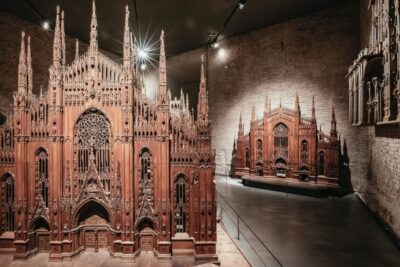
Cathedral and Duomo’s Terraces Entrance Ticket
Read our review →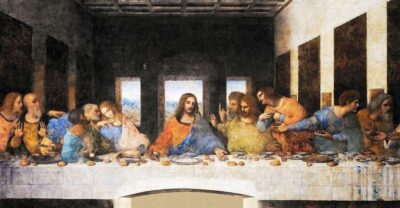
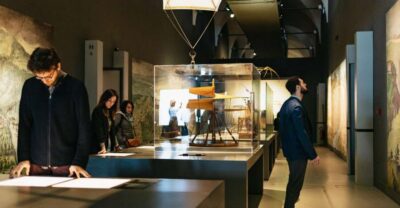
Science and Technology Leonardo da Vinci Museum Entry
Read our review →
City Sightseeing Hop-On Hop-Off Bus with Audio Guide
Read our review →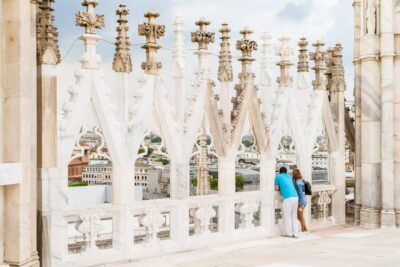
Milan Cathedral: Duomo Terraces Ticket (No Church Access)
Read our review →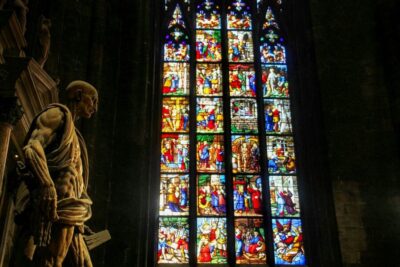
Milan Cathedral Direct Entrance – Terrace Excluded
Read our review →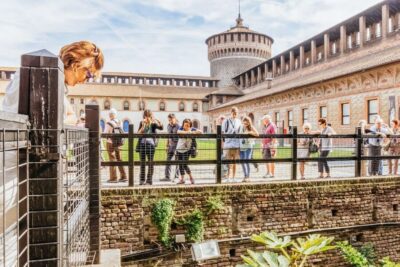
Guided Walking Tour & Last Supper Visit with Ticket
Read our review →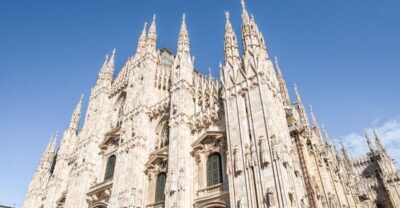
Fast-Track Milan Cathedral and Terraces Guided Tour
Read our review →Browse the lists this tour appears in