
Review · CYCLING TOURS
Milan: Highlights and Hidden Gems Guided Bike Tour
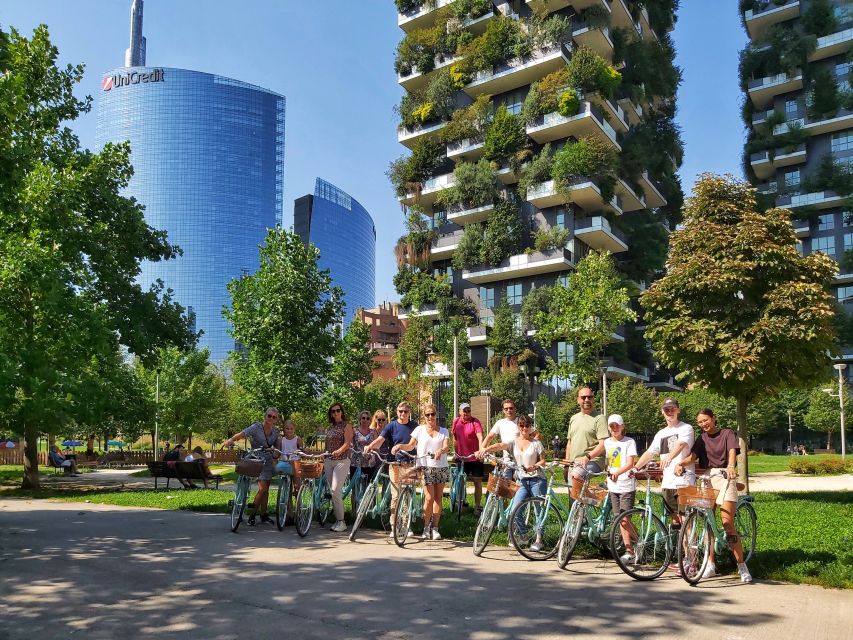
Milan makes more sense from a bike seat. In 3.5 hours, this relaxed ride links the Duomo, La Scala, Brera, Porta Nuova, Castello Sforzesco, and Roman ruins, while also slipping through streets you could easily miss on foot. I like the way the route shows Milan as more than a crowded cathedral square.
I especially like the flat, easy pace and the guides’ local touch. Paolo is often singled out for his clear storytelling and friendly manner, while Sandra and Martha have also led memorable rides. The well-kept bikes come in several sizes, and a coffee or gelato break may be offered along the way.
The main consideration is simple: you must be comfortable riding a bike, and you need to be at least 135 centimeters tall. This is a city ride, not an athletic challenge, but you still need to watch the road and follow the guide through central Milan.
In This Review
- Key points to know before you book
- Why a bike is such a good way to see Milan
- Starting in Ticinese, where old Milan meets daily life
- The Duomo, Palazzo Reale, Galleria, and La Scala
- Brera, Milan’s art district with time to look around
- Porta Nuova, where Milan looks to the future
- Castello Sforzesco and the quiet of Parco Sempione
- Roman Milan and the city beneath the modern one
- Bikes, safety, breaks, and group comfort
- Is $44.41 a fair price?
- Who should book this Milan bike tour?
- Should you book it?
- FAQ
- How long does the Milan bike tour last?
- What sights does the route include?
- Is the bike included?
- Is the route difficult?
- What languages are available?
- What happens if it rains?
- Where does the tour start and finish?
Key points to know before you book
- A fast city orientation: Cover Milan’s major districts and sights in one easy half-day ride.
- A useful mix of icons and side streets: See the Duomo, Galleria, and La Scala, then move into Brera, Ticinese, and quieter corners.
- Flat roads and a relaxed rhythm: The route is designed for steady riding, frequent stops, and plenty of explanation.
- Strong guide presence: Paolo, Sandra, and Martha are praised for clear history, good humor, and safe navigation.
- Good equipment included: You receive a bike, helmet, liability insurance, and a waterproof jacket if rain arrives.
- A practical first-day activity: Use the ride to learn where you may want to return for food, museums, or a longer walk.
Why a bike is such a good way to see Milan
Milan’s center can feel confusing at first. The Duomo area is packed with people, trams, shoppers, and grand buildings, but the city’s character changes quickly once you pedal a few minutes away. A bike lets you connect these areas without spending your day walking between them.
This tour is not built around one major monument. Its value comes from the links between places. You move from Milan’s medieval and royal center to its art district, modern towers, castle grounds, and Roman remains. That range gives you a better sense of the city than a simple checklist of famous buildings.
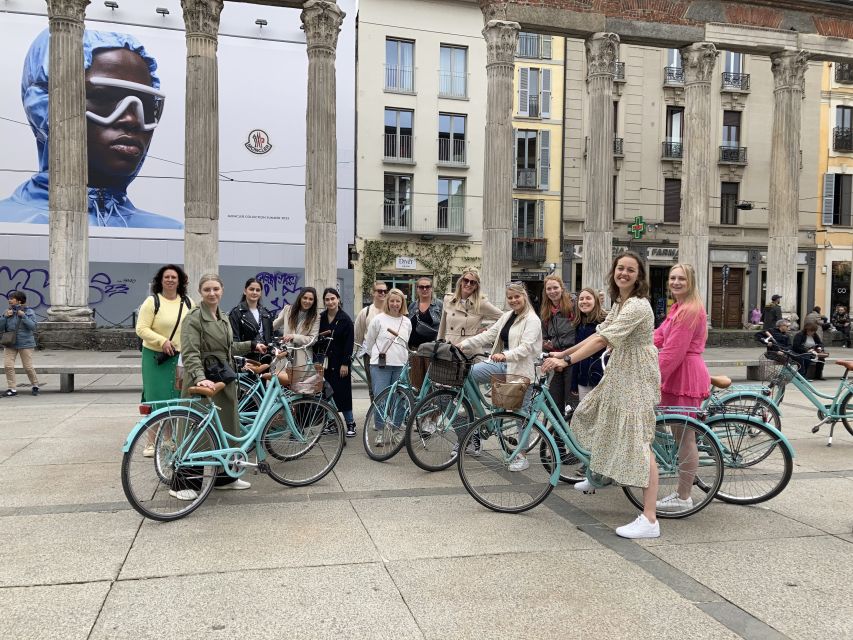
I also like the pace. The ride is described as smooth and leisurely, with regular stops for stories and photos. Several guides have been praised for keeping groups together, including a group of about 15 riders. That is large enough to feel social, but still manageable when the guide stops to explain a square or monument.
You should not expect a high-speed cycling tour. The point is to look around, listen, and get your bearings. The flat streets help, and riders report that no gears are needed for the route.
More rides around Milan:
- Milan: Hidden Gems Guided Bike Tour
★ 4.8 · 1,040 reviews - Milan’s Hidden Gems: Unique Bike Tour (ENG, NL)
★ 5.0 · 970 reviews - Highlights and hidden gems of Milan Bike Tour
★ 5.0 · 491 reviews
Starting in Ticinese, where old Milan meets daily life
The meeting point is in or near the historic Ticinese district, a lively area with a strong local feel and useful access from several metro stations. Vetra station on the M4 is about a three-minute walk away. Duomo station takes about 14 minutes on foot, or you can use tram 3. S. Ambrogio is about 12 minutes away by walking or bus 94.
Ticinese is a smart starting area because it helps you see Milan before the grand center takes over. The route begins among streets and districts connected to ordinary city life, then moves toward the great monuments. That change is part of the lesson: Milan is not only polished shopping arcades and famous facades.
If you arrive by car, take the ZTL warning seriously. Do not enter the restricted traffic zone by mistake, since fines can follow. Public transport is the safer choice for reaching the start.
The Duomo, Palazzo Reale, Galleria, and La Scala
The central section brings you to Milan’s best-known sights. The Duomo is the visual centerpiece, with its forest of Gothic details and enormous presence in the city square. From a bike, you can appreciate how the cathedral dominates the surrounding streets, even when the piazza itself is crowded.
The Palazzo Reale sits beside the cathedral and adds a quieter note of royal and civic history. Your guide explains how these buildings fit into Milan’s past and present, rather than simply naming them and moving on. That context matters because Milan’s center can otherwise blur into one grand facade after another.
The Galleria Vittorio Emanuele II offers a different kind of spectacle. Its glass roof, arcades, and elegant shops show Milan’s long connection with design, commerce, and style. You will not experience it like a slow museum visit, but a bike stop gives you enough time to take in the architecture and hear why the passage matters.
Nearby La Scala brings the city’s musical identity into view. Even if opera is not high on your list, the building helps explain Milan’s role as a major cultural center. The guide’s stories and anecdotes are useful here, especially if you prefer a sense of place over a string of dates.
The drawback is that the central streets can be busy. You need to stay alert around pedestrians and traffic, and some stops may feel short if you want a long look at every monument. The reward is seeing several major sights without giving each one a full museum-style visit.
Brera, Milan’s art district with time to look around
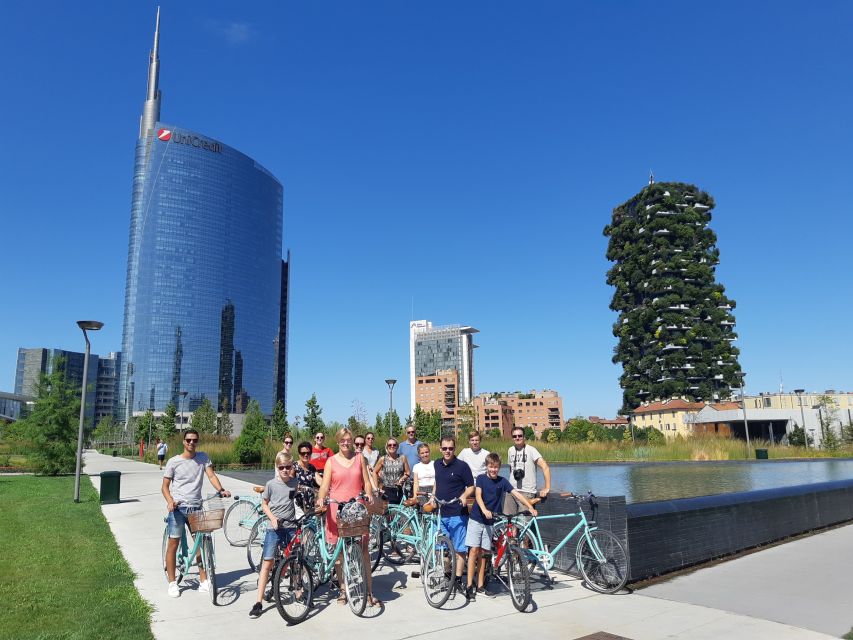
From the main center, the ride continues to Brera, one of Milan’s most appealing districts. Brera is tied to painting, galleries, design, and attractive old streets. The Pinacoteca di Brera is the major cultural marker here, though this cycling tour does not function as an indoor museum visit.
That distinction is important. You see the area and learn why it matters, but you do not get time to tour the gallery collection during the ride. If the Pinacoteca is a priority, make a separate booking for it.
Brera is also a good example of the tour’s broader idea. You are not only collecting famous sights. You are learning how Milan’s districts feel different from one another. A guide can point out details you might overlook while walking alone, then help you decide where to return later.
The route has been especially useful for people with limited time in Milan. It gives you a quick picture of the central districts, then leaves you with a list of places worth exploring on foot.
More Milan trips worth a second look
- Milan: Da Vinci’s Last Supper Guided Tour
★ 4.7 · 10,143 reviews - Milan: City Sightseeing Hop-On Hop-Off Bus with Audio Guide
★ 4.0 · 6,256 reviews - Milan: Guided Walking Tour & Last Supper Visit with Ticket
★ 4.7 · 5,409 reviews - Milan: Fast-Track Milan Cathedral and Terraces Guided Tour
★ 4.7 · 5,240 reviews
Porta Nuova, where Milan looks to the future
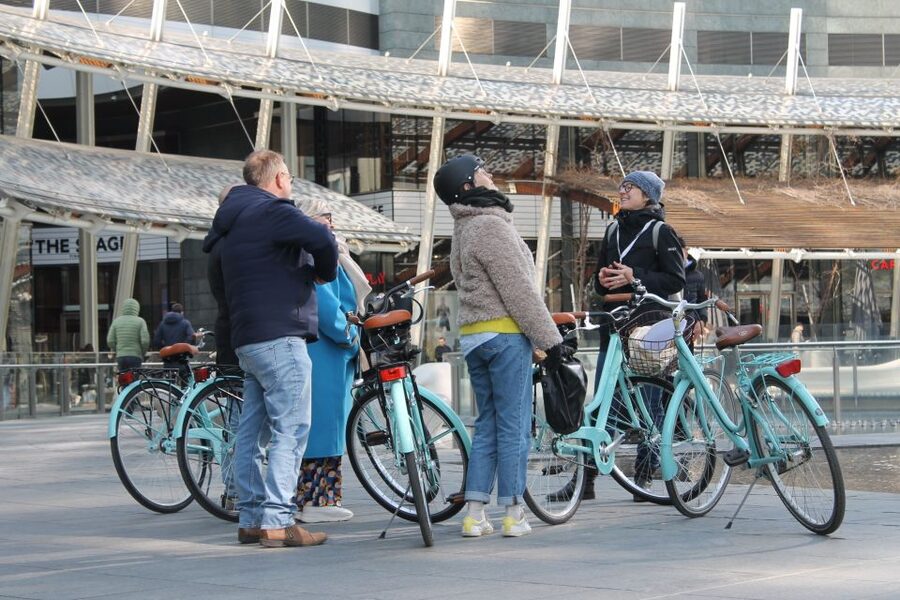
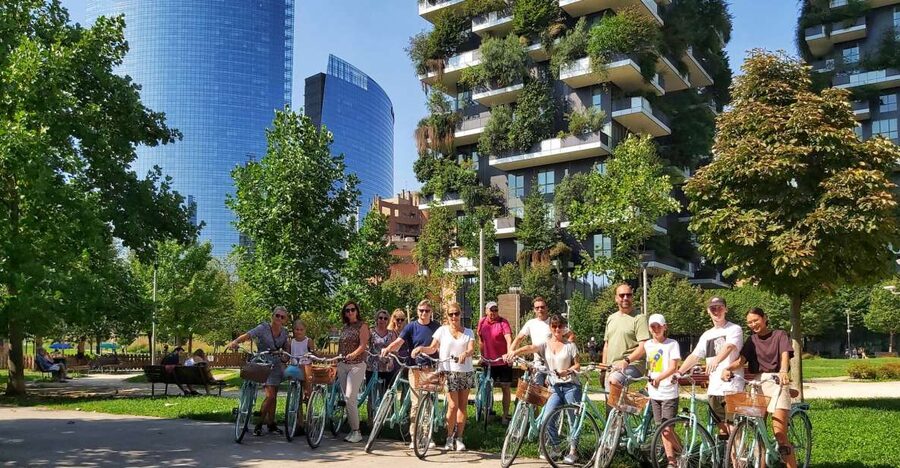
The move to Porta Nuova changes the mood again. Here, the route shifts from historic stone and painted facades to modern architecture and a more recent vision of the city. It is a useful contrast with the Duomo and Brera.
You may not care about every new tower or office building, but this stop keeps the tour from turning into a purely historic circuit. Milan is a working, changing city, and Porta Nuova shows that clearly. The contrast also makes the older districts easier to understand.
This is one of the places where a bike saves time. You can cover the distance between contrasting districts without spending a large part of the day on foot or figuring out the tram system. The ride itself becomes the connection.
Castello Sforzesco and the quiet of Parco Sempione
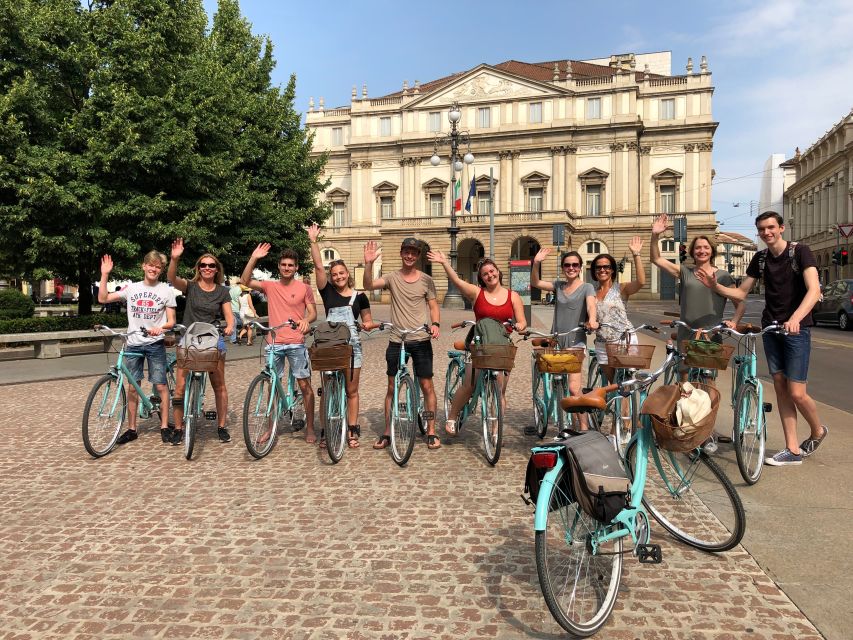
Castello Sforzesco makes a grand entrance on the route. The fortress is one of Milan’s defining landmarks, with broad walls and a strong link to the city’s ruling families and political past. A guide can give you the basic story without turning the ride into a lecture.
The castle also marks a welcome change in space. After central streets, Parco Sempione gives you room to slow down. The park is Milan’s large green retreat, and it leads toward the Arco della Pace, a graceful neoclassical arch at the far end.
I like this part of the route because it gives your legs and your mind a break. You are still seeing major sights, but the atmosphere is less intense than around the Duomo. The guide may pause here for photographs or explanation, and the open setting makes it easier to stay with the group.
This is also a good reminder that the tour is not only about monuments. It shows you how Milan residents use their city, with grand architecture balanced by space to pause.
Roman Milan and the city beneath the modern one
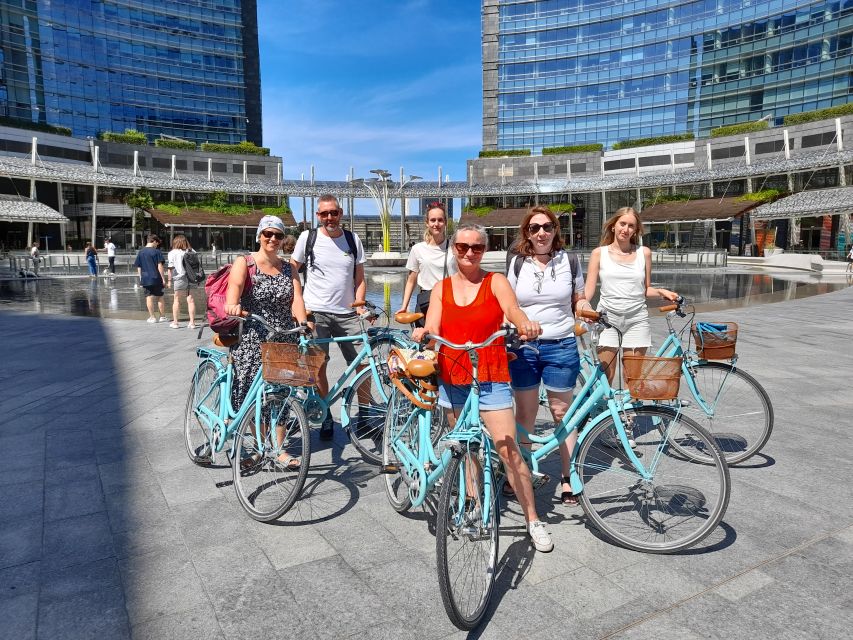
The final historic section looks back much further, to the period when Milan was a capital of the Roman Empire. You visit remains connected with the imperial palace, circus, and amphitheater.
These ruins are not presented as a single grand archaeological complex. Instead, they appear as fragments within the modern city. That makes the stop valuable. You begin to notice that Milan’s streets are built over layers of older history, with Roman remains appearing among later buildings and daily traffic.
The Roman section also rounds out the ride. You have seen Gothic, royal, artistic, modern, medieval, neoclassical, and Roman Milan in one outing. That is a lot of ground in a few hours, and it explains why the tour works well as an introduction.
You return to the original meeting point at the end. Since the tour does not finish at a separate attraction, you can plan your next stop from the same central area.
Bikes, safety, breaks, and group comfort
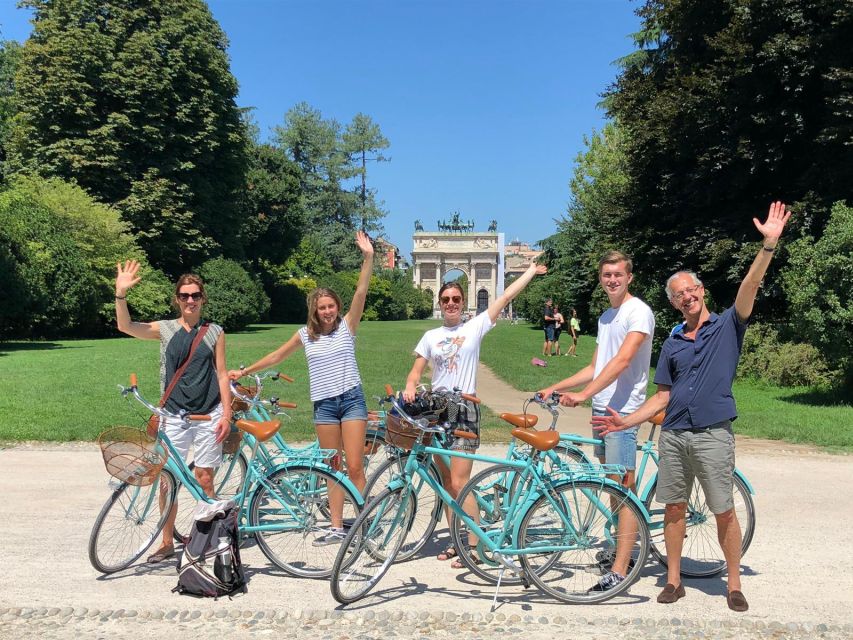
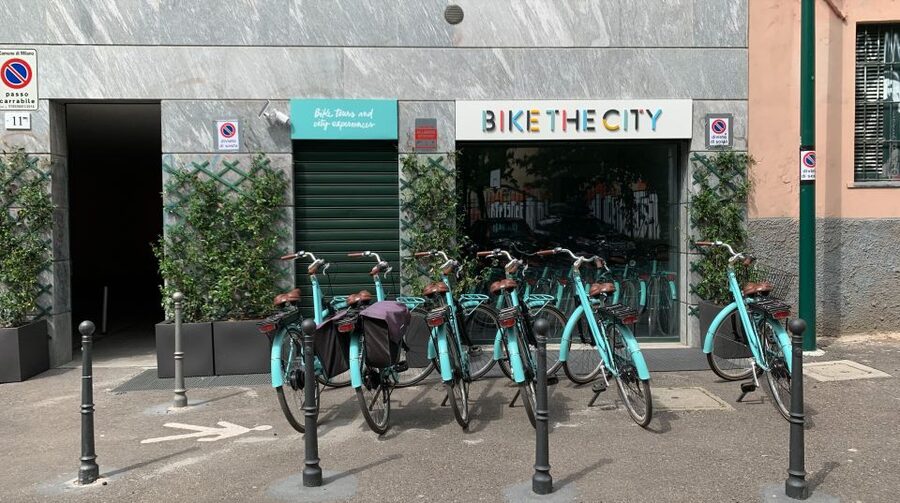
The tour includes the bike, helmet, official guide, and third-party liability insurance. A waterproof jacket is available if rain appears. The bikes are described as comfortable and well maintained, with several sizes to help you find a suitable fit.
The route is generally easy to pedal because Milan is flat. Several riders found the pace gentle, with frequent stops and no need for gears. Still, do not confuse flat roads with complete effortlessness. Three and a half hours on a bike takes some stamina, especially if you are not used to city cycling.
The guide’s role is central. Paolo is praised for his enthusiasm, clear explanations, and ability to recommend places to eat or visit later. Sandra and Martha are also noted for careful, detailed guiding. Good navigation matters in Milan, and the guides are expected to keep the group together while moving through city streets.
A coffee or gelato stop may be included during the ride, depending on the group and the guide. It is a welcome touch, but do not book this expecting a food tour. The main focus is seeing the city and hearing its stories.
The experience runs in English and Dutch. It is not suitable for anyone who cannot ride a bike or anyone under 135 centimeters tall. Wear comfortable clothes, and avoid bringing alcohol or drugs, which are not allowed.
Is $44.41 a fair price?
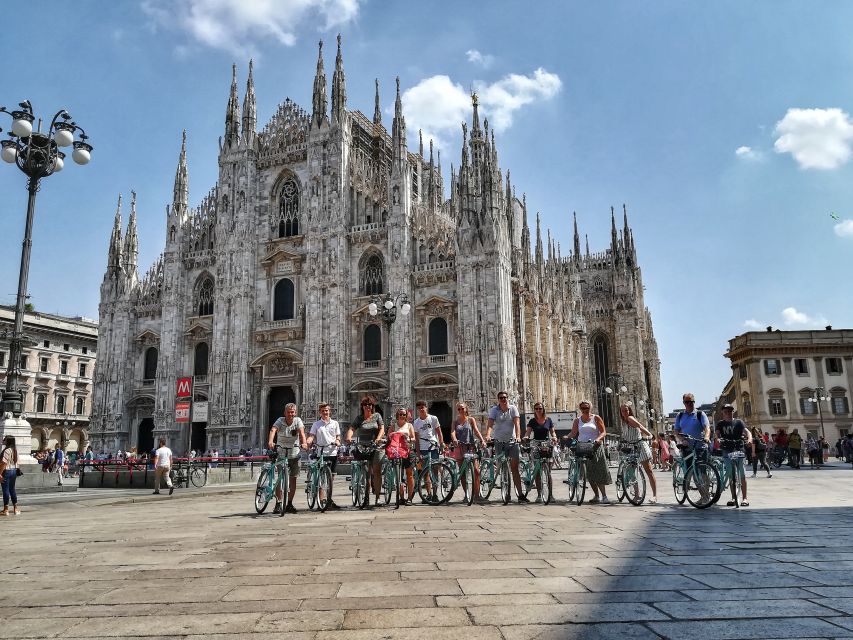
At $44.41 per person, this is a strong value if you want a broad first look at Milan. You are paying for a 3.5-hour guided route, equipment, a helmet, insurance, and access to a guide who can help you understand how the districts connect.
The price makes the most sense when you have only a short stay or want to save your feet for museums and meals. You can cover far more ground than on a walking tour, while still stopping often enough to hear the story.
It is less useful if you already know central Milan well or want long visits inside individual attractions. The Duomo, Pinacoteca di Brera, and Castello Sforzesco all deserve more time than a sightseeing ride can provide. Think of this as a city overview, not a replacement for museum tickets.
The flexible booking terms help, too. You can cancel up to 24 hours ahead for a full refund, and reserve now while paying later. If poor weather brings heavy rain, the operator may help you reschedule or offer a full refund. A light sprinkle does not automatically stop the ride.
Who should book this Milan bike tour?
I would choose this tour early in a Milan visit, ideally near the beginning. It can help you decide where to return, and guides may point you toward restaurants and local food stops. One useful example from the ride is the recommendation of panzerotto, a local stuffed fried pastry that can make a satisfying follow-up snack.
This experience suits you if:
- You want to see many districts in one morning or afternoon.
- You enjoy history presented through stories and anecdotes.
- You prefer a relaxed ride to a long walking tour.
- You are visiting Milan for the first time.
- You like small streets, neighborhood changes, and major monuments in equal measure.
- You are happy to see attractions from outside rather than tour every interior.
It may not suit you if you dislike cycling in city traffic, cannot ride for several hours, or need a fully private and quiet tour. The language choice is also limited to English and Dutch.
Should you book it?
Book this Milan bike tour if you want a clear sense of the city without spending the day on foot. Its best feature is the range: Ticinese, the Duomo, Brera, Porta Nuova, Castello Sforzesco, Parco Sempione, and Roman Milan all fit into one easy-paced outing.
I would especially recommend it for a first day in town, a short weekend visit, or anyone who finds the Duomo area too crowded and wants to see another side of Milan. Skip it only if you are not comfortable on a bike or if your main goal is extended time inside museums and monuments.
FAQ
How long does the Milan bike tour last?
The tour lasts 3.5 hours. Starting times depend on availability at the time of booking.
What sights does the route include?
The ride includes the Duomo Cathedral, Palazzo Reale, Galleria Vittorio Emanuele II, La Scala, Brera, the Pinacoteca area, Porta Nuova, Castello Sforzesco, Parco Sempione, Arco della Pace, and Roman remains linked with the imperial palace, circus, and amphitheater.
Is the bike included?
Yes. The price includes a bike, helmet, official guide, and third-party liability insurance.
Is the route difficult?
The tour is described as a leisurely ride on generally flat roads. It is not suitable for people who cannot ride a bike.
What languages are available?
The live guide operates in English and Dutch.
What happens if it rains?
The tour continues during a gentle sprinkle, and a waterproof jacket is available. If the weather becomes heavy, the operator will contact you about rescheduling or a full refund.
Where does the tour start and finish?
The ride begins in the Ticinese area and ends back at the meeting point. Vetra metro station is about a three-minute walk away, while Duomo station is about 14 minutes on foot.
Recently reviewed around Milan
- From Milan: Venice Full-Day Guided Tour With Boat Ride★ 4.5 · 322 reviews
- Venice Day Trip from Milan with Guided City Tour★ 4.0 · 383 reviews
- Verona and Lake Garda Day Trip from Milan★ 4.5 · 214 reviews
- Full-day Skip-The-Line Milan, The Last Supper and Duomo Cathedral★ 5.0 · 293 reviews
- Small-Group Lake Como & Lugano by Swiss Train + Boat Cruise★ 5.0 · 1,084 reviews
- Tour Bernina Red Train And St Moritz from Milan★ 4.5 · 247 reviews
- Walking Food Tour of Milan with Tastings★ 4.5 · 194 reviews
- Skip the Line: Essential Milan Tour Including Da Vinci’s ‘The Last Supper’★ 4.5 · 339 reviews
Cycling Tours, compared.
Rome EBike Tour: Appian Way, Catacombs & Roman Aqueducts
Read our review →
Top Highlights & Hidden Gems Tour by Cannondale E-Bike
Read our review →
Appian Way, Catacombs, & Roman Aqueducts E-bike Tour
Read our review →
Rome City Small Group Bike Tour with quality Cannondale EBike
Read our review →
Tuscany Bike Tours Through the Chianti Hills with Wine Tasting
Read our review →
Rome by Night – Ebike Small Group Tour – Food and Wine (Option)
Read our review →
Appian Way E-bike Tour with Catacombs, Aqueducts & Food
Read our review →
Browse the lists this tour appears in