
Review · MILAN TOURS
Milan Hop-On Hop-Off Bus Tour with Four Routes
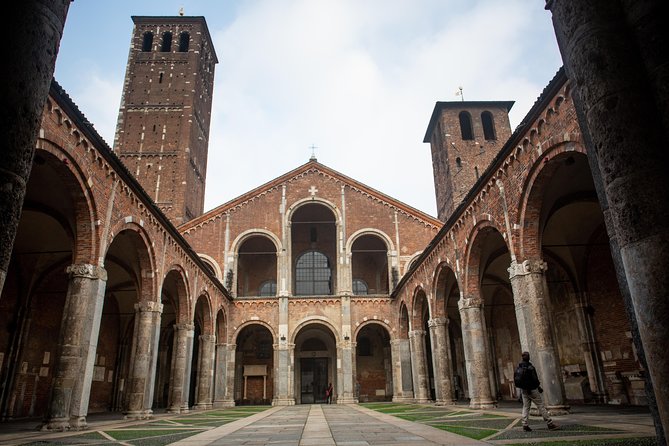
Milan’s four-route bus tour is most useful as a city orientation tool, not as a polished guided sightseeing show. It links the Duomo, Leonardo’s Last Supper, San Siro, Navigli, Brera, the Monumental Cemetery, and major shopping streets, giving you a practical way to see far-flung parts of town without wearing out your shoes.
I like the four connected routes and the freedom to hop off whenever something catches your eye. I also like the open-air upper deck, free Wi-Fi, and phone app showing buses in real time. The main caution is timing: stops can be hard to locate, buses may arrive about 30 minutes apart, and the recorded commentary is sometimes out of sync or difficult to hear.
- Four lines cover different sides of Milan: Red, blue, green, and yellow routes reach the central sights, San Siro, Porta Venezia, Navigli, and CityLife.
- The Duomo is the main interchange: Several routes pass through Piazza del Duomo, making it the easiest place to change buses.
- The Last Supper has its own stop: Get off near Santa Maria delle Grazie, but remember that the bus ticket does not include entry to the fresco.
- San Siro requires the green line: The route reaches the stadium, Casa Milan, CityLife, and the fairground district.
- A 72-hour weekend ticket has a seasonal extra: From June through September, a Saturday or Sunday 72-hour ticket includes the Milan Night Tour.
- The audio system is the weak link: Ten languages are offered, but some headphone sockets do not work and the narration can arrive before or after the sight.
In This Review
- What the four Milan routes actually give you
- Starting at Foro Buonaparte and Castello Sforzesco
- Santa Maria delle Grazie and the Last Supper stop
- Piazza del Duomo, Milan’s main switching point
- La Scala and the Monte Napoleone district
- Palazzo Lombardia, Centrale, and Porta Venezia
- CityLife, Casa Milan, and the San Siro stadium
- Navigli, Piazza XXIV Maggio, and Brera on Line D
- How to use a 24-, 48-, or 72-hour ticket
- The audio guide, Wi-Fi, and upper-deck views
- Timing, stops, and the practical weak spots
- Who gets the most value from this tour
- Should you book the Milan four-route bus tour?
- FAQ
- How long does the Milan hop-on hop-off bus tour last?
- How many routes are included?
- What languages are available for the audio guide?
- Does the ticket include entry to the Last Supper?
- Is the Milan Night Tour included?
- Can I cancel for a full refund?
What the four Milan routes actually give you
The tour uses open-air double-decker buses on four connected lines. Together, they have more than 30 stops, though each route has a different purpose.
The red line, Line A, is the core historic-center route. Its loop takes about 90 minutes, making it the best first ride if you want a broad look at central Milan before deciding where to get off.
The blue line, Line B, heads north and east from the Duomo toward Porta Venezia, the central station area, and Palazzo Lombardia. It is useful when you want to connect the old center with Milan’s newer high-rise district.
The green line, Line C, is the broadest route for western Milan. It reaches CityLife, Casa Milan, the Monumental Cemetery area, the San Siro stadium, and several stops near the fairgrounds and western neighborhoods.
The yellow line, Line D, is the most atmospheric route. It follows the canals around Navigli, passes Piazza XXIV Maggio, returns to the Duomo, and continues toward Brera and the Monte Napoleone shopping district.
The listed duration is about 1 hour 20 minutes, while the red loop is described as about 90 minutes. Treat those figures as approximate. Traffic, loading passengers, and route conditions can change the ride time.
Starting at Foro Buonaparte and Castello Sforzesco
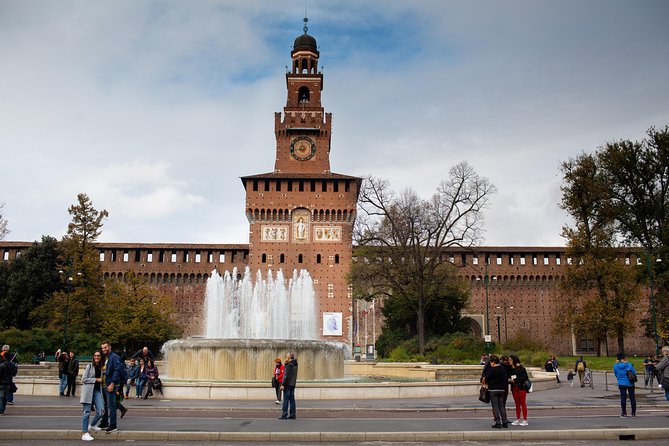
The main starting point is at Foro Buonaparte, beside Castello Sforzesco. This is a sensible place to begin because the castle is one of Milan’s biggest landmarks and sits between the historic center and Parco Sempione.
Get off here if you want to explore the castle courtyards, museums, and broad park beyond it. The bus stop also makes a useful base for the red, green, and yellow routes, although you should check the app before assuming the next bus will arrive soon.
The nearby Cadorna stop connects with Milan’s metro system and is labeled Cadorna, Via Boccaccio. That gives you a practical backup if the bus schedule is not working for your plans.
Other Milan days travellers weigh against this one:
- Milan: Cathedral and Duomo’s Terraces Entrance Ticket
★ 4.6 · 61,054 reviews - Milan: Da Vinci’s Last Supper Guided Tour
★ 4.7 · 10,143 reviews - Milan: Science and Technology Leonardo da Vinci Museum Entry
★ 4.5 · 7,169 reviews
Santa Maria delle Grazie and the Last Supper stop
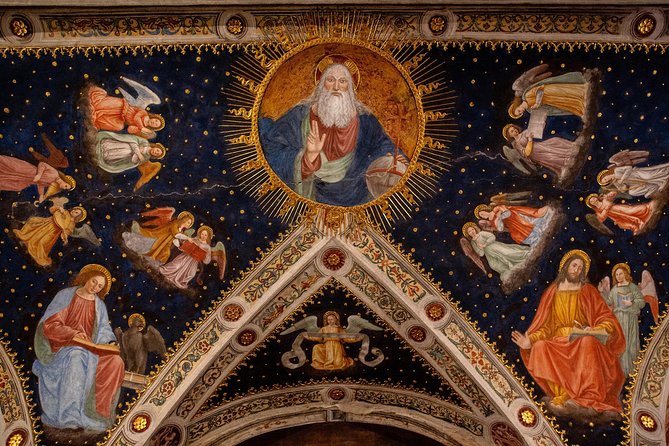
The stop at Via Caradosso serves Cenacolo, the Last Supper. It is near Santa Maria delle Grazie, where Leonardo da Vinci’s famous fresco is displayed.
This stop is valuable, but the bus ticket only gets you near the church. You need a separate timed admission for the fresco. If you already have a reservation, use the bus as a simple connection from the castle or Duomo area, then allow time to find the entrance.
The audio narration may provide background as you approach, but do not rely on it for detailed museum information. The tour is better at showing you where the sight is than at replacing a proper visit.
Piazza del Duomo, Milan’s main switching point
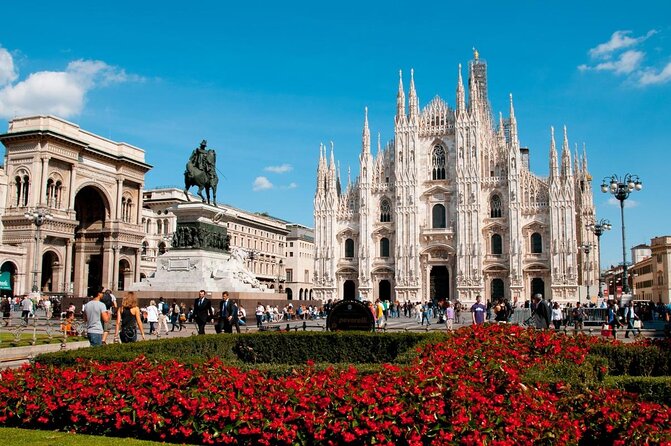
The Duomo stop at Piazza del Duomo is the most useful stop on the entire network. The cathedral, Galleria Vittorio Emanuele II, La Scala, and the surrounding central streets are all close by.
This is also where several lines connect. If you want to cover a lot in one day, you can use the Duomo as your anchor: ride one route out, explore a district, then return and change lines.
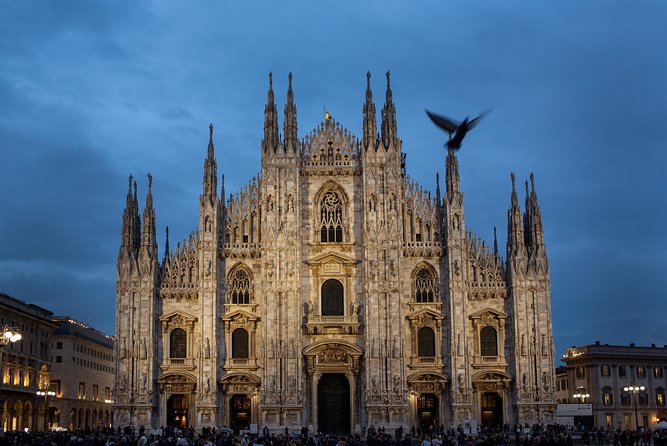
The cathedral itself deserves more time than a quick look from the bus. The upper deck gives you a fine first view of its crowded, elaborate façade, but the bus cannot show you the rooftop terraces or interior. Think of the ride as a way to decide where you want to spend your walking time.
La Scala and the Monte Napoleone district
The Manzoni stop serves Monte Napoleone, near Milan’s famous luxury shopping quarter. It is also useful for reaching La Scala and the streets around the central fashion district.
This part of Milan changes character quickly. Near the Duomo, the city feels monumental and public. Around Via Montenapoleone, the focus shifts to polished storefronts, fashion houses, and elegant streets.
You do not need to shop to enjoy the area. I would use this stop for a short walk between La Scala, the shopping streets, and Brera. The bus gives you a ride between districts, but the real pleasure here comes on foot.
The Manin and Moscova stops extend the red route toward Brera and the northeastern edge of the center. These are useful if you prefer to get off before the Duomo crowds and walk through smaller streets.
A different way to spend the day, same part of Italy:
- Milan: City Sightseeing Hop-On Hop-Off Bus with Audio Guide
★ 4.0 · 6,256 reviews - Milan Cathedral: Duomo Terraces Ticket (No Church Access)
★ 4.6 · 6,111 reviews - Milan: Milan Cathedral Direct Entrance – Terrace Excluded
★ 4.5 · 5,782 reviews - Milan: Guided Walking Tour & Last Supper Visit with Ticket
★ 4.7 · 5,409 reviews
Palazzo Lombardia, Centrale, and Porta Venezia
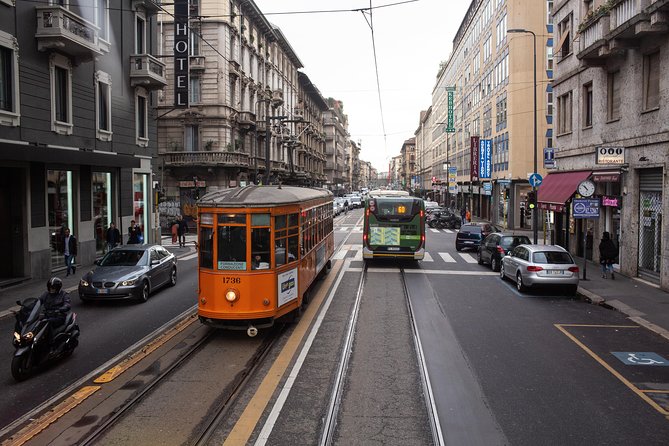
Line B begins at the Duomo and runs through Manzoni, Piazza della Repubblica, Palazzo Lombardia, Milano Centrale, Corso Buenos Aires, Porta Venezia, and San Babila.
The stop at Palazzo Lombardia takes you toward Milan’s modern office district and skyscrapers. This is a helpful contrast with the cathedral and castle, especially if you want to see how quickly Milan’s architecture shifts from medieval and nineteenth-century landmarks to glass towers.
The Stazione Centrale stop serves Milan’s main railway station. The station is worth seeing for its huge scale and grand interior, but finding the bus stop there can take patience. The directions have been described as unclear, so use the app and allow extra time rather than assuming the stop is directly outside the most obvious entrance.
Corso Buenos Aires offers a long shopping street, while Porta Venezia gives you access to one of Milan’s historic city gates and the surrounding neighborhood. San Babila brings you back toward the Duomo and central shopping streets.
This line is especially helpful if you are staying near the central station or arriving by train. It can also save you a long walk between the Duomo and Porta Venezia.
CityLife, Casa Milan, and the San Siro stadium
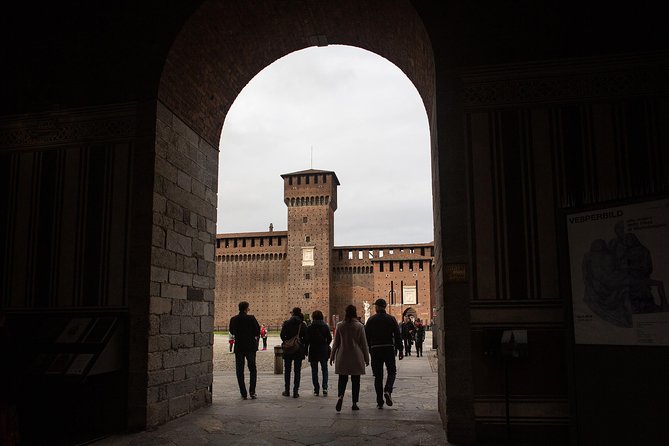
Line C is the route to choose for Milan’s western sights. From Castello, it runs toward Arco della Pace, CityLife, Casa Milan, the MiCo and Fieramilanocity area, Lotto, the Ippodromo, and San Siro.
San Siro stadium is the headline stop. The bus reaches the stadium at Gate 8, giving football fans a straightforward way to get near one of Italy’s best-known sporting venues.
Casa Milan provides another football-related stop, while CityLife shows a newer side of the city. Arco della Pace and the Monumental Cemetery area offer a different feel, with broad streets, historic monuments, and large civic spaces.
This route spreads out across western Milan, so it is not the one to choose if you plan to hop off at every stop. You will spend a fair amount of time riding between sights. It makes more sense when you have a specific destination, such as San Siro or CityLife, or when you want a long rest from walking.
The route includes several stops around Lotto, Montebianco, Monterosa, Buonarroti, Pagano, and Conciliazione. These names can be confusing at first because the stop labels combine metro stations with nearby streets. The app is useful here, particularly for seeing which bus is moving toward your intended stop.
Navigli, Piazza XXIV Maggio, and Brera on Line D
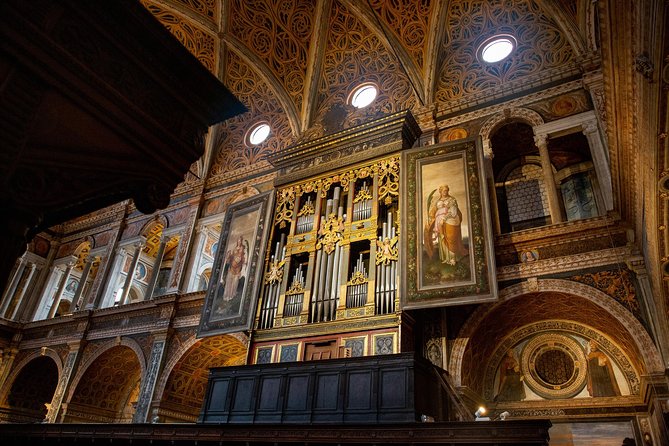
Line D follows a more attractive central and southern arc. From the castle and Cadorna, it passes the Last Supper stop, then heads to Via Vigevano near Navigli.
Navigli is Milan’s canal district and one of the best places to leave the bus for a walk. The canals, bridges, bars, and restaurants make this a good stop for late afternoon, though you should keep the bus timetable in mind if you plan to return by bus.
The next stop, Piazza XXIV Maggio, places you near another lively part of the canal area. From there, the yellow line returns to the Duomo, Monte Napoleone, and Brera.
Brera is an excellent final stop. Its narrow streets and art-focused character make it feel more intimate than the large squares around the cathedral. The bus will not replace walking through Brera, but it can bring you close without requiring a long cross-town trek.
How to use a 24-, 48-, or 72-hour ticket
You can choose a 24-, 48-, or 72-hour ticket. The clock begins when you first use the ticket, so a 24-hour pass can be useful across parts of two calendar days if you start at the right time.
For a short Milan visit, I would first consider the 24-hour option. At $27.01 per person, it can make sense if you use several routes, get off at two or three distant areas, and also value the chance to sit down between walks.
The pass is less attractive if you plan to stay around the Duomo, La Scala, and Brera. Those sights are close together, and Milan’s metro and regular public transport may be more practical for simple point-to-point journeys.
A 48-hour pass gives you more room to work around missed buses and longer stops. The 72-hour ticket is worth closer attention if you are visiting from June through September and can use it on a Saturday or Sunday, because the weekend Milan Night Tour is included.
You should not buy three days simply because a longer pass sounds safer. The bus service may be intermittent, and some people use the pass only once because they find regular public transport faster.
The audio guide, Wi-Fi, and upper-deck views
An audio guide is available in 10 languages. It gives basic information about major sights and helps you understand the city’s general layout.
The quality is uneven. Some headphone sockets do not work, and audio can switch from English to Italian or become difficult to change back. The narration can also arrive too early or too late, which makes it hard to match the words to the building outside.
Bring your own wired headphones only if the equipment accepts them, since the supplied details do not confirm the connection type. At minimum, test the audio as soon as you sit down and move to another seat if the socket fails.
The upper deck offers the best view, but it is exposed to sun and rain. Seats can become wet after bad weather, and there is no promise of a clear view from every position. Windows, seat placement, and standing passengers can block parts of the scene, especially when the bus is full.
Free Wi-Fi is included. The free Sightseeing Experience app is intended to show bus locations in real time, though it may close unexpectedly. I would use it as a useful aid, not your only source of information.
Timing, stops, and the practical weak spots
The advertised start time is 10 a.m. The service is not designed for an early-morning sightseeing start, and the buses may stop shortly after 6 p.m. outside the separate night tour.
That makes planning important. If you want to ride all four lines, start as close to 10 a.m. as possible and focus on riding rather than making long visits at every stop. One workable order is blue, yellow, red, then green, with a lunch break in the middle, but you should check current operating details before committing to that plan.
Stops are not always obvious. At the railway station in particular, you may need extra time to locate the correct place. Look for signs, compare the stop name with the app, and confirm the line color before boarding.
The bus can be a little bumpy, and hard braking has been reported. Drivers and stop staff can be helpful, but the experience is mainly self-guided. Do not expect a personal guide to explain Milan between stops.
There are no public washrooms on the buses or at the Milan Visitor Center. Plan bathroom breaks around museums, cafés, or other stops where facilities are available.
Who gets the most value from this tour
I would recommend this tour most strongly to you if:
- You are visiting Milan for the first time and want a quick sense of the city’s layout.
- You do not want to walk between distant areas such as the Duomo and San Siro.
- You want to combine historic sights with modern Milan, Navigli, and football landmarks.
- You prefer flexible sightseeing and may change your plans during the day.
- You can use the bus for several rides instead of treating it as a single loop.
It is less suitable if you want detailed guiding, exact departure times, or efficient transport for every short trip. Milan’s metro may beat the bus when you simply need to cross town.
The experience is generally accessible to most people, and mobile tickets make boarding convenient. Specific accessibility details are not provided, so check with the operator if you need a particular boarding arrangement.
Should you book the Milan four-route bus tour?
Book it if you see it as a moving overview of Milan, with useful transport between major districts and a pleasant break from walking. The route selection is strong, and the stops cover more than the standard city center circuit.
Choose the 24-hour ticket for a first look, or the 72-hour weekend ticket from June through September if the included night tour fits your plans. I would avoid paying for three days unless you have a clear plan to use the bus repeatedly.
The biggest value comes from the red and yellow routes for historic Milan, the blue line for Porta Venezia and the central station, and the green line for San Siro and western Milan. If you can accept basic audio, imperfect stop information, and possible waits, this is a useful way to get your bearings. If you want a lively, expert-led explanation at every landmark, spend your money elsewhere.
Cancellation is free up to 24 hours before the local start time. Changes or cancellations made later are not accepted for a refund.
FAQ
How long does the Milan hop-on hop-off bus tour last?
One full ride takes approximately 1 hour 20 minutes, while the red Line A loop is listed at about 90 minutes. Actual ride times can vary.
How many routes are included?
Your ticket includes four connected bus lines: red Line A, blue Line B, green Line C, and yellow Line D.
What languages are available for the audio guide?
The onboard audio guide is available in 10 languages. English is one of the offered languages.
Does the ticket include entry to the Last Supper?
No. The bus stops near Santa Maria delle Grazie and the Last Supper, but admission to the fresco is not included.
Is the Milan Night Tour included?
The Milan Night Tour is included with a 72-hour ticket valid for the weekend, on Saturday and Sunday, from June through September.
Can I cancel for a full refund?
Yes. You can cancel at least 24 hours before the experience start time for a full refund. Cancellations made less than 24 hours before the start are not refunded.
Recently reviewed around Milan
- Venice Day Trip from Milan with Guided City Tour★ 4.0 · 383 reviews
- Verona and Lake Garda Day Trip from Milan★ 4.5 · 214 reviews
- From Milan: Venice Full-Day Guided Tour With Boat Ride★ 4.5 · 322 reviews
- Full-day Skip-The-Line Milan, The Last Supper and Duomo Cathedral★ 5.0 · 293 reviews
- Small-Group Lake Como & Lugano by Swiss Train + Boat Cruise★ 5.0 · 1,084 reviews
- Tour Bernina Red Train And St Moritz from Milan★ 4.5 · 247 reviews
- Walking Food Tour of Milan with Tastings★ 4.5 · 194 reviews
- Skip the Line: Essential Milan Tour Including Da Vinci’s ‘The Last Supper’★ 4.5 · 339 reviews
Milan Tours, compared.
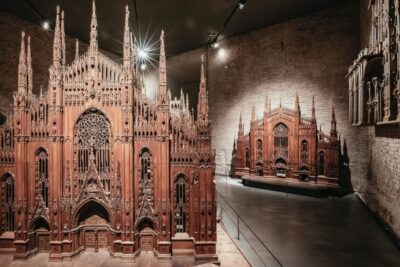
Cathedral and Duomo’s Terraces Entrance Ticket
Read our review →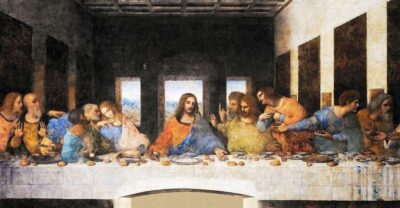
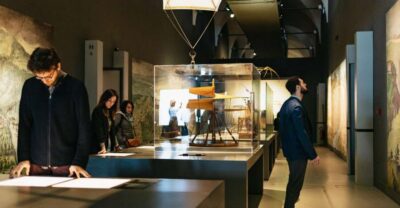
Science and Technology Leonardo da Vinci Museum Entry
Read our review →
City Sightseeing Hop-On Hop-Off Bus with Audio Guide
Read our review →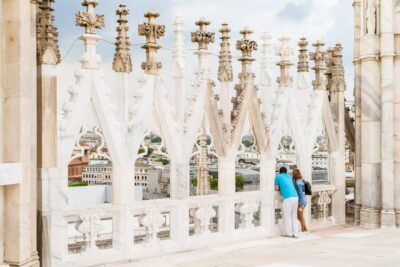
Milan Cathedral: Duomo Terraces Ticket (No Church Access)
Read our review →
Milan Cathedral Direct Entrance – Terrace Excluded
Read our review →
Guided Walking Tour & Last Supper Visit with Ticket
Read our review →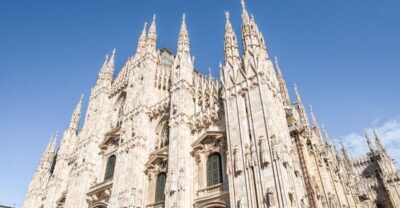
Fast-Track Milan Cathedral and Terraces Guided Tour
Read our review →Browse the lists this tour appears in