
Review · MILAN TOURS
Milan: “Museo Teatrale Alla Scala” Guided Tour
La Scala can look almost modest from the street, but inside it opens into one of Milan’s great theatrical spaces. This 90-minute guided tour takes you from the square outside into the opera house, then through a museum filled with costumes, instruments, portraits, and stage designs tied to famous performances.
I like the way the guide connects the building to the people who made it famous, from Giuseppe Verdi and Gioachino Rossini to Maria Callas and Luciano Pavarotti. I also like the museum’s personal touch, including private objects and historic instruments. The main catch is that rehearsals and private events can limit access to the theater itself, leaving you with the museum only.
In This Review
- Key points to know before you book
- Why La Scala is worth your time
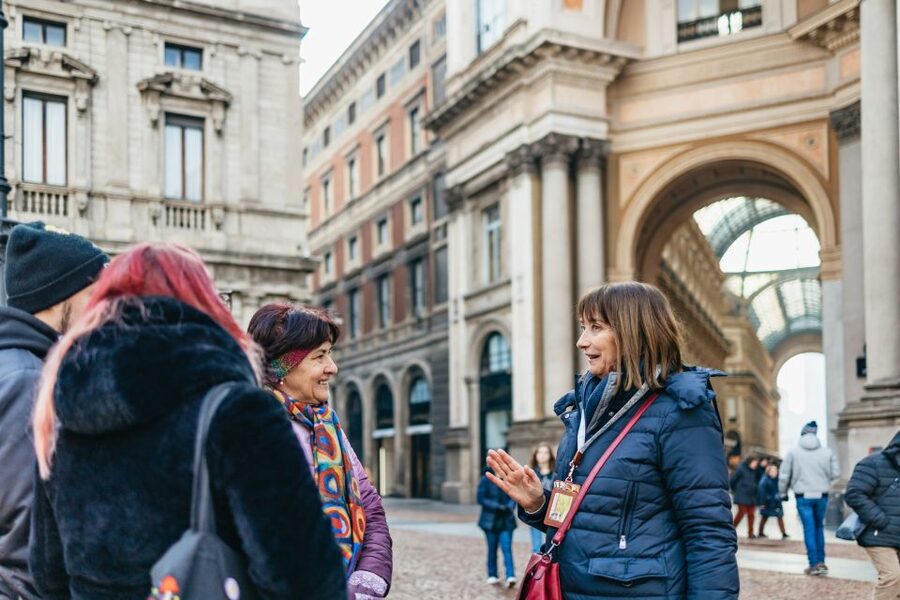
- Meeting your guide beside the museum
- The theater’s early years and changing role
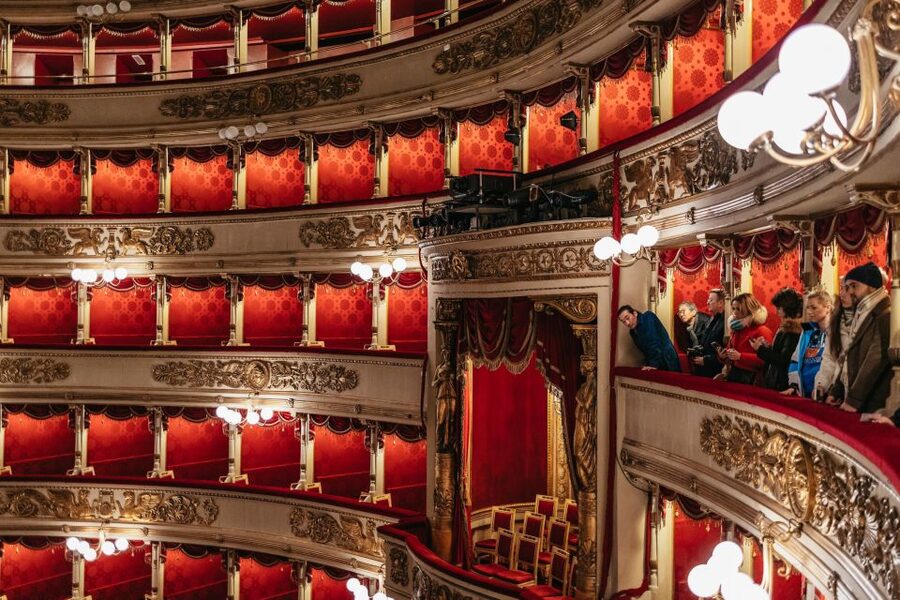
- Looking into the auditorium and private boxes
- The La Scala Museum’s costumes and instruments
- How the guides shape the experience
- Is $44 a fair price?
- Practical details that can affect your visit
- Who should book this La Scala tour?
- Final verdict: book it for context, not just access
- FAQ
- How long does the La Scala guided tour last?
- What does the $44 price include?
- Is hotel pickup included?
- Where do I meet the guide?
- Which languages are available?
- Is the tour wheelchair accessible?
- Can I bring a large backpack or suitcase?
- Will I definitely enter the theater auditorium?
- Can I watch a rehearsal?
- Can I cancel the booking?
Key points to know before you book
- A small theater with a grand interior: La Scala’s exterior does not prepare you for its elegant auditorium and intimate-feeling design.
- The guide makes the difference: Fabio, Simone, Lorella, Chiara, Giorgio, and other guides have earned praise for clear explanations, humor, and strong interest in opera.
- Rehearsals can be the surprise highlight: If the theater is open during practice, you may watch musicians, singers, actors, or dancers from a box.
- The museum is more than a waiting room: Costumes, set models, sculptures, portraits, and instruments give the theater’s past a human face.
- The location is easy to combine with sightseeing: The meeting point is near Milan Cathedral and the Galleria Vittorio Emanuele II.
- The $44 price is reasonable for the right visitor: It is good value if you want context and stories, but less so if you only want a quick look inside.
Why La Scala is worth your time
La Scala is not simply a pretty opera house. It is a place where music, fashion, architecture, celebrity, and Milanese civic life meet. A guide helps you see those links instead of wandering through a silent room and wondering what matters.
The theater is in central Milan, a short walk from the Duomo and the Galleria. That makes this an easy addition to a sightseeing day. You can visit the cathedral in the morning, walk through the shopping arcade, and arrive at La Scala without arranging a separate trip across town.
I especially like the contrast between the outside and inside. The building does not announce its scale from the street. Once you enter, the auditorium’s elegant design gives you a much stronger sense of La Scala’s importance. Several tours have included a look into one of the private boxes, which helps you understand how the theater was arranged for different parts of Milanese society.
The guided format matters here. The museum labels alone cannot explain why a costume matters, how an instrument connects to a composer, or why a certain singer changed the theater’s reputation. A good guide turns those objects into parts of a story.
More Milan trips worth a second look
- Milan: Da Vinci’s Last Supper Guided Tour
★ 4.7 · 10,143 reviews - Milan: City Sightseeing Hop-On Hop-Off Bus with Audio Guide
★ 4.0 · 6,256 reviews - Milan: Guided Walking Tour & Last Supper Visit with Ticket
★ 4.7 · 5,409 reviews
Meeting your guide beside the museum
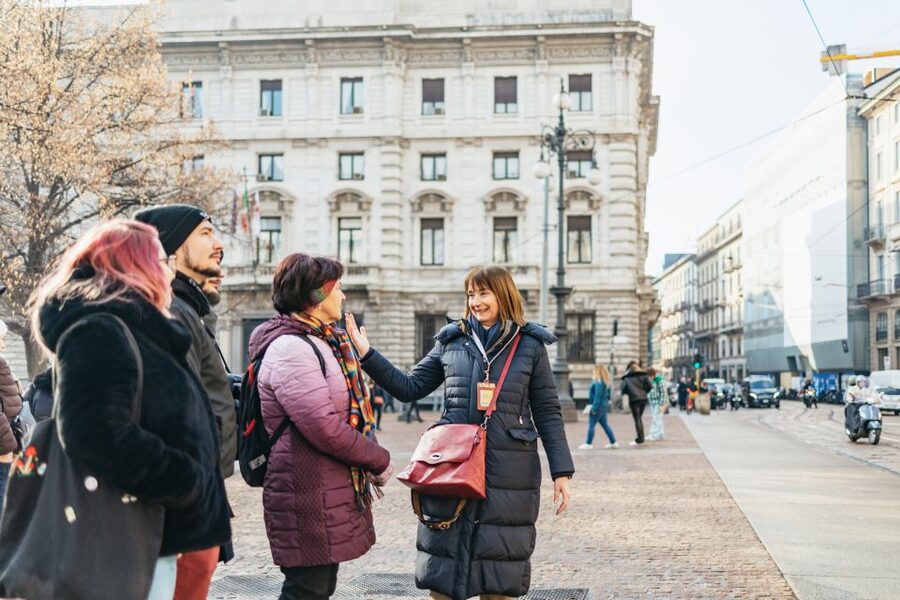
You meet in front of the entrance to the La Scala Theatre Museum. Look for a guide holding a purple Hidden Experiences flag or board. Since the meeting point is in the middle of central Milan, allow enough time to find the entrance rather than rushing from the cathedral.
The tour is offered in English, Italian, French, German, and Spanish. The guide uses headsets, which is useful when a group is moving between rooms or when the building has background noise. The activity is also available as a private group, which can make sense for families or anyone who wants more time for questions.
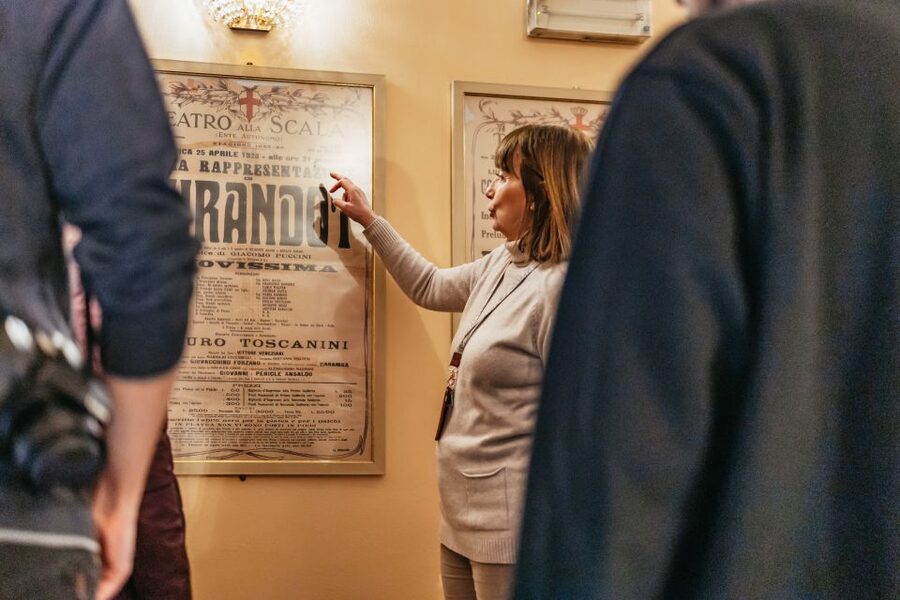
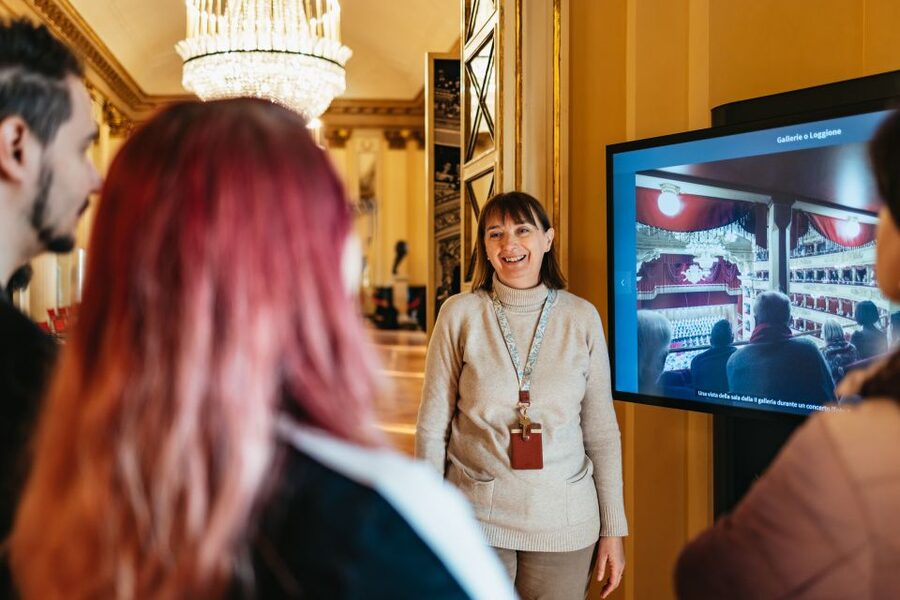
The strongest part of this experience is the guide’s personal command of the subject. Fabio has been praised for lively explanations and clear English. Simone is known for linking theater history, architecture, and cultural life. Lorella has a warm, animated style, while Chiara has focused closely on art objects and museum details. Giorgio has also been praised for making the subject engaging for children.
You cannot choose a particular guide in advance based on the information provided. Still, the repeated pattern is clear: the tour depends heavily on a guide who enjoys telling the stories, not just reciting dates.
The theater’s early years and changing role
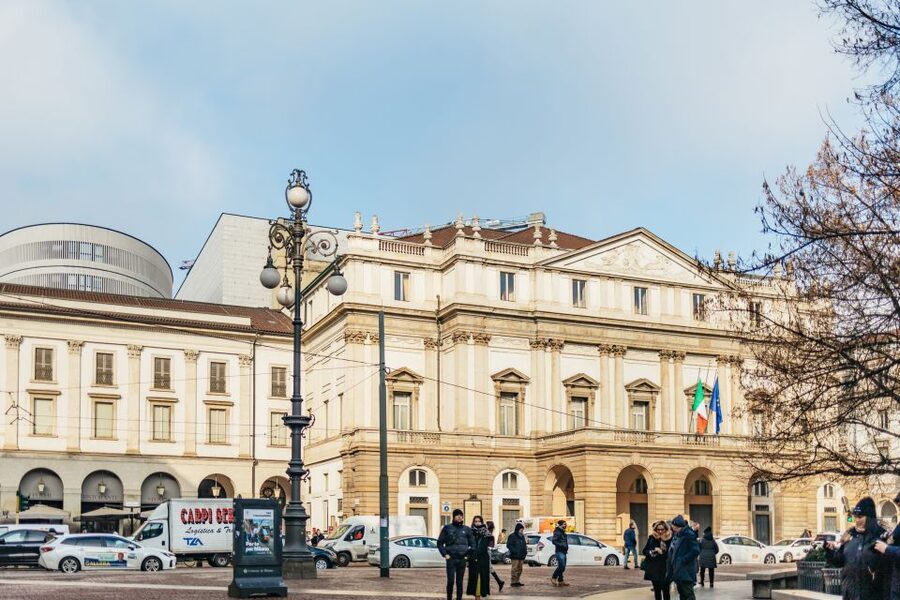
The first part of the tour places La Scala in its Milan setting. You may begin outside, learning about the surrounding neighborhood and why the area looks as it does. This short introduction helps you see the theater as part of the city rather than an isolated monument.
Inside, the guide explains the theater’s early years and its place in opera history. You will hear about major performances and the artists connected with the stage. Verdi and Rossini are especially important names, while Callas and Pavarotti help bring the story into the modern era.
The value here is not just the list of famous names. The guide can explain how singers, composers, conductors, dancers, designers, and audiences shaped La Scala over time. That wider view is useful if you enjoy music but do not know opera well. You do not need to arrive with a background in Italian theater.
If you already know the major composers and singers, the tour can still work well because the guides often add backstage stories, details about the building, and information about current and past seasons. Several guides have also answered questions at length and adjusted their explanations to the group’s interests.
Looking into the auditorium and private boxes
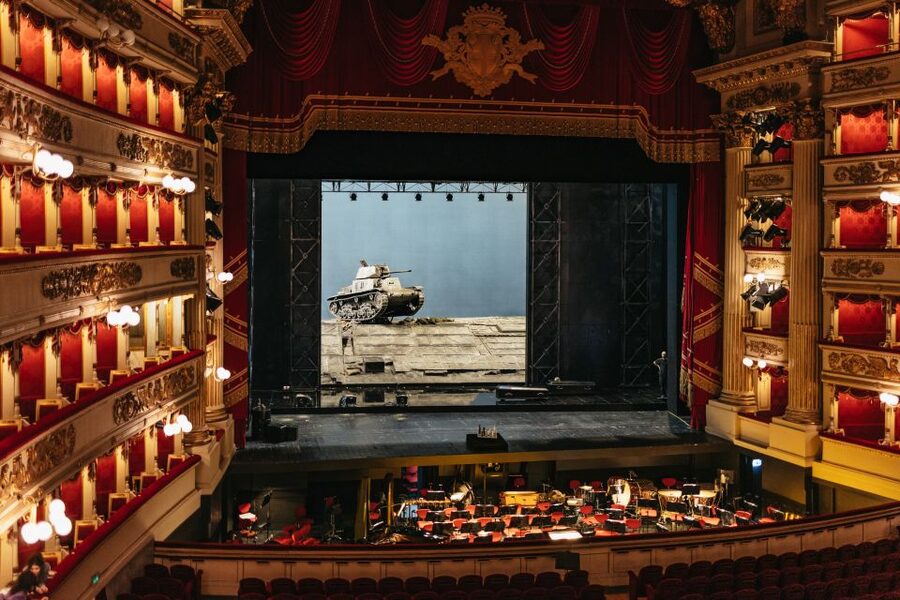
The auditorium is the visual payoff for many people. Its design feels formal but not cold, and its scale can seem more intimate than you might expect from a theater with such an international reputation.
Access is not guaranteed on every visit. Rehearsals, private events, and theater operations can change the route. That is the most important limitation to understand before paying for the tour. You are buying entry to the theater and museum, but the theater portion may be restricted when the building is in use.
When access is possible, the tour may include a view from one of the boxes. This gives you a different perspective from a standard floor-level visit and helps explain how the auditorium works as a performance space. Some visitors have watched an orchestra or ballet rehearsal for a few minutes from a box, which is a memorable bonus.
Do not book this experience expecting a full rehearsal or a backstage tour. The schedule is controlled by the theater, and the activity promises a guided visit, not guaranteed practice viewing. Treat a rehearsal as good fortune, not as part of the fixed program.
That said, the possibility gives the tour a sense of connection to a working theater. You may see the room prepared for performance rather than frozen as a museum display. Even a short glimpse of musicians or dancers at work can make the building feel active and real.
A different way to spend the day, same part of Italy:
- Milan: Cathedral and Duomo’s Terraces Entrance Ticket
★ 4.6 · 61,054 reviews - Milan: Science and Technology Leonardo da Vinci Museum Entry
★ 4.5 · 7,169 reviews - Milan Cathedral: Duomo Terraces Ticket (No Church Access)
★ 4.6 · 6,111 reviews - Milan: Milan Cathedral Direct Entrance – Terrace Excluded
★ 4.5 · 5,782 reviews
The La Scala Museum’s costumes and instruments
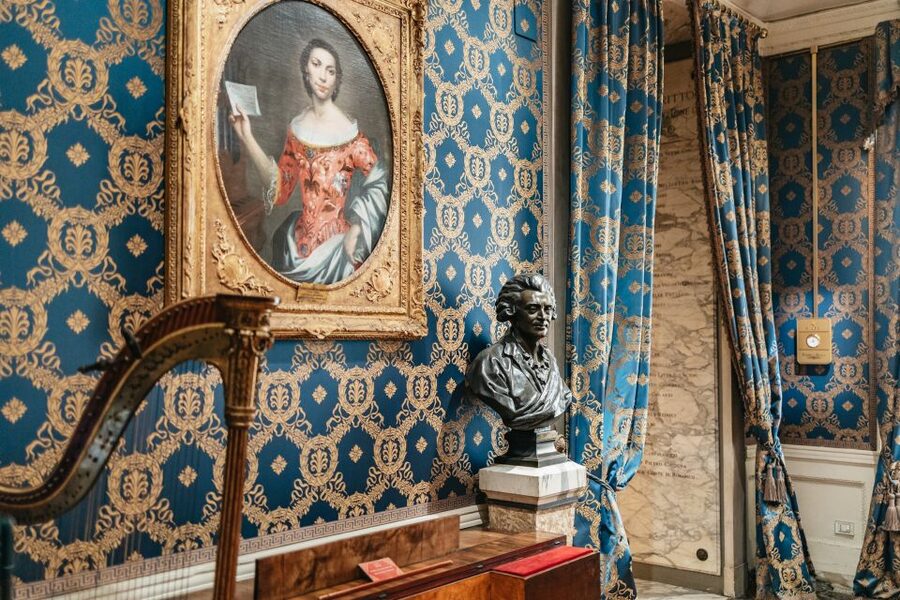
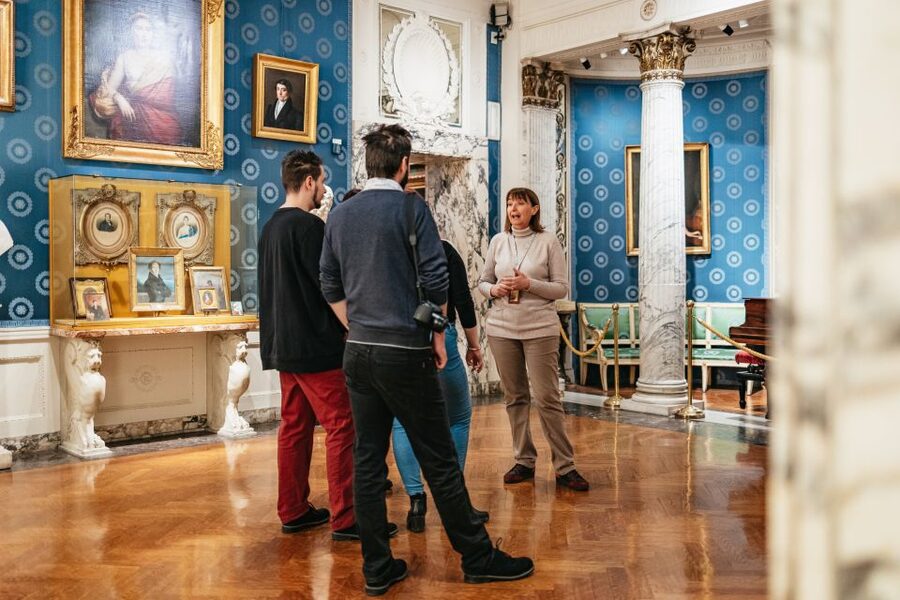
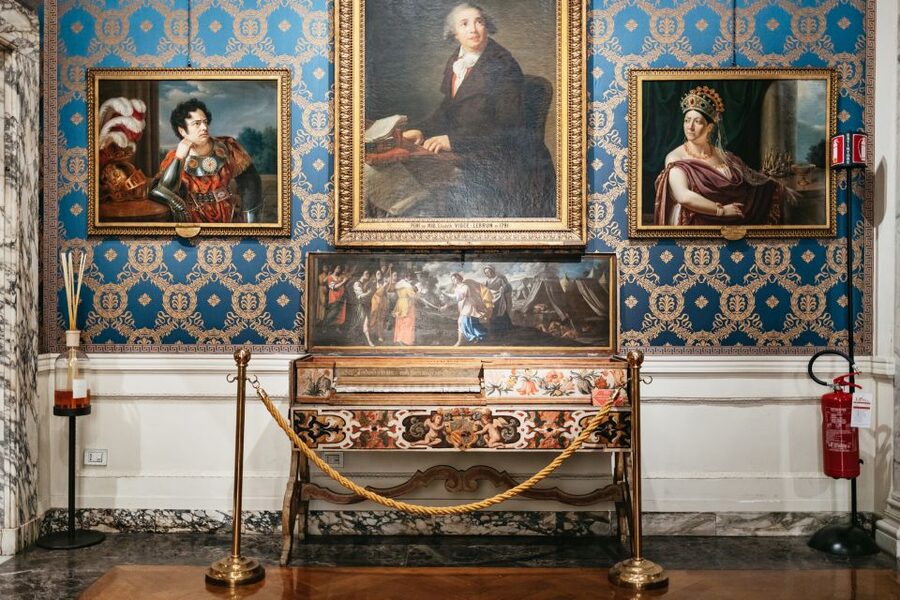
The museum gives the tour its dependable second half. Here you see costumes, set designs, musical instruments, sculptures, paintings, and private artifacts linked to the theater.
Costumes are particularly effective because they show opera as a visual art. Fabric, shape, decoration, and scale tell you how a production creates its world. Ballet displays add another angle, with costumes and objects connected to the movement and design of dance.
The set designs help you picture how productions were planned before anything appeared on stage. They are useful for understanding the work that happens behind the curtain, where scenery, lighting, clothing, music, and performance must come together.
Musical instruments provide a more direct link to sound. One visitor singled out a Liszt piano as a special part of the museum. You may also see instruments connected with the theater’s wider musical story, along with portraits and personal belongings that give famous performers a more ordinary human presence.
I like this part of the visit because it avoids treating opera as something only for experts. A costume or instrument can draw you in even if you have never attended an opera. The guide’s explanation then gives the object a place in the larger story.
The museum is also a useful fallback if the auditorium is closed. It cannot replace seeing the theater in use, but it offers enough material for a worthwhile visit, especially when the guide explains what you are looking at.
How the guides shape the experience
The tour’s strongest praise centers on the guides’ storytelling. That is important because La Scala can be difficult to appreciate through architecture alone. The building is elegant, but its meaning comes from the performances and people associated with it.
A strong guide adds small details about the theater’s construction, singers, composers, current seasons, backstage work, and audience traditions. Guides have also been praised for humor, warmth, and the ability to keep explanations clear for people with different levels of opera knowledge.
Families can do well here. One family with children aged 10 and 7 found the 90-minute format engaging and manageable. Teenagers have also enjoyed the tour when the guide kept the presentation lively and connected it to stories rather than only dates.
Small groups are another advantage. Some departures have had only two to five participants, making it easier to ask questions and hear the guide. A very small group may even feel like a private tour, though group size can vary and you should not assume you will have the guide alone.
The headset is included, so you do not need to stand shoulder to shoulder with the guide to follow the explanation. That is helpful in a museum, where people naturally pause at different objects.
Is $44 a fair price?
At $44 per person, this is not the cheapest way to look at a historic building. The price makes the most sense when you value interpretation, museum entry, and the chance of seeing the theater during a rehearsal.
If you only want to step inside, take a few photographs, and leave, a guided tour may feel costly. The visit lasts 1.5 hours, so you are paying for more than access. You are paying for a guide who explains the building, introduces its major artists, and helps you understand the museum’s objects.
I consider it good value for:
- First-time visitors to Milan who want cultural context
- Opera, ballet, music, and theater fans
- Visitors who cannot afford or cannot find tickets for a performance
- Families who prefer a structured visit
- People who enjoy architecture but want more than a quick photograph
- Anyone hoping to see a rehearsal, while accepting that it is not guaranteed
It is less convincing for someone who has already attended a performance at La Scala, knows the museum well, and mainly wants unsupervised time. It may also disappoint if your top priority is a guaranteed auditorium visit, since theater access can change.
One useful comparison is the cost of attending a performance. Some visitors choose this tour when the available opera ticket is expensive or the program is not to their taste. The tour gives you a connection to La Scala without committing to a full evening or learning the opera beforehand.
Practical details that can affect your visit
The theater and museum are wheelchair and stroller accessible. Large bags and backpacks must go into the cloakroom, and oversize luggage is not allowed. I would arrive with a small day bag and avoid carrying anything you need to keep with you during the tour.
Hotel pickup and drop-off are not included. You make your own way to the central meeting point, which is easy to combine with other Milan sights but still requires attention to the exact museum entrance.
The tour has free cancellation up to 24 hours before the start time, and you can reserve now and pay later. Starting times depend on availability, so check the schedule before planning a tightly timed cathedral visit or train departure.
The visit may be limited to the museum because of rehearsals or private events. This is not a minor footnote. If seeing the auditorium is essential to your decision, ask about current access conditions before booking or be prepared for the museum portion to carry the experience.
Some people have received an invitation or voucher to return to the theater after an active rehearsal blocked the first visit. That has happened on individual tours, but it should not be treated as a standard promise.
Who should book this La Scala tour?
I would book it if you want to understand why La Scala matters, not just see its interior. The guide-led format works especially well for people who like stories about performers, architecture, and the work behind a production.
It is also a good choice for visitors who enjoy opera and ballet but do not have time, money, or interest in attending a full performance. The museum provides visual interest even when the stage is unavailable.
Families should consider it, especially if the children are comfortable with a 90-minute cultural visit. The right guide can make the subject accessible, and the objects are varied enough to hold attention better than a room of paintings alone.
I would think twice if you need guaranteed theater access or dislike guided pacing. The experience is structured, and the route can change. Also, the museum alone may feel limited to someone expecting a behind-the-scenes tour.
Final verdict: book it for context, not just access
La Scala is most rewarding when you understand the people and work behind its famous name. This tour gives you that context through the auditorium, boxes when available, and a museum collection of costumes, instruments, set designs, and personal artifacts.
The $44 cost is fair if you care about music, theater, architecture, or Milan’s cultural life. Book it for the guide’s stories and the museum’s objects, then treat a rehearsal as an extra gift. If you want a guaranteed full look inside the theater, confirm access conditions first. For most first-time visitors with an interest in the performing arts, it is a smart and well-paced way to meet La Scala.
FAQ
How long does the La Scala guided tour last?
The tour lasts 1.5 hours.
What does the $44 price include?
The price includes entry to La Scala Theatre and Museum, the guided tour, and headsets to hear the guide clearly.
Is hotel pickup included?
No. Hotel pickup and drop-off are not included, so you must reach the meeting point yourself.
Where do I meet the guide?
Meet in front of the entrance to the La Scala Theatre Museum. Look for the guide holding a purple Hidden Experiences flag or board.
Which languages are available?
Live tours are available in English, Italian, French, German, and Spanish.
Is the tour wheelchair accessible?
Yes. The theater and museum are accessible to wheelchairs and strollers.
Can I bring a large backpack or suitcase?
Large bags and backpacks must be checked in the cloakroom. Oversize luggage is not allowed.
Will I definitely enter the theater auditorium?
No. Rehearsals and private events can limit the visit to the museum only. Theater access depends on the building’s schedule.
Can I watch a rehearsal?
You may be able to watch an orchestra, opera, or ballet rehearsal if one is taking place and access is permitted. Rehearsal viewing is not guaranteed.
Can I cancel the booking?
Yes. You can cancel up to 24 hours in advance for a full refund. You can also reserve now and pay later.
Recently reviewed around Milan
- From Milan: Venice Full-Day Guided Tour With Boat Ride★ 4.5 · 322 reviews
- Venice Day Trip from Milan with Guided City Tour★ 4.0 · 383 reviews
- Verona and Lake Garda Day Trip from Milan★ 4.5 · 214 reviews
- Full-day Skip-The-Line Milan, The Last Supper and Duomo Cathedral★ 5.0 · 293 reviews
- Small-Group Lake Como & Lugano by Swiss Train + Boat Cruise★ 5.0 · 1,084 reviews
- Tour Bernina Red Train And St Moritz from Milan★ 4.5 · 247 reviews
- Walking Food Tour of Milan with Tastings★ 4.5 · 194 reviews
- Skip the Line: Essential Milan Tour Including Da Vinci’s ‘The Last Supper’★ 4.5 · 339 reviews
Milan Tours, compared.
Cathedral and Duomo’s Terraces Entrance Ticket
Read our review →
Science and Technology Leonardo da Vinci Museum Entry
Read our review →
City Sightseeing Hop-On Hop-Off Bus with Audio Guide
Read our review →
Milan Cathedral: Duomo Terraces Ticket (No Church Access)
Read our review →
Milan Cathedral Direct Entrance – Terrace Excluded
Read our review →
Guided Walking Tour & Last Supper Visit with Ticket
Read our review →
Fast-Track Milan Cathedral and Terraces Guided Tour
Read our review →Browse the lists this tour appears in