
Review · MILAN TOURS
Milan: Pinacoteca Ambrosiana and San Sepolcro Crypt Ticket
Milan’s Pinacoteca Ambrosiana packs an astonishing number of major works into a manageable museum visit. You can stand before Caravaggio’s Basket of Fruit, Raphael’s full-size cartoon for the School of Athens, and Leonardo da Vinci’s drawings without the scale or crowds of Milan’s biggest sights.
I especially like the quiet pace and the way the museum joins art with books, architecture, and city history. The 17th-century reading room and Codex Atlanticus exhibition are just as memorable as the paintings. The main drawback is the Crypt of San Sepolcro: it is small, physically restricted, and can feel brief unless you take time with its story.
The ticket costs about $25 per person and covers both sites for one day. Plan roughly two hours for the Pinacoteca and another 30 to 40 minutes for the crypt, with enough time between them to avoid missing the crypt’s final admission at 5:30 PM.
In This Review
- Key points to know before you go
- Why this small museum deserves a place in your Milan plans
- Begin with the Pinacoteca Ambrosiana
- Caravaggio, Raphael, and Leonardo in one visit
- The library reading room and Codex Atlanticus
- Allow 90 minutes, or more if you love art
- Continue to the Crypt of San Sepolcro
- Timing matters more than the distance
- Is the $25 ticket good value?
- Who will enjoy this experience most?
- My practical plan for a smooth visit
- Should you book the Pinacoteca and crypt ticket?
- FAQ
- Where does the visit begin?
- Where is the Crypt of San Sepolcro?
- How long does the complete visit take?
- What time is the last admission to the crypt?
- Is the visit wheelchair accessible?
- Are audio guides included?
Key points to know before you go
- Caravaggio’s Basket of Fruit: One of the museum’s most famous paintings, and a fine reason to make this stop.
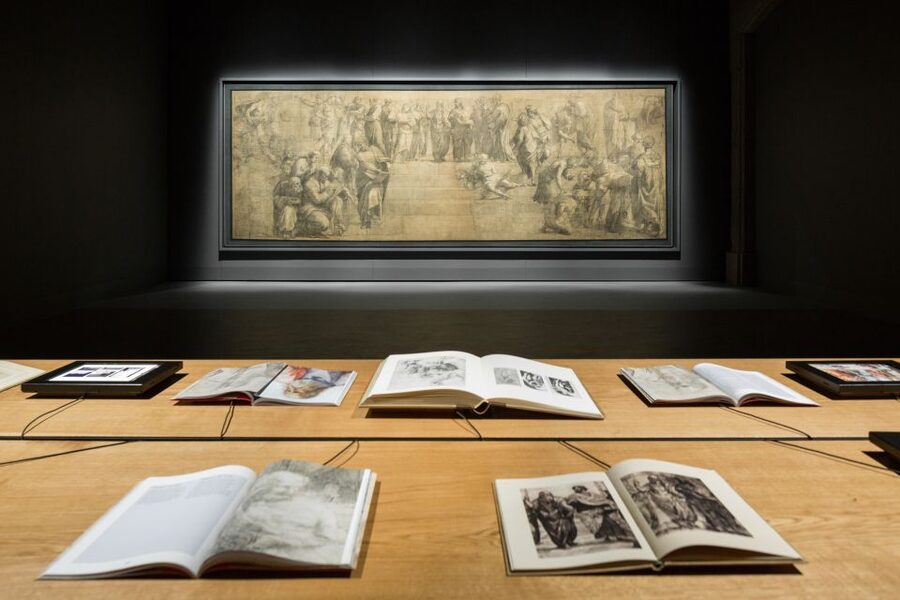
- Raphael’s School of Athens cartoon: A huge preparatory drawing that gives you a close look at Raphael’s planning and technique.
- Leonardo’s Codex Atlanticus: Original drawings are displayed in the library’s beautiful 17th-century reading room.
- A self-guided museum visit: You set the pace, use the map, and can download an app to listen after leaving.
- The Crypt of San Sepolcro: A medieval underground church built over the stones of ancient Mediolanum.
- Mind the clock: The crypt closes at 6 PM, and its last admission is at 5:30 PM.
Why this small museum deserves a place in your Milan plans
Milan is famous for the Duomo, the Galleria, and Leonardo’s Last Supper. Those sights can dominate a short visit, but the Ambrosiana offers a different kind of art experience. It is close to the Duomo, easier to manage than a giant museum, and filled with works that reward close attention.
The collection brings together Italian and Flemish masters, with paintings, drawings, sculptures, books, and historic interiors. You are not simply moving through a parade of famous names. You are also seeing how Cardinal Federico Borromeo’s interests shaped the institution, especially his connection between art, study, and religion.
I like museums that give you room to look. Here, you can spend several minutes with one painting, sit down when you need a rest, and move on when your attention starts to fade. Some people finish in about an hour and a half. Others spend two or three hours because the collection contains far more than its compact size suggests.
The museum is particularly useful on a hot or rainy afternoon. It offers a calm indoor break in the center of Milan, only about a five-minute walk from the Duomo according to the practical directions provided for the visit.
More Milan trips worth a second look
- Milan: Cathedral and Duomo’s Terraces Entrance Ticket
★ 4.6 · 61,054 reviews - Milan Cathedral: Duomo Terraces Ticket (No Church Access)
★ 4.6 · 6,111 reviews - Milan: Guided Walking Tour & Last Supper Visit with Ticket
★ 4.7 · 5,409 reviews
Begin with the Pinacoteca Ambrosiana
Your visit starts at Piazza Pio XI 2, at the Pinacoteca Ambrosiana. The ticket gives you admission to the museum first, so do not head directly to the crypt unless you have already checked the timing for your day.
The visit is self-guided rather than a traditional group tour. You can take a museum map and work through the rooms at your own speed. That suits this collection well. You will want time to pause in front of the best-known works, but you may also prefer to move quickly through less familiar sections.
The rooms are generally well organized, and the museum’s modest scale helps you keep track of what you have seen. The building itself is part of the experience. You will encounter decorative details, old interiors, stained-glass elements, sculptures, and stairways alongside the paintings.
Lighting is not perfect in every room. Some works can be harder to see than expected, and a few displays may feel less dramatic than the masterpieces deserve. Still, the presentation is orderly, and there are seats where you can stop, rest, and look carefully.
Caravaggio, Raphael, and Leonardo in one visit
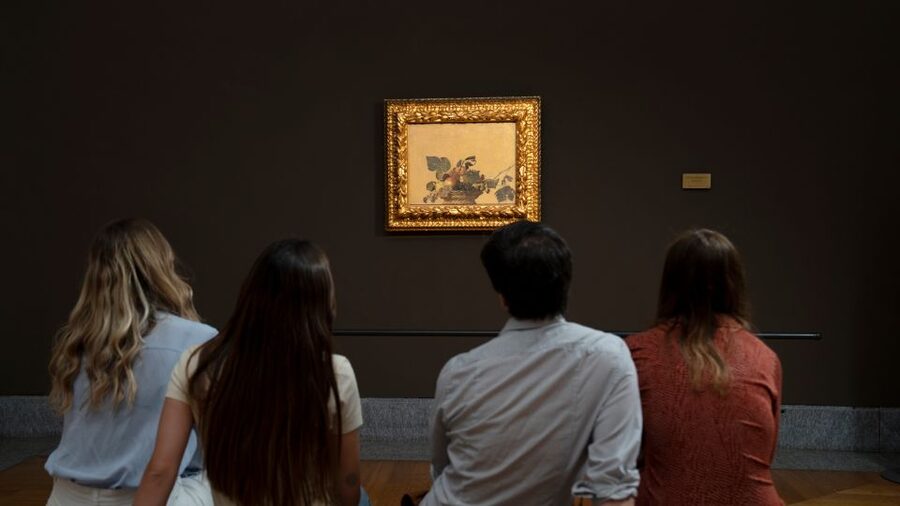
The most famous painting here is Caravaggio’s Basket of Fruit. It is a small subject, but the painting has an outsized presence. Look closely at the fruit, the leaves, and the signs of imperfection. Caravaggio turns an ordinary basket into something direct and startling.
Raphael’s cartoon for the School of Athens is a different kind of experience. This enormous preparatory drawing shows how a major Renaissance composition was worked out before it reached the wall. You can study the figures, gestures, and arrangement at close range, rather than viewing the finished fresco from a distance.
The cartoon is one of the strongest reasons to visit the museum. It helps you understand that famous Renaissance images were planned through careful drawing, revision, and large-scale preparation. If you have seen Raphael’s finished School of Athens elsewhere, this work gives you a fresh way to think about it.
Leonardo’s portrait of a musician brings another mood. It is quieter and more enigmatic than the bold Caravaggio or large Raphael cartoon. The painting is a reminder that the Ambrosiana’s appeal comes from variety as much as fame.
You will also find works connected with Botticelli, Brueghel, Luini, Tiepolo, Mengs, and other Italian and Flemish painters. Brueghel’s flamboyant vase of flowers is especially appealing if you enjoy detailed still life. The collection is not limited to one period or one style, so you can compare religious paintings, portraits, studies, and decorative works as you move through the rooms.
The library reading room and Codex Atlanticus
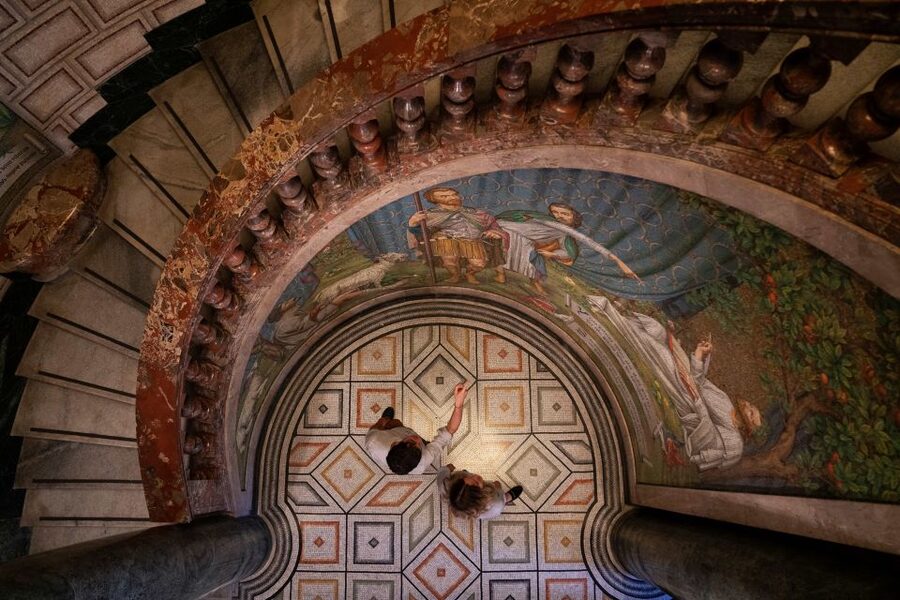
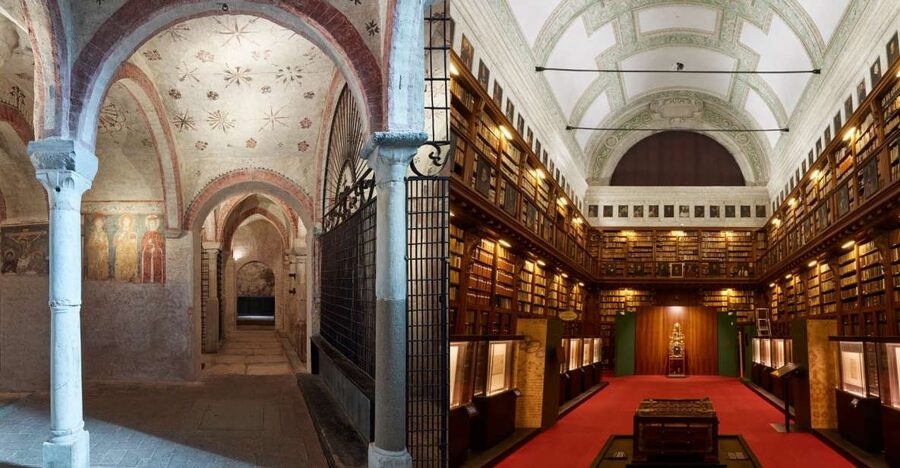
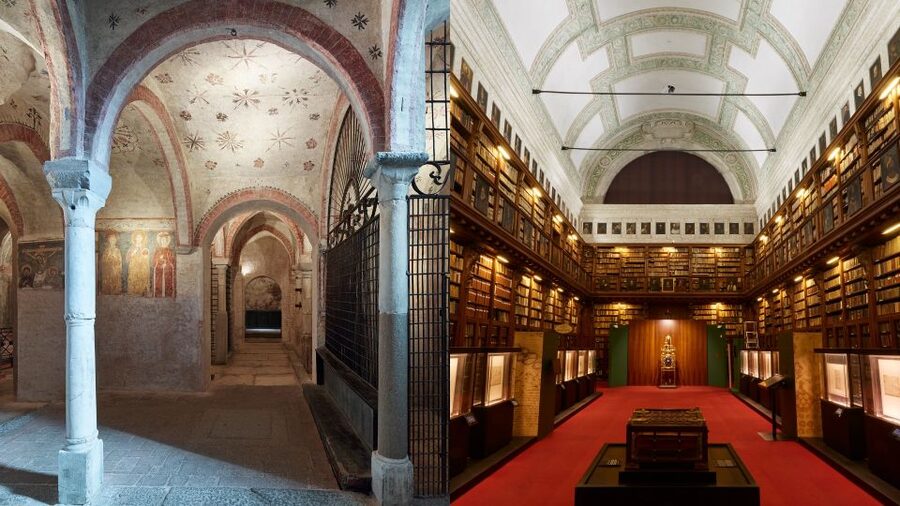
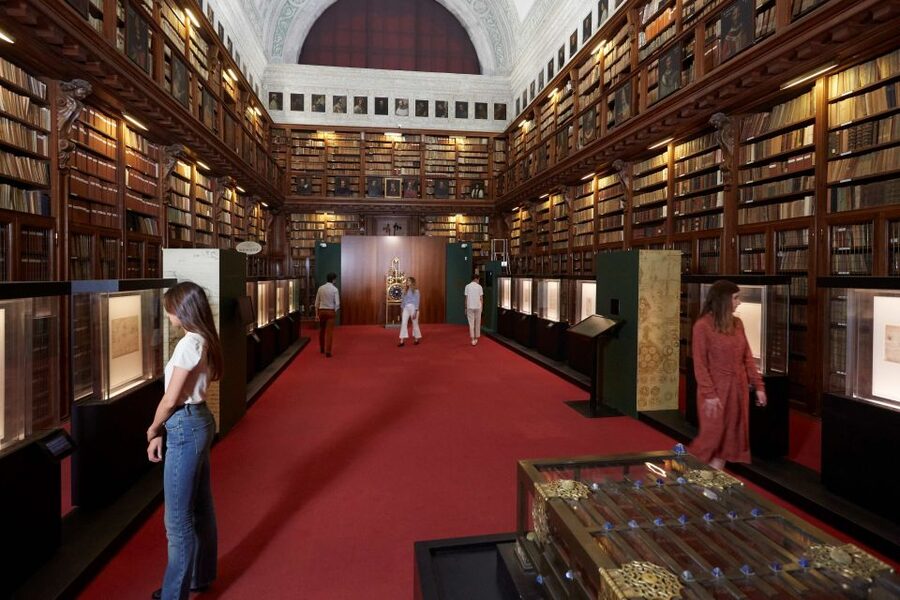
For many people, the most unusual part of the Pinacoteca is not a painting. It is the library reading room, with its 17th-century setting and exhibition of original drawings from Leonardo da Vinci’s Codex Atlanticus.
This is where the Ambrosiana feels different from a standard art gallery. The room connects the visual arts with Leonardo’s work as an observer, designer, and thinker. You are looking at working drawings and ideas, not only finished images intended for display.
The drawings make Leonardo’s mind feel more immediate. Even a visitor who is not an art specialist can appreciate the combination of close observation and practical problem-solving. Give yourself time here. It is easy to hurry through because the pages may look delicate and small compared with the gallery’s larger paintings.
The reading room itself deserves attention. Its scale, order, and old-world atmosphere create a strong contrast with Milan’s busy streets outside. Several people find the library more memorable than expected, particularly if they enjoy manuscripts, scientific drawings, or the history of books.
An audio option can add useful context. The visit is self-guided, and an audio guide has been available for a small additional fee of about €4. The activity also provides an app that you can download to your device and listen to after the visit. Check the current instructions when booking, since the exact audio arrangement may vary.
A different way to spend the day, same part of Italy:
- Milan: Da Vinci’s Last Supper Guided Tour
★ 4.7 · 10,143 reviews - Milan: Science and Technology Leonardo da Vinci Museum Entry
★ 4.5 · 7,169 reviews - Milan: City Sightseeing Hop-On Hop-Off Bus with Audio Guide
★ 4.0 · 6,256 reviews - Milan: Milan Cathedral Direct Entrance – Terrace Excluded
★ 4.5 · 5,782 reviews
Allow 90 minutes, or more if you love art
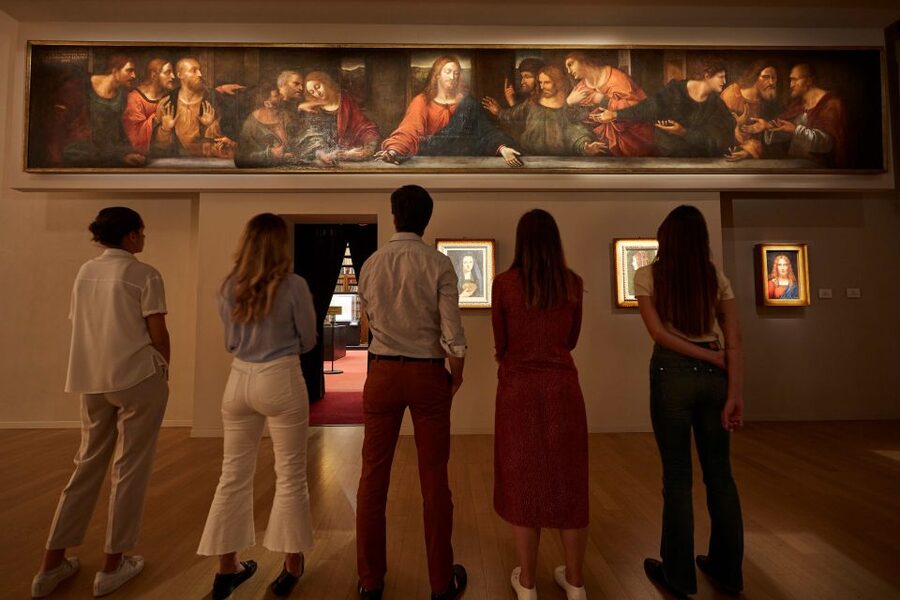
The stated visit time for the Pinacoteca is about 1.5 hours. That is a sensible minimum for a steady walk through the collection, including the major paintings and library.
You can complete it faster if you are mainly interested in Leonardo, Raphael, and Caravaggio. You can also stay longer if you want to read labels, examine the smaller works, and sit with the paintings. The museum works well for both styles because you are not tied to a guide’s pace.
I would allow at least two hours if your schedule permits. That gives you time to absorb the building and avoid treating the Codex Atlanticus room as a quick photo stop. Families and mixed-interest groups may appreciate the flexibility, since not everyone has to spend equal time in every room.
The ticket is valid for one day, but the practical plan is to visit both attractions in one outing. The crypt is directly connected to the route out of the Pinacoteca, with its entrance on Piazza San Sepolcro. That makes the pairing convenient, but the closing time requires attention.
Continue to the Crypt of San Sepolcro
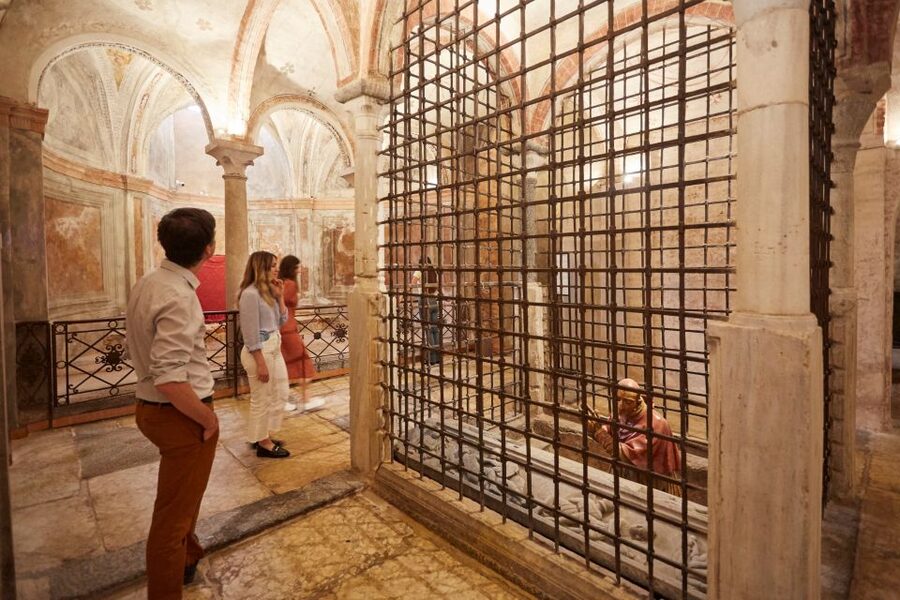
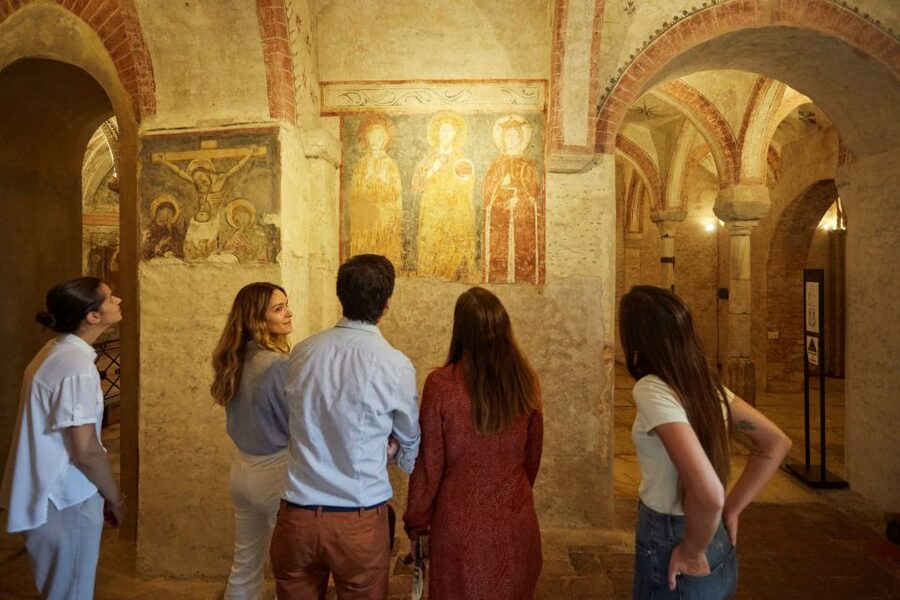
You exit the Pinacoteca onto Piazza San Sepolcro, where the entrance to the crypt is located. The crypt is a medieval underground church, and its floor uses ancient stones from Mediolanum, the Roman city that preceded modern Milan.
This gives the second half of the visit a different purpose. The Pinacoteca presents works created by artists. The crypt lets you stand in a physical layer of the city itself. You are below street level, looking at a place shaped by centuries of worship, construction, and urban change.
The crypt takes about 30 to 40 minutes. It is not a large underground complex, and you should not expect a long route through multiple chambers. Some people find it underwhelming when seen without much explanation because the room is simple and compact.
That simplicity is also its strength. Look at the ceiling, the stone pavement, and the architectural details rather than expecting a grand visual spectacle. The crypt works best as a short historical counterpoint to the museum, not as a second major art gallery.
A virtual reality experience may be available for an extra payment at the crypt. It can help bring the site’s past to life, especially if you want more context about ancient Milan. Without added interpretation, the space may seem like an atmospheric basement. With some explanation, it becomes easier to understand as a surviving piece of the city’s earlier layers.
Timing matters more than the distance
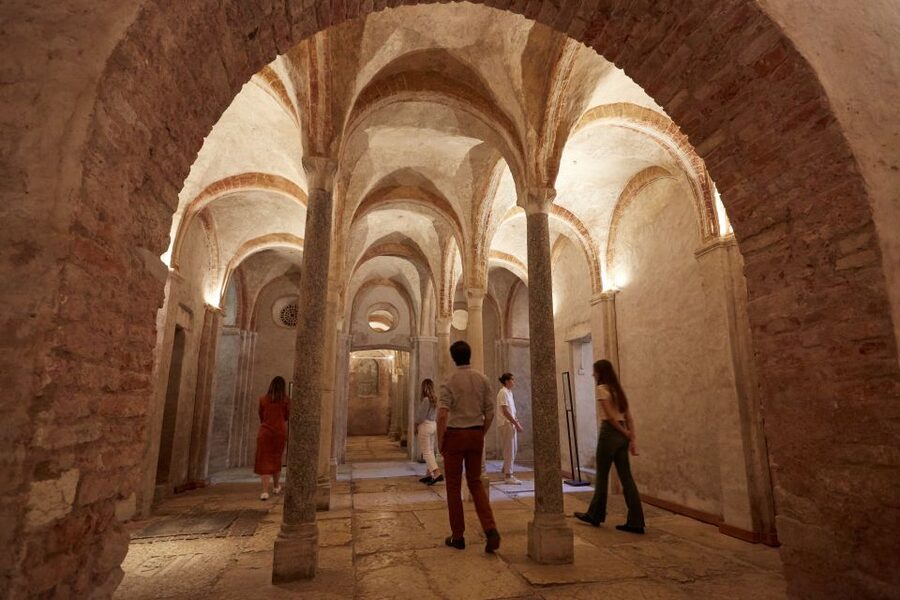
The two sites are close together, so the transfer itself is easy. The real issue is the clock. The crypt’s last admission is at 5:30 PM, and it closes at 6 PM.
If you begin the Pinacoteca late in the afternoon, you may feel rushed through the paintings or miss the crypt altogether. Start early enough to allow 1.5 to 2 hours at the museum, then continue to the crypt while you still have a comfortable margin.
A morning or early afternoon visit is the safest choice. You can look carefully at the collection, see the reading room, and still reach the crypt without watching the time every few minutes.
The ticket includes admission to both attractions, but it does not turn the experience into a guided walking tour. You are responsible for moving from the museum exit to the crypt entrance. Fortunately, the route is short and clearly tied to Piazza San Sepolcro.
Is the $25 ticket good value?
At about $25 per person, this combination offers solid value if you want major art and a historic site in one compact stop. The museum alone contains enough important work to justify serious attention, especially with Caravaggio, Raphael, Leonardo, Brueghel, Botticelli, and the Codex Atlanticus all in the mix.
The crypt adds value through contrast rather than size. It is a small visit, but it changes the focus from paintings and drawings to the physical remains of Milan’s past. You get two distinct experiences without arranging separate transport or spending a full day on either one.
The price is less attractive if you only want a quick look at one famous painting. It is also worth remembering that the audio guide may cost extra, and a virtual reality option at the crypt may require another payment.
For art lovers, history-minded visitors, and anyone who likes quiet museums, the cost is reasonable. For someone interested only in spectacular architecture, the crypt may not provide enough on its own to carry the price.
Who will enjoy this experience most?
I would recommend this ticket to you if you enjoy Renaissance and Baroque art but prefer a museum that can be handled in a few hours. It is also a good choice if you want to see Leonardo-related material beyond the Last Supper.
The self-guided format suits independent visitors. You can use the map, add an audio guide if useful, and linger over the works that matter most to you. You will not be pushed along by a large group.
Families may appreciate the manageable size and the chance to take breaks. The subject matter is heavily connected with religion, so younger children who need hands-on entertainment may lose interest, but the Leonardo drawings and dramatic paintings offer clear points of focus.
The activity is not suitable for wheelchair users or people with significant mobility limitations because the crypt has architectural barriers. Most of the Pinacoteca’s exhibition rooms are wheelchair accessible, but the combined ticket is not fully accessible. If accessibility is important, choose the Pinacoteca alone rather than this combination.
Strollers, backpacks, luggage, and large bags are not allowed. Plan to visit without bulky belongings.
My practical plan for a smooth visit
I would schedule the Pinacoteca for late morning or early afternoon, allowing two hours rather than relying on the shortest estimate. Start with the major works, then return to smaller rooms if you still have energy.
Make a point of seeing these areas before you leave:
- Caravaggio’s Basket of Fruit
- Raphael’s cartoon for the School of Athens
- Leonardo’s portrait of a musician
- Brueghel’s vase of flowers
- The Codex Atlanticus drawings
- The 17th-century library reading room
- The crypt ceiling and ancient stone pavement
After the museum, follow the exit to Piazza San Sepolcro and enter the crypt. Keep at least 45 minutes before the 5:30 PM final admission, since you may need time to finish the museum and orient yourself.
If you want more explanation, arrange the audio option at the museum or use the downloadable app. If Milan’s early history interests you, ask about the virtual reality experience at the crypt and check its extra cost before paying.
Should you book the Pinacoteca and crypt ticket?
Book it if you want concentrated quality rather than a huge museum, especially if Leonardo, Raphael, Caravaggio, and historic libraries appeal to you. The collection is small enough for a relaxed visit, yet important enough to fill a serious afternoon.
The best reason to choose the combination is the contrast: great paintings and drawings above ground, ancient Milan below it. The main caution is to keep the crypt’s closing time in view and not expect a large underground monument.
For a first visit to Milan, this is an excellent companion to the Duomo and Last Supper. It gives you famous art, a beautiful historic building, and a glimpse of the city beneath its modern streets, all within an easy walk of the center.
FAQ
Where does the visit begin?
You begin at the Pinacoteca Ambrosiana at Piazza Pio XI 2 in Milan.
Where is the Crypt of San Sepolcro?
The crypt entrance is on Piazza San Sepolcro, where you exit the Pinacoteca. The activity ends in Piazza San Sepolcro.
How long does the complete visit take?
The Pinacoteca normally takes about 1.5 hours. The crypt takes around 30 to 40 minutes. You may spend longer at the museum if you want to study the collection in detail.
What time is the last admission to the crypt?
The last admission is at 5:30 PM, and the crypt closes at 6 PM. Finish the Pinacoteca in time to reach the crypt before final admission.
Is the visit wheelchair accessible?
The combined activity is not completely accessible. Most Pinacoteca exhibition rooms are wheelchair accessible, but the crypt has architectural barriers.
Are audio guides included?
The visit is self-guided, and you can download an app to listen on your device, including after the visit. An audio guide has also been available for an additional fee of about €4, so check the current arrangements when booking.
Recently reviewed around Milan
- From Milan: Venice Full-Day Guided Tour With Boat Ride★ 4.5 · 322 reviews
- Venice Day Trip from Milan with Guided City Tour★ 4.0 · 383 reviews
- Verona and Lake Garda Day Trip from Milan★ 4.5 · 214 reviews
- Full-day Skip-The-Line Milan, The Last Supper and Duomo Cathedral★ 5.0 · 293 reviews
- Small-Group Lake Como & Lugano by Swiss Train + Boat Cruise★ 5.0 · 1,084 reviews
- Tour Bernina Red Train And St Moritz from Milan★ 4.5 · 247 reviews
- Walking Food Tour of Milan with Tastings★ 4.5 · 194 reviews
- Skip the Line: Essential Milan Tour Including Da Vinci’s ‘The Last Supper’★ 4.5 · 339 reviews
Milan Tours, compared.
Cathedral and Duomo’s Terraces Entrance Ticket
Read our review →
Science and Technology Leonardo da Vinci Museum Entry
Read our review →
City Sightseeing Hop-On Hop-Off Bus with Audio Guide
Read our review →
Milan Cathedral: Duomo Terraces Ticket (No Church Access)
Read our review →
Milan Cathedral Direct Entrance – Terrace Excluded
Read our review →
Guided Walking Tour & Last Supper Visit with Ticket
Read our review →
Fast-Track Milan Cathedral and Terraces Guided Tour
Read our review →Browse the lists this tour appears in