
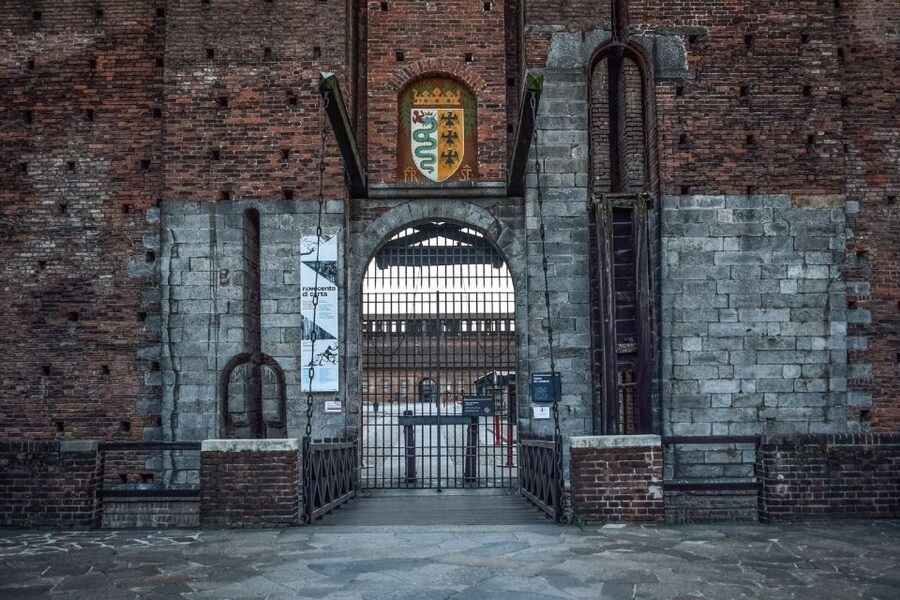
Review · MILAN TOURS
Milan: Sforza Castle and Michelangelo’s Pietà Rondanini Tour
Michelangelo’s Pietà Rondanini is the heart of this experience. It is unfinished, spare, and almost startlingly modern, with elongated figures and rough marble that reveal the artist working close to the end of his life. I like that the tour gives this difficult sculpture time and context instead of treating it as one more object in a museum room.
I also like the route through the Ducal Courtyards, where Milan’s political story comes alive through the Visconti and Sforza families, Leonardo da Vinci’s long connection with the castle, and the serpent emblem known as the Biscione. The main drawback is time: 90 minutes is enough for the major sights, but not enough for a relaxed look at every museum. Some visitors also found the audio earpieces unreliable.
In This Review
- Key points
- Why Pietà Rondanini deserves the first look
- Crossing into Sforza Castle
- The Corte Ducale and Cortile della Rocchetta
- Leonardo da Vinci’s long Milan connection
- The Visconti and Sforza families in plain language
- What fits into 90 minutes
- Group size, audio, and accessibility
- Is $47 a fair price?
- Who should book this castle tour?
- Final verdict on Sforza Castle and Pietà Rondanini
- FAQ
- How long does the Sforza Castle and Pietà Rondanini tour last?
- What is included in the price?
- Where is the meeting point?
- Which languages are available?
- Is the tour wheelchair accessible?
- Can I book a private group?
- Can I cancel the booking?
Key points
- Michelangelo’s final sculpture: Study the unfinished Pietà Rondanini and its stark, emotional style.
- Leonardo’s Milan workplace: Learn how Leonardo served Ludovico il Moro as a court engineer and architect.
- Castle courtyards: Walk through the Corte Ducale and Cortile della Rocchetta, the castle’s most atmospheric spaces.
- Strong guide-led storytelling: Guides including Giorgio, Fabio, Simon, Simone, Lorella, and Stefania have been praised for clear explanations and lively history.
- Short, focused format: The 1.5-hour visit works well before or after the Duomo, but it is not a full museum day.
- Straightforward meeting point: Meet outside in Piazza Castello, under the Filarete clock tower, not inside the castle courtyards.
Why Pietà Rondanini deserves the first look
Many visitors arrive at Sforza Castle expecting thick walls, grand towers, and old military stories. The most affecting moment may instead be a small, unfinished marble group by Michelangelo.
The Pietà Rondanini shows Mary supporting the body of Christ. It is not polished like Michelangelo’s earlier sculptures. The figures seem stretched upward, and parts of the stone remain rough. You can see the work as a record of the artist’s hand and changing ideas, not as a finished display piece.
Michelangelo worked on it until only a few days before his death at 89. That fact matters, but the guide’s explanation matters more. Without context, the sculpture can look incomplete in a simple, accidental way. With a good explanation, the roughness becomes the point. You begin to see an elderly artist moving away from physical perfection and toward grief, faith, and inner feeling.
I especially value the way this stop slows the tour down. Sforza Castle contains many objects and rooms, but Pietà Rondanini gives the visit a clear focus. You are not simply checking off a famous name. You are looking at an artist reconsidering what sculpture should express.
The museum setting is inside the castle, so this is not a separate trip across Milan. Your entry covers the castle and museums, and the guide leads you directly to the main artistic prize. Expect the sculpture to receive detailed attention, but do not expect a long, silent museum visit. The tour has other ground to cover.
Other Milan days travellers weigh against this one:
- Milan: Cathedral and Duomo’s Terraces Entrance Ticket
★ 4.6 · 61,054 reviews - Milan: Da Vinci’s Last Supper Guided Tour
★ 4.7 · 10,143 reviews - Milan: Science and Technology Leonardo da Vinci Museum Entry
★ 4.5 · 7,169 reviews
Crossing into Sforza Castle
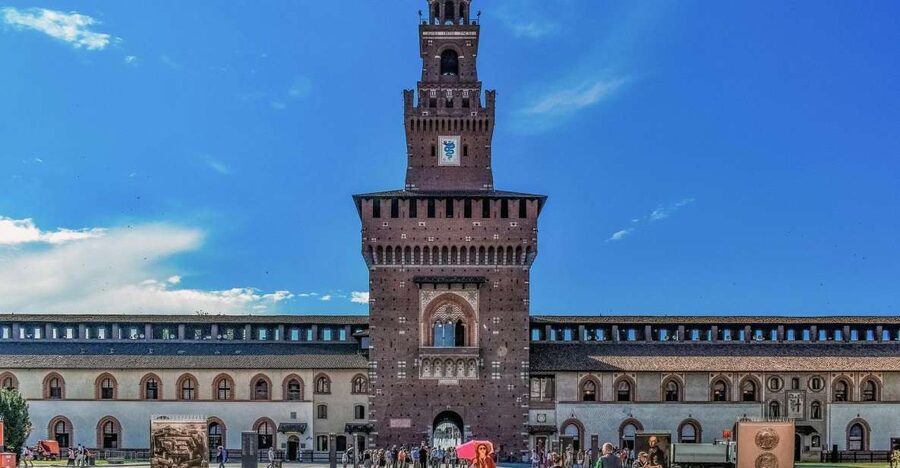
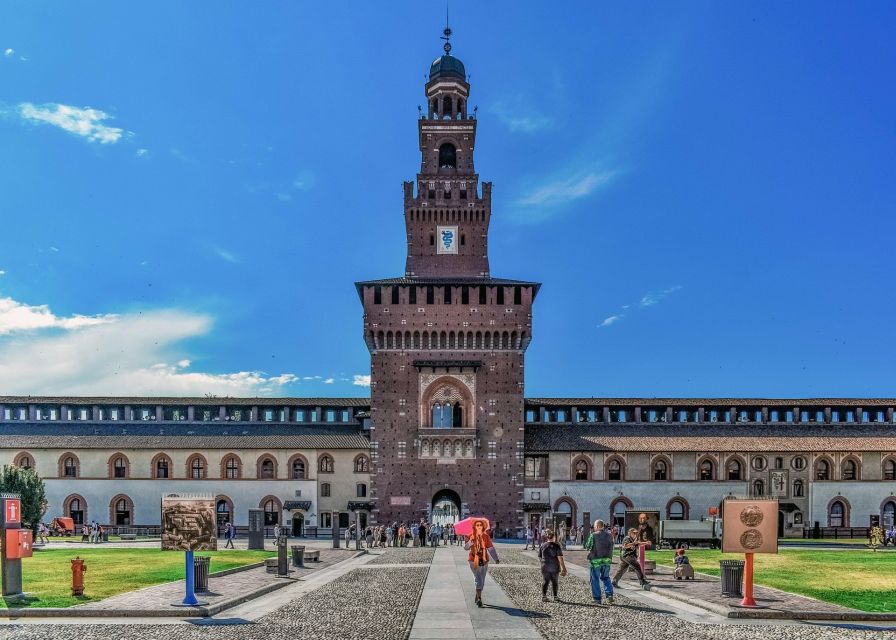
The meeting point is in Piazza Castello, outside the castle, under the Filarete clock tower. Look for the guide holding a purple Hidden Experiences flag or board. This detail is worth taking seriously. The instructions specify that you should not go inside the courtyards before meeting the guide.
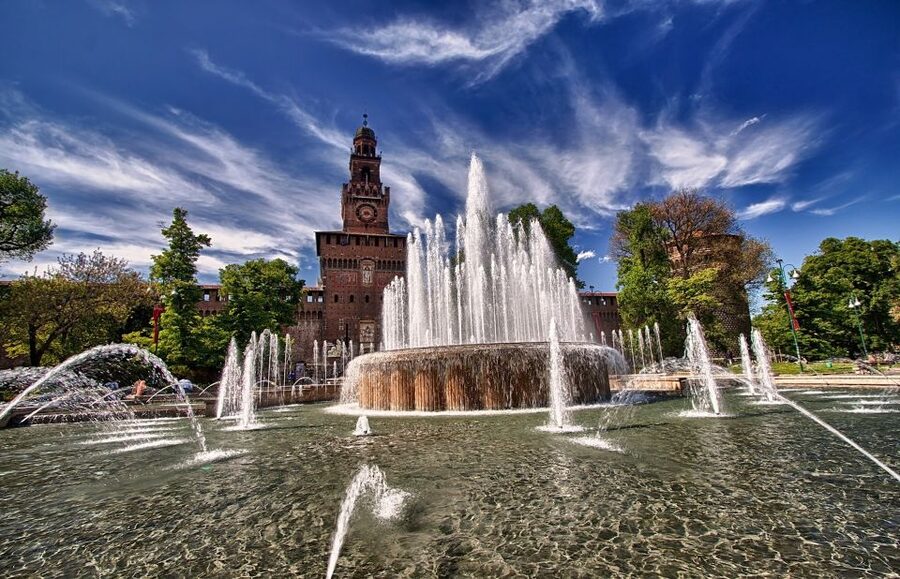
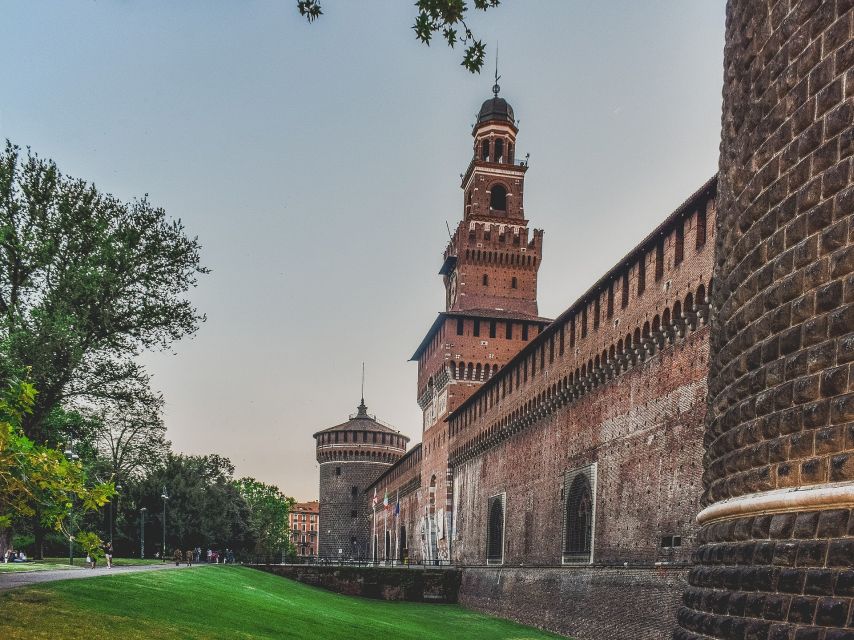
From the square, the castle presents itself as a powerful fortress rather than a delicate Renaissance palace. That contrast helps set up the story. Milan’s dukes wanted protection, but they also wanted a court worthy of their wealth, ambition, and artistic taste.
The building began as a medieval citadel under the Visconti family and later became the home of the Sforza dynasty. Its role changed over time, and its walls witnessed political shifts, military threats, court life, and artistic projects. The guide’s job is to connect those layers without letting the story turn into a list of names.
This is where a live guide earns the ticket price. The Visconti and Sforza families can blur together if you meet them only in a guidebook. A good explanation shows how the castle moved from defensive stronghold to ducal residence and then into its current role as a major cultural site.
The Filarete Tower gives you a useful visual anchor. As you walk beneath its shadow, you can see why the castle became part of Milan’s identity. It is not a hidden corner of the city. It sits close to the Duomo, yet its mood is different: less cathedral grandeur, more dynastic power and military display.
The Corte Ducale and Cortile della Rocchetta
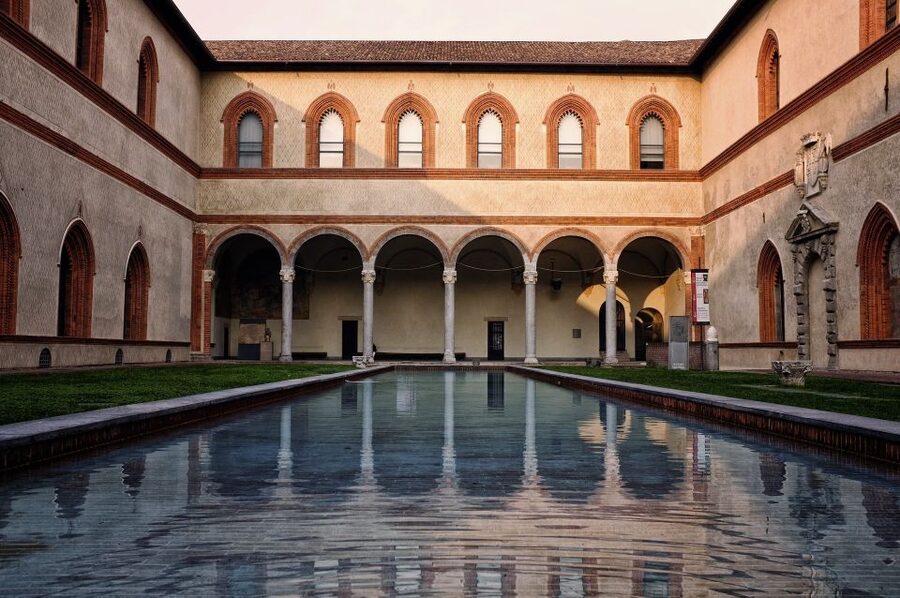
The internal courtyards are among the best parts of the experience. The Corte Ducale has the scale and order expected of a ducal residence, while the Cortile della Rocchetta feels more connected to the castle’s defensive role.
These spaces make the history easier to picture. Instead of hearing only about dukes and court officials, you see the setting in which power was displayed. Walls, towers, passageways, and open courtyards all served a purpose, even when the castle was being used for ceremony and residence rather than battle.
The guide points out the castle’s Renaissance architecture and explains how military construction and courtly design meet here. I like that combination. Sforza Castle is not simply an old fort, and it is not simply a palace. Its character comes from being both.
You will also hear about the Biscione, the serpent emblem associated with Milan and the Visconti family. It is one of those details that can seem decorative until you know what it represents. Once the guide explains its political meaning, you start looking for the symbol as a sign of dynastic authority.
The courtyards are also useful for pacing. After the enclosed museum spaces, you get room to look up, orient yourself, and notice the architecture. On hot days, the guide may adjust the route and spend less time in direct sun. One guide was specifically praised for seeking shade and breezy areas, a small courtesy that can make a difference in Milan’s summer heat.
Leonardo da Vinci’s long Milan connection
Leonardo is one of the main reasons this castle matters to art lovers. Most visitors associate him with The Last Supper, but his work in Milan was broader than painting.
Leonardo lived and worked at Sforza Castle for nearly 20 years under Ludovico il Moro. He served the court as an engineer and architect, taking on problems connected with buildings, defenses, design, and court life. The castle was not just a backdrop to his career. It was a place where he worked within a powerful political system.
The guide explains Leonardo’s relationship with the Sforza family and points out traces connected with his presence. You should keep your expectations realistic: this is not a dedicated Leonardo museum, and you are not promised a preserved private studio. The value lies in understanding the setting and the range of his work.
I find this part especially helpful if you have already seen The Last Supper or plan to see it later. Leonardo becomes less like an isolated genius and more like a court artist and problem solver whose talents were used by ambitious rulers.
Guides such as Lore, Giorgio, and Stefania have been praised for linking Leonardo’s life with Milan’s wider story. Stefania, in particular, was described as connecting details across history and art while also offering suggestions for other things to see in the city. That kind of local guidance can help you make better use of the rest of your visit.
A different way to spend the day, same part of Italy:
- Milan: City Sightseeing Hop-On Hop-Off Bus with Audio Guide
★ 4.0 · 6,256 reviews - Milan Cathedral: Duomo Terraces Ticket (No Church Access)
★ 4.6 · 6,111 reviews - Milan: Milan Cathedral Direct Entrance – Terrace Excluded
★ 4.5 · 5,782 reviews - Milan: Guided Walking Tour & Last Supper Visit with Ticket
★ 4.7 · 5,409 reviews
The Visconti and Sforza families in plain language
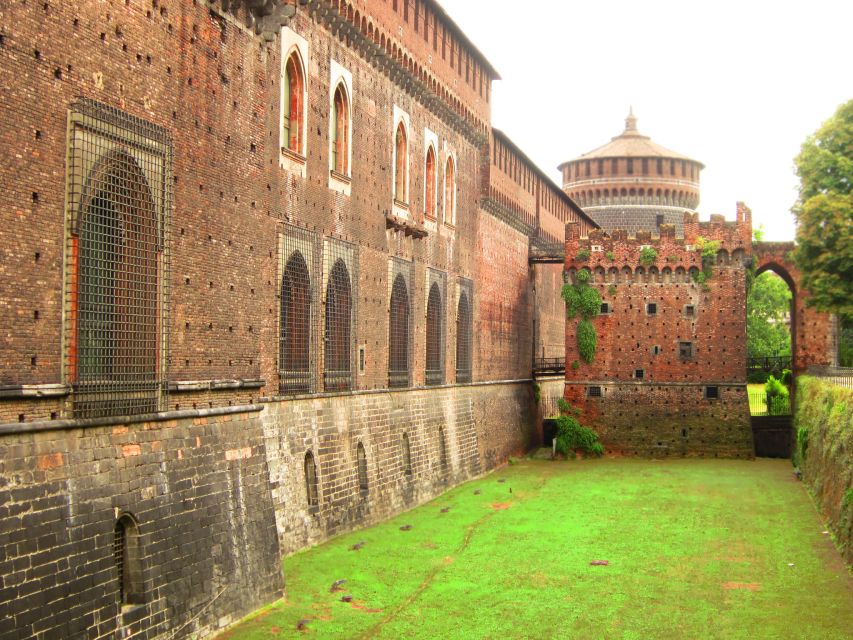
The castle’s family story can become complicated, so the quality of the explanation matters. The Visconti were an older ruling family in Milan, while the Sforza family took control later and turned the castle into the center of a powerful Renaissance court.
You will hear about ambitious men, noblewomen, alliances, and the political choices that shaped Milan. These stories give the architecture a human scale. A tower is easier to remember when you know it was part of a struggle for control, status, or survival.
The tour also explains how the dukes used art and architecture to make their power visible. This is one of the most useful themes of the visit. The castle was not only a place to live or defend. It was a statement about who ruled Milan and how that ruling family wanted to be seen.
Guides have been praised for sharing small facts and anecdotes rather than simply reciting dates. Simon, for example, was described as keeping the tour lively with historical details and lesser-known facts. Fabio was praised for making the political story exciting and easy to follow.
That variety matters because the same route can feel very different depending on the guide. The official languages are Italian, English, German, French, and Spanish. Several English-language guides were singled out for speaking clearly, slowly, and with enough volume to follow comfortably.
What fits into 90 minutes
The tour lasts about 1.5 hours. That is a good length for a first visit, especially if you have a full day planned around the Duomo, Brera, The Last Supper, or other Milan sights.
You should expect a selective route rather than a complete tour of every room. The guide focuses on the Pietà Rondanini, the castle’s main courtyards, Leonardo’s connection, the ruling families, and key historical details. This approach keeps the visit moving and gives you a useful framework for returning on your own if you have more time.
One practical tradeoff is that the archaeological museum or other museum areas may receive only a quick look. A visitor specifically wished for more time in the archaeological museum, while another noted that the guide selected the most important and interesting pieces. Both observations point to the same reality: this is a highlights tour.
I think that is the right format for many first-time visitors. Wandering through a large castle without a plan can leave you with impressive rooms but little understanding of how they fit together. A guide gives you a story and helps you spend your limited time on the most meaningful sections.
On the other hand, if your main goal is to study museum collections slowly, take notes, or see every exhibition, book extra independent time at the castle. The 90-minute guided visit should be the introduction, not the entire day.
Group size, audio, and accessibility
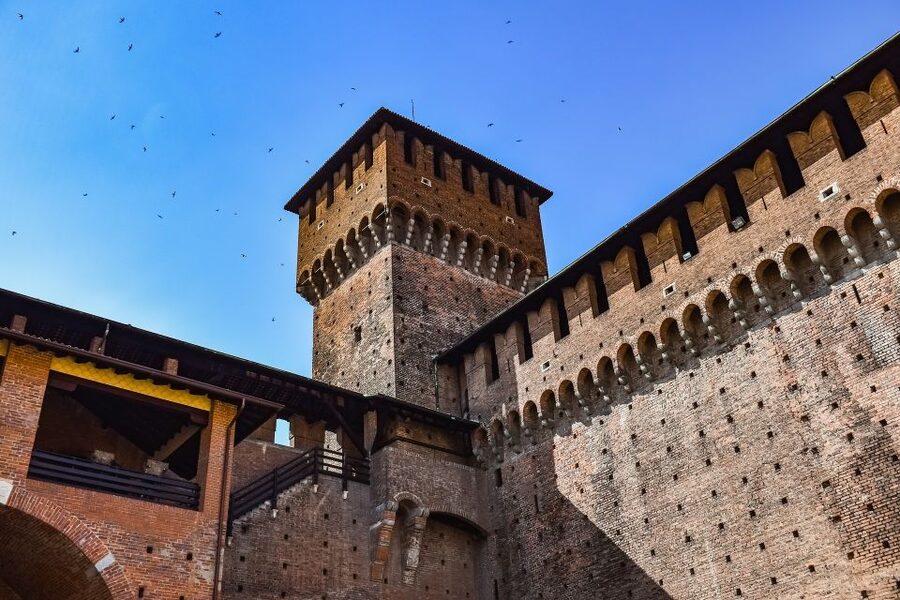
The experience is described as a small-group tour, with a private group option available. The group may sometimes be very small. Some people had groups of three, four, or six, and one booking became a private experience. That can make it easier to ask questions and keep the pace comfortable.
Headphones are provided when the group reaches 11 participants. The purpose is clear: large courtyards and busy public spaces can make it hard to hear a guide. Still, one visitor reported that the earpieces worked only intermittently, so I would stay close to the guide and speak up quickly if the sound cuts out.
The experience is wheelchair accessible. Since the tour takes place in a historic castle, you may still want to confirm the exact route and current access arrangements when booking, especially if you need particular facilities. The provided information confirms accessibility but does not describe every surface or museum entrance.
No food or drink is included. Hotel pickup and drop-off are also not included, though an optional paid service is available. The meeting point is central and specific, so most people can arrange their own arrival without adding a transfer.
Is $47 a fair price?
At $47 per person, the tour is not the cheapest way to see Sforza Castle. You are paying for admission, a certified guide, and the time saved by having someone choose the most important rooms and explain what you are seeing.
The value is strongest if you care about art and history but do not want to prepare a long self-guided visit. Pietà Rondanini is much easier to appreciate when someone explains its unfinished surface, late date, and emotional force. The same applies to Leonardo’s role and the political history of the castle.
The price also makes more sense for a first visit than for a repeat visit. If you already know Milan’s ruling families, have studied Michelangelo, and prefer to read wall panels at your own pace, you may get more from independent admission.
Several guide names have drawn especially warm praise, including Giorgio, Fabio, Simone, Stefania, Lorella, Simon, and Nina. The repeated strengths are clear speech, strong subject knowledge, patience, and an ability to answer questions. Those qualities are important here because the castle itself does not automatically explain its story.
I would call the tour good value for an art-minded visitor who wants a short, organized introduction. It is less good value if you want a full museum day or plan to spend most of your time photographing architecture without stopping for interpretation.
Who should book this castle tour?
I recommend it for first-time visitors to Milan, especially if your schedule is tight. It fits neatly into a day of central sightseeing and gives you a better sense of Milan beyond its modern shopping streets and the Duomo.
Art lovers should book it for the Pietà Rondanini and the Leonardo connection. History fans will appreciate the Visconti and Sforza story, the Biscione emblem, and the shift from fortress to Renaissance court.
Families can also benefit from the guide-led format. The story of powerful families, towers, symbols, and court intrigue gives younger visitors more to follow than a silent museum walk. The short length helps prevent the experience from becoming tiring.
You may want to skip it if you have only a passing interest in art and would rather explore the castle freely. You should also allow extra time if the museum collections matter as much to you as the courtyards and sculpture.
Booking is flexible, with cancellation up to 24 hours before the start for a full refund and a reserve-now, pay-later option. Starting times vary, so check availability before building the rest of your Milan schedule.
Final verdict on Sforza Castle and Pietà Rondanini
I would book this tour if you want the castle to make sense, not simply appear impressive in photographs. The Pietà Rondanini gives the visit emotional weight, while the courtyards, Leonardo story, and Sforza politics give it structure.
The 90-minute limit is the main compromise. You will get a focused introduction, not an exhaustive museum visit. For most visitors, that is a sensible trade: the guide brings the castle’s people, symbols, and artworks into focus, then leaves you free to continue exploring Milan.
FAQ
How long does the Sforza Castle and Pietà Rondanini tour last?
The tour lasts 1.5 hours.
What is included in the price?
The $47 price includes entrance fees to Sforza Castle and its museums, a certified live tour guide, and a small-group guided visit. Headphones are provided for groups of 11 or more participants.
Where is the meeting point?
Meet in Piazza Castello under the Filarete clock tower, in front of Sforza Castle. Do not go inside the courtyards before meeting the guide. Look for the Hidden Experiences purple flag or board.
Which languages are available?
The tour is available in Italian, English, German, French, and Spanish.
Is the tour wheelchair accessible?
Yes, the activity is listed as wheelchair accessible.
Can I book a private group?
Yes. A private group option is available.
Can I cancel the booking?
Yes. You can cancel up to 24 hours in advance for a full refund. A reserve-now, pay-later option is also available.
Recently reviewed around Milan
- From Milan: Venice Full-Day Guided Tour With Boat Ride★ 4.5 · 322 reviews
- Venice Day Trip from Milan with Guided City Tour★ 4.0 · 383 reviews
- Verona and Lake Garda Day Trip from Milan★ 4.5 · 214 reviews
- Full-day Skip-The-Line Milan, The Last Supper and Duomo Cathedral★ 5.0 · 293 reviews
- Small-Group Lake Como & Lugano by Swiss Train + Boat Cruise★ 5.0 · 1,084 reviews
- Tour Bernina Red Train And St Moritz from Milan★ 4.5 · 247 reviews
- Walking Food Tour of Milan with Tastings★ 4.5 · 194 reviews
- Skip the Line: Essential Milan Tour Including Da Vinci’s ‘The Last Supper’★ 4.5 · 339 reviews
Milan Tours, compared.
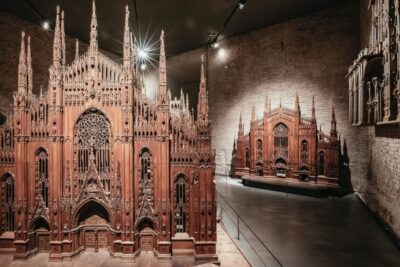
Cathedral and Duomo’s Terraces Entrance Ticket
Read our review →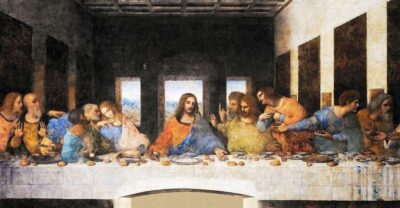
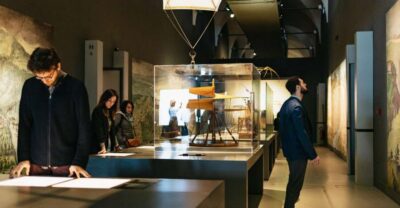
Science and Technology Leonardo da Vinci Museum Entry
Read our review →
City Sightseeing Hop-On Hop-Off Bus with Audio Guide
Read our review →
Milan Cathedral: Duomo Terraces Ticket (No Church Access)
Read our review →
Milan Cathedral Direct Entrance – Terrace Excluded
Read our review →
Guided Walking Tour & Last Supper Visit with Ticket
Read our review →
Fast-Track Milan Cathedral and Terraces Guided Tour
Read our review →Browse the lists this tour appears in