
Review · COLOSSEUM & ROMAN FORUM TOURS
Palatine Hill and Roman Forum Tour with Fast-Track Entrance
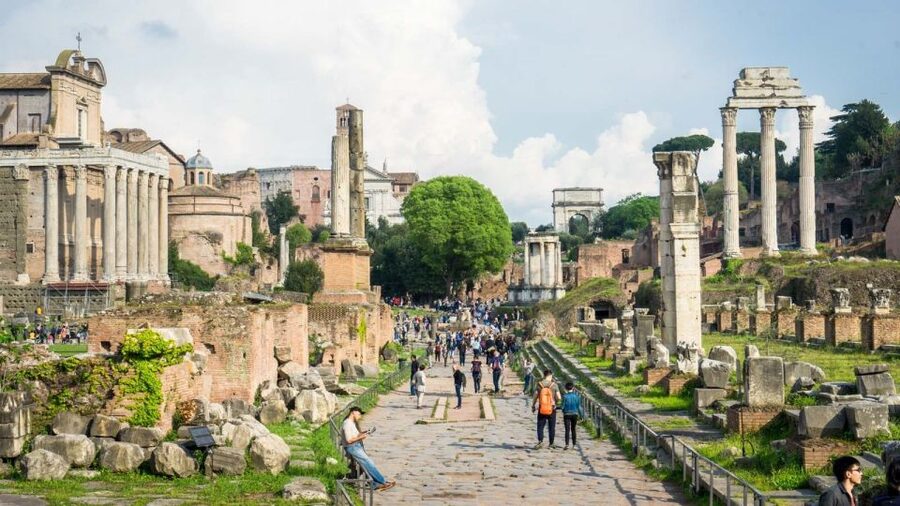
Rome’s story begins on Palatine Hill, where an older settlement dates to the 9th century BC and the tale of Romulus and Remus still gives the ruins a pulse. I like the fast-track entrance, which reduces one layer of waiting, and the strong storytelling, with guides such as Simona, Anton, Antonio, and Giorgio praised for making broken walls and vanished buildings easy to picture. The drawback is the price: at $293.41 per person, this is costly for a two-hour visit, especially since the Colosseum is not included.
In This Review
- Key points to know before booking
- Meeting at Oppio Caffe near the Colosseum
- Palatine Hill and the first chapter of Rome
- Views across Circus Maximus and the Forum valley
- The Roman Forum and the Sacred Way
- Temple of Julius Caesar and the politics of memory
- Arch of Titus and the language of victory
- Vestal Virgins, the Senate House, and Basilica of Maxentius
- Why the guide matters here
- Is two hours enough?
- Fast-track entry and the $293.41 price
- Who will enjoy this Roman Forum tour?
- Should you book it?
- FAQ
- How long does the Palatine Hill and Roman Forum tour last?
- Does the tour include the Colosseum?
- Where does the tour meet?
- Is fast-track entrance included?
- What identification do I need?
- What languages are available?
- Are headsets provided?
- Is the tour suitable for wheelchair users or people with mobility problems?
Key points to know before booking
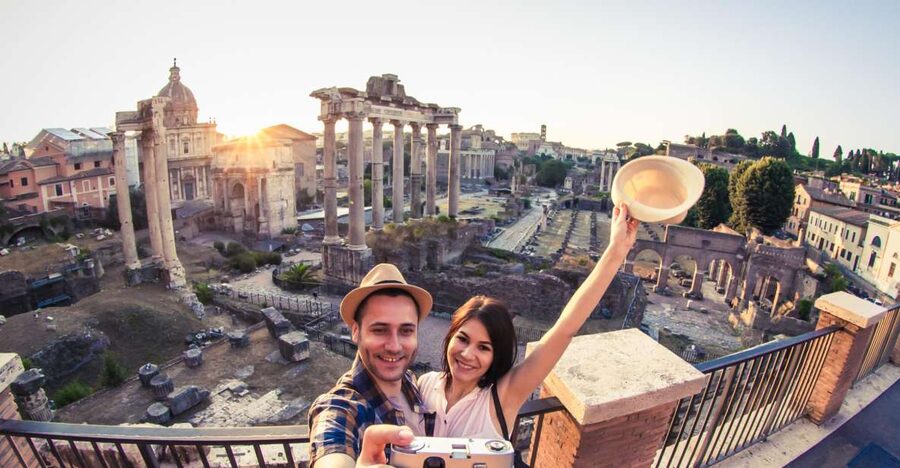
- Palatine Hill comes first, with views across Circus Maximus and the Roman Forum valley.
- The Roman Forum stops include major monuments, such as the Temple of Julius Caesar, Arch of Titus, Senate House, and Basilica of Maxentius.
- Guides are the main reason to book, with lively explanations, archaeological detail, and useful visual aids.
- Headsets are supplied for groups of more than eight, helping you hear over the noise of central Rome.
- Expect moderate walking and stairs, with no access for wheelchair users or people with mobility, back, or certain medical concerns.
- The Colosseum is not part of this tour, so you need a separate ticket if you want to see its interior.
Meeting at Oppio Caffe near the Colosseum
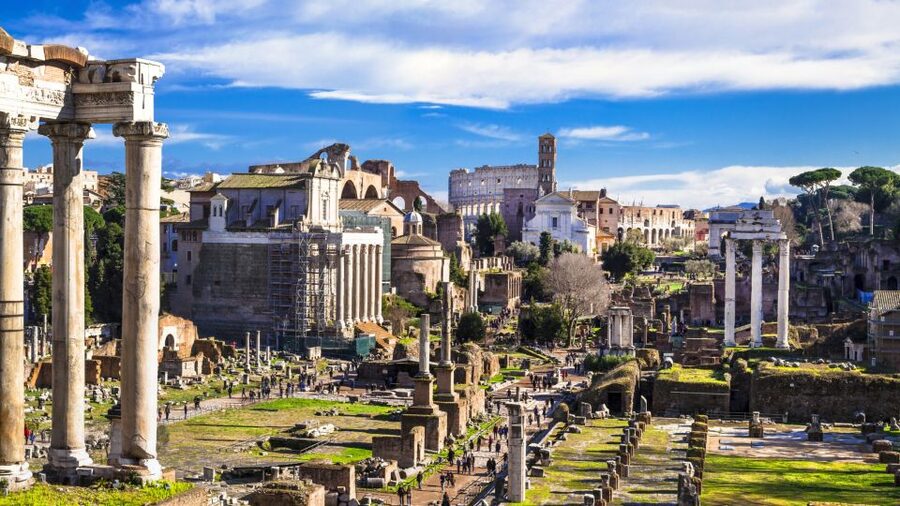
Your starting point is in front of Oppio Caffe on Via delle Terme di Tito, at the corner of Via Nicola Salvi. The guide holds a sign with your name, so look carefully for the meeting group rather than assuming the café itself is the tour office.
This area can be confusing, especially with the Colosseum crowds, street crossings, and several nearby entrances. Give yourself enough time to find the corner without rushing. The meeting instructions ask you to arrive early, but some people have found the suggested arrival time more generous than necessary. Still, being late is a poor gamble here: the guide must coordinate entrance and identity checks for the whole group.
Bring your passport or ID card. Your full name and date of birth are required at booking, and the entrance details must match your identification. Security can refuse entry if your information does not match, so check the spelling before you leave home.
Other Rome days travellers weigh against this one:
- Vatican: Museums & Sistine Chapel Entrance Ticket
★ 4.5 · 144,003 reviews - Vatican Museums & Sistine Chapel Tour with Optional Basilica
★ 4.3 · 67,413 reviews - Colosseum, Roman Forum & Palatine Guided Tour
★ 4.7 · 63,148 reviews
Palatine Hill and the first chapter of Rome
The tour begins with Palatine Hill, one of Rome’s most important archaeological sites. The hill is linked to an older settlement from the 9th century BC, long before the imperial palaces that later covered much of the ridge.
This is also the setting for the familiar founding story of Romulus and Remus. The abandoned brothers, raised by a wolf, eventually fought over power and control. A good guide uses the legend as a doorway into Roman ideas about authority, ancestry, and destiny, rather than presenting it as a simple fact.
You will not walk through a preserved ancient town with complete streets and intact homes. Much of the hill is made up of foundations, walls, open ground, and partial structures. That can make independent sightseeing difficult. A guide helps you connect the stones to the larger story and explains what may once have occupied each area.
The walking is moderate, but the hill is not flat. Reviews describe steps leading to the upper areas, and the heat can make the climb feel harder than the distance suggests. Wear proper walking shoes and bring water. Baby strollers, large backpacks, luggage, and walking frames are not allowed.
Views across Circus Maximus and the Forum valley
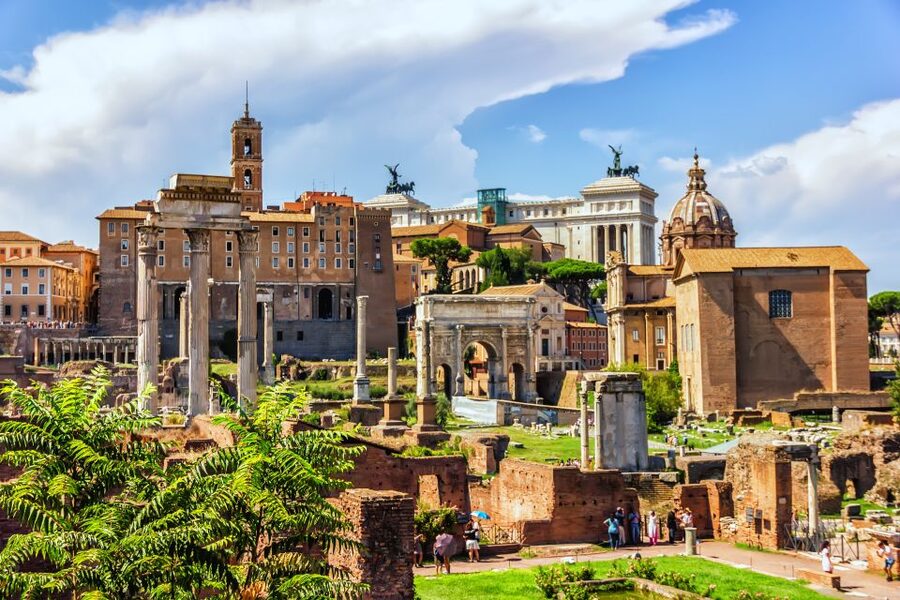
One of the best parts of Palatine Hill is the view. From the higher ground, you can look toward Circus Maximus and across the valley occupied by the Roman Forum.
These views give you a useful map of ancient Rome. Instead of seeing the Forum as a collection of unrelated columns, you can understand its position between the hills and imagine how public life once spread through the valley below. It is also a good place for photographs, with the ruins and Rome’s wider cityscape sharing the frame.
The view comes with a practical tradeoff. You need to reach the higher part of the hill to enjoy it, and this involves some stairs and uneven walking. One guide made special allowances for a person with limited mobility, but the activity is officially not suitable for wheelchair users, people with mobility impairments, people with back problems, or people with certain pre-existing medical conditions. Contact the operator in advance if you have an impairment, including a visual or hearing impairment.
The Roman Forum and the Sacred Way
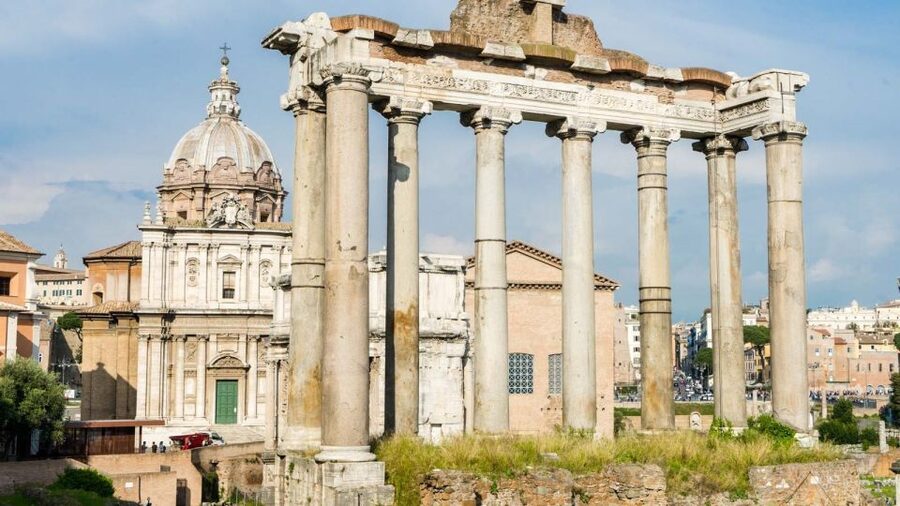
After Palatine Hill, the tour moves into the Roman Forum. This was the civic center of Ancient Rome, and it remains one of the world’s most important archaeological areas.
The Forum can be hard to read at first. Columns are scattered, buildings are incomplete, and the original functions are not always obvious. That is where the guide earns the price of admission. The tour explains how the buildings fit together and why this valley mattered to Roman politics, religion, law, and public ceremony.
The Sacred Way is one of the key routes through the Forum. It served as a triumphal road, where Roman commanders and soldiers returned after battles and conquests. The tour connects this road with the public display of military success, helping you see the Forum not only as a group of ruins but as a stage for Roman power.
The site is exposed, with little relief from sun and heat in some areas. Plan your clothing accordingly, and do not count on a quick, easy stroll. The activity lasts about two hours, but you will be on your feet for much of it.
A different way to spend the day, same part of Italy:
- Vatican Museums, Sistine Chapel & St Peter’s Basilica Guided Tour
★ 4.5 · 39,149 reviews - Rome: Colosseum, Palatine Hill and Roman Forum Guided Tour
★ 4.8 · 32,814 reviews - Rome: Guided Tour of Colosseum, Roman Forum & Palatine Hill
★ 4.7 · 27,897 reviews - Rome: Colosseum & Forum with Audio Guide App -Optional Arena
★ 4.2 · 24,770 reviews
Temple of Julius Caesar and the politics of memory
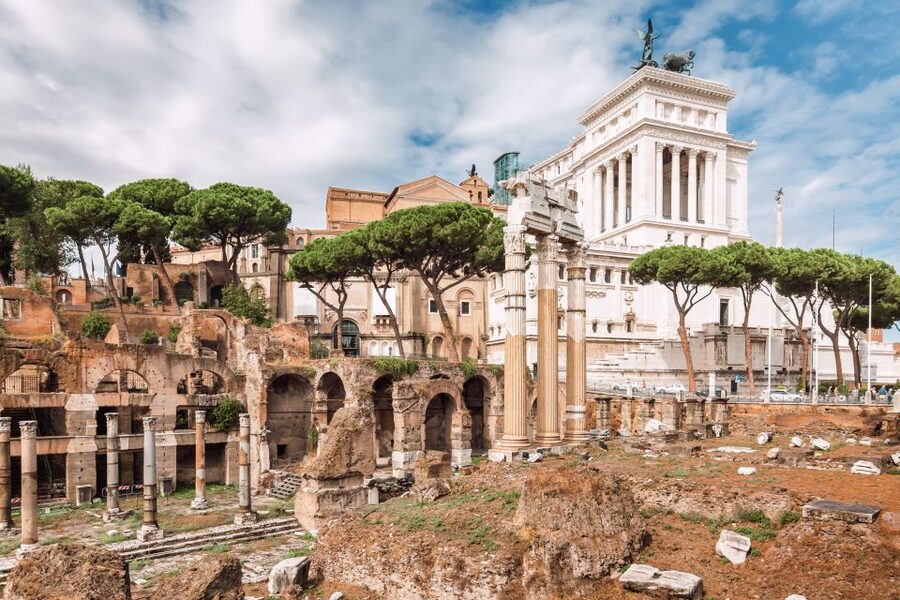
The Temple of Julius Caesar is one of the most evocative stops. It marks the place connected with Caesar’s public memory and the political changes that followed his assassination.
The remains may look modest compared with a complete monument, but the location carries enormous weight. This was not simply another temple. It was tied to the transformation of Rome from republic toward imperial rule and to the way Roman leaders used architecture to shape public memory.
A guide can point out what survives, what has disappeared, and how archaeologists interpret the remains. Several guides on this experience have used photographs or visual material to help you picture the ancient structures. That is useful here, where imagination has to fill in many gaps.
Arch of Titus and the language of victory
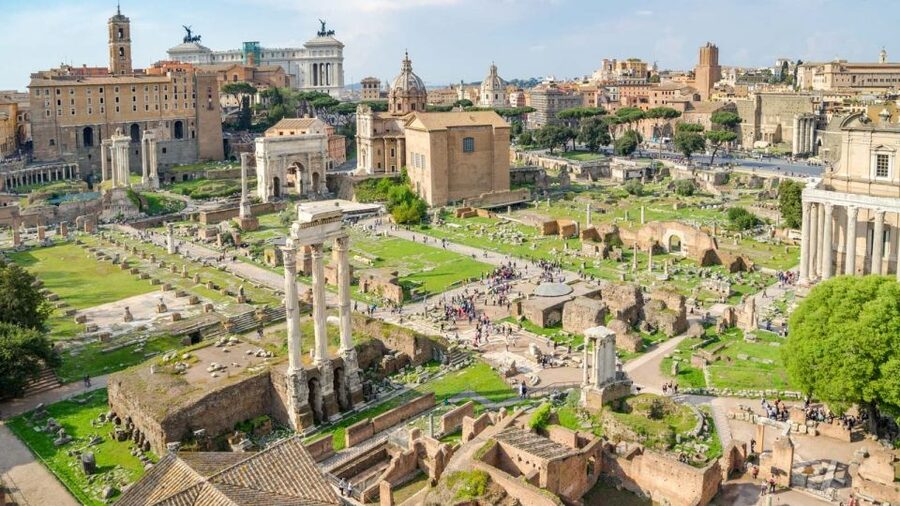
The Arch of Titus is another major stop. Arches like this celebrated military victories and placed those victories into the permanent setting of Rome’s public life.
The arch is especially meaningful along the Sacred Way because it shows how Roman triumphs were turned into architecture. The guide explains the monument as part of a procession route, not merely as a photo stop.
You should expect a mix of history, myth, and reconstruction during this portion of the tour. Guides may explain what is known from physical evidence while also describing how ancient ceremonies unfolded. The best moments come when that information stays clear and grounded rather than becoming a flood of dates.
Vestal Virgins, the Senate House, and Basilica of Maxentius
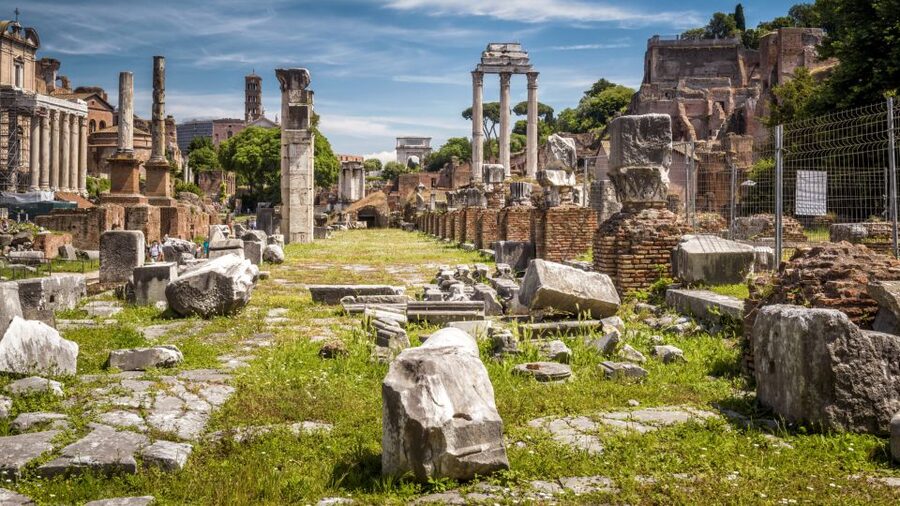
The House of the Vestal Virgins offers a look at Rome’s religious life and the important role of the Vestal Virgins in maintaining the sacred fire. Their residence stood near the Forum’s main public spaces, linking religious duties with the heart of Roman civic activity.
The Senate House brings you to the political side of the Forum. This was the place associated with debate and decision-making by Rome’s senators. The building’s presence helps explain why the Forum was more than a religious center or ceremonial route.
The Basilica of Maxentius shows the scale of Roman public construction. In Roman terms, a basilica was a large public building used for legal, commercial, and civic activity, not a church in the later Christian sense. The surviving structure gives you a feel for the engineering and ambition behind Roman building projects.
A strong guide keeps these stops distinct. Without explanation, it is easy to blur the Senate House, temples, basilicas, and arches into one long parade of stones. The guides praised most warmly, including Simona and Anton, were good at adding drama while still explaining what each place was for.
Why the guide matters here
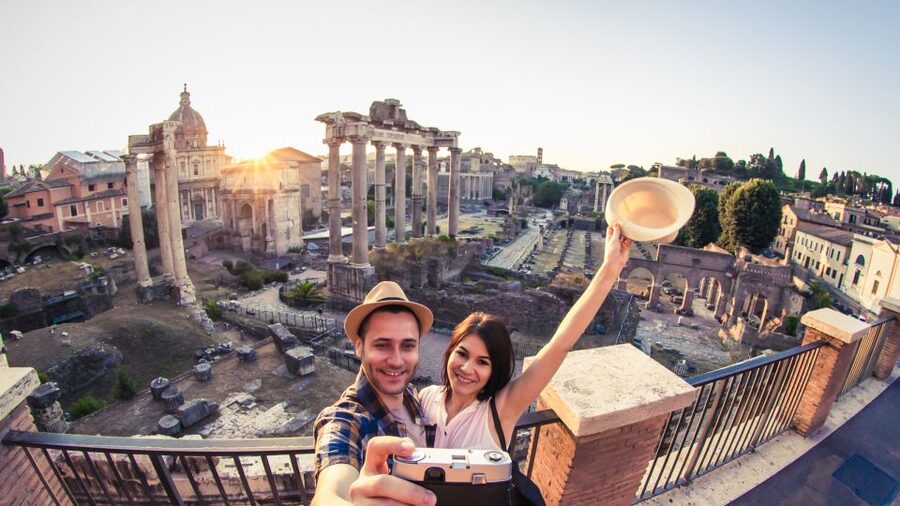
I would not choose this tour mainly for the fast-track entry. I would choose it for the guide.
Several guides have been singled out for clear English, humor, archaeological training, and the ability to answer questions. Simona is known for explaining both the people who lived on Palatine Hill and the groups who used the Forum, while also discussing building design and materials. Anton has been praised for adding spontaneous detail and using drama to keep even a nine-year-old interested. Antonio and Giorgio have also been praised for making the stories easy to follow.
The guide quality can vary because the named guide is not guaranteed. Still, the feedback points to a consistent strength in the company’s guiding approach. The best guides do not simply recite dates. They show you where to look, explain how historians interpret the ruins, and help you imagine buildings that no longer survive.
Headsets are provided when the group has more than eight people. This matters in a busy archaeological site, where nearby groups, traffic, and general city noise can make a normal speaking voice difficult to follow. One guide also made regular checks to ensure the group could hear, take photographs, use the restroom, and refill water bottles.
The group option is listed as a small group of up to 20 people, while the activity information also describes a private group and offers a private guide option. Check the exact option you select at booking, since group size and price can change the feel of the visit.
Is two hours enough?
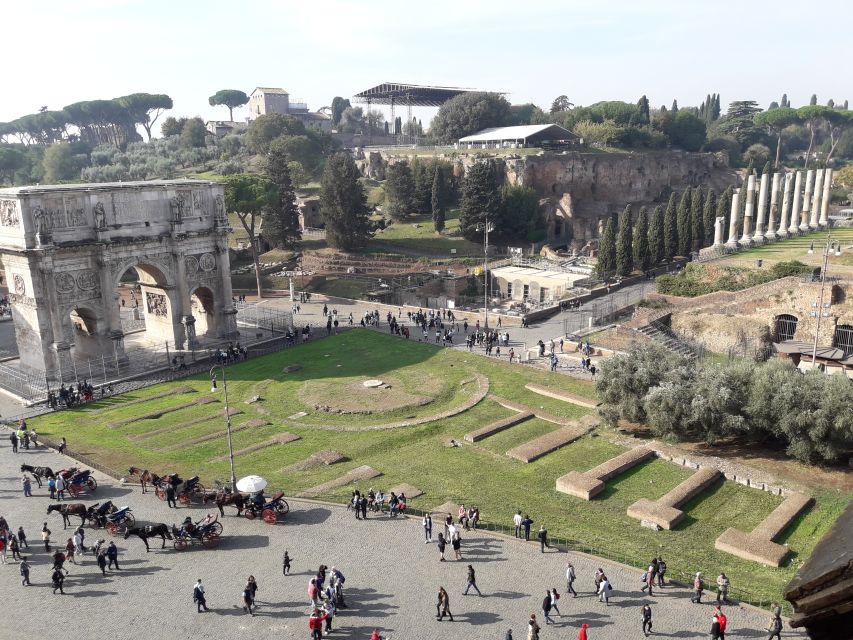
Two hours is enough for a guided introduction to Palatine Hill and the Roman Forum. It gives you a clear route through the principal areas without asking you to spend half a day among exposed ruins.
It is not enough for a slow, independent examination of every remaining wall, garden, temple, and viewpoint. One guide reportedly ran a little under two hours, while another person wished for more time. That is a fair criticism if you enjoy archaeology and want to linger.
Think of this as a structured first visit. The guide shows you the major locations and gives you a framework. Afterward, you may want to remain in the Forum area and look around on your own if the site rules and schedule allow. If you want a long archaeological study, choose a longer visit or plan additional time separately.
The tour ends back at the meeting point according to the activity details. Confirm the exact end arrangement with the operator on the day, particularly if you have a timed reservation afterward.
Fast-track entry and the $293.41 price
The separate fast-track entrance can save time, but it does not mean you walk straight through without any checks. You still pass through security and metal detectors, and increased security can create lines even for groups using a faster entrance.
At $293.41 per person, the cost is high for two hours and deserves careful thought. The price makes more sense if you place a high value on a live guide, need a visit in a specific language, want help understanding the site, or prefer not to manage a major archaeological area alone.
The value is weaker if you already have strong Roman history knowledge, enjoy reading site signs and guidebooks, or mainly want entry to the ruins. The Colosseum is not included, and food, drinks, and hotel transfers are also excluded.
Before booking, compare the cost of this guided visit with a basic entrance ticket and a separate guide option. The experience is selling interpretation and organization more than admission alone. Reserve-now, pay-later booking and free cancellation up to 24 hours before the activity reduce financial risk, but they do not change the underlying price.
Who will enjoy this Roman Forum tour?
This tour suits you if you want the main ruins explained in plain language and prefer a fixed two-hour route. It is also a good choice for families, since guides such as Anton have used stories and theatrical touches to hold younger listeners’ attention.
It works well for first-time visitors to the Forum, people with limited time in Rome, and anyone who finds archaeological ruins difficult to interpret without help. The guide-led format also helps if you want to ask questions as you go.
You should think twice if you dislike group pacing, need a completely step-free route, or want to spend long periods photographing each monument. The site involves walking, stairs, sun, and uneven ground. Large bags, backpacks, suitcases, strollers, selfie sticks, glass objects, sprays, alcohol, drugs, weapons, and sharp objects are not permitted.
Languages offered are Portuguese, English, Italian, Spanish, German, and French. Choose carefully at booking so the guide’s explanations are easy for you to follow.
Should you book it?
Book this tour if the stories behind Rome’s ruins matter more to you than simply entering the site. The strongest part is the guiding: Simona, Anton, Antonio, Giorgio, and others have been praised for clarity, humor, archaeological detail, and keeping the group involved.
Skip it if $293.41 feels too steep for a two-hour walk or if you plan to visit the Colosseum and expect it to be included. For the right visitor, the price buys a clear introduction to Palatine Hill and the Forum, plus fast-track access and a guide who can turn scattered remains into a readable chapter of Roman life.
FAQ
How long does the Palatine Hill and Roman Forum tour last?
The tour lasts two hours. Starting times vary, so check availability when selecting your date.
Does the tour include the Colosseum?
No. The Colosseum is not included in this activity.
Where does the tour meet?
The meeting point is in front of Oppio Caffe on Via delle Terme di Tito, at the corner of Via Nicola Salvi. The guide holds a sign with your name.
Is fast-track entrance included?
Yes. Fast-track access through a separate entrance to Palatine Hill and the Roman Forum is included. You must still pass through security and metal detectors, and lines may form because of security measures.
What identification do I need?
Each person needs a valid passport or ID card. Your full name and date of birth must be provided when booking, and the booking information must match your identification.
What languages are available?
The tour is offered in Portuguese, English, Italian, Spanish, German, and French.
Are headsets provided?
Headsets are provided for groups of more than eight people.
Is the tour suitable for wheelchair users or people with mobility problems?
No. The activity is not suitable for wheelchair users, people with mobility impairments, people with back problems, or people with certain pre-existing medical conditions. Contact the local operator in advance to discuss disabilities or other access needs.
Recently reviewed around Rome
- Ancient Rome at Twilight Walking Tour★ 5.0 · 276 reviews
- Domus Aurea Guided Tour: The Golden House of Nero★ 4.5 · 199 reviews
- Early Vatican Museums & Sistine Chapel Small Group Tour★ 4.5 · 314 reviews
- Early Vatican Museums Tour: The Best of the Sistine Chapel★ 4.5 · 900 reviews
- Jewish Ghetto & Piazza Navona: Food, Wine & Sightseeing Rome Tour★ 5.0 · 460 reviews
- 3 Days in Sorrento, Capri & Pompeii: la Dolce Vita★ 4.0 · 595 reviews
- Tivoli Villas Full Day Trip From Rome with Lunch★ 4.0 · 443 reviews
- Cook With Us in Rome: A Hands-On Cooking Experience 09:20AM class★ 5.0 · 234 reviews
Colosseum & Roman Forum Tours, compared.
Colosseum, Roman Forum & Palatine Guided Tour
Read our review →
Colosseum, Palatine Hill and Roman Forum Guided Tour
Read our review →
Guided Tour of Colosseum, Roman Forum & Palatine Hill
Read our review →
Colosseum & Forum with Audio Guide App -Optional Arena
Read our review →
Colosseum, Roman Forum and Palatine Hill Guided Tour
Read our review →
Colosseum, Roman Forum, Palatine with Multimedia Video
Read our review →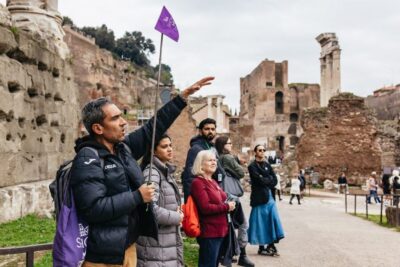
Colosseum, Palatine Hill & Roman Forum Guided Tour
Read our review →
Colosseum: Underground and Ancient Rome Tour
Read our review →Browse the lists this tour appears in