Review · ROME TOURS
Roman Gladiator School: Learn How to Become a Gladiator
The most memorable part of this two-hour class is stepping into a small arena with a shield and wooden sword, then putting your training to work in a playful Roman battle. Before that, you’ll see armor and weapons, dress as a gladiator, and learn why different fighters used different gear.
I like the hands-on museum session, where you can handle or try on pieces of Roman-style equipment, and the warm, theatrical teaching from instructors such as Patricio, Ivan, Mirkos, and Flama. The main drawback is getting there: the school is outside the old center, and its entrance can be tricky to find. Bring mosquito repellent, too.
In This Review
- Key points to know before you book
- A gladiator lesson with a real sense of play
- What happens at Via Appia Antica 18
- First stop: the Gladiator School of Rome Museum
- Dressing as a Roman fighter
- Warmups, footwork, and the first sword moves
- The mock battle in the arena
- How the experience suits adults and older children
- Timing, comfort, and what to bring
- Is $108.16 a fair price?
- Planning the visit around Rome’s ancient sights
- Who should book this experience?
- Should you book the Gladiator School of Rome?
- FAQ
- Where does the Gladiator School experience take place?
- How long does the gladiator class last?
- What is included in the price?
- What clothing and weapons do participants use?
- What is the minimum age?
- Can family and friends watch without participating?
- How many people can be in one session?
- Can I cancel for a refund?
Key points to know before you book
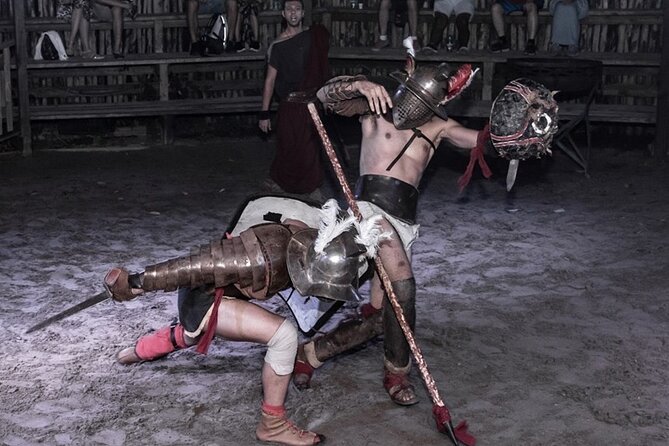
- The arena battle is the big finish: You learn basic attack and defense moves before facing other members of your group.
- The museum comes first: See weapons, helmets, shields, armor, and displays that give the class a useful Roman setting.
- It works especially well for families: Children from age 6 can participate, and adults can join the fun rather than simply watch.
- Groups stay fairly small: A session can have up to 15 people, with small-group classes offering more direct help.
- The Appian Way location takes planning: The meeting point is at Via Appia Antica 18, away from the Colosseum itself.
- Wear practical clothes: You will be moving, warming up, and handling training weapons, so comfortable shoes and clothes make sense.
A gladiator lesson with a real sense of play
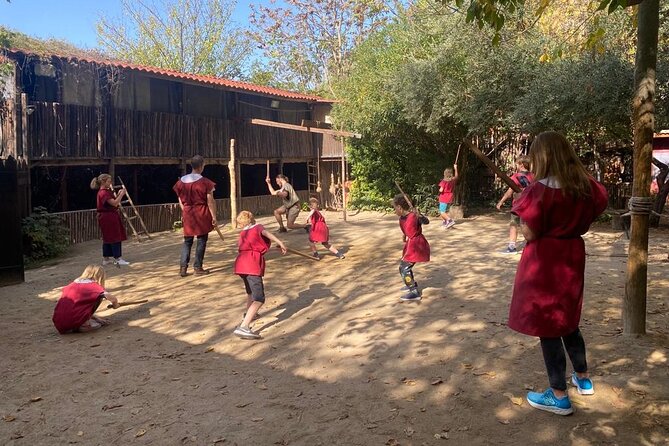
Rome offers endless chances to look at ancient stones behind a rope. This experience asks you to move, listen, laugh, and take part. You are not simply told how gladiators fought. You put on a tunic, belt, leather gloves, and a training sword called a rudis, then practice the basics before entering the arena.
The tone is theatrical, but the class also has an educational core. Instructors from the Historic Group of Rome explain Roman soldiers, gladiators, weapons, armor, and fighting styles. You may find the lesson more memorable than a standard talk because the objects are tied to the movements you will soon practice.
The class is not a serious combat course. The swords are for training, and the final battles are staged for fun. Still, you should expect physical activity and mock fighting. That makes it a better choice for active families and playful adults than for anyone seeking a quiet museum visit.
Other Rome days travellers weigh against this one:
- Vatican: Museums & Sistine Chapel Entrance Ticket
★ 4.5 · 144,003 reviews - Vatican Museums & Sistine Chapel Tour with Optional Basilica
★ 4.3 · 67,413 reviews - Colosseum, Roman Forum & Palatine Guided Tour
★ 4.7 · 63,148 reviews
What happens at Via Appia Antica 18
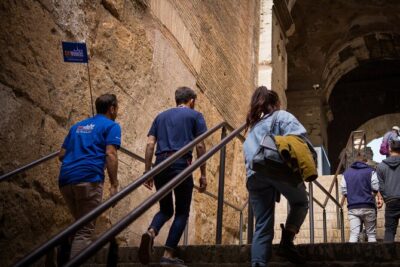
The school sits on the historic Appian Way, at Via Appia Antica 18, 00179 Rome. It is near the Colosseum in the broad sense of being part of Rome’s ancient Roman world, but it is not beside the amphitheater entrance. Several practical details matter here.
The site is outside the old Roman walls, and reaching it can take longer than the map first suggests. A taxi is the simplest option, though the fare can be high. Bus 118 serves the Appian Way, while buses are not especially frequent. You can also walk from the Colosseum, but allow about 45 minutes and do not rush.
The entrance may be at the end of a long driveway rather than exactly where a map pin seems to place it. Give yourself extra time, particularly if you have children with you or a fixed class start. Once you arrive, the activity ends at the same meeting point.
First stop: the Gladiator School of Rome Museum
The museum is small, but it gives the lesson useful weight. You can see gladiator weapons and Roman-style equipment, including helmets, shields, armor, and uniforms. The instructor explains what these objects were used for and how a fighter’s equipment shaped his movements.
This opening is more than a photo stop. You begin to understand that gladiators were not all dressed or armed alike. A shield changes how you protect yourself. A sword changes how close you need to stand. A helmet affects sight and movement. Those simple points become clearer once you hold the gear and then use similar equipment outside.
Many families enjoy being able to try on pieces of armor for pictures. Children get a visual connection to the Colosseum, especially if you visit the amphitheater before or after this activity. One useful tip: allow enough time to look around the museum, since the training can become the main focus once the class starts.
The museum is not a replacement for Rome’s major archaeological sites. It is a compact teaching space, designed to prepare you for the activity. If you want a long, scholarly museum visit, this will feel brief. If you want objects explained before you handle a wooden sword, it does the job well.
Dressing as a Roman fighter
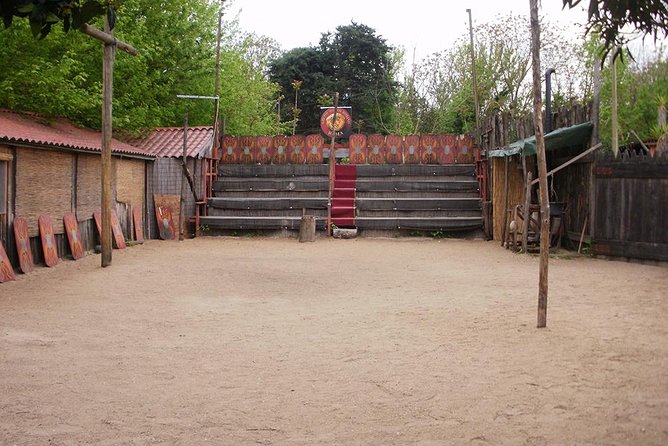
After the introduction, you change into the basic outfit provided for the class. That includes a traditional belt, tunic, leather gloves, and a rudis, the wooden training sword used during the lesson. You hire the clothing and weapons for the duration of the class, so you do not need to bring equipment.
This costume change helps children settle into the story. Adults may feel a little silly at first, but that is part of the appeal. The instructors use humor and encouragement to help everyone take the role seriously enough to enjoy it, without pretending this is a modern fencing school.
Your friends and family can watch from a viewing platform. That is useful if some members of your party prefer not to participate. Parents can observe children, take pictures, and still follow the lesson. The supplied information says the activity includes a drink, though one participant reported not receiving it, so I would not book this expecting refreshments to be a major part of the value.
A different way to spend the day, same part of Italy:
- Vatican Museums, Sistine Chapel & St Peter’s Basilica Guided Tour
★ 4.5 · 39,149 reviews - Rome: Colosseum, Palatine Hill and Roman Forum Guided Tour
★ 4.8 · 32,814 reviews - Rome: Guided Tour of Colosseum, Roman Forum & Palatine Hill
★ 4.7 · 27,897 reviews - Rome: Colosseum & Forum with Audio Guide App -Optional Arena
★ 4.2 · 24,770 reviews
Warmups, footwork, and the first sword moves
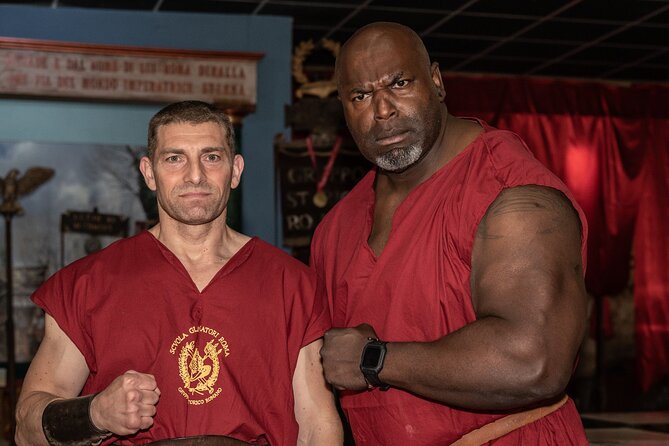
The training begins with warmups and agility work. You may also encounter simple mental exercises designed to get you into the gladiator mindset. The point is not to build athletic skill in two hours. It is to get everyone moving, paying attention, and ready for the choreographed fight.
The instructor then teaches basic offensive and defensive techniques. You learn how to hold the sword, how to use a shield, and how to respond to an opponent. The lesson is built for beginners, so you do not need previous experience. Most people can participate, and the minimum age is 6.
The small-group format helps here. With no more than 15 participants, an instructor can correct a stance or demonstrate a move again. Sessions can be much smaller in quieter periods. One early morning class had only two adults, which allowed very close attention. Group size will vary, but the maximum is limited.
Expect the teaching style to vary with the instructor. Patricio has been praised for making the class work for two families, while Ivan has been singled out for his energy with children. Mirkos has led particularly attentive low-season sessions, and Flama has combined Roman military explanations with physical training. The particular instructor depends on the date and session.
The mock battle in the arena

The class builds toward a final bout in the arena. You use the moves from the lesson, face another participant, and play out a controlled gladiator contest. There may be a friendly tournament with a prize for the winner.
This is where the activity becomes most memorable for children. They get a clear goal, a chance to cheer for family members, and a funny ending to the lesson. Adults can join the matches, too, and the result is usually more enjoyable when the whole family takes part instead of leaving the children to fight alone.
You should keep expectations sensible. This is a reenactment, not a full historical spectacle or a hard-contact sport. The class is intended to be fun and educational, but one important caution comes from the nature of mock combat itself: younger children may become upset if a match feels too physical. The official minimum age is 6, yet children differ in confidence and comfort.
If your child dislikes rough play, explain the format beforehand and ask the instructor for guidance. If your family enjoys Nerf-sword battles, costumes, and make-believe, the arena finale is likely to be the strongest part of the experience.
Everyone receives a certificate of accomplishment at the end. It is a small souvenir, but children tend to value it because it marks the moment they completed the training.
How the experience suits adults and older children
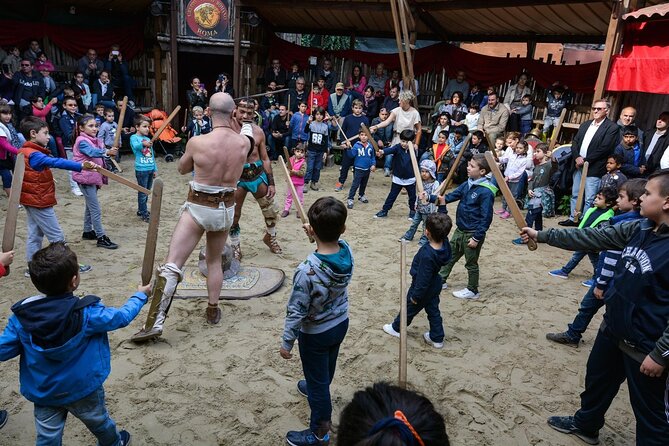
This activity is clearly aimed at families, but it is not limited to young children. Adults who enjoy Roman history, reenactment, or silly group activities can have a good time. A pair of adults who booked an early session found the combination of artifacts, warmups, sword work, and arena practice engaging even without children.
Still, adults need to bring the right attitude. If you want a serious lesson in historical swordsmanship, this will be too light. The instruction is introductory and theatrical. You are paying for a guided activity, costume, objects, and a shared performance, not for professional weapons training.
Older children and teenagers often get the most from the class because they can follow instructions, manage the equipment, and enjoy the competition. Younger children may love the costume and warmups but need closer supervision during the battle.
The school has also worked well for children with different needs. One family brought three autistic children and found the staff supportive and the teaching useful. That does not guarantee the same experience for every child, but it suggests that the instructors can adjust their approach when families explain what their children need.
Timing, comfort, and what to bring
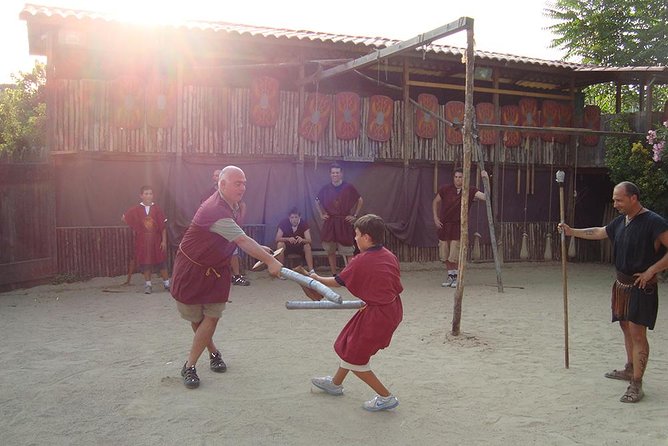
The class lasts about two hours, and lesson times are offered throughout the day. That flexibility helps you fit the activity around the Colosseum, Roman Forum, or Appian Way plans. An early session may be quieter, while a busier time can give you a larger group and more people to watch during the tournament.
Wear comfortable clothes and sturdy, comfortable shoes. You will warm up, move around, and practice with a sword and shield. You do not need to bring gladiator clothing or weapons, since those are supplied.
The outdoor setting brings one nuisance: mosquitoes. Several people have needed bug spray, and one group reported getting many bites. Pack repellent, especially during warm weather, and consider it essential rather than optional.
Food options nearby are limited. Eat before you arrive, particularly if you are bringing children. A drink is listed as included, but the experience is not designed as a meal stop, and the reported uncertainty about the drink makes it wise to carry water.
Is $108.16 a fair price?
At $108.16 per person, this is not a bargain activity for a large family. A family of four will spend more than $400 before transportation and any food. You should compare that cost with what you want from your Rome schedule.
The price includes roughly two hours of instruction, the museum, the costume and weapon hire, a drink, and a certificate. You are also paying for trained reenactors, a purpose-built activity, and a small-group experience capped at 15 people. That is more substantial than a quick photo opportunity in costume.
The value is strongest if you want a shared family memory and an active break from major archaeological sites. It is weaker if only one person plans to participate, if you dislike staged combat, or if you expect a large-scale show with animals, elaborate sets, or professional theater.
For families who would otherwise spend the day moving from one museum to another, the class adds variety. It also gives children a reason to remember what they saw at the Colosseum. I would treat it as a special activity, not an inexpensive add-on.
Planning the visit around Rome’s ancient sights
The school pairs naturally with the Colosseum, but do not assume you can walk out of the amphitheater and arrive at the class in a few minutes. The route to the Appian Way takes planning, and taxis can be costly. Bus 118 is an option, though you should allow extra time because service is not frequent.
You might visit the Colosseum first, then use the gladiator class to turn the images of ancient combat into a physical activity. Another option is to schedule the school earlier and spend the afternoon in central Rome. Either way, avoid placing a timed Colosseum entry immediately after the class unless you have left a generous travel buffer.
The activity begins and ends at Via Appia Antica 18. Hotel pickup and drop-off are not included. Confirmation arrives when you book, and free cancellation is available up to 24 hours before the start time. Changes or cancellations inside that 24-hour window are not accepted for a refund.
Who should book this experience?
I would recommend it most strongly to families with children age 6 and up who enjoy costumes, movement, and playful competition. It is also a good pick for adults who want an unusual Roman activity and do not mind looking a bit theatrical.
It is a particularly good choice if you have already seen the Colosseum and want to do something rather than simply see another monument. It suits groups that like to laugh together, since the instructor’s humor and the final battle are central to the mood.
I would hesitate if your children are uncomfortable with mock fighting, if you have limited mobility for this kind of activity, or if your Rome schedule leaves no room for a trip outside the center. The official information says most people can participate, but the class does involve warmups and physical movement.
Should you book the Gladiator School of Rome?
Book it if you want an active, family-friendly lesson that mixes Roman objects with a staged arena contest. The museum, costume, basic combat drills, and final tournament create a clear two-hour story, and the certificate gives children a simple souvenir to take home.
Skip it if you want a quiet museum, serious martial instruction, or a low-cost activity right beside the Colosseum. Plan the journey carefully, bring mosquito repellent, eat beforehand, and prepare young children for gentle but physical mock combat. With those points in mind, this is one of Rome’s more distinctive choices for families who want to take part in ancient history rather than only look at it.
FAQ
Where does the Gladiator School experience take place?
The class takes place at the Gladiator School of Rome at Via Appia Antica 18, 00179 Roma RM, Italy. It is on the historic Appian Way, outside Rome’s old walls.
How long does the gladiator class last?
The activity lasts approximately two hours.
What is included in the price?
The experience includes the two-hour gladiator class, instruction from members of the Historic Group of Rome, entrance to the Gladiator School of Rome Museum, a drink, and the use of gladiator clothing and training weapons during the lesson.
What clothing and weapons do participants use?
You receive a traditional belt, tunic, leather gloves, and a training sword called a rudis. The class also includes practice with equipment such as shields and wooden swords.
What is the minimum age?
The minimum age is 6 years old.
Can family and friends watch without participating?
Yes. Friends and family can watch the class from a viewing platform.
How many people can be in one session?
The maximum group size is 15 participants. Some sessions, especially in the low season, may be much smaller.
Can I cancel for a refund?
Yes. You can cancel at least 24 hours before the local start time for a full refund. Cancellations or changes made less than 24 hours before the start time are not accepted for a refund.
Recently reviewed around Rome
- Ancient Rome at Twilight Walking Tour★ 5.0 · 276 reviews
- Domus Aurea Guided Tour: The Golden House of Nero★ 4.5 · 199 reviews
- Early Vatican Museums & Sistine Chapel Small Group Tour★ 4.5 · 314 reviews
- Early Vatican Museums Tour: The Best of the Sistine Chapel★ 4.5 · 900 reviews
- Jewish Ghetto & Piazza Navona: Food, Wine & Sightseeing Rome Tour★ 5.0 · 460 reviews
- 3 Days in Sorrento, Capri & Pompeii: la Dolce Vita★ 4.0 · 595 reviews
- Tivoli Villas Full Day Trip From Rome with Lunch★ 4.0 · 443 reviews
- Cook With Us in Rome: A Hands-On Cooking Experience 09:20AM class★ 5.0 · 234 reviews
Rome Tours, compared.

Vatican: Museums & Sistine Chapel Entrance Ticket
Read our review →
Vatican Museums & Sistine Chapel Tour with Optional Basilica
Read our review →
Colosseum, Roman Forum & Palatine Guided Tour
Read our review →
Vatican Museums, Sistine Chapel & St Peter’s Basilica Guided Tour
Read our review →
Colosseum, Palatine Hill and Roman Forum Guided Tour
Read our review →
Guided Tour of Colosseum, Roman Forum & Palatine Hill
Read our review →
Colosseum & Forum with Audio Guide App -Optional Arena
Read our review →