
Review · CYCLING TOURS
Rome: Appian Way Aqueducts Bike Tour (UPG Catacombs & Lunch)
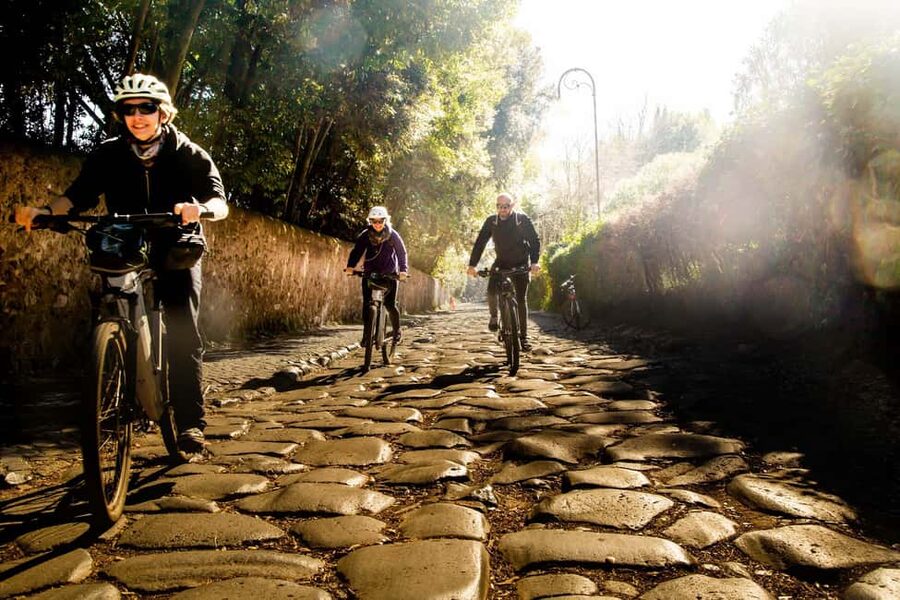
Rome’s best escape from the city center is not far from the Colosseum. This e-bike tour carries you onto the 2,300-year-old Appian Way, through quiet parks and beneath the long stone arches of the Roman aqueducts. In a short time, traffic and stone streets give way to grass, ruins, and open countryside.
I like two things right away: the excellent full-suspension e-bikes make rough ancient roads manageable, and the route shows you parts of Rome you would rarely reach on foot. Guides such as Alex, Paolo, Ricardo, and Ava add plenty of Roman stories and keep a close eye on the group. The main drawback is that some city riding takes place beside cars, and the ancient road can be bumpy or muddy after rain.
In This Review
- Key points to know before you book
- Why this is a smart way to see ancient Rome
- The e-bikes make a real difference
- Porta San Sebastiano and the road out of Rome
- St. Callixtus Catacombs in the 5-hour tour
- Caffarella Park and the Ninfeo di Egeria
- Parco degli Acquedotti and Rome’s water system
- Villa dei Quintili and the Appian Way ruins
- Tomb of Cecilia Metella and Circus of Maxentius
- Baths of Caracalla and the return ride
- How much value do you get for $81?
- Who should book, and who should skip it
- Should you book the Appian Way e-bike tour?
- FAQ
- Where does the Appian Way e-bike tour start?
- How long does the tour last?
- Are the Catacombs of St. Callixtus included?
- Is lunch included?
- What languages are available?
- Are e-bikes and helmets provided?
- Can children join the tour?
Key points to know before you book
- Six Roman aqueducts meet in one park: Parco degli Acquedotti gives you the clearest look at Rome’s famous water system.
- The 5-hour version adds St. Callixtus Catacombs: You also receive a traditional lunch in the morning or an aperitif on the afternoon departure.
- The e-bikes handle hills and rough ground: Their electric assistance and suspension help, but you still need to be comfortable riding.
- You leave the city quickly: The route passes through Caffarella Park, the Appian Way, and quiet green areas beyond the usual Rome sights.
- A guide makes the ruins readable: Expect historical explanations, local anecdotes, safety advice, and regular photo stops.
- Families have several options: Child seats hold up to 25 kilograms, and children aged 6 to 10 can use a trailer bike if they meet the stated height requirement.
Why this is a smart way to see ancient Rome
Rome can wear you out. The Colosseum, Forum, Pantheon, and Vatican all demand plenty of walking, while the city’s traffic and hard stone streets never let you forget where you are. This ride changes the rhythm.
You start near the Colosseo Metro station, only about 0.03 miles from the meeting point beside a Carrefour supermarket. After fitting your helmet and getting familiar with the bike, you ride out with a guide rather than trying to find the Appian Way on your own.
The route mixes history, countryside, and light exercise. You are not simply pedaling from one monument to another. You move through parks, stop for explanations, take photos, and use the electric motor when the road rises or the surface turns rough.
That mix makes this especially useful if you have several days in Rome and want something beyond the standard center. It also works well near the end of a trip, when you may appreciate a half-day away from crowds.
More Bike Tours in Rome
- Rome EBike Tour: Appian Way, Catacombs & Roman Aqueducts
★ 5.0 · 1,766 reviews - Rome: Top Highlights & Hidden Gems Tour by Cannondale E-Bike
★ 4.9 · 1,760 reviews - Rome: Appian Way, Catacombs, & Roman Aqueducts E-bike Tour
★ 4.9 · 1,421 reviews
The e-bikes make a real difference
The bikes are one of the strongest parts of the outing. They are described as high-quality e-bikes, and many riders found them powerful, smooth, and comfortable. The full-suspension mountain bikes are a useful choice for the old Roman roads, where smooth pavement is not the point.
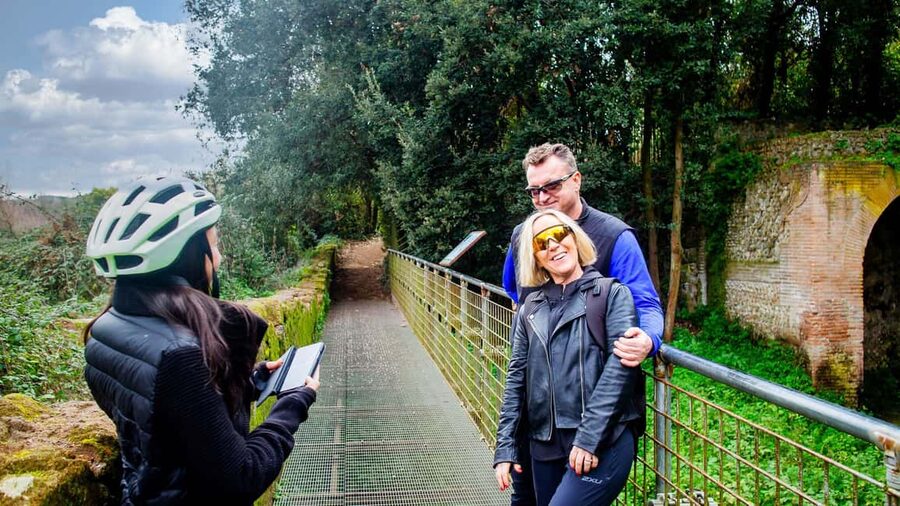
You still need basic cycling confidence. Electric assistance does not remove the need to steer, brake, watch for obstacles, or ride in a group. One part of the route includes busier roads inside the city, and that can feel challenging if you have not ridden for years.
The guides adjust to different abilities. Alex, in particular, is repeatedly praised for helping riders use the electric assistance correctly, checking comfort, and keeping the group together. Ricardo and Iman also received praise for setting a manageable pace and warning riders about obstacles.
The ride is not a race. You stop often enough for sights, stories, and photos. Still, wear clothes you can move in, and bring gear that can handle dirt. Spring rain can turn parts of the route muddy, while summer heat may make the five-hour option feel long for younger children.
A helmet and mobile phone holder are included. Child seats can carry children up to 25 kilograms, and a trailer bike is available for children aged 6 to 10 who are about 140 centimeters tall. One family found the four-hour format enough for an eight-year-old, while older children handled the longer ride well.
Porta San Sebastiano and the road out of Rome
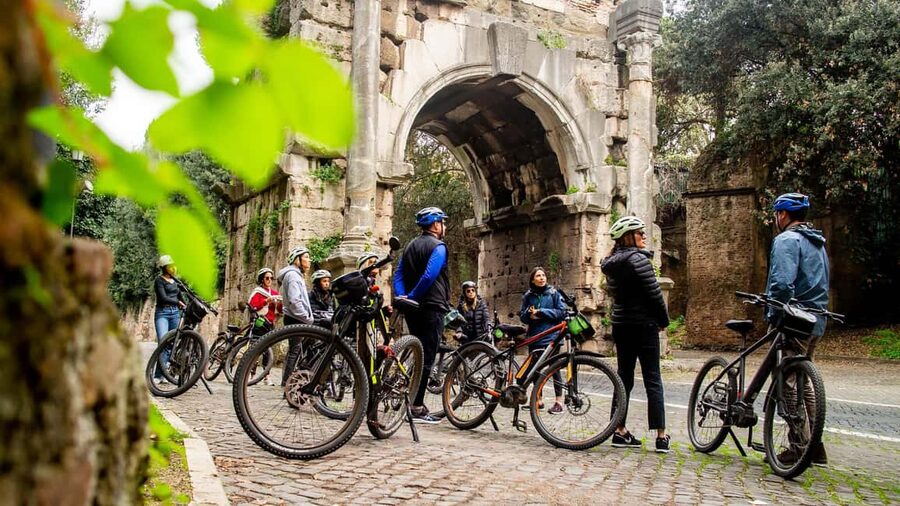
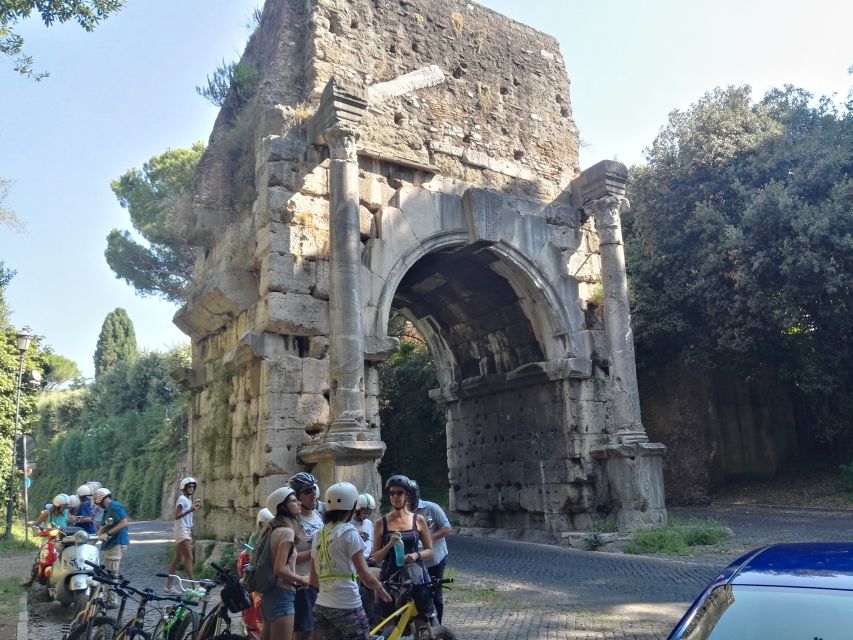
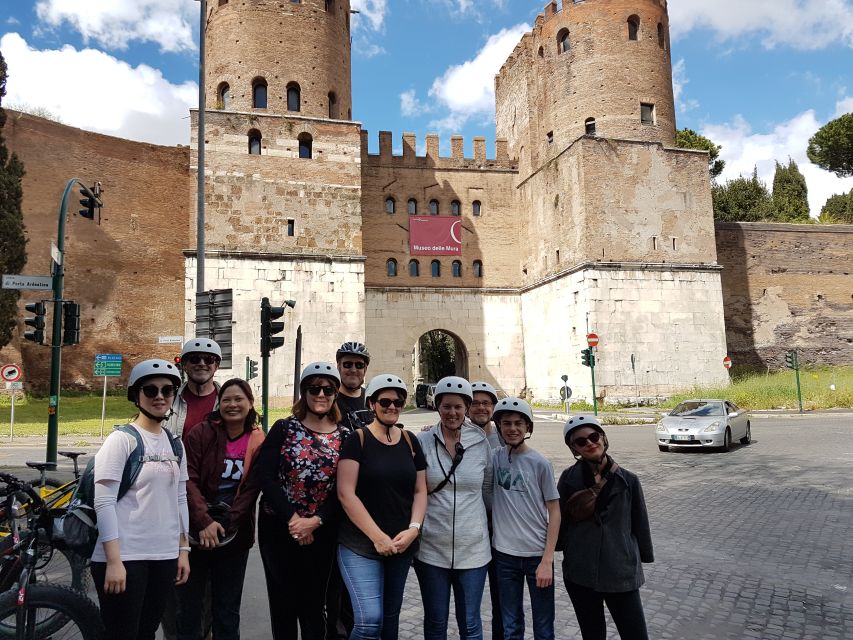
The first major stop is Porta San Sebastiano, one of the old gates through Rome’s defensive walls. It is a fitting introduction because the tour quickly shifts from the familiar inner city to the ancient road system beyond it.
Your guide explains what you are seeing, then leads you onward by bike. The contrast arrives fast. You may still be close to Rome’s center, but the route begins to feel rural, with grass, trees, ruins, and far fewer people around.
This opening section includes some city streets, so listen closely to the guide’s instructions. The company’s guides are praised for paying attention to safety and keeping everyone aware of traffic and road conditions. That matters more here than it would on a fully separated cycle path.
St. Callixtus Catacombs in the 5-hour tour
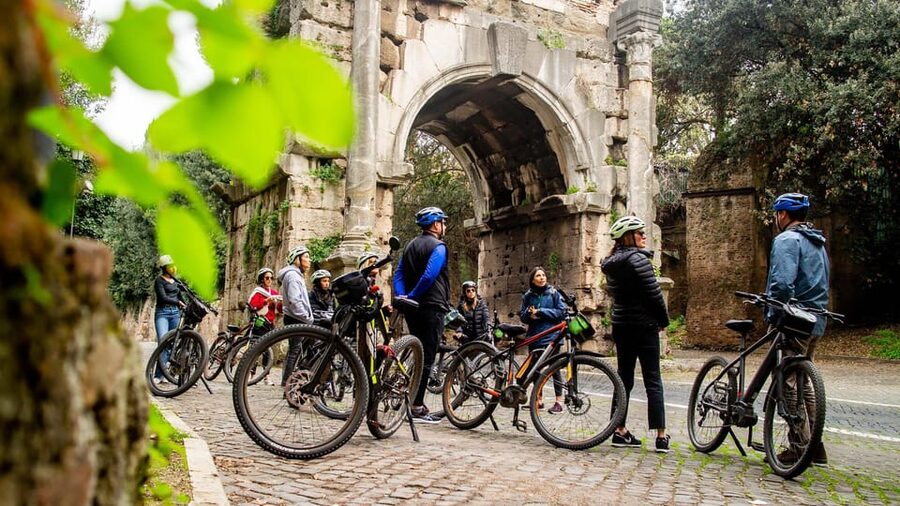
The catacombs are included only with the five-hour option. St. Callixtus forms part of a large funerary complex between the Via Appia Antica, Via Ardeatina, and Via delle Sette Chiese, with underground burial areas extending through the site.
The guided visit lasts about an hour. It gives the longer tour a different mood from the open-air cycling, shifting your attention from imperial engineering and roads to early Christian burial practices.
You should choose this option if underground history interests you and you want more than a quick ride past ruins. The catacombs were described as one of the most memorable sections of the day, but the added hour also makes the tour more demanding. If your group includes children or casual riders, think about stamina before choosing the longer format.
The catacombs also make the five-hour tour feel like a fuller historical outing rather than simply a bike ride with several stops. You get a guided visit, not just an exterior photo stop.
More rides around Rome:
- Rome City Small Group Bike Tour with quality Cannondale EBike
★ 5.0 · 1,380 reviews - Rome by Night – Ebike Small Group Tour – Food and Wine (Option)
★ 5.0 · 1,275 reviews - Rome:Appian Way E-bike Tour with Catacombs, Aqueducts & Food
★ 4.9 · 1,210 reviews - Rome: E-Bike Night Tour with Food and Wine Tasting
★ 4.9 · 1,131 reviews
Caffarella Park and the Ninfeo di Egeria
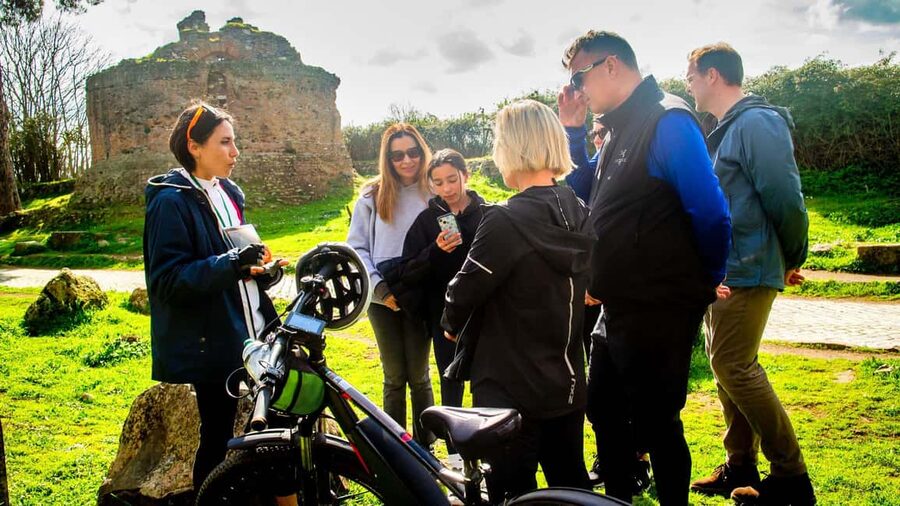
Caffarella Park is where the tour really opens up. The ride passes through a broad natural area tied to the Appian Way, with archaeological remains scattered among greenery. The route here lasts about 50 minutes, including sightseeing and riding.
I like this part because it shows how close Rome’s quiet side is to its crowded monuments. You are still exploring the city’s past, but the setting feels far less urban. The pace gives you room to look around instead of rushing from one ticketed site to the next.
The Ninfeo di Egeria follows as a shorter stop of about 20 minutes. Your guide explains the site and gives you time for photographs. It is one of the many places that becomes more interesting when someone supplies the context, since the ruins alone may not tell you how they fit into Roman life.
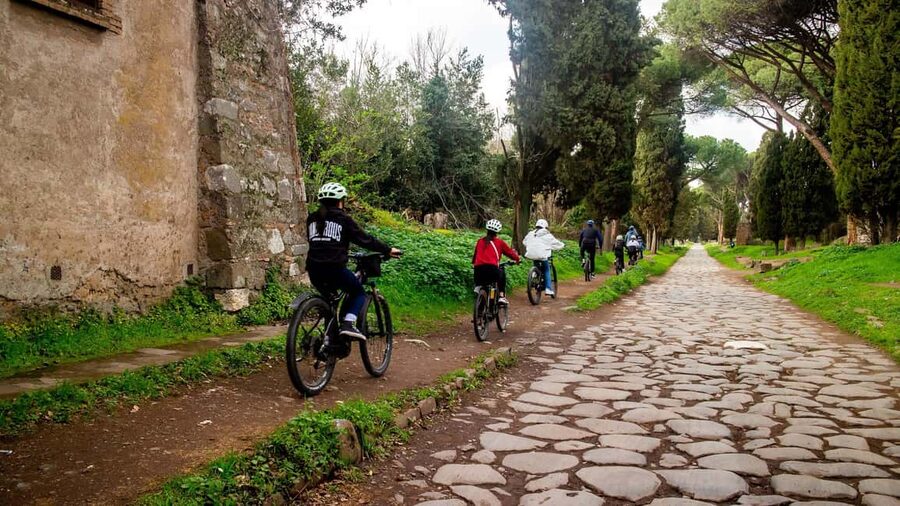
The ground is not always smooth. Ancient roads and park tracks can have bumps, stones, and uneven edges. The suspension helps, but this is not a polished cycling route. Think of it as a guided archaeological ride, not a city bike lane.
Parco degli Acquedotti and Rome’s water system
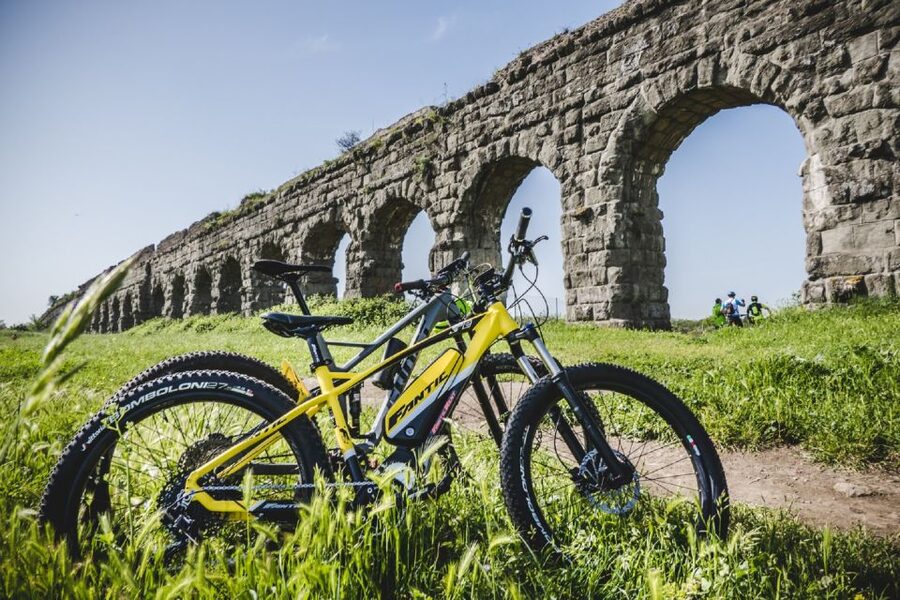
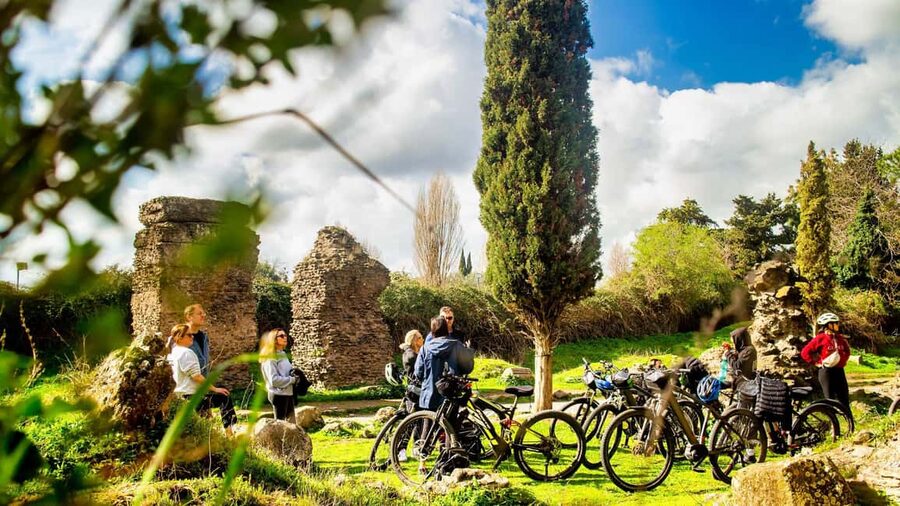
The aqueduct park is the visual high point for many people. About six ancient Roman aqueducts converge in this area, creating long rows of arches across open grass. You can ride near the structures, stop for photographs, and hear how Rome’s water supply depended on careful engineering over great distances.
This is where the tour’s mix of nature and ancient technology works best. The aqueducts are huge, but the open setting lets you understand their scale. Instead of viewing one fragment beside a busy street, you see the arches stretching across the park.
The riding section here lasts about an hour. That gives you more than a token stop, though the exact amount of time spent riding, listening, and taking photos depends on the group and guide. Confident riders may enjoy getting close to the aqueducts, while less experienced cyclists should keep their eyes on the uneven ground.
The park is also the setting for the included meal on the five-hour morning tour. The food is described as traditional Roman cuisine, and several riders especially enjoyed the pasta. One family found the lunch only average, while others considered it a welcome and tasty break. I would value it mainly as a chance to refuel in a quiet setting, not as a reason to book the tour by itself.
For an afternoon departure, the five-hour option includes an aperitif instead of lunch. The supplied information does not specify the exact dishes or drinks, so check the details at booking if the meal matters to your decision.
Villa dei Quintili and the Appian Way ruins
Villa dei Quintili appears as a guided photo stop during the ride. The villa was a grand Roman country residence, and its position along the Appian Way helps explain why this road was more than a route for soldiers and merchants. It also served as a corridor for wealthy Romans and imperial power.
The stop lasts about 20 minutes. That is enough for an introduction and photographs, but not a full archaeological visit with extensive time inside every ruin. If you want long museum-style visits, this format may feel quick. If you prefer seeing several sites in one outing, the short stop keeps the ride moving.
The Appian Way itself is the main event. Called the Queen of the Streets, it is one of Rome’s oldest roads and remains evocative because the route still passes through open ground and ancient remains. You are not looking at history from behind a bus window. You are feeling the surface under the tires, with all the bumps that implies.
Tomb of Cecilia Metella and Circus of Maxentius
The Tomb of Cecilia Metella is another strong Appian Way stop. The large ancient tomb is easy to recognize and gives the guide a chance to explain Roman burial customs, status, and the importance of the road.
The scheduled stop lasts about 25 minutes. The visit is centered on sightseeing, explanation, and photography, so keep your expectations focused on the exterior view and the surrounding road rather than a long indoor tour.
The Circus of Maxentius follows with another 25-minute guided stop. This site adds a public and imperial side to the route, contrasting with the tombs and rural ruins. Together, the two stops help you see the Appian Way as a broad historical zone rather than a single ancient street.
Your guide is important here. Alex, Lorenzo, Paolo, and others are praised for mixing facts with anecdotes and humor. That personal delivery helps the stops avoid becoming a list of dates and names. You can also ask questions and adjust the conversation to your interests.
Baths of Caracalla and the return ride
The Baths of Caracalla are the final major sightseeing stop, with about 20 minutes for a guided look and photographs. The baths were one of ancient Rome’s great public complexes, and even a short explanation can help you understand the scale of Roman public life and construction.
After that, you ride back to Roma STARBIKE. The route returns you to the same starting point near the Colosseum and Carrefour supermarket.
The complete outing lasts four to five hours. The shorter version covers the main cycling route and archaeological stops, while the longer version adds the catacombs and food or aperitif. Because the tour includes many locations, the day feels active even though the pace is relaxed.
How much value do you get for $81?
At $81 per person, this is not the cheapest way to spend half a day in Rome. But the price includes the e-bike, helmet, guide, and the longer option’s catacombs visit plus lunch or aperitif.
The value is strongest if you would otherwise need to arrange transport to the Appian Way, rent a bike, find the right route, and research each site yourself. The guide also handles the tricky transition between city streets, parks, and ancient roads.
For the five-hour version, lunch adds practical value because you do not need to stop and plan a separate meal during the ride. The food should not be treated as a gourmet event, but it gives the group a useful pause.
I would not choose this tour only to save money. I would choose it because it covers a large area efficiently and gives you access to Rome’s quieter archaeological side. Private and small-group formats are available, which may justify the cost if you want more personal attention or are traveling with family.
Free cancellation up to 24 hours ahead and reserve-now, pay-later booking also make it easier to fit into a changing Rome schedule.
Who should book, and who should skip it
You should book this if you are comfortable on a bicycle, want open space after several days in the historic center, and enjoy hearing stories while moving between ruins. It is particularly good for active families, couples, solo visitors, and anyone who has already seen the main central monuments.
Choose the five-hour version if the catacombs matter to you or if you want lunch included. Choose four hours if your group has younger children, mixed stamina, or limited time.
You should think twice if you dislike uneven roads, cannot comfortably ride beside traffic for short sections, or want a completely passive sightseeing day. Pregnant women and people over 120 kilograms, or 264 pounds, should not join according to the stated restrictions.
Bring comfortable clothing. After rain, expect mud. You may also want your own water bottle, since water is not listed among the included items and one rider specifically wished one had been supplied.
Should you book the Appian Way e-bike tour?
Yes, if you want to see a less familiar side of Rome and can handle a real bike ride. The aqueducts, Appian Way, parks, tombs, and catacombs create a varied day, while the electric assistance keeps the effort reasonable.
The tour is best understood as an active history outing with rough roads, not a smooth recreational cycle. Book the longer option for the catacombs and meal, and the shorter option for a lighter family-friendly day. At $81, it offers solid value for the amount of ground covered, the quality of the bikes, and the care provided by guides such as Alex, Paolo, Ricardo, Ava, and Lorenzo.
FAQ
Where does the Appian Way e-bike tour start?
It starts at Roma STARBIKE, about 0.03 miles from the Colosseo Metro station on Line B, next to a Carrefour supermarket.
How long does the tour last?
The tour lasts four or five hours, depending on the option you choose. Starting times vary, so check availability when booking.
Are the Catacombs of St. Callixtus included?
The catacombs are included only in the five-hour tour option. The guided catacombs visit lasts about one hour.
Is lunch included?
Lunch is included with the five-hour morning tour. The afternoon version includes an aperitif instead. The four-hour option does not include these extras.
What languages are available?
The live tour guide is available in English or Italian.
Are e-bikes and helmets provided?
Yes. A high-quality e-bike and helmet are included, along with a mobile phone holder.
Can children join the tour?
Child seats are available for children weighing up to 25 kilograms. A trailer bike is available for children aged 6 to 10 who are about 140 centimeters tall. Children and adults still need to be comfortable riding as part of a group.
More Lunch Experiences in Rome
- Pompeii and Mount Vesuvius Day Trip from Rome with Pizza Lunch
★ 4.5 · 6,151 reviews - Rome: Tuscany & Montepulciano Day Trip with Lunch & Wine Tasting
★ 4.5 · 5,232 reviews - From Rome: Pompeii Day Trip with Optional Vesuvius and Lunch
★ 4.6 · 5,067 reviews - Rome to Pompeii Guided Tour with Wine & Lunch by High Speed Train
★ 5.0 · 1,379 reviews
Recently reviewed around Rome
- Ancient Rome at Twilight Walking Tour★ 5.0 · 276 reviews
- Domus Aurea Guided Tour: The Golden House of Nero★ 4.5 · 199 reviews
- Early Vatican Museums & Sistine Chapel Small Group Tour★ 4.5 · 314 reviews
- Early Vatican Museums Tour: The Best of the Sistine Chapel★ 4.5 · 900 reviews
- Jewish Ghetto & Piazza Navona: Food, Wine & Sightseeing Rome Tour★ 5.0 · 460 reviews
- 3 Days in Sorrento, Capri & Pompeii: la Dolce Vita★ 4.0 · 595 reviews
- Tivoli Villas Full Day Trip From Rome with Lunch★ 4.0 · 443 reviews
- Rome Pasta Making Class with Italian Sauces and Wine Included★ 5.0 · 645 reviews
Cycling Tours, compared.
Rome EBike Tour: Appian Way, Catacombs & Roman Aqueducts
Read our review →
Top Highlights & Hidden Gems Tour by Cannondale E-Bike
Read our review →
Appian Way, Catacombs, & Roman Aqueducts E-bike Tour
Read our review →
Rome City Small Group Bike Tour with quality Cannondale EBike
Read our review →
Tuscany Bike Tours Through the Chianti Hills with Wine Tasting
Read our review →
Rome by Night – Ebike Small Group Tour – Food and Wine (Option)
Read our review →
Appian Way E-bike Tour with Catacombs, Aqueducts & Food
Read our review →
Browse the lists this tour appears in