
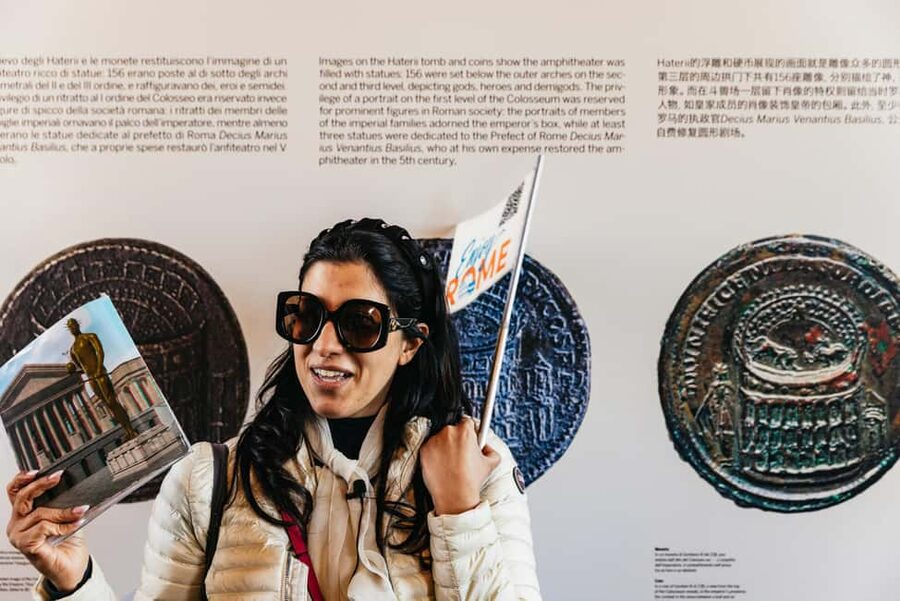
Review · COLOSSEUM & ROMAN FORUM TOURS
Rome: Colosseum, Forum & Palatine Hill Tour & Optional Arena
The best moment comes when you enter the Colosseum through the gladiators’ gate and step onto the arena floor. From there, you can look down toward the underground chambers where fighters prepared and animals were held. I like that this tour also gives the Roman Forum and Palatine Hill serious attention, rather than treating them as quick extras. The priority entry is another real time-saver.
The main drawback is pace. You cover three large archaeological areas in roughly 2.5 hours, and some tours run beyond three hours when the guide waits for stragglers or adds more explanation. The tour is not suitable for wheelchair users or people with mobility impairments, and bad weather can close the arena floor without a refund.
In This Review
- Key points to know before booking
- The meeting point near Via delle Terme di Tito
- The Roman Forum: Rome’s public heart in ruins
- Palatine Hill and the story of Rome’s beginning
- Entering the Colosseum through the gladiators’ gate
- Why the guide and headset matter
- Is the 58-dollar price good value?
- Timing, crowds, and the real length of the visit
- What to bring, and what to leave behind
- Who should book this Colosseum tour?
- Should you book it?
- FAQ
- How long does the tour last?
- What sites are included?
- Is the Colosseum arena floor included?
- Is the underground Colosseum included?
- Where does the tour begin?
- What languages are available?
- Is the tour suitable for wheelchair users?
- What happens if bad weather closes the arena floor?
Key points to know before booking
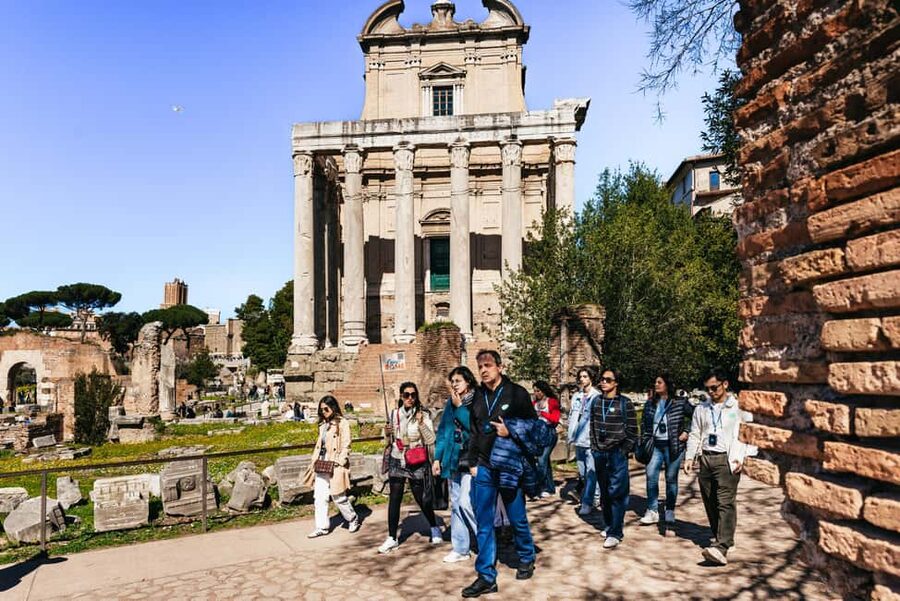
- The arena floor is the special upgrade: Choose the option that includes the gladiators’ entrance and arena floor for an up-close view of the Colosseum.
- The Forum and Palatine Hill are not rushed add-ons: Each receives guided attention, with temples, government buildings, and imperial residences explained along the way.
- Headsets make a real difference: You can hear the guide while walking a little behind the group or moving between sites.
- Guides bring the ruins to life: Maria, Olga, Stefano, Sabrina, Laura, Amir, Alexandria, and Alessandro Campioni are among the guides praised for clear explanations and lively delivery.
- Allow extra time: The advertised duration is 2.5 hours, but the visit can last more than three hours.
- Come prepared for a walk: Wear comfortable shoes, bring water and identification, and leave large bags and luggage behind.
The meeting point near Via delle Terme di Tito
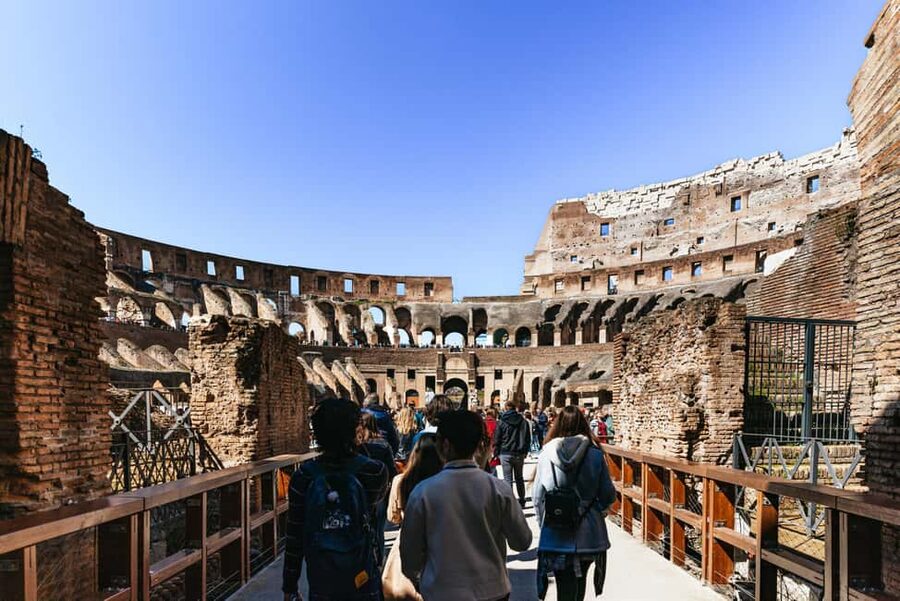
The tour begins at Via delle Terme di Tito 93, close to the Colosseum. If you arrive by metro, get off at Colosseo station, walk up to the terrace above the station, continue along Via Nicola Salvi for about 100 meters, and turn left.
This location is near the monument and generally easy to place once you are above the station. Still, give yourself time to find the exact meeting point. One useful detail from the tour arrangement is that check-in is intended to be quick, but finding the guide can be harder if you arrive at the last minute or only look for a sign directly beside the Colosseum.
Bring the complete names of everyone on your booking. This matters because entry cannot be guaranteed if the reservation has incomplete names. You should also carry a passport or ID card, including identification for children.
The tour uses headsets, which are supplied for you. They are especially useful in a busy archaeological area where the group may spread out. You do not need to stand shoulder to shoulder with the guide every time a new explanation begins.
Other Rome days travellers weigh against this one:
- Vatican: Museums & Sistine Chapel Entrance Ticket
★ 4.5 · 144,003 reviews - Vatican Museums & Sistine Chapel Tour with Optional Basilica
★ 4.3 · 67,413 reviews - Colosseum, Roman Forum & Palatine Guided Tour
★ 4.7 · 63,148 reviews
The Roman Forum: Rome’s public heart in ruins
The order can change, but many departures begin at the Roman Forum before moving to the Colosseum. I think this is a smart way to approach ancient Rome. The Forum is less instantly readable than the amphitheater, so hearing the story first gives you a framework for the stones and columns you see later.
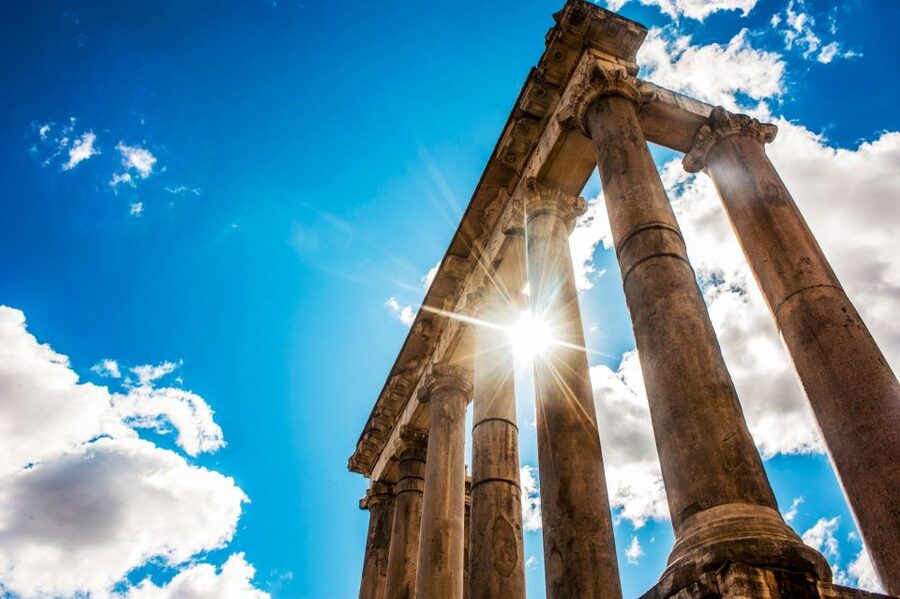
The Forum was the political, social, and religious center of the city. Your guide explains the remains of public buildings, temples, and the sacred home of the Vestal Virgins. You also hear about political disputes and daily life, which helps turn a field of broken walls into a functioning city.
This is where a strong guide matters most. Names, dates, and Latin terms can pile up quickly, but guides such as Maria, Olga, and Alessandro Campioni have been praised for making complex material easier to follow. The best explanations connect a building to what happened there: public business, religious ritual, legal arguments, or political theater.
The walking itself is uneven and exposed. You will be moving over ancient surfaces, so comfortable shoes are more than a polite suggestion. There is plenty to see, but the Forum is not a place to rush through while staring only at your phone. Keep your attention on the guide, then use the pauses for photographs.
A possible weakness is that the Forum portion can feel compressed if the group loses time. One tour experience specifically noted that the final part felt rushed because people wandered away and the guide had to wait. Stay close to your group and listen for instructions. It helps everyone get more time at the important viewpoints.
Palatine Hill and the story of Rome’s beginning
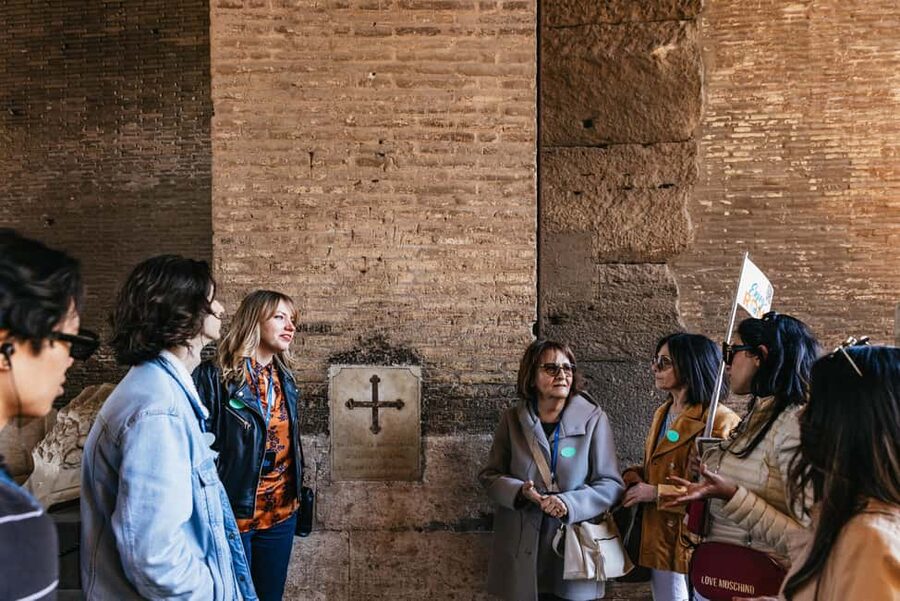
From the Forum, the route continues to Palatine Hill. According to Rome’s traditional founding story, Romulus chose this hill for his new city. In later centuries, the hill became an address for wealthy and powerful Romans during the Republic and the imperial period.
The value here is not just the view or the elevated setting. Palatine Hill helps you understand how Rome developed from a small settlement into a center of power. Your guide places the remains in that larger story, linking the hill to the people who lived and ruled there.
The site can be harder to interpret alone than the Colosseum. Walls and foundations do not always announce what they were used for, and a guide can point out why a particular ruin matters. Olga was praised for simplifying complicated history and helping the group picture how the area once looked and functioned.
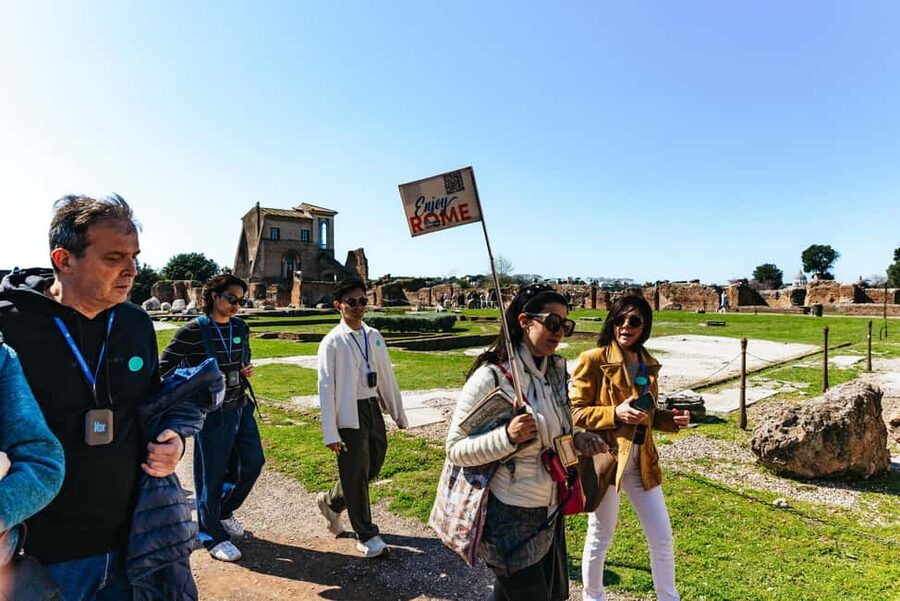
Plan for more walking than the short distance on a map suggests. The Forum and Palatine Hill form a broad archaeological zone, and the route includes slopes and uneven ground. If you tire easily, this is worth considering before you book. The tour is specifically not suitable for people with mobility impairments or wheelchair users.
The hill also gives the tour a useful change of mood. The Colosseum is all spectacle. The Forum is public life and politics. Palatine Hill adds the private world of Rome’s elite and the old stories about the city’s founding.
Entering the Colosseum through the gladiators’ gate
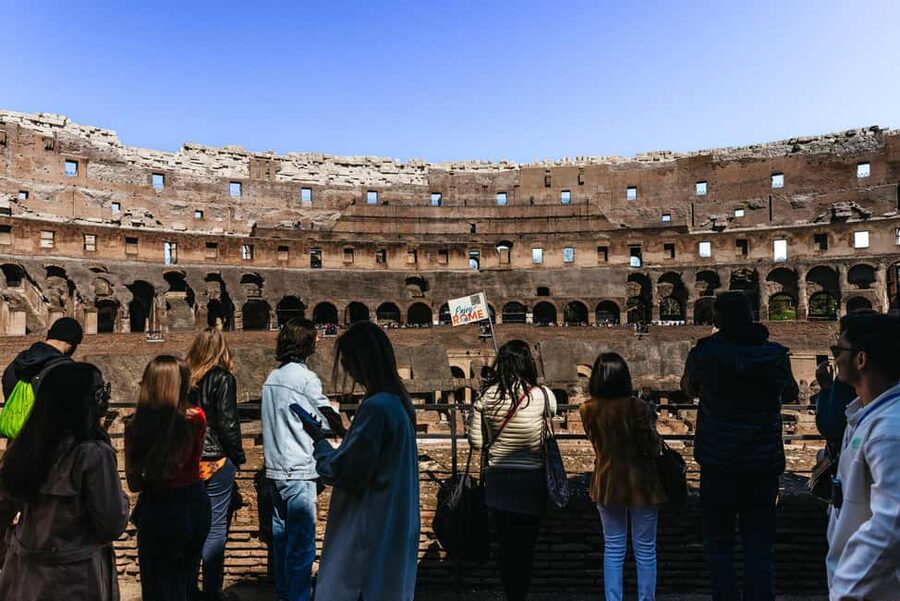
The Colosseum is the grand finale for many departures, though the order is subject to change. With priority entry, you use a separate entrance intended to reduce time spent in the regular lines. This does not mean you walk straight in without any checks, but it can make a major difference during a crowded day.
The optional arena floor is the feature that sets this outing apart from a basic exterior visit or standard interior tour. Choose the arena option if you want to stand where the games took place and enter through the gladiators’ gate.
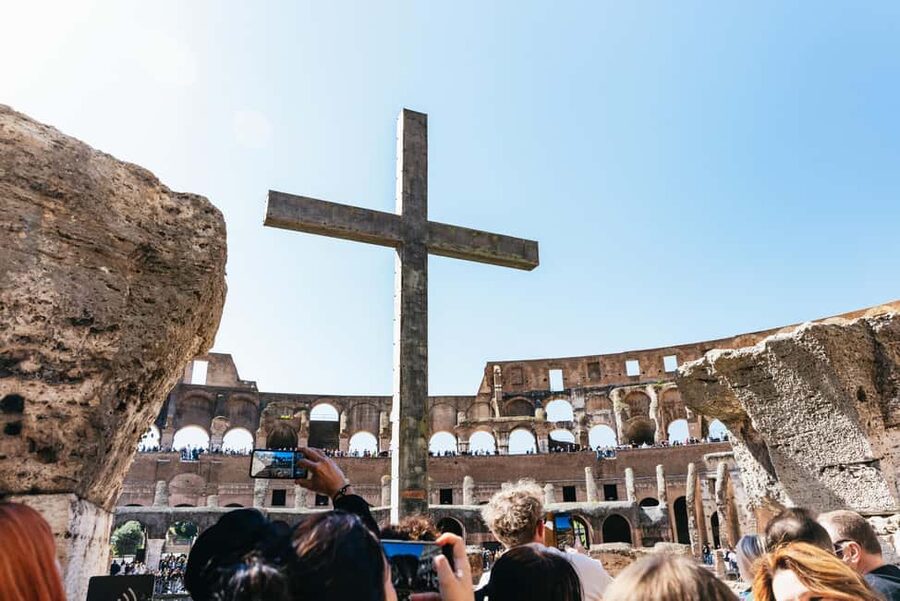
From the arena, you can look down into the underground areas where gladiators prepared and wild animals were kept. The view gives you a clearer sense of how the building worked. Instead of seeing only the seating bowl, you can connect the public spectacle above with the service spaces below.
The arena floor does not recreate the ancient games, of course. Its value is physical and visual: you are standing at the center of the structure, looking up toward the seating and across the remains. A good guide then supplies the human story, explaining what the building meant to spectators, performers, and the rulers who sponsored the events.
The arena option costs an additional 24 euros according to the tour details. For many people, I think it is worth paying for, especially if this is your first visit to Rome or your main reason for booking is to understand the Colosseum from inside. If you have already visited the arena or want the least expensive option, the standard entry may be enough.
The underground floor is not included. Do not confuse the arena floor with the underground level. You can look down toward the dungeons from the arena, but this experience does not give you access to the underground floor itself.
A different way to spend the day, same part of Italy:
- Vatican Museums, Sistine Chapel & St Peter’s Basilica Guided Tour
★ 4.5 · 39,149 reviews - Rome: Colosseum, Palatine Hill and Roman Forum Guided Tour
★ 4.8 · 32,814 reviews - Rome: Guided Tour of Colosseum, Roman Forum & Palatine Hill
★ 4.7 · 27,897 reviews - Rome: Colosseum & Forum with Audio Guide App -Optional Arena
★ 4.2 · 24,770 reviews
Why the guide and headset matter
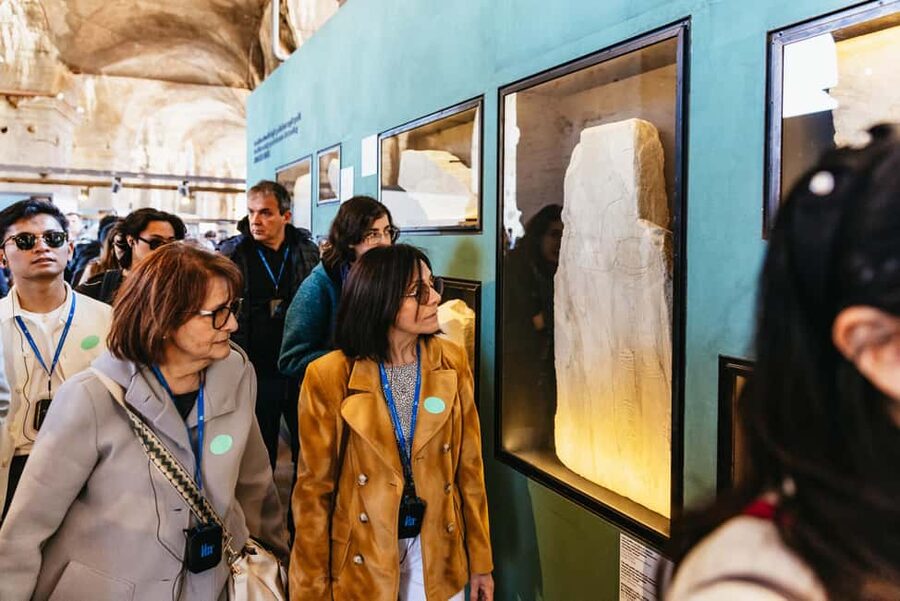
This is a history-heavy tour, and the guide is central to its value. The ruins are impressive on their own, but the Forum and Palatine Hill are much easier to understand when someone explains what you are seeing as you walk.
The guide team includes French, Italian, German, English, and Spanish tours. English-language guides praised for strong delivery include Mohamed, Stefano, Sabrina, Laura, Amir, Alexandria, Maria, Olga, and Alessandro Campioni. Individual guide assignments can vary, so you should not book expecting one particular person.
The strongest pattern is clear speaking combined with enthusiasm. Alexandria was praised for adding detailed stories and fun facts. Amir was noted for warmth and humor. Laura was described as easy to listen to, while Stefano was praised for being friendly and well informed. These details matter because a dry lecture can make even the Colosseum feel like homework.
The headsets are a practical plus. You can hear the guide while walking a few steps behind, taking a photograph, or moving between locations. One of the most useful features is that the guide can continue speaking during transitions instead of stopping the whole group every few minutes.
There is a trade-off. A guided group follows the guide’s rhythm, not your own. If you want to linger over one column, sketch, or read every plaque, this may feel quick. The tour is better suited to you if you want a clear overview and the main stories in a set period.
Is the 58-dollar price good value?
The listed price is $58.07 per person. That is not the cheapest way into the Colosseum, but the price includes a guide, headsets, priority entry to the Colosseum, and priority entry to the Forum and Palatine Hill. The standard Forum and Palatine access is listed as 18 euros, while arena access adds 24 euros when selected.
I see the value in the time saved and the interpretation provided. Rome’s archaeological sites can be confusing, and buying entry alone does not explain why one ruined building mattered more than another. If you have only a short stay in Rome, avoiding a long entrance line and getting a structured explanation can justify the extra cost.
The arena option improves the value for a first visit. You get the main Colosseum interior plus the central floor and gladiator entrance, rather than viewing the building only from the outer corridors and seating levels.
Still, compare the final price shown for your date and option. The $58.07 figure is the stated per-person price, but the arena is presented as an option rather than part of every booking. You should also remember that food, drinks, and transfers are not included.
Timing, crowds, and the real length of the visit
The advertised duration is 2.5 hours, with starting times shown when you check availability. The route description allocates about an hour to each of the Colosseum, Roman Forum, and Palatine Hill, though the total advertised time is shorter than three full hours.
In practice, plan your day with flexibility. One experience ran a little over three hours, and another noted that time was lost waiting for people who had moved away from the group. That extra time may be welcome if you enjoy history, but it can affect lunch bookings, train connections, or a later museum visit.
The guide may also adjust the order to manage timing and crowd levels. Olga was praised for reaching key areas at useful times, which helped the group avoid some congestion. You cannot count on a completely quiet visit, but a well-paced route can make the major difference between a pleasant walk and a slow shuffle.
The tour operates in all weather. Wear clothing suited to the forecast and bring water. If bad weather causes the arena floor to close, the gladiators’ gate can still be used, but you will not be allowed onto the floor and no refund is provided for that change.
What to bring, and what to leave behind
Keep your packing light. Large bags, luggage, glass objects, sharp items, weapons, alcohol, drugs, and pets are not allowed. A small amount of water, identification, and a phone or camera are the sensible basics.
Comfortable shoes are essential because the route covers the Colosseum, Forum, and Palatine Hill on foot. Weather-appropriate clothing also matters because much of the archaeological area is open to the sky.
The tour ends back at the meeting point, with the stated drop-off locations at Via delle Terme di Tito 93 and Via della Salara Vecchia. Transfers are not included, so you arrange your own way to and from the start.
Cancellation is possible up to 24 hours in advance for a 75 percent refund. Check the exact terms attached to your booking before making plans around that policy.
Who should book this Colosseum tour?
I would choose this tour for a first-time Rome visitor who wants the major ancient sites explained in one organized outing. It also suits anyone who prefers a live guide to reading signs or carrying a guidebook through a large ruin.
The tour is a good match for you if:
- You want to see all three sites in one visit.
- You value priority entry and want to limit time in regular lines.
- You want the arena floor and gladiators’ gate.
- You enjoy historical stories, political drama, and explanations of daily life.
- You can manage uneven ground, slopes, and several hours of walking.
- You want commentary in English, French, Italian, German, or Spanish.
I would think twice if you need wheelchair access, have limited mobility, dislike group pacing, or want a slow photographic visit. I would also avoid scheduling another fixed appointment immediately afterward.
Should you book it?
Yes, if you want the ancient center of Rome explained rather than simply photographed. The Forum and Palatine Hill are far more rewarding when you understand what happened there, and the arena floor adds a memorable physical connection to the Colosseum.
Choose the arena option if this is your first Colosseum visit and the extra cost fits your budget. Book the standard version if you mainly want the three major sites with a guide and priority entry.
The practical warning is simple: arrive early at Via delle Terme di Tito 93, stay with the group, bring identification and good shoes, and leave room in your schedule for the tour to run long. With those points covered, this is a strong way to meet ancient Rome in one concentrated morning or afternoon.
FAQ
How long does the tour last?
The advertised duration is 2.5 hours. Some visits can run longer than three hours, so leave extra time afterward.
What sites are included?
The tour visits the Colosseum, Roman Forum, and Palatine Hill with a live guide.
Is the Colosseum arena floor included?
Arena floor access is included only if you select the arena option. That option uses the gladiators’ entrance and costs an additional 24 euros according to the tour details.
Is the underground Colosseum included?
No. Access to the underground floor is not included. From the arena floor, you can look down toward the underground areas.
Where does the tour begin?
The meeting point is Via delle Terme di Tito 93. From Colosseo metro station, walk to the terrace above the station, continue along Via Nicola Salvi for about 100 meters, and turn left.
What languages are available?
Live guiding is available in English, French, Italian, German, and Spanish.
Is the tour suitable for wheelchair users?
No. The activity is not suitable for wheelchair users or people with mobility impairments.
What happens if bad weather closes the arena floor?
The tour operates in all weather. If poor weather closes the arena floor, entry through the gladiators’ gate is not affected, but access to the floor is prohibited and no refund is provided.
Recently reviewed around Rome
- Ancient Rome at Twilight Walking Tour★ 5.0 · 276 reviews
- Domus Aurea Guided Tour: The Golden House of Nero★ 4.5 · 199 reviews
- Early Vatican Museums & Sistine Chapel Small Group Tour★ 4.5 · 314 reviews
- Early Vatican Museums Tour: The Best of the Sistine Chapel★ 4.5 · 900 reviews
- Tivoli Villas Full Day Trip From Rome with Lunch★ 4.0 · 443 reviews
- Jewish Ghetto & Piazza Navona: Food, Wine & Sightseeing Rome Tour★ 5.0 · 460 reviews
- 3 Days in Sorrento, Capri & Pompeii: la Dolce Vita★ 4.0 · 595 reviews
- Cook With Us in Rome: A Hands-On Cooking Experience 09:20AM class★ 5.0 · 234 reviews
Colosseum & Roman Forum Tours, compared.
Colosseum, Roman Forum & Palatine Guided Tour
Read our review →
Colosseum, Palatine Hill and Roman Forum Guided Tour
Read our review →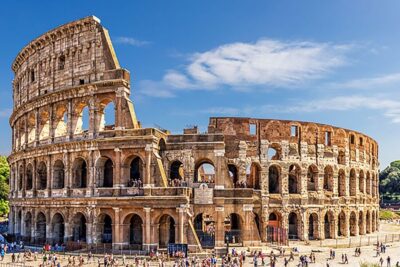
Guided Tour of Colosseum, Roman Forum & Palatine Hill
Read our review →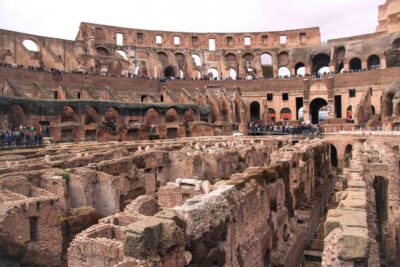
Colosseum & Forum with Audio Guide App -Optional Arena
Read our review →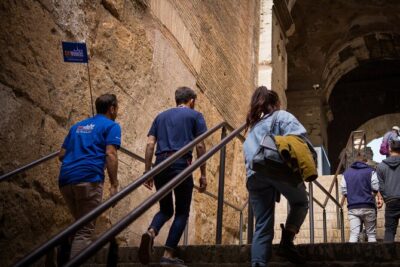
Colosseum, Roman Forum and Palatine Hill Guided Tour
Read our review →
Colosseum, Roman Forum, Palatine with Multimedia Video
Read our review →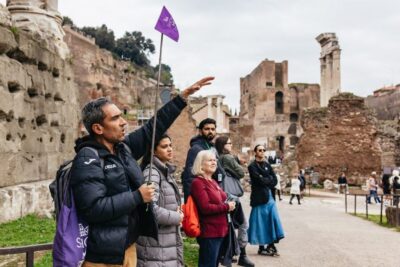
Colosseum, Palatine Hill & Roman Forum Guided Tour
Read our review →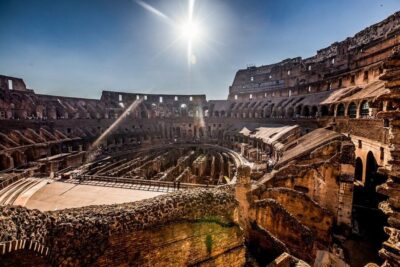
Colosseum: Underground and Ancient Rome Tour
Read our review →Browse the lists this tour appears in