
Review · COLOSSEUM & ROMAN FORUM TOURS
Rome: Colosseum, Roman Forum and Palatine Hill Group Tour
The most vivid part of this tour is the Colosseum’s machinery: trapdoors, animal cages, and staging systems that turned the arena into a giant theater of blood and spectacle. You’ll then walk through the Roman Forum and climb Palatine Hill, where emperors lived above the city.
I like the choice between a live English-speaking guide and a self-guided audio tour. I also like the practical route: it covers the three essential ancient-Rome sites in roughly three hours, with a headset so you can hear the guide over the crowds. The main drawback is that the pace can feel brisk, especially in summer heat or when the group is delayed by security checks.
- Colosseum’s second tier: See the arena from one of its best viewing levels.
- Roman engineering: Learn how trapdoors, cages, and mock naval battles worked.
- Julius Caesar’s cremation site: Visit the remains of the temple built where his body was burned.
- Palatine Hill views: Look toward the Circus Maximus and across the Roman Forum.
- Two touring styles: Join a guide or use a multilingual audio guide on your smartphone.
- Fast-track access: Use a separate entrance, though ID checks can still cause delays.
In This Review
- Three Ancient Rome Sites in One Well-Planned Route
- Entering the Colosseum and Reading the Arena
- The Arch of Constantine and the Change of Pace
- Walking the Roman Forum, Rome’s Former Center
- Temple of Julius Caesar and the Story of His Cremation
- Climbing Palatine Hill for Imperial Views
- Guided Tour or Smartphone Audio Tour?
- Price, Fast-Track Entry, and What You Receive
- Practical Advice for a Smoother Visit
- Should You Book This Ancient Rome Tour?
- FAQ
- How long does the tour last?
- Which sites are included?
- Is a tour guide included?
- What languages are available?
- Does the tour include skip-the-line entry?
- What identification should I bring?
- Are food, drinks, and transportation included?
- Is the tour accessible for wheelchair users?
- Can I cancel if the weather is bad?
Three Ancient Rome Sites in One Well-Planned Route
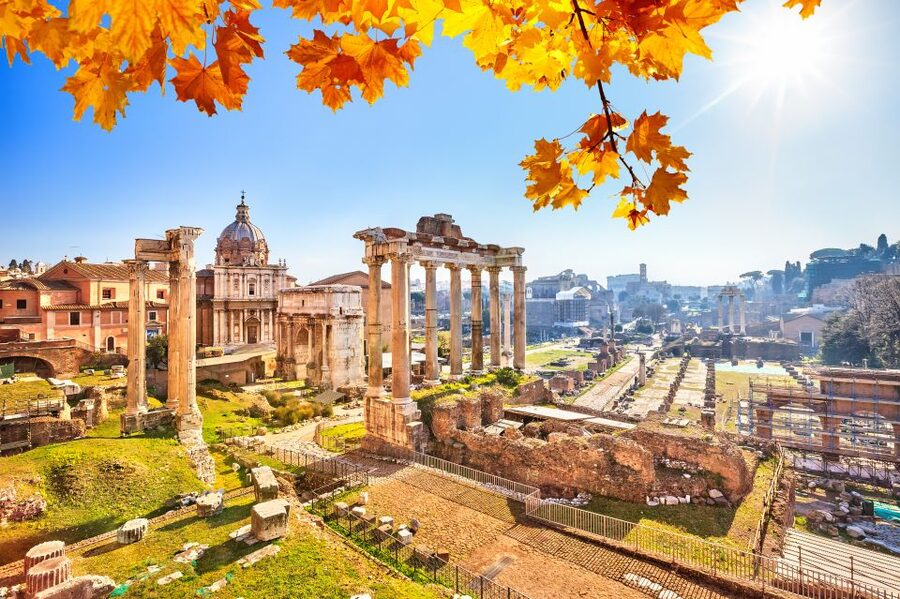
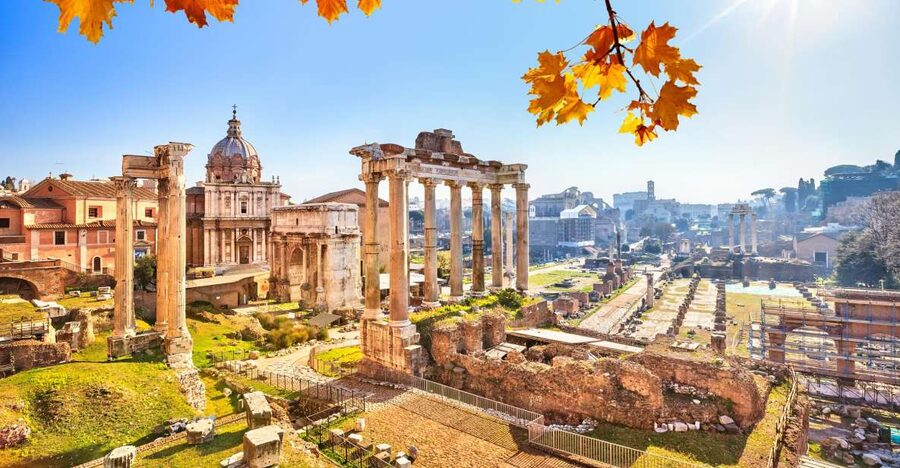
This experience links the Colosseum, Roman Forum, and Palatine Hill in a logical half-day outing. You begin near one of three possible meeting points, then move through the archaeological zone on foot before finishing near Via dei Fori Imperiali or the Colosseum.
The advertised duration is 2.5 to 3 hours. That is enough time to see the major monuments and understand how they fit together, but not enough for a slow, scholarly examination of every ruin. I see that as a fair trade for a first visit. Ancient Rome is spread across a large open site, and a clear route saves you from wandering past important buildings without knowing what you are seeing.
You can book the standard guided version or choose a self-guided audio option. The live version includes a licensed guide, headset system, and commentary in the group language. The audio option offers 44 points of interest in English, Chinese, German, French, Italian, Polish, Spanish, and Portuguese, depending on the selected version and current availability.
The audio format suits you if you prefer to stop for photographs, move ahead, or listen again to a section. The live tour is better if you want questions answered, historical connections explained, and help identifying the less obvious ruins.
Entering the Colosseum and Reading the Arena
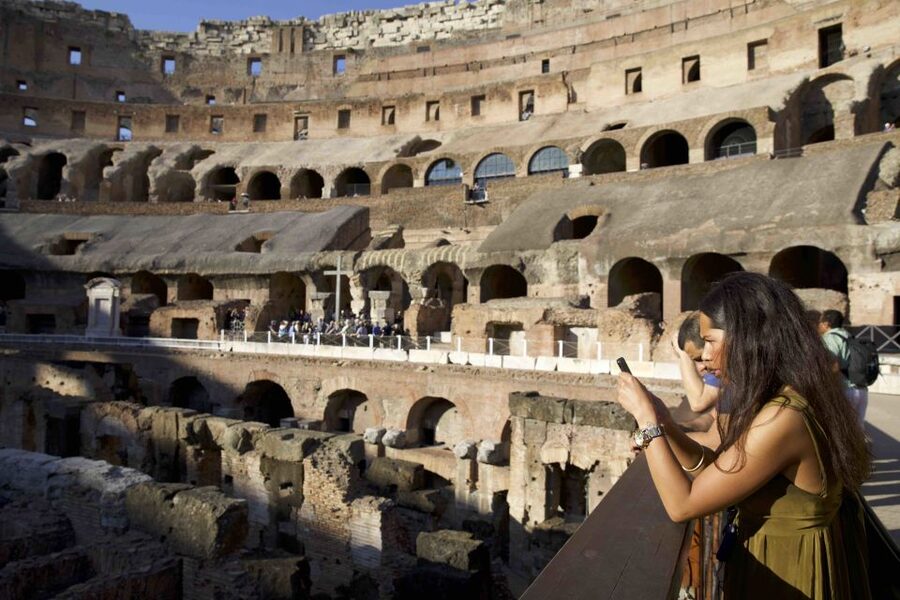
The Colosseum receives the longest portion of the route, about 75 minutes. Before going inside, the guide gives an outside explanation and points out the building’s scale, surviving sections, and construction methods.
This opening matters because the amphitheater can look deceptively simple from ground level. Once you hear how Roman builders arranged arches, concrete, stone, ramps, and circulation routes, the structure becomes more than a famous photograph. You begin to see it as a carefully planned machine for moving tens of thousands of people.
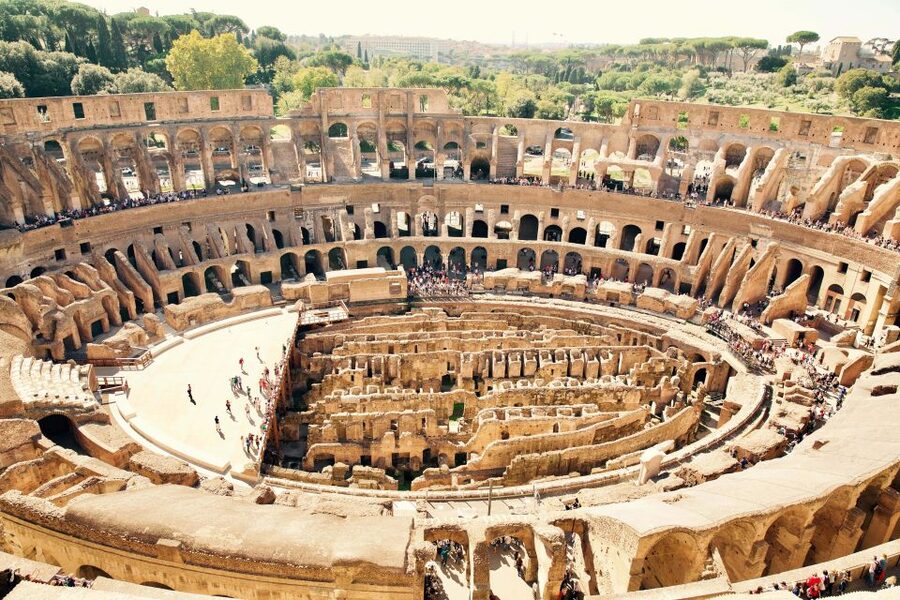
Inside, the tour focuses on the games held for public entertainment. You hear about gladiator fights, battles with wild animals, mock sea battles, and the cages that held lions. Trapdoors and hidden mechanisms allowed animals, scenery, and fighters to appear suddenly in the arena.
The stories are dramatic, but the stronger part of the explanation is the connection between engineering and spectacle. The Romans were not simply placing people in an open field and hoping for a good show. They designed an arena with elevators, underground spaces, entrances, and systems that kept the action moving.
The group visits the second tier, which offers broad views into the arena and across the surrounding ruins. It is a useful balance between seeing the Colosseum from the outside and standing inside its surviving structure.
The separate entrance can save time compared with the main public queue. Still, fast-track does not mean instant entry. Colosseum security checks the name and identification document of every visitor, so the line can slow down even with reserved admission. Bring the passport or ID card used for booking, and arrive early enough to handle an unexpected wait.
The headset system is especially useful here. Several groups may be speaking nearby, and the amphitheater can be noisy. A clear audio connection lets you look around while still following the guide.
Other Rome days travellers weigh against this one:
- Vatican: Museums & Sistine Chapel Entrance Ticket
★ 4.5 · 144,003 reviews - Vatican Museums & Sistine Chapel Tour with Optional Basilica
★ 4.3 · 67,413 reviews - Colosseum, Roman Forum & Palatine Guided Tour
★ 4.7 · 63,148 reviews
The Arch of Constantine and the Change of Pace
After the Colosseum, the route pauses at the Arch of Constantine for about 10 minutes. This is a short stop, but it helps connect the arena to the wider imperial setting.
You can photograph the arch and hear about its place beside the Colosseum. The stop also gives you a moment to adjust from the enclosed monument to the open archaeological area. It is not a long independent visit, so do not expect to study every carved panel in detail.
This is one reason comfortable shoes matter. The route now becomes a walk across uneven ancient ground, with several steps and changes in level. The tour is not suitable for wheelchair users or people with mobility impairments.
Walking the Roman Forum, Rome’s Former Center
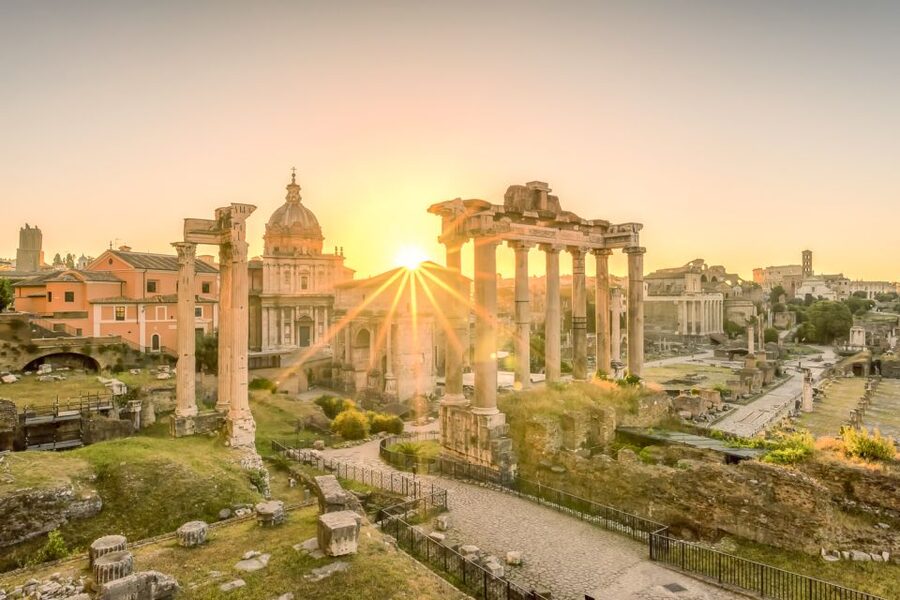
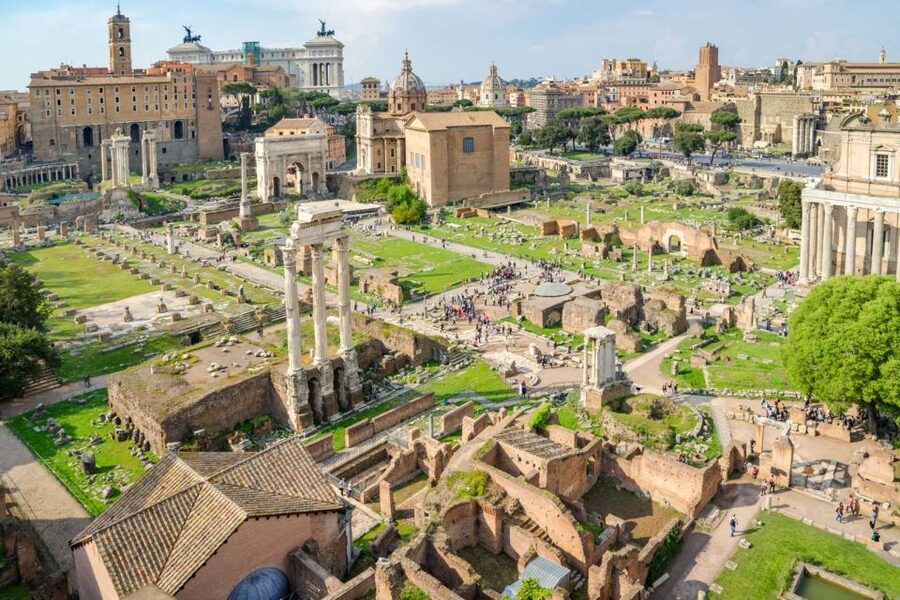
The Roman Forum receives about 30 minutes of guided touring, followed by several focused stops. This part can be harder to understand without help. Ruined columns and broken foundations do not announce their former purpose, and the Forum is large enough to blur together if you do not have a clear explanation.
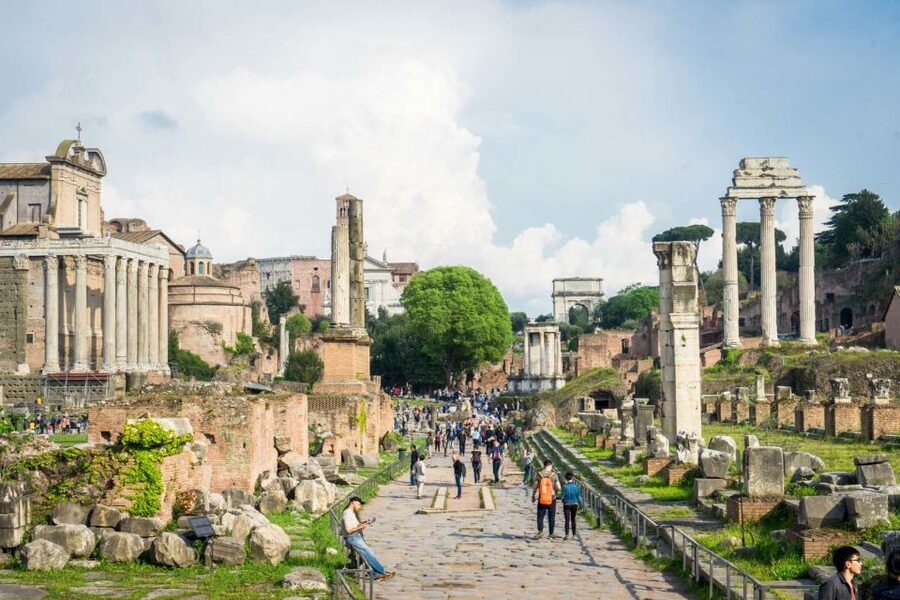
The route includes the Arch of Titus, Basilica of Maxentius, Temple of Antoninus Pius and Faustina, Senate House, and Arch of Septimius Severus. Each stop represents a different part of Roman public life, from government and law to religion, ceremony, and imperial power.
The Arch of Titus is particularly useful for understanding how Rome celebrated military victories. The Basilica of Maxentius shows the scale of Roman public construction, even though much of the building has disappeared.
At the Curia, or Senate House, you get a direct link to Roman government. The Senate was not a quiet modern chamber in the way you might picture one today. It was part of a political system that changed dramatically as the Republic gave way to imperial rule.
The Temple of Antoninus Pius and Faustina offers another reminder that the Forum was not just an administrative center. Religious buildings, monuments, meeting places, and triumphal arches stood close together, creating a public stage for Rome’s political and spiritual life.
The Arch of Septimius Severus marks another imperial victory. Seen among the Forum’s foundations, it helps you understand how rulers used monuments to announce military success and strengthen their public image.
The 30-minute Forum segment is efficient, though short. If you already have a strong interest in Roman archaeology, you may want more time among the ruins. For a first visit, the guide’s structure helps you focus on the sites most likely to be missed.
Temple of Julius Caesar and the Story of His Cremation
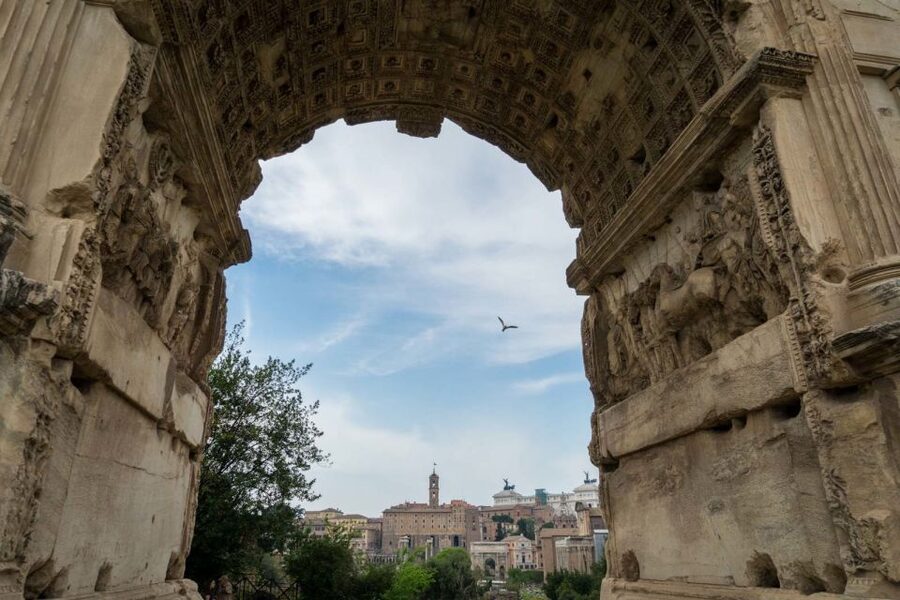
One of the most memorable details is the Temple of Julius Caesar. It was built at the place where Caesar’s body was cremated, connecting a familiar historical figure to a specific spot in the Forum.
The remains are not dramatic in the same way as the Colosseum’s walls, but the site rewards attention. You are looking at a place tied to the political crisis that ended the Roman Republic and opened the way for imperial rule.
This is also where a good guide can make a real difference. A bare ruin needs context. The tour places Caesar’s death and commemoration within the larger story of the Roman Republic, rather than treating the temple as just another pile of ancient stones.
A different way to spend the day, same part of Italy:
- Vatican Museums, Sistine Chapel & St Peter’s Basilica Guided Tour
★ 4.5 · 39,149 reviews - Rome: Colosseum, Palatine Hill and Roman Forum Guided Tour
★ 4.8 · 32,814 reviews - Rome: Guided Tour of Colosseum, Roman Forum & Palatine Hill
★ 4.7 · 27,897 reviews - Rome: Colosseum & Forum with Audio Guide App -Optional Arena
★ 4.2 · 24,770 reviews
Climbing Palatine Hill for Imperial Views
The final major section takes you up Palatine Hill for around 30 minutes. This is where the route gains elevation, so the climb may feel demanding on a hot day or if you have already spent hours walking around Rome.
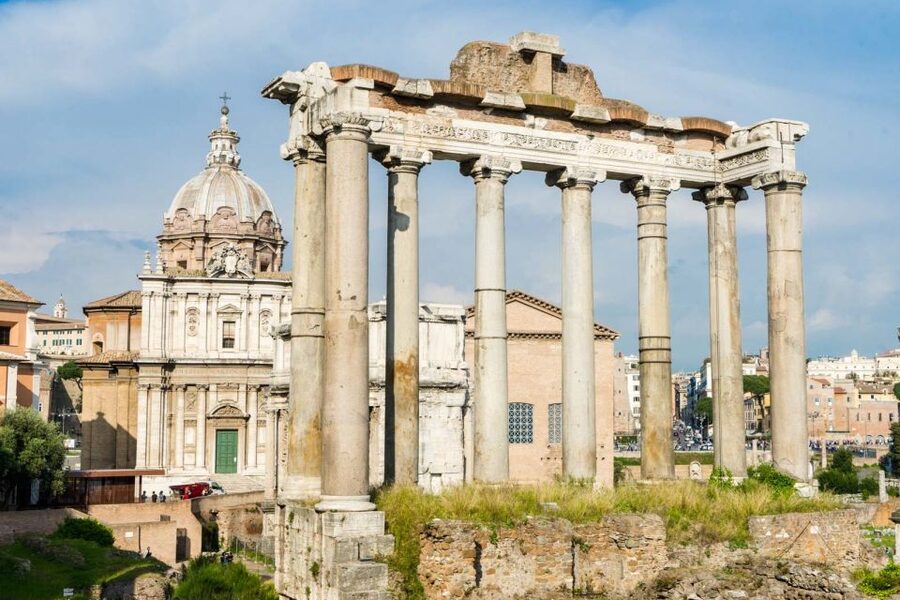
The reward is the view. From the hill, you can look toward the Circus Maximus on one side and across the Roman Forum on the other. The layout becomes easier to read from above. The Forum’s temples, arches, and public buildings form a connected district rather than a series of isolated ruins.
Palatine Hill was associated with Rome’s elite and imperial residences. The tour explains where emperors lived and why this hill became a powerful address. It is not only a viewpoint. It shows how status, politics, and geography came together in ancient Rome.
In July and August, the tour may last only two hours because of the heat, and the exact route can change with weather or other site conditions. Plan for direct sun, bring water, and expect the guide to adjust the pace if conditions are severe. The tour operates in all weather, and admission cannot be changed or refunded simply because you decide not to go on a rainy day.
Guided Tour or Smartphone Audio Tour?
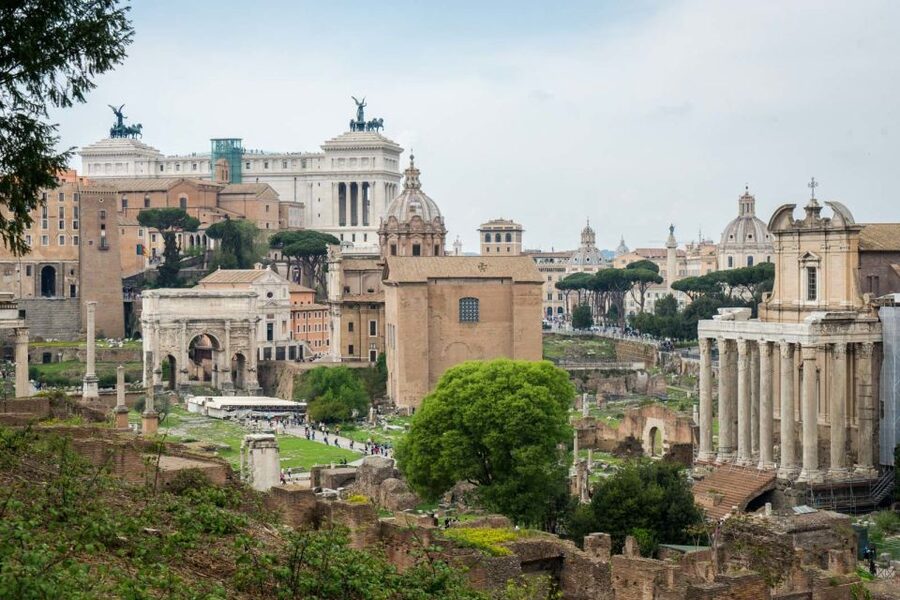
The live guided option is the stronger choice if this is your first time in Ancient Rome. You can ask questions, hear the story in a sensible order, and benefit from a guide who knows when to pause for a photograph or point out a detail hidden in the ruins.
Several guides have earned especially warm praise for their delivery. George is described as patient and well informed, while Riccardo is noted for keeping the group together and adapting when some participants found the heat or steps difficult. Barbara is praised for her engaging storytelling, and Caterina for moving the group efficiently while still allowing time for photographs. These names do not guarantee who will lead your departure, but they give you a useful sense of the standard the operator aims for.
The audio option gives you more freedom. You download the multilingual storytelling guide to your smartphone and can use its 44 points of interest at your own pace. You need your own charged phone and headphones, which are not included.
I would choose audio if you dislike group movement or want to repeat explanations. I would choose the guide if you want history presented as a connected story. The live commentary also avoids the small hassle of managing a phone in bright sun while walking over uneven ground.
Price, Fast-Track Entry, and What You Receive
At about $28 per person, this is a modest price for admission to the Colosseum, Roman Forum, and Palatine Hill. The adult ticket itself costs 18 euros, and the rest covers the guide or audio service, headset equipment for the live option, staff, and taxes.
That makes the guided version particularly good value if you want an introduction rather than a private specialist tour. You are paying for someone to sort out the route and explain why the ruins matter, not just for entry.
There are limits. Food, drinks, transport, hotel pickup, mobile devices, and headphones are not included. You must reach the meeting point yourself, and the exact starting location depends on the option booked. Late arrival is a serious problem because tickets cannot be amended or canceled, so leave extra time for Rome traffic, walking, and finding the correct entrance.
The group size is not specified. Most of the route is shared, and the headset helps you follow even when other groups are close. One unusual situation described by the operator involved a guide continuing with a much smaller group after others left because of the heat. That kind of flexibility can make the experience feel more personal, but it should not be treated as a promise of a private tour.
Practical Advice for a Smoother Visit
Wear shoes that can handle uneven paving and steps. The itinerary includes sustained walking, a climb up Palatine Hill, and outdoor sections with limited shade.
Carry your passport or ID card, a charged smartphone if using the audio option, and headphones. Large bags, backpacks, luggage, selfie sticks, and pets are not allowed. Sunscreen is also listed among the prohibited items, so check the operator’s current instructions before packing and plan your sun protection carefully.
Meet at the precise point shown for your booking. There may be more than one entrance or garden access point near the Colosseum, and finding the group by phone can be difficult if you only have Wi-Fi. Screenshot the meeting details and map them before leaving your accommodation.
Allow time for the security check even when using the separate entrance. The staff checks names and identification, and the line may take longer than expected.
This tour is best for first-time visitors, history fans who want a clear overview, and anyone who values a guide but does not want to pay for a private experience. It is less suitable if you need a wheelchair-accessible route, dislike walking, or want hours of quiet independent study at every ruin.
Should You Book This Ancient Rome Tour?
I would book it if you want the Colosseum, Roman Forum, and Palatine Hill handled in one efficient morning or afternoon. The route covers the essential sights, the price includes admission, and the live guides are consistently praised for clear explanations, humor, patience, and good group management.
Choose the guided option for the best historical context and the easiest experience. Choose the audio option if personal pace matters more than questions and conversation.
Skip it only if you already know Ancient Rome well and want to explore slowly on your own. For most first visits, this tour gives you the essential monuments, the major stories, and the practical advantage of organized entry without turning the visit into an all-day commitment.
FAQ
How long does the tour last?
The guided tour lasts about 2.5 to 3 hours. In July and August, it may last two hours because of excessive heat. The self-guided audio option can vary in length.
Which sites are included?
Admission and touring cover the Colosseum, Roman Forum, and Palatine Hill. The route also includes the Arch of Constantine, Arch of Titus, Basilica of Maxentius, Temple of Antoninus Pius and Faustina, Senate House, and Arch of Septimius Severus.
Is a tour guide included?
A professional English-speaking guide is included with the guided option. The self-guided option does not include a live guide and uses a downloadable audio guide instead.
What languages are available?
Live guiding is available in English, Chinese, French, German, Italian, Spanish, and Portuguese. The audio guide is available in German, French, Spanish, Italian, Chinese, English, and Portuguese.
Does the tour include skip-the-line entry?
The ticket includes fast-track entry through a separate entrance. You must still pass security and show identification, so entry may take longer than expected.
What identification should I bring?
Bring your passport or ID card. Colosseum security checks names and identification documents for every visitor.
Are food, drinks, and transportation included?
No. Food, drinks, transport to and from the attractions, and hotel pickup and drop-off are not included.
Is the tour accessible for wheelchair users?
No. The tour is not suitable for wheelchair users or people with mobility impairments.
Can I cancel if the weather is bad?
You can cancel up to five days in advance for a full refund. The tour operates in all weather, and admission cannot be changed or refunded if you decide not to attend because of rain.
Recently reviewed around Rome
- Ancient Rome at Twilight Walking Tour★ 5.0 · 276 reviews
- Domus Aurea Guided Tour: The Golden House of Nero★ 4.5 · 199 reviews
- Early Vatican Museums & Sistine Chapel Small Group Tour★ 4.5 · 314 reviews
- Early Vatican Museums Tour: The Best of the Sistine Chapel★ 4.5 · 900 reviews
- Jewish Ghetto & Piazza Navona: Food, Wine & Sightseeing Rome Tour★ 5.0 · 460 reviews
- 3 Days in Sorrento, Capri & Pompeii: la Dolce Vita★ 4.0 · 595 reviews
- Tivoli Villas Full Day Trip From Rome with Lunch★ 4.0 · 443 reviews
- Cook With Us in Rome: A Hands-On Cooking Experience 09:20AM class★ 5.0 · 234 reviews
Colosseum & Roman Forum Tours, compared.
Colosseum, Roman Forum & Palatine Guided Tour
Read our review →
Colosseum, Palatine Hill and Roman Forum Guided Tour
Read our review →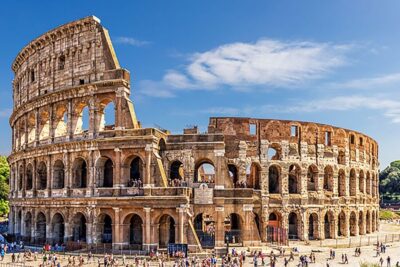
Guided Tour of Colosseum, Roman Forum & Palatine Hill
Read our review →
Colosseum & Forum with Audio Guide App -Optional Arena
Read our review →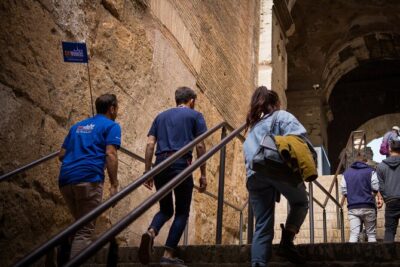
Colosseum, Roman Forum and Palatine Hill Guided Tour
Read our review →
Colosseum, Roman Forum, Palatine with Multimedia Video
Read our review →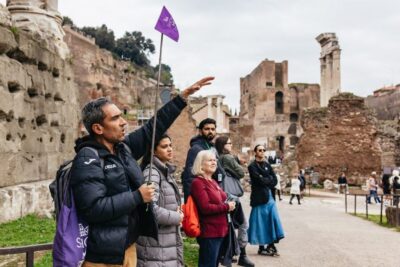
Colosseum, Palatine Hill & Roman Forum Guided Tour
Read our review →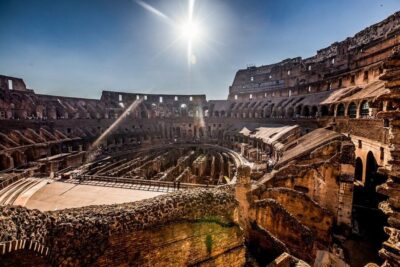
Colosseum: Underground and Ancient Rome Tour
Read our review →Browse the lists this tour appears in