
Review · COLOSSEUM & ROMAN FORUM TOURS
Rome: Colosseum Underground and Arena Tour
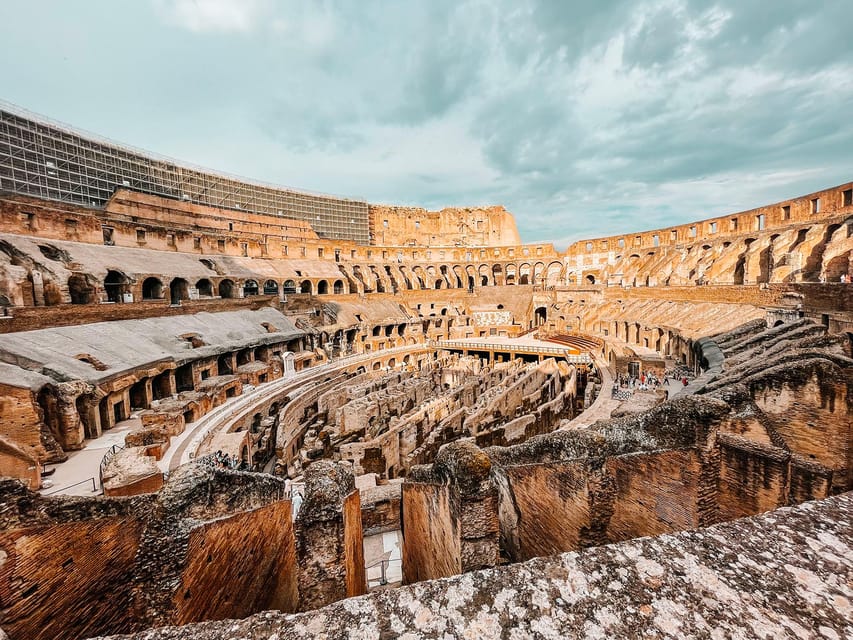
The most unusual part of this Rome tour is below the Colosseum, where narrow passageways once held gladiators, animals, lifts, trapdoors, and drainage channels. You also walk onto the arena floor, a rare viewpoint that makes the great amphitheater feel less like a postcard and more like a working machine.
I like the small group of up to eight and the headset system, which helps you hear the guide even when the site is busy. I also like that the ticket covers the Roman Forum and Palatine Hill, not just the Colosseum. The main drawback is pace: several people found the Forum or underground section a little rushed, especially when access times changed.
In This Review
- Key points to know before you book
- Why the Colosseum underground matters
- Starting at the Roman Forum entrance
- Roman Forum in 30 minutes
- Palatine Hill and its 15-minute photo stop
- Entering the Colosseum’s restricted levels
- The Hypogeum, where the machinery comes alive
- Walking onto the arena floor
- First and second tiers for the classic view
- What the $94 price buys you
- Group size, guides, and the pace
- Who should take this tour?
- Should you book the Colosseum Underground and Arena Tour?
- FAQ
- How long does the Colosseum Underground and Arena Tour last?
- What language is the tour conducted in?
- How many people are in the group?
- What areas of the Colosseum are included?
- What can I see in the underground area?
- Are the Roman Forum and Palatine Hill included?
- Where is the meeting point?
- What identification should I bring?
- Can wheelchair users take this tour?
Key points to know before you book
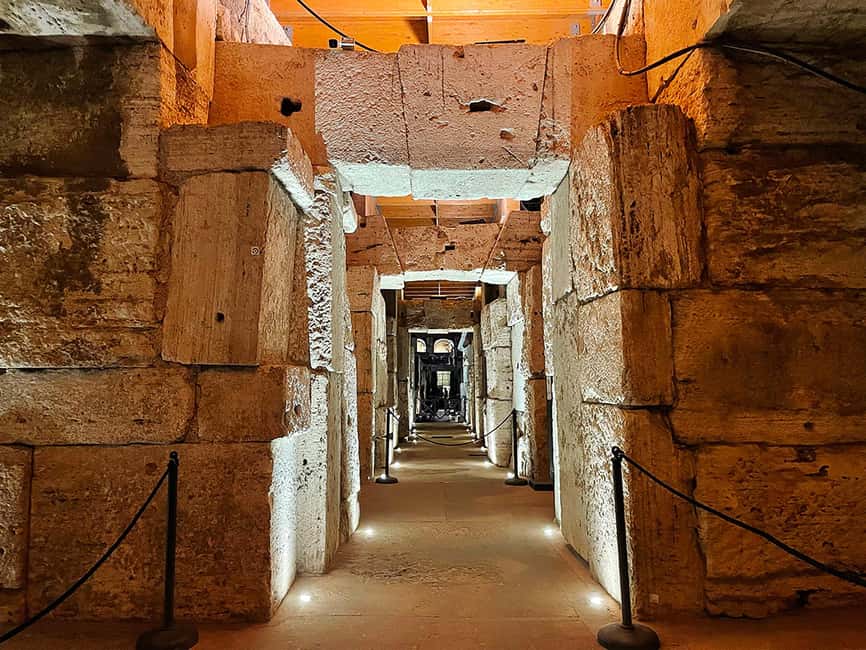
- The Hypogeum is the star attraction: See gladiator chambers, animal cages, drainage works, original flooring, and a reconstruction of an ancient elevator.
- Arena access changes your view: Stand on the sand-covered wooden platform and look up at the Colosseum’s tiers.
- The Forum and Palatine Hill are included: Allow time for ruins, terraces, and wide views before the Colosseum visit.
- The group is limited to eight: That makes questions, photos, and keeping up with the guide easier.
- English is the planned tour language: Access rules can occasionally affect which guide accompanies you underground.
- Book with flexibility: The Colosseum can alter entry times or close areas for public or political events.
Why the Colosseum underground matters
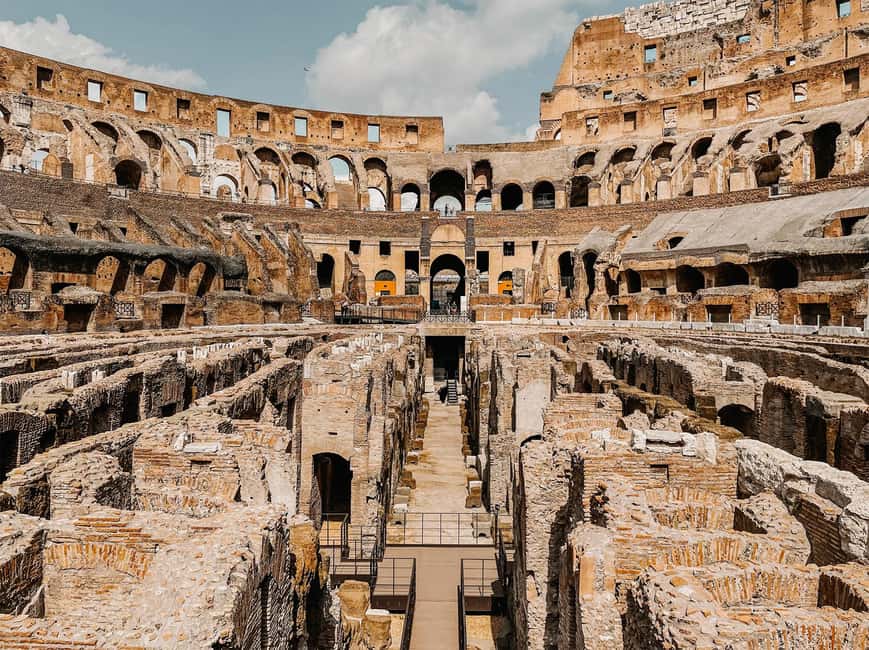
Most people see the Colosseum from the outside, then climb through its upper levels and peer down at the arena. This tour takes you underneath that famous floor first, into the Hypogeum, where the building’s hidden mechanics become the main story.
The underground level is made up of tight corridors, stone blocks, holding rooms, cages, and working spaces. The area is not a fully preserved backstage set. Much of what you see is fragmentary, and the lighting can be dim, but that is part of its effect. You are looking at the infrastructure that made the public spectacles possible.
I find this more useful than simply hearing a list of emperors and battles. The Hypogeum shows how the Colosseum operated. Gladiators waited below. Animals were held in cages. Trapdoors opened above. A reconstructed elevator demonstrates how people and animals could be raised from the lower level to the arena.
The word arena comes from the Latin word for sand, and that detail makes sense when you see the central platform. The arena floor is covered with sand over a wooden structure, giving you the same basic viewpoint from which performers entered the public eye.
Other Rome days travellers weigh against this one:
- Vatican: Museums & Sistine Chapel Entrance Ticket
★ 4.5 · 144,003 reviews - Vatican Museums & Sistine Chapel Tour with Optional Basilica
★ 4.3 · 67,413 reviews - Colosseum, Roman Forum & Palatine Guided Tour
★ 4.7 · 63,148 reviews
Starting at the Roman Forum entrance
The tour begins at Largo della Salara Vecchia, near the Roman Forum ticket counters and under a tree on the left side. Look for a guide carrying the GET YOUR GUIDE logo, and arrive with the names on your booking matching the passports or identity cards you bring.
This meeting point deserves care. It is at the entrance to the Roman Forum, not directly in front of the Colosseum. One person found the location hard to identify, so do not assume the large amphitheater is the correct place to wait. Read the meeting instructions closely and give yourself time to find Largo della Salara Vecchia.
After the group forms, the guide leads you into the Forum for about 30 minutes. You will not have unlimited time here, so think of this part as an orientation rather than a slow, independent archaeological visit.
Roman Forum in 30 minutes
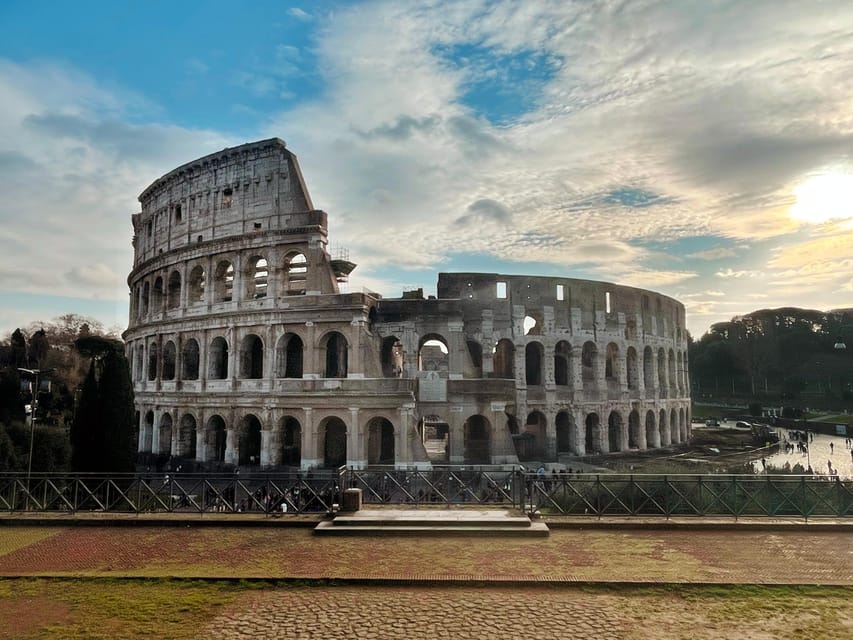
The Forum was the center of public life in ancient Rome, and it is filled with broken columns, temples, arches, basilicas, and fragments that can be hard to read without help. A good guide turns scattered stones into a picture of how the city worked.
This is where the guide’s skill matters most. Guides including Sara, Claudia, Virginia, Giorgio, Paola, and Italo have been praised for making complicated subjects clear, using stories, questions, and visual material. Claudia, in particular, used graphics to help explain how the Forum, Palatine Hill, and Colosseum changed over time.
The time limit is the weak point. Several people wanted longer in the Forum, and some felt they missed sections because the group had to reach the Colosseum at a fixed time. I would not choose this tour if your main goal is to inspect every Forum ruin at your own pace.
Still, the short visit gives you useful context before the amphitheater. You begin to see Rome as a connected civic center rather than a collection of isolated monuments.
Palatine Hill and its 15-minute photo stop
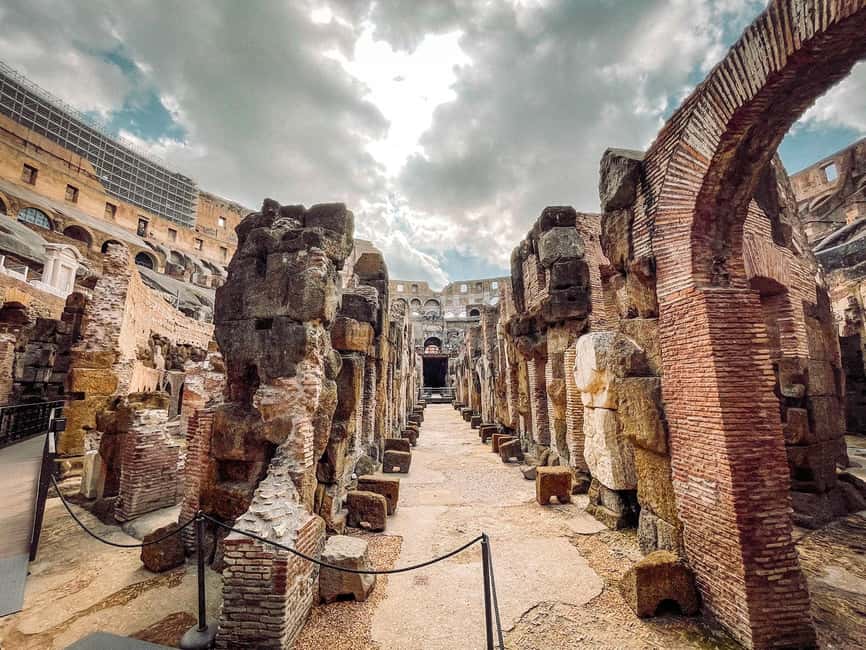
The group then continues to Palatine Hill for around 30 minutes, followed by a 15-minute photo stop. The hill is closely tied to Rome’s early legends and later imperial residences, but the practical reward is the view and the sense of scale.
From the higher ground, you can look back across the Forum and toward the Colosseum. This is a good place to take photographs because the ruins spread out below you, and the amphitheater becomes part of a much larger ancient city.
Do not expect a quiet, extended break here. The photo stop is scheduled, and the full route covers a great deal in two and a half hours. Guides such as Lucia have helped people find strong viewpoints and take group photos, which is useful when you are trying to manage a camera and keep track of the tour.
The Palatine section also gives your legs a short change of rhythm before the more enclosed underground visit. Wear comfortable shoes, since the route includes archaeological ground, stairs, and uneven surfaces.
A different way to spend the day, same part of Italy:
- Vatican Museums, Sistine Chapel & St Peter’s Basilica Guided Tour
★ 4.5 · 39,149 reviews - Rome: Colosseum, Palatine Hill and Roman Forum Guided Tour
★ 4.8 · 32,814 reviews - Rome: Guided Tour of Colosseum, Roman Forum & Palatine Hill
★ 4.7 · 27,897 reviews - Rome: Colosseum & Forum with Audio Guide App -Optional Arena
★ 4.2 · 24,770 reviews
Entering the Colosseum’s restricted levels
The tour next moves to the Colosseum, where security procedures and timed access control the schedule. The site can change its entry time or close an area without much notice because of public events, political events, or other unexpected circumstances.
That rule matters. One scheduled visit was moved by an hour, and another booking had to be rearranged after an unexpected closure. Keep the rest of your day flexible, especially if you have a train, dinner reservation, or another timed attraction immediately afterward.
The VIP access is valuable because the underground and arena areas are not part of the most basic Colosseum visit. At $94 per person, you are paying not only for admission but also for a guide, a small group, headsets, and help with a difficult-to-secure ticket category.
The official ticket can cost less, but the underground spaces often sell out very quickly. One technically confident visitor said the official booking attempt disappeared almost instantly. If gaining access is the priority, the extra cost can be easier to justify.
The Hypogeum, where the machinery comes alive
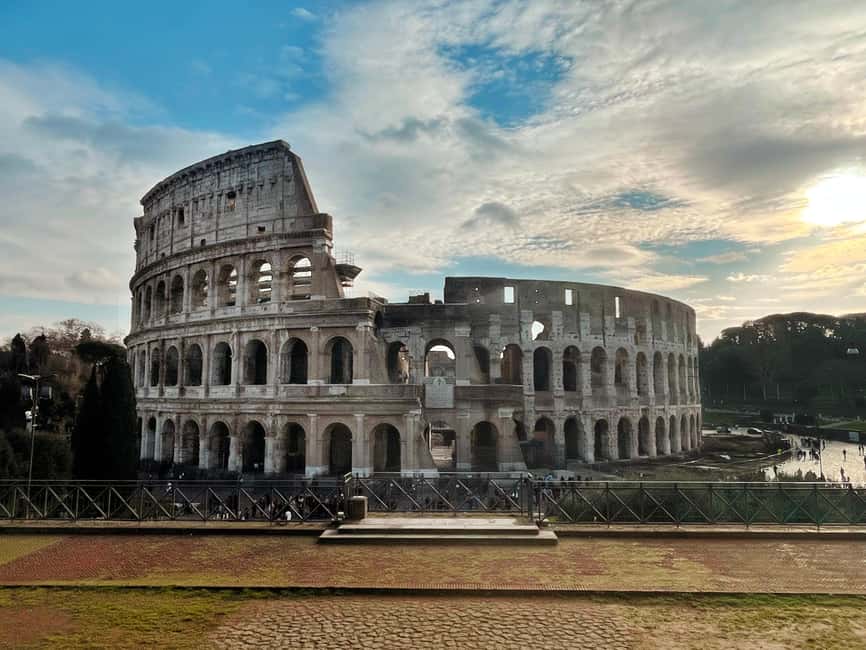
The underground tour lasts about 20 minutes. That may sound brief, but the area itself is restricted and the route is controlled. You move through narrow corridors while the guide points out original fragments, drainage channels, holding areas, cages, and the reconstructed lift.
This is the part where you should listen closely rather than rush to take photographs. The remains are not always obvious at first glance. A stone channel or doorway can look ordinary until the guide explains how it fit into the arena’s system.
The lift reconstruction is especially helpful because it gives you a physical sense of how the ancient shows were staged. The elevator was anchored to trapdoors above, connecting the underground level with the arena. It is a practical detail that replaces vague images of sudden entrances with a clearer idea of the engineering involved.
The atmosphere is stark. The corridors are close and the light is low. You can imagine the pressure of people and animals waiting below, but the guide should also help you separate modern drama from what the surviving structure can actually show.
One important caution: the guide who leads the Forum and main Colosseum visit may not always accompany you below. Access rules are controlled by Colosseum staff, and one group received an Italian-only guide for the underground segment. The tour is advertised in English, but this unusual arrangement means an English explanation in the Hypogeum cannot be treated as absolutely guaranteed.
Walking onto the arena floor
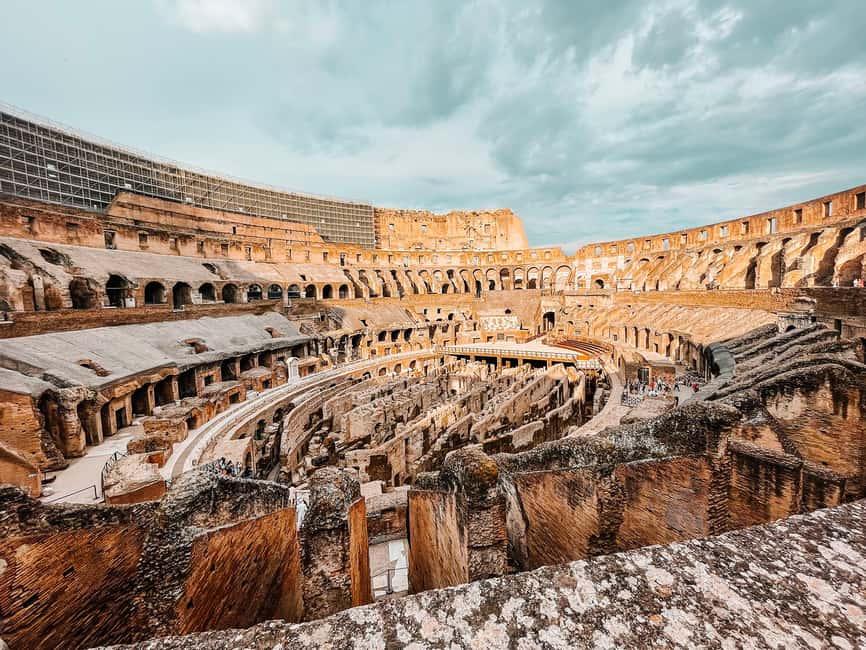
After the underground chambers, you reach the arena floor for about 20 minutes. This is one of the strongest moments of the tour because you are no longer looking down from the upper seating tiers.
The platform is sand-covered and wooden, with the surrounding walls rising around it. From here, the Colosseum feels enormous. You can look toward the seating areas, study the exposed underground structure, and understand the relationship between the public spectacle above and the labor below.
The arena floor also helps correct a common misunderstanding. The Colosseum was not simply an empty bowl where fights happened. It was a complex venue with entrances, backstage areas, trapdoors, lifts, crowd access, and a carefully managed performance space.
You will want more time for photographs here, but the schedule is tight. The guide must keep the group moving through each controlled area. Take your main pictures early, then listen. The explanation of how the machinery worked is more valuable than trying to capture every angle.
First and second tiers for the classic view
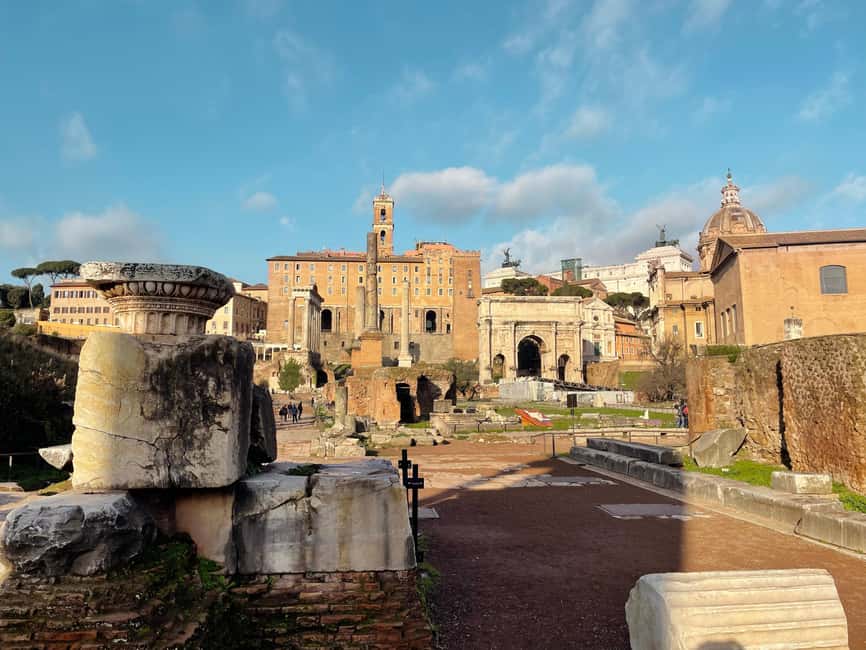
The tour continues to the first and second tiers of the Colosseum. These levels give you the familiar interior views, but after seeing the Hypogeum and arena floor, they mean more.
From above, you can see the structure’s damaged sections, the exposed lower works, and the oval shape of the amphitheater. The terraces also provide strong photo opportunities. Guides often help with pictures, and the headset keeps their explanation audible as the group moves.
The upper levels are where the guide fills in the larger story: how the monument was built and operated, what kinds of public games took place, and how spectators used the building. The details can include bloody contests, animals, staged events, and the social order reflected in the seating tiers.
The best guides avoid turning this into a dry lecture. Giorgio was praised for explaining how the building was built and used, while Sara helped clarify misconceptions about spectators and the shows. A family with a 10-year-old found Virginia’s approach engaging without being too heavy, which suggests the tour can work well for children who tire of long historical talks.
What the $94 price buys you
At $94, this is not a cheap Rome ticket. The basic admission price is lower, so the value depends on what you want from the visit.
I think the price is reasonable when three things matter to you: access to the Hypogeum, a guide who can explain the machinery and history, and a small group rather than a large crowd. The underground ticket category is difficult to obtain independently, and the operator handles the arrangements needed for the restricted areas.
The value is weaker if you prefer to wander alone or already know the Forum and Colosseum well. You will have limited free time, and the route is controlled by entry slots. The Forum, Palatine Hill, underground, arena, and upper tiers make a full program, but not a leisurely one.
For a first Rome visit, I would see the tour fee as payment for access and structure, not just narration. You are buying a clear route through three major sites and a better chance of seeing areas that may otherwise be unavailable.
Group size, guides, and the pace
A maximum of eight participants is a real advantage. The guide can hear your questions, adjust explanations, keep an eye on the group, and help with photographs. The small size also makes the headset system more effective, since you are less likely to lose the guide in a large crowd.
The strongest part of the experience depends on the person leading it. Paola, Italo, Sylvia, Sara, Virginia, Giorgio, Massimo, Stefano, Daniela, Claudia, Coumba, Lucia, Maria, Giulia, Vincenza, and Gina have all been singled out for clear explanations, humor, patience, or personal attention.
That does not mean you can choose a specific guide when booking. It does mean the company has several guides who bring energy to a demanding route. Some use images or graphics. Others focus on stories, family connections, engineering, or quick answers to questions.
The pace is brisk. One group felt the underground was rushed, another wanted more Forum time, and several people simply wished the whole tour were longer. I would plan to stay mentally engaged and avoid scheduling another major sight immediately afterward.
Who should take this tour?
I recommend it most strongly for a first visit to Rome, especially if you want the Colosseum’s restricted levels and do not want to fight for official underground tickets.
It suits families, history fans, and visitors who learn better from a person than from labels. The small group and headsets also help if you want to ask questions without shouting.
It may not suit wheelchair users, since the experience is specifically listed as unsuitable for wheelchair users. It is also a poor fit if you want long stretches of independent exploring or a slow photographic visit.
Bring your passport or identity card. Security staff require identification, and the names on the booking must match those documents. Wear shoes suited to ancient paving and uneven ground, and leave room in your schedule for a changed start time.
Should you book the Colosseum Underground and Arena Tour?
Book it if the Hypogeum is high on your Rome wish list. The underground rooms, lift system, and arena floor offer something more useful than another distant view of the Colosseum, and the Forum and Palatine Hill add important context.
At $94, you should accept the tradeoff: strong access and guidance, but a brisk schedule and limited freedom. If you book early, arrive at the correct Forum meeting point, bring matching identification, and keep your afternoon open, this is a well-focused way to see the ancient center of Rome.
FAQ
How long does the Colosseum Underground and Arena Tour last?
The tour lasts 2.5 hours.
What language is the tour conducted in?
The live tour guide is scheduled to conduct the tour in English.
How many people are in the group?
The group is limited to eight participants.
What areas of the Colosseum are included?
The tour includes VIP entry to the underground Hypogeum, the arena floor, and the first and second tiers of the Colosseum.
What can I see in the underground area?
You can see original floor fragments, drainage channels, gladiator holding rooms, animal cages, narrow corridors, and a reconstruction of an ancient elevator system.
Are the Roman Forum and Palatine Hill included?
Yes. The tour includes guided visits to the Roman Forum and Palatine Hill, plus a photo stop on Palatine Hill.
Where is the meeting point?
The meeting point is at Largo della Salara Vecchia, near the Roman Forum ticket counters and under the tree on the left side. The guide carries the GET YOUR GUIDE logo.
What identification should I bring?
Bring a passport or identity card. The names on your booking must match the names on those documents for security checks.
Can wheelchair users take this tour?
No. The experience is listed as unsuitable for wheelchair users.
Recently reviewed around Rome
- Ancient Rome at Twilight Walking Tour★ 5.0 · 276 reviews
- Domus Aurea Guided Tour: The Golden House of Nero★ 4.5 · 199 reviews
- Early Vatican Museums & Sistine Chapel Small Group Tour★ 4.5 · 314 reviews
- Early Vatican Museums Tour: The Best of the Sistine Chapel★ 4.5 · 900 reviews
- Jewish Ghetto & Piazza Navona: Food, Wine & Sightseeing Rome Tour★ 5.0 · 460 reviews
- 3 Days in Sorrento, Capri & Pompeii: la Dolce Vita★ 4.0 · 595 reviews
- Tivoli Villas Full Day Trip From Rome with Lunch★ 4.0 · 443 reviews
- Rome Pasta Making Class with Italian Sauces and Wine Included★ 5.0 · 645 reviews
Colosseum & Roman Forum Tours, compared.
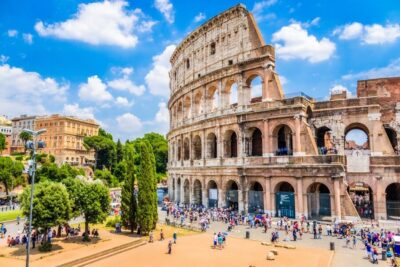
Colosseum, Roman Forum & Palatine Guided Tour
Read our review →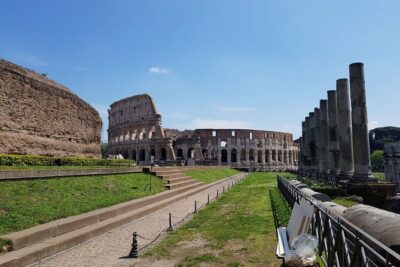
Colosseum, Palatine Hill and Roman Forum Guided Tour
Read our review →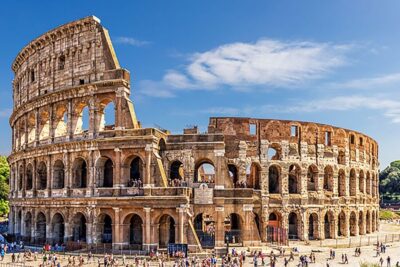
Guided Tour of Colosseum, Roman Forum & Palatine Hill
Read our review →
Colosseum & Forum with Audio Guide App -Optional Arena
Read our review →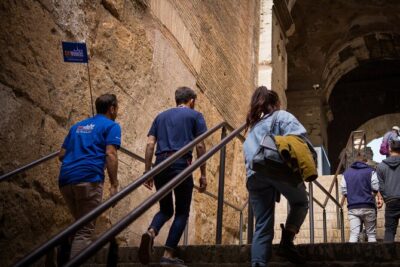
Colosseum, Roman Forum and Palatine Hill Guided Tour
Read our review →
Colosseum, Roman Forum, Palatine with Multimedia Video
Read our review →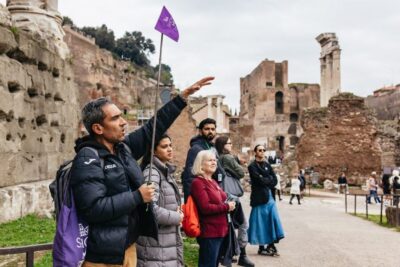
Colosseum, Palatine Hill & Roman Forum Guided Tour
Read our review →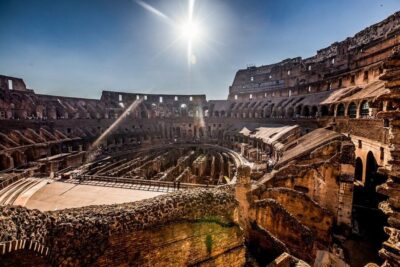
Colosseum: Underground and Ancient Rome Tour
Read our review →Browse the lists this tour appears in