Review · GUIDED
Rome: Domus Aurea Guided Group Tour
Nero’s Golden House is one of Rome’s strangest time capsules. You descend beneath Oppian Hill into vaulted rooms that once formed part of an enormous palace, then use virtual reality to see the extravagance that the surviving brick and plaster can no longer show. It is a rare look at Rome’s active archaeology, not a polished monument scrubbed clean of its past.
I like the small-group feel and expert guiding, especially when the guide has an archaeology background. I also like the VR and multimedia sections, which turn fragmentary walls into a picture of Nero’s vanished palace. The main drawback is the physical setting: steps, uneven floors, staircases, cool underground rooms, and limited access mean this is not suitable for wheelchair users.
In This Review
- What makes this tour worth your time
- Meeting Oppio Caffè beside the Colosseum
- Descending into Nero’s Golden House
- The rooms, vaults, and surviving frescoes
- What happened to Nero’s palace
- The VR reconstruction is more than a gimmick
- Two hours underground, with a practical pace
- Is $55 a fair price?
- Who will enjoy Domus Aurea most
- Tips for getting the most from the visit
- Should you book the Domus Aurea tour?
- FAQ
- Where does the Domus Aurea tour begin?
- Where does the tour finish?
- How long does the guided visit last?
- What does the $55 price include?
- Is transportation included?
- Is the tour conducted in English?
- Can wheelchair users take this tour?
- What should I bring?
What makes this tour worth your time
- Walk through Nero’s buried palace: See excavated rooms, soaring vaults, tiled floors, and surviving wall frescoes.
- Use VR to restore the missing palace: The technology helps you picture the artificial lake, gardens, buildings, and original decoration.
- Hear the story from an archaeology guide: Guides such as Valentina, Thomas, Brandon, Monica, Marco, and Renata have been praised for clear storytelling and strong subject knowledge.
- Visit an active excavation site: Restoration and preservation work remain part of the setting.
- Connect Nero’s palace to the Colosseum: The palace’s artificial lake was filled in, and the Flavian Amphitheatre was built in its place.
- Prepare for an underground walk: Bring water, warm clothing, and comfortable shoes, but leave large luggage behind.
Meeting Oppio Caffè beside the Colosseum
The tour begins in front of Oppio Caffè, on the corner of Via Nicola Salvi and Via delle Terme di Tito. The exact address is Via delle Terme di Tito 72, and your guide carries a Through Eternity sign or flag.
This meeting point sits in the busy Colosseum district, so allow time to find the café and your guide. The tour does not include transportation, and it finishes at Domus Aurea itself. That makes the outing easy to pair with nearby ancient sights, but you need to arrange your own way to the starting point.
The express security check is useful here. Domus Aurea has controlled access, and this tour handles the ticket and reservation arrangements for you. You still need to arrive at the right corner on time, since this is a scheduled visit rather than a casual walk-in attraction.
More Rome trips worth a second look
- Colosseum, Roman Forum & Palatine Guided Tour
★ 4.7 · 63,148 reviews - Vatican Museums, Sistine Chapel & St Peter’s Basilica Guided Tour
★ 4.5 · 39,149 reviews - Rome: Colosseum, Palatine Hill and Roman Forum Guided Tour
★ 4.8 · 32,814 reviews
Descending into Nero’s Golden House
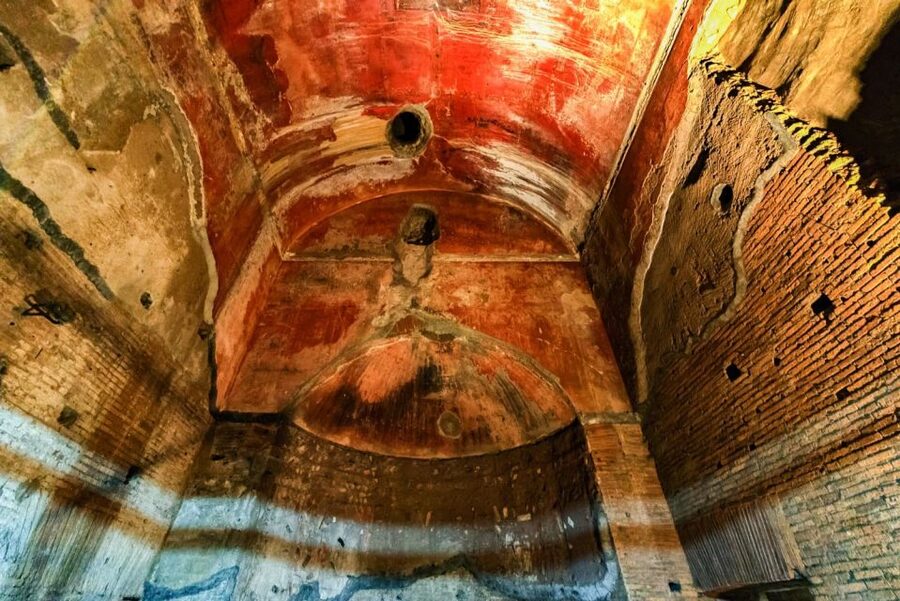
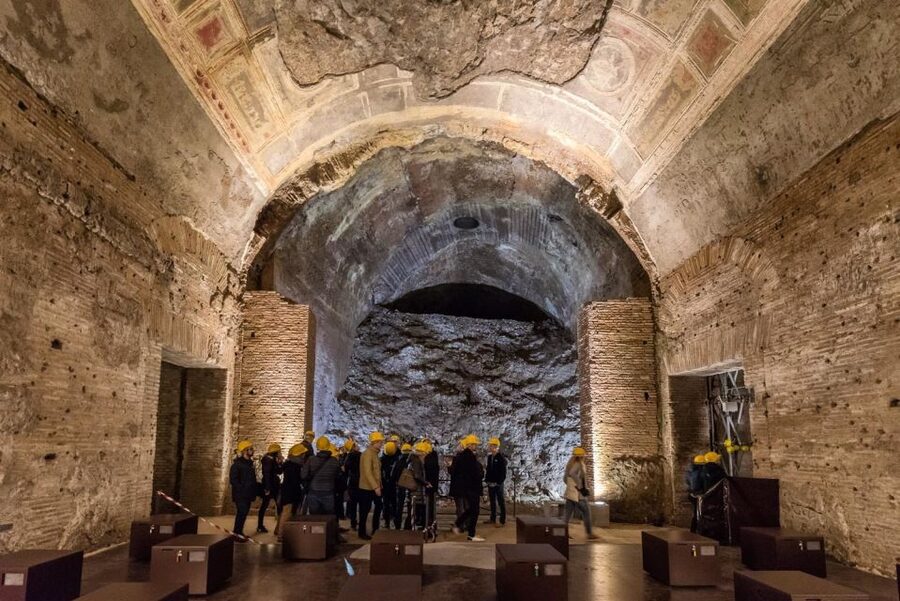
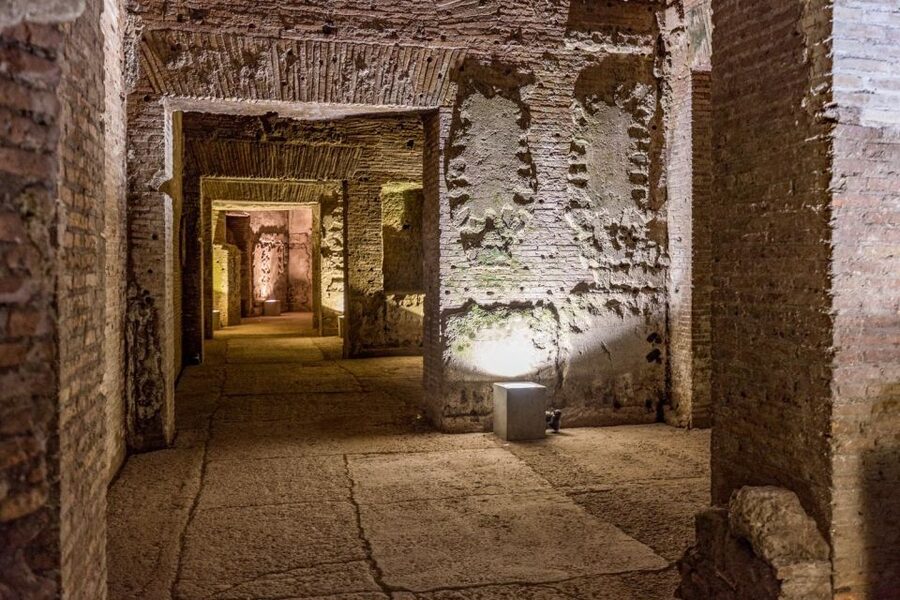
The first surprise is the change in atmosphere. Rome above is full of traffic, cafés, churches, and crowds. Below ground, the Domus Aurea feels cool, dim, and unfinished, with bare archaeological surfaces and restoration work close at hand.
That unfinished quality is part of the appeal. You are not looking at a fully rebuilt palace. You are seeing what survives after fire, political revenge, centuries of burial, water damage, and repeated alteration. The rooms are impressive precisely because you must use your imagination.
The palace was built after the great fire of Rome in 64 AD. Nero’s architects created a vast complex over the burned parts of the city, with extravagant rooms, courtyards, gardens, and water features. The name Domus Aurea means Golden House, a fitting title for a palace designed to project wealth and imperial power.
The scale can be hard to grasp from the surviving chambers alone. The palace once covered a huge area, and its artificial lake occupied the ground where the Colosseum would later rise. The present-day Colosseum is therefore not just a nearby sight. It is part of the palace’s afterlife.
The rooms, vaults, and surviving frescoes
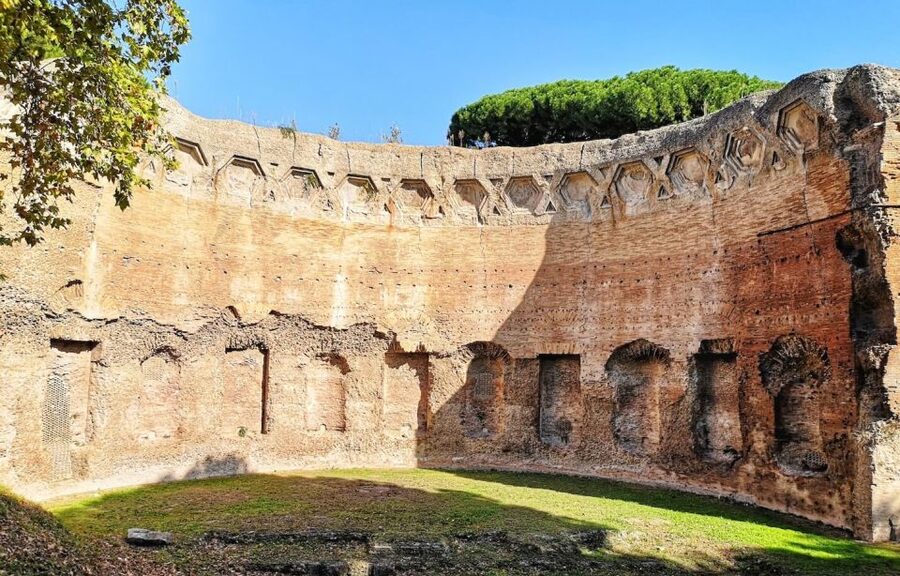
Inside, you move through a succession of ancient spaces rather than following a single grand corridor. Some rooms are broad and high, while others feel enclosed and almost secretive. The soaring vaults give the ruins a powerful sense of size, even where walls and ceilings are incomplete.
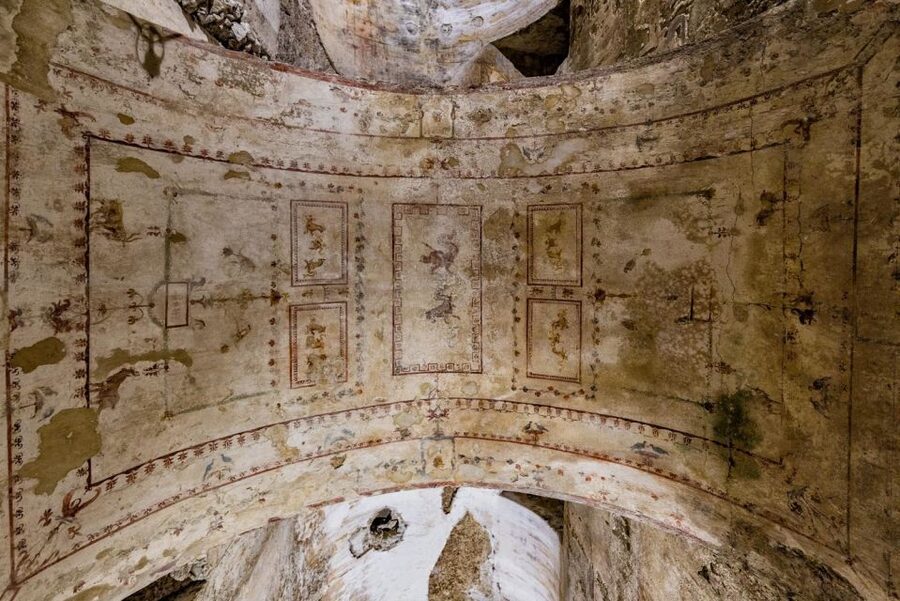
Look closely at the surviving decoration. Frescoes remain in places on the walls and ceilings, along with traces of tiled floors and plaster ornament. They are not intact in the way a visitor might hope after hearing about an imperial palace, but the fragments are remarkable.
The decoration is especially important because Nero’s palace helped inspire later artistic movements. Renaissance artists reportedly encountered the underground rooms and copied the strange ornamental designs they found there. The buried chambers influenced what became known as grotesque decoration, a style built around delicate figures, plants, animals, and fanciful combinations.
A good guide helps you separate what is visible from what is reconstructed. That matters at an archaeological site. You want to know which wall is original, which surface has been stabilized, and which image comes from a modern interpretation.
The strongest guides use the rooms as evidence rather than giving you a string of dates. Valentina has been praised for combining archaeology with humor and a clear presentation. Thomas has been singled out for his pace and delivery, while Brandon has impressed families and history fans with his ability to answer questions. Guide quality can vary by departure, but the general format gives you a live English-speaking guide with a strong focus on Roman history.
What happened to Nero’s palace
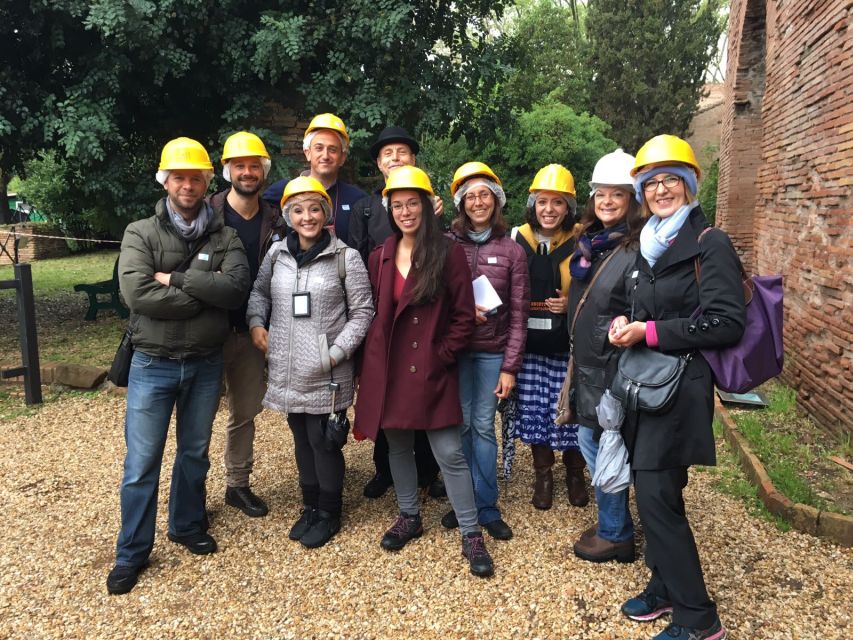
Nero’s palace was not allowed to remain as a lasting monument to the emperor. After Nero died by suicide in 68 AD, his successors moved quickly to distance themselves from his rule and his extravagant image.
The palace was stripped, altered, and buried. The artificial lake was filled in, and the Colosseum was built over part of the former complex only a few years later. Other structures rose above the buried rooms, helping hide the palace from view.
This political erasure gives the visit an unusual edge. The Domus Aurea is not only a story about luxury. It is also a story about how rulers control memory. Nero built a home that put his presence at the center of Rome, and later emperors tried to make that presence disappear.
The guide also places the palace in the wider story of Rome. You may hear about the fire, imperial politics, Roman building methods, Egyptian influences, and the later Renaissance discovery of the underground rooms. That wider context helps the Domus Aurea connect with sights you see elsewhere in the city.
A different way to spend the day, same part of Italy:
- Vatican: Museums & Sistine Chapel Entrance Ticket
★ 4.5 · 144,003 reviews - Vatican Museums & Sistine Chapel Tour with Optional Basilica
★ 4.3 · 67,413 reviews - Rome: Guided Tour of Colosseum, Roman Forum & Palatine Hill
★ 4.7 · 27,897 reviews - Rome: Colosseum & Forum with Audio Guide App -Optional Arena
★ 4.2 · 24,770 reviews
The VR reconstruction is more than a gimmick
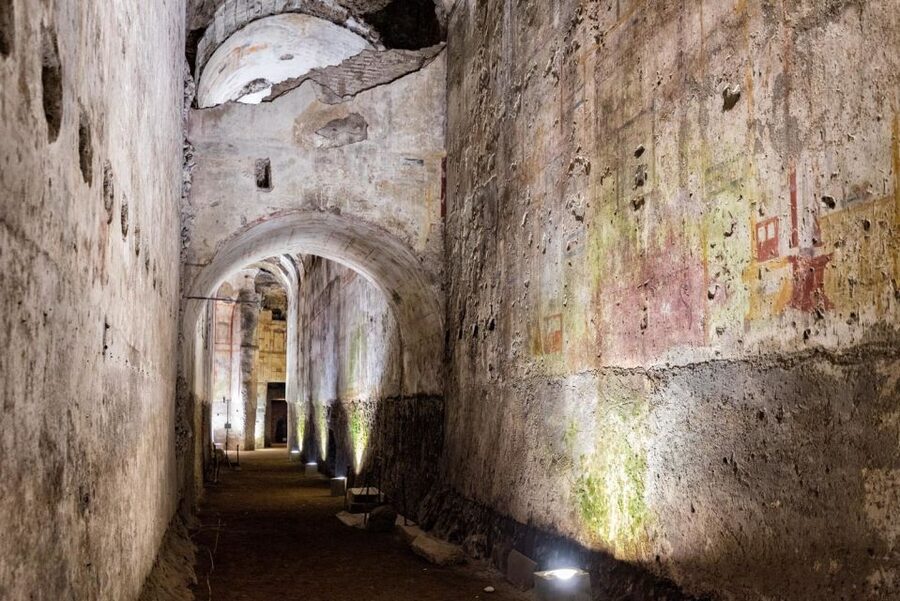
The virtual reality section is the tour’s most useful modern touch. Brick walls and faded frescoes can tell you a great deal, but they cannot easily show the full palace, the open-air spaces, the artificial lake, or the original color and decoration.
The VR presentation gives you a visual sense of Nero’s Rome as it may have appeared at the height of the palace’s use. It helps you understand how the rooms related to the surrounding grounds and why the complex seemed so outrageous to ancient Romans.
Several visitors have found the multimedia section especially moving and helpful. That makes sense, particularly if you do not already have a strong mental picture of ancient Roman architecture. The reconstruction supplies the missing pieces without pretending that the modern ruins are complete.
I would not treat the VR as a substitute for the archaeology. Its value comes from the contrast. First you see the real, damaged, carefully preserved remains. Then you see a visual interpretation of the palace at its most extravagant. The gap between the two is the point.
Two hours underground, with a practical pace
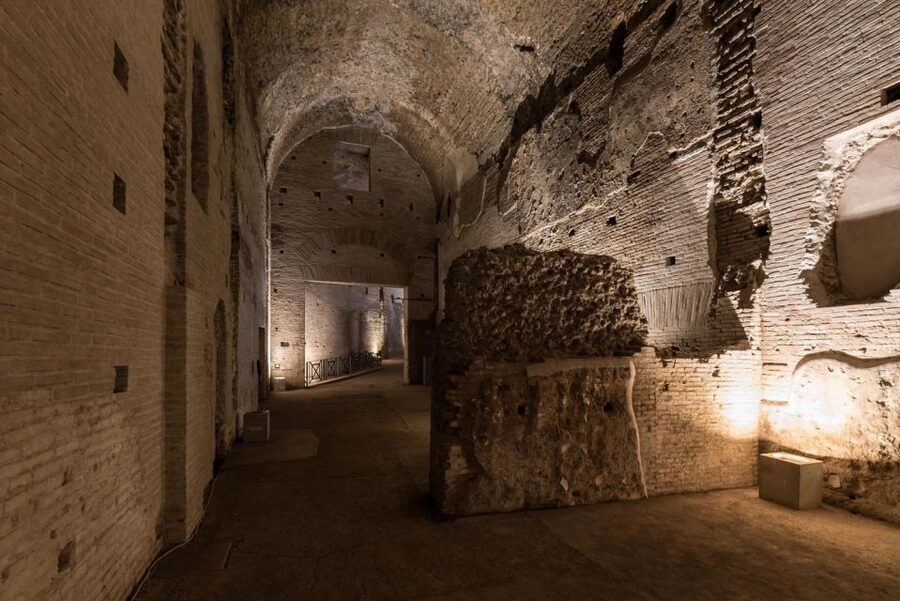
The scheduled visit lasts about two hours. That is enough time for a guided walk through the main remains and the multimedia presentation, but it is not a leisurely half-day archaeological study.
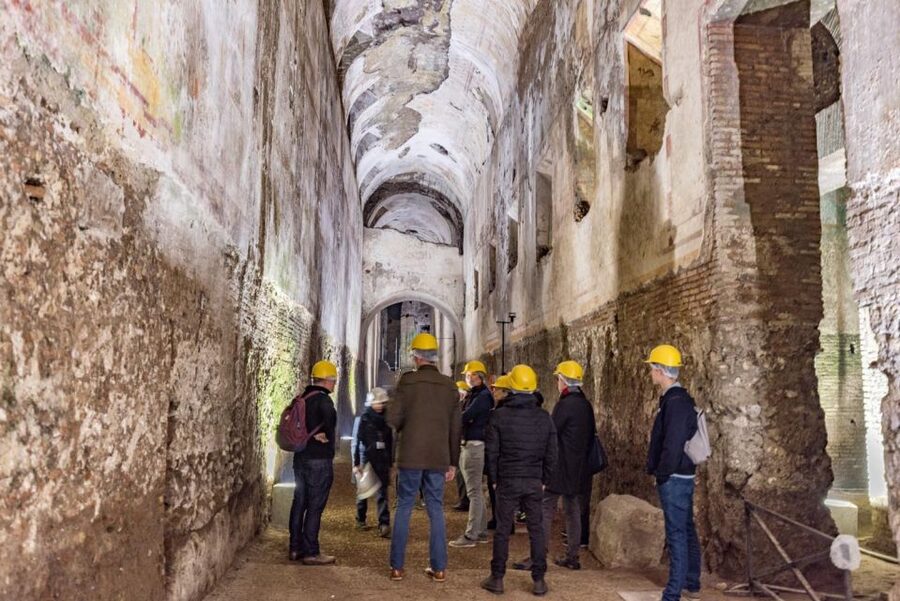
The pace has generally worked well for families and older visitors, though the underground route requires steady walking. You should expect steps, staircases, and uneven surfaces. The site is not suitable for wheelchair users, and anyone with mobility concerns should tell the provider during booking so possible arrangements can be considered.
Wear shoes with a firm sole. Warm clothing is also sensible because the underground rooms can feel cool, even when Rome is hot above ground. Bring water, but do not bring a suitcase or large bag, since luggage and large bags are not allowed.
One practical point concerns sound. Some visitors have found individual guides difficult to hear, especially during the opening escort or in echoing spaces. The museum staff guide may conduct part of the visit, depending on the arrangement. If you have hearing concerns, stay close to the guide and mention the issue early.
Is $55 a fair price?
At $55 per person, this is not Rome’s cheapest ancient-site visit. The price includes entry, reservation fees, express security access, the English-speaking guide, and the VR presentation.
I think the value is good if you want explanation rather than a quick look. Domus Aurea is not an easy place to understand on your own. The rooms are incomplete, the palace’s full footprint is underground or gone, and the political story stretches across several centuries. A strong guide gives the remains a clear shape.
The price is less attractive if you prefer to move at your own speed or mainly want intact art and architecture. This is an excavation site, not a fully restored palace. You will spend much of the visit looking at fragments, surfaces, and spaces that require interpretation.
The limited access also matters. Domus Aurea is not as straightforward as the Colosseum, and opening times can be restricted. Check available starting times carefully before building the rest of your day around it.
Who will enjoy Domus Aurea most
I would recommend this tour to anyone interested in Roman emperors, ancient building, archaeology, or the way modern technology can explain old ruins. It is also a strong choice if you have already seen the Colosseum and want to understand what occupied the site before the amphitheatre was built.
Families can do well here, especially when the guide welcomes questions. Several guides have been praised for handling children’s questions and keeping the material lively. The VR section also gives younger visitors a clear visual hook.
Art and architecture fans will appreciate the frescoes, vaults, and Renaissance connection. History students will value the way the visit links Nero’s rule with later efforts to erase his memory. Even on a third trip to Rome, the site can feel new because it offers a different kind of ancient monument.
I would be more cautious if you dislike enclosed spaces, cannot manage stairs, or want a bright open-air ruin with plenty of room to wander. The setting is atmospheric, but it can also feel dark and confined.
Tips for getting the most from the visit
Read a little about Nero before you arrive, but do not overdo it. Knowing the basic story of the 64 AD fire and the later construction of the Colosseum is enough to make the site easier to follow.
Arrive at Oppio Caffè with the exact address saved. The guide should have a Through Eternity flag or sign, but the area can be busy and confusing around the Colosseum.
Stay close to the guide once inside. Echoes can make soft speech hard to follow, and some rooms are larger than they first appear. If you are using the visit to support children or older family members, choose a place near the front.
Give the frescoes time. The rooms may initially seem plain compared with the Vatican Museums or the Colosseum exterior. Once your eyes adjust, small surviving details begin to matter: a patch of color, a bit of floor pattern, or the curve of a vault.
Keep your expectations realistic. Restoration is ongoing, and access may change as work continues. That is not a flaw in the visit. It is a reminder that archaeology is a process, not a finished display.
Should you book the Domus Aurea tour?
Yes, if you want a focused, unusual look at imperial Rome and do not mind an underground site with incomplete remains. The archaeologist-led format, limited access, and VR reconstruction make the $55 fee reasonable for visitors who value context and interpretation.
Book it with comfortable shoes, warm clothing, and a willingness to imagine what is missing. Skip it if you need step-free access, dislike enclosed spaces, or want only perfectly preserved monuments.
For many visitors, the highlight will be the contrast between the real ruins and the VR palace. That contrast captures the whole Domus Aurea: immense ambition above, political destruction after Nero, and careful archaeological work bringing the buried rooms back into view.
FAQ
Where does the Domus Aurea tour begin?
It begins in front of Oppio Caffè, on the corner of Via Nicola Salvi and Via delle Terme di Tito. The exact address is Via delle Terme di Tito 72.
Where does the tour finish?
The tour finishes at Domus Aurea.
How long does the guided visit last?
The visit lasts two hours. Starting times vary, so check availability when booking.
What does the $55 price include?
The price includes Domus Aurea entry, reservation fees, express security access, an English-speaking guide, and the virtual reality presentation.
Is transportation included?
No. You are responsible for getting to the meeting point and arranging transportation afterward.
Is the tour conducted in English?
Yes. The listed live tour language is English.
Can wheelchair users take this tour?
No. The visit includes steps, staircases, and uneven surfaces and is not suitable for wheelchair users.
What should I bring?
Bring comfortable walking shoes, warm clothing, and water. Large bags and luggage are not allowed.
Recently reviewed around Rome
- Ancient Rome at Twilight Walking Tour★ 5.0 · 276 reviews
- Early Vatican Museums Tour: The Best of the Sistine Chapel★ 4.5 · 900 reviews
- Domus Aurea Guided Tour: The Golden House of Nero★ 4.5 · 199 reviews
- Early Vatican Museums & Sistine Chapel Small Group Tour★ 4.5 · 314 reviews
- Jewish Ghetto & Piazza Navona: Food, Wine & Sightseeing Rome Tour★ 5.0 · 460 reviews
- 3 Days in Sorrento, Capri & Pompeii: la Dolce Vita★ 4.0 · 595 reviews
- Tivoli Villas Full Day Trip From Rome with Lunch★ 4.0 · 443 reviews
- Cook With Us in Rome: A Hands-On Cooking Experience 09:20AM class★ 5.0 · 234 reviews
Guided, compared.
Colosseum, Roman Forum & Palatine Guided Tour
Read our review →
Vatican Museums, Sistine Chapel & St Peter’s Basilica Guided Tour
Read our review →
Colosseum, Palatine Hill and Roman Forum Guided Tour
Read our review →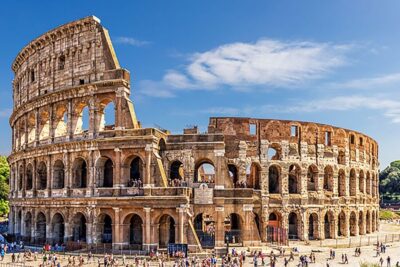
Guided Tour of Colosseum, Roman Forum & Palatine Hill
Read our review →
Colosseum & Forum with Audio Guide App -Optional Arena
Read our review →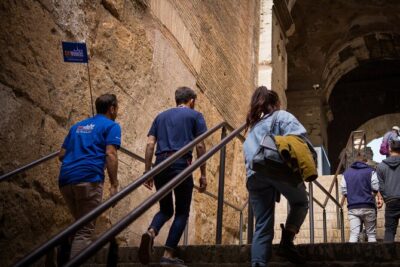
Colosseum, Roman Forum and Palatine Hill Guided Tour
Read our review →
Naples Underground Entry Ticket and Guided Tour
Read our review →