
Review · MUSEUMS
Rome: Doria Pamphilj Gallery Entry Ticket
The best part of the Doria Pamphilj Gallery is that the art comes wrapped in a palace that still feels like a private home. You move through painted rooms, mirrored spaces, sculpture, furniture, tapestries, and walls crowded with centuries of family possessions. Caravaggio, Raphael, Titian, Velázquez, Bernini, Bruegel, and Dürer are among the names to look for.
I like the freedom to set your own pace, and I like the audio guide’s family-centered approach. It gives the collection a human story instead of turning every painting into a dry list of dates. The two main cautions are the price, which can be much higher than buying directly at the gallery, and the fact that the gallery audio guide is not clearly included with every booking option.
In This Review
- Key points to know before you go
- A private palace on Via del Corso
- Start with the architecture, not the famous names
- The masterpieces worth seeking out
- How the audio guide changes the visit
- The optional Secret Rooms experience
- How long should you allow?
- A quiet alternative to Rome’s busiest museums
- Is $34 a fair price?
- Getting inside without confusion
- Who will enjoy this gallery most?
- Should you book the Doria Pamphilj Gallery?
- FAQ
- Where is the Doria Pamphilj Gallery?
- How much does the entry ticket cost?
- How long does the visit take?
- Is an audio guide included?
- How many audio guide points are available?
- Is there a guided tour?
- What are the Secret Rooms?
- Where do I collect my ticket?
- Can I take photographs inside?
- Can I cancel the booking?
Key points to know before you go
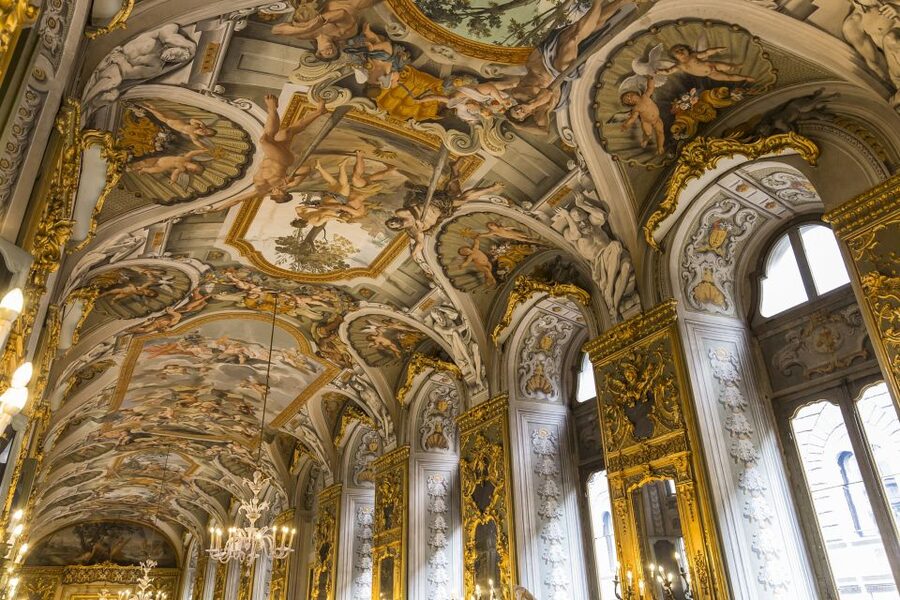
- The palace is part of the collection: Painted ceilings, mirrored rooms, furniture, sculpture, and tapestries matter almost as much as the paintings.
- More than 170 audio stops: The audio guide app gives structure to a large collection that can otherwise feel overwhelming.
- Expect a quiet visit: This is often calmer than Rome’s headline museums, with room to study paintings without being hurried along.
- Look for famous names carefully: Important works by Caravaggio, Raphael, Titian, and others are not always clearly labeled.
- Secret Rooms are optional: You can add independent access or a guided visit focused on the private life of the Doria family.
- Check the price before paying: The advertised price is $34 per person, while direct gallery admission has sometimes been reported as considerably cheaper.
A private palace on Via del Corso
Palazzo Doria Pamphilj sits at Via del Corso 305, right in central Rome. That makes it easy to pair with a day of sightseeing, but the doorway can be easy to miss. Once inside, you go to the gallery ticket desk, generally on the first floor, to collect or confirm your entry.
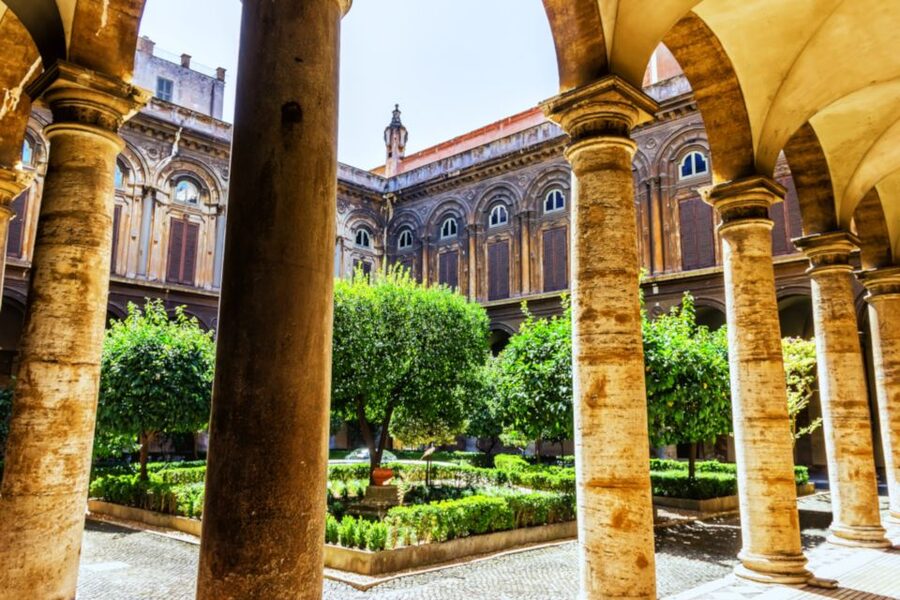
The building tells its own story. This was not designed as a neutral museum with white walls and tidy rows of pictures. The Doria Pamphilj family displayed its art in living quarters, corridors, galleries, and reception rooms. Paintings cover the walls in dense arrangements, while ceilings, mirrors, furniture, and floors compete for your attention.
I find that setup useful because it shows how aristocratic families once lived with art. A painting is not isolated here. It belongs to a room, a family, a political world, and a long chain of inheritance and marriage alliances.
That can also be tiring. If you prefer a clean museum layout with one object at a time and large labels, this place may feel crowded with information. Give yourself time to adjust, then let the room guide you.
More Museum Tours in Rome
- Vatican: Museums & Sistine Chapel Entrance Ticket
★ 4.5 · 144,003 reviews - Vatican Museums & Sistine Chapel Tour with Optional Basilica
★ 4.3 · 67,413 reviews - Vatican Museums, Sistine Chapel & St Peter’s Basilica Guided Tour
★ 4.5 · 39,149 reviews
Start with the architecture, not the famous names
You may arrive eager to find Caravaggio, but take a few minutes first to look up and around. The painted ceilings, ornate rooms, old furniture, sculpture, and tapestries create the mood of a lived-in noble residence.
The mirrored hall is one of the most memorable spaces. It adds a theatrical touch and makes the palace feel larger and more elaborate than its street entrance suggests. The courtyard and the on-site Doria Café also provide a welcome pause, especially after several rooms of concentrated looking.
The architecture is valuable for another reason: it explains why the collection feels so personal. You are not simply seeing what a museum chose to display. You are seeing a family’s taste spread across its home.
Expect some warmth in the rooms during hot weather. Fans are used to make the galleries more comfortable, but this is still something to keep in mind when planning a long visit in summer.
The masterpieces worth seeking out
The collection includes works associated with Caravaggio, Titian, Raphael, Bernini, Velázquez, Bruegel, Dürer, Vasari, and other Italian and European artists. The number of works is part of the experience. You are not finished after seeing three famous paintings because the surrounding rooms keep offering more.
Caravaggio is a major reason to come. Several paintings are on display, and the group of three works has been enough to make the visit worthwhile for many art-focused visitors. Look closely at his use of light, which makes figures appear to push forward from the darkness.
Raphael and Titian are also important names to watch for, but finding the works may take some patience. Labels are not always as clear or prominent as you might expect. If you already know the collection, this may not bother you. If you are visiting to identify major works, use the audio guide and ask staff for help when needed.
Velázquez, Bernini, Bruegel, Dürer, and Vasari add variety beyond the Italian Renaissance and Baroque works. You get paintings, statues, and decorative arts in the same sequence of rooms, so the visit feels broader than a conventional painting museum.
The gallery does not ask you to rush from one star object to the next. The pleasure is partly in the unexpected pieces between the famous ones. A lesser-known portrait, a piece of furniture, or a wall of closely hung paintings can explain the family’s habits better than a single celebrated masterpiece.
How the audio guide changes the visit
The supplied information describes an audio guide app with more than 170 points of interest. In practice, some booking options or entry arrangements may provide a handheld audio device instead. The important point is to confirm exactly what your selected option includes before you arrive, since gallery audio guides are not listed as part of every basic ticket.
I recommend using the audio guide rather than walking through silently. The palace has so much to see that it can become a visual jumble. Audio commentary gives you a route and adds context about the Doria family, the rooms, and individual works.
The strongest feature is its family viewpoint. Instead of hearing only the artist’s name and the date, you get a sense of how the collection grew and why the palace mattered. That makes the old rooms feel less like storage space and more like a home shaped by generations.
You do not need to listen to every stop. More than 170 points is generous, but it can also be too much if you try to absorb everything. I would choose the major works first, then listen to extra stops in rooms that interest you.
One practical weakness is labeling. Several notable works are not always easy to identify from the room alone. If a painting seems important but the label is vague, check the guide before moving on. The guide is especially useful for visitors who do not already know the artists.
More Rome museums and collections:
- Rome: Vatican Museums, Sistine Chapel & Basilica Tour
★ 4.3 · 13,872 reviews - Vatican Museums & Sistine Chapel Skip-the-Line Entry Ticket
★ 4.4 · 13,838 reviews - Rome: Vatican Museums, Sistine Chapel & Basilica Tour
★ 4.7 · 13,217 reviews - Rome: Vatican Museums & Sistine Chapel Guided Tour
★ 4.3 · 12,117 reviews
The optional Secret Rooms experience
The Secret Rooms add-on takes the visit beyond the main public gallery. You can choose independent access, allowing you to move at your own speed, or a guided tour that explains private stories, objects, and the history of the Doria dynasty.
This option suits you if the family story interests you as much as the paintings. The main gallery shows the public face of the palace. The Secret Rooms offer a closer look at the private side of the residence and the way the family occupied it.
The exact meeting point can vary according to the option you book, so read the voucher carefully. Do not assume that every ticket includes this section. The basic reserved entry covers the Doria Pamphilj Gallery, while the Secret Rooms require the relevant add-on.
I would choose the guided version if you want the family background explained as you go. Choose the independent version if you already have a full day in central Rome and prefer to linger over selected rooms. The main gallery itself is self-guided, not a standard guided tour, unless your chosen package says otherwise.
How long should you allow?
The stated duration ranges from 70 minutes to three hours. That range is realistic because the visit can work at two very different speeds.
Allow about 70 minutes if you mainly want the palace interiors and the best-known paintings. You will get a good sense of the rooms, but you will need to keep moving and skip much of the audio.
Plan on two hours for a more satisfying first visit. That gives you time to follow the main audio stops, examine several artists, and appreciate the building rather than treating it as a quick checklist.
Three hours makes sense if you are an art enthusiast, want to listen to many of the 170-plus points, or add the Secret Rooms. The gallery is dense, so a longer visit does not feel excessive if you enjoy close looking.
Families can also manage this stop. One booking party spent more than two hours with a 10-year-old, who enjoyed the setting and variety. The range of rooms helps because children can shift attention from paintings to statues, mirrors, furniture, and ceilings.
A quiet alternative to Rome’s busiest museums
The Doria Pamphilj Gallery is often pleasantly calm. That changes the tone of the visit. You can pause in front of a painting, study a ceiling, or take a photograph without the same pressure found at Rome’s most crowded sights.
Photography rules are strict. Flash photography, tripods, and selfie sticks are not allowed, and video recording is prohibited inside the gallery. Plan to enjoy the rooms directly rather than treating the visit as a filming stop.
The quieter setting is especially useful after the Vatican Museums or the Colosseum. Those major attractions can be demanding, while this palace gives you a slower afternoon with art and architecture under one roof.
Do not mistake quiet for small. The collection is extensive, and the walls are packed. A calm atmosphere makes the visit easier, but it does not make the material less demanding. The audio guide helps you decide what deserves your attention.
Is $34 a fair price?
The listed cost is $34 per person. That price can be reasonable if reserved entry saves you time, the booking process is important to you, and the package includes the Secret Rooms or a useful audio option.
The value is weaker for a simple gallery visit if the direct ticket price is much lower on your date. One booking party found a direct price of about €16 compared with roughly €29 paid through the booking service. Another described the $33.60 price as poor value for the same admission.
That difference deserves attention. Before paying, compare the official gallery price with the package price and check exactly what is included. Reserved entry may be worth paying extra during a busy period, but the gallery is often not crowded, so the time-saving benefit may be modest.
The audio guide adds value when it is included. It gives you a route through a collection that can otherwise feel unstructured. Still, do not assume it comes with the basic ticket. Confirm the selected option and ask at the desk if the arrangement is unclear.
The free cancellation policy, available up to 24 hours before the visit, and reserve-now-pay-later option make the booking more flexible. Those features matter if your Rome schedule is still changing, but they do not remove the need to compare the admission price.
Getting inside without confusion
Bring your ticket or voucher to the Doria Pamphilj Gallery ticket desk at Via del Corso 305. The name is typically checked at the gallery counter, and the entry process has been straightforward for many bookings.
Some people first expect to redeem a voucher at a separate tourist office. In this case, the actual palace ticket window may be the correct place, depending on your option. Read the instructions attached to your booking so you do not waste time looking for a second meeting point.
The meeting point varies for different packages, especially those involving the Secret Rooms. That is one reason to check the exact option before leaving your hotel.
The gallery is in a very central location, so it works well between other Rome sights. I would avoid squeezing it into a 30-minute gap. Even a quick visit needs enough time to find the entrance, collect your ticket, and get oriented inside.
Who will enjoy this gallery most?
I would recommend it first to people who like historic homes, portraits, decorative arts, and the feeling of seeing a private collection in its original setting. It is also a strong choice if you have already visited Rome’s main museums and want something quieter.
Art students and serious painters will appreciate the range of names and periods, but they should bring patience. The labeling can be inconsistent, and some major works may not announce themselves clearly from the room.
Families can do well here if you keep the visit flexible. Let younger children notice the mirrors, ceiling paintings, statues, and unusual objects, then use the audio guide selectively.
You may want to skip it if you only have time for Rome’s essential ancient sites, or if you dislike rooms with dense displays. The palace is not a quick, minimalist museum. Its appeal comes from abundance, atmosphere, and the odd surprise around the next corner.
Should you book the Doria Pamphilj Gallery?
Book it if you want a quieter art stop with a palace setting, strong Baroque and Renaissance names, and the freedom to explore at your own pace. Caravaggio, Raphael, Titian, Velázquez, Bernini, and the building itself give you plenty of reasons to make time for it.
I would choose the Secret Rooms only if the Doria family’s private life interests you. For the basic gallery, compare prices first. If the booking premium is small and you value reserved entry or flexible cancellation, it can be convenient. If the difference is large, buying directly may be the better deal.
FAQ
Where is the Doria Pamphilj Gallery?
The gallery is at Palazzo Doria Pamphilj, Via del Corso 305, in Rome’s Lazio region.
How much does the entry ticket cost?
The listed price is $34 per person. Direct admission prices can differ, so compare the available options before booking.
How long does the visit take?
The stated duration is between 70 minutes and three hours, depending on your pace and whether you add the Secret Rooms.
Is an audio guide included?
The basic gallery ticket does not list a gallery audio guide as included. Some options provide an audio guide app or device, so check the exact package before booking.
How many audio guide points are available?
The audio guide app includes more than 170 points of interest.
Is there a guided tour?
A guided tour is available with certain options. The Secret Rooms can be visited independently or with a guided tour.
What are the Secret Rooms?
The Secret Rooms are an optional part of Palazzo Doria Pamphilj focused on the private stories, treasures, and history of the Doria family.
Where do I collect my ticket?
You should pick up the ticket directly at the Doria Pamphilj Gallery ticket desk at Via del Corso 305.
Can I take photographs inside?
Flash photography, tripods, and selfie sticks are not permitted. Video recording is also not allowed inside the gallery.
Can I cancel the booking?
You can cancel up to 24 hours in advance for a full refund. A reserve-now-pay-later option is also available.
Recently reviewed around Rome
- Ancient Rome at Twilight Walking Tour★ 5.0 · 276 reviews
- Domus Aurea Guided Tour: The Golden House of Nero★ 4.5 · 199 reviews
- Early Vatican Museums & Sistine Chapel Small Group Tour★ 4.5 · 314 reviews
- Early Vatican Museums Tour: The Best of the Sistine Chapel★ 4.5 · 900 reviews
- Jewish Ghetto & Piazza Navona: Food, Wine & Sightseeing Rome Tour★ 5.0 · 460 reviews
- 3 Days in Sorrento, Capri & Pompeii: la Dolce Vita★ 4.0 · 595 reviews
- Tivoli Villas Full Day Trip From Rome with Lunch★ 4.0 · 443 reviews
- Cook With Us in Rome: A Hands-On Cooking Experience 09:20AM class★ 5.0 · 234 reviews
Museums, compared.
Vatican: Museums & Sistine Chapel Entrance Ticket
Read our review →
Vatican Museums & Sistine Chapel Tour with Optional Basilica
Read our review →
Vatican Museums, Sistine Chapel & St Peter’s Basilica Guided Tour
Read our review →
Skip-The-Line Uffizi Gallery Timed Entry Ticket
Read our review →
Vatican Museums, Sistine Chapel & Basilica Tour
Read our review →
Vatican Museums & Sistine Chapel Skip-the-Line Entry Ticket
Read our review →Vatican Museums, Sistine Chapel & Basilica Tour
Read our review →
Vatican Museums & Sistine Chapel Guided Tour
Read our review →Browse the lists this tour appears in