
Review · FOOD & DRINK
Rome: Eat Like a Roman Ghetto & Campo de’ Fiori Food Tour
Rome’s best food stories are often found between the grand sights, and this 2.5-hour walking tour makes that connection clear. You’ll eat Roman staples such as supplì, porchetta, pizza, Jewish-style fried artichokes, and gelato while walking from Piazza Navona toward Campo de’ Fiori, the Jewish Ghetto, and Largo di Torre Argentina.
I like the way the tour joins food with specific Roman places, rather than treating lunch as a series of unrelated samples. I also like the guides’ personal touch: Julia, Fiammetta, Claudio, Daniele, Angie, and others are praised for explaining local customs, answering questions, and suggesting places to eat later.
The main drawback is the food itself. This is not a good fit for vegans or people with gluten intolerance, and drinks cost extra. Morning tours are the better choice if you want the Campo de’ Fiori market and the olive oil, truffle, and vinegar tasting.
In This Review
- Key points to know before booking
- Why this route works for a first taste of Rome
- Starting at Piazza di San Simeone
- Supplì, porchetta, and the Roman street-food plate
- Campo de’ Fiori in the morning
- Bakeries, pizza, and the pleasures of a short stop
- The Jewish Ghetto and carciofo alla Giudia
- Teatro Marcello and the story of Caesar
- Finishing near the Pantheon with gelato
- What $36 gets you
- Who will enjoy this tour most
- Practical tips for a better food walk
- Should you book this Roman food tour?
- FAQ
- How long does the Rome food tour last?
- Where does the tour begin?
- Where does the tour finish?
- What food is included?
- Does the tour visit the Campo de’ Fiori market?
- Are vegetarian options available?
- Is the tour suitable for people with gluten intolerance?
- Are drinks included?
- Which landmarks are part of the route?
- Is the tour wheelchair accessible?
- Can I cancel the booking?
Key points to know before booking
- Five substantial food tastings: Expect Roman street food rather than tiny decorative bites, including supplì, porchetta panini, pizza, fried artichokes, and gelato.
- Morning tours include more: The local fruit market and tastings of olive oil, truffle products, and vinegar are offered only in the morning.
- History comes between the bites: The route passes the Jewish Ghetto, Portico d’Ottavia, Teatro Marcello, Largo di Torre Argentina, and the Pantheon.
- Guides make the difference: Julia, Fiammetta, Claudio, Daniele, Angie, and other English-speaking guides are praised for warmth, clear explanations, and useful Rome tips.
- Good value at $36: Five tastings plus a guided city-center walk can replace a meal and give you a practical introduction to Roman food.
- Plan for walking and standing: The tour is on foot, lasts two and a half hours, and is listed as wheelchair accessible.
Why this route works for a first taste of Rome
This tour gives you a useful introduction to Rome without making food feel separate from the city. You move through central streets, hear stories about Roman politics and religion, and stop to eat the foods that locals connect with everyday life and neighborhood tradition.
That matters because Roman cooking is more than pasta and pizza. A supplì tells you about the city’s fondness for fried comfort food. Porchetta brings in the roast-pork tradition of central Italy. Carciofo alla Giudia, the famous fried artichoke of the Jewish Ghetto, connects a dish directly to a community and place.
I especially like the route for the first or second day of a Rome visit. You get a quick sense of several neighborhoods, learn what different foods are called, and leave with recommendations for places to try later. The guides also add small historical details, including the story of Julius Caesar’s assassination, that help you read the streets after the tour ends.
The group moves through public streets and stops at food businesses, so this is not a sit-down food class. You should expect a social walk with short pauses for tasting, listening, and asking questions.
More Food Tours in Rome
- Rome: Tuscany & Montepulciano Day Trip with Lunch & Wine Tasting
★ 4.5 · 5,232 reviews - Winner 2025 Rome Twilight Trastevere Food Tour by Eating Europe
★ 5.0 · 5,157 reviews - Rome: Trastevere or Jewish Quarter Street Food Tour
★ 4.8 · 3,839 reviews
Starting at Piazza di San Simeone
The meeting point is the fountain in the center of Piazza di San Simeone, near Piazza Navona. This is a convenient starting area for a tour focused on central Rome, but give yourself enough time to find the fountain. A busy city square can feel confusing if you arrive at the last minute.
From here, the group walks past the Chiostro del Bramante. The cloister is passed rather than visited inside, so you should not book this tour expecting a museum stop. Still, the route gives the guide a chance to place the surrounding streets in context before the eating begins.
The short opening walk is useful. You are not sent straight into a heavy meal, and the guide can introduce the plan, explain the tastings, and learn about allergies or dietary restrictions. Tell the guide about those needs before the first stop.
Supplì, porchetta, and the Roman street-food plate
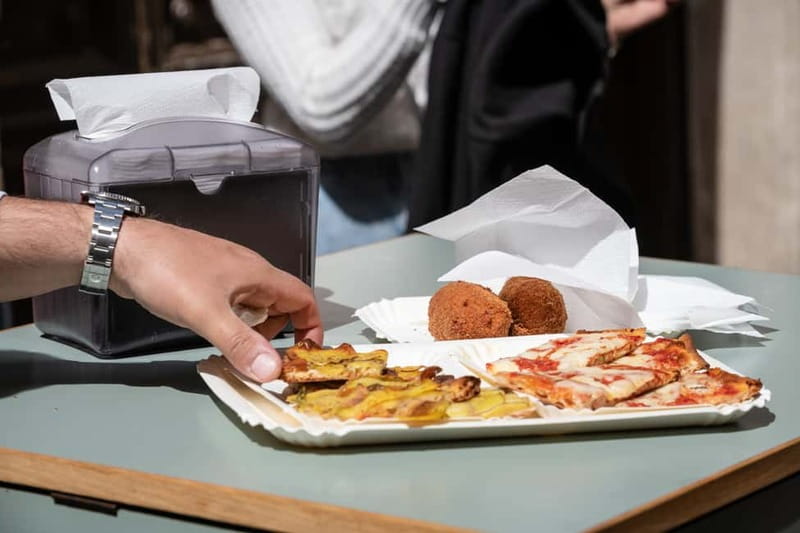
One of the first food stops is at a local restaurant, where you taste regional street food. A central item is supplì, a deep-fried rice ball with a crisp outside and a savory center. It is one of the most recognizable Roman snacks, and it gives you an immediate sense of the city’s simple, hearty food culture.
Next comes a panino with porchetta, tender roast pork seasoned in the central Italian style. This is filling food, not a token sample. If you have a light breakfast, the porchetta sandwich may feel like part of a real meal.
Vegetarian options are available, but the tour is not suitable for vegans. The supplied details do not specify every replacement dish, so contact the provider with your restrictions before booking rather than hoping a substitute will appear on the day.
The food is served at more than one kind of stop. You may eat at a local restaurant, a bakery, or a smaller food stop, which keeps the experience connected to ordinary Roman eating habits. One review singled out arrosticini as a personal highlight, though the core food list centers on the items described above. Menus can change, so think of the listed dishes as the tour’s food framework rather than a guaranteed restaurant menu.
Campo de’ Fiori in the morning
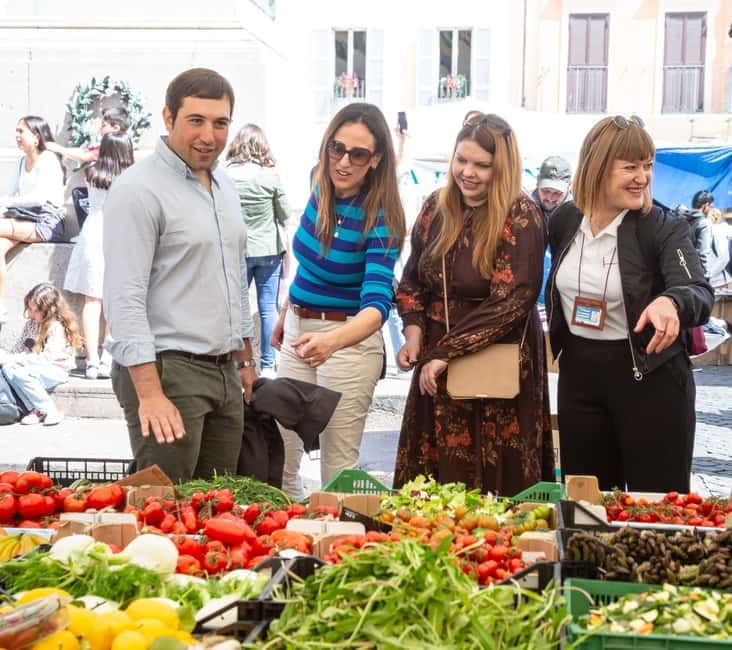
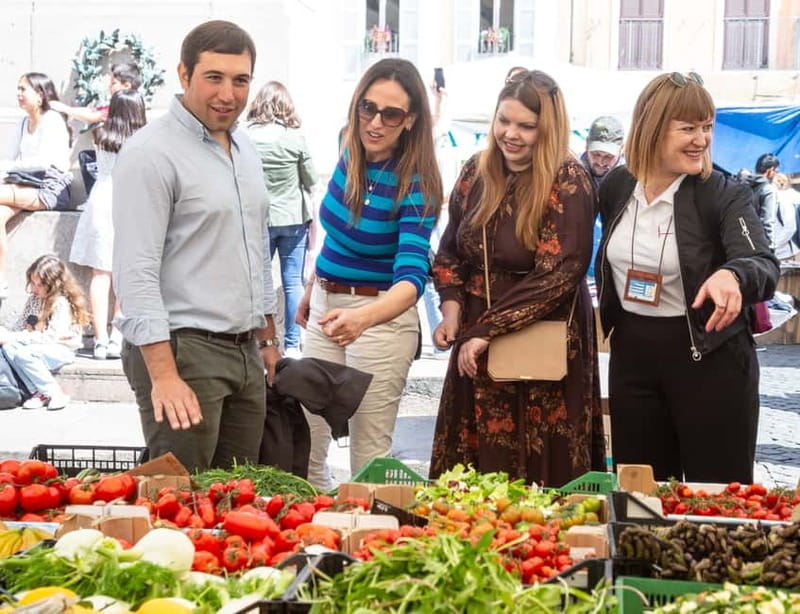
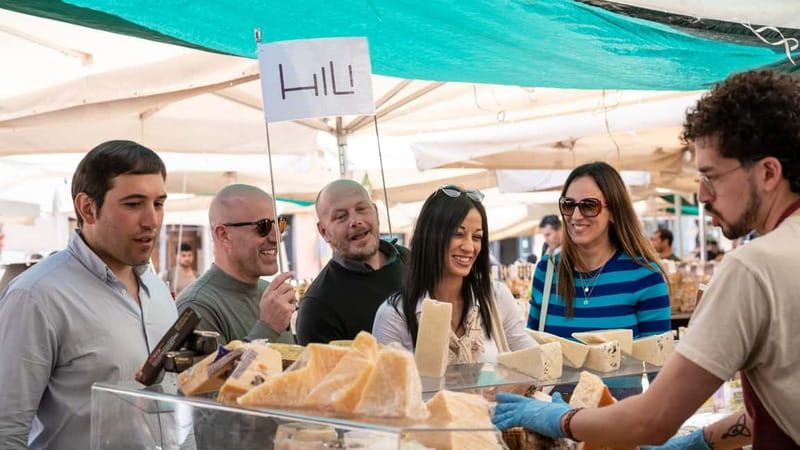
Campo de’ Fiori is one of the most recognizable stops on the route. On morning departures, the tour includes the local market, where you can see stalls selling fruit and other products. This is the liveliest version of the square, and it adds a visual side to the food experience.
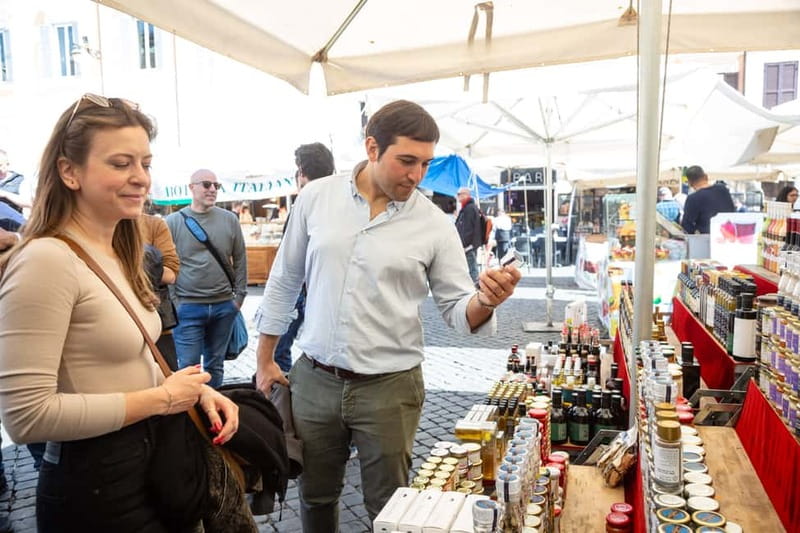
The market stop also includes tastings of Italian products such as olive oils, truffle sauces, and vinegars. I find this useful because these products are easy to buy without understanding quality or regional use. A guide can explain what you are tasting and how it fits into Italian cooking.
There is a practical reason to choose the morning departure: you get an extra part of the experience. Afternoon or evening tours still include Campo de’ Fiori, but the market and the oil, truffle, and vinegar tasting are morning-only features.
The square is also a good place to hear about the difference between Italian food in general and Roman food in particular. The guides are praised for making that distinction clear. Julia, in particular, is repeatedly described as friendly, patient, and good at linking the food to Roman customs and history.
More Rome food and drink outings:
- Rome Food Tour: Unlimited Tastings with Fine Wine & Barolo
★ 5.0 · 3,365 reviews - Rome: Trastevere Food tour with Free-Flowing Fine Wine
★ 5.0 · 2,853 reviews - Rome: Trastevere & Campo de Fiori Street Food Walking Tour
★ 4.9 · 2,768 reviews - Rome Street Food Tour with Local Guide
★ 5.0 · 2,361 reviews
Bakeries, pizza, and the pleasures of a short stop
The route includes a local bakery where you taste Roman-style pizza. Roman pizza can differ from the thick, heavily topped slices many visitors expect. The important point here is not to compare every slice to a favorite restaurant back home, but to notice how the dough, topping, and serving style fit the city’s casual food rhythm.
A fifteen-minute tasting stop may sound brief, but that is part of the design. You sample, hear a little about the food, and keep moving. The schedule prevents the tour from becoming a long restaurant meal, though it also means you will not have much time to linger at each business.
Several short walks connect the food stops. The route includes a pass by Piazza and Passetto del Biscione, along with another stop described as a secret or lesser-known point. These are not full guided visits, but they give the walk some variety and help you see central Rome beyond the main postcard sights.
The tour works best if you enjoy grazing. If you want to sit down for a relaxed lunch with a glass of wine, this will feel too active. If you like trying several foods in small portions while seeing the city, the pace makes good sense.
The Jewish Ghetto and carciofo alla Giudia
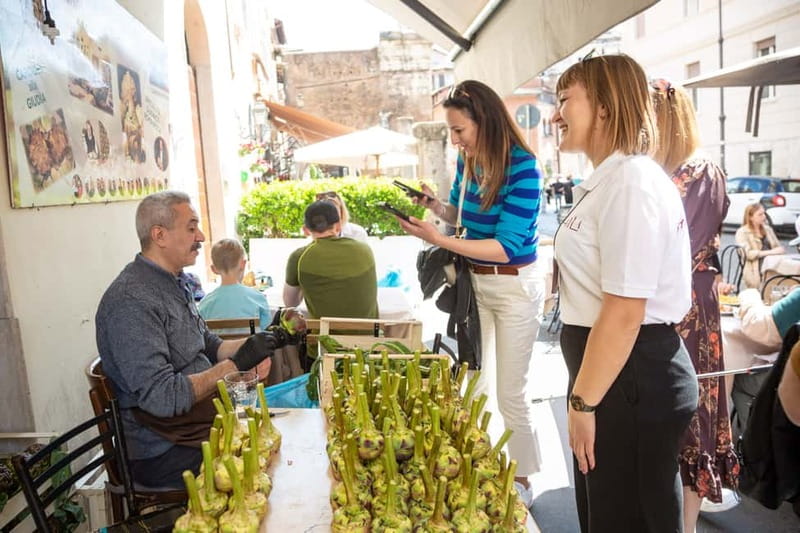
The Jewish Ghetto is the culinary and cultural center of the tour. Here you taste carciofo alla Giudia, a whole artichoke fried until the leaves open and crisp. It is strongly associated with the Roman Jewish tradition and is one of the route’s most distinctive foods.
This stop has more meaning than a standard vegetable tasting. The dish makes sense because you are eating it in the neighborhood where its culinary tradition is rooted. Your guide can connect the food with the area’s identity and explain why the Ghetto remains one of Rome’s important food districts.
The route also passes the Portico d’Ottavia and the Turtle Fountain. The Portico is especially relevant to the Jewish Ghetto walk, while the fountain provides one of the route’s memorable central Rome landmarks. You are not simply transferred from one restaurant to another. The streets and monuments are part of the meal.
Keep in mind that fried artichokes are seasonal in Rome, and the exact food served can depend on availability. The provided tour details specifically list the dish, but they also ask you to report allergies and dietary restrictions in advance. That is sensible advice for anyone with a serious food concern.
Teatro Marcello and the story of Caesar
After the Ghetto, the walk continues toward Teatro Marcello and Largo di Torre Argentina. Teatro Marcello is an ancient theater area that gives the route a strong Roman-era setting without requiring a separate ticketed visit.
Largo di Torre Argentina is tied to the assassination of Julius Caesar. The guide uses this stop to tell one of Rome’s most familiar stories in the actual place connected with it. This is the kind of short historical explanation that can make a walk more memorable than a list of dates.
I like the balance here. The tour does not try to replace a full ancient Rome tour, and it does not spend the entire afternoon on archaeology. Instead, the guide adds just enough context to make the walk feel like sightseeing with a purpose.
The history is woven into the food stops, which is one of the strongest reasons to book this experience. You hear why a neighborhood matters, then taste something associated with it. That connection gives you a better chance of remembering both the dish and the place.
Finishing near the Pantheon with gelato
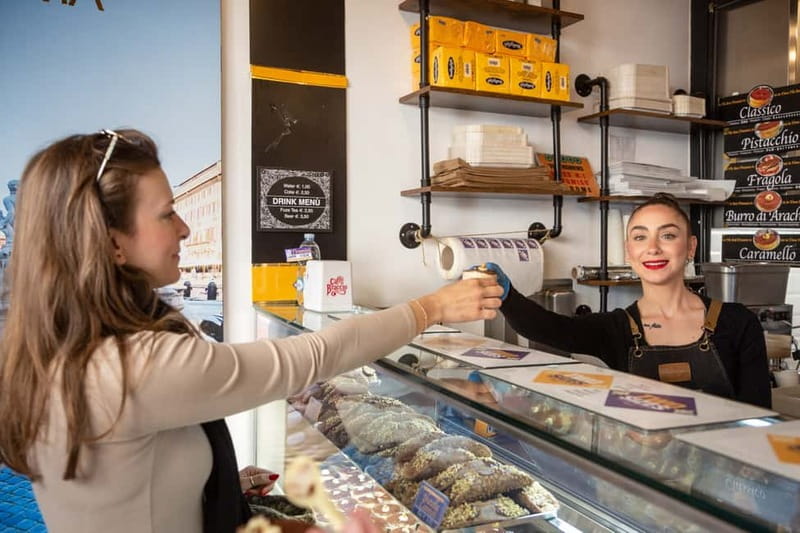
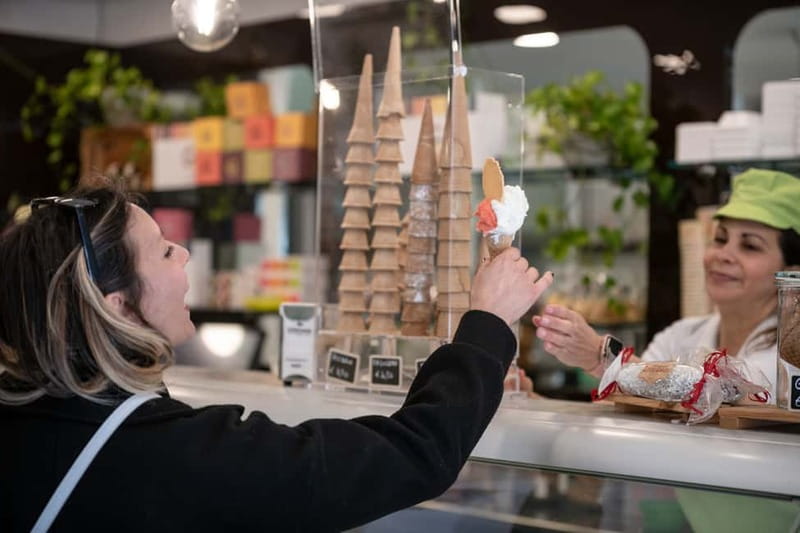
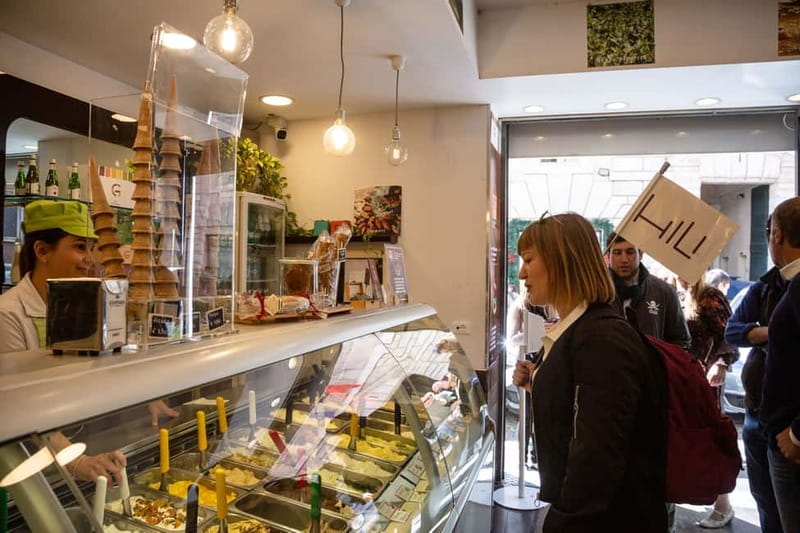
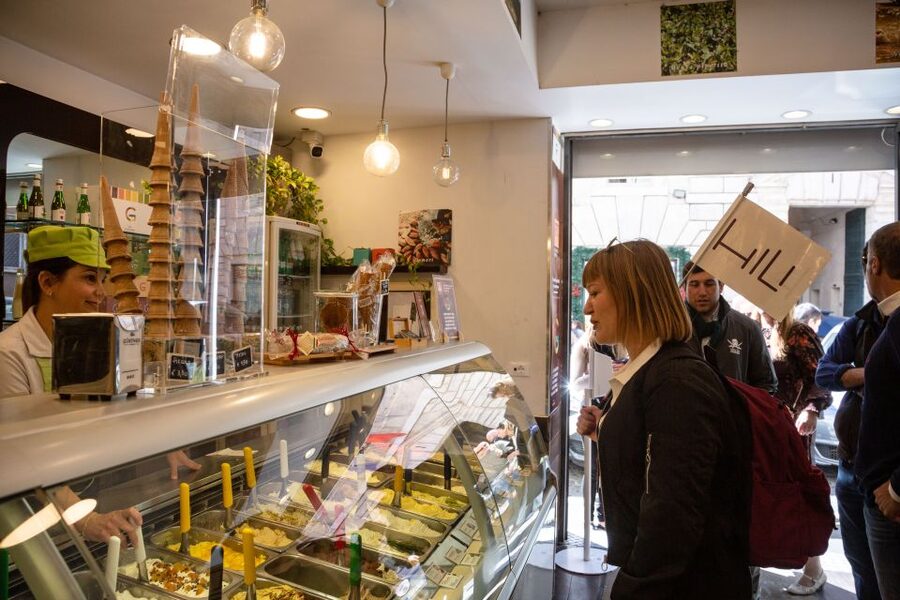
The final tasting is artisanal gelato at Gunther Gelateria, near the Pantheon and Piazza di Sant’Eustachio. After fried snacks, pizza, and porchetta, a cold dessert is a welcome finish.
The gelato stop also gives the tour a clean ending. You are not left at an obscure restaurant or sent back across town. The stated finish is Piazza di Sant’Eustachio, while the activity information also describes the tour as ending back at the meeting point. Confirm the exact end point when you book, especially if you have a timed reservation afterward.
The Pantheon is passed rather than entered. That makes the area useful for continuing your own sightseeing, but you should not count the Pantheon as an included admission. The same rule applies to the other landmarks along the way: they are viewed from the route, with the guide providing context.
A gelato stop can be more valuable than it sounds. The guide may help you understand the difference between artisanal gelato and mass-produced frozen desserts, while the final location puts you close to several major central Rome sights.
What $36 gets you
At $36 per person, the tour is priced well if you make use of all five tastings. You receive a guided walk, food at several stops, a market visit on morning departures, and an English-speaking local guide. The food can also serve as a substantial lunch or early dinner, depending on the start time.
The value is strongest for first-time visitors. You do not have to research which Roman snacks to try, find the Jewish Ghetto, or guess where to buy a decent gelato. You also get recommendations for later meals, which several guides offer when asked.
The value is less clear for a food-focused visitor who already knows Rome’s street-food spots. In that case, the history and neighborhood walk may be more important than the tastings themselves. Drinks are not included, so bring extra money if you want something beyond the provided food.
The option to reserve now and pay later adds flexibility, and cancellation is free up to 24 hours before the tour for a full refund. These terms are useful when your Rome schedule includes changing museum or train plans.
Who will enjoy this tour most
I would recommend this tour to:
- First-time Rome visitors who want an easy introduction to Roman food.
- Families with older children or teenagers who need a break from formal sightseeing.
- Couples and friends who prefer walking and tasting to a long restaurant meal.
- History lovers who want food connected to the Jewish Ghetto and ancient landmarks.
- Visitors who want practical restaurant suggestions early in their stay.
The tour also works for many vegetarians, since vegetarian options are available. It does not suit vegans, and it is not suitable for people with gluten intolerance. Anyone with allergies should tell the provider ahead of time.
The pace should be manageable for most people, with short walks between stops, but you will be on city streets for two and a half hours. The experience is listed as wheelchair accessible, though you should still communicate any mobility needs when booking.
Practical tips for a better food walk
Choose a morning departure if the market matters to you. It includes the local fruit market and the oil, truffle, and vinegar tasting, giving you more than the later route.
Do not eat a large meal beforehand. Supplì, porchetta, pizza, fried artichoke, and gelato add up. A small breakfast will leave you room to enjoy the full selection.
Book this early in your stay if possible. Guides such as Julia, Claudio, Fiammetta, Daniele, and Angie are praised for giving useful suggestions about other places to eat. Their advice is most helpful when you still have several meals ahead.
Wear comfortable shoes. The total distance is not provided, but the itinerary includes repeated walks of three to ten minutes between stops, plus time standing at food businesses and landmarks.
Ask questions. The strongest part of the tour is not just the food quantity. It is the chance to ask why a dish is Roman, how it differs from a general Italian version, and which neighborhoods fit your own interests.
Should you book this Roman food tour?
Book it if you want a short, affordable introduction to Rome that combines street food, neighborhood history, and major sights along one walk. The price is fair for five tastings, and the guides receive unusually strong praise for warmth, clear explanations, and personal recommendations.
Choose the morning for the fullest version of the route. Skip it if you need a vegan or gluten-free experience, or if you prefer a long sit-down meal with drinks included. For most first-time visitors who want to eat well and get their bearings fast, this is a practical way to begin a Rome stay.
FAQ
How long does the Rome food tour last?
The tour lasts 2.5 hours. Starting times vary, so check availability when booking.
Where does the tour begin?
Meet your English-speaking guide at the fountain in the center of Piazza di San Simeone.
Where does the tour finish?
The stated finish is Piazza di Sant’Eustachio. The activity information also describes the tour as ending back at the meeting point, so confirm the exact end location when booking.
What food is included?
The tastings include supplì, a panino with porchetta, Roman-style pizza, fried artichokes called carciofo alla Giudia, and artisanal gelato. Morning tours also include olive oil, truffle, and vinegar tastings.
Does the tour visit the Campo de’ Fiori market?
Yes, morning tours include the local market at Campo de’ Fiori. Market visits are not included on every departure.
Are vegetarian options available?
Yes, vegetarian options are available. The tour is not suitable for vegans.
Is the tour suitable for people with gluten intolerance?
No. The activity is listed as unsuitable for people with gluten intolerance.
Are drinks included?
No. Drinks are not included in the tour price.
Which landmarks are part of the route?
The walk includes Campo de’ Fiori, Piazza and Passetto del Biscione, the Jewish Ghetto, Portico d’Ottavia, Teatro Marcello, Largo di Torre Argentina, and the Pantheon. These are passed or viewed during the walk, not listed as included interior visits.
Is the tour wheelchair accessible?
Yes, the activity is listed as wheelchair accessible. You should still tell the provider about any mobility needs when booking.
Can I cancel the booking?
You can cancel up to 24 hours in advance for a full refund. Reserve-now-and-pay-later is also available.
More Food in Rome
- Rome: Award Winning Trastevere Group Food Tour with Wine
★ 5.0 · 2,273 reviews - Rome: Guided Food Tour in Trastevere
★ 4.8 · 2,266 reviews - Rome: Food Tour with Unlimited Food and Barolo Wine
★ 4.8 · 1,883 reviews - Rome by Night – Ebike Small Group Tour – Food and Wine (Option)
★ 5.0 · 1,275 reviews
Recently reviewed around Rome
- Ancient Rome at Twilight Walking Tour★ 5.0 · 276 reviews
- Domus Aurea Guided Tour: The Golden House of Nero★ 4.5 · 199 reviews
- Early Vatican Museums & Sistine Chapel Small Group Tour★ 4.5 · 314 reviews
- Early Vatican Museums Tour: The Best of the Sistine Chapel★ 4.5 · 900 reviews
- Jewish Ghetto & Piazza Navona: Food, Wine & Sightseeing Rome Tour★ 5.0 · 460 reviews
- 3 Days in Sorrento, Capri & Pompeii: la Dolce Vita★ 4.0 · 595 reviews
- Tivoli Villas Full Day Trip From Rome with Lunch★ 4.0 · 443 reviews
- Cook With Us in Rome: A Hands-On Cooking Experience 09:20AM class★ 5.0 · 234 reviews
Food & Drink, compared.
Small-Group Wine Tasting Experience in the Tuscan Countryside
Read our review →
Tuscany & Montepulciano Day Trip with Lunch & Wine Tasting
Read our review →
Winner 2025 Rome Twilight Trastevere Food Tour by Eating Europe
Read our review →
SMALL-GROUP Wine Safaris: Tuscan Wine Tasting Tours from Florence
Read our review →
Winner 2025 Florence Sunset Food & Wine Tour by Eating Europe
Read our review →
San Gimignano, Siena, Monteriggioni, Chianti Day Trip with Lunch & Wine Tasting
Read our review →
Mount Etna Morning or Sunset Day Trip with Tasting
Read our review →Browse the lists this tour appears in