
Review · FOOD & DRINK
Rome Food Tour in the Historic Centre with 8+ Food Tastings
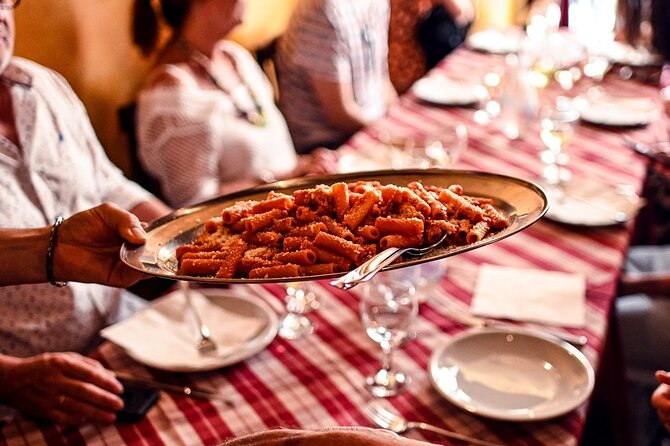
Rome’s best food tours do more than move you from one restaurant to the next. This one uses pizza, pasta, supplì, and gelato to explain how Rome eats, while leading you through Piazza Navona, the old Jewish Ghetto, Campo de’ Fiori, and the temples at Largo di Torre Argentina. The food is the main event, but the streets give the meal its setting.
I like the small maximum group of 12, which makes it easier to hear the guide and ask questions. I also like the generous menu: two pizzas, supplì, cold cuts and cheeses, two Roman pastas, cannoli, gelato, and a secret dish. The main caution is simple: this is a lot of food and a fair amount of walking in only three hours, so arrive hungry and wear comfortable shoes.
In This Review
- Key points to know before booking
- Piazza Navona begins the Roman food story
- Pizza, supplì, and the first taste of Rome
- A Renaissance palace and a change of neighborhood
- The Jewish Ghetto brings food and history together
- Two Roman pastas make this the main meal
- Campo de’ Fiori shows Rome’s everyday side
- Cold cuts, cheeses, cannoli, and the secret dish
- Gelato ends the tour on a cool note
- The ancient walkway and Largo di Torre Argentina
- Is $118.51 a fair price?
- Who will enjoy this three-hour food walk?
- Practical booking advice
- Should you book the Rome food tour?
- FAQ
- How long does the Rome food tour last?
- Where does the tour begin?
- Where does the tour end?
- What food is included?
- How many tastings are included?
- Is the tour offered in English?
- How large is the group?
- Is hotel transportation included?
- Can I cancel for a full refund?
Key points to know before booking
- Eight or more tastings: You sample two types of homemade pizza, supplì, meats and cheeses, two Roman pastas, cannoli, artisanal gelato, and a secret dish.
- A useful historic route: The walk connects Piazza Navona, the Jewish Ghetto, Campo de’ Fiori, and Largo di Torre Argentina.
- Small English-speaking group: The tour accepts no more than 12 people, with group discounts available.
- A full meal, not a snack crawl: The five-course format can leave you very full by the end.
- Strong guide reports: Massimiliano, Rocio, Luda, Eduardo, Federico, Robbie, and Manuel are praised for combining food knowledge, humor, and Roman history.
- Easy central start and finish: Meet at Sant’Agnese in Agone on Piazza Navona and finish at Largo di Torre Argentina, with no hotel transport included.
Piazza Navona begins the Roman food story
Your meeting point is Sant’Agnese in Agone, at Piazza Navona 14. This is a good place to begin because the square brings together ancient Rome, baroque architecture, fountains, cafés, and the everyday pleasure of stopping for a bite.
Piazza Navona occupies the site of an ancient stadium. Its long, open shape still hints at that earlier purpose, while the surrounding buildings and fountains give it the look of a grand public room. The tour spends about 20 minutes here, enough time to get oriented and hear why the square matters before food becomes the focus.
The famous Fountain of the Four Rivers is here, with its obelisk and four river figures. It gives the guide a natural chance to explain Rome’s habit of building new monuments over old foundations. You will also see Sant’Agnese in Agone, the church that anchors the meeting point.
The food connection is practical. Roman eating is often casual and social, with pizza served by the slice, fried snacks eaten on the go, and gelato used as an afternoon pause. Piazza Navona is full of places selling these staples, though the tour’s value is that your guide directs you to selected stops instead of leaving you to guess among the many options.
More Food Tours in Rome
- Rome: Tuscany & Montepulciano Day Trip with Lunch & Wine Tasting
★ 4.5 · 5,232 reviews - Winner 2025 Rome Twilight Trastevere Food Tour by Eating Europe
★ 5.0 · 5,157 reviews - Rome: Trastevere or Jewish Quarter Street Food Tour
★ 4.8 · 3,839 reviews
Pizza, supplì, and the first taste of Rome
The opening tastings include two different kinds of homemade pizza and supplì. This gives you a useful comparison between familiar Italian food and Roman versions that can be easy to overlook.
Roman pizza can mean several things. Depending on the stop and the day, you might taste a thin, crisp style or a softer, more bread-like preparation. Having two types side by side helps you notice texture and seasoning rather than treating all pizza as the same dish.
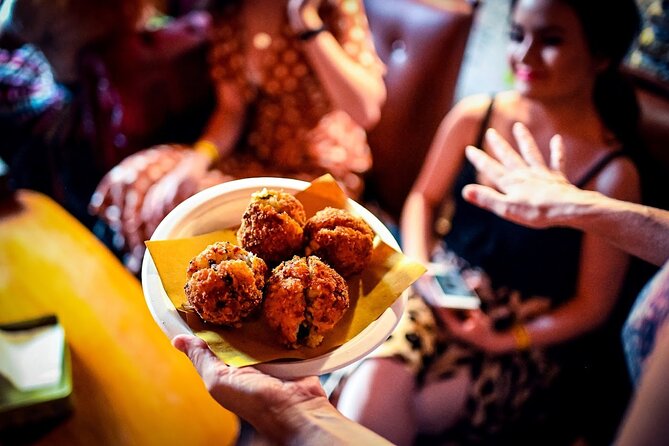
Supplì is one of Rome’s classic street foods: a fried rice croquette, commonly built around tomato and cheese. It is compact, hot, and filling. For many people, it becomes one of the tour’s most distinctive bites because it feels less obvious than pizza or pasta.
The menu can change with shop availability, weather, and other conditions. That matters here because food tours depend on small kitchens and working restaurants, not a fixed theater production. You receive the promised range of Roman specialties, but not necessarily the exact same dish or stop every time.
A Renaissance palace and a change of neighborhood
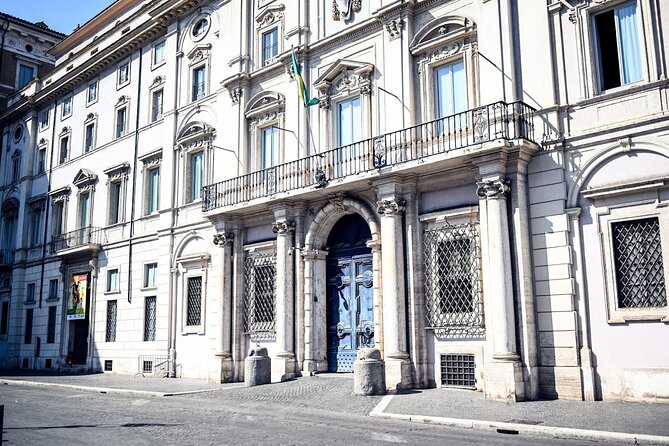
After the first food stops, the walk passes an important High Renaissance palace that now serves as the French embassy in Italy. The building adds a bit of formal architecture to the route and shows how Rome’s historic center keeps old political spaces in active use.
The tour does not treat the city as a string of isolated monuments. Your guide connects the building, the square, and the food culture around them. That is where guides such as Massimiliano, Rocio, Manuel, Luda, and Eduardo seem to make the largest difference. Their role is not just to carry you to a restaurant. They explain the origins of the dishes and add small facts about the buildings and streets you pass.
The exact guide depends on the departure. Names associated with this experience include Massimiliano, Rocio, Luda, Eduardo, Federico, Robbie, Manuel, and others. The strongest guide accounts describe a mix of humor, clear English, Roman history, and useful advice for eating later in the trip.
The Jewish Ghetto brings food and history together
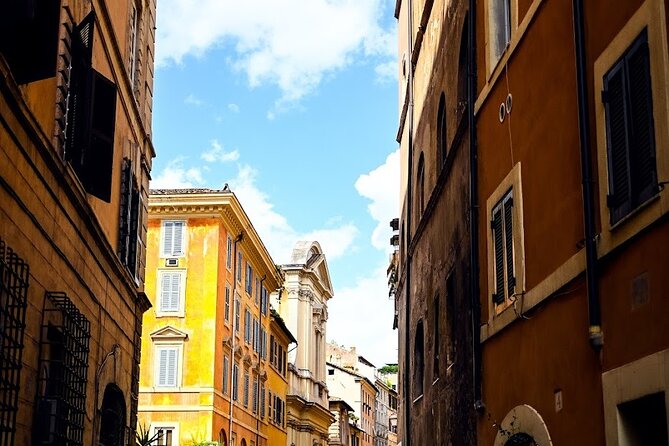
The route then reaches Rome’s Jewish Ghetto in the Rione Sant’Angelo. It is one of the city’s most distinctive districts, shaped by centuries of Jewish life, restrictions, community, and cultural exchange.
This part of the walk gives the food a stronger sense of place. Rome’s cooking is not one single tradition. It has absorbed influences from different communities and neighborhoods, and the Ghetto helps you see how food, religion, trade, and local identity overlap.
Expect a neighborhood walk rather than a museum visit. The tour’s focus remains food, but the guide explains the area as you move through it. That balance works well if you want context without spending several hours in formal historical sites.
For families, the format can work surprisingly well. A guide may adjust drinks or explanations for younger children, and one family found the 4- and 6-year-olds stayed engaged. Still, you should be comfortable walking and standing. One parent who was six months pregnant found the walking manageable, but heat and appetite are personal matters, so plan accordingly.
More Historical Tours in Rome
- Rome in a Day Tour with Vatican, Colosseum and Historic Center
★ 4.5 · 1,042 reviews - Rome: Ancient History and Colosseum Underground Tour
★ 4.5 · 996 reviews - Rome: Forbidden History Walking Tour & Pub Crawl with Drinks
★ 4.9 · 688 reviews - Food Tasty and History Tour in Civitavecchia
★ 5.0 · 256 reviews
Two Roman pastas make this the main meal
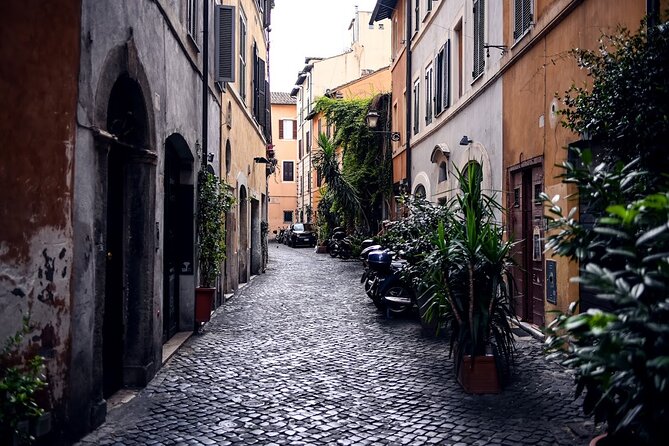
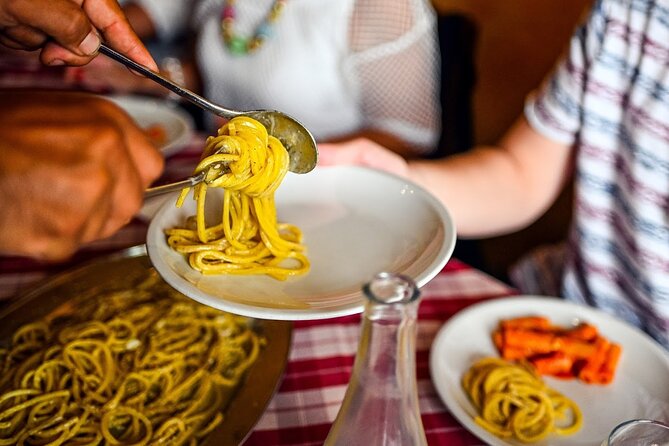
The two Roman pasta tastings are likely to be the most substantial part of the tour. They are included as separate dishes, giving you more than a quick forkful at a counter. The purpose is to show how Roman pasta depends on a few strong ingredients, careful timing, and a particular sense of balance.
The package does not name the two pasta dishes in advance. That is worth noting if you are hoping specifically for carbonara, amatriciana, cacio e pepe, or gricia. You may encounter familiar Roman classics, but the menu is subject to change.
This is also where the tour becomes a proper lunch or dinner substitute. The combination of pizza, fried food, cold cuts, cheeses, and two pastas is substantial. Several guides are described as sending people home very full, and that is believable from the menu alone.
Vegetarians are not left out. A vegetarian pasta and other alternatives have been provided when needed. You should still communicate dietary requirements at booking or before the tour, since the available substitutions depend on the food stops and the day’s menu. No broad dietary guarantee is provided, so do not assume every restriction can be handled.
Campo de’ Fiori shows Rome’s everyday side
The walk continues to Campo de’ Fiori, a rectangular square south of Piazza Navona. Its name means field of flowers, a reminder that the area was once open land before becoming part of central Rome.
Campo de’ Fiori is a useful contrast with Piazza Navona. Piazza Navona feels carefully framed and monumental. Campo de’ Fiori has a more practical market-square character, even though its restaurants and food businesses now serve a steady stream of visitors.
This is a good place to pay attention to how a food tour chooses its stops. You are not simply sampling dishes in the same polished setting. The route moves through different kinds of public spaces, then uses small eateries and restaurants to show how food fits into the city.
The walking distance is not presented as difficult, but it is real. Three hours goes quickly when you stop to eat, listen, and move between busy central streets. On a hot day, the pace may feel harder than the map suggests. Bring water and avoid treating this as a brisk sightseeing walk.
Cold cuts, cheeses, cannoli, and the secret dish
The cold cuts and cheese course adds variety after the hot pizza and pasta. It also slows the pace. Instead of eating only cooked dishes, you get a chance to taste products that commonly appear on Italian tables and compare salt, texture, and intensity.
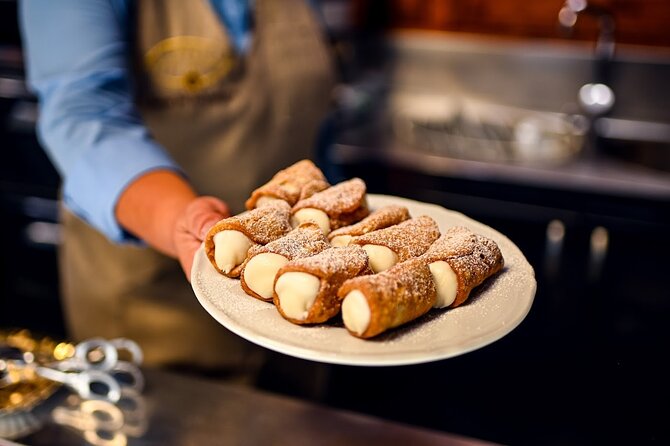
Cannoli follows the savory food as one of the sweet stops. Even if you are not normally a fan of cannoli, the version served here may change your mind. That is partly the point of a food tour: a fresh preparation from a good shop can be very different from a generic pastry found elsewhere.
The final food item is described as a secret dish. You should treat that as a pleasant surprise, not as a promised specialty you can plan around. Since the itinerary and menu can change, the secret item is especially likely to shift.
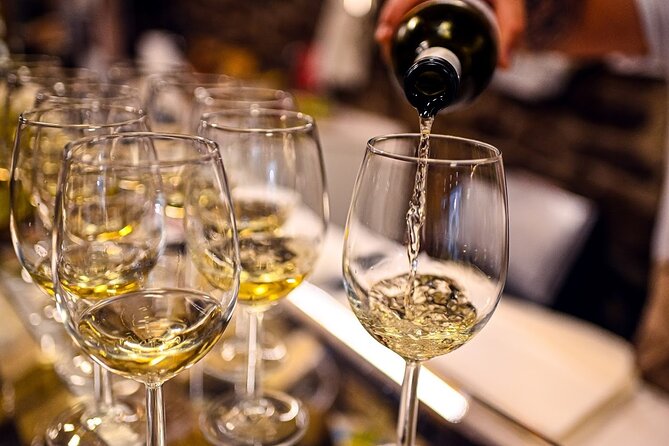
Some food combinations also include wine, espresso, or other drinks. The supplied food details do not promise a fixed drink menu, so I would not book this expecting a specific wine tasting. The minimum drinking age is 18.
Gelato ends the tour on a cool note
Artisanal gelato is the closing sweet course. Ending with gelato makes sense in Rome, where a small cup or cone can serve as dessert, refreshment, and a final lesson in texture.
The distinction between gelato and ordinary ice cream is often overstated, but a good gelateria does give you a chance to notice freshness, density, and flavor. The tour’s gelato stop has been singled out as especially good, including by people who had already tried plenty of gelato in Rome.
You will finish near Largo di Torre Argentina, so the gelato is not the end of your sightseeing for the day. The area contains four Roman Republican temples and remains connected with Pompey’s Theatre, all within the ancient Campus Martius.
The ancient walkway and Largo di Torre Argentina
One stop features the remains of an ancient walkway built in the second century BC to link two Roman temples. This small piece of infrastructure is easy to miss when you are focused on grand monuments, but it gives the walk a welcome sense of scale.
Rome is full of fragments like this. A road, wall, fountain, or temple base may appear in the middle of an ordinary street, with modern cafés and traffic close by. A food guide who points out those details can help you read the city instead of simply passing through it.
The tour ends at Largo di Torre Argentina. This is convenient for continuing into central Rome, but hotel drop-off is not included. You will need to make your own way back by foot or public transport.
Is $118.51 a fair price?
At $118.51 per person, this is not a cheap way to eat in Rome. It can still be good value if you count the experience as a substantial meal, a guided walk, and an introduction to several neighborhoods.
The menu includes at least eight tasting elements and is described as five courses. Two pizzas, supplì, cold cuts and cheeses, two pastas, cannoli, gelato, and a secret dish would cost a meaningful amount if purchased separately, especially in central Rome. You also receive an English-speaking guide and the benefit of having someone select the stops.
The value is strongest on your first visit, when you want help understanding what to order and where to eat next. Guides often offer practical restaurant suggestions for the rest of your stay, which can save you from spending several meals on guesswork.
The price is less attractive if you have a very small appetite, prefer to choose every restaurant yourself, or already know Roman food well. You are paying for the route, explanations, group setting, and variety, not just the ingredients.
The tour is often reserved well ahead of time, with an average booking lead time of about 73 days. That does not mean you must book that early, but it suggests that popular dates can fill up. Confirmation is sent within 48 hours, subject to availability.
Who will enjoy this three-hour food walk?
I would choose this tour for a first or second visit to Rome, especially if you want a fast introduction to local dishes without giving up sightseeing. It also suits couples, families with older children, and solo visitors who like meeting a small group over shared food.
The food quantity makes it useful as a lunch or early dinner. Do not schedule a major meal immediately afterward. You may also want to keep the evening light, particularly in warm weather.
The tour is offered in English and accepts up to 12 people. Group discounts may make it more appealing for families or friends traveling together. Most people can participate, and the route is near public transportation, but pets are not permitted.
The experience is less suitable if you dislike walking, need a guaranteed fixed menu, or have strict dietary needs that have not been confirmed in advance. Weather and restaurant availability can change the plan, so flexibility is part of the bargain.
Practical booking advice
Meet at Sant’Agnese in Agone, Piazza Navona 14. Check the meeting details carefully, since central Rome has many churches and squares with similar names.
Wear shoes you can walk in and arrive hungry. The food is not limited to tiny samples, and you will be better able to enjoy the pastas and desserts if you do not eat a large breakfast or lunch first.
Free cancellation is available up to 24 hours before the start time for a full refund. Changes or cancellations made inside that 24-hour window are not accepted for a refund, and cut-off times use Rome’s local time.
Should you book the Rome food tour?
Book it if you want a full meal with a history lesson attached, rather than a simple restaurant crawl. The route is central, the menu is broad, and the small group gives the guide room to explain both Roman dishes and the streets around them.
I would be especially comfortable booking it for a first visit, a family that enjoys tasting several foods, or anyone who wants restaurant tips for the rest of a Rome stay. Massimiliano, Rocio, Luda, Eduardo, Federico, Robbie, and Manuel are all associated with warm, funny, informative guiding, though the exact guide is not guaranteed.
Skip it if you want a fixed list of named dishes, a short walk, or a low-cost way to grab pizza and gelato. At $118.51, the tour earns its price through quantity, variety, guidance, and the connection between food and place. Come hungry, leave room for gelato, and expect Rome to feed you well.
FAQ
How long does the Rome food tour last?
The tour lasts approximately three hours.
Where does the tour begin?
It begins at Sant’Agnese in Agone, Piazza Navona 14, 00186 Rome, Italy.
Where does the tour end?
The tour ends at Largo di Torre Argentina in central Rome.
What food is included?
The food includes two types of homemade pizza, supplì, Italian cold cuts and cheeses, two Roman pastas, cannoli, artisanal gelato, and a secret dish.
How many tastings are included?
The experience includes eight or more food tastings across five courses.
Is the tour offered in English?
Yes. The tour is offered in English.
How large is the group?
The group can have a maximum of 12 participants.
Is hotel transportation included?
No. Hotel pick-up and drop-off are not included.
Can I cancel for a full refund?
Yes. You can cancel at least 24 hours before the experience start time for a full refund. Cancellations or changes made less than 24 hours in advance are not refunded.
More Food in Rome
- Rome Food Tour: Unlimited Tastings with Fine Wine & Barolo
★ 5.0 · 3,365 reviews - Rome: Trastevere Food tour with Free-Flowing Fine Wine
★ 5.0 · 2,853 reviews - Rome: Trastevere & Campo de Fiori Street Food Walking Tour
★ 4.9 · 2,768 reviews - Rome Street Food Tour with Local Guide
★ 5.0 · 2,361 reviews
Recently reviewed around Rome
- Ancient Rome at Twilight Walking Tour★ 5.0 · 276 reviews
- Domus Aurea Guided Tour: The Golden House of Nero★ 4.5 · 199 reviews
- Early Vatican Museums & Sistine Chapel Small Group Tour★ 4.5 · 314 reviews
- Early Vatican Museums Tour: The Best of the Sistine Chapel★ 4.5 · 900 reviews
- Jewish Ghetto & Piazza Navona: Food, Wine & Sightseeing Rome Tour★ 5.0 · 460 reviews
- 3 Days in Sorrento, Capri & Pompeii: la Dolce Vita★ 4.0 · 595 reviews
- Tivoli Villas Full Day Trip From Rome with Lunch★ 4.0 · 443 reviews
- Cook With Us in Rome: A Hands-On Cooking Experience 09:20AM class★ 5.0 · 234 reviews
Food & Drink, compared.
Small-Group Wine Tasting Experience in the Tuscan Countryside
Read our review →
Tuscany & Montepulciano Day Trip with Lunch & Wine Tasting
Read our review →
Winner 2025 Rome Twilight Trastevere Food Tour by Eating Europe
Read our review →
SMALL-GROUP Wine Safaris: Tuscan Wine Tasting Tours from Florence
Read our review →
Winner 2025 Florence Sunset Food & Wine Tour by Eating Europe
Read our review →
San Gimignano, Siena, Monteriggioni, Chianti Day Trip with Lunch & Wine Tasting
Read our review →
Mount Etna Morning or Sunset Day Trip with Tasting
Read our review →Browse the lists this tour appears in