Review · ROME TOURS
Rome: Giuseppe Verdi’s “La Traviata” Live Performance
La Traviata in a church is a very different night from La Traviata in a grand opera house. At St. Paul’s Within the Walls, you sit close to the singers and orchestra beneath a high church ceiling, following Violetta Valéry’s tragic struggle for love and freedom. The performance lasts two hours and begins at 8:30 pm.
I like the beautiful setting and the relatively intimate scale. I also like the chance to hear a live choir, orchestra, and Italian soloists for about $41, a fair price for an evening of music in central Rome. The main drawback is practical: seating is on church pews or chairs, and the stage is at floor level, so a late arrival or a seat toward the back can mean a poor view.
In This Review
- Key points
- Why La Traviata works so well in Rome
- Inside St. Paul’s Within the Walls Church
- The 8:30 pm performance, act by act
- The singers and orchestra
- Seating is the biggest practical issue
- Sound, language, and following the story
- Is $41 good value?
- Who should book this evening?
- Getting there and planning the evening
- My recommendation
- FAQ
- Where does La Traviata take place?
- What time does the performance start and finish?
- How long is the opera performance?
- Is the opera performed in English?
- What does the ticket include?
- Is the church wheelchair accessible?
- Can I cancel my booking?
Key points
- A church instead of an opera house: St. Paul’s Within the Walls gives the evening a memorable setting, but its acoustics and seating are not designed like a formal theater.
- A compact two-hour performance: You get the central drama of Verdi’s three-act opera without committing to a long night.
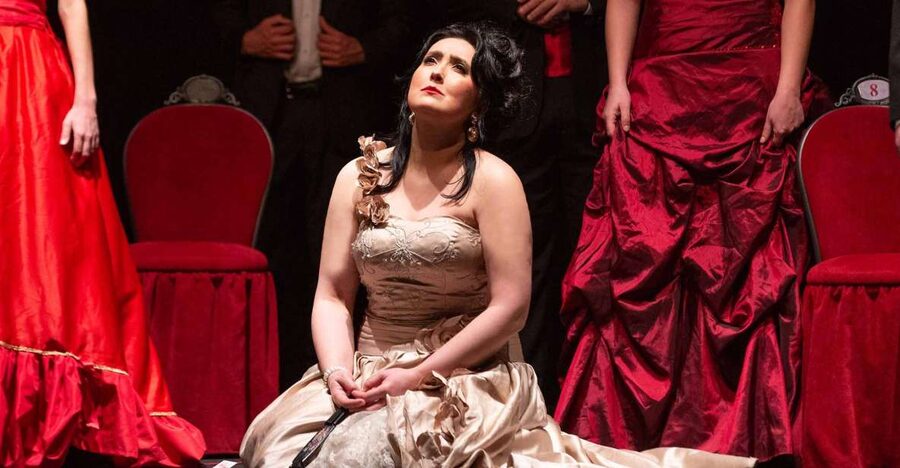
- Strong vocal focus: Soprano Aleksandra Buczek sings Violetta, with Emil Alekperov as Alfredo and Cristian Alderete as Giorgio Germont.
- Live orchestra and choir: Conductor Elvin Dhimitri leads the Opera e Lirica Orchestra, with supporting singers and ensemble performers.
- Arrive early for sightlines: There is no raised stage, so people in front can block the view, especially from the rear pews.
- Good first opera choice: Read the story before you go, since the performance is in Italian and does not begin with a plot explanation.
Why La Traviata works so well in Rome
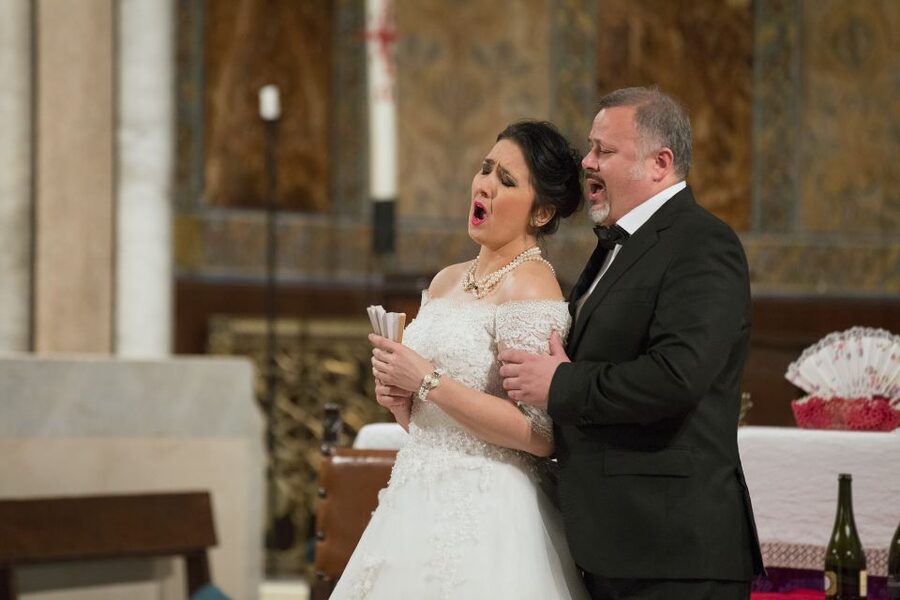
Verdi’s La Traviata tells a story that still feels direct and human. Violetta Valéry is a celebrated Parisian courtesan who falls in love with Alfredo Germont. Their private happiness is challenged by Alfredo’s father, Giorgio, and the opera moves from glittering social scenes to sacrifice, illness, and loss.
Verdi based the opera on Alexandre Dumas fils’s novel and play La Dame aux Camélias. It first appeared at Venice’s La Fenice in 1853, originally under the title Violetta. The work failed to make its full impact at the first performance, then became one of the most performed operas in the world after revisions and later productions.
You do not need to know opera to follow the emotional arc. You do need a little preparation. The singing is in Italian, and this event does not promise English translation or a spoken introduction. I strongly suggest reading a short plot outline before leaving your hotel. That small effort makes the words, gestures, and famous musical moments much easier to follow.
Other Rome days travellers weigh against this one:
- Vatican: Museums & Sistine Chapel Entrance Ticket
★ 4.5 · 144,003 reviews - Vatican Museums & Sistine Chapel Tour with Optional Basilica
★ 4.3 · 67,413 reviews - Colosseum, Roman Forum & Palatine Guided Tour
★ 4.7 · 63,148 reviews
Inside St. Paul’s Within the Walls Church
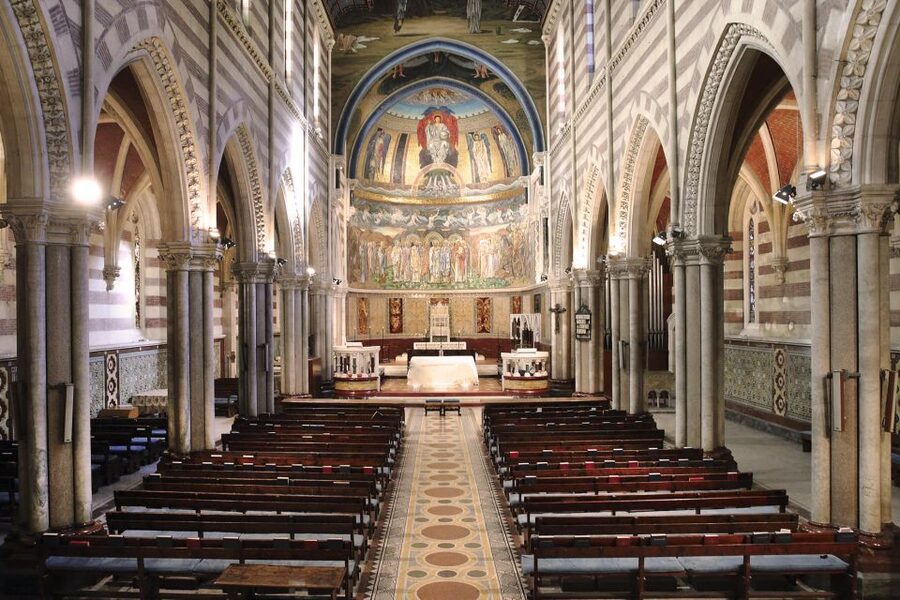
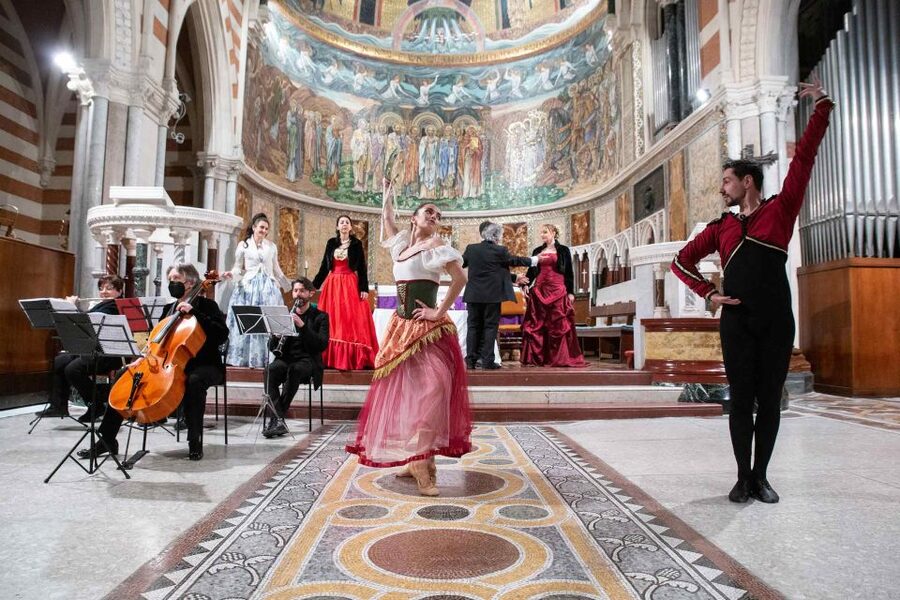
The venue is part of the experience, not just a place to store the audience. St. Paul’s Within the Walls is on Via Nazionale, a central Rome street, and its church interior gives the performance a solemn, unusual backdrop.
The high ceiling helps create the sense of occasion. The singers are close enough for you to see their performance more clearly than you might in a large opera house, at least if you have a front or central seat. The church also gives the orchestra and voices a particular resonance, with some people finding the acoustics excellent.
That same height can create problems. Sound may carry differently depending on where you sit, and the church was not built as an opera venue. The result can be impressive in one part of the room and less clear in another. I would choose a forward seat if the price difference is reasonable.
The setting also has physical limits. In warm weather, the church can feel hot, with limited ventilation. Fans may help a little, but do not expect the controlled temperature of a modern theater. If you are visiting Rome in summer, wear something comfortable and light while still dressing respectfully for a church.
The 8:30 pm performance, act by act
The evening begins at 8:30 pm and runs until about 10:30 pm. The exact staging can vary, but you can expect the opera’s three-act structure, solo arias, ensemble scenes, orchestra, choir, and supporting performers.
The opening act introduces Violetta in a social setting, where the music moves between celebration and private feeling. This is where the famous drinking song, Libiamo, appears. The contrast is central to the opera: public gaiety on one side, Violetta’s fragile health and longing for a different life on the other.
The second act turns toward Violetta and Alfredo’s relationship. Alfredo’s father, Giorgio Germont, asks Violetta to give up the life she has built with his son. His request creates the opera’s painful moral conflict. Violetta agrees to a sacrifice that Alfredo does not understand, and the emotional weight shifts heavily onto the singers.
The final act is quieter and more intimate. Violetta’s illness has worsened, and the music becomes increasingly personal. This section depends less on spectacle and more on the soprano’s ability to carry the character’s fear, tenderness, and exhaustion.
The performance is presented in a compact format. One audience member described it as a shortened version of the original, so you should not expect the scale, scene changes, or length of a major opera-house production. That is not necessarily a flaw. For a first experience, the shorter format keeps the evening manageable, especially after a full day of sightseeing.
The singers and orchestra
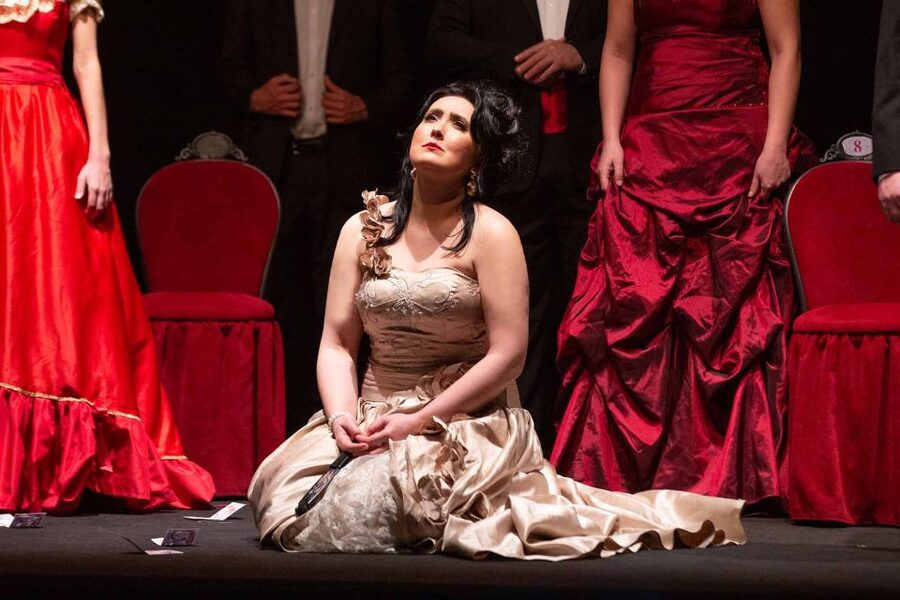
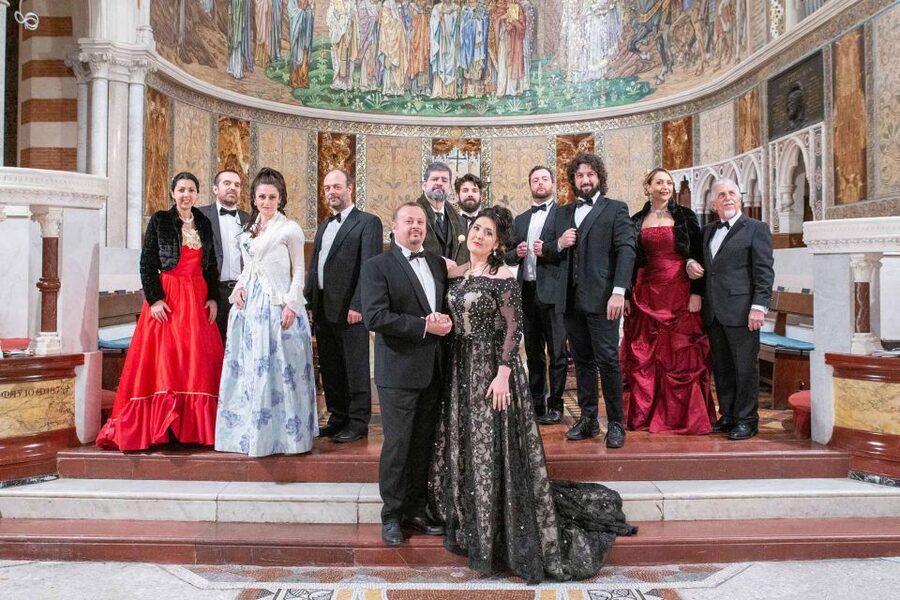
The cast includes soprano Aleksandra Buczek as Violetta, tenor Emil Alekperov as Alfredo, and baritone Cristian Alderete as Giorgio Germont. Their characters form the emotional center of the opera, and Violetta carries much of the evening’s vocal and dramatic pressure.
The supporting cast includes Anastasiia Demchenko as Flora and Annina, Andrea Pecci as Gastone, Andrea Scorsolini as Baron Douphol, Matteo Nardinocchi as the Marquis d’Obigny, and Giuseppe Trovato as the commission agent. Choir members portray servants, noblemen, friends, revelers, gypsies, matadors, picadors, and masked figures.
Elvin Dhimitri conducts the Opera e Lirica Orchestra. The orchestra is not a background recording or a decorative extra. It gives the singers the musical support that makes live opera feel immediate, from the bright party scenes to the darker closing passages.
You may also see balletic interludes. They are not the main focus of La Traviata, but they can add variety to the staging. Sightlines matter here even more, since dancers and stage action can disappear behind taller people when you sit farther back.
A different way to spend the day, same part of Italy:
- Vatican Museums, Sistine Chapel & St Peter’s Basilica Guided Tour
★ 4.5 · 39,149 reviews - Rome: Colosseum, Palatine Hill and Roman Forum Guided Tour
★ 4.8 · 32,814 reviews - Rome: Guided Tour of Colosseum, Roman Forum & Palatine Hill
★ 4.7 · 27,897 reviews - Rome: Colosseum & Forum with Audio Guide App -Optional Arena
★ 4.2 · 24,770 reviews
Seating is the biggest practical issue
This is the point I would take most seriously before booking. The church has pew seating, with some plastic chairs used in certain areas. The seating is not comparable to padded, tiered opera-house seats.
The stage is at floor level rather than raised above the audience. From the front, that puts you close to the action. From the back, it means heads in the rows ahead can block your view. If you are short, or if seeing the performers matters as much as hearing them, pay for the best seats you can manage and arrive with time to spare.
The room has been arranged in roughly 20 rows, which keeps the performance feeling fairly intimate. Still, intimacy does not guarantee a clear view. A good listening seat may not be a good viewing seat, especially at the sides.
Arriving only ten minutes before the start can leave you with limited choices. Dinner plans should allow enough time to reach Via Nazionale, find the church, and enter before the performance begins. You will get more from the evening if you are seated early rather than rushing in with the lights going down.
A small cushion may be useful if you are sensitive to hard benches. Two hours on a church pew is manageable for many people, but it is not the same as settling into a theater seat. Some front-area seats may be ordinary chairs rather than pews, and those can also be firm.
Sound, language, and following the story
The opera is performed in Italian. If you speak Italian, you will catch more of the text, but everyone benefits from knowing the plot in advance. There is no stated English narration or introductory explanation, and the production does not appear to pause to explain Verdi’s background or the story.
This matters because the drama moves quickly through social customs, family pressure, and emotional reversals. If you do not know why Violetta leaves Alfredo, the second act can feel abrupt. If you do know, the singers’ gestures and vocal phrasing carry much more weight.
The acoustics are one of the evening’s strengths and one of its variables. The church can give the voices a beautiful bloom, and the orchestra may sound especially effective from central seats. Yet the tall interior can also make some sound less focused, depending on your position.
I would not book this expecting studio-perfect clarity from every seat. I would book it for the combination of live voices, orchestra, and place. That is a good trade for many first-time opera visitors, but dedicated opera fans who want precise acoustics and perfect sightlines may prefer a formal theater.
Is $41 good value?
At $41 per person, this is a reasonable way to add live opera to a Rome itinerary. A full-scale opera-house production can cost more and may demand a longer evening, more formal planning, and a greater commitment to the art form.
Here, your ticket covers the performance only. Food and drinks are not included, so plan dinner before or after the show. The 8:30 pm start makes it possible to eat beforehand, but you should not cut things too close because late arrival can affect your seat and view.
The value is strongest if you want a first taste of opera, enjoy classical music, or want a memorable final evening in Rome without spending a large amount. The value is less certain if you are mainly paying to see elaborate scenery. This production uses the church as its visual setting, and the staging is more modest than what you would find at a major opera company.
A 4.3 rating from 435 completed bookings suggests a generally positive experience with some consistent limitations. The strongest praise centers on the voices, orchestra, church setting, and intimate feel. The repeated concerns are also clear: hard seating, heat in warm weather, variable acoustics, and obstructed views from some seats.
Who should book this evening?
I would recommend it to anyone curious about opera but not ready to spend a great deal on a formal production. La Traviata has familiar themes, memorable melodies, and a clear emotional story once you know the plot.
It also suits couples and families with older children or teenagers. A teenager attending opera for the first time may find the two-hour format less demanding than a full-length production. The setting gives the night a special Roman character without requiring a day trip or complicated transportation.
Classical-music fans should book with realistic expectations. The singers and orchestra are the main attraction, but the church cannot offer the comfort, stage height, or technical precision of a purpose-built opera house.
I would think twice if you need air conditioning, padded seats, or a guaranteed unobstructed view. You can reduce the risk by choosing an earlier arrival and a forward seat, but the venue’s basic design will not change.
Getting there and planning the evening
The meeting point is St. Paul’s Within the Walls Church, Via Nazionale 16/A, Rome. You make your own way there, and the ticket is the only included item.
Give yourself enough time to locate the entrance and settle in. Via Nazionale is a major central street, but an evening appointment still deserves a little buffer, especially if dinner runs late. The performance starts at 8:30 pm and ends around 10:30 pm, so it works well as a planned evening activity rather than a casual stop between sights.
The event is wheelchair accessible. Pets are not allowed. You can cancel up to 24 hours before the start for a full refund, and the reserve-now, pay-later option can help if your Rome plans are still shifting.
My recommendation
Book this La Traviata if you want live opera, strong voices, and a memorable church setting at a sensible price. Prepare by reading the plot, arrive early, and choose a forward seat if seeing the action matters to you.
Skip it if you expect a grand opera-house production with tiered seating, subtitles, air conditioning, and elaborate scenery. For the right audience, though, this is an accessible and atmospheric way to hear Verdi in Rome, with the music and singers doing most of the work.
FAQ
Where does La Traviata take place?
The performance takes place at St. Paul’s Within the Walls Church on Via Nazionale 16/A in Rome.
What time does the performance start and finish?
It starts at 8:30 pm and ends at approximately 10:30 pm.
How long is the opera performance?
The stated duration is two hours.
Is the opera performed in English?
No. The performance is in Italian, so reading the story of La Traviata beforehand can help you follow the action.
What does the ticket include?
The ticket includes admission to the performance. Food and drinks are not included.
Is the church wheelchair accessible?
Yes, the activity is listed as wheelchair accessible.
Can I cancel my booking?
Yes. You can cancel up to 24 hours in advance for a full refund. A reserve-now, pay-later option is also available.
Recently reviewed around Rome
- Ancient Rome at Twilight Walking Tour★ 5.0 · 276 reviews
- Domus Aurea Guided Tour: The Golden House of Nero★ 4.5 · 199 reviews
- Early Vatican Museums & Sistine Chapel Small Group Tour★ 4.5 · 314 reviews
- Early Vatican Museums Tour: The Best of the Sistine Chapel★ 4.5 · 900 reviews
- Jewish Ghetto & Piazza Navona: Food, Wine & Sightseeing Rome Tour★ 5.0 · 460 reviews
- 3 Days in Sorrento, Capri & Pompeii: la Dolce Vita★ 4.0 · 595 reviews
- Tivoli Villas Full Day Trip From Rome with Lunch★ 4.0 · 443 reviews
- Cook With Us in Rome: A Hands-On Cooking Experience 09:20AM class★ 5.0 · 234 reviews
Rome Tours, compared.

Vatican: Museums & Sistine Chapel Entrance Ticket
Read our review →
Vatican Museums & Sistine Chapel Tour with Optional Basilica
Read our review →
Colosseum, Roman Forum & Palatine Guided Tour
Read our review →
Vatican Museums, Sistine Chapel & St Peter’s Basilica Guided Tour
Read our review →
Colosseum, Palatine Hill and Roman Forum Guided Tour
Read our review →
Guided Tour of Colosseum, Roman Forum & Palatine Hill
Read our review →
Colosseum & Forum with Audio Guide App -Optional Arena
Read our review →