Review · ROME TOURS
Rome: Jewish Ghetto and Trastevere Tour
Rome’s Jewish Ghetto and Trastevere are separated by the Tiber, yet their stories are closely linked. This 2.5-hour walk follows that connection through ancient ruins, the former Jewish quarter, Tiber Island, and the lanes of Trastevere. It gives you a side of Rome that feels more local and human than a standard greatest-hits tour.
I especially like the clear historical storytelling, which turns layers of Roman history into an easy-to-follow story, and the route’s useful finish in Trastevere, where you can continue with dinner or a drink. Guides such as Ben, Guido, and Alethea are praised for humor, patience, and practical restaurant advice. The main limitation is that the synagogue is seen only from outside, so this is not the right choice if you want an in-depth look inside Rome’s Jewish Museum or synagogue.
In This Review
- Key points to know before booking
- Why this Rome walk feels different
- Starting near the Theatre of Marcellus
- Portico d’Ottavia and the entrance to the Ghetto
- Piazza Mattei and the quieter details
- Tiber Island: the geographic link
- Trastevere beyond the postcard view
- The guides are the main value
- Pace, comfort, and practical limits
- Who will get the most from this tour
- Is $35 a fair price?
- Should you book the Jewish Ghetto and Trastevere Tour?
- FAQ
- How long does the Jewish Ghetto and Trastevere Tour last?
- What language is the tour conducted in?
- Where does the tour begin?
- Where does the tour finish?
- Is entry to the synagogue included?
- Are food and drinks included?
- Is the tour wheelchair accessible?
- What should I bring?
Key points to know before booking
- Ancient Rome frames the story: Begin near the Theatre of Marcellus and Portico d’Ottavia before focusing on the Jewish Ghetto.
- A thoughtful look at Jewish Rome: The tour covers centuries of Jewish life, hardship, resilience, and modern memory.
- Tiber Island links the neighborhoods: A short break here gives your feet a rest and helps explain the geography.
- Trastevere is more than pretty lanes: Churches, alleys, food traditions, and local character round out the history.
- Guides make the difference: Ben, Guido, Alethea, and other English-speaking guides are known for lively delivery and strong command of Roman history.
- Good value at $35: You get a focused walking tour with an expert guide, but food, drinks, and synagogue entry cost extra.
Why this Rome walk feels different
Rome can make you feel as if you are racing from one famous monument to the next. This tour slows the pace and lets you follow a connected story across three distinct areas.
You begin with the ancient city, move into the Jewish Ghetto, cross the Tiber, and finish in Trastevere. That sequence matters. Instead of treating each neighborhood as an isolated stop, the guide shows how Rome’s geography, religion, politics, and daily life overlap.
The strongest part is the guide’s role. This is not a headphone-led stroll where you simply point your camera at buildings. Guides such as Ben, Guido, and Alethea are praised for explaining difficult subjects in a warm, direct way, adding jokes and small details without burying you in dates.
The tone also appears well judged. The story includes tragedy, especially when discussing the Jewish community and the Second World War, but it is not presented as a grim lecture from start to finish. You get difficult facts alongside stories of courage, survival, architecture, food, and neighborhood life.
At $35 per person, the tour is priced well for Rome. You are paying for a live English-speaking guide and a route through areas that reward context. It is not a bargain if you only want independent sightseeing, since every stop is outdoors and easy to reach on foot. But for a first visit, the storytelling adds real value.
Other Rome days travellers weigh against this one:
- Vatican: Museums & Sistine Chapel Entrance Ticket
★ 4.5 · 144,003 reviews - Vatican Museums & Sistine Chapel Tour with Optional Basilica
★ 4.3 · 67,413 reviews - Colosseum, Roman Forum & Palatine Guided Tour
★ 4.7 · 63,148 reviews
Starting near the Theatre of Marcellus
The meeting point is outside Santa Rita da Cascia in Campitelli, on Via Montanara, beside Antico Caffè del Teatro Marcello. Look for the guide holding a sign marked Jewish Ghetto & Trastevere Stroll, and arrive about 10 minutes early.
The opening stop is the Theatre of Marcellus, a useful introduction because it shows how Rome’s past is layered rather than neatly separated. Here, the guide spends about 10 minutes explaining the ancient setting and its place in the city’s long story.
This opening also helps you get your bearings. You are not dropped straight into a narrow lane with no context. Instead, the route begins with a large Roman landmark and then moves toward the compact streets of the former Jewish quarter.
The stop is guided rather than an interior visit, so do not expect a ticketed theater experience. Its value comes from the explanation and the way it prepares you for the next part of the walk.
Portico d’Ottavia and the entrance to the Ghetto
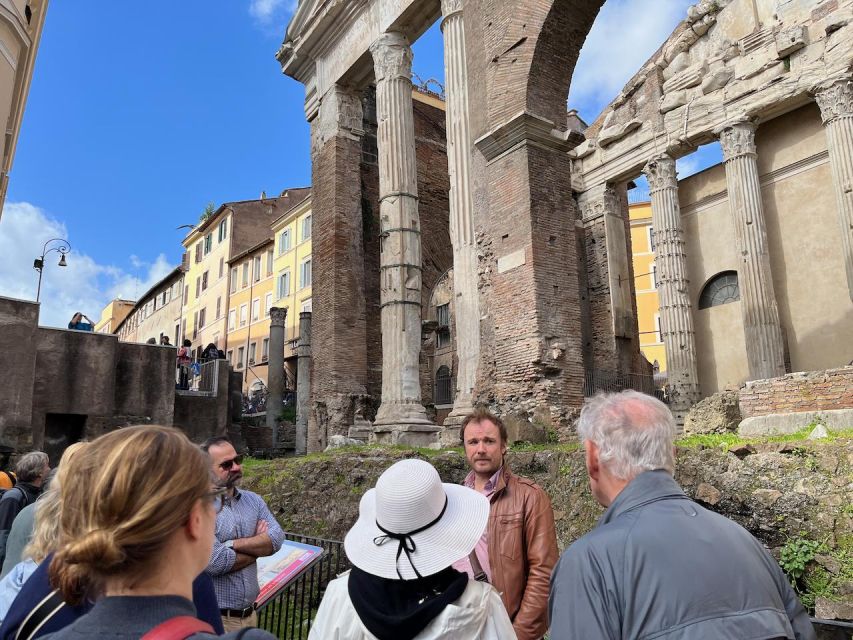
The Portico d’Ottavia receives a shorter explanation, about five minutes, but it is an important transition point. Ancient Roman remains sit directly beside the area associated with Jewish life in Rome, and the contrast makes the city’s layered past easy to see.
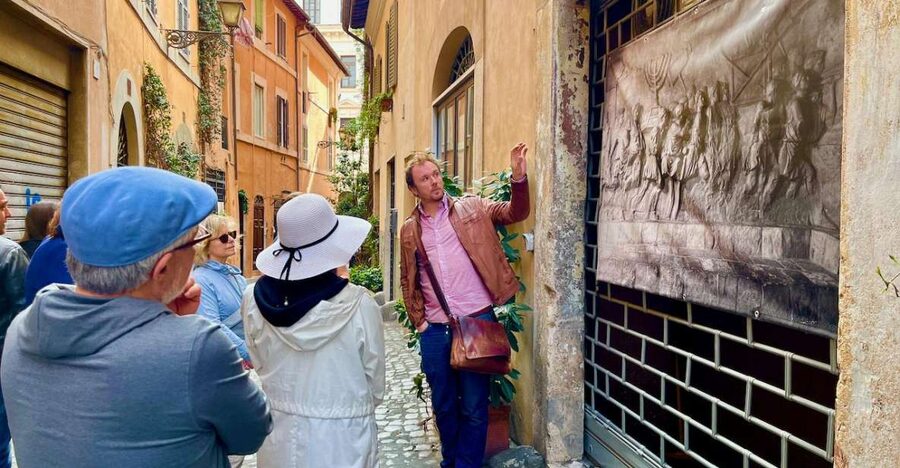
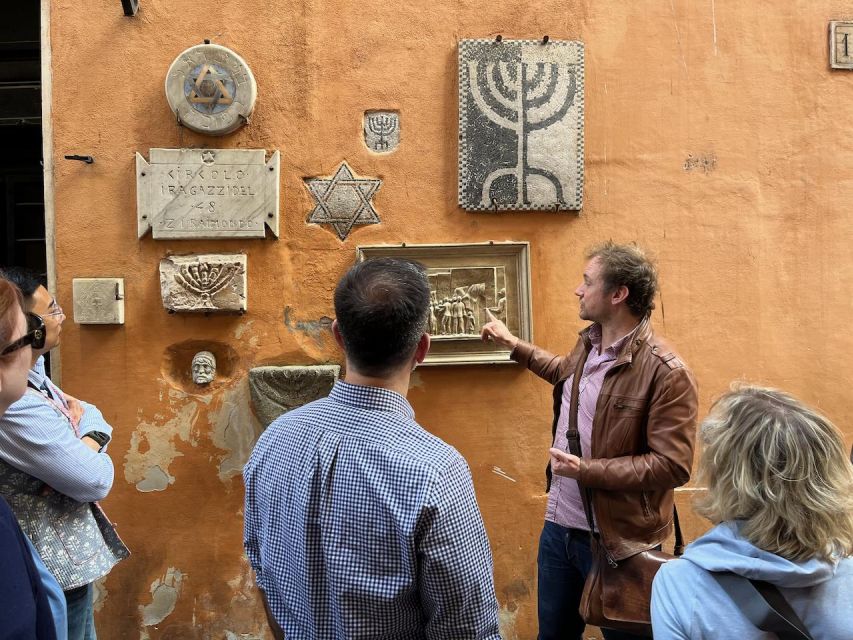
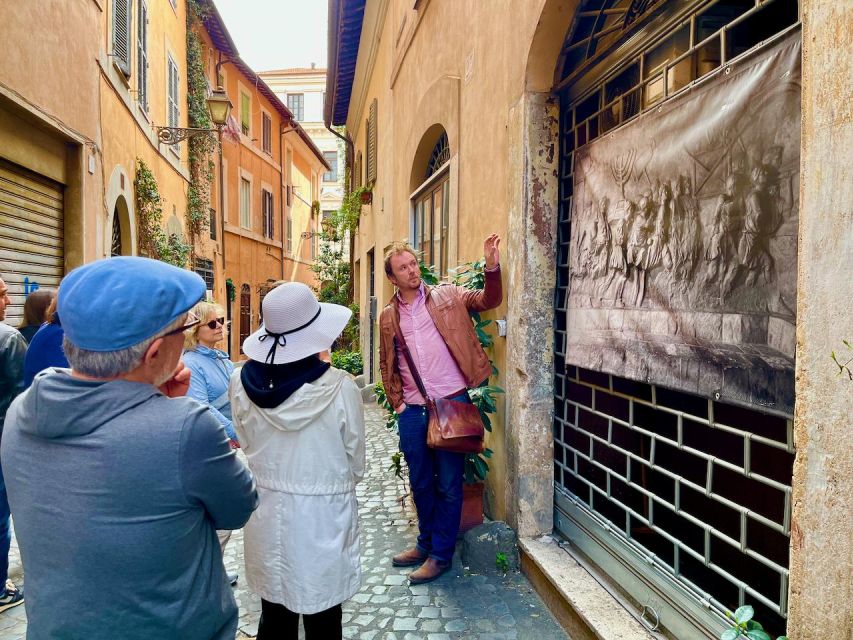
You then spend about half an hour walking through the Jewish Ghetto. Expect cobbled streets, close-packed buildings, historic markers, and a guide who explains how the neighborhood developed and why it remains so important.
The word ghetto carries a heavy history here. A good guide needs to explain more than the word itself, including the restrictions imposed on Jewish residents, the conditions of daily life, and the community’s endurance across the centuries. The strongest feedback about this experience focuses on precisely that ability to make painful and complex subjects understandable.
This portion will suit you if you want more than a quick photo stop. The tour gives time for stories and questions, rather than simply pointing out a landmark and moving on. Several guides are praised for answering questions patiently and for presenting the subject with both care and a sense of humor.
Piazza Mattei and the quieter details
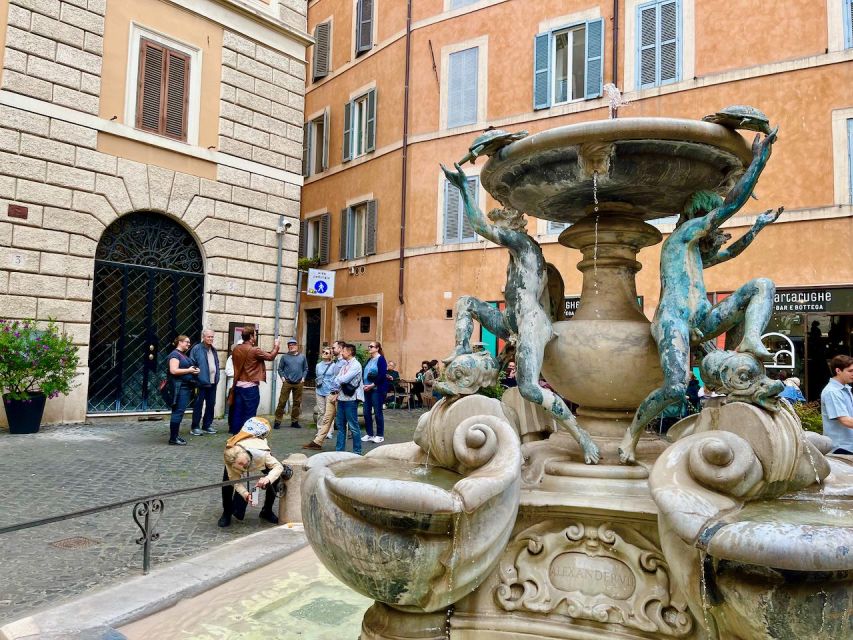
Piazza Mattei is a small but memorable stop, with around 10 minutes for explanation. Its scale offers a break from monumental Rome. You can pay attention to the details of the square while the guide connects it to the surrounding neighborhood.
This is one reason a walking guide can be useful. On your own, you might pass through the piazza, admire the fountain, and keep moving. With a guide, the square becomes part of a larger account of power, urban change, and the people who lived around it.
The route then returns to the Jewish Ghetto for another 20-minute section. That return is worthwhile because the area has more than one story to tell. The guide can build on the earlier introduction and bring together religious, social, architectural, and modern historical themes.
Do not expect a museum-style presentation with objects or indoor displays. The tour’s setting is the street itself. You learn by looking closely at the buildings, paths, plaques, churches, and spaces where community life unfolded.
A different way to spend the day, same part of Italy:
- Vatican Museums, Sistine Chapel & St Peter’s Basilica Guided Tour
★ 4.5 · 39,149 reviews - Rome: Colosseum, Palatine Hill and Roman Forum Guided Tour
★ 4.8 · 32,814 reviews - Rome: Guided Tour of Colosseum, Roman Forum & Palatine Hill
★ 4.7 · 27,897 reviews - Rome: Colosseum & Forum with Audio Guide App -Optional Arena
★ 4.2 · 24,770 reviews
Tiber Island: the geographic link
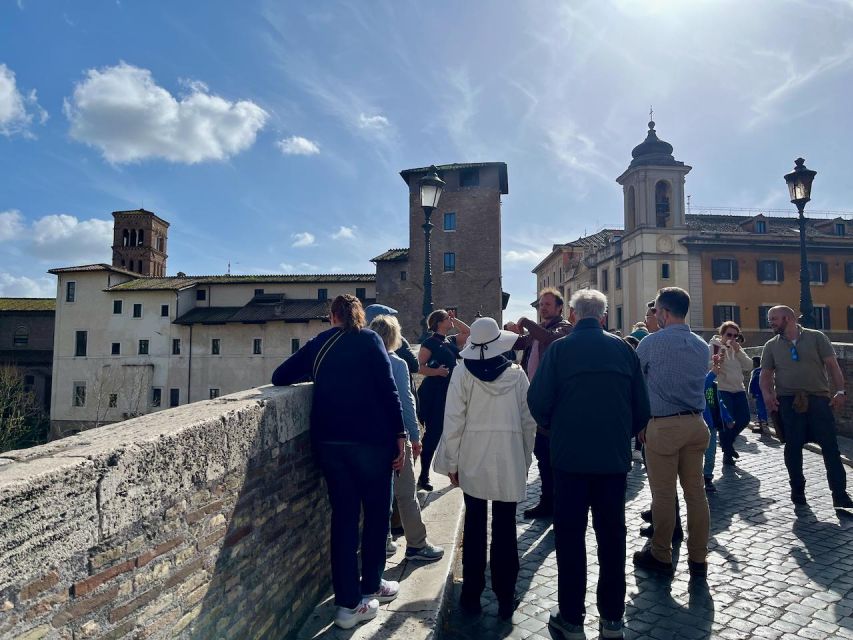
From the Ghetto, the group walks to Tiber Island. The island is small, but it plays a key role in this route because it connects the two neighborhoods physically and symbolically.
The guided portion lasts about 15 minutes. Your guide explains why this patch of land in the river matters to Roman society and how it fits into the city around it. The island also creates a natural pause between the two halves of the tour.
A 10-minute break is scheduled here. That is a modest amount of time, but it helps on a walking route that uses cobblestones and narrow streets. Bring water, especially in summer. Rome’s public fountains can help with refills, but you should still arrive with a bottle.
The break may also include an optional stop at a gelateria or café. Food and drinks are not included, so budget separately if you choose to buy something. This is a pleasant extra, not the main purpose of the tour.
Trastevere beyond the postcard view
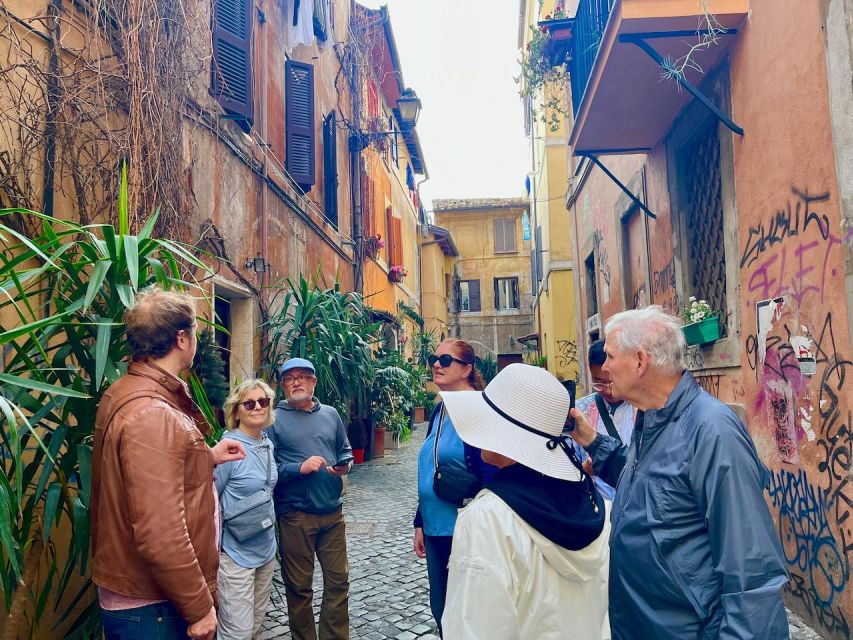
After Tiber Island, you enter Trastevere for a 30-minute guided walk. This is where the mood changes. The streets become more intimate, and you see ivy-clad houses, narrow lanes, old churches, and the less formal side of Rome that draws people here after dark.
Trastevere is often reduced to restaurants and attractive alleys. This tour gives you more context. The guide explains why the district matters and how its character fits into the broader story of Rome.
You continue with about 10 minutes at Santa Maria in Trastevere. The church is one of the neighborhood’s key landmarks, and the guide helps you read it as part of the area’s religious and civic life. This is a guided exterior-focused stop, so the schedule should not be treated as a full church tour.
Another 20-minute walk through Trastevere follows. This gives the guide room to point out smaller details and answer questions. The route is leisurely, which makes it easier to listen, take photographs, and notice the streets instead of simply trying to keep up.
The tour finishes at Piazza Trilussa after a final five-minute explanation. This is a practical ending point. You are already in an area suited to an evening meal, café stop, or casual wander, and guides often provide suggestions for places to eat and drink.
The guides are the main value
The route is good, but the guide is what makes this experience worth booking. Several guides are specifically praised for strong English, clear explanations, humor, and the ability to adjust to questions.
Ben is repeatedly described as an engaging storyteller who can handle more than 2,000 years of Roman history without turning the walk into a flood of facts. Guido is praised for making every stop come to life and mixing architecture with history. Alethea, also spelled Alithia in one account, is noted for energy, research, jokes, and useful food suggestions.
You may not receive one particular guide, so book for the format rather than a promised personality. Still, the consistent pattern is encouraging: the guides are expected to explain, entertain, and respond rather than recite a fixed script.
That matters most in the Jewish Ghetto. The subject can easily become either too shallow or too solemn. The best comments describe a balance between sad events, human resilience, and lighter anecdotes. You should come ready to listen respectfully, but you will not be expected to sit through a dry academic talk.
Pace, comfort, and practical limits
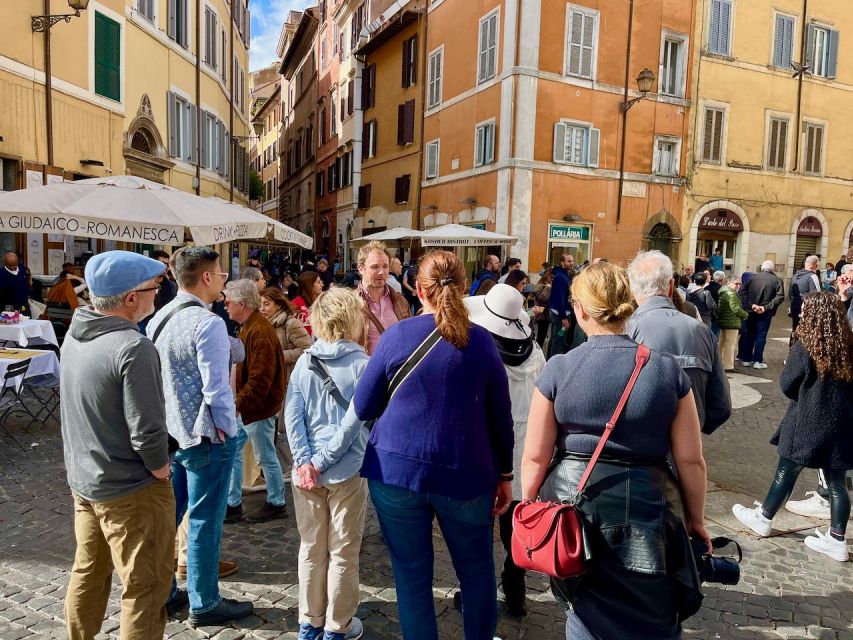
The official duration is 2.5 hours. It is a walking tour with several pauses, so comfortable shoes are essential. Rome’s cobblestones can make a short route feel longer than the map suggests.
The walk is listed as wheelchair accessible, though you should still be prepared for historic streets and outdoor surfaces. No transportation is included or needed. The route begins at Santa Rita da Cascia in Campitelli and ends at Piazza Trilussa.
The tour operates rain or shine. Bring a rain layer or other weather protection when needed, and carry water during hot months. The optional café or gelato stop is not included in the price.
Late arrival is a real concern. The guide cannot guarantee waiting, so allow time to find Via Montanara and the church. The meeting point is next to Antico Caffè del Teatro Marcello, which gives you a useful visual reference.
The booking terms are flexible: cancellation is free up to 24 hours before the start, and you can reserve while paying later. Those details are useful if your Rome schedule is still shifting.
Who will get the most from this tour
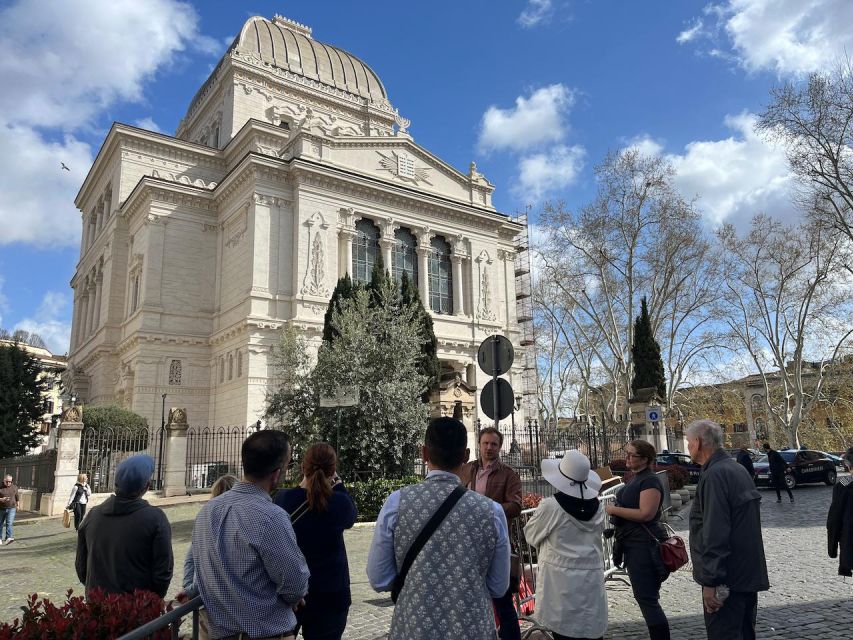
I would choose this walk if you have already seen, or plan to see, the Colosseum and major imperial sights but want a more human-scale view of Rome. It also works early in a visit because the guide’s food and neighborhood tips can help shape later evenings.
History fans will find plenty to hold their attention, especially in the Jewish Ghetto. Families with older children and teenagers may also like the mix of ruins, street stories, churches, and short walking segments. One family found the guide’s delivery accessible enough to keep teenagers interested.
You do not need a Jewish family connection or a background in Roman history to follow the tour. The guide builds the story from the street up. Still, you should not book it expecting a specialist synagogue visit, a religious service, or a full study of Jewish ritual life.
The experience may be less suitable if you dislike guided walking, want lots of free time at each site, or prefer indoor attractions. It also offers no included meal, no synagogue entrance, and no major monument interior.
Is $35 a fair price?
Yes, for most visitors. At $35, the cost is modest compared with many guided Rome experiences, and you get 2.5 hours with a live English-speaking guide across several historic areas.
The value comes from the connections. You are not paying simply to be walked between the Ghetto and Trastevere. You are paying to understand why the Theatre of Marcellus, Portico d’Ottavia, Jewish Ghetto, Tiber Island, and Trastevere belong in one story.
The price is less attractive if you only want photographs or already know the history well. Independent visitors can walk this route without paying an admission fee. But the small details, explanations, and food recommendations are difficult to reproduce from a quick guidebook scan.
I would also treat the optional gelateria or café stop as a chance to spend a little more, not as part of the package. Bring enough for a drink or snack if you want one.
Should you book the Jewish Ghetto and Trastevere Tour?
Book it if you want serious history delivered in an easy, entertaining way, and if you like finishing a tour in a neighborhood where you can continue exploring on your own. The route is well chosen, the pace is manageable, and the guides appear especially strong at telling stories without drowning you in information.
Skip it if your priority is entering the synagogue, spending long periods inside churches, or sampling food as part of the ticket. This is a street-level history walk, not a food tour or museum visit.
For $35, I think it is a smart choice for first-time Rome visitors and anyone who wants the city beyond its biggest monuments. Wear good shoes, bring water, arrive early, and leave room after Piazza Trilussa for dinner in Trastevere.
FAQ
How long does the Jewish Ghetto and Trastevere Tour last?
The tour lasts 2.5 hours. The route includes guided stops and a short break on Tiber Island.
What language is the tour conducted in?
The live tour guide speaks English.
Where does the tour begin?
The meeting point is outside Santa Rita da Cascia in Campitelli on Via Montanara, next to Antico Caffè del Teatro Marcello.
Where does the tour finish?
The tour ends at Piazza Trilussa in Trastevere.
Is entry to the synagogue included?
No. The synagogue is seen from the outside, and synagogue entrance is not included.
Are food and drinks included?
No. An optional stop at a gelateria or café may be made, but any food or drink is at your own expense.
Is the tour wheelchair accessible?
Yes, the activity is listed as wheelchair accessible.
What should I bring?
Bring comfortable shoes and suitable weather protection because the tour runs rain or shine. In summer, bring a water bottle, as fountains are available for refills.
Recently reviewed around Rome
- Ancient Rome at Twilight Walking Tour★ 5.0 · 276 reviews
- Domus Aurea Guided Tour: The Golden House of Nero★ 4.5 · 199 reviews
- Early Vatican Museums & Sistine Chapel Small Group Tour★ 4.5 · 314 reviews
- Early Vatican Museums Tour: The Best of the Sistine Chapel★ 4.5 · 900 reviews
- Jewish Ghetto & Piazza Navona: Food, Wine & Sightseeing Rome Tour★ 5.0 · 460 reviews
- 3 Days in Sorrento, Capri & Pompeii: la Dolce Vita★ 4.0 · 595 reviews
- Tivoli Villas Full Day Trip From Rome with Lunch★ 4.0 · 443 reviews
- Rome Pasta Making Class with Italian Sauces and Wine Included★ 5.0 · 645 reviews
Rome Tours, compared.

Vatican: Museums & Sistine Chapel Entrance Ticket
Read our review →
Vatican Museums & Sistine Chapel Tour with Optional Basilica
Read our review →
Colosseum, Roman Forum & Palatine Guided Tour
Read our review →
Vatican Museums, Sistine Chapel & St Peter’s Basilica Guided Tour
Read our review →
Colosseum, Palatine Hill and Roman Forum Guided Tour
Read our review →
Guided Tour of Colosseum, Roman Forum & Palatine Hill
Read our review →
Colosseum & Forum with Audio Guide App -Optional Arena
Read our review →