Review · ROME TOURS
Rome: La Traviata at St. Paul’s Within the Walls
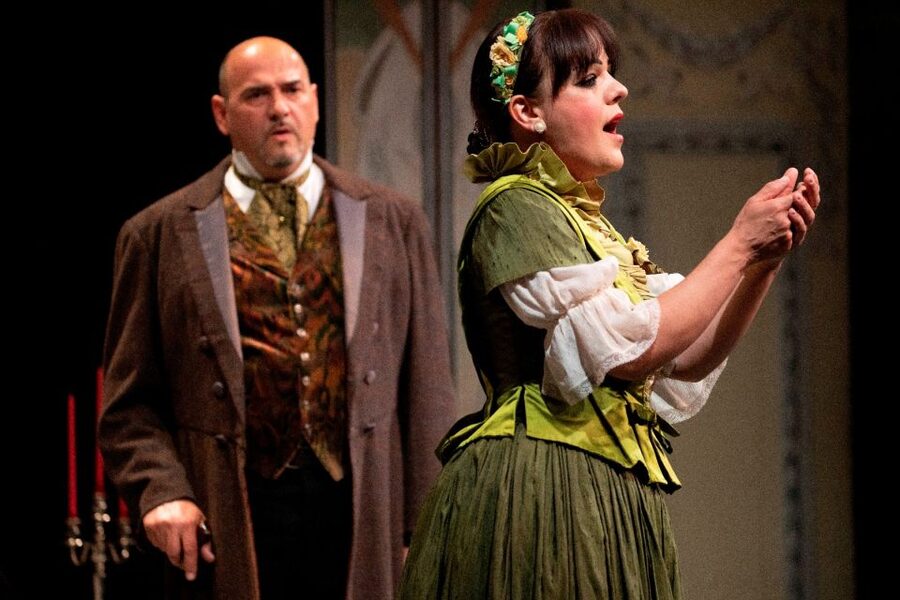
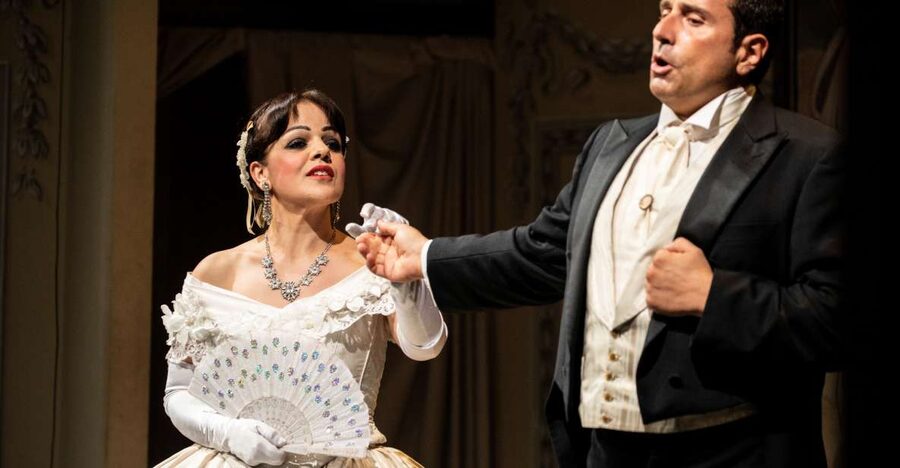
Rome has a wonderfully dramatic place to hear La Traviata: St. Paul’s Within the Walls, an ornate church near the center of the city. Verdi’s tragic love story gets a full three-act treatment, with costumes, scenery, professional singers, and the orchestra I Virtuosi dell’Opera di Roma.
I like the intimate setting and the quality of the voices most. The church gives the performance a distinctive atmosphere, while the compact room lets you see the singers’ expressions far better than in a large opera house. The main catch is practical: the seats are arranged on one level, so views can be poor from the back, and wooden benches may feel hard during a 130-minute show.
In This Review
- Key points to know before you book
- Why La Traviata works so well in Rome
- Entering St. Paul’s Within the Walls
- What the orchestra brings to the performance
- Act One: Violetta’s glittering world
- Act Two: Love, sacrifice, and the opera’s emotional center
- Act Three: A quieter and more tragic finish
- The church acoustics: beautiful but not perfectly controlled
- Seating: the most important booking decision
- A real opera experience, but not a major opera-house production
- Language, timing, and audience behavior
- Who will get the most from this performance
- Booking advice and practical value
- Should you book La Traviata at St. Paul’s Within the Walls?
- FAQ
- How long does La Traviata at St. Paul’s Within the Walls last?
- Is the opera performed in Italian?
- What is included in the ticket?
- Is the venue wheelchair accessible?
- Are different seating categories available?
- Can I cancel the booking?
Key points to know before you book
- A full three-act La Traviata: You hear Verdi’s complete opera, not just a short selection of famous arias.
- A memorable church setting: St. Paul’s Within the Walls adds striking architecture, unusual acoustics, and a sense of occasion.
- A strong Italian ensemble: I Virtuosi dell’Opera di Roma brings together musicians trained at leading Italian conservatories.
- Pay attention to your seat: The flat floor makes the front rows a smart upgrade if seeing the stage clearly matters to you.
- Italian-language performance: You do not need to know Italian to follow the basic story, but the language is worth considering if you want every detail.
- Good value at $47: This is a relatively affordable way to hear a complete Verdi opera in Rome, especially compared with a major opera-house production.
Why La Traviata works so well in Rome
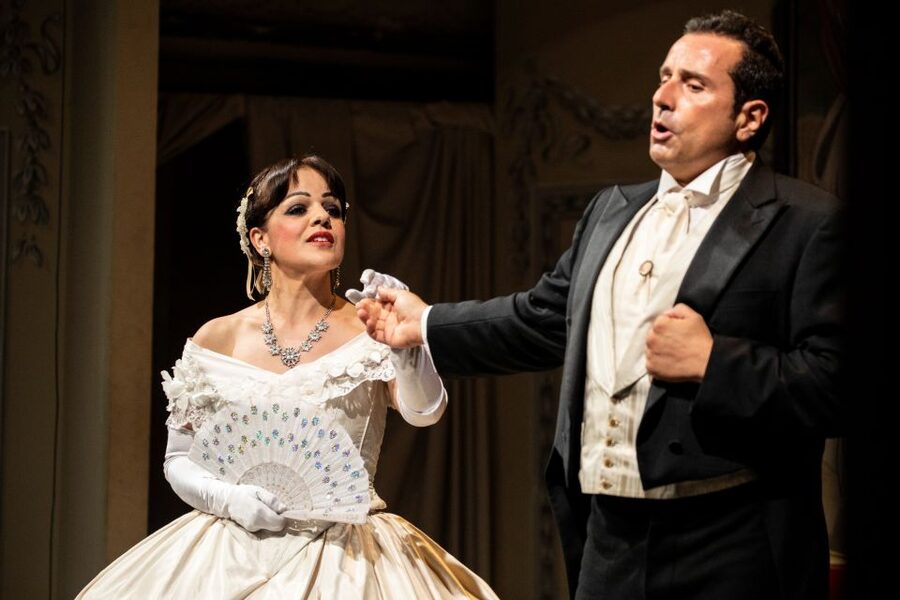
La Traviata is one of the easiest operas to choose for a first performance. The plot is direct, the music is instantly recognizable, and the emotional stakes are clear from the beginning.
Verdi’s opera follows Violetta, a celebrated courtesan in Paris, and Alfredo, a young nobleman who falls in love with her. Their relationship faces social pressure, sacrifice, illness, and an inevitable tragedy. Even if you do not understand every Italian word, the acting, music, and shifting mood carry the main story.
The production runs for about 130 minutes, so plan it as a full evening rather than a quick cultural add-on. You will hear the opera in Italian, performed with costumes and scenes rather than as a bare concert version. That matters because the cast can act out the story instead of simply standing and singing.
For a first-time opera visitor, this is useful. You get the big emotional moments, the famous melodies, and a clear dramatic arc without committing to one of the longest works in the repertory.
Other Rome days travellers weigh against this one:
- Vatican: Museums & Sistine Chapel Entrance Ticket
★ 4.5 · 144,003 reviews - Vatican Museums & Sistine Chapel Tour with Optional Basilica
★ 4.3 · 67,413 reviews - Colosseum, Roman Forum & Palatine Guided Tour
★ 4.7 · 63,148 reviews
Entering St. Paul’s Within the Walls
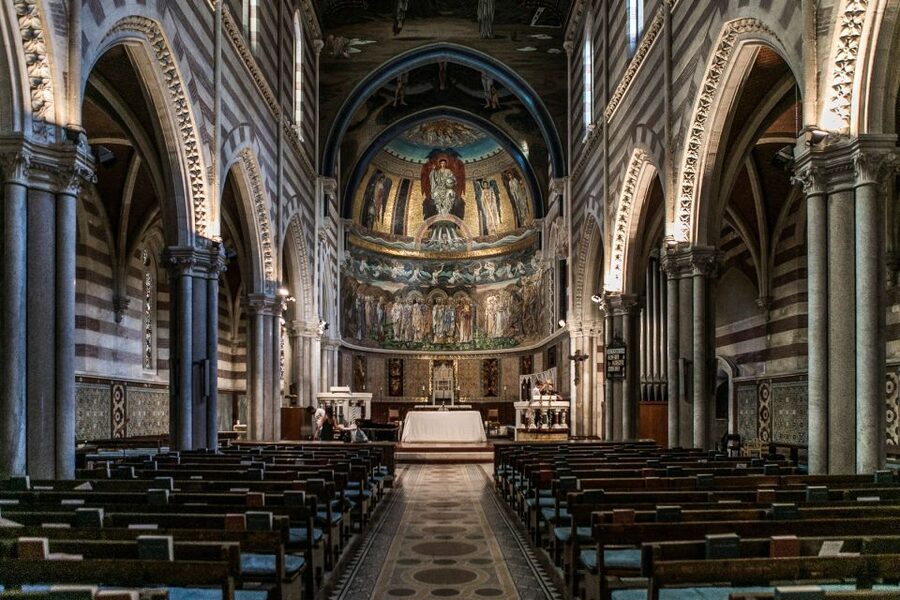
The venue is part of the experience. St. Paul’s Within the Walls is a church in central Rome with an ornate interior that feels very different from a purpose-built theater.
You exchange your voucher at the church’s ticket counter before the performance. Allow enough time to find the counter and settle in, since your seat location matters here. The theater does not have the usual steeply raised rows, so arriving early is especially helpful within the seating category you have purchased.
The church’s architecture gives the evening a sense of place that a standard auditorium cannot match. You are not simply attending an opera in Rome. You are hearing Italian opera inside a historic religious space, surrounded by decorative details and tall interior volumes.
That setting has a tradeoff. A church was designed for worship and acoustics, not for perfect sightlines. The stage and audience seating are on the same general level, and several seating areas can leave you looking around another person’s head. From some front-side seats, the piano or other instruments may partly block the action.
What the orchestra brings to the performance
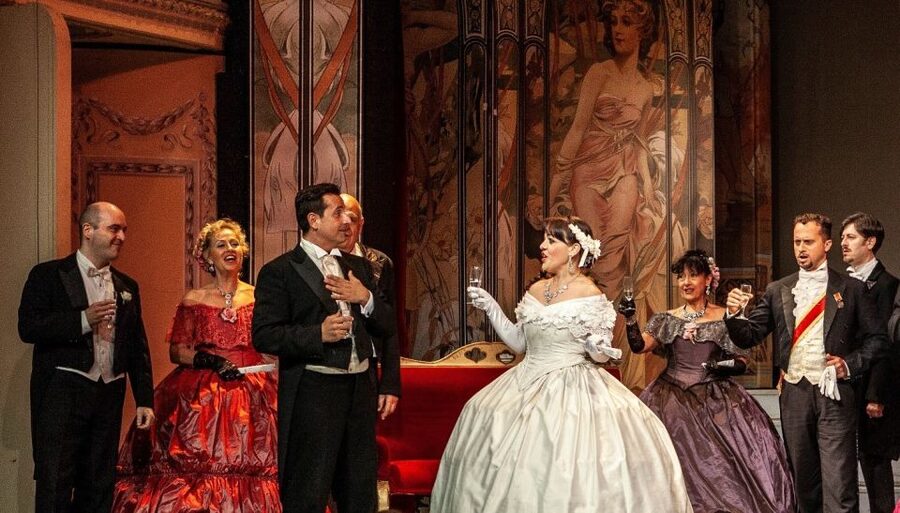
The orchestra is I Virtuosi dell’Opera di Roma, an ensemble made up of professors from prestigious Italian conservatories. Its specialty is the Italian lyrical tradition, which makes Verdi a natural choice.
The musicians provide the essential shape of the evening. In La Traviata, the orchestra shifts quickly from elegant social music to private tenderness and then to dark, urgent drama. A good performance depends on that contrast, not only on the singers’ high notes.
The church’s acoustics can make the music feel powerful. Many audience members praised the clear voices and the way the sound filled the room. At times, though, the same reverberation that gives the church its atmosphere can reduce crispness. A few sections of the orchestra may also overpower the singers, especially from certain seats.
This is one reason your seat choice matters. A front-row position can give you a clearer balance between stage and orchestra, while a poor side angle may leave you hearing the opera well but seeing less of it. The sound is part of the charm, but it is not always as controlled as it would be in a modern opera house.
Act One: Violetta’s glittering world
The first act introduces Violetta in the social world of mid-19th-century Paris. This is the bright, public side of her life, filled with music, society, and appearances.
You can expect the production to establish the contrast between Violetta’s public reputation and her private vulnerability. Alfredo’s arrival changes the mood. His love is sincere, but it also threatens the carefully managed life Violetta has built.
For many people, the opening act is the easiest entry into opera. The costumes and stage scenes help explain who everyone is, while the music gives you a quick sense of the characters’ personalities. You do not need to study the libretto in advance to understand that this is a romance caught between genuine affection and social expectations.
The church setting changes the feel of these scenes. Instead of a large ballroom with elaborate theatrical machinery, you get a smaller, more direct presentation. That can feel less lavish than a major opera-house staging, but it also brings the singers closer to you.
A different way to spend the day, same part of Italy:
- Vatican Museums, Sistine Chapel & St Peter’s Basilica Guided Tour
★ 4.5 · 39,149 reviews - Rome: Colosseum, Palatine Hill and Roman Forum Guided Tour
★ 4.8 · 32,814 reviews - Rome: Guided Tour of Colosseum, Roman Forum & Palatine Hill
★ 4.7 · 27,897 reviews - Rome: Colosseum & Forum with Audio Guide App -Optional Arena
★ 4.2 · 24,770 reviews
Act Two: Love, sacrifice, and the opera’s emotional center
The second act moves the story from public celebration to the consequences of Violetta and Alfredo’s relationship. Their love becomes more serious, and the outside world begins to press in.
This is where the opera’s central conflict takes hold. Alfredo’s father asks Violetta to give up the relationship for the sake of his family. Her decision drives the tragedy, even though it comes from concern rather than betrayal.
The emotional power of this act depends heavily on the performers’ acting. The cast is not only required to sing difficult music, but also to show hesitation, anger, shame, tenderness, and regret. This production has received especially strong praise for singers who act as well as sing, and that quality can make the story understandable even if Italian is not your language.
The intimate church arrangement helps here. You may be close enough to see faces and small gestures, particularly in the front rows. That closeness is one of the clearest advantages over a very large theater.
Act Three: A quieter and more tragic finish
The final act turns inward. The social sparkle of the opening gives way to illness, memory, and loss. The story’s ending is not a surprise, but Verdi makes the path there painfully effective.
The smaller cast and church acoustics can suit these quieter scenes. Instead of relying on large sets, the production must use the singers’ voices, acting, lighting, and the audience’s imagination. Some people find that limitation moving because it keeps attention on the performers. Others may miss the fuller theatrical illusion of a dedicated opera house.
The performance is presented as a complete opera with costumes and scenes, but you should still expect a compact production rather than a giant spectacle. Think of it as a close-up version of La Traviata, with the music and drama doing most of the work.
The church acoustics: beautiful but not perfectly controlled
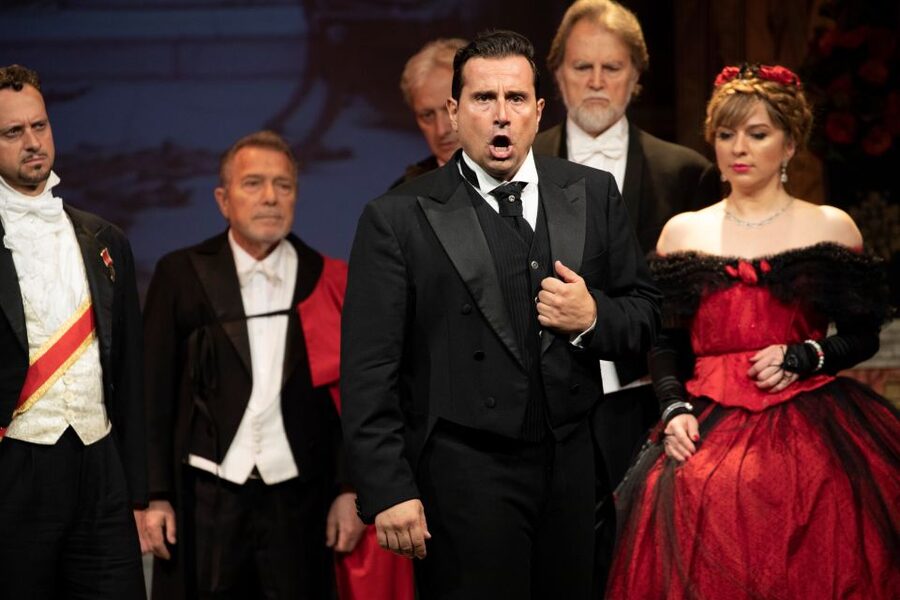
The acoustics are one of the most praised parts of the evening, and for good reason. A church can give the singers remarkable projection and create an enveloping sound that feels larger than the room itself.
That quality is especially effective during the opera’s big musical moments. The voices can seem to rise into the architecture, while the orchestra adds weight beneath them. The result is more atmospheric than a tightly engineered theater sound system.
Still, reverberation has a downside. Sound can linger after a note, which may blur fast musical passages or make some words harder to distinguish. The tenor may not always benefit from the room, and the orchestra can cover the singers in places.
Your expectations should match the venue. If you want studio-like clarity and precise theatrical sound, this may frustrate you. If you value atmosphere and the feeling of hearing live opera in an unusual Roman setting, the acoustics are part of the appeal.
Seating: the most important booking decision
The ticket price starts at about $47 per person, with several seating categories available. That is a reasonable price for a complete 130-minute opera with live musicians, professional singers, costumes, and a distinctive central Rome venue.
I would spend more for a front or VIP category if your budget allows. The extra cost is not only about comfort or prestige. It can make a real difference to your view because the seating is not arranged like a steep theater.
From farther back, you may need to look between heads or deal with a less direct angle. The same-level floor means there is no built-in lift over the row ahead. People seated near the front have also found that an instrument can obstruct part of the action, particularly from a far-side position.
Even front seats are not guaranteed to offer a perfect view of every performer at every moment. The layout is compact, and singers may move across the performance area. Still, front-row or VIP seating gives you the best chance to see faces, costumes, and acting clearly.
The seats themselves are another consideration. Some are wooden benches or firm church-style seating, and they can become uncomfortable during a performance lasting over two hours. If you have back or hip concerns, prioritize the best available seating and arrive prepared for a long spell of sitting.
A real opera experience, but not a major opera-house production
This performance offers much more than a short tourist concert. You hear the opera in full, with a live orchestra, a cast, costumes, scenes, and the full emotional progression of Verdi’s work.
At the same time, the church does not recreate every part of a traditional theater visit. The flat seating, limited stage space, and simple production style can make the experience feel less polished than a major opera house. One benefit is intimacy. One cost is theatrical scale.
I think that tradeoff works best for people who want a memorable Roman evening rather than a formal night at a grand theater. You are close to the singers, surrounded by church architecture, and likely to notice the human effort behind the music.
For a serious opera fan, it may feel modest in staging. For a first-time opera visitor, it can be a welcoming way to discover why the form has lasted. The famous music does not require prior knowledge, and the story is easy to follow.
Language, timing, and audience behavior
The performance language is Italian, and the host or greeter language is also Italian. You should not expect the event to function as an English-language guided program.
A little preparation can help. Read a short plot outline of La Traviata before you go, especially the relationships among Violetta, Alfredo, and Alfredo’s father. That lets you focus on the music and acting instead of trying to work out every plot point as it happens.
The show lasts 130 minutes, and some performances may include several pauses. After a long day walking around Rome, the combination of hard seating and warm church air can feel tiring. Reports of a warm interior and unused fans are worth taking seriously during hot weather.
Audience manners can also affect the evening. Photography and video recording with flash are not allowed, yet phones have distracted people during some performances. Staff may ask people to stop, but you should still be ready for occasional interruptions.
Pets are not allowed. The venue is wheelchair accessible, which is useful when planning with a mobility concern, though the flat seating layout still makes it sensible to ask the ticket counter for the most suitable available position.
Who will get the most from this performance
I would recommend this La Traviata to several kinds of Rome visitors:
- First-time opera attendees: The famous score and straightforward story make this an approachable starting point.
- Music lovers on a budget: At $47, it offers a complete opera without the cost of a major theatrical production.
- Couples looking for an evening activity: The church setting and tragic romance give the night a clear sense of occasion.
- Visitors who value historic interiors: The venue is a major part of the attraction, not merely a room for the performance.
- People curious about Italian culture: Hearing Verdi in Rome, performed by an Italian ensemble, connects the evening to the country’s lyrical tradition.
I would be more cautious if you need soft, theater-style seating, perfect sightlines, or crisp sound in every passage. In those cases, pay for the best seating category available or choose a different venue.
Booking advice and practical value
The ability to reserve now and pay later gives you some flexibility when building a Rome schedule. You can also cancel up to 24 hours in advance for a full refund, according to the stated terms.
Before booking, decide what matters most to you. If the goal is simply to hear live Verdi, the $47 entry price is attractive. If you want to watch the acting closely, treat the seating upgrade as part of the ticket price rather than an optional extra.
I would also avoid scheduling this immediately after an exhausting full day on foot unless you are comfortable with a long performance and firm seating. Give yourself time to reach St. Paul’s Within the Walls, exchange the voucher at the ticket counter, and arrive early within your seating zone.
Should you book La Traviata at St. Paul’s Within the Walls?
Book it if you want an affordable, atmospheric introduction to opera in Rome. The strongest parts are the talented singers, the live Italian orchestra, the church acoustics, and the close-up feel of the compact setting.
Choose a front or VIP category if you care about visibility. Read the story beforehand, expect Italian, and prepare for church seating rather than theater comfort.
Skip it if your priority is a grand opera-house production with raised rows, elaborate sets, and perfectly balanced sound. For everyone else, this is a memorable way to spend an evening in Rome, with enough musical quality and local character to make the compromises worthwhile.
FAQ
How long does La Traviata at St. Paul’s Within the Walls last?
The performance lasts about 130 minutes.
Is the opera performed in Italian?
Yes. The listed language for the performance and host or greeter is Italian.
What is included in the ticket?
The ticket includes entrance to the performance. Food and drinks are not included.
Is the venue wheelchair accessible?
Yes, St. Paul’s Within the Walls is listed as wheelchair accessible.
Are different seating categories available?
Yes. You can choose from several seating categories, including higher-priced VIP options. Front seating is worth considering because the church has a flat floor and views can be limited from the back.
Can I cancel the booking?
You can cancel up to 24 hours in advance for a full refund. The activity also offers a reserve-now, pay-later option.
Recently reviewed around Rome
- Ancient Rome at Twilight Walking Tour★ 5.0 · 276 reviews
- Domus Aurea Guided Tour: The Golden House of Nero★ 4.5 · 199 reviews
- Early Vatican Museums & Sistine Chapel Small Group Tour★ 4.5 · 314 reviews
- Early Vatican Museums Tour: The Best of the Sistine Chapel★ 4.5 · 900 reviews
- 3 Days in Sorrento, Capri & Pompeii: la Dolce Vita★ 4.0 · 595 reviews
- Tivoli Villas Full Day Trip From Rome with Lunch★ 4.0 · 443 reviews
- Jewish Ghetto & Piazza Navona: Food, Wine & Sightseeing Rome Tour★ 5.0 · 460 reviews
- Cook With Us in Rome: A Hands-On Cooking Experience 09:20AM class★ 5.0 · 234 reviews
Rome Tours, compared.

Vatican: Museums & Sistine Chapel Entrance Ticket
Read our review →
Vatican Museums & Sistine Chapel Tour with Optional Basilica
Read our review →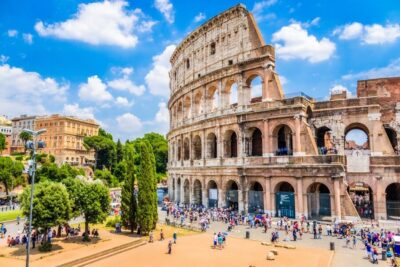
Colosseum, Roman Forum & Palatine Guided Tour
Read our review →
Vatican Museums, Sistine Chapel & St Peter’s Basilica Guided Tour
Read our review →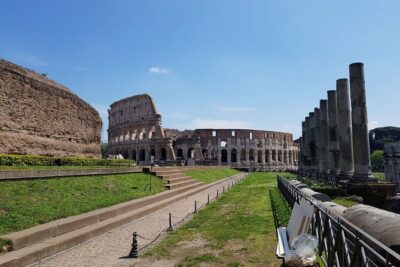
Colosseum, Palatine Hill and Roman Forum Guided Tour
Read our review →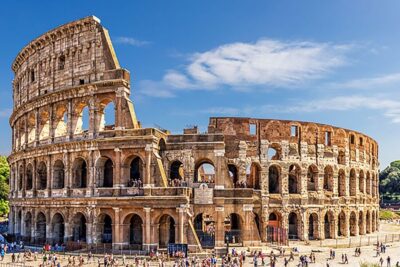
Guided Tour of Colosseum, Roman Forum & Palatine Hill
Read our review →
Colosseum & Forum with Audio Guide App -Optional Arena
Read our review →