
Review · MILAN TOURS
Rome: Leonardo Da Vinci Experience Entry Ticket
Leonardo da Vinci’s ideas feel surprisingly modern when you can touch and test working models rather than study them only in a book. This small museum near St Peter’s Square turns his sketches into flying machines, bridges, weapons, lifting devices, and other hands-on displays.
I like the easy, self-guided format and the cool air conditioning, especially on a hot Rome day. I also like the mix of science and art: you can examine a machine gun model, build a Leonardo bridge, then study reproductions of the Virgin of the Rocks and Lady with an Ermine.
The main consideration is size. This is not a grand museum filled with original masterpieces, and some visitors finish in under an hour. For the best value, use the audio guide and allow about one to one and a half hours, or longer if you have curious children.
In This Review
- Key points to know before you go
- Starting near St Peter’s Square
- Five halls built around Leonardo’s ideas
- Flying machines, war machines, and engineering models
- Water, bridges, and the practical side of genius
- The Room of Mirrors and Leonardo’s study of light
- Reproductions of Leonardo’s most famous paintings
- The Last Supper and the Dan Brown connection
- How long should you allow?
- Is $18 a fair price?
- Who will enjoy this experience most?
- Should you book the Leonardo da Vinci Experience?
- FAQ
- Where is the Leonardo da Vinci Experience in Rome?
- How much does admission cost?
- How long is the ticket valid?
- Is an audio guide included?
- Should I bring headphones?
- Is there a guided tour?
- Can I cancel my booking?
Key points to know before you go
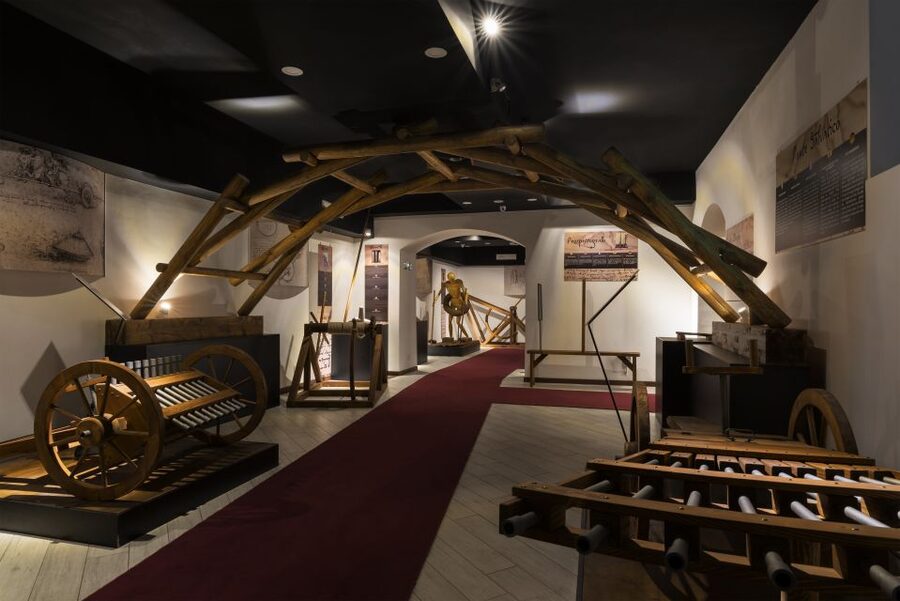
- Fifty hands-on inventions: Try models based on Leonardo’s designs, including flying machines, a bicycle, water skis, lifting equipment, and a suspension bridge.
- Five exhibition halls: The route covers engineering, war, flight, water, optics, and Leonardo’s artistic work.
- A useful multilingual audio guide: Commentary is available in English, Italian, French, German, Spanish, Portuguese, Russian, and Chinese.
- A short walk from the Vatican: The entrance on Via della Conciliazione is about 150 meters from St Peter’s Square.
- Good for families: Children can experiment with several models, while adults get a clear introduction to Leonardo’s scientific ideas.
- A flexible Rome stop: The ticket is valid for one day, and you can cancel up to 24 hours ahead for a full refund.
Starting near St Peter’s Square
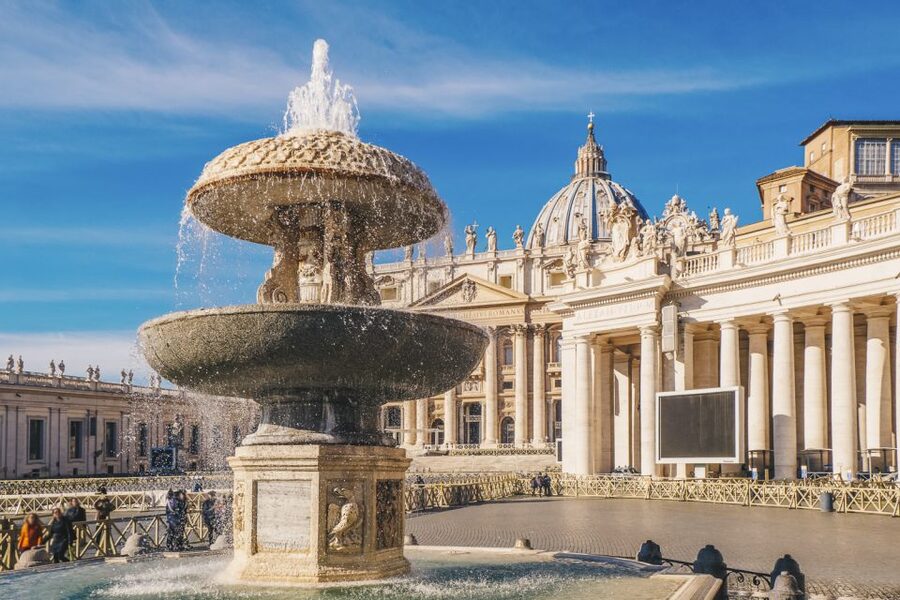
The Leonardo da Vinci Experience is at Via della Conciliazione 19, about 150 meters from St Peter’s Square. That makes it easy to pair with a visit to St Peter’s Basilica or the Vatican Museums, though you should treat it as a separate attraction rather than part of a Vatican ticket.
The location is useful when your Vatican plans leave you with an hour to spare. It also gives you an indoor break from Rome’s heat. The exhibition is fully air-conditioned, with restrooms and free WiFi available.
The entrance is on one of Rome’s busiest sightseeing streets, so allow a little time to find the correct doorway. Some people arrive early and are admitted before their allocated time, but I would not count on that. Check the available starting times when booking and keep your phone voucher ready.
More Milan trips worth a second look
- Milan: Cathedral and Duomo’s Terraces Entrance Ticket
★ 4.6 · 61,054 reviews - Milan Cathedral: Duomo Terraces Ticket (No Church Access)
★ 4.6 · 6,111 reviews - Milan: Guided Walking Tour & Last Supper Visit with Ticket
★ 4.7 · 5,409 reviews
Five halls built around Leonardo’s ideas
The museum is arranged across five exhibition halls. The exact order may vary as you move through the displays, but the central idea is clear: Leonardo was not only the painter of the Mona Lisa. He was also an engineer, architect, sculptor, scientist, and careful observer of the natural world.
The models are modern reconstructions made according to his designs. You are not looking at original machines from the Renaissance, because very few such objects could survive in this form. The value is seeing how a sketch might work when translated into wood, metal, gears, ropes, and moving parts.
Several exhibits are interactive. You can operate or handle selected machines, test mechanical ideas, and see how simple forces produce movement. That physical contact makes the visit work well for children, who may understand a pulley or bridge more quickly by trying it than by reading a paragraph about it.
The museum also helps connect Leonardo’s drawings with familiar modern objects. His concepts include early versions of digging and lifting equipment, a sewing machine, a bicycle, water skis, and machines linked to solar energy. The point is not that he invented every modern device in its final form, but that his drawings show a remarkable habit of thinking ahead.
Flying machines, war machines, and engineering models
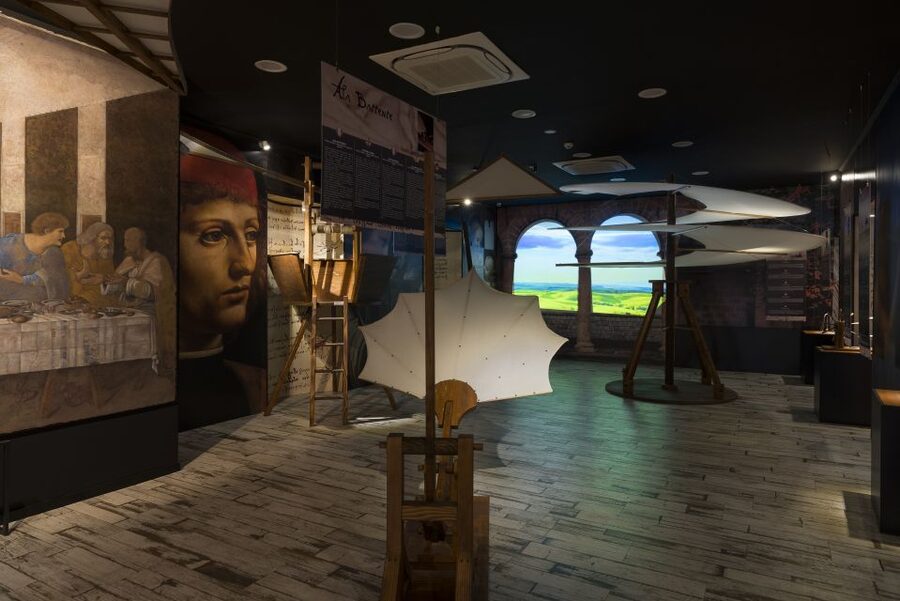
Leonardo’s flying machines are among the most popular displays. He studied birds and tried to understand how human flight might work. At the museum, you can see full-size or large-scale reconstructions of these designs and take a photograph beside the helicopter model.
The helicopter is especially useful because it shows how far Leonardo’s imagination reached, even though the materials and power sources of his time could not make the design fly. You can look at the shape and ask the practical question: what would have been needed to lift it? That is more interesting than simply hearing that Leonardo had a flying-machine idea.
The war machines offer a sharper reminder that Renaissance invention was not always peaceful. Models include an armored tank and a machine gun design. You can see how Leonardo applied gears, wheels, armor, and multiple firing mechanisms to military problems.
I would not present these as functional weapons. They are reconstructed teaching models, intended to show how the designs may have operated. Their strength is visual clarity. You can understand the structure of a machine far more quickly than you can from a page of mirror-writing sketches.
The engineering section includes lifting and digging devices, along with the unsupported suspension bridge. The bridge is one of the best hands-on stops because you can build a version yourself. It demonstrates how a clever arrangement of parts can create stability without the heavy supports you might expect.
Water, bridges, and the practical side of genius
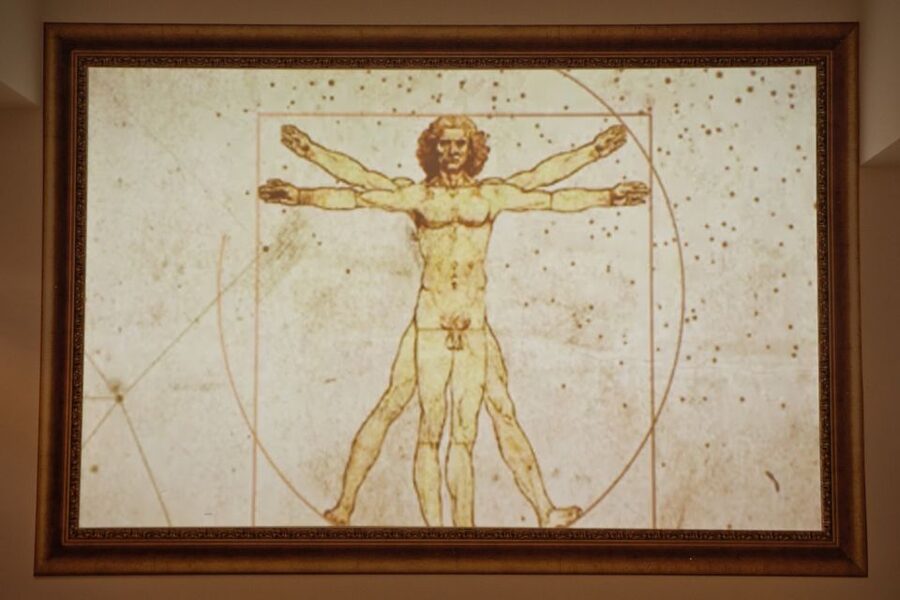
Leonardo’s interest in water appears in several designs, including underwater breathing equipment, submarines, and water skis. These ideas came from close observation and practical problem-solving, not just fantasy.
The underwater equipment is a good example of Leonardo asking how people could move through an unfamiliar environment. The submarine model shows the same curiosity on a larger scale. Again, the museum presents models based on his plans, so you should see them as explanations of his thinking rather than original prototypes.
The bicycle and sewing machine models help bring the exhibition back to everyday life. These displays are less dramatic than the armored tank, but they show how Leonardo’s study of motion and repetitive mechanical action could apply to ordinary tasks.
I find this part most rewarding when I slow down and use the audio guide. Without commentary, a room full of wooden mechanisms can become a blur of wheels and levers. The explanations give each object a purpose and help you see the link between the machine and the problem Leonardo was trying to solve.
Bring your own headphones. They are specifically recommended, and they make the audio guide easier to use. The museum supplies the audio guide, but personal headphones are a practical comfort, especially if you want to listen carefully while other people are moving around you.
A different way to spend the day, same part of Italy:
- Milan: Da Vinci’s Last Supper Guided Tour
★ 4.7 · 10,143 reviews - Milan: Science and Technology Leonardo da Vinci Museum Entry
★ 4.5 · 7,169 reviews - Milan: City Sightseeing Hop-On Hop-Off Bus with Audio Guide
★ 4.0 · 6,256 reviews - Milan: Milan Cathedral Direct Entrance – Terrace Excluded
★ 4.5 · 5,782 reviews
The Room of Mirrors and Leonardo’s study of light
The Room of Mirrors is one of the most memorable parts of the visit. It explores Leonardo’s interest in light, reflection, and the way images can be formed and projected.
This section connects Renaissance observation with later developments in photography and projection. You do not need a technical background to enjoy it. The room gives you a visual break from the machine displays and creates a natural photo opportunity.
It is also one of the better stops for children. The mirror effects are immediate and playful, but the audio commentary adds a more serious point: Leonardo’s art and science were often linked by the same desire to understand how people see the world.
The room can be popular because it is visually distinctive, so do not rush through it. If you are visiting with children, this is a good place to let them look and experiment while you listen to the explanation.
Reproductions of Leonardo’s most famous paintings
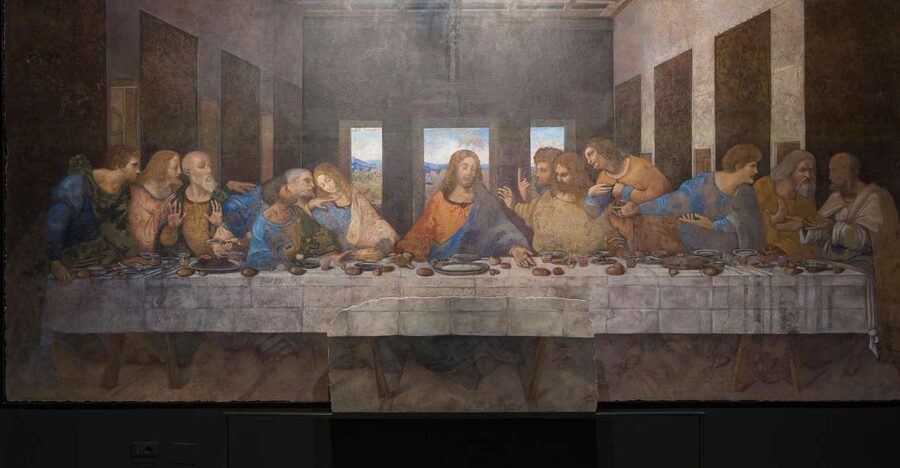
The Exhibition Gallery changes the mood of the experience. After the mechanical rooms, you enter a space focused on Leonardo as an artist.
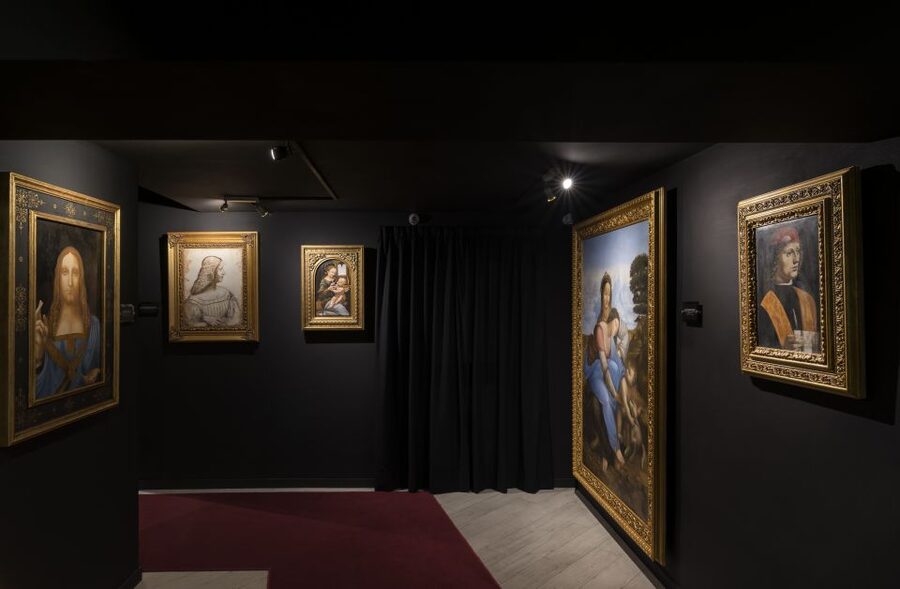
The gallery contains 20 certified reproductions painted by prominent Vatican Museum restoration artists. These are reproductions, not original paintings, so the museum should not replace a visit to the Louvre, London’s National Gallery, or another major collection. The benefit is that you can see several important works together and learn how they relate to Leonardo’s methods.
The two versions of the Virgin of the Rocks are a highlight. The originals are held in Paris and London, and seeing both versions represented in one place helps you compare the subject and composition without visiting two different countries.
The Lady with an Ermine is another important stop. Leonardo changed the tradition of formal portraiture by giving the sitter a sense of movement, personality, and presence. The audio guide explains these artistic choices in a way that helps you look beyond the face and notice the pose, hands, animal, and use of light.
You will also see other famous works and detailed explanations of Leonardo’s technique. If you know him mainly for the Mona Lisa, this gallery makes the point that his artistic importance reaches far beyond one painting.
The Last Supper and the Dan Brown connection
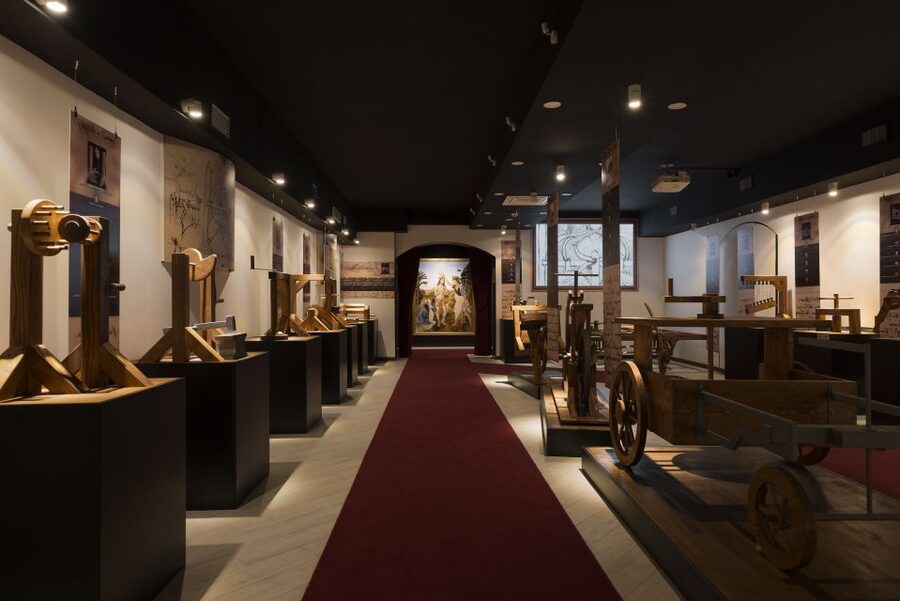
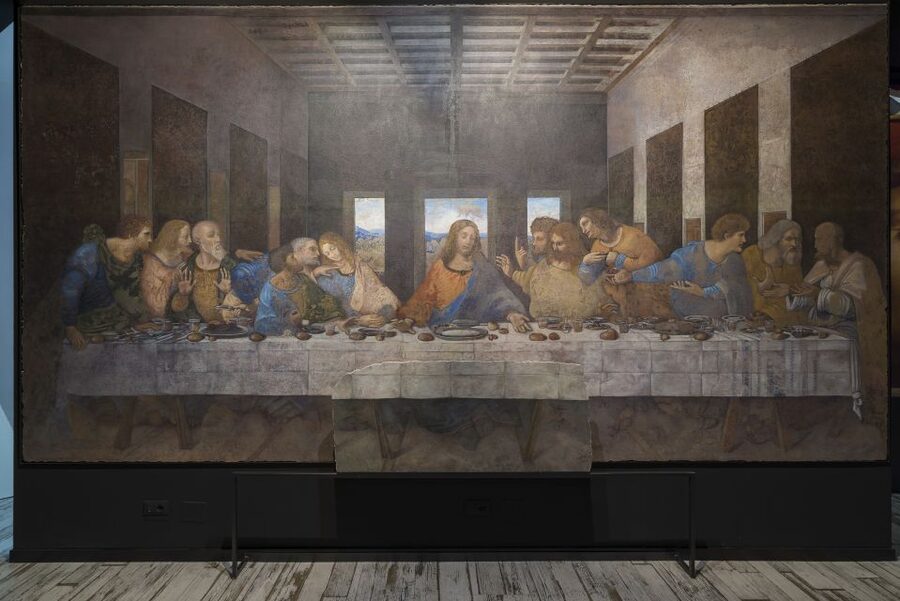
A full-sized reproduction of The Last Supper gives you a chance to study the famous scene without traveling to Milan. It is not the original mural, and that distinction matters, but the scale helps you understand the composition.
The painting became even more famous in popular culture through Dan Brown’s The Da Vinci Code. The museum uses that interest to discuss the painting’s mysteries and controversies. The audio guide provides context rather than asking you to accept every novel-inspired theory as fact.
This is a useful stop for anyone who has seen the painting reproduced in books or films but has never examined its arrangement closely. Look at how Leonardo directs attention across the table, how the figures react, and how the central position of Christ organizes the scene.
Do not expect the atmosphere of a church or a conservation lab. You are viewing a full-sized reproduction in an exhibition setting. Its value is educational and visual, especially when combined with the commentary.
How long should you allow?
The listed ticket is valid for one day, but the practical visit is much shorter. Many people spend about an hour, while a careful visit with the audio guide takes roughly 90 minutes. Families who stop at every interactive model may spend two or even three hours.
That range is important when you plan your day. I would allow at least 75 minutes if you want to hear the main explanations and try several machines. If you are tired after the Vatican, the museum can work as a compact visit, but you may not absorb as much as you would earlier in the day.
The self-guided format lets you choose your own pace. You are not tied to a group, and you can pause at the exhibits that interest you. The tradeoff is that you do not have a live guide to answer questions or adjust the route for your group.
The audio guide is included in eight languages: English, Italian, French, German, Spanish, Portuguese, Russian, and Chinese. It is one of the most important parts of the ticket, since the machines make much more sense when you understand the problem each one was designed to solve.
Is $18 a fair price?
At $18 per person, this is not Rome’s cheapest small museum. Its value depends on how you use it.
If you walk through quickly and skip the audio commentary, the price can feel high for a compact exhibition. Several displays are reconstructions, and the paintings are certified reproductions rather than originals. You should not book this expecting a major art museum.
The calculation improves if you enjoy interactive exhibits or are traveling with children. You get five halls, around 50 invention models, an audio guide, air conditioning, restrooms, and a location close to the Vatican. For a family, the chance to experiment with machines can be more useful than another room of paintings viewed from behind a rope.
I also like the freedom to visit without joining a guided group. You can spend five minutes with the bridge, linger over the flying machines, or move quickly through a section that does not interest you. The ticket also allows free cancellation up to 24 hours in advance and offers a reserve-now, pay-later option, which helps when your Rome schedule is still changing.
Who will enjoy this experience most?
I would recommend it to families with children, science and engineering fans, and anyone who wants a break from Rome’s churches and ancient ruins. Teenagers often have enough independence to test the machines while adults listen to the art commentary.
It also suits first-time visitors who know Leonardo mainly as the painter of the Mona Lisa. The exhibition gives you a wider picture of his work and shows how his studies of mechanics, light, water, and flight connected with his art.
It is less suitable if you want original Leonardo paintings, a formal guided tour, or a large museum that fills half a day. There is no guided tour included, and the venue is intentionally compact.
For a quieter visit, going early may help. One visitor found there could be a wait at busy times, while another found the museum pleasantly uncrowded at 10 a.m. Conditions will vary, but an early start is a sensible choice near the Vatican.
Should you book the Leonardo da Vinci Experience?
Book it if you want an approachable, hands-on museum close to St Peter’s Square. The interactive machines and strong audio guide make the visit more than a display of famous names, and the air conditioning is a real advantage during Rome’s hot months.
Skip it if your priority is seeing original art or if your schedule is already packed with major museums. At $18, it earns its price through the models, explanations, and family-friendly format, not through rare objects.
For most people, I would plan 60 to 90 minutes, bring headphones, and visit before or after the Vatican. Used that way, it is a smart short stop that shows why Leonardo’s curiosity still feels fresh five centuries later.
FAQ
Where is the Leonardo da Vinci Experience in Rome?
It is located at Leonardo da Vinci Experience, Via della Conciliazione 19, about 150 meters from St Peter’s Square.
How much does admission cost?
The listed price is $18 per person.
How long is the ticket valid?
The ticket is valid for one day. Check availability for the starting times offered when you book.
Is an audio guide included?
Yes. The audio guide is included with admission and is available in English, Italian, French, German, Spanish, Portuguese, Russian, and Chinese.
Should I bring headphones?
Yes. Headphones are recommended for use with the audio guide.
Is there a guided tour?
No guided tour is included. The visit is self-guided, so you can move through the exhibition at your own pace.
Can I cancel my booking?
Yes. You can cancel up to 24 hours in advance for a full refund. A reserve-now, pay-later option is also available.
Recently reviewed around Milan
- From Milan: Venice Full-Day Guided Tour With Boat Ride★ 4.5 · 322 reviews
- Venice Day Trip from Milan with Guided City Tour★ 4.0 · 383 reviews
- Verona and Lake Garda Day Trip from Milan★ 4.5 · 214 reviews
- Full-day Skip-The-Line Milan, The Last Supper and Duomo Cathedral★ 5.0 · 293 reviews
- Small-Group Lake Como & Lugano by Swiss Train + Boat Cruise★ 5.0 · 1,084 reviews
- Tour Bernina Red Train And St Moritz from Milan★ 4.5 · 247 reviews
- Walking Food Tour of Milan with Tastings★ 4.5 · 194 reviews
- Skip the Line: Essential Milan Tour Including Da Vinci’s ‘The Last Supper’★ 4.5 · 339 reviews
Milan Tours, compared.
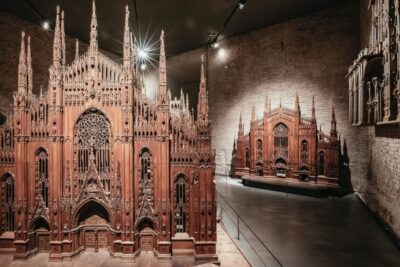
Cathedral and Duomo’s Terraces Entrance Ticket
Read our review →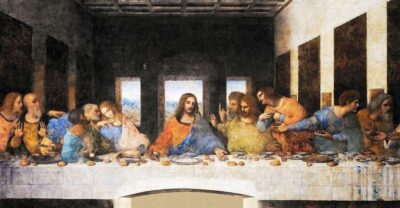
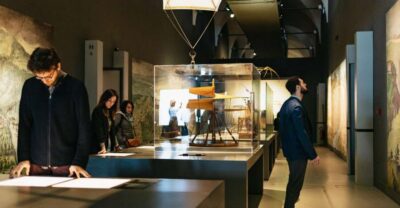
Science and Technology Leonardo da Vinci Museum Entry
Read our review →
City Sightseeing Hop-On Hop-Off Bus with Audio Guide
Read our review →
Milan Cathedral: Duomo Terraces Ticket (No Church Access)
Read our review →
Milan Cathedral Direct Entrance – Terrace Excluded
Read our review →
Guided Walking Tour & Last Supper Visit with Ticket
Read our review →
Fast-Track Milan Cathedral and Terraces Guided Tour
Read our review →Browse the lists this tour appears in