Review · ROME TOURS
Rome: Tour of St. Clement’s Basilica Underground Temples
Rome’s San Clemente Basilica is a history lesson built in layers. You begin with a medieval church, then go 14 meters underground to an early Christian basilica, an ancient Roman level, and one of the city’s best-preserved Mithraic temples. An underground river adds a real sense of mystery.
I like the way the tour connects art with archaeology: the golden apse mosaic explains the medieval church above, while the frescoes below show the danger faced by early Christians. I also like the choice of adding Santo Stefano Rotondo, where stark martyrdom scenes continue the story.
The main drawback is physical. Narrow underground spaces, stairs, and uneven architectural levels make this unsuitable for wheelchair users and uncomfortable for anyone with claustrophobia. At $70 per person, the value depends heavily on your interest in ancient religion and Rome’s layered past.
In This Review
- Key points to know before you book
- Why San Clemente feels like Rome in cross-section
- Descending 14 meters to the early Christian church
- The Mithraic temple and the underground river
- A guide can make or break the experience
- Adding Santo Stefano Rotondo for another 45 minutes
- What the $70 price includes
- Clothing, photography, and practical limits
- Who will enjoy San Clemente most
- Should you book this Rome underground tour?
- FAQ
- How long does the San Clemente tour last?
- What does the tour cost?
- Is Santo Stefano Rotondo included automatically?
- Which languages are available?
- Is the tour accessible for wheelchair users?
- Can I take photographs inside?
- What should I wear and bring?
Key points to know before you book
- Four eras in one descent: Move from the 12th-century basilica to a 4th-century church, Roman structures, and a Mithraic temple.
- The Mithraic temple is the star below ground: See a rare surviving place linked to the secretive cult of Mithras and hear how its rituals fit into Roman religious life.
- The apse mosaic gives the tour a strong opening: Your guide explains its gold imagery and symbolism before you head below.
- Guides make a major difference: Francesca, Lorenzo, Paul, Anestis, and others have led especially engaging visits, with Paul described as an archaeologist and Rome history professor.
- Santo Stefano Rotondo is optional: Add 45 minutes for a circular church and graphic frescoes showing Christian martyrdom.
- Plan for church rules: Wear appropriate clothing, bring comfortable shoes, and expect no photography or video inside.
Why San Clemente feels like Rome in cross-section
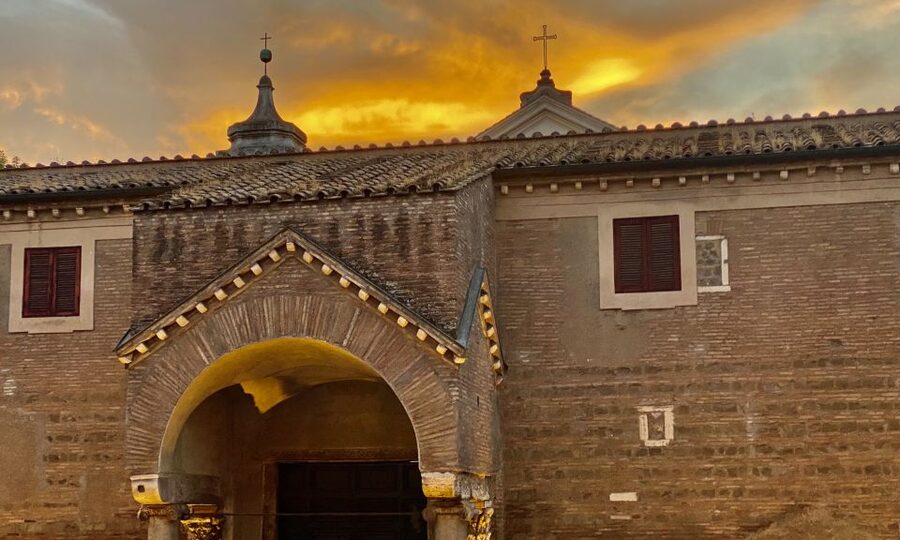
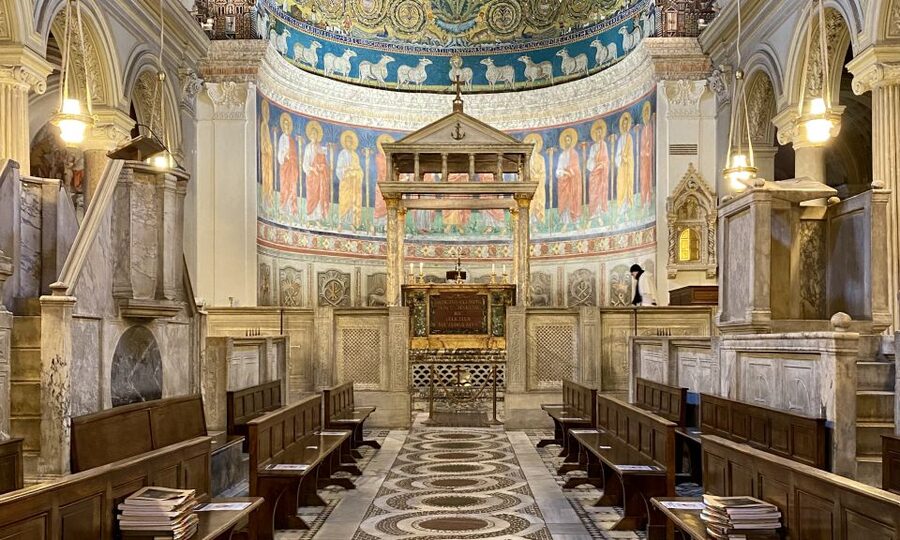
Rome can feel like a city built on top of itself, and San Clemente makes that idea visible. The present Basilica of San Clemente al Laterano dates from the 12th century, but its floor is only the top layer of the story.
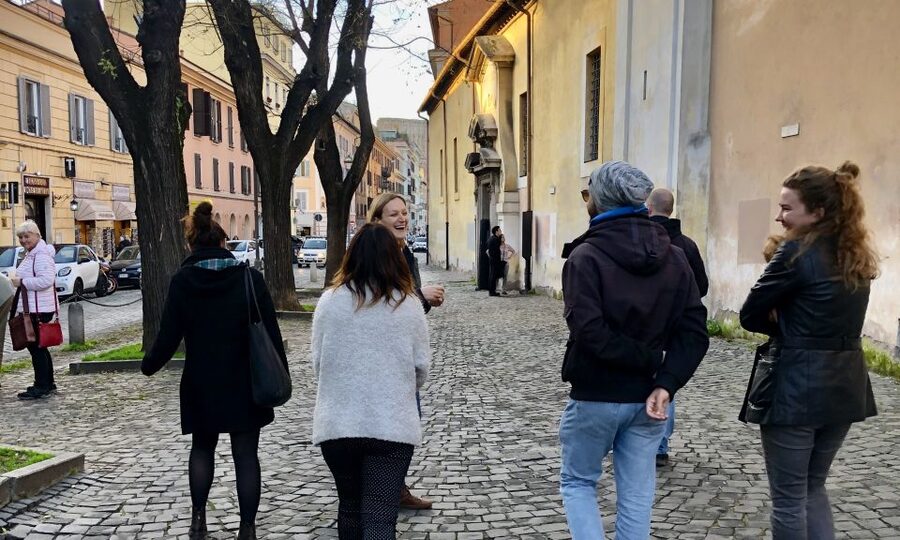
The experience begins at Piazza di San Clemente. Your guide introduces the church above ground before leading you downward. This is important because the underground rooms make more sense once you understand the building that covers them.
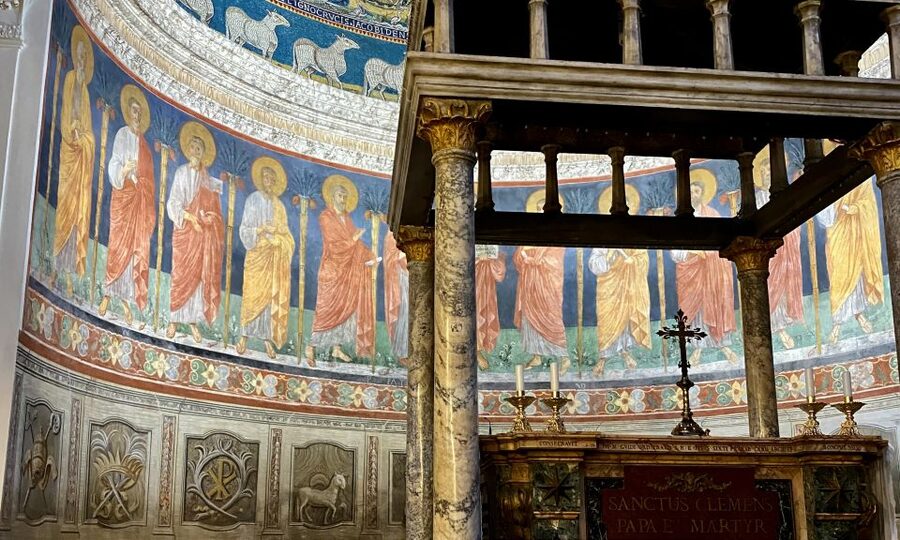
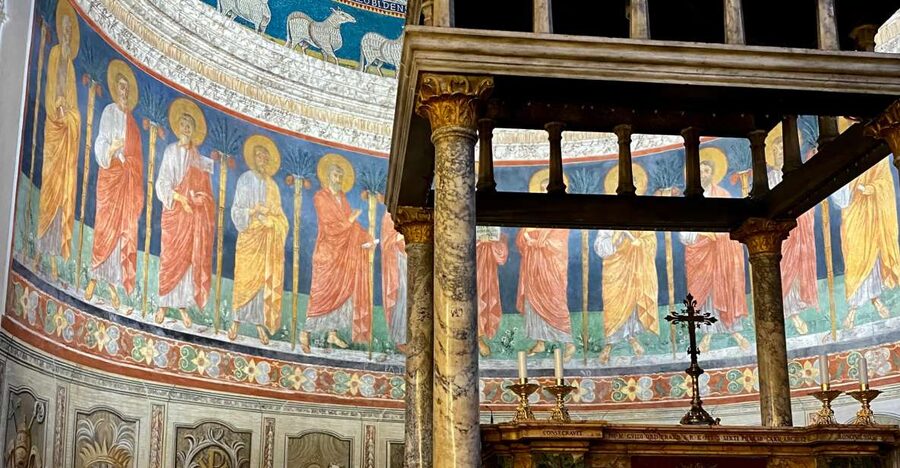
Inside the basilica, look first toward the apse. Its golden mosaic is not simply decoration. Your guide points out its symbolism and spiritual meaning, giving you a useful way to read medieval church art instead of treating it as a wall of glittering color.
I appreciate this order. Many underground tours rush straight toward the oldest stones, but San Clemente works better when you begin with the church you can see. The descent then becomes a literal trip through changing beliefs, building practices, and centuries of Roman life.
The basilica is more modest than St. Peter’s or St. Paul’s Outside the Walls, and that is part of its appeal. You will not get the same grand scale, but you will get a more focused encounter with Rome’s past and fewer distractions from the archaeology beneath your feet.
Other Rome days travellers weigh against this one:
- Vatican: Museums & Sistine Chapel Entrance Ticket
★ 4.5 · 144,003 reviews - Vatican Museums & Sistine Chapel Tour with Optional Basilica
★ 4.3 · 67,413 reviews - Colosseum, Roman Forum & Palatine Guided Tour
★ 4.7 · 63,148 reviews
Descending 14 meters to the early Christian church
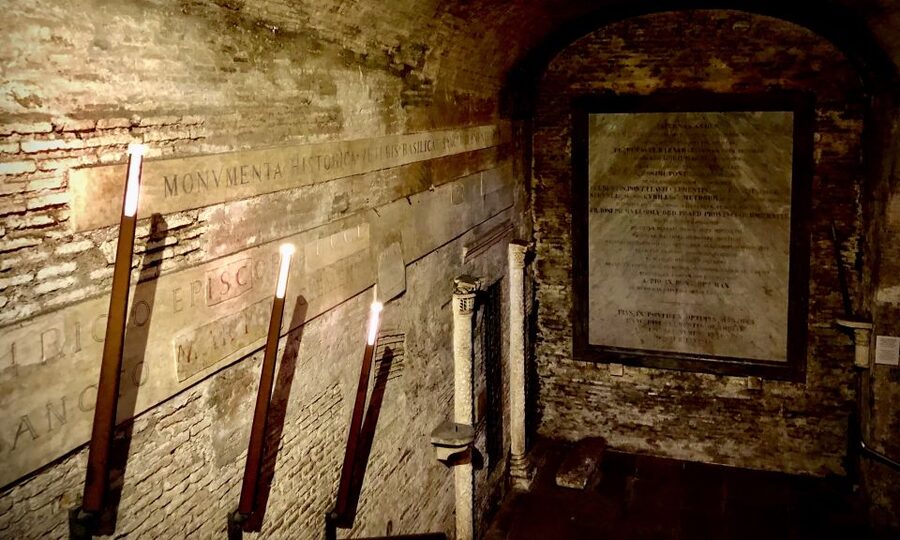
The first major stop below the basilica is a 4th-century underground church. It was built directly above the home associated with St. Clement, identified as the third pope of Rome.
Here, the guide explains the early Christian community and the pressure it faced during periods of persecution. The surviving frescoes are among the most important sights on the route because they show early Christian stories, including the lives and deaths of martyrs.
The art is not presented as a collection of pretty fragments. It carries the memory of a small and vulnerable religious community. You can see how Christian images helped preserve stories of faith, suffering, and loyalty at a time when the religion was not yet dominant.
Some visitors find this part more moving than the pagan temple because the frescoes connect the site to individual people and their beliefs. Others prefer the temple below, where the atmosphere is darker and the questions are less familiar. The guide is useful in both spaces, translating damaged art and broken walls into a story you can follow.
The underground church also gives you a sense of Rome’s changing street level. The city above did not replace the old city in one clean sweep. New buildings rose over older rooms, and the ground itself shifted around them.
The stairs and passageways require care. Comfortable shoes are essential, and the underground setting may feel tight. The route is not suitable for wheelchair users, and it may be a poor fit if enclosed rooms make you uneasy.
The Mithraic temple and the underground river
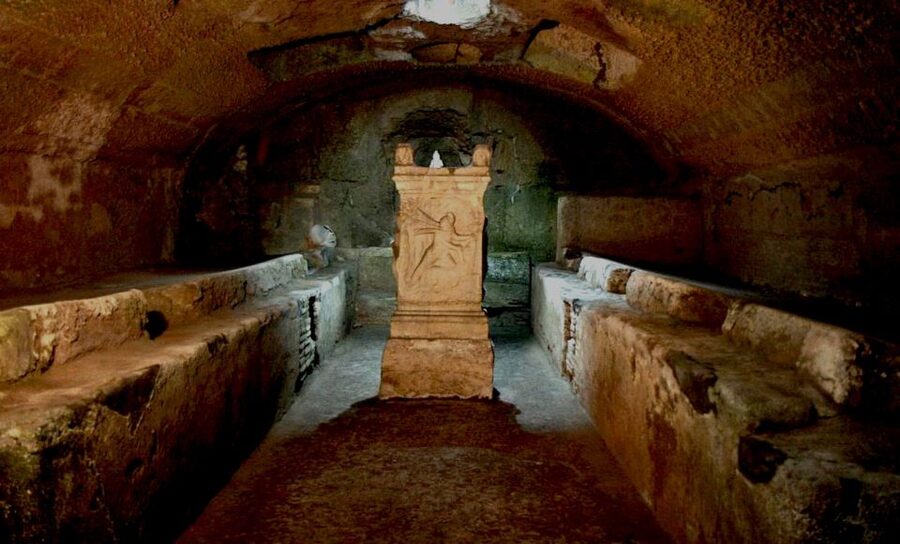
The deepest and most unusual stop is a Mithraic temple, one of the best-preserved examples in Rome. Mithraism was a pagan cult that flourished before Christianity became the dominant faith of the Roman Empire.
Your guide explains the group’s beliefs, rites, and secretive nature. The point is not to reduce Mithraism to a simple rival of Christianity. Instead, you get a glimpse of the many religious practices that existed in Rome before the city’s Christian identity took hold.
The temple is compact and atmospheric. Its survival gives you a rare chance to picture how a small group might have gathered for ceremonies away from the main public spaces of the city. The word secretive matters here, although the exact details of ancient ritual life are not always certain. A good guide helps distinguish established facts from interpretation.
Water flowing through an underground river adds to the mood. It is not a grand natural sight, but hearing and seeing the water in a place already layered with old beliefs makes the setting feel unusually immediate. This is one of those details you would probably miss or understand poorly without an explanation.
I would give this section time rather than treating it as a quick final stop. The temple is not large, and its importance comes from context. Listen for the explanation of how Roman pagan practice worked, how cult groups differed, and why this site matters beside the early Christian rooms above it.
The descent also makes the $70 price easier to assess. You are not paying only to enter a church. You are paying for access to several archaeological levels and for a guide who can connect them. If you are interested mainly in grand architecture, the cost may feel high. If you enjoy archaeology, religious history, and places that reward careful explanation, the price is more defensible.
A guide can make or break the experience
San Clemente is the kind of place where a guide adds real value. Without context, you see a medieval basilica, faded paintings, old masonry, and a dark room with water. With a strong guide, those same elements become a sequence of Roman religious changes.
Several guides have received particularly warm praise. Francesca is described as enthusiastic, friendly, clear, and good-humored. Lorenzo has been especially well regarded for his excellent English, personal manner, and ability to answer questions about ancient Rome. Anestis is also noted for answering questions and providing interesting facts throughout the visit.
Paul has been singled out for an unusually academic background. He has been described as an archaeologist and professor in Rome, and his explanations reportedly included information connected with artifacts found at the basilica. You cannot book a specific guide based on the information provided, so treat these names as examples of the level of expertise that may be available, not a guarantee.
The tour includes headsets, which matter underground. Stone rooms can make voices echo, and a headset lets you hear the explanation without crowding close to the guide. Languages offered include English, Italian, Spanish, French, German, and Portuguese.
Private groups are available. If you are booking that option, you may get more time for questions and a pace better suited to your group. A small group can also make it easier to see fresco details and hear clearly in confined rooms.
The standard San Clemente visit lasts about one hour. That is enough for the main sequence, but it is not a slow archaeological study. If you want every detail explained at length, a private group or a particularly scholarly guide would be worth considering.
A different way to spend the day, same part of Italy:
- Vatican Museums, Sistine Chapel & St Peter’s Basilica Guided Tour
★ 4.5 · 39,149 reviews - Rome: Colosseum, Palatine Hill and Roman Forum Guided Tour
★ 4.8 · 32,814 reviews - Rome: Guided Tour of Colosseum, Roman Forum & Palatine Hill
★ 4.7 · 27,897 reviews - Rome: Colosseum & Forum with Audio Guide App -Optional Arena
★ 4.2 · 24,770 reviews
Adding Santo Stefano Rotondo for another 45 minutes
The optional extension takes you on foot for about 15 minutes to Santo Stefano Rotondo. The extra guided visit lasts 45 minutes, bringing the overall experience to roughly two hours.
Santo Stefano Rotondo is known for its circular form and its frescoes showing the martyrdom of early Christians. The architecture gives you a different visual experience from San Clemente, while the artwork continues the theme of persecution introduced in the underground church.
The martyrdom scenes are graphic. They may not be suitable for children, and sensitive visitors should know what they are going to see. Their purpose is not gentle decoration. The paintings confront you with the physical suffering associated with early Christian faith.
I see the extension as worthwhile if you want a stronger focus on Christian art and martyr stories. It is less essential if the Mithraic temple and Roman pagan religion are your main reasons for booking. San Clemente already provides the core archaeological experience, while Santo Stefano adds emotional weight and another distinctive church interior.
The extension can occasionally be unavailable because of special events or liturgical celebrations. The order may also change, with the visit beginning at Santo Stefano Rotondo and continuing to San Clemente, rather than following the usual sequence. The total plan can also be adjusted if part of a church is closed, with alternative sites used instead.
What the $70 price includes
At $70 per person, this is not a bargain-priced church visit. You are paying for an expert live guide, entrance to San Clemente, headsets, and, only when selected at purchase, the guided visit to Santo Stefano Rotondo.
The price makes more sense when you consider the access and interpretation together. San Clemente’s underground levels are the main attraction, but their meaning is not obvious on your own. A guide can explain the relationship between the 12th-century basilica, the 4th-century church, the Roman structures, and the Mithraic temple.
If Santo Stefano is included, the added 45 minutes gives you a second church and a different type of art. Check the option carefully when booking because the extension is not part of every reservation.
There is no pickup or drop-off, and food and drinks are not included. You meet at or near Piazza di San Clemente, depending on the option booked, then walk to Santo Stefano if you choose the extension.
Free cancellation up to 24 hours before the start and reserve-now, pay-later booking make the cost less risky if your Rome schedule is still moving. Church closures, weather, and liturgical events can still affect the visit, with an alternative date or full refund offered if the tour is canceled.
Clothing, photography, and practical limits
This is a church visit as well as an archaeological tour, so dress modestly. Shorts, short skirts, sleeveless shirts, food, drinks, alcohol, and drugs are not allowed. Weapons and sharp objects are also prohibited.
Photography and video recording inside are not allowed. That may disappoint anyone hoping to document the frescoes, but it also keeps the focus on looking closely and listening.
Wear comfortable shoes. You will walk between sites if you choose the extension, and the underground sections include architectural features that make the route unsuitable for wheelchairs.
Pets are not allowed. The underground passages may be uncomfortable for people with claustrophobia, so consider the setting honestly before booking. This is not a wide-open archaeological park. It is a confined, layered interior with stairs and old masonry.
Who will enjoy San Clemente most
I would recommend this experience to you if you like:
- Roman archaeology and buildings with multiple construction levels
- Early Christian art and stories of martyrdom
- Ancient pagan religions and the way beliefs changed over time
- Guided visits where explanation matters as much as the view
- Smaller historic sites beyond Rome’s most famous monuments
It is especially useful after visiting larger monuments such as St. Peter’s or St. Paul’s. Those churches show the power and scale of later Christianity. San Clemente shows something quieter: how religious life developed among older Roman buildings and beliefs.
Families should consider the age and interests of their children. The underground setting may feel cramped, and Santo Stefano’s martyrdom frescoes are graphic. Adults with a strong interest in history will get more from the visit than anyone looking for a quick, purely visual stop.
The tour is offered in six languages, and a private group option may suit you if questions and pace are important. Guide quality can vary by assignment, but the repeated praise for clear, engaging explanations suggests that the operator places real weight on the human side of the experience.
Should you book this Rome underground tour?
Book it if you want to see a side of Rome that grand churches and open-air ruins cannot provide. The combination of golden medieval art, early Christian frescoes, pagan ritual space, and underground water makes San Clemente unusually varied for a one-hour visit.
Choose the Santo Stefano Rotondo extension if you want more Christian art and can handle graphic martyrdom scenes. Skip it if your schedule is tight or your main interest is the Mithraic temple and the archaeological layers beneath San Clemente.
At $70, I would not call this a casual add-on. I would call it a focused choice for history-minded visitors who value a strong guide. Paul, Francesca, Lorenzo, and other praised guides show how much the interpretation can add, but you cannot guarantee a particular person. If stairs and enclosed rooms are not a problem, this is one of Rome’s most rewarding short tours for understanding how the city changed without ever clearing away its past.
FAQ
How long does the San Clemente tour last?
The guided visit to Basilica di San Clemente lasts about one hour. The optional Santo Stefano Rotondo visit adds 45 minutes, with about 15 minutes of walking between the sites.
What does the tour cost?
The listed price is $70 per person. The base option includes the expert guide, entrance fees to San Clemente, and headsets. Santo Stefano Rotondo is included only if you select that option during purchase.
Is Santo Stefano Rotondo included automatically?
No. The guided visit to Santo Stefano Rotondo is optional and must be selected during booking. It may also occasionally be unavailable because of special events or liturgical celebrations.
Which languages are available?
Live guides are offered in English, Italian, Spanish, French, German, and Portuguese.
Is the tour accessible for wheelchair users?
No. The architectural structures and underground areas at San Clemente mean the tour is not accessible for wheelchair users.
Can I take photographs inside?
No. Photography and video recording inside are not allowed.
What should I wear and bring?
Wear comfortable shoes and modest clothing. Shorts, short skirts, and sleeveless shirts are not allowed, and food and drinks cannot be brought inside.
Recently reviewed around Rome
- Ancient Rome at Twilight Walking Tour★ 5.0 · 276 reviews
- Domus Aurea Guided Tour: The Golden House of Nero★ 4.5 · 199 reviews
- Early Vatican Museums & Sistine Chapel Small Group Tour★ 4.5 · 314 reviews
- Early Vatican Museums Tour: The Best of the Sistine Chapel★ 4.5 · 900 reviews
- Jewish Ghetto & Piazza Navona: Food, Wine & Sightseeing Rome Tour★ 5.0 · 460 reviews
- 3 Days in Sorrento, Capri & Pompeii: la Dolce Vita★ 4.0 · 595 reviews
- Tivoli Villas Full Day Trip From Rome with Lunch★ 4.0 · 443 reviews
- Rome Pasta Making Class with Italian Sauces and Wine Included★ 5.0 · 645 reviews
Rome Tours, compared.

Vatican: Museums & Sistine Chapel Entrance Ticket
Read our review →
Vatican Museums & Sistine Chapel Tour with Optional Basilica
Read our review →
Colosseum, Roman Forum & Palatine Guided Tour
Read our review →
Vatican Museums, Sistine Chapel & St Peter’s Basilica Guided Tour
Read our review →
Colosseum, Palatine Hill and Roman Forum Guided Tour
Read our review →
Guided Tour of Colosseum, Roman Forum & Palatine Hill
Read our review →
Colosseum & Forum with Audio Guide App -Optional Arena
Read our review →