Review · GUIDED
Rome: Trevi Fountain District Underground Domus Guided Tour
Nine meters below the streets near Trevi, Rome gets quieter, cooler, and far older. At the Vicus Caprarius archaeological site, you follow ancient water channels, see Roman masonry, and stand among the remains of a once-luxurious domus residence.
I like the way this short tour connects the famous fountain above with the working water system below. I also like having an archaeologist guide who can explain details such as the hundreds of coins, African amphorae, polychrome marble, and the head of Alessandro Helios. The main catch is that you do not enter beneath the actual Trevi Fountain, and the fountain visit at the end does not include skip-the-line access.
In This Review
- Key points to know before booking
- What you actually see beneath the Trevi District
- Following water from the Trevi Fountain
- Ancient coins, amphorae, and the domus residence
- Why the archaeologist guide matters
- The 40-minute underground route
- Ending at the Trevi Fountain
- Is $50 a fair price for 45 minutes?
- Who should book this Rome underground tour?
- Practical timing and meeting advice
- Should you book it?
- FAQ
- Where does the tour meet?
- How long does the experience last?
- Is the tour conducted in English?
- Does the tour go underneath the actual Trevi Fountain?
- Is skip-the-line access included at Trevi Fountain?
- What can I see underground?
- Is the tour suitable for wheelchair users?
- Can I cancel the booking?
Key points to know before booking
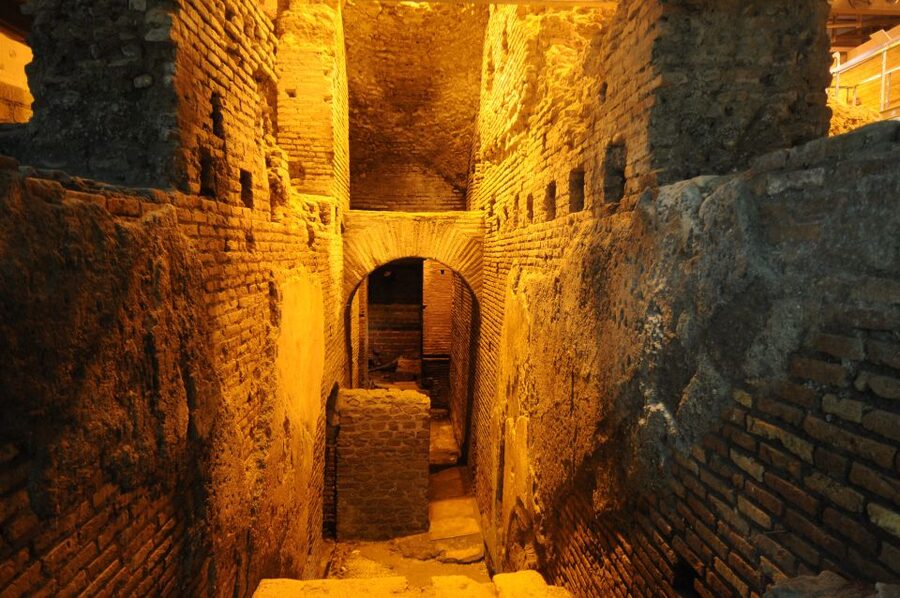
- Nine meters below Rome: Explore the Vicus Caprarius archaeological site beneath the Trevi District.
- Ancient water engineering: Trace water connected with the Trevi Fountain through old masonry, pipes, and pools.
- A small but packed site: The underground rooms are fascinating, though some visitors find the space smaller than expected.
- Strong guide-led experience: Guides including Erika, Naomi, Noemi, Michelle, and Alessia bring the archaeology to life in English.
- Trevi Fountain finish: End outside at the famous Baroque fountain, but expect crowds and no priority access.
- Good value at $50: The price makes sense if you want context and interpretation, not simply a quick look at ruins.
What you actually see beneath the Trevi District

The tour begins at Vicolo del Puttarello 25, at the entrance to the Vicus Caprarius archaeological area. This is close to the Trevi Fountain, but the underground site is next to the fountain rather than directly below its basin.
That distinction matters. The title can make the experience sound like you will descend beneath the famous fountain itself. You will not. Instead, you explore an ancient site linked to the same water system, then finish with a short guided look at the fountain above.
The Vicus Caprarius is often called the City of Water. That name fits the visit. You move through three sections of an excavation where water, buildings, and later layers of Roman life come together.
The guide explains how Rome was built and rebuilt over time. You see the remains of ancient walls, rooms, channels, and pipes rather than a fully restored monument. Some sections are fragmentary, so the quality of the visit depends heavily on the explanation around you.
That is where the guide earns the admission price. A walk through the site on your own would show you old stone and brick, but it would be harder to understand what each room did, how water moved through the structure, or how the building changed over the centuries.
More Rome trips worth a second look
- Colosseum, Roman Forum & Palatine Guided Tour
★ 4.7 · 63,148 reviews - Vatican Museums, Sistine Chapel & St Peter’s Basilica Guided Tour
★ 4.5 · 39,149 reviews - Rome: Colosseum, Palatine Hill and Roman Forum Guided Tour
★ 4.8 · 32,814 reviews
Following water from the Trevi Fountain
The most memorable thread is the water itself. The tour shows how water from the spring connected with the underground structures and passed through ancient masonry.
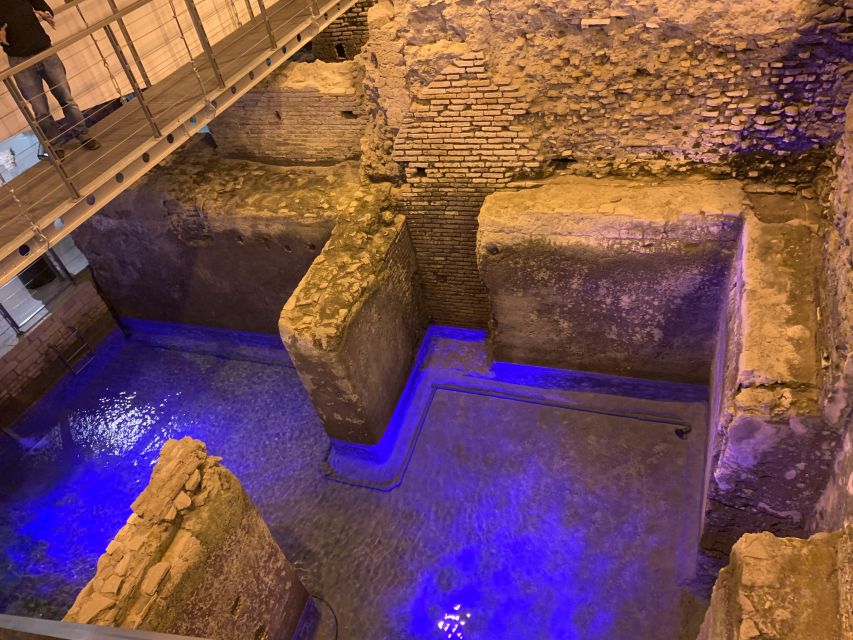
The route helps you picture water filtering through the Roman system before reaching pools and pipes associated with the domus. This is not just a story about a fountain. It is a lesson in how Roman builders made water part of daily life, household comfort, and public display.
You can expect the guide to focus on the engineering: channels, pipes, masonry, and the careful management of water underground. Several people find this more striking than the decorative remains because it reveals the practical side of Roman achievement.
The connection also gives the Trevi Fountain more meaning. Above ground, you see a dramatic Baroque monument. Below ground, you see the older water network that made the location important long before the fountain took its current form.
I would especially recommend this visit if you have already seen the Colosseum, Roman Forum, or Pantheon and want help joining the pieces together. One guide, Leslie, said the information would have been useful earlier in a Rome visit because it helped explain other sights around the city. I agree with that logic. Book it near the start of your stay if you can.
Ancient coins, amphorae, and the domus residence
The underground site is not only about water channels. It also offers clues about the people who used the buildings.
You see hundreds of ancient coins dating from the Imperial Age. Coins can look small and easy to overlook, but they help place the site in the world of ordinary commerce. They point to movement, payment, and the daily activity that took place around Roman homes and businesses.
The African amphorae are another useful detail. These large ceramic containers were used to transport oil. Their presence links the site to trade across the Roman world and gives the excavation a practical human scale. You are not just looking at walls from a vanished empire. You are seeing the remains of food, trade, household needs, and imported goods.
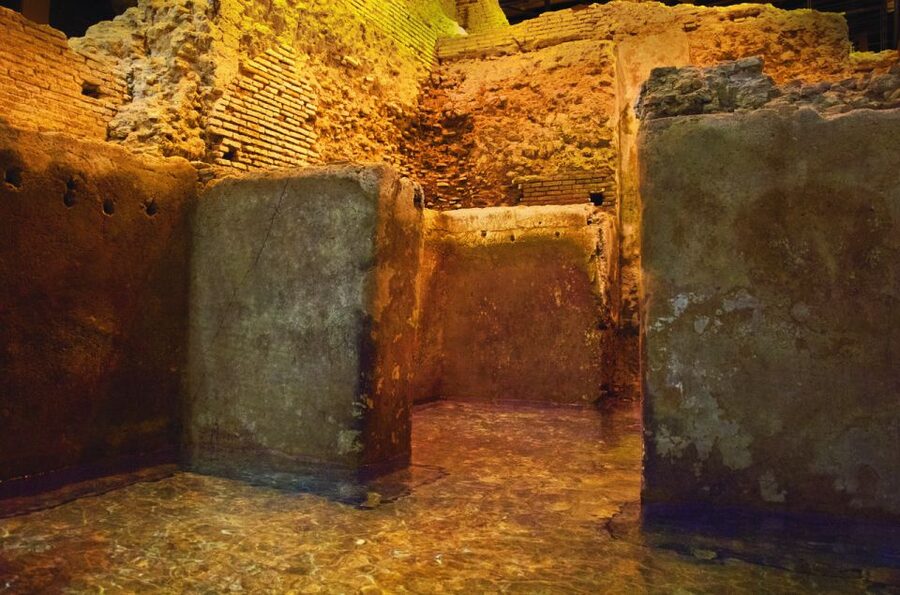
The domus itself adds a more comfortable side to the story. This was a luxurious residence with pools and water pipes, and the guide explains how the water system served the property.
Polychrome marble suggests decoration and status. The head of Alessandro Helios adds a striking artistic fragment. You might not see every object in the same way that you would view a major museum collection, but the finds become more interesting once the guide explains where they fit.
The site is compact. One visitor found it smaller than expected, and that is a fair warning. This is not a huge underground city with long passages and grand chambers. Its appeal comes from close views of archaeological remains and the story that ties them together.
Why the archaeologist guide matters
The English-language guide is the heart of the experience. Names mentioned for guides on different departures include Erika, Naomi, Noemi, Michelle, Alessia, and Federica. The guide assigned to your tour can vary, but the format is consistent: live commentary in English, with time for questions.
The strongest guides combine facts with storytelling. Naomi is described as friendly and funny, while Erika is repeatedly praised for her energy, clear explanations, and ability to connect the site with wider Roman history. Noemi is also noted for mixing interesting stories with humor.
That style suits this site. Archaeological excavations can be hard to read without help. A guide can point out the shape of a room, explain a change in floor level, or show how a water channel relates to the building above it.
You may also receive a small radio system so you can hear the guide while walking through the site. That is useful when more than one group is underground or when the rooms are crowded.
The 45-minute schedule leaves little room for a slow, academic lecture. The underground portion takes about 40 minutes, followed by roughly five minutes at the fountain. Several guides are described as enthusiastic enough to have more to say than the clock allows.
I see that as both a strength and a limitation. The tour gives you a clear introduction without taking half a day, but serious archaeology fans may wish for more time with the site and its objects.
A different way to spend the day, same part of Italy:
- Vatican: Museums & Sistine Chapel Entrance Ticket
★ 4.5 · 144,003 reviews - Vatican Museums & Sistine Chapel Tour with Optional Basilica
★ 4.3 · 67,413 reviews - Rome: Guided Tour of Colosseum, Roman Forum & Palatine Hill
★ 4.7 · 27,897 reviews - Rome: Colosseum & Forum with Audio Guide App -Optional Arena
★ 4.2 · 24,770 reviews
The 40-minute underground route

The main visit moves through the three sections of Vicus Caprarius. Your guide explains the excavation as you go, rather than leaving you to read labels and guess at the layout.
Expect a mixture of preserved masonry, water features, pipes, rooms, and archaeological objects. The ruins are not presented as a perfect reconstruction. Instead, you get a layered picture of Rome, with ancient structures and later changes visible in the same space.
The temperature underground can be a welcome break in hot weather. One visitor particularly liked the chance to cool off below the streets. Comfortable shoes are important because the tour takes place on an archaeological site, not a smooth modern gallery floor.
The space can become crowded. More than one group may be inside at the same time, sometimes in different languages. This can make it harder to take photographs or stand in the ideal position for every explanation.
Even so, the short length works well for many visitors. You can fit it between major sights, and you will still have time afterward to stay around Trevi, take photographs, or continue toward the Pantheon and central Rome.
Ending at the Trevi Fountain
After the underground visit, the tour concludes at the Trevi Fountain. The guide gives you a brief explanation of the fountain and its history, then you can continue exploring on your own.
This final portion lasts about five minutes, so keep your expectations in check. It is not a full Trevi Fountain tour, and you do not get private access to the basin or a quiet viewing area.
The fountain itself is free to visit. Crowds can be heavy, and there may be a long line to reach the closest area. The included fountain access should not be confused with skip-the-line entry.
Still, the ending works well. You have just seen the older water system below, so the Baroque fountain above feels connected to a much longer story. Take your own photographs after the formal tour, and allow extra time if getting close to the fountain matters to you.
Some departures may offer an optional ice cream add-on, with a voucher for a shop near Trevi. That is not part of the standard experience described here, but it can be a practical extra if you want a sweet stop after the tour.
Is $50 a fair price for 45 minutes?
At $50 per person, this is not the cheapest short activity in Rome. You are paying for reserved entry, a live English-speaking guide, and access to a site that many people would have trouble interpreting alone.
The value depends on your interests. If you want a quick photograph at Trevi, the tour is too expensive. The fountain is free, and the underground site is relatively small.
If you enjoy archaeology, Roman engineering, and the hidden layers beneath modern streets, the price is easier to justify. The guide supplies the context, answers questions, and helps you understand why the water system and domus matter.
The tour also saves you from dealing with the underground entry on your own. Reserved entry is included, and the small-group option can make the visit more personal, though group size can vary.
I would compare this with the cost of a longer major-site tour before booking. This experience does not replace the Colosseum or Roman Forum. It adds a focused 45-minute chapter about water, domestic life, and the area around Trevi.
Who should book this Rome underground tour?
I would recommend it to you if:
- You have already seen Trevi Fountain and want a different angle on the area.
- You enjoy Roman archaeology but do not want a long museum visit.
- You value a guide who can answer questions and explain fragments.
- You want a short indoor activity during a hot afternoon.
- You are visiting Rome early in your trip and want background for other ancient sites.
- You are comfortable walking through a compact archaeological space with uneven surfaces.
Families with older children may find the water system and underground setting engaging, but the tour is still explanation-heavy. Young children who need constant movement may not enjoy 40 minutes of archaeology.
This is not suitable for wheelchair users or people with mobility impairments. Comfortable shoes are recommended for everyone.
Practical timing and meeting advice
Plan to arrive at Vicolo del Puttarello 25, directly at the entrance to the Vicus Caprarius archaeological area. Do not wait at the Trevi Fountain for the guide, since the meeting point is at the underground site.
The activity lasts 45 minutes, with about 40 minutes underground and five minutes at the fountain. Check the available start times when booking, since the schedule can change.
Leave extra time after the tour if you want photographs at Trevi. The fountain visit is crowded, and the tour does not give you priority access.
Free cancellation is available up to 24 hours before the tour for a full refund. You can also reserve now and pay later, which helps if your Rome plans are still shifting.
Should you book it?
Book this tour if you want to understand the water behind Trevi Fountain, see Roman remains close to the city center, and hear the site explained by an archaeologist guide. The coins, amphorae, marble, statue fragment, pipes, and domus make the visit more than a quick look at old walls.
Skip it if you are expecting to go underneath the actual fountain or receive a private, crowd-free Trevi visit. The underground site is compact, the fountain stop is brief, and the price is high for a short activity.
For the right visitor, this is a smart addition to a Rome itinerary. I would schedule it early in your stay, wear comfortable shoes, and treat the fountain as a free follow-up rather than the main attraction.
FAQ
Where does the tour meet?
Meet your guide at the entrance to the Vicus Caprarius archaeological area at Vicolo del Puttarello 25.
How long does the experience last?
The full experience lasts 45 minutes. About 40 minutes are spent at Vicus Caprarius, followed by about five minutes at the Trevi Fountain.
Is the tour conducted in English?
Yes. The activity includes a live English-speaking guide.
Does the tour go underneath the actual Trevi Fountain?
No. The underground visit takes place at the Vicus Caprarius archaeological site next to the Trevi Fountain. It does not enter beneath the fountain itself.
Is skip-the-line access included at Trevi Fountain?
No. The fountain is free to enter, but the tour does not include skip-the-line access. The area can be very crowded.
What can I see underground?
You can see ancient Roman ruins, water channels, pipes, pools connected with a domus residence, Imperial Age coins, African amphorae, polychrome marble, and the head of Alessandro Helios.
Is the tour suitable for wheelchair users?
No. The activity is not suitable for wheelchair users or people with mobility impairments.
Can I cancel the booking?
Yes. You can cancel up to 24 hours in advance for a full refund. Reserve now and pay later is also available.
Recently reviewed around Rome
- Ancient Rome at Twilight Walking Tour★ 5.0 · 276 reviews
- Domus Aurea Guided Tour: The Golden House of Nero★ 4.5 · 199 reviews
- Early Vatican Museums & Sistine Chapel Small Group Tour★ 4.5 · 314 reviews
- Early Vatican Museums Tour: The Best of the Sistine Chapel★ 4.5 · 900 reviews
- Jewish Ghetto & Piazza Navona: Food, Wine & Sightseeing Rome Tour★ 5.0 · 460 reviews
- 3 Days in Sorrento, Capri & Pompeii: la Dolce Vita★ 4.0 · 595 reviews
- Tivoli Villas Full Day Trip From Rome with Lunch★ 4.0 · 443 reviews
- Cook With Us in Rome: A Hands-On Cooking Experience 09:20AM class★ 5.0 · 234 reviews
Guided, compared.

Colosseum, Roman Forum & Palatine Guided Tour
Read our review →
Vatican Museums, Sistine Chapel & St Peter’s Basilica Guided Tour
Read our review →
Colosseum, Palatine Hill and Roman Forum Guided Tour
Read our review →
Guided Tour of Colosseum, Roman Forum & Palatine Hill
Read our review →
Colosseum & Forum with Audio Guide App -Optional Arena
Read our review →
Colosseum, Roman Forum and Palatine Hill Guided Tour
Read our review →
Naples Underground Entry Ticket and Guided Tour
Read our review →