
Review · VATICAN & SISTINE CHAPEL TOURS
Rome: Vatican Museums and Sistine Chapel Tour with Ticket
The Vatican Museums are less a single museum than a long procession of papal palaces, ancient statues, painted ceilings, maps, and rooms designed to impress. This 2.5-hour guided visit gets you past the main ticket queue and keeps your attention on the best-known works, from the Laocoön Group to Michelangelo’s Sistine Chapel ceiling.
I like the priority entrance, which can save a painful wait, and I like having a guide explain what you are seeing instead of wandering through 70,000-plus exhibits without a plan. Guides such as Juliana, Deny, Carolina, Luis, and Andre Luis have been praised for clear explanations and strong organization. The tradeoff is simple: the Vatican is often packed and hot, and 2.5 hours gives you highlights, not a full museum visit.
In This Review
- Key points to know before booking
- What this Vatican tour actually gives you
- Meeting at Via Sebastiano Veniero
- Priority entry, then airport-style security
- Courtyard of the Belvedere and the Pine Cone
- Pio Clementino Museum and famous ancient sculpture
- The Gallery of Candelabra
- Flemish art in the Gallery of Tapestries
- Maps, painted walls, and the Gallery of Maps
- Raphael’s Rooms and the Renaissance apartments
- Michelangelo in the Sistine Chapel
- What happens with St. Peter’s Basilica
- Crowds, comfort, and the two-and-a-half-hour pace
- Who should book this tour
- Should you book the Vatican Museums and Sistine Chapel tour?
- FAQ
- Where does the tour meet?
- What is the nearest metro station?
- How long does the tour last?
- Which languages are available?
- Are skip-the-line tickets included?
- Is St. Peter’s Basilica included?
- Is the dome of St. Peter’s included?
- What should I wear to the Vatican?
Key points to know before booking
- Priority entry saves valuable Rome time: You use a separate entrance, though everyone still passes through airport-style security.
- The route covers the Vatican’s essential art: Expect ancient sculpture, three major galleries, Raphael’s Rooms, and the Sistine Chapel.
- Guides make the art easier to read: Several guides have been praised for explaining artistic technique, symbolism, and Vatican history in an engaging way.
- The Sistine Chapel visit is brief: You may have only about 10 minutes there, so arrive ready to look up and pay attention.
- Crowds are part of the experience: The Vatican can feel cramped, noisy, and very warm, especially in busy months.
- St. Peter’s Basilica is not the main tour: A side exit toward the basilica may be available, but guided basilica access, the dome, and dome tickets are not included.
What this Vatican tour actually gives you
At $106 per person, this is not a cheap museum ticket. You are paying for three things: entry at a busy time, a live guide, and a carefully chosen route through one of the world’s biggest art collections.
That can be good value in Rome. The Vatican Museums hold more than 70,000 exhibits, and the buildings themselves are part of the story. Without a plan, you can spend hours walking corridors and still miss the works that give the museum its fame. A guide helps you stop at the right places and understand why they matter.
The important limit is pace. This is a highlights tour, not a slow art course. You will see major rooms and hear useful background, but you will not have time to study every statue, painting, map, and ceiling. If you want long stretches of quiet looking, you should consider a longer visit instead.
The average rating of 4.5 from 663 bookings points to a dependable experience, especially for people who value explanation and time saved at the entrance. The most praised part is the guide. Juliana is repeatedly singled out for her scholarly but engaging approach, while Deny has been praised for explaining the techniques behind the art. Other guides named in strong feedback include Carolina, Luis, Tatiana, Julia, and Andre Luis.
More Museum Tours in Rome
- Vatican: Museums & Sistine Chapel Entrance Ticket
★ 4.5 · 144,003 reviews - Vatican Museums & Sistine Chapel Tour with Optional Basilica
★ 4.3 · 67,413 reviews - Vatican Museums, Sistine Chapel & St Peter’s Basilica Guided Tour
★ 4.5 · 39,149 reviews
Meeting at Via Sebastiano Veniero
Your meeting point is the CheckandGo Tours office at Via Sebastiano Veniero, 21. The office sits on a street parallel to the Vatican Museums entrance, so you do not meet directly at the museum gates.
The nearest metro stop is Ottaviano on Line A. Look for the Todis supermarket and an auto shop with a blue Michelin sign. I would allow extra time to find the office, especially if you are unfamiliar with Rome’s signs and busy streets. The tour cannot wait for late arrivals, and a late arrival means you may lose your place without a refund.
You will be given headsets so you can hear the guide while walking through crowded rooms. That small detail matters here. The Vatican corridors can be packed, and a guide speaking to a group without audio equipment would be easy to lose.
Priority entry, then airport-style security
The separate entrance is the tour’s first practical advantage. The regular ticket line can be extremely long, while a priority group can reach the museum entrance much faster. One booking reported entering in about 15 minutes, though that is not a promise for every date.
You still need to pass through security. It works much like airport screening, and in high season the wait can reach 30 minutes. So skip-the-line does not mean walk straight inside. It means you avoid the main ticket queue, which is usually the more painful delay.
Bring a passport or identity card for children, and bring a student card if you are using student identification. Weapons, sharp objects, scooters, pets, and shorts are not allowed. The Vatican also requires modest clothing: no sleeveless shirts, miniskirts, or hats. Dress for both the religious setting and the heat. Several accounts describe the museum and Sistine Chapel as very warm.
Courtyard of the Belvedere and the Pine Cone
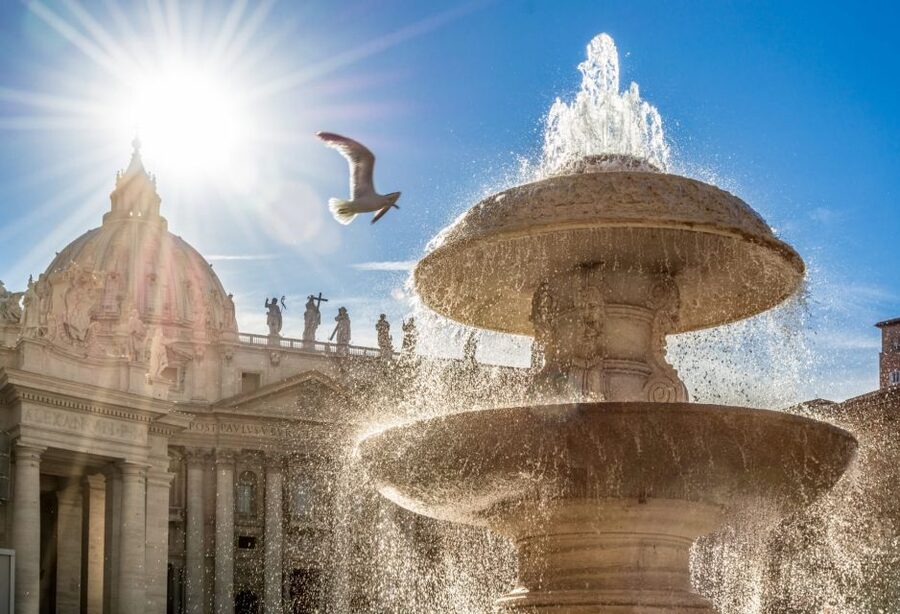
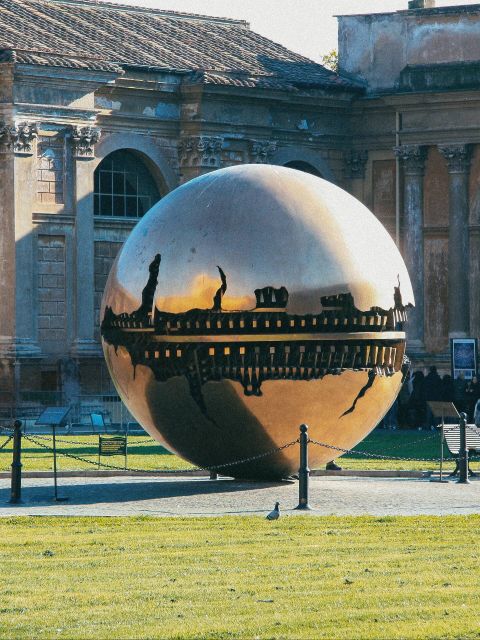
The tour begins around the Vatican’s open courtyards, including the Courtyard of the Belvedere and the Courtyard of the Pine Cone. This gives you a useful first look at the scale of the papal complex before the indoor galleries begin.
From the Courtyard of the Armor, you may glimpse the Vatican Gardens. The view is not the same as a dedicated garden tour, but it helps you understand that the Vatican is a working city-state as well as a collection of galleries.
The Courtyard of the Pine Cone takes its name from a large ancient bronze pine cone. It sits among historic papal buildings and provides a natural pause before the ancient sculpture rooms. Your guide will likely use these spaces to set up the larger story: Roman power, Christian authority, papal collecting, and the Renaissance desire to reconnect with classical Greece and Rome.
These courtyards are also where the scale of the visit becomes clear. You are not simply entering a gallery with a few famous paintings. You are moving through former papal residences and ceremonial spaces, with art placed along a route built to display power.
More Rome museums and collections:
- Rome: Vatican Museums, Sistine Chapel & Basilica Tour
★ 4.3 · 13,872 reviews - Vatican Museums & Sistine Chapel Skip-the-Line Entry Ticket
★ 4.4 · 13,838 reviews - Rome: Vatican Museums, Sistine Chapel & Basilica Tour
★ 4.7 · 13,217 reviews - Rome: Vatican Museums & Sistine Chapel Guided Tour
★ 4.3 · 12,117 reviews
Pio Clementino Museum and famous ancient sculpture
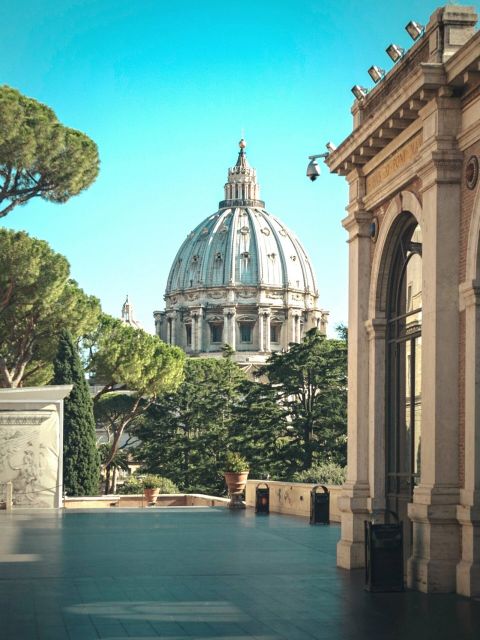
The route continues through parts of the former Belvedere Palace, once used as a summer residence by the pope. Today, these rooms form part of the Pio Clementino Museum, home to some of the Vatican’s most important Greco-Roman works.
Two pieces deserve special attention. The Apollo Belvedere presents an idealized image of the male body and became a major reference point for Renaissance artists. The Laocoön Group shows a Trojan priest and his sons struggling against sea serpents. Its twisting bodies and emotional force made it one of the most important ancient discoveries for artists in Renaissance Rome.
This is one place where a guide earns the admission price. Ancient sculpture can look familiar if you have seen countless copies in books and museums. The guide can point out posture, movement, restoration, and the way later artists studied these works. Several guides on this tour have also brought an artist’s eye, explaining how technique shapes what you see.
The drawback is that this section can feel rushed. You may stop at the major statues while the group continues moving around you. If Apollo Belvedere or Laocoön is a personal priority, stay close to the guide and listen for the stopping point.
The Gallery of Candelabra
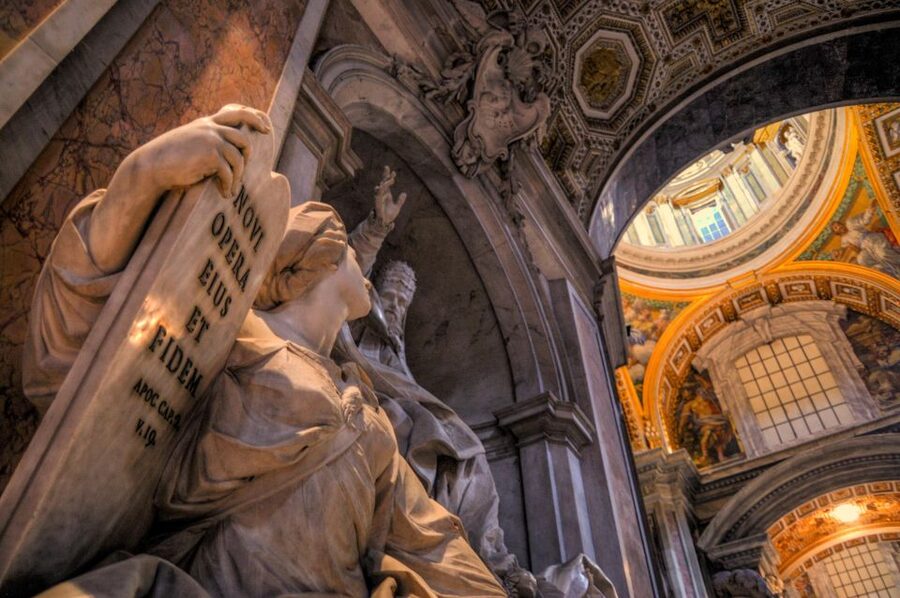
The first of the three long galleries is the Gallery of Candelabra. Its name comes from the large marble candelabra placed along the corridor, but the art is not limited to decorative objects.
You will see ancient sculpture and other pieces arranged in a long ceremonial passage. The room itself matters. It shows how the Vatican displays its collection, not in a plain modern box but in a grand sequence that makes every turn feel deliberate.
I find this part useful as a transition. You have just seen some of the museum’s strongest ancient works, and now the route begins moving toward the Renaissance apartments and the Sistine Chapel. Your guide may point out details overhead and along the walls that you would likely miss while trying to keep pace with the group.
Do not expect a quiet stroll. The galleries are among the most crowded parts of the route, and groups can bunch together. Keep your headset on and stay aware of the person in front of you.
Flemish art in the Gallery of Tapestries
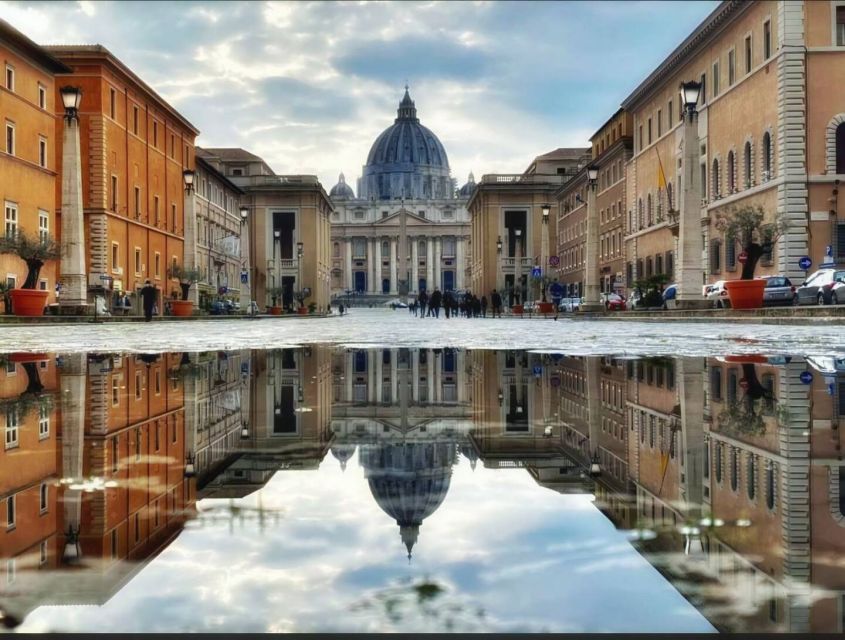
The next corridor is the Gallery of Tapestries, where large works from the Flemish workshop of Peter Van Aelst are displayed. These textiles were made to tell stories through figures, settings, and carefully arranged scenes.
The gallery is a good reminder that Vatican decoration is not only about frescoes and marble. Woven works could cover walls, soften cold stone, and display wealth and religious themes at the same time. Look closely at the detail if the crowd allows, especially the way depth and movement are created with thread rather than paint.
This is also a section where the guide’s commentary helps. At a glance, a tapestry can seem like a flat wall hanging. With a short explanation, you can start reading the figures and visual clues instead of merely passing by.
The group does not have unlimited time, so you should not expect to examine every textile. If you are particularly interested in decorative art, this tour will give you an introduction rather than a full study.
Maps, painted walls, and the Gallery of Maps
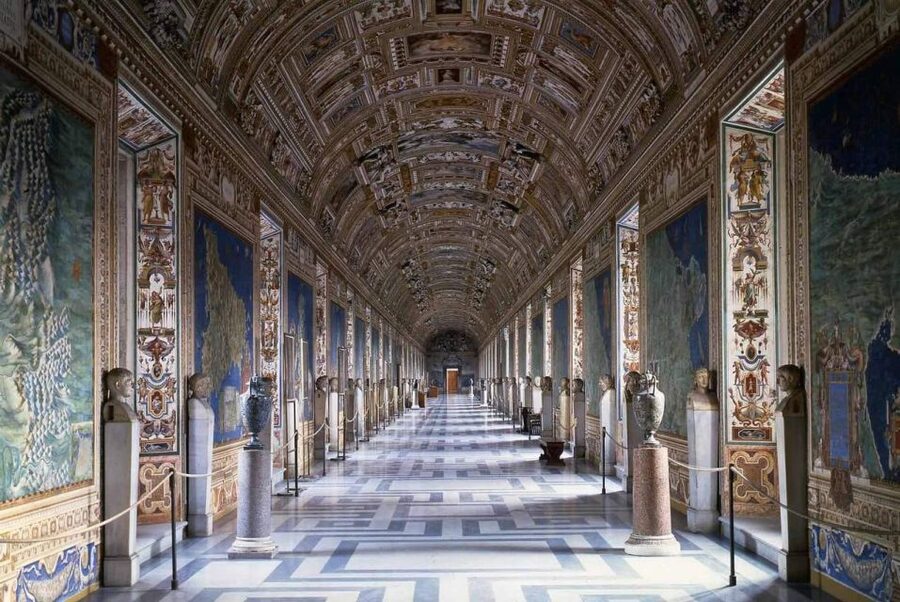
The Gallery of Maps is one of the most memorable corridors in the Vatican Museums. Its walls carry frescoed maps of Italy, commissioned by Pope Gregory XIII in the late 16th century.
Even if you are not an art specialist, this gallery is easy to appreciate. It combines geography, decoration, politics, and religion in one long room. You can look for the shapes of Italian regions, coastlines, towns, and mountains while also taking in the painted ceiling above.
The maps are not simply practical charts. They reflect how the papacy viewed and presented Italian territory. Your guide can help you read the corridor as both a work of art and a statement about authority.
This is often a busy stretch, so you may need to look upward while moving with the group. The ceiling and walls compete for your attention, and it is easy to miss smaller details if you focus only on the central route. I recommend pausing mentally at each section rather than trying to photograph everything.
Raphael’s Rooms and the Renaissance apartments
Near the end of the route, you reach Raphael’s Rooms, part of the apartment used by Pope Julius II. These rooms contain some of the most important Renaissance paintings in the Vatican.
Raphael’s work rewards a guide’s explanation. The paintings are large, crowded with figures, and filled with references to philosophy, theology, and classical learning. Without context, you may notice the beauty but miss the arguments taking place inside the scenes.
The School of Athens is the best-known example, though the supplied route does not promise a fixed list of every painting you will study. The central idea is clear: Raphael used the papal apartments to create rooms where art and intellectual life supported the pope’s authority.
This section can be one of the tour’s highlights, but it is also vulnerable to crowd pressure. You may be standing shoulder to shoulder while trying to take in a wall-sized composition. I would listen first, then look. The guide’s short explanation can give you a framework that makes the painting easier to understand later.
Michelangelo in the Sistine Chapel
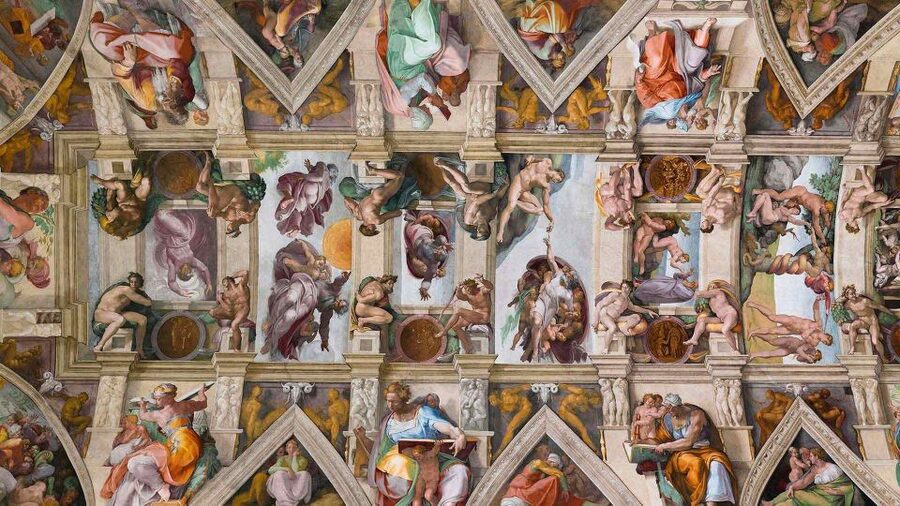
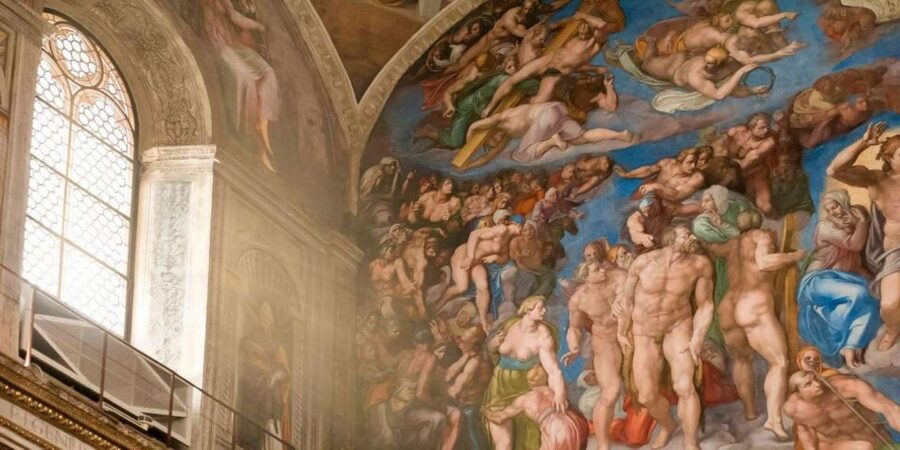
The Sistine Chapel is the emotional finish of the route. Michelangelo’s ceiling presents scenes from Genesis, while The Last Judgement covers the altar wall.
The chapel is a religious site, not just an art gallery. Silence is expected, and photography is not allowed. Follow the guide’s instructions carefully, since staff enforce the rules and the group must stay together.
You may have only about 10 minutes inside. That sounds short, but the ceiling is so large that a focused visit can still be rewarding. Before entering, listen closely to the guide’s explanation of the major scenes and how the ceiling is organized. Then use your time to look systematically: start at the central Genesis panels, move to the surrounding figures, and finish with The Last Judgement if the crowd permits.
The chapel can be extremely crowded and hot. That is not a minor detail. You may find it hard to stand still, and people around you may be trying to move in several directions. This is not the setting for quiet contemplation, but it remains the place where the whole route comes together: ancient sculpture, Renaissance painting, papal power, and Michelangelo’s physical skill.
What happens with St. Peter’s Basilica
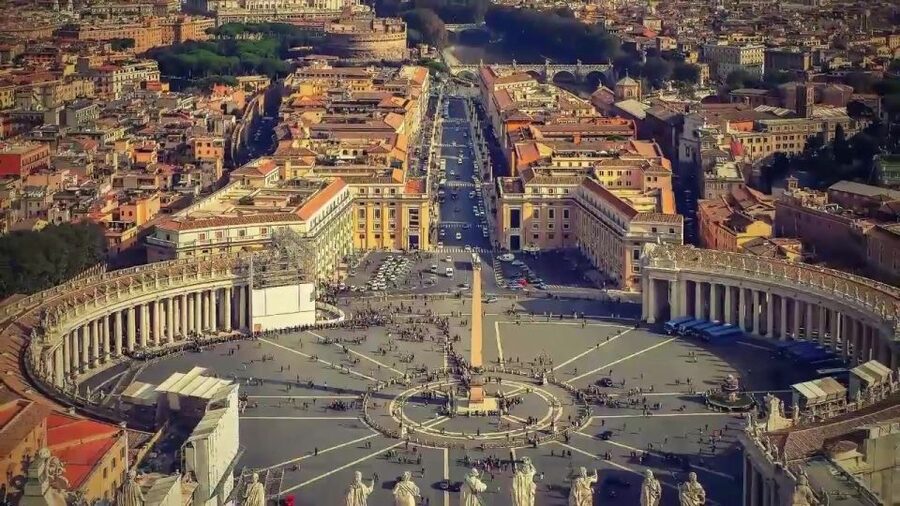
The stated tour includes the Vatican Museums and Sistine Chapel, but not a guided tour of St. Peter’s Basilica or the dome. This distinction matters when you compare prices.
Some tour arrangements may allow you to leave the Sistine Chapel through a side gate toward St. Peter’s Basilica and avoid another entrance queue. That can be a very useful finish. You may then explore the basilica on your own, but the guide’s formal service ends with the museum route.
The dome is separate. Tickets and access to St. Peter’s Dome are not included, and a line may still be required if you choose to go up. I would not book this tour assuming that the dome is part of the package. Think of the dome as an optional addition to plan separately.
Crowds, comfort, and the two-and-a-half-hour pace
Crowds are the main weakness. The Vatican is among the most visited museums in the world, and even a priority ticket cannot clear the corridors. Reports describe people feeling squeezed in, especially during busy months, and the heat can add to the strain.
The guide can manage the route, but no guide can create space. You should wear comfortable shoes, dress within the Vatican rules, and carry water if permitted. Keep valuables secure and stay close enough to hear the headset.
The short duration is both a benefit and a limit. Two and a half hours is manageable in a busy museum, especially if you are combining the Vatican with other Rome sights. It also means you get a clean overview without spending half a day inside.
I think the pace works best if you accept that this is an introduction. You will see the major rooms, hear the key stories, and leave with a sense of what deserves a longer return visit. If you want to linger over lesser-known paintings, the route may feel too fast.
Who should book this tour
I would recommend this experience to a first-time Rome visitor who wants the Vatican’s major sights without planning a complicated museum route. It suits people who prefer a guide, families who need structure, and anyone unwilling to spend hours in the standard ticket line.
It is also a good choice if art museums usually feel confusing. A guide can turn a sequence of famous names into a story about ancient Rome, the popes, Renaissance artists, and the religious purpose of the rooms.
I would think twice if you dislike crowds, need a wheelchair-accessible route, or want a slow and private visit. The activity is not suitable for wheelchair users or people with mobility impairments, and the packed corridors may be tiring even for those who walk easily.
The available languages are English, Spanish, Russian, and Portuguese. Free cancellation is available up to 24 hours before the tour, and you can reserve now and pay later, which helps if your Rome schedule is still shifting.
Should you book the Vatican Museums and Sistine Chapel tour?
Book it if you want the essential Vatican route, a live explanation, and a faster way through the main entrance. The strongest value comes from the guide, not just the ticket. Guides such as Juliana and Deny have been praised for making complex art clear, while Carolina and others have been noted for keeping groups organized in difficult crowds.
Do not book it expecting an empty museum, a long Sistine Chapel visit, or a full St. Peter’s Basilica and dome experience. At $106, I see it as a practical first visit for someone with limited time. Arrive early, dress correctly, prepare for security and heat, and treat the tour as a well-guided introduction to the Vatican’s greatest hits.
FAQ
Where does the tour meet?
You meet inside the CheckandGo Tours office at Via Sebastiano Veniero, 21. The office is on a street parallel to the Vatican Museums entrance.
What is the nearest metro station?
The nearest station is Ottaviano on Metro Line A. The meeting area is near the Todis supermarket and an auto shop with a blue Michelin sign.
How long does the tour last?
The tour lasts about 2.5 hours. You should check the available start times when booking.
Which languages are available?
The live guide service is available in English, Spanish, Russian, and Portuguese.
Are skip-the-line tickets included?
Yes. The activity includes skip-the-line tickets through a separate entrance to the Vatican Museums. You must still pass airport-style security, and that wait can reach 30 minutes during high season.
Is St. Peter’s Basilica included?
A guided tour of St. Peter’s Basilica is not included. The tour may offer a side exit toward the basilica, allowing you to continue there on your own and possibly avoid another entrance line.
Is the dome of St. Peter’s included?
No. St. Peter’s Dome and its tickets are not included.
What should I wear to the Vatican?
You should dress modestly. Sleeveless shirts, miniskirts, shorts, and hats are not allowed. You should also avoid bringing weapons, sharp objects, scooters, pets, or other prohibited items.
Recently reviewed around Rome
- Ancient Rome at Twilight Walking Tour★ 5.0 · 276 reviews
- Domus Aurea Guided Tour: The Golden House of Nero★ 4.5 · 199 reviews
- Early Vatican Museums & Sistine Chapel Small Group Tour★ 4.5 · 314 reviews
- Early Vatican Museums Tour: The Best of the Sistine Chapel★ 4.5 · 900 reviews
- Tivoli Villas Full Day Trip From Rome with Lunch★ 4.0 · 443 reviews
- Jewish Ghetto & Piazza Navona: Food, Wine & Sightseeing Rome Tour★ 5.0 · 460 reviews
- 3 Days in Sorrento, Capri & Pompeii: la Dolce Vita★ 4.0 · 595 reviews
- Cook With Us in Rome: A Hands-On Cooking Experience 09:20AM class★ 5.0 · 234 reviews
Vatican & Sistine Chapel Tours, compared.

Vatican: Museums & Sistine Chapel Entrance Ticket
Read our review →
Vatican Museums & Sistine Chapel Tour with Optional Basilica
Read our review →
Vatican Museums, Sistine Chapel & St Peter’s Basilica Guided Tour
Read our review →
Vatican Museums, Sistine Chapel & Basilica Tour
Read our review →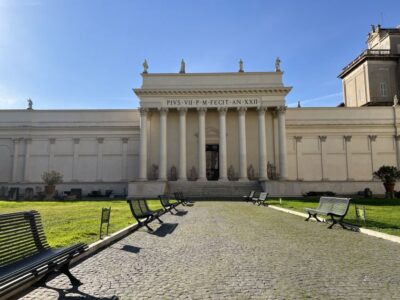
Vatican Museums & Sistine Chapel Skip-the-Line Entry Ticket
Read our review →Vatican Museums, Sistine Chapel & Basilica Tour
Read our review →
Skip-the-Line Group Tour of the Vatican, Sistine Chapel & St. Peter’s Basilica
Read our review →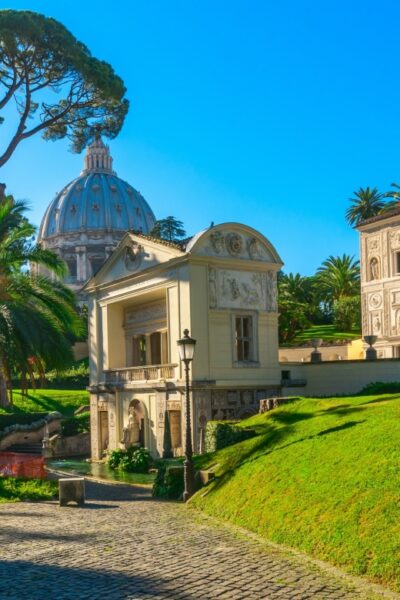
Vatican Museums & Sistine Chapel Guided Tour
Read our review →Browse the lists this tour appears in