
Review · VATICAN & SISTINE CHAPEL TOURS
Rome: Vatican Museums Sistine Chapel with priority admission
The biggest advantage here is simple: you avoid the regular ticket line outside the Vatican Museums. An escort from Habemus Tours meets you at its Via Del Mascherino office, gives you the tickets, and walks you to the museum entrance. Once inside, you explore on your own rather than following a guide with a flag.
I like the freedom to linger in the Raphael Rooms and the Sistine Chapel, and I like that priority admission matters even more during major church events or peak season. The tradeoff is that priority entry does not mean an empty museum. Security can still take up to 30 minutes, and the galleries may be so crowded that moving slowly or taking photos becomes difficult.
In This Review
- Key points to know before booking
- Why priority entry matters at the Vatican
- The Belvedere courtyards begin the visit
- Ancient sculpture in the Pius Clementine Museum
- Three long galleries lead toward the papal apartments
- The Raphael Rooms reward a slower pace
- Michelangelo’s Sistine Chapel is the final major stop
- What the $55.80 price is really buying
- The 2.5-hour schedule needs sensible expectations
- Dress, documents, and mobility rules
- Who should choose this Vatican experience
- Should you book it?
- FAQ
- How long does the Vatican Museums and Sistine Chapel experience last?
- Where do I meet the escort?
- Does priority admission mean I skip security?
- Is this a guided tour?
- What clothing is required?
- Can wheelchair users join?
Key points to know before booking
- Priority entry saves the most time outside: An escort takes you from the Habemus Tours office to the Vatican entrance, helping you avoid the regular ticket queue.
- The visit covers major Vatican highlights: You pass through the Belvedere and three grand galleries before reaching the Raphael Rooms and Sistine Chapel.
- You set your own pace inside: This is mainly an escorted-entry experience, not a guided explanation of every artwork.
- Crowds remain the main concern: The Vatican is one of the world’s most visited museums, and security lines can still form.
- Dress for a religious site: Shorts, short skirts, sleeveless shirts, and hats are not allowed.
- Arrive 30 minutes early: Late arrivals cannot join, reschedule, or receive a refund.
Why priority entry matters at the Vatican
The Vatican Museums can be a poor place to gamble with your time. The regular line may stretch a long way, especially in high season, during a Jubilee year, or around major events connected with the Catholic Church. This ticket gives you a separate priority entrance, with an escort to help you reach the correct point.
That does not mean you walk through every checkpoint without stopping. All visitors pass through airport-style security, and the wait there can reach 30 minutes at busy times. Still, bypassing the main ticket line is valuable, especially if you have only a few days in Rome.
The meeting point is the Habemus Tours office at Via Del Mascherino 37/41. You need to arrive 30 minutes before your booked time, show the reservation code, collect your tickets, and follow the staff member to the museum entrance. The office is not directly at the museum doors, so allow enough time to find it. Clear directions and punctuality matter here.
Once the escort has taken you inside, the independent part begins. You can move through the prescribed museum route without staying with a guide. A guided upgrade is available if you prefer commentary and help making sense of the collection.
More Museum Tours in Rome
- Vatican: Museums & Sistine Chapel Entrance Ticket
★ 4.5 · 144,003 reviews - Vatican Museums & Sistine Chapel Tour with Optional Basilica
★ 4.3 · 67,413 reviews - Vatican Museums, Sistine Chapel & St Peter’s Basilica Guided Tour
★ 4.5 · 39,149 reviews
The Belvedere courtyards begin the visit
The route starts at the Cortile dell’Armatura, where you get an early glimpse toward the Vatican Gardens. It is a useful opening because it gives you a sense of the scale of the papal complex before you enter the galleries.
From there, you continue to the Cortile della Pigna. This courtyard sits at the center of the old papal buildings and takes its name from the enormous ancient bronze pine cone displayed there. The setting gives you a moment of open space before the indoor rooms become busier.
The courtyard stops are not the main reason to book this experience, but they help establish the Vatican as more than a single chapel. You are moving through former papal residences, courtyards, galleries, and museums that grew over centuries. Keep your eyes up and pace yourself. The famous rooms arrive later, and rushing the opening sections can leave you tired before the most important art.
Ancient sculpture in the Pius Clementine Museum
The route passes through parts of the Belvedere Palace, once the Pope’s summer residence. Today, this area houses the Pius Clementine Museum, one of the Vatican’s major collections of Greco-Roman art.
Two works deserve special attention. The Apollo Belvedere presents the idealized athletic figure that shaped European ideas about classical beauty. The Laocoon Group is more theatrical, showing the Trojan priest Laocoön and his sons struggling against sea serpents. Its twisting bodies and intense expressions make it easy to understand why artists and collectors valued ancient sculpture so highly.
These rooms can be crowded, and you may not have much time to stand in front of a sculpture without people passing behind you. That is one reason the self-guided format can work well. If a particular piece catches your eye, you can stop and take it in without waiting for a group to move on.
On the other hand, without a guide, you are responsible for supplying the context. The ticket gets you to the art, but it does not automatically explain why Apollo and Laocoön mattered to Renaissance artists or to the papal collection. If you enjoy background stories, consider the guided upgrade or bring a reliable museum guide.
Three long galleries lead toward the papal apartments
Next come three galleries that form one of the most memorable stretches of the Vatican Museums. Each has a different visual character, so this part rewards looking beyond the crowds directly in front of you.
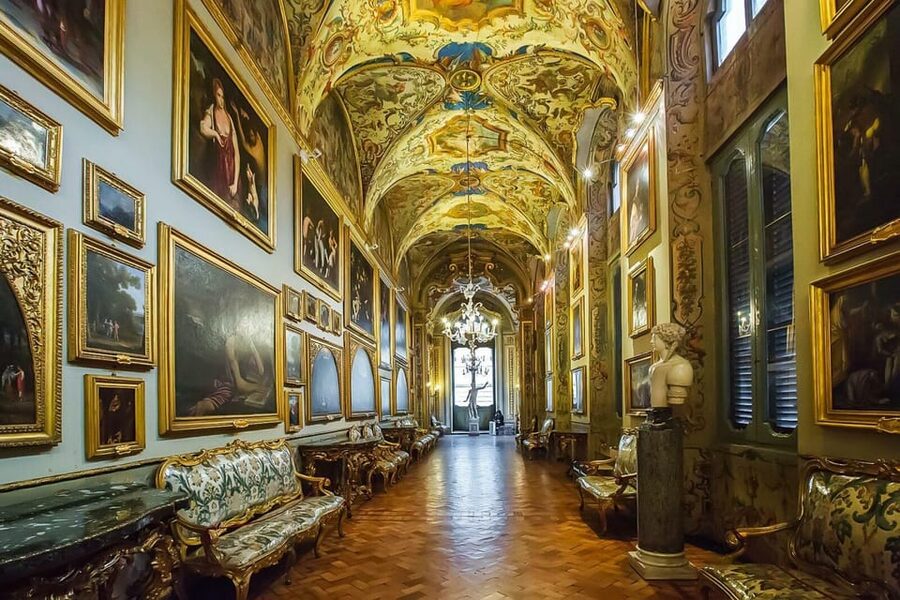
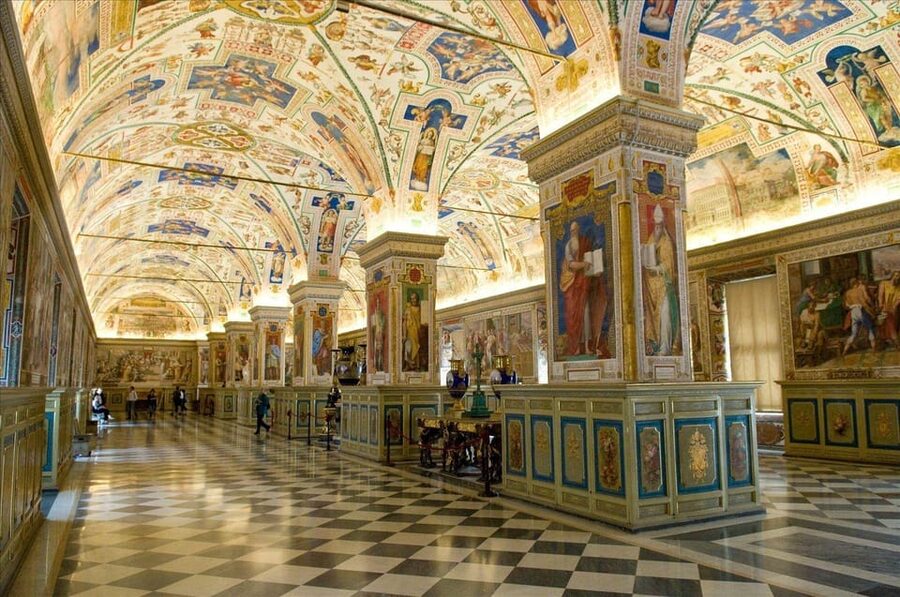
The Gallery of the Candelabra contains ancient sculpture and decorative details arranged along a long corridor. It can feel like a passageway rather than a destination, but the ceiling and repeated architectural elements make the walk visually impressive.
The Gallery of the Tapestries contains works made by the Flemish workshop associated with Peter Van Aelst. The large scenes reward a slower look, but the corridor may be packed. You might need to pause at the edge to study details without blocking the flow of people.
The Gallery of the Maps is lined with frescoed maps of Italian territory, commissioned by Pope Gregory XIII. It is one of the easiest galleries to remember because the maps cover the walls while the ceiling draws attention overhead. The maps are historical objects, not modern navigation tools, but they provide a striking picture of how Italy was understood and represented in the late 16th century.
This gallery sequence is also where the practical downside becomes clearest. The Vatican route is designed to move large numbers of people toward the Sistine Chapel. You may find yourself walking with a steady crowd, and at busy times it can be hard to stop. Look for wider areas and step aside when possible.
More Rome museums and collections:
- Rome: Vatican Museums, Sistine Chapel & Basilica Tour
★ 4.3 · 13,872 reviews - Vatican Museums & Sistine Chapel Skip-the-Line Entry Ticket
★ 4.4 · 13,838 reviews - Rome: Vatican Museums, Sistine Chapel & Basilica Tour
★ 4.7 · 13,217 reviews - Rome: Vatican Museums & Sistine Chapel Guided Tour
★ 4.3 · 12,117 reviews
The Raphael Rooms reward a slower pace
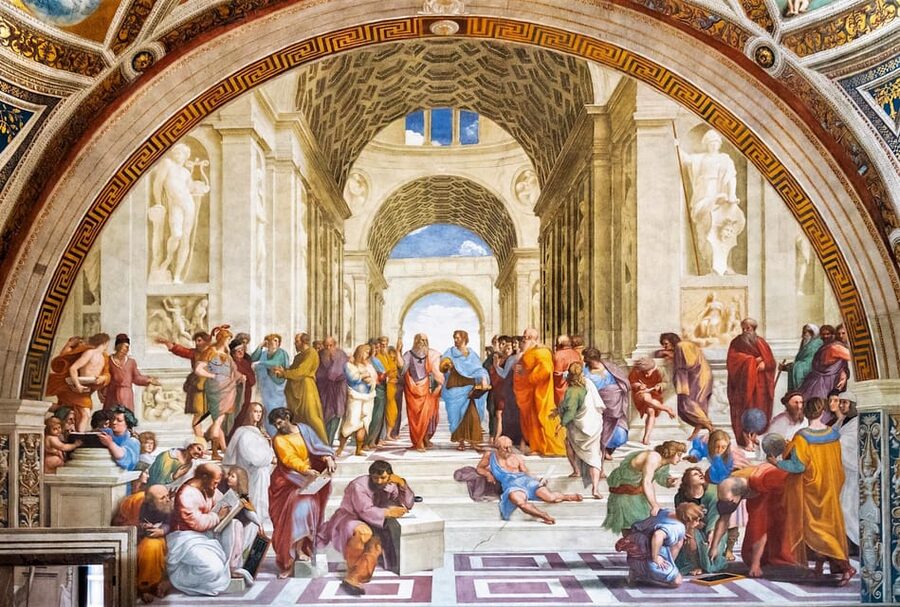
The route ends with the Raphael Rooms, located in the apartment of Pope Julius II. These rooms contain frescoes by Raphael and his workshop, created for the papal apartments.
The most famous room is the Room of the Segnatura, known for major Renaissance compositions including The School of Athens. Even if you are not an art expert, it is worth spending a few minutes looking at the organization of the scene, the gestures, and the way the painted architecture creates a grand setting.
The rooms can be one of the easiest places to lose sight of the route because the surfaces are full of detail. If you are visiting independently, decide in advance that you will slow down here. The crowd may encourage you to keep walking, but these rooms deserve more than a quick glance.
The self-guided setup gives you flexibility, but not unlimited solitude. If the rooms are full, stand where you can and wait for a small opening. You will get more from the paintings by studying one section carefully than by trying to photograph everything while people press forward.
Michelangelo’s Sistine Chapel is the final major stop
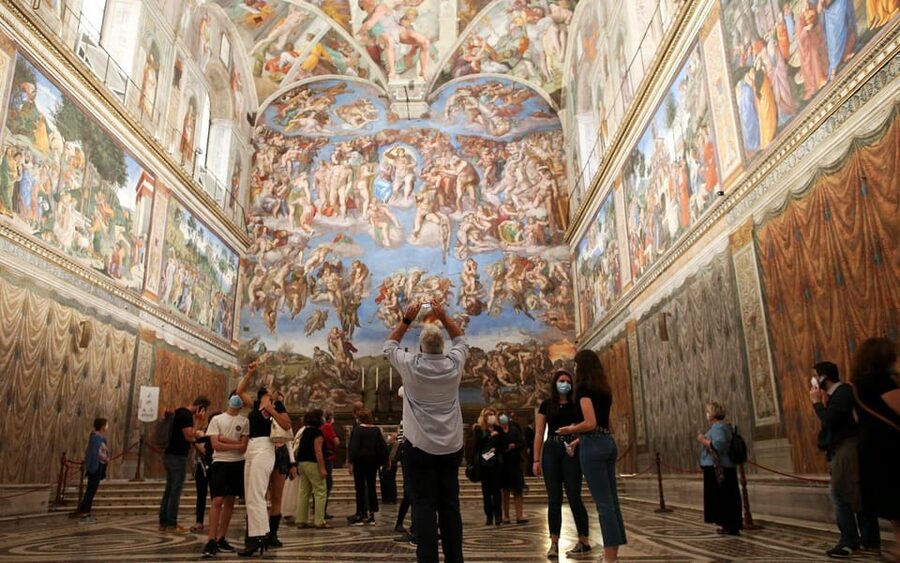
The Sistine Chapel is the emotional finish of the visit. Michelangelo’s ceiling presents scenes from the Book of Genesis, while the monumental Last Judgment fills the altar wall.
The ceiling is easy to recognize, but do not look only for the most famous image. Give yourself time to scan the full arrangement of figures, architectural frames, and narrative scenes. The Last Judgment has a different force, with its crowded movement and dramatic treatment of salvation and damnation.
Photography is not allowed in the Sistine Chapel. That rule is enforced, so put your phone away and use the time to look. Shops outside sell reproductions and other merchandise, but the chapel itself is a quiet place for observation rather than picture-taking.
The chapel is also a religious site, not simply an art gallery. Keep your voice low and follow staff instructions. Because this is the final part of the route, it may be crowded and difficult to move around. You may not get the still, empty-chapel moment shown in guidebooks, but the scale and importance of the artwork remain clear.
After the chapel, the activity ends back at the meeting point according to the supplied arrangements. Confirm the exact exit instructions with the staff before you separate from the escort, especially if you plan to continue elsewhere in Rome.
What the $55.80 price is really buying
At $55.80 per person, this is not the cheapest way to see the Vatican. You are paying for priority access, ticket handling, and an escort to the entrance. You are not paying for a full guided explanation throughout the museum unless you choose the upgrade.
The value depends on your schedule. If you have a short stay in Rome, avoiding the regular ticket line can be worth the cost. Several visitors found the priority access especially useful during a Jubilee year and around major papal events, when the outside lines were described as extreme. In that situation, the ticket is buying back hours that you can use elsewhere.
If your budget is tight and you are visiting during a quiet period, the price may feel less appealing. Priority admission does not remove the security check or the crowds inside. One visitor still had to wait with other priority-ticket holders after being escorted to the entrance, which made the benefit feel smaller than expected.
The key distinction is this: priority admission improves entry, not the entire museum experience. It cannot guarantee a clear view of every painting or a relaxed walk through the galleries.
The 2.5-hour schedule needs sensible expectations
The listed duration is 2.5 hours, with start times available when you check the booking calendar. That is enough for a focused visit to the main route, but it may feel short if you want to study every room.
The Vatican Museums contain far more than the Belvedere, the three galleries, the Raphael Rooms, and the Sistine Chapel. Your pace will depend on crowd levels, the amount of time spent at major works, and how often you can stop without blocking other people.
I would treat the 2.5 hours as a structured first visit. Focus on the ancient sculptures, Gallery of the Maps, Raphael Rooms, and Sistine Chapel. If you want a slower art-study session, choose the guided option or make sure you have enough time in Rome for a return visit.
Start times also matter. The supplied information does not promise a quiet hour, and even the end of March can be crowded. Pick the time that best protects the rest of your day, then arrive early at the office rather than trying to cut it close.
Dress, documents, and mobility rules
The Vatican enforces a dress code because the Sistine Chapel is a religious site. Sleeveless shirts, miniskirts, shorts, and hats are not allowed. Wear clothing that covers your shoulders and knees, even if the Roman heat makes lighter clothes tempting.
Bring your passport or ID card. A copy is accepted, and a student card should also be brought if it applies to your booking. The information does not promise a student discount at the entrance, so treat the card as supporting identification rather than assuming it changes the price.
Pets, weapons, and sharp objects are not allowed. Non-folding wheelchairs are also not permitted, and the activity is not suitable for wheelchair users. If accessibility is important for your party, this is a serious limitation rather than a minor inconvenience.
Arrive 30 minutes early at Via Del Mascherino 37/41. Late arrivals cannot join the group, move to another departure, or receive a refund. You can cancel for a full refund up to 24 hours before the scheduled time, and the reserve-now, pay-later option helps if your Rome plans are still shifting.
Who should choose this Vatican experience
This works best for you if you want the major Vatican sights without committing to a full guided tour. It is especially useful if you value independence, have limited time, or are visiting when regular ticket lines are likely to be severe.
It also suits repeat visitors. One person returning to the Vatican appreciated having the ticket and entrance handled, then having plenty of time to explore independently. You can skip explanations of works you already know and spend your time on rooms that deserve a closer look.
First-time visitors who want strong historical and artistic context may prefer the guided upgrade. Without it, the escort handles the entrance, but you should not expect a guide to lead you through each gallery.
It is less suitable if crowds make you uncomfortable, if you need step-free access for a non-folding wheelchair, or if you want a quiet, photographic visit. The Vatican is often crowded even outside the main summer season, and priority admission cannot change that.
Should you book it?
Book this experience if your main goal is saving time at the entrance while keeping control of your visit. The escort service is practical, and the route includes the Vatican’s essential highlights: ancient sculpture, the three major galleries, the Raphael Rooms, and the Sistine Chapel.
Skip it if you are looking for a deeply explained art tour or a low-cost museum ticket. In that case, compare the guided upgrade with other guided options before committing.
For most short Rome visits, I consider the priority access worthwhile, provided you understand its limits. Arrive early, dress correctly, expect crowds, and use your freedom inside to spend your best minutes on the Raphael Rooms and Michelangelo’s work.
FAQ
How long does the Vatican Museums and Sistine Chapel experience last?
The scheduled duration is 2.5 hours. Starting times depend on availability when you book.
Where do I meet the escort?
Meet at the HABEMUS TOURS office at Via Del Mascherino 37/41. Arrive 30 minutes before your booked departure time, show your reservation code, and collect your tickets.
Does priority admission mean I skip security?
No. All visitors must pass through airport-style security. During peak periods, the security wait can take up to 30 minutes.
Is this a guided tour?
The standard experience includes an escort to the entrance, followed by independent exploration. A guided tour upgrade is available.
What clothing is required?
Because the route includes a religious site, you cannot wear sleeveless shirts, shorts, short skirts, or hats. Dress appropriately with shoulders and knees covered.
Can wheelchair users join?
The activity is not suitable for wheelchair users, and non-folding wheelchairs are not allowed.
Recently reviewed around Rome
- Ancient Rome at Twilight Walking Tour★ 5.0 · 276 reviews
- Domus Aurea Guided Tour: The Golden House of Nero★ 4.5 · 199 reviews
- Early Vatican Museums & Sistine Chapel Small Group Tour★ 4.5 · 314 reviews
- Early Vatican Museums Tour: The Best of the Sistine Chapel★ 4.5 · 900 reviews
- Jewish Ghetto & Piazza Navona: Food, Wine & Sightseeing Rome Tour★ 5.0 · 460 reviews
- 3 Days in Sorrento, Capri & Pompeii: la Dolce Vita★ 4.0 · 595 reviews
- Tivoli Villas Full Day Trip From Rome with Lunch★ 4.0 · 443 reviews
- Cook With Us in Rome: A Hands-On Cooking Experience 09:20AM class★ 5.0 · 234 reviews
Vatican & Sistine Chapel Tours, compared.

Vatican: Museums & Sistine Chapel Entrance Ticket
Read our review →
Vatican Museums & Sistine Chapel Tour with Optional Basilica
Read our review →
Vatican Museums, Sistine Chapel & St Peter’s Basilica Guided Tour
Read our review →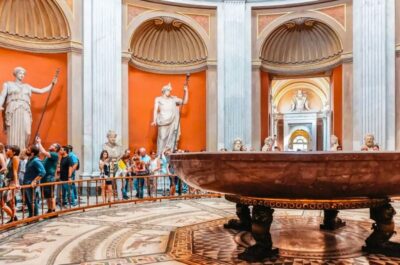
Vatican Museums, Sistine Chapel & Basilica Tour
Read our review →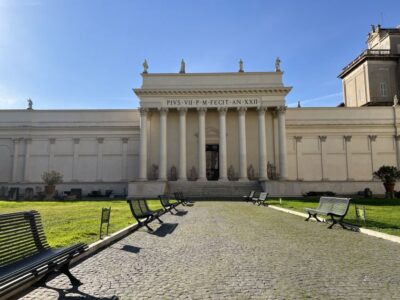
Vatican Museums & Sistine Chapel Skip-the-Line Entry Ticket
Read our review →Vatican Museums, Sistine Chapel & Basilica Tour
Read our review →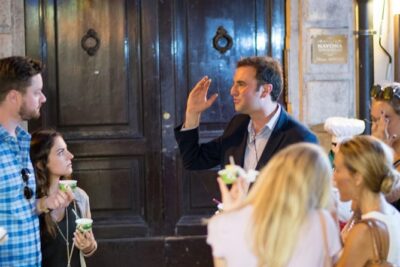
Skip-the-Line Group Tour of the Vatican, Sistine Chapel & St. Peter’s Basilica
Read our review →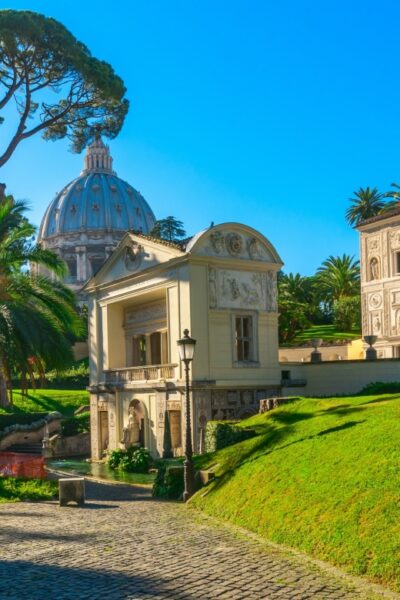
Vatican Museums & Sistine Chapel Guided Tour
Read our review →Browse the lists this tour appears in