
Review · VATICAN & SISTINE CHAPEL TOURS
Rome: Vatican Museums & St. Peter’s Basilica with Dome Climb
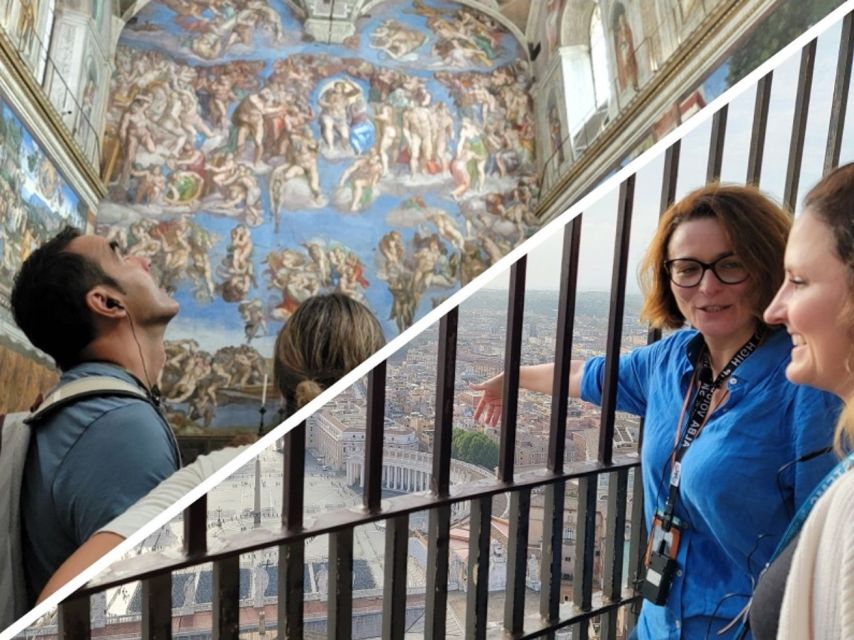
The big payoff here comes early: you climb St. Peter’s Dome before the worst crowds arrive, then look down over the square and across Rome from the top. After that, your guide leads you through the Basilica and the Vatican Museums, ending beneath Michelangelo’s ceiling in the Sistine Chapel.
I like the smart order of the day and the time saved by the Vatican Museums’ separate entrance. I also like having free time inside St. Peter’s Basilica, so you can admire the Pietà and Bernini’s Baldacchino without being marched past them. The main drawback is the pace: five hours of walking, standing, and climbing is a lot, and the Vatican Museums can feel crowded even with reserved entry.
In This Review
- Key points to know before booking
- Why the early start matters at St. Peter’s
- The Dome Climb: 300 steps and a first-rate view
- St. Peter’s Basilica: free time after the climb
- Walking to the Vatican Museums
- The Vatican Museums route and its best stops
- The Sistine Chapel: prepare before entering
- How the guides shape the experience
- Is the $157.47 price fair?
- Dress rules and practical preparation
- Who should book this Vatican combination?
- Should you book this tour?
- FAQ
- How long does the tour last?
- Where does the tour begin?
- What time should I arrive?
- Does the tour include skip-the-line entry to St. Peter’s Basilica?
- Does the tour include the dome climb?
- Can I speak inside the Sistine Chapel?
- What should I wear?
- Is the tour suitable for wheelchair users?
Key points to know before booking
- The dome climb includes about 300 stairs: An elevator takes you to the first level, but reaching the summit requires a steep stair climb.
- The early Basilica visit is the crowd-control trick: There is no skip-the-line service for St. Peter’s Basilica, but the early start usually means a much shorter wait.
- The route covers the Vatican highlights: You’ll see the Gallery of Maps, Raphael’s Rooms, the Belvedere Courtyard, the Candelabra Gallery, and the Sistine Chapel.
- Guides make the huge museums manageable: Guides such as Maria, John, Serena, Kate, and Alessandro have been praised for clear explanations, humor, and good pacing.
- Dress rules are strict: Cover your knees and shoulders, and do not bring large bags, luggage, tripods, or sharp objects.
- This is not a mobility-friendly outing: The dome stairs, long walking route, and standing time make it unsuitable for wheelchair users and people with mobility impairments.
Why the early start matters at St. Peter’s
Meet at Largo del Colonnato, just outside the colonnades to the right of St. Peter’s Square as you face the Basilica. Look for the guide holding a The Tour Guy sign between the fountain and the green kiosk, and arrive 10 minutes early.
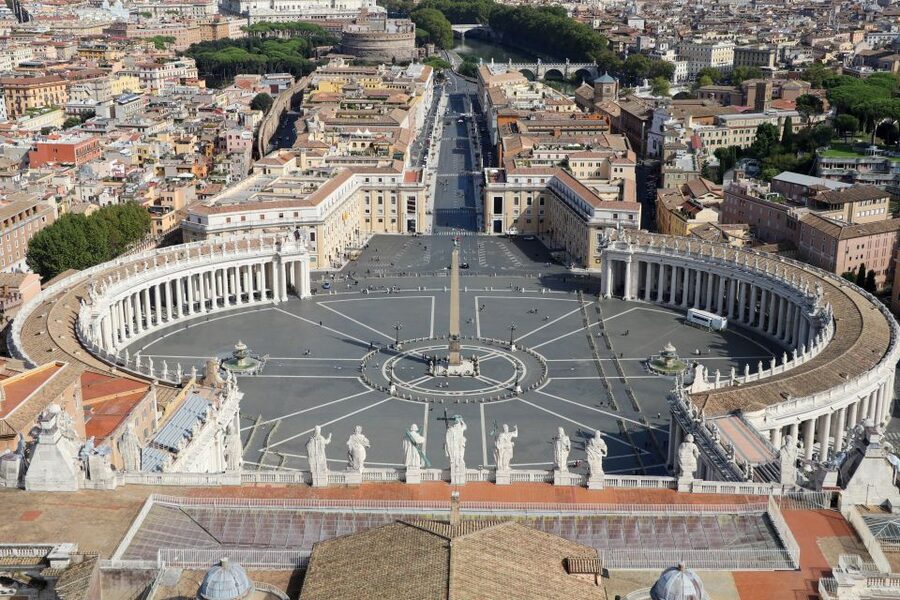
The day begins with a walk across or beside St. Peter’s Square. The square itself deserves a moment. Bernini’s curving colonnades were designed to welcome the faithful with the effect of open arms, and they also frame the Basilica beautifully. Your guide uses this first stretch to explain the setting before the climb begins.
The early access is one of the strongest reasons to choose this tour. St. Peter’s Basilica does not offer a skip-the-line entry for this experience, but an early arrival can help you avoid the long daytime queues. By late morning, the area can be much slower and more confusing, so starting here gives the tour a useful head start.
The exact time depends on the date you select, but the activity lasts five hours. Some groups have run longer when crowds or entry procedures slow the route. You should not plan a tight appointment immediately afterward.
More Museum Tours in Rome
- Vatican: Museums & Sistine Chapel Entrance Ticket
★ 4.5 · 144,003 reviews - Vatican Museums & Sistine Chapel Tour with Optional Basilica
★ 4.3 · 67,413 reviews - Vatican Museums, Sistine Chapel & St Peter’s Basilica Guided Tour
★ 4.5 · 39,149 reviews
The Dome Climb: 300 steps and a first-rate view
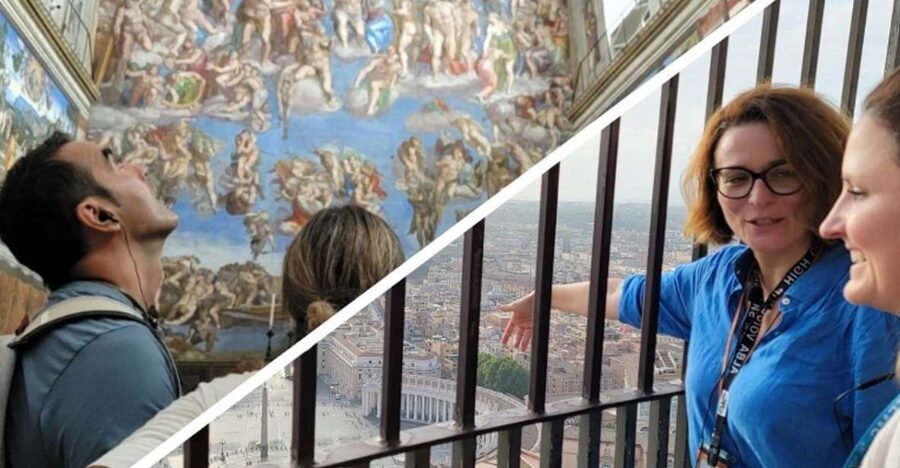
The dome section lasts about 80 minutes, including the guided explanation and time for the views. You take an elevator to the first level, where you can look out over St. Peter’s Square from a terrace.
If you continue to the top, you climb roughly 300 more steps. The route becomes narrower and more enclosed as you go, with curved passages that follow the shape of the dome. This is not a casual stroll, but the climb is broken up by the changing views and the sense of rising through one of Rome’s great architectural achievements.
At the summit, you get a broad view over Rome and Vatican City. The advertised reward is a 360-degree panorama, and this is the point where the physical effort pays off. You can also look down toward the square and see how the colonnades shape the space below.
Take the climb seriously if you have mobility concerns, trouble with stairs, or discomfort in tight spaces. The activity is specifically not suitable for wheelchair users or people with mobility impairments. Wear comfortable shoes, carry water, and avoid bringing anything bulky. Large bags and luggage are not allowed.
The guide stays involved during this part of the tour. One guide, Kate, was praised for encouraging the group during the climb and allowing a short coffee and shopping break on the roof. That kind of support matters, especially if your group includes children or anyone who needs a brief rest.
St. Peter’s Basilica: free time after the climb
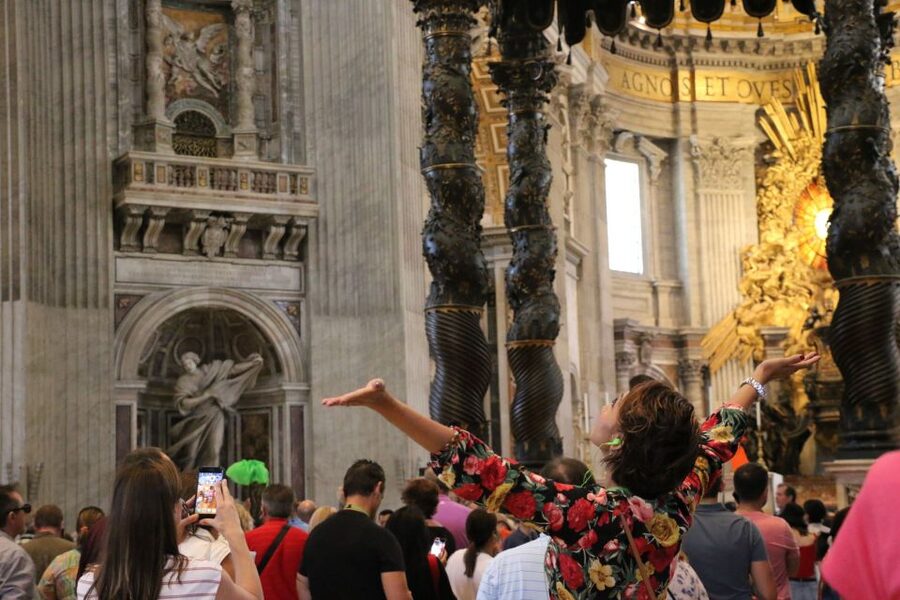
Once you return to ground level, you have about an hour to explore St. Peter’s Basilica. This is a welcome change from the guided route. You can listen to the guide’s explanations, then take your own time with the details that interest you most.
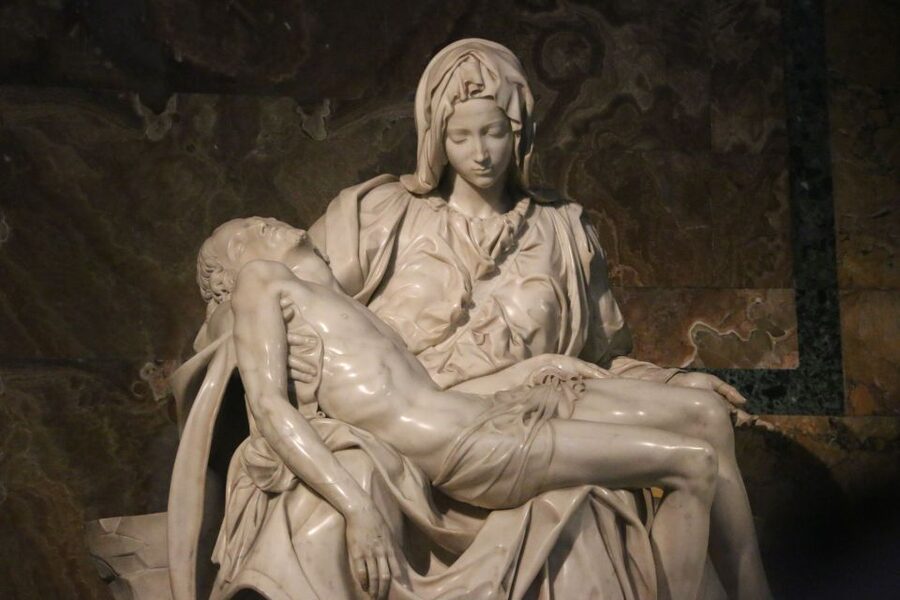
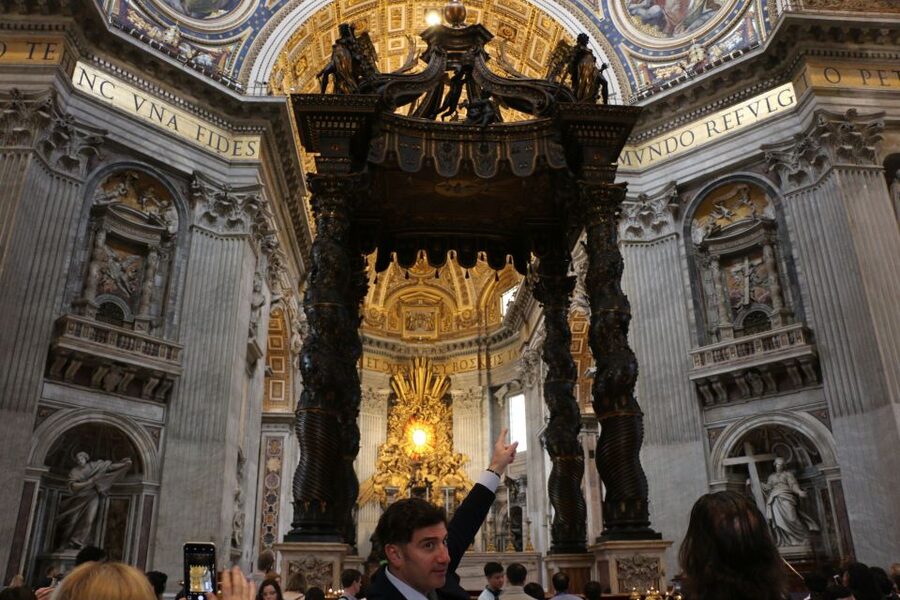
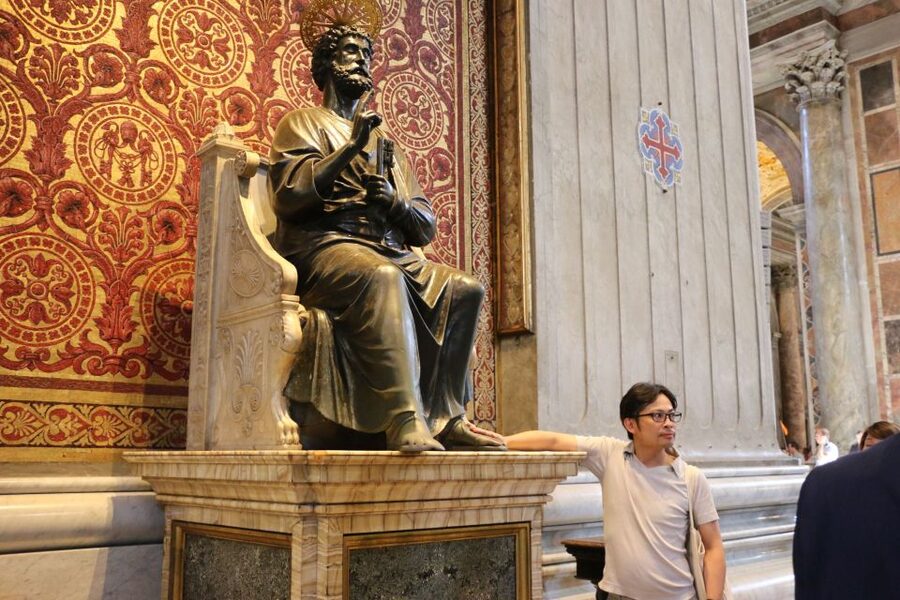
Start with Michelangelo’s Pietà, the marble sculpture of Mary holding the body of Christ. Then look up at Bernini’s Baldacchino, the huge bronze canopy above the main altar. The altar was built over the tomb of St. Peter, making this more than a grand church interior. It is the spiritual and symbolic center of the Vatican.
The Basilica is immense, and it can be hard to grasp its scale from photographs. Free time helps because you can stop, look, and take in the space without trying to keep up with a speech. Your guide may also point out details that are easy to miss, but the hour is yours to use.
Keep in mind that religious services or special events can change access. During state visits or major religious occasions, parts of the Vatican may close without warning. If that happens, the guide explains the closed areas from outside and provides another site or gallery when possible.
Walking to the Vatican Museums
The group walks for about 10 minutes from St. Peter’s Basilica to the Vatican Museums. Hotel pickup and drop-off are not included, so you need to make your own way to the meeting point and arrange your return afterward.
This short transfer is useful because the tour moves between two major parts of Vatican City without adding transport arrangements. It also gives you a small reset before the museum portion, which lasts roughly two hours.
The Vatican Museums are not a single quiet gallery. They are a vast series of rooms, corridors, courtyards, and collections leading toward the Sistine Chapel. A good guide helps you avoid spending your limited time on lesser-known rooms while missing the major works.
More Rome museums and collections:
- Rome: Vatican Museums, Sistine Chapel & Basilica Tour
★ 4.3 · 13,872 reviews - Vatican Museums & Sistine Chapel Skip-the-Line Entry Ticket
★ 4.4 · 13,838 reviews - Rome: Vatican Museums, Sistine Chapel & Basilica Tour
★ 4.7 · 13,217 reviews - Rome: Vatican Museums & Sistine Chapel Guided Tour
★ 4.3 · 12,117 reviews
The Vatican Museums route and its best stops
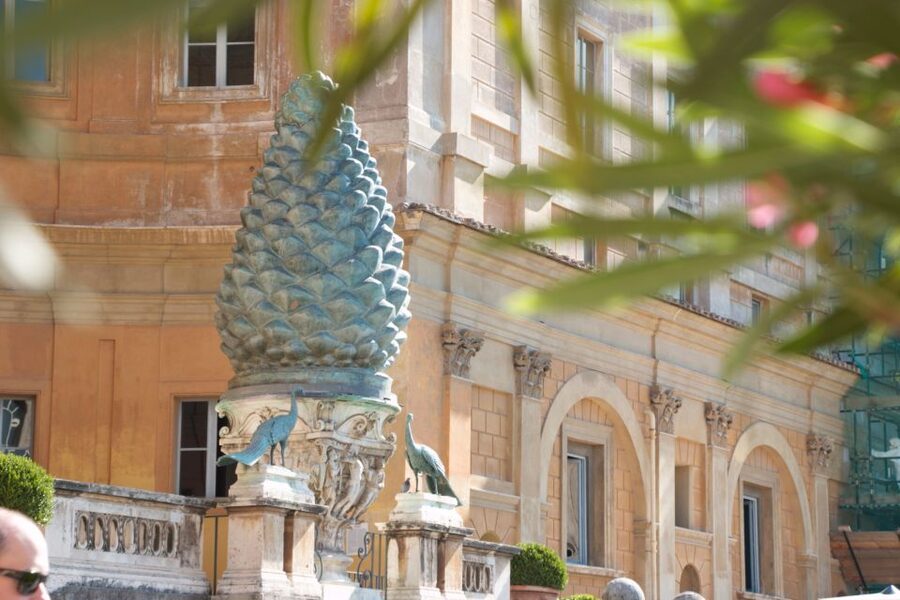
The museum tour begins around the Cortile del Belvedere, a courtyard that helps you understand the scale and layout of the complex. The route then moves through several major galleries.
The Gallery of the Candelabra contains classical sculpture and decorative details. It is an early reminder that the Vatican Museums are not only about Renaissance paintings. You’ll see how ancient art, church power, architecture, and collecting all meet inside the museum.
The Museo Pio Clementino is especially important for ancient sculpture. Your guide provides the context needed to understand why these works mattered to later artists. Without that background, a succession of marble figures can start to blur together.
The Gallery of Maps is one of the most memorable corridors. Its wall maps depict parts of Italy, while the decorated ceiling pulls your eyes upward. This is also a place where group movement can slow down, since many tours pass through the same narrow route.
You then reach the Gallery of Tapestries, where large woven scenes add a different kind of visual experience. The route continues to the Raphael Rooms, a set of rooms decorated with Raphael’s frescoes and those of his workshop. These rooms are a major reason to take a guided visit, since the political and religious themes are easier to follow when someone points out the important figures and scenes.
The order and timing can shift because of crowd controls, closures, or changing procedures. The guide may move the group along quickly in narrow halls. That is practical, but it means you should not expect long, quiet periods in front of every work.
The Sistine Chapel: prepare before entering
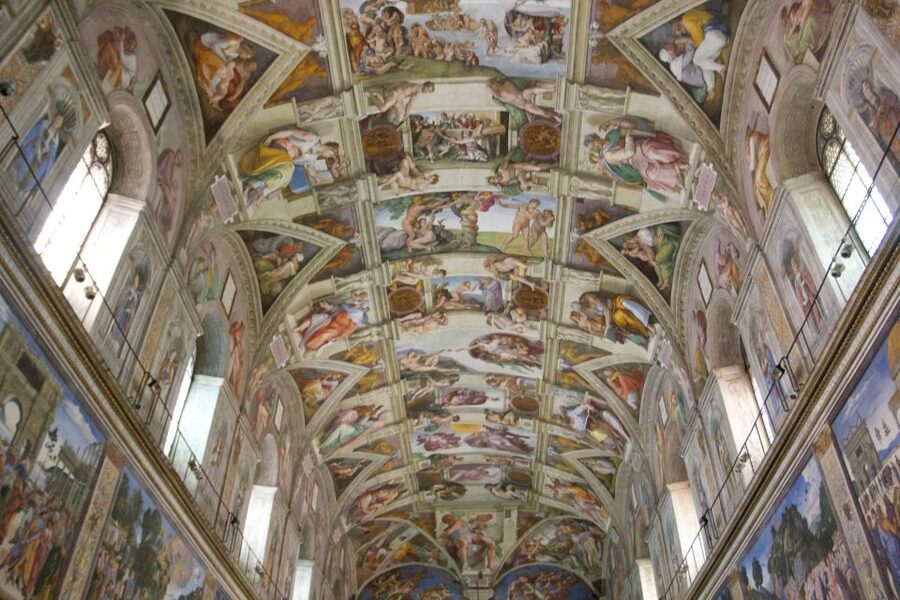
The Sistine Chapel is the final major stop. You see Michelangelo’s ceiling, including The Creation of Adam, along with The Last Judgement on the altar wall.
Speaking is prohibited inside the chapel because of its religious purpose. Your guide gives the explanation before you enter, then you explore independently in silence for about 15 minutes. This arrangement works well if you pay attention beforehand. Once inside, you need to rely on what you have just learned and take in the paintings without commentary.
The chapel can be very busy. Even with the tour’s planned access, you may be sharing the space with many other groups. That is normal for one of Rome’s most sought-after sights. Look up slowly, but also make room for others and follow staff instructions.
The Sistine Chapel is not a place for a leisurely photo session. Tripods are not allowed, and the quiet rule is strictly enforced. The strongest way to appreciate it is to study the ceiling scenes and the overall design rather than trying to record every panel.
How the guides shape the experience
The guide is the main value of this tour. The Vatican is filled with famous names and complicated connections, but the buildings do not explain themselves. A strong guide turns the route into a story instead of a long series of rooms.
Guides named Maria, John, Serena, Kate, Alessandro, Alba, Lia, Yamuna, and Carolina have received especially warm praise for their energy, humor, historical background, and ability to answer questions. One guide, Maria Louisa, was praised for clear English and careful explanations. Another guide, Alessandro, was noted for answering questions patiently, pointing out useful facilities, and giving the group enough breaks.
This matters for families. Yamuna kept children aged 10 and 12 engaged during the five-hour outing, which is no small task. The combination of the dome, the open Basilica time, and the art stops gives younger visitors more variety than a museum-only tour.
A good guide also helps when rules or routes change. Several accounts praised guides for handling altered procedures at St. Peter’s and keeping the group moving through crowded spaces. That practical help is easy to undervalue until you see how many people are unsure which entrance or queue to use.
Headsets are provided when there are six or more participants. That makes a real difference in the larger rooms and busy corridors. If your group is smaller, the listening setup may differ.
Is the $157.47 price fair?
At $157.47 per person, this is not a bargain tour. You are paying for an English-speaking guide, early morning access to St. Peter’s Basilica, the dome elevator and stairs, free Basilica time, skip-the-line Vatican Museum entry, the museum tour, and Sistine Chapel admission.
The value is strongest if you want to see all three headline sights in one morning: the dome, the Basilica, and the museums with the Sistine Chapel. Buying separate entries and working out the route yourself may cost less, but you would also need to manage the queues, entrances, timing, and explanations on your own.
The early start is especially valuable. Groups have finished around 1 p.m. while people without reserved museum access were still waiting in long lines. You pay more, but you use your Rome day more efficiently.
The price is less appealing if you dislike group tours, want long stretches of quiet time, or have already visited the Vatican and only want the dome. In that case, a smaller or more targeted experience might suit you better. Here, the point is coverage and guidance rather than a slow, private visit.
Free cancellation is available up to three days in advance for a full refund. Starting times vary, so check the selected date before building the rest of your schedule.
Dress rules and practical preparation
The Vatican requires men and women to cover their knees and shoulders. Do not count on being admitted if your clothing does not meet the rule. Wear long pants or another approved option, plus a shirt with covered shoulders.
Comfortable shoes are essential. You will walk through the square, climb the dome stairs, tour the Basilica, and spend about two hours in the museums. Bring a passport, with a copy accepted according to the tour information.
Do not bring shorts, short skirts, sleeveless shirts, large bags, luggage, weapons, sharp objects, or tripods. The restrictions are easy to overlook when packing for a warm Roman day, so plan your outfit before leaving your hotel.
This is an English-only tour. The five-hour length makes it a good choice for adults who want a full Vatican introduction and for families with older children who can manage the stairs and museum pace. It is not a good match for anyone who needs step-free access or frequent seated breaks.
Who should book this Vatican combination?
I would book this tour if you are visiting the Vatican for the first time and want a clear route through the main sights. The combination of early Basilica entry, the Dome Climb, guided museum highlights, and the Sistine Chapel covers the essential experience in one organized block.
I would also choose it if your Rome schedule is tight. The guide handles the complicated movement between entrances and collections, while the early start helps protect your morning from queues.
I would hesitate if you want to examine every artwork at length. The Vatican Museums are enormous, and this tour focuses on major highlights. Crowds can also make the museum portion tiring, even when the entrance process is faster.
Should you book this tour?
Book it if you can handle 300 stairs, five hours on your feet, and a morning surrounded by major sights and plenty of other people. The dome view, the free time in St. Peter’s Basilica, and the guide’s explanations give the day a strong mix of architecture, art, religion, and Rome views.
Skip it if stairs are a serious problem, if you need a wheelchair-accessible route, or if you prefer exploring at your own slow pace. For most first-time visitors who want to see the Vatican efficiently, the higher price is justified by the early timing, reserved museum access, and steady guidance through a very confusing complex.
FAQ
How long does the tour last?
The tour lasts five hours, although the schedule may run longer if crowds or entry procedures slow the group.
Where does the tour begin?
It begins at Largo del Colonnato, outside the colonnades on the right side of St. Peter’s Square when facing the Basilica. Look for the representative holding a The Tour Guy sign between the fountain and green kiosk.
What time should I arrive?
Arrive 10 minutes before the scheduled starting time.
Does the tour include skip-the-line entry to St. Peter’s Basilica?
No. There is no skip-the-line service for St. Peter’s Basilica, but the early start is intended to avoid much of the daytime crowd.
Does the tour include the dome climb?
Yes. The experience includes the elevator to the first level of the dome and the stairs to the top. The remaining climb is about 300 steps.
Can I speak inside the Sistine Chapel?
No. Speaking is prohibited inside the chapel. The guide explains the artwork before you enter, and you then explore quietly on your own.
What should I wear?
You must cover your knees and shoulders. Long pants and a long-sleeved shirt are recommended, and unsuitable clothing may result in refused entry.
Is the tour suitable for wheelchair users?
No. The experience is not suitable for wheelchair users or people with mobility impairments because of the dome stairs and extensive walking.
Recently reviewed around Rome
- Ancient Rome at Twilight Walking Tour★ 5.0 · 276 reviews
- Domus Aurea Guided Tour: The Golden House of Nero★ 4.5 · 199 reviews
- Early Vatican Museums & Sistine Chapel Small Group Tour★ 4.5 · 314 reviews
- Early Vatican Museums Tour: The Best of the Sistine Chapel★ 4.5 · 900 reviews
- Jewish Ghetto & Piazza Navona: Food, Wine & Sightseeing Rome Tour★ 5.0 · 460 reviews
- 3 Days in Sorrento, Capri & Pompeii: la Dolce Vita★ 4.0 · 595 reviews
- Tivoli Villas Full Day Trip From Rome with Lunch★ 4.0 · 443 reviews
- Rome Pasta Making Class with Italian Sauces and Wine Included★ 5.0 · 645 reviews
Vatican & Sistine Chapel Tours, compared.

Vatican: Museums & Sistine Chapel Entrance Ticket
Read our review →
Vatican Museums & Sistine Chapel Tour with Optional Basilica
Read our review →
Vatican Museums, Sistine Chapel & St Peter’s Basilica Guided Tour
Read our review →
Vatican Museums, Sistine Chapel & Basilica Tour
Read our review →
Vatican Museums & Sistine Chapel Skip-the-Line Entry Ticket
Read our review →Vatican Museums, Sistine Chapel & Basilica Tour
Read our review →
Skip-the-Line Group Tour of the Vatican, Sistine Chapel & St. Peter’s Basilica
Read our review →
Vatican Museums & Sistine Chapel Guided Tour
Read our review →Browse the lists this tour appears in