
Review · TRAIN EXPERIENCES
Swiss Alps Bernina Red Train and St.Moritz Tour from Milan
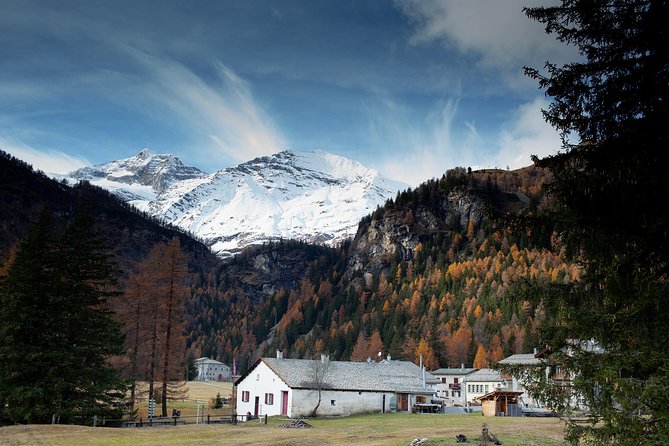
The best part of this Milan to St. Moritz day trip is the change of scenery. You leave Italy by coach, reach the high Swiss resort of St. Moritz, then ride the Bernina railway past glaciers, high Alpine stations, spiral tunnels, and the Brusio Viaduct before returning to Italy.
I like two things in particular. First, the route gives you both a comfortable coach journey and the famous red train, so you see the Alps from changing angles. Second, the older second-class carriages have opening windows, which are handy for clear photographs and a real sense of the cold mountain air. The main drawback is the length: at about 12 and a half hours, this is a full day with limited free time and a long return bus ride.
In This Review
- Key points to know before booking
- What this Milan to Switzerland day trip really offers
- Leaving Milan before the city wakes up
- St. Moritz gives you a taste, not a full visit
- Boarding the Bernina Red Train
- The high point at Ospizio Bernina
- The Brusio Viaduct and arrival in Tirano
- The long ride back to Milan
- Guides can shape the whole day
- Who will get the most from this tour
- Is the Bernina Red Train tour worth booking?
- FAQ
- How long does the tour from Milan take?
- Is hotel pickup available?
- What type of train ticket is included?
- Is food included?
- Do I need a passport?
- What happens if the weather is poor?
Key points to know before booking
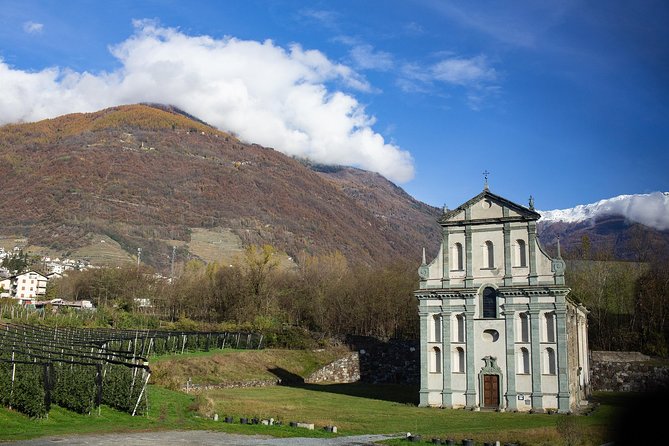
- The train reaches Ospizio Bernina at 2,253 meters, the highest station on the Rhaetian Railway, with views toward Alp Grüm, Lake Palü, and the Palü Glacier.
- St. Moritz is a short stop, useful for a walk, lunch, chocolate shopping, or a look at the lake, but not long enough for a relaxed town visit.
- The train is not a private sightseeing carriage. It is a second-class train service that stops at stations and can become crowded.
- Opening windows help with photos, but cold air, drizzle, and competition for the best view can make the carriage hectic.
- The return to Milan can take three hours or more, and there may be no planned restroom stop, so use the facilities in Tirano before boarding the bus.
- Hotel pickup is not always efficient. If you are near Milano Centrale, check whether walking to the main meeting point will save time.
What this Milan to Switzerland day trip really offers
At $179.82 per person, the tour is priced as a sightseeing package rather than a simple train ticket. You get the coach from Milan, a professional guide, the second-class Bernina train fare, and transport back from Tirano. You also avoid piecing together separate Italian and Swiss rail connections, which can be worthwhile for a one-day visit.
The price makes the most sense if you want to see St. Moritz and the Bernina route in one day without handling the timetable yourself. It is less attractive if you dislike group schedules, want a reserved window seat, or would rather spend several hours in one place.
The group can reach as many as 50 people, though some departures are smaller. The guide usually provides commentary during the road journey, in St. Moritz, and on the train. English is guaranteed. Spanish may be offered on some departures, but it is not guaranteed every day, and the tour can be bilingual.
More Milan trips worth a second look
- Bernina Red Train, Swiss Alps & St Moritz From Milan
★ 5.0 · 2,954 reviews - Small-Group Lake Como & Lugano by Swiss Train + Boat Cruise
★ 5.0 · 1,084 reviews - Intimate Small-Group Bernina UNESCO Scenic Train on Swiss Alps
★ 5.0 · 619 reviews
Leaving Milan before the city wakes up
The day begins early. Hotel pickup, if you select it, starts from 6:00 a.m., and you must wait in your hotel lobby because the vehicle collects people from several hotels. This sounds convenient, but the transfer can involve a slow circuit through Milan before you reach the main departure point.
If you are staying near Milano Centrale, compare your options carefully. Several people have found that going directly to the designated meeting point is faster than taking hotel pickup, being dropped at a transfer location, and then waiting for the main coach. Pickup locations can change by booking option, so read your confirmation closely and check the exact side of the building.
The main departure area can be confusing, especially early in the morning. Do not assume that all tour coaches gather beside the other buses at the station. Arrive early, identify the Zani Viaggi staff or coach, and keep the company phone number available. The bus will not wait indefinitely for a late arrival.
The road journey to St. Moritz takes about three hours, with a short rest stop along the way. There is no toilet on the coach, and food and drinks are not allowed onboard. Use the stop to buy water or a snack, and do not count on another break until you reach Tirano later in the day.
The coach views are part of the experience. As Milan fades, the route moves toward mountain valleys and higher ground. On clear days, you might see Lake Como along the way, followed by sharper slopes, rocky gorges, and snow on the upper peaks. Traffic, weather, and road conditions can change the timing.
St. Moritz gives you a taste, not a full visit
St. Moritz is the tour’s first major stop. This is Switzerland’s polished Alpine resort, known for winter sports, expensive shops, elegant hotels, and its lake ringed by mountains. You have free time here for lunch and a short walk before heading to the station.
The published schedule allows roughly two hours, but the practical free time can be shorter after the guide explains the meeting point and the group makes its way to the train. I would treat St. Moritz as a pleasant pause rather than the main event.
You can walk near Lake St. Moritz, look at the snow-covered peaks, browse the town center, or buy Swiss chocolate. If you want a sit-down meal, keep an eye on the clock. A faster choice is the marketplace at the train station, where you may find sandwiches, drinks, and hot food. This can save both money and time.
Prices in St. Moritz reflect its upscale reputation. Credit cards are useful, but remember that Switzerland uses Swiss francs, not euros. A card purchase avoids receiving change in the wrong currency for the rest of your Italian trip.
The season matters. In winter, snow can make the town look splendid, and a Sunday in February may coincide with the White Turf horse races on the frozen lake. In the off-season, some businesses may be closed, and the town can feel quiet. Poor weather can also hide the mountain views, though the journey still has scenic value.
Boarding the Bernina Red Train
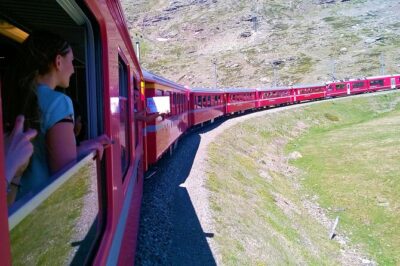
The central rail experience begins after your time in St. Moritz. The train ticket is second class, and upgrades are not available. The carriages may be the older style with windows that open, rather than the panoramic cars with broad sealed windows.
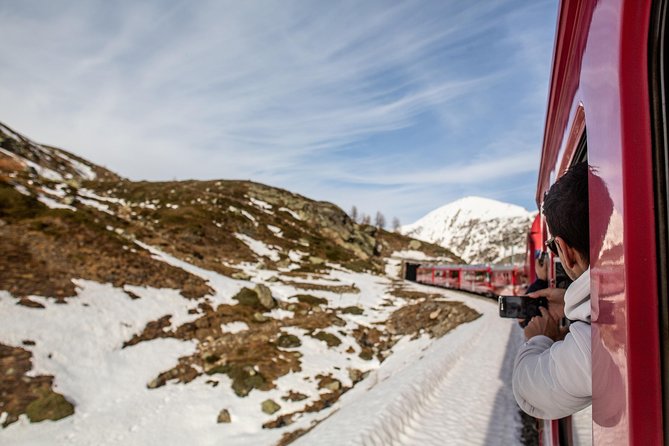
That distinction matters. Opening windows let you photograph the scenery without reflections from glass, and they give you a stronger sense of the rushing air. They also bring in cold air and, in wet weather, a little drizzle. If you prefer warmth and a fixed seat, keep the window closed. If photography is your priority, opening it briefly can make a big difference.
This is not necessarily a private train reserved only for the tour. It may function as a regular rail service, stopping at stations and allowing local passengers to board. The train ride takes about two hours and includes around 12 stops. That is normal for the route, but it differs from the image some people have of a nonstop luxury sightseeing train.
Seat allocation is one of the tour’s weakest points. Seating can be first come, first served, and a crowded carriage may leave couples separated or place some people in aisle seats. Window seats are especially valuable because many of the best views fall to one side of the train.
Arrive at the platform promptly and board as soon as your group is instructed. If you are traveling with someone, stand together in the boarding line. Do not assume that paying the same tour price guarantees adjoining seats or a window.
The guide may try to point out the best sights, but passengers standing in front of windows, making loud phone calls, or repeatedly opening and closing windows can affect the experience. You will get more from the ride if you accept that this is a shared public carriage, not a private viewing room.
A different way to spend the day, same part of Italy:
- Milan: Cathedral and Duomo’s Terraces Entrance Ticket
★ 4.6 · 61,054 reviews - Milan: Da Vinci’s Last Supper Guided Tour
★ 4.7 · 10,143 reviews - Milan: Science and Technology Leonardo da Vinci Museum Entry
★ 4.5 · 7,169 reviews - Milan: City Sightseeing Hop-On Hop-Off Bus with Audio Guide
★ 4.0 · 6,256 reviews
The high point at Ospizio Bernina
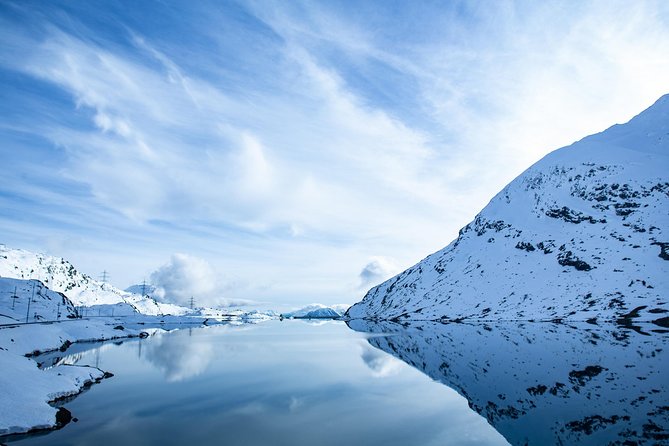
One of the route’s defining moments comes at Ospizio Bernina, 2,253 meters above sea level. This is the highest station on the Rhaetian Railway and a striking marker of the railway’s engineering achievement.
From the train, you can see Alp Grüm, Lake Palü, and the Palü Glacier. The scenery changes quickly, from open snowy slopes to steep valleys and rough mountain walls. Weather is highly changeable at this altitude. A sunny morning in Milan does not guarantee clear views in the pass.
Bring practical layers, not just a stylish city coat. Gloves, a hat, sturdy shoes, and protection from rain can make the train ride much more comfortable. The tour involves walking between the coach, town, station, and train, so it is not a good fit if you need a completely step-free day.
The route also passes through wild gorges, across high bridges, and into spiral tunnels. The train climbs and descends through tight terrain using curves, loops, and carefully built railway structures. You do not need to be a railway enthusiast to appreciate how unusual the route feels.
The Brusio Viaduct and arrival in Tirano
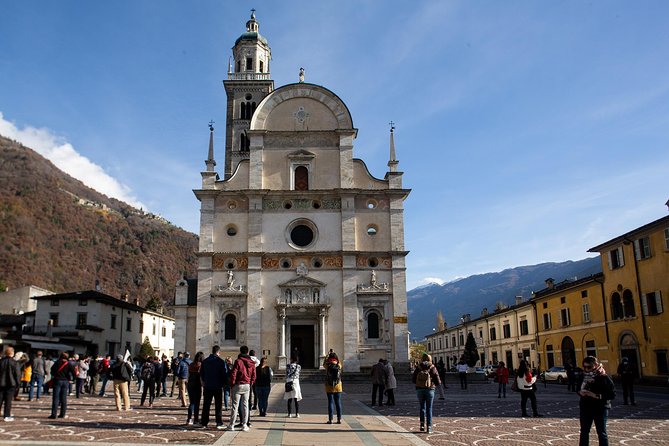
The Brusio Viaduct is the most recognizable structure on the lower part of the ride. The train curves in a broad spiral across the open viaduct, allowing the track to gain or lose height in a confined valley. It is one of those moments when you should put your phone down for a few seconds and watch the train’s movement.
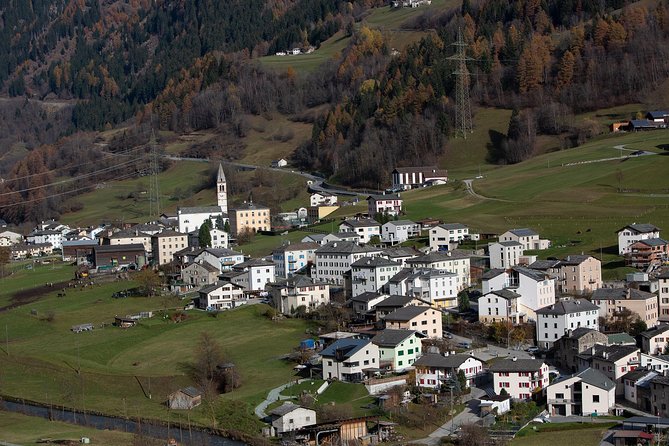
After the Bernina Pass and the Engadin Valley, the scenery gradually points back toward Italy. The train ends in Tirano, an Italian town with a more everyday feel than polished St. Moritz.
You have about 30 minutes in Tirano before boarding the bus. That is enough for a quick restroom visit, a short walk, or a drink if time allows. It is not enough for a full town tour. Use this stop practically. The return coach may run for about three hours, and planned restroom breaks are not guaranteed.
The contrast between St. Moritz and Tirano is part of the appeal. One is a high-end Swiss resort, the other a smaller Italian stop where the trip changes from rail to road. You get two different impressions of the border region in one day.
The long ride back to Milan
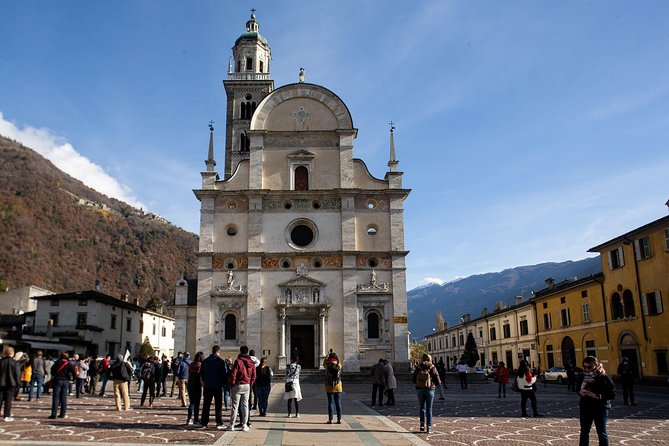
After Tirano, you return to Milan by air-conditioned coach. The scheduled drive is about three hours, but traffic or an accident can extend it. Some departures have included an unscheduled rest stop when conditions allowed, but you should not depend on one.
Before boarding, use the restroom in Tirano and buy anything you need for the ride. Since food and drinks are not allowed on the bus, plan accordingly. The return journey comes after an early start, a coach ride, free time in St. Moritz, and a mountain train, so fatigue is part of the calculation.
Drop-off at your hotel is not included. The tour ends back at the meeting point, and you will need to arrange your own way home. This is easy enough if you are near central Milan, but less convenient if you have luggage or are staying far from the center.
The coach itself may vary by departure. Most people find the ride safe, and drivers such as Javier and Davide have been praised for handling steep roads and sharp bends carefully. Still, reports of worn trays, broken handles, missing seat lights, and cramped seating mean you should not expect luxury-bus comfort.
Guides can shape the whole day
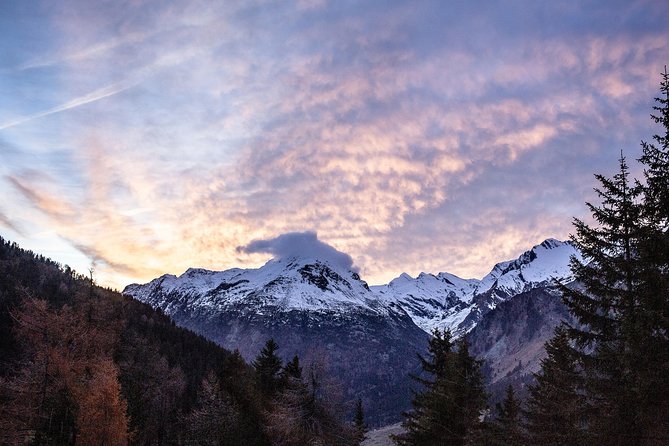
A good guide makes the long schedule easier. Guides named Sara, Anna, Simone, Angelo, Monica, and Mario have received warm praise for clear explanations, humor, energy, and helpful reminders about where to meet. A guide who points out the next photo stop or explains the railway route adds real value during the hours on the road.
The experience can vary, especially when the tour is bilingual or when the guide has difficulty speaking loudly enough for a full coach. Stay close when the group leaves the bus, remember your guide’s name, and note the meeting time and place in St. Moritz.
Do not wander off without confirming where to return. Missing the train or coach would be a serious problem because the itinerary has little spare time.
The overall rating of 4.3 from 2,369 ratings suggests a strong experience for many people, but the lower scores point to predictable weak spots: unclear meeting instructions, crowded train seating, long drives, and limited control over the schedule. I would book with realistic expectations rather than assuming every departure will feel polished.
Who will get the most from this tour
I would recommend this trip if you have one free day in Milan and want a broad introduction to the Swiss Alps. It works especially well for first-time visitors who value scenery more than extended time in either St. Moritz or Tirano.
Families can enjoy the snow, bridges, tunnels, and train ride, though young children may find the 12-and-a-half-hour schedule tiring. The route also suits photographers who are willing to arrive early for a better position and tolerate cold air at the open windows.
This is not the right choice if you need a relaxed pace, guaranteed adjoining seats, a private train carriage, or several hours for lunch and shopping. Independent rail fans may prefer arranging their own journey, since this tour uses a public second-class service and does not offer ticket upgrades.
A current valid passport is required because the trip crosses from Italy into Switzerland and back. Most people can participate, but expect walking and changing between coach, town, station, and train. Weather can change the quality of the day, and poor conditions may lead to a new date or a full refund.
Is the Bernina Red Train tour worth booking?
For me, the scenery makes this a worthwhile day if you accept the compromises. The high Bernina Pass, the Palü Glacier, Ospizio Bernina, and Brusio Viaduct give you a memorable route that would be difficult to arrange casually from Milan in a single day.
Book it for the mountain journey, not for a long visit to St. Moritz. Meet at the correct point early, skip hotel pickup if a direct central meeting point is clearly easier, bring warm layers, use every restroom stop, and board quickly if a window seat matters.
The $179.82 price is fair for a guided coach and rail combination, especially if you want the planning handled for you. It is not a bargain if you end up separated from your companion, stuck in an aisle seat, or expecting a luxury panoramic train.
My final advice is simple: choose this tour when dramatic scenery and convenience matter more than comfort and independence. If that trade-off sounds acceptable, the Bernina route can be the highlight of your Milan stay.
FAQ
How long does the tour from Milan take?
The experience lasts approximately 12 hours and 30 minutes. The schedule includes about three hours by coach from Milan to St. Moritz, roughly two hours in St. Moritz, about two hours on the Bernina train, around 30 minutes in Tirano, and about three hours by coach back to Milan.
Is hotel pickup available?
Hotel pickup is available only when you select that option and only from selected hotels. Pickup begins at about 6:00 a.m., and you must wait in your hotel lobby. If your hotel is not listed, you need to travel to one of the designated meeting points yourself.
What type of train ticket is included?
The tour includes a second-class ticket on the Bernina Red Train, with carriages that have opening windows. Upgrades are not available. The train may stop at stations and may include local passengers.
Is food included?
No. Food and drinks are at your own expense. There is a short rest stop during the coach ride to St. Moritz, and you can also buy food during your free time in St. Moritz.
Do I need a passport?
Yes. You must bring a current valid passport on the day of travel because the tour crosses the Italy-Switzerland border.
What happens if the weather is poor?
The tour requires suitable weather. If it is canceled because of poor conditions, you will be offered another date or a full refund. Weather can also cause changes to the order or timing of the itinerary.
Recently reviewed around Milan
- From Milan: Venice Full-Day Guided Tour With Boat Ride★ 4.5 · 322 reviews
- Venice Day Trip from Milan with Guided City Tour★ 4.0 · 383 reviews
- Verona and Lake Garda Day Trip from Milan★ 4.5 · 214 reviews
- Full-day Skip-The-Line Milan, The Last Supper and Duomo Cathedral★ 5.0 · 293 reviews
- Small-Group Lake Como & Lugano by Swiss Train + Boat Cruise★ 5.0 · 1,084 reviews
- Tour Bernina Red Train And St Moritz from Milan★ 4.5 · 247 reviews
- Walking Food Tour of Milan with Tastings★ 4.5 · 194 reviews
- Skip the Line: Essential Milan Tour Including Da Vinci’s ‘The Last Supper’★ 4.5 · 339 reviews
Train Experiences, compared.
Bernina Red Train, Swiss Alps & St Moritz From Milan
Read our review →
Rome to Pompeii Guided Tour with Wine & Lunch by High Speed Train
Read our review →
Small-Group Lake Como & Lugano by Swiss Train + Boat Cruise
Read our review →
Guided tour of Pompeii skip-the-line and round-trip train
Read our review →
Intimate Small-Group Bernina UNESCO Scenic Train on Swiss Alps
Read our review →
Ancient Ostia Antica Semi-Private Day Trip from Rome by Train with Guide
Read our review →Browse the lists this tour appears in