Review · ROME TOURS
The Original Roman Crypts and Catacombs Tour with Transfers
Rome’s most unusual sights are underground. This tour takes you from the Capuchin Crypt, decorated with the bones of nearly 4,000 friars, to the early Christian tunnels of the Domitilla Catacombs and the ancient layers beneath San Martino ai Monti.
I like the smart route, which combines three hard-to-link sites with transfers in an air-conditioned coach. I also like the mix of experiences: the Capuchin Crypt is macabre and artistic, the catacombs are vast and historical, and the basilica adds a quieter look at Rome’s changing religious life.
The main drawback is pace. You cover a lot in roughly three and a half hours, and the catacomb corridors are narrow. The Capuchin Crypt uses an audio guide rather than a live guide inside, and a busy group can make the visit feel brisk.
In This Review
- Key points to know before booking
- Why Rome’s underground side is worth your time
- Meeting at Piazza Barberini and reaching the crypt
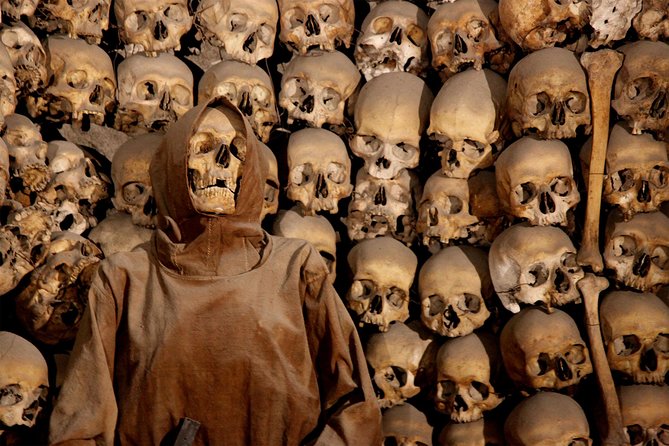
- The Capuchin Crypt and its 4,000 bones
- Riding to the Domitilla Catacombs
- Entering the Domitilla Catacombs
- San Martino ai Monti, Rome beneath a church
- The after-hours option
- Guides, group size, and the pace of the day
- Clothing, comfort, and practical preparation
- Is this tour good value at $66.51?
- Who should book the Roman Crypts and Catacombs Tour?
- FAQ
- How long does the daytime tour last?
- What sites does the daytime tour visit?
- Is transportation included?
- Where does the tour start?
- Where does the daytime tour end?
- Is the Capuchin Crypt guided?
- Is the tour available in Spanish?
- Are photographs allowed inside?
- What should I wear?
- Is there an after-hours tour?
Key points to know before booking
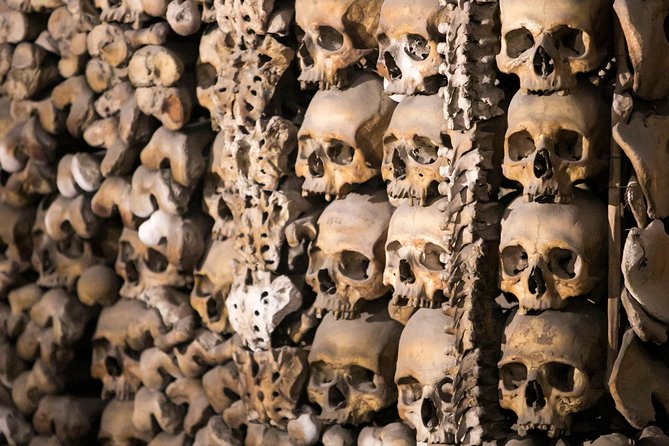
- Nearly 4,000 bones in the Capuchin Crypt: The monks arranged human remains into intricate decorations, creating Rome’s most striking ossuary.
- Domitilla is a real underground walk: Expect about an hour in narrow volcanic-rock corridors, with Christian symbols, burial chambers, and frescoes.
- San Martino ai Monti adds ancient layers: Baroque art, early Christian worship spaces, and Roman ruins sit beneath one church.
- The coach makes the route practical: You walk from Piazza Barberini to the first stop, then use private air-conditioned transport between sites.
- Guides shape the experience: Past tours have featured Andrea, Alan, Paula, Heather, Andrea, and others praised for clear explanations, energy, patience, and humor.
- This is not for everyone: You need moderate fitness, covered knees and shoulders, and comfort in enclosed spaces.
Why Rome’s underground side is worth your time
Rome can feel like one grand open-air museum, but its lower levels tell a different story. This outing shifts your attention from famous monuments to burial customs, early Christianity, and the way churches were built over older structures.
I like that the stops are not three versions of the same attraction. The Capuchin Crypt is compact and carefully arranged. The Domitilla Catacombs give you a longer walk through real underground passages. San Martino ai Monti brings you back into a church, but then takes you below it again.
That variety gives the tour a good rhythm. You begin with the most immediately startling stop, spend more time underground at the catacombs, then finish with art and architecture. The private coach matters here. Rome’s traffic can be slow, and the catacombs sit away from the center, so arranging the route yourself would take more time and planning.
The listed price is $66.51 per person. That is a fair deal if you want all three sites and do not have a car. Admission to each attraction is included, along with the guide and transfers. The value is weaker if you mainly want an in-depth visit to the Capuchin Crypt, since that part is largely self-guided with an audio device.
The tour is offered in English, with Spanish available on the appropriate option. It has a maximum of 25 people, though even that size can feel large in a cramped passage or inside a small church.
Other Rome days travellers weigh against this one:
- Vatican: Museums & Sistine Chapel Entrance Ticket
★ 4.5 · 144,003 reviews - Vatican Museums & Sistine Chapel Tour with Optional Basilica
★ 4.3 · 67,413 reviews - Colosseum, Roman Forum & Palatine Guided Tour
★ 4.7 · 63,148 reviews
Meeting at Piazza Barberini and reaching the crypt
The tour begins at Fontana del Tritone near Piazza Barberini. This is a central meeting point, close to public transport and easy to pair with other Rome sightseeing.
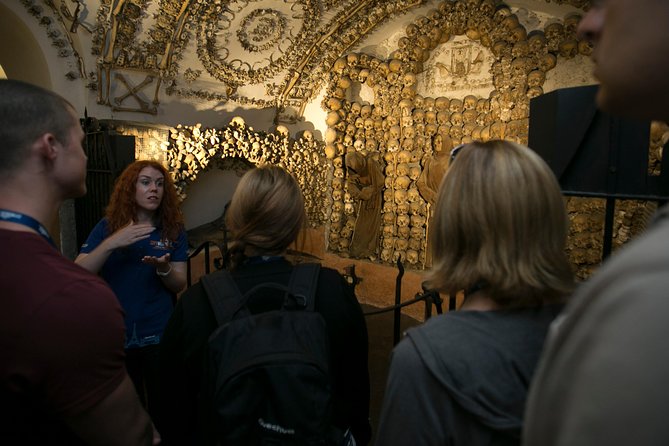
From there, you walk with the guide to the Capuchin Crypt. The short walk is useful because the guide can explain what you are about to see before you enter. That preparation helps. The crypt is not simply a room filled with old bones. It reflects an 18th-century Capuchin practice of arranging the remains of deceased brothers in symbolic and decorative patterns.
You should expect a somber setting rather than a spooky entertainment attraction. The atmosphere is quiet, and the displays ask you to think about mortality, religious devotion, and the way earlier generations treated death.
The Capuchin Crypt and its 4,000 bones
The Museum and Crypt of the Capuchin Friars is the first major stop, with about 45 minutes set aside. Admission is included, and you receive an audio guide for the crypt visit.
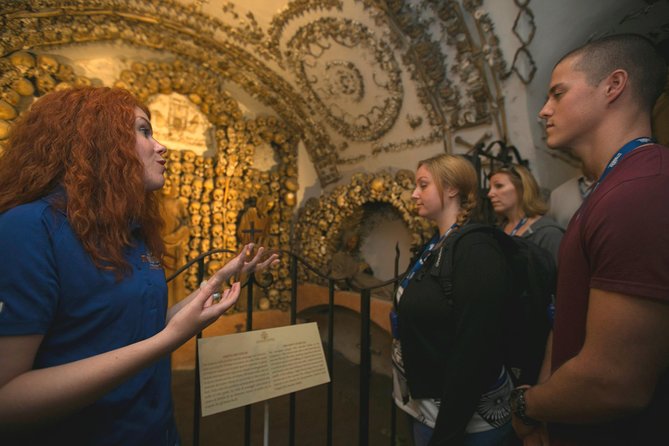
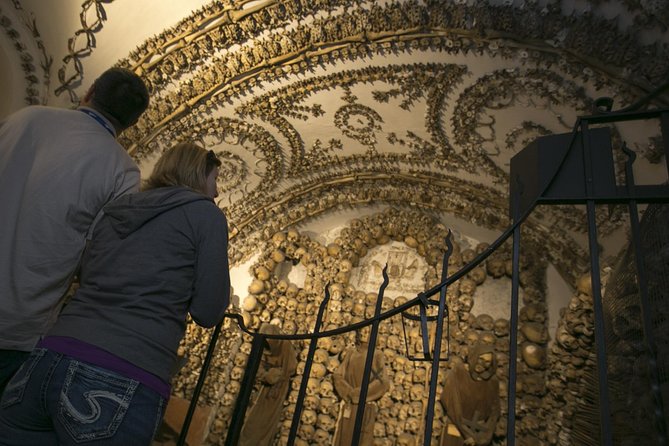
Nearly 4,000 Capuchin monks are represented by the bones and mummified remains here. The decorations cover walls, ceilings, and floors in carefully arranged designs. The effect can be unsettling, but it is also surprisingly deliberate and formal.
I would not rush this stop. The audio guide explains why the bones were used and gives meaning to the arrangements. Without that context, you might see only a macabre display. With it, the crypt becomes a lesson in Capuchin beliefs and the changing ways Rome has confronted death.
There is one important limitation: your main tour guide does not lead the full visit inside. The venue supplies the audio device, and you explore on your own before returning to the agreed meeting point. That arrangement gives you some freedom, but it also means you must watch the time.
This is where the tour’s organization matters most. One poor experience described a late start and confusion about the meeting time at the crypt. You should stay close to your group, listen carefully to the return instructions, and arrive at the meeting point before the deadline. The rest of the itinerary depends on the group moving together.
Photography is not allowed inside the venue. Dress modestly, with knees and shoulders covered, since religious sites on the route require it.
Riding to the Domitilla Catacombs
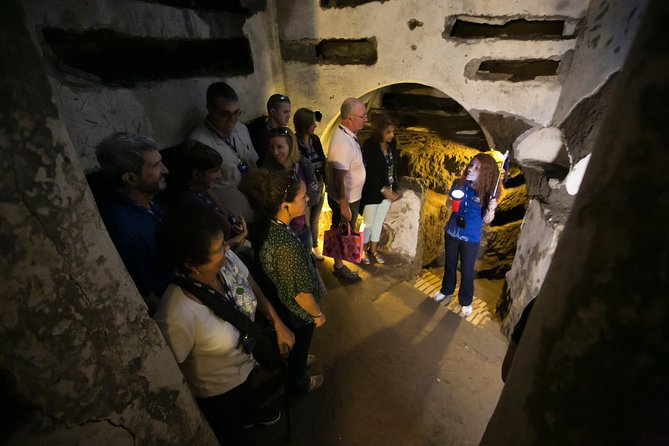
After the crypt, you board a private air-conditioned coach for the catacombs. This break is welcome after the first walk and gives your feet a rest before the longest underground section.
The ride also solves a basic Rome problem. The catacombs are outside the compact center, and reaching them by public transport can add time and uncertainty. If you are not renting a car, the included transfer is one of the strongest reasons to choose this tour.
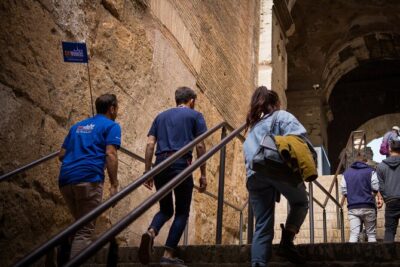
The schedule can be affected by traffic or conditions at the sites. A past outing included a long wait before departure and an uphill walk to the coach, so you should not expect every minute to run perfectly. Comfortable shoes are a good idea, and a light layer is wise because underground areas can feel cool.
A different way to spend the day, same part of Italy:
- Vatican Museums, Sistine Chapel & St Peter’s Basilica Guided Tour
★ 4.5 · 39,149 reviews - Rome: Colosseum, Palatine Hill and Roman Forum Guided Tour
★ 4.8 · 32,814 reviews - Rome: Guided Tour of Colosseum, Roman Forum & Palatine Hill
★ 4.7 · 27,897 reviews - Rome: Colosseum & Forum with Audio Guide App -Optional Arena
★ 4.2 · 24,770 reviews
Entering the Domitilla Catacombs
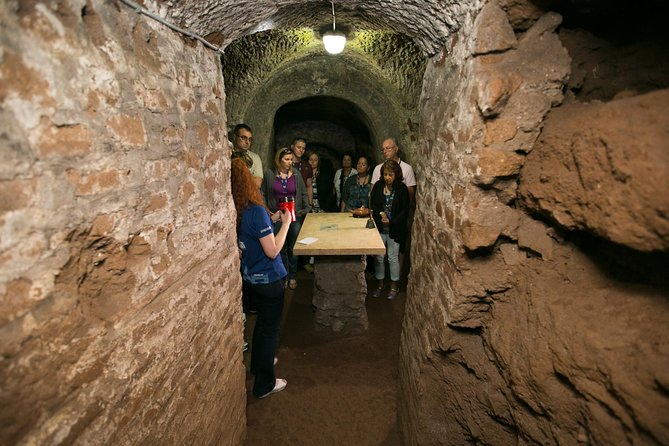
The Domitilla Catacombs receive about an hour, making this the longest stop. A historian or site guide leads you through the network of tunnels, while your main guide helps connect the visit to the wider story of ancient Rome.
The corridors were carved into soft volcanic rock. You pass burial places that also served as spaces for Christian worship during periods of persecution. Early Christian symbols and frescoes add visual interest, but the setting itself is the main attraction: you are moving through an underground network shaped by generations of burial and worship.
The size can be hard to grasp from the surface. The route is not a quick look at one chamber. You walk through narrow passages and see how the catacombs functioned as a sacred place and a burial site.
This portion is fascinating, but it is also the most physically demanding. The paths are confined, and you may spend much of the hour walking or standing. The tour specifically calls for moderate physical fitness and is not suitable for people with claustrophobia.
The guide makes a big difference here. Names praised for clear and engaging explanations include Alan, Andrea, Cat, and others who answered questions and kept the group interested. One outing included a priest as the catacomb guide, adding a direct religious perspective to the site. The exact guide can vary, but the strongest version of this tour is one where the explanations continue as you move through the tunnels rather than stopping only at a few points.
Group size is another factor. A maximum of 25 people is reasonable for a city tour, but it can feel crowded in a narrow corridor. If you need a slow pace for photos, you will be disappointed because photography is not permitted inside the venues.
San Martino ai Monti, Rome beneath a church
The final stop is Basilica dei Santi Silvestro e Martino ai Monti, usually called San Martino ai Monti. The visit lasts about 30 minutes and provides a welcome change from the crypt and catacombs.
The church was founded in the fourth century and sits above older Roman remains. You see Baroque frescoes at the basilica level, then descend to early Christian spaces and the remains of a titulus, an early place of Christian worship.
This layered arrangement is the point. Rome is not built in neat historical slices. A modern church can sit over an early Christian chapel, which sits over older Roman structures. San Martino ai Monti lets you see that process in a small, less famous setting.
I like this ending because it adds beauty after the darker first two stops. The basilica gives you painted ceilings, mosaics, and a sense of Rome’s religious continuity, while the underground rooms bring the tour back to its main theme.
Sunday visits are not guaranteed because of liturgical activities. If seeing this church is essential to your plans, avoid relying on a Sunday departure.
The day tour ends at the basilica on Viale del Monte Oppio, near the Colosseum area. That is convenient if you plan to continue sightseeing in the historic center, although you should check your next appointment before booking. The route is designed to finish there, not return you to your hotel.
The after-hours option
An after-hours version starts at 5pm and lasts about two and a half hours. It is intended for people who prefer a later visit and want to experience Rome’s underground attractions after the main daytime schedule.
The shorter duration means the pacing is likely to feel tighter. The after-hours option also does not include the San Martino ai Monti church, so you are choosing a different experience rather than simply getting the same tour later.
The after-hours tour ends at Piazza della Repubblica. This can suit an evening meal or a return by public transport, but it may be less useful if your hotel or dinner reservation is near the daytime ending point.
Guides, group size, and the pace of the day
The guide is central to the tour’s value. Several guides, including Andrea, Alan, Paula, Heather, Frederica, Maria, Emiliano, and Kat, have been praised for clear history, humor, patience, and an ability to answer questions.
The strongest guide-led moments occur on the coach and at the catacombs, where explanations help you understand what you are seeing. The Capuchin Crypt is different because the audio guide takes over. Keep that distinction in mind when comparing this tour with a private visit.
The full day tour lasts about three and a half hours. The listed stop times add up to two hours and 15 minutes, leaving the rest for walking, boarding, transfers, and group management. That is a sensible structure for Rome, but delays can reduce your free time at a site.
You should arrive early at the Fontana del Tritone meeting point. The operator requires the group to move on together, and a guide cannot hold the coach indefinitely for people who wander away inside the crypt.
Clothing, comfort, and practical preparation
Wear comfortable shoes. You walk between the meeting point and the first stop, move through underground corridors, and may walk uphill to the coach depending on the day’s boarding arrangements.
Cover your knees and shoulders. This is required for entry into some sites, and it is easier to dress appropriately from the start than to find a cover at the last minute.
The tour is not suitable for anyone who suffers from claustrophobia. The catacombs contain narrow passages, and the underground church spaces can also feel enclosed. If you dislike tight corridors, choose Rome’s open-air archaeological sites instead.
You cannot take photographs inside the venues. That is worth knowing if you are selecting the tour mainly for pictures. The reward here is the experience and the explanation, not a large collection of indoor images.
Cancellation is free up to 24 hours before the start time. Within 24 hours, the payment is not refunded, and changes are not accepted. Illness or a same-day change of plans will not normally protect you from that policy, so leave some flexibility in your schedule.
Is this tour good value at $66.51?
I think the price works well for a first visit to Rome’s underground sights. You receive three admissions, a guide, and private transport for less than the effort and cost of arranging the same route independently.
The best value comes from the Domitilla Catacombs and the transfer. The catacombs are not in the middle of the usual sightseeing route, and the coach lets you see them without spending much of your day figuring out connections.
The weaker value is the Capuchin Crypt if you expect a guide to walk beside you and explain every room. You use an audio guide there, so the paid tour is mainly buying admission, timing, and the connection to the rest of the route.
The group discount option may help families or larger parties, though the supplied details do not state the exact discount. Check the price shown for your group before booking.
Who should book the Roman Crypts and Catacombs Tour?
You should book it if you have already seen Rome’s famous center and want something less predictable. It suits history-minded adults, older children and teenagers who can handle the subject matter, and anyone curious about early Christianity, burial customs, and Rome’s underground spaces.
It is also a strong choice if you do not have a car. The coach removes a major logistical headache, and the three-stop route gives you a full afternoon without requiring separate reservations.
I would think twice if you want a slow, highly personal tour. The schedule is fixed, groups can feel large, and the catacombs involve steady walking. I would also skip it if you are claustrophobic, need indoor photography, or mainly want an extended visit inside the Capuchin Crypt.
For most suitable visitors, I would book the daytime departure, wear sturdy shoes, dress for church entry, and keep the rest of the day flexible. Choose the after-hours version only if the later start fits your plans and you are comfortable giving up the San Martino ai Monti church.
FAQ
How long does the daytime tour last?
The daytime tour lasts approximately three hours and 30 minutes.
What sites does the daytime tour visit?
It visits the Capuchin Crypt and Museum, the Domitilla Catacombs, and Basilica dei Santi Silvestro e Martino ai Monti.
Is transportation included?
Yes. Transfers between the sites are provided in a private, air-conditioned coach.
Where does the tour start?
The tour starts at Fontana del Tritone near Piazza Barberini in Rome.
Where does the daytime tour end?
The daytime tour ends at Basilica dei Santi Silvestro e Martino ai Monti on Viale del Monte Oppio.
Is the Capuchin Crypt guided?
The Capuchin Crypt visit uses an audio guide. You explore the crypt independently and return to the agreed meeting point at the scheduled time.
Is the tour available in Spanish?
Yes. An English or Spanish-speaking guide is available depending on the option selected.
Are photographs allowed inside?
No. Photography is not allowed inside the venues during the tour.
What should I wear?
Knees and shoulders must be covered for entry into some sites. Comfortable shoes are also recommended because the tour involves walking and underground passages.
Is there an after-hours tour?
Yes. The after-hours option starts at 5pm, lasts about two and a half hours, does not include the San Martino ai Monti church, and ends at Piazza della Repubblica.
Recently reviewed around Rome
- Ancient Rome at Twilight Walking Tour★ 5.0 · 276 reviews
- Domus Aurea Guided Tour: The Golden House of Nero★ 4.5 · 199 reviews
- Early Vatican Museums & Sistine Chapel Small Group Tour★ 4.5 · 314 reviews
- Early Vatican Museums Tour: The Best of the Sistine Chapel★ 4.5 · 900 reviews
- Jewish Ghetto & Piazza Navona: Food, Wine & Sightseeing Rome Tour★ 5.0 · 460 reviews
- 3 Days in Sorrento, Capri & Pompeii: la Dolce Vita★ 4.0 · 595 reviews
- Tivoli Villas Full Day Trip From Rome with Lunch★ 4.0 · 443 reviews
- Cook With Us in Rome: A Hands-On Cooking Experience 09:20AM class★ 5.0 · 234 reviews
Rome Tours, compared.
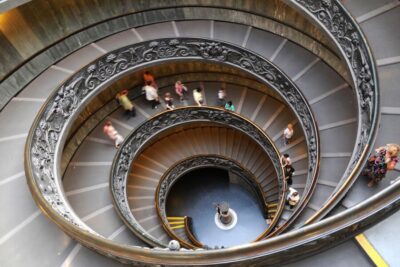
Vatican: Museums & Sistine Chapel Entrance Ticket
Read our review →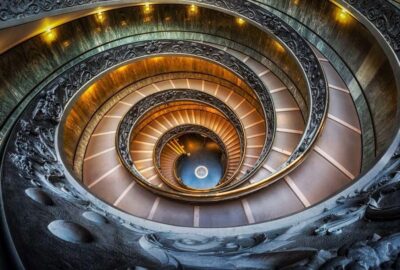
Vatican Museums & Sistine Chapel Tour with Optional Basilica
Read our review →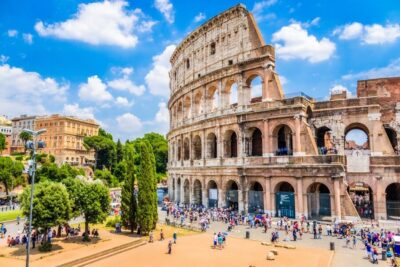
Colosseum, Roman Forum & Palatine Guided Tour
Read our review →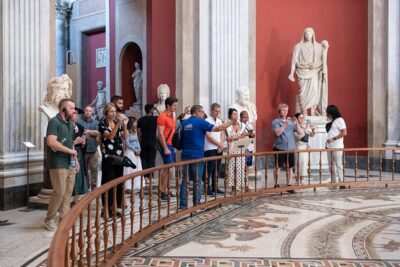
Vatican Museums, Sistine Chapel & St Peter’s Basilica Guided Tour
Read our review →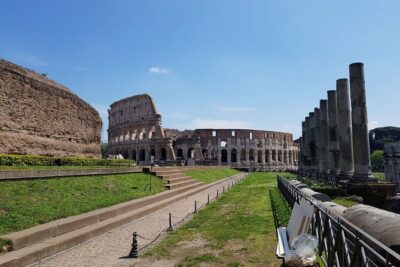
Colosseum, Palatine Hill and Roman Forum Guided Tour
Read our review →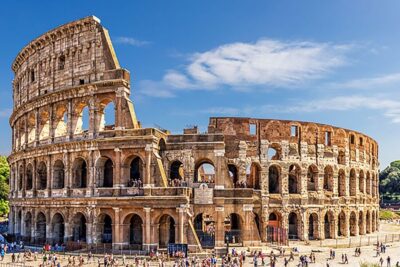
Guided Tour of Colosseum, Roman Forum & Palatine Hill
Read our review →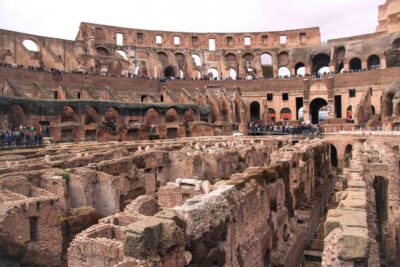
Colosseum & Forum with Audio Guide App -Optional Arena
Read our review →