
Review · MUSEUMS
Turin: Guided Egyptian Museum Tour
The most striking thing about Turin’s Egyptian Museum is its scale and focus. This is the world’s oldest museum devoted entirely to Egyptian civilization, and its galleries hold mummies, papyri, statues, sarcophagi, jewelry, and objects from several dynasties. A guide helps turn that large collection into a clear story instead of a long march past glass cases.
I like the chronological route, which can take you from the Predynastic period through the rise and decline of Egyptian culture. I also like the human touch: guides such as Nasser, Alessandro, Helena, and Olivier have been praised for explaining difficult material in plain language and answering questions. The main drawback is time. Two hours gives you a strong introduction, but the museum is large, and one guide may spend so much time on individual objects that the final rooms feel rushed.
In This Review
- Key points to know before you book
- Why Turin has an Egyptian museum at all
- Meeting at Via Accademia delle Scienze 6
- A chronological walk through Egyptian civilization
- Mummies, sarcophagi, and the Egyptian view of death
- Papyri, inscriptions, and learning to read ancient signs
- Royal jewelry and the objects that make history personal
- What the guides add to the visit
- Is $70 a fair price?
- Who should take this tour?
- Final verdict: book it for guidance, not speed
- FAQ
- How long is the guided Egyptian Museum tour in Turin?
- What is included in the price?
- Where does the tour meet?
- How early should I arrive?
- Is ticket-line access included?
- Which languages are available?
- Is the museum tour wheelchair accessible?
- Are private groups available?
- Can I cancel for a full refund?
Key points to know before you book
- A focused route through a huge museum: Your guide leads you toward the major pieces instead of leaving you to guess what matters most.
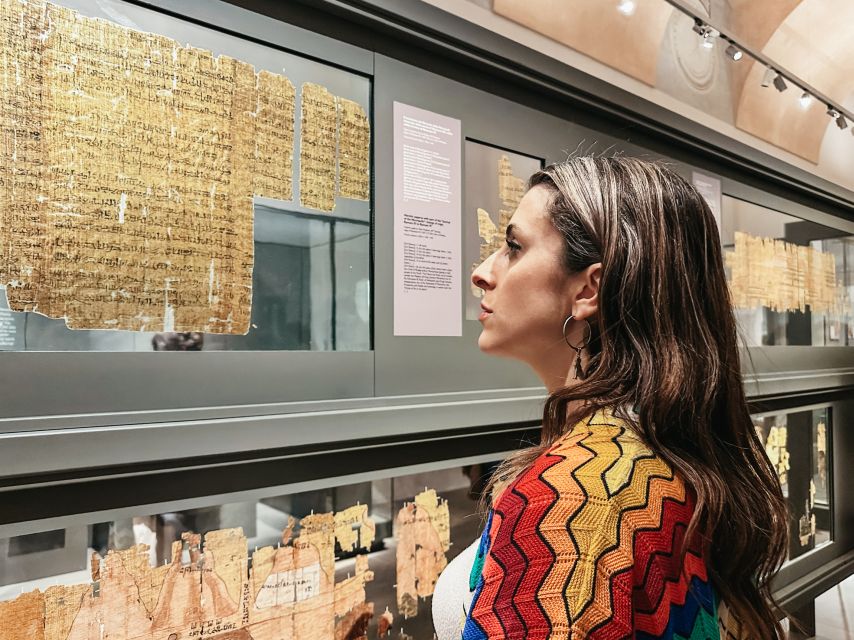
- Ancient objects with stories attached: Mummies, papyri, sarcophagi, royal jewelry, and Egyptian writing become easier to understand with context.
- Several highly regarded guides: Nasser, also called Nasr or Nasar in some bookings, Alessandro, Helena, Olivier, Sophie, and Carol have all led praised tours.
- Two hours is an introduction, not a full museum visit: You will see important highlights, but you may want extra time for independent viewing.
- Entry and ticket-line access are included: You meet outside the museum, and the admission ticket is handled as part of the tour.
- Good flexibility for many visitors: Tours are offered in Italian, English, French, German, and Spanish, with wheelchair access and private groups available.
Why Turin has an Egyptian museum at all
Turin can surprise you. The city is better known for royal palaces, elegant squares, cafés, and its connection to the House of Savoy. Yet its Egyptian collection is one of the city’s defining sights.
The museum is considered the second most important Egyptology collection in the world after Cairo’s. That is a bold claim, but the reason for Turin’s importance is easy to see once you enter: the collection is not a small side display. Egyptian civilization is the entire subject, and the museum’s presentation follows that idea.
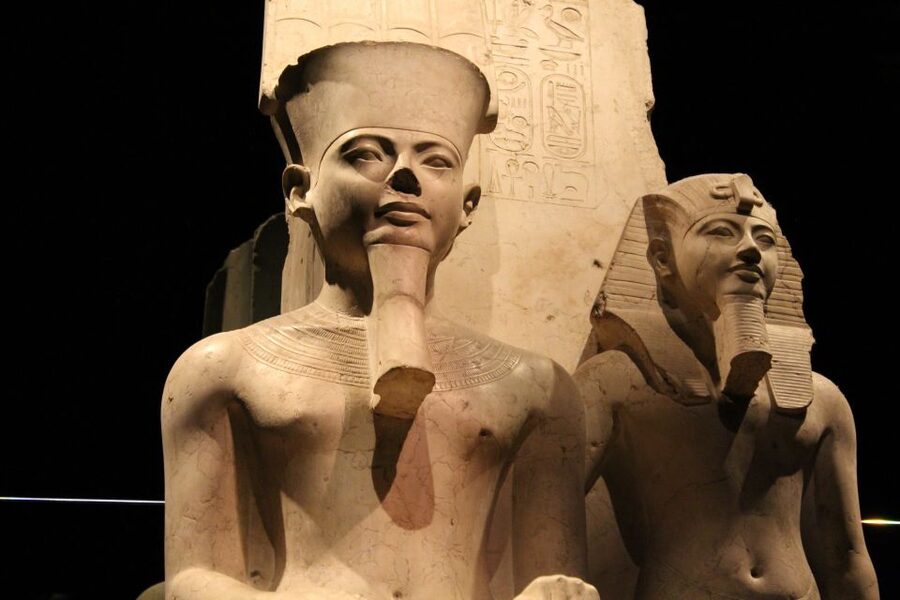
You are not simply looking at isolated treasures. The objects help explain how Egyptians viewed kingship, death, religion, writing, family, art, and daily life. A statue is not just a statue. A sarcophagus is not merely a decorated box. A papyrus may reveal how people recorded beliefs, stories, or practical matters.
That context is the chief reason I would choose a guided visit here. The museum is large enough to overwhelm first-time visitors, especially if you have only one afternoon in Turin. A good guide gives you a route and a framework.
More Italy museums and collections:
- Vatican: Museums & Sistine Chapel Entrance Ticket
★ 4.5 · 144,003 reviews - Vatican Museums & Sistine Chapel Tour with Optional Basilica
★ 4.3 · 67,413 reviews - Vatican Museums, Sistine Chapel & St Peter’s Basilica Guided Tour
★ 4.5 · 39,149 reviews
Meeting at Via Accademia delle Scienze 6
Your meeting point is directly in front of the Museo Egizio entrance at Via Accademia delle Scienze, 6. Arrive at least 15 minutes early. This is not a casual suggestion: latecomers are not accepted.
That strict timing matters because the guide handles the group’s entry. If you arrive after the start, you may not be able to catch up inside. Give yourself time to find the street, identify the entrance, and gather before the tour begins.
The central location also makes this easy to combine with a day in Turin’s historic center. Still, do not cut it close after lunch or another appointment. The tour has a fixed two-hour schedule, and a late start can cost you the experience altogether.
The museum is wheelchair accessible, which makes this a practical choice for many visitors with mobility needs. The tour is also offered in English, Italian, French, German, and Spanish. A private group option is available if you want a more personal visit, though the price and arrangements may differ from the standard experience.
A chronological walk through Egyptian civilization
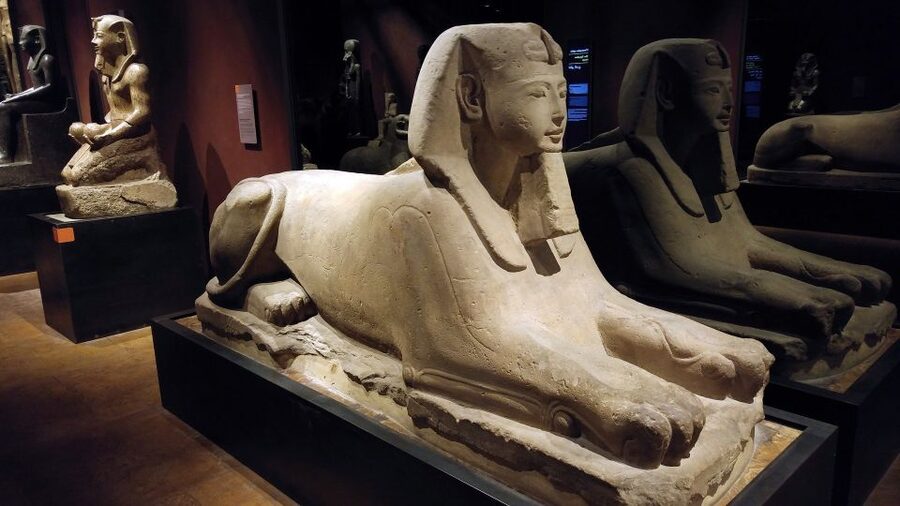
The strongest version of this tour follows time. Alessandro, for example, has been praised for arranging the visit from the Predynastic period through later centuries, allowing you to see how Egyptian art, beliefs, and political power changed.
That order is useful. Egyptian civilization lasted for thousands of years, and it is easy to treat it as one unchanging culture. A chronological route shows that it was not. Styles shifted, rulers changed, religious ideas developed, and the role of the pharaoh changed over time.
Your guide will likely begin with early objects and explain the setting in which Egyptian civilization formed. From there, the tour moves through the major dynasties and toward the better-known royal periods. You should expect the guide to point out key pharaohs and explain why certain rulers matter, rather than simply reciting names from a timeline.
This is where a live explanation helps most. Museum labels can tell you an object’s date and material. A guide can connect it to larger questions: Why was it made? What did it say about the ruler or the dead person? How did Egyptian artists show power? What can the object tell us about religious belief?
The exact route can vary with the guide and group. Some guides spend longer on a single object, while others move faster to cover more ground. That creates a small tradeoff. Detailed discussion is rewarding if you enjoy ancient history, but it can leave less time for the final sections.
Mummies, sarcophagi, and the Egyptian view of death
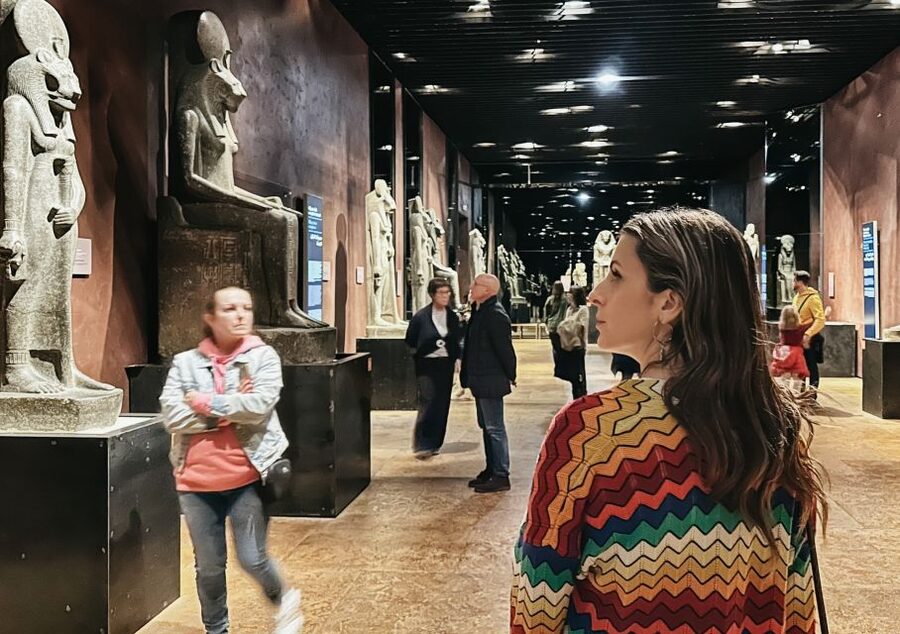
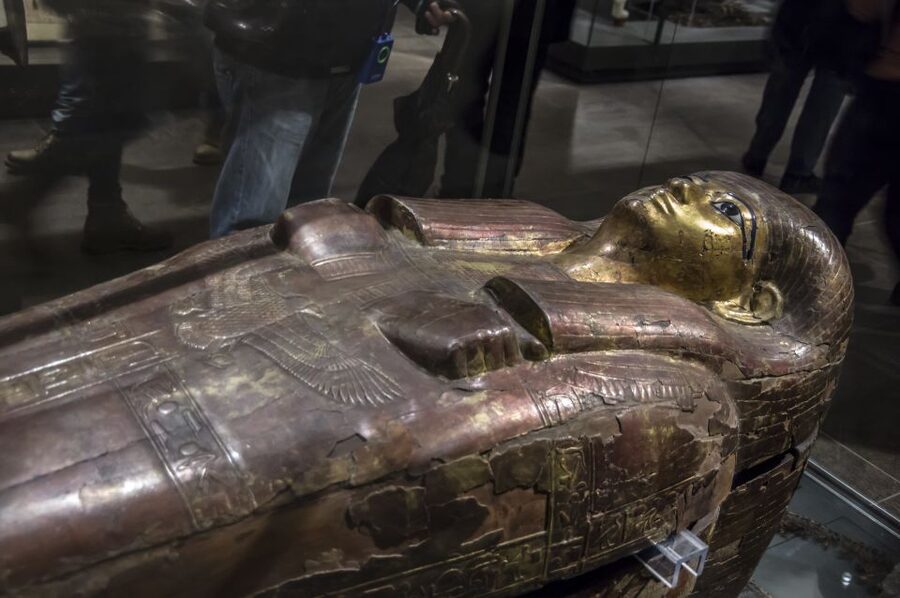
The museum’s mummies and sarcophagi are among the most memorable parts of the visit. You will see ancient remains and richly decorated coffins, with guides explaining the beliefs behind burial practices and the afterlife.
The value here is not simple shock or spectacle. The objects show how carefully Egyptians prepared for death and how closely religion, art, writing, and social status were linked. Painted symbols and carved figures were not random decoration. They carried meaning.
A guide can also help you look beyond the famous names. Royal jewelry may catch your eye first, but smaller burial objects and inscriptions can reveal just as much about the ancient world. Pay attention when the guide explains symbols or points out details that are easy to miss at standing distance.
Some visitors with previous experience in Egypt may find parts of the visit familiar. Even so, the museum adds a different angle. You are seeing a major collection arranged indoors and explained through its objects, not visiting the monuments where those objects were first used. One person who had already been to Egypt described the tour as a refresher that still supplied new information.
More Italy trips worth a second look
- Colosseum, Roman Forum & Palatine Guided Tour
★ 4.7 · 63,148 reviews - Rome: Colosseum, Palatine Hill and Roman Forum Guided Tour
★ 4.8 · 32,814 reviews - Rome: Guided Tour of Colosseum, Roman Forum & Palatine Hill
★ 4.7 · 27,897 reviews - Rome: Colosseum & Forum with Audio Guide App -Optional Arena
★ 4.2 · 24,770 reviews
Papyri, inscriptions, and learning to read ancient signs
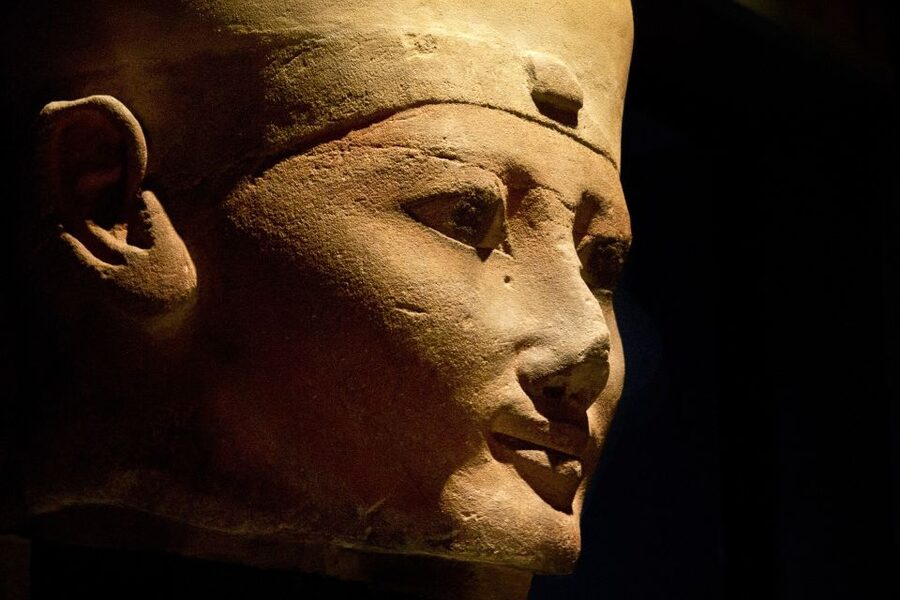
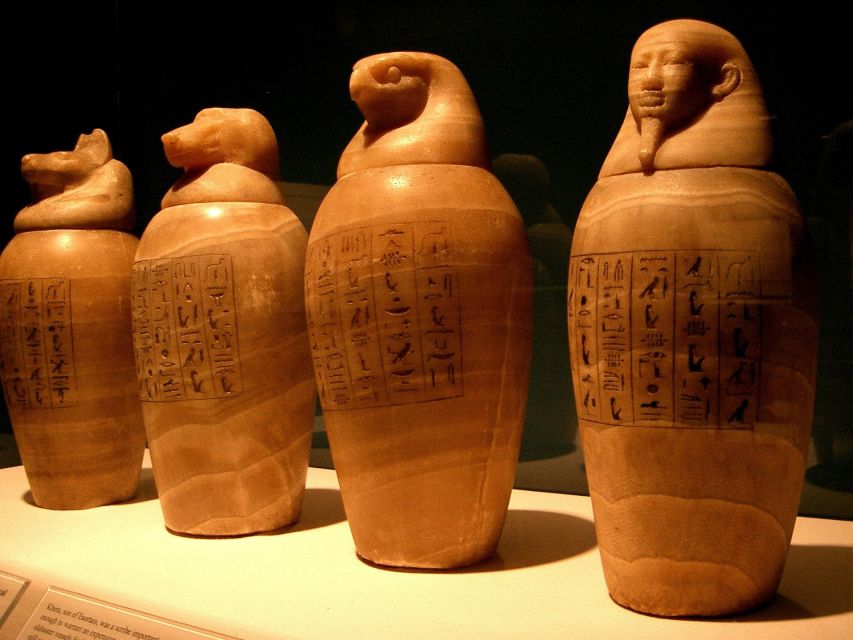
Papyri bring another kind of evidence. They are more fragile than stone statues, and their survival gives you a direct link to the written culture of ancient Egypt.
Your guide may explain how Egyptian writing worked and show you how to recognize ancient signs. One particularly memorable detail from the tour descriptions is a guide teaching visitors how to read Egyptian letters. That sort of demonstration makes the display more active. You are not only looking at marks on a surface. You begin to understand that the marks carried sound, meaning, and religious importance.
This part of the visit can appeal to adults and teenagers alike. A teenager who might tire of a long historical lecture can still respond to the puzzle-like quality of symbols and scripts. Families should expect serious content, but the guides have been praised for making explanations clear and engaging.
Ask questions if you have them. The guides named for this experience include Egyptology and archaeology specialists, and several have been praised for answering detailed questions without losing the thread of the tour. Sophie, for example, has been noted for clear English and easy-to-follow explanations.
Royal jewelry and the objects that make history personal
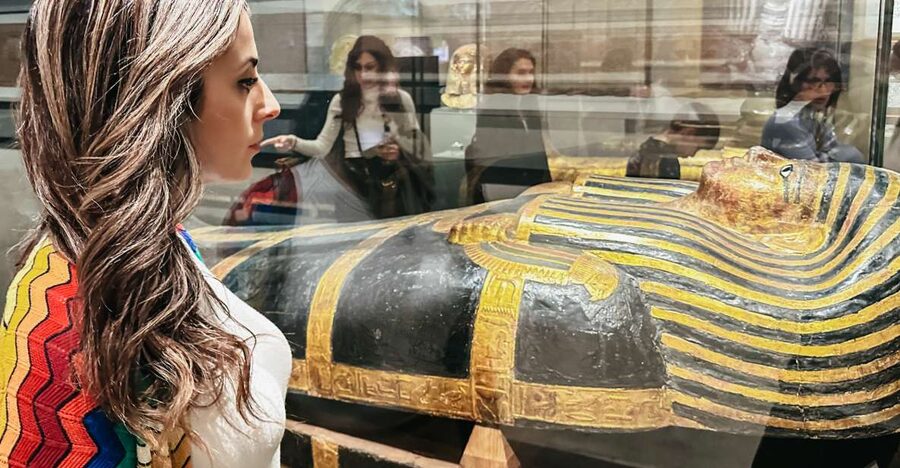
The magnificent jewelry associated with pharaohs gives the tour a welcome change of pace. Gold and ornament are visually appealing, but they also help explain status, wealth, ritual, and the way rulers presented themselves.
Look closely at how the guide connects beauty with power. Royal jewelry was not only worn for decoration. It could signal rank, support religious ideas, and accompany a person into death. That makes these objects more than attractive highlights.
The museum’s strength is the mix of grand and intimate pieces. A large statue may dominate a room, while a small personal item offers a closer look at everyday concerns. Your guide’s job is to help you notice both.
This is also a good point to think about the limits of a two-hour tour. You will not examine every necklace, coffin, inscription, and statue. Instead, you will receive a selected path through the collection. If you prefer to browse slowly, stop often, and read every label, plan additional museum time beyond the guided portion if your schedule allows.
What the guides add to the visit
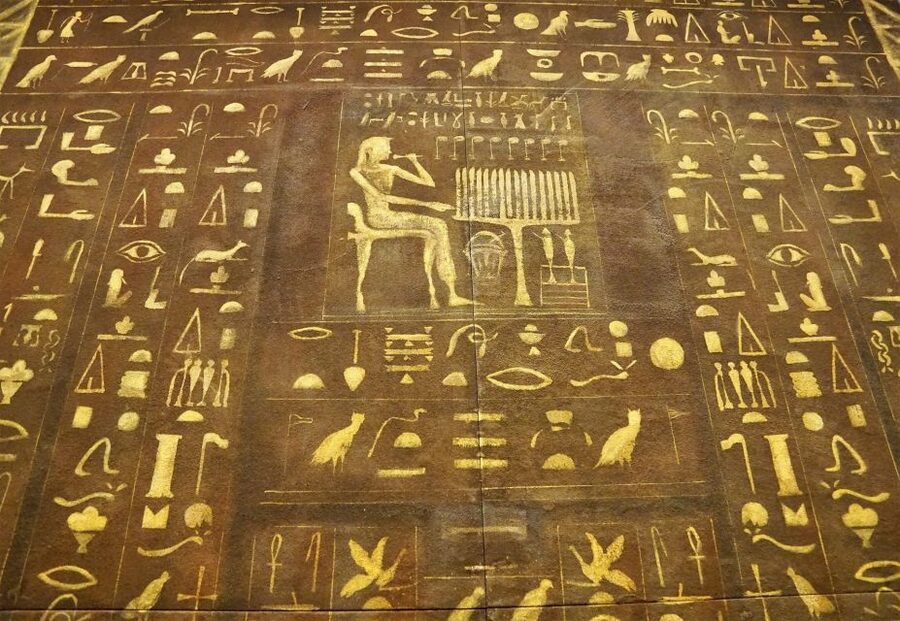
The guide is the main reason to book this experience instead of entering alone. The museum itself provides the objects, but the guide supplies the order, explanation, and conversation.
Nasser, also referred to as Nasr or Nasar, receives especially strong praise in the available feedback. He is Egyptian, trained in Egyptology, and has worked as a guide in Cairo. That background can add a personal connection to the subject, while his museum knowledge helps link Turin’s collection with the wider story of Egypt.
Alessandro is another recurring name. He has been praised for a well-organized route, a background in archaeology, and an ability to explain the collection with energy. Helena has been described as experienced and good at selecting the most impressive objects. Olivier has been praised for combining strong subject knowledge with genuine enthusiasm for Turin’s museum.
Of course, a guided tour is not a machine-made experience. The pace and style depend on the person leading your group. Some guides may talk at length about individual artifacts. If you want to see more rooms, say so politely at the start and ask how the route will be handled.
The strongest guides make the two hours pass quickly. The less ideal outcome is a tour that feels too slow for your interests. This is not a serious flaw, but it is worth considering if you already know a great deal about ancient Egypt or want a quick highlight tour.
Is $70 a fair price?
At $70 per person, this is not the cheapest way to enter a museum. The price includes admission, a live guide, the guided tour, and ticket-line access. For a large specialist museum, that package can make sense if you value structure and expert explanation.
I see the price as fair for first-time visitors who have limited time in Turin. Two hours with a guide can prevent you from spending your visit on rooms that do not match your interests while missing the main pieces. It also reduces the work of preparing your own route.
The value is less clear if you enjoy studying displays independently. You may prefer to buy admission and spend several hours moving at your own pace. You also need to remember that food, drinks, and hotel pickup are not included, though those omissions are not unusual for a museum visit.
Private groups are available for people who want more control over pace and questions. For a family, a group of friends, or a visitor with a strong Egyptology interest, the extra privacy may be worth considering. The standard two-hour format is the better fit for most people seeking a guided introduction.
Cancellation is free up to 24 hours before the activity for a full refund, and you can reserve now and pay later. Those terms help if your Turin plans are still shifting, but the fixed arrival rule remains important on the day itself.
Who should take this tour?
I would choose this tour for a first visit to the museum, especially if you have only a few days in Turin. It is also a good match for families with older children or teenagers, couples who want a clear introduction, and anyone who finds enormous museums tiring to navigate alone.
You do not need a background in archaeology. The guides are expected to explain the material in accessible language, and the available languages make the tour useful for international visitors.
This tour may be less suitable for you if you want to photograph every room, read each label, or move at your own pace. Two hours is fixed, and a guide-led route means you give up some freedom in exchange for direction.
It is also not the best choice if you are looking for transportation or a full day of sightseeing. You must make your own way to the museum, and the experience covers the museum rather than the rest of Turin.
Final verdict: book it for guidance, not speed
I recommend booking the Turin Egyptian Museum guided tour if you want the collection to make sense, not merely look impressive. The strongest reasons are the museum’s size, the chronological route, and the quality of guides such as Nasser, Alessandro, Helena, and Olivier.
Go in expecting a focused introduction rather than a complete survey. Arrive early, wear comfortable shoes, ask questions, and accept that some objects may receive more attention than you would choose. If you have extra time, leave room in your Turin schedule for a slower look at the pieces that catch you after the tour.
At $70, the tour earns its price when expert explanation matters to you. For a quick, well-organized first encounter with one of Europe’s great Egyptian collections, it is a strong choice. For a slow independent museum day, buy entry on your own and keep the afternoon free.
FAQ
How long is the guided Egyptian Museum tour in Turin?
The tour lasts two hours. Starting times vary, so you need to check availability when booking.
What is included in the price?
The price includes the Egyptian Museum entrance ticket, a live tour guide, and the guided visit. Headphones are included for groups of 10 or more.
Where does the tour meet?
You meet in front of the Museo Egizio entrance at Via Accademia delle Scienze, 6, 10123 Torino TO.
How early should I arrive?
Arrive 15 minutes before the scheduled start. Latecomers will not be accepted.
Is ticket-line access included?
Yes. The activity includes skip-the-ticket-line access along with the museum entrance ticket.
Which languages are available?
The tour is available in Italian, English, French, German, and Spanish.
Is the museum tour wheelchair accessible?
Yes. The activity is listed as wheelchair accessible.
Are private groups available?
Yes. A private group option is available.
Can I cancel for a full refund?
Yes. You can cancel up to 24 hours in advance for a full refund. You can also reserve now and pay later.
Recently reviewed around Italy
- Ancient Rome at Twilight Walking Tour★ 5.0 · 276 reviews
- Domus Aurea Guided Tour: The Golden House of Nero★ 4.5 · 199 reviews
- Early Vatican Museums & Sistine Chapel Small Group Tour★ 4.5 · 314 reviews
- Early Vatican Museums Tour: The Best of the Sistine Chapel★ 4.5 · 900 reviews
- Jewish Ghetto & Piazza Navona: Food, Wine & Sightseeing Rome Tour★ 5.0 · 460 reviews
- 3 Days in Sorrento, Capri & Pompeii: la Dolce Vita★ 4.0 · 595 reviews
- Tivoli Villas Full Day Trip From Rome with Lunch★ 4.0 · 443 reviews
- Rome Pasta Making Class with Italian Sauces and Wine Included★ 5.0 · 645 reviews
Museums, compared.
Vatican: Museums & Sistine Chapel Entrance Ticket
Read our review →
Vatican Museums & Sistine Chapel Tour with Optional Basilica
Read our review →
Vatican Museums, Sistine Chapel & St Peter’s Basilica Guided Tour
Read our review →
Skip-The-Line Uffizi Gallery Timed Entry Ticket
Read our review →
Vatican Museums, Sistine Chapel & Basilica Tour
Read our review →
Vatican Museums & Sistine Chapel Skip-the-Line Entry Ticket
Read our review →Vatican Museums, Sistine Chapel & Basilica Tour
Read our review →
Vatican Museums & Sistine Chapel Guided Tour
Read our review →Browse the lists this tour appears in