
Review · WALKING TOURS
Alternative Walking Tour of Rome’s City Center & Hidden Gems
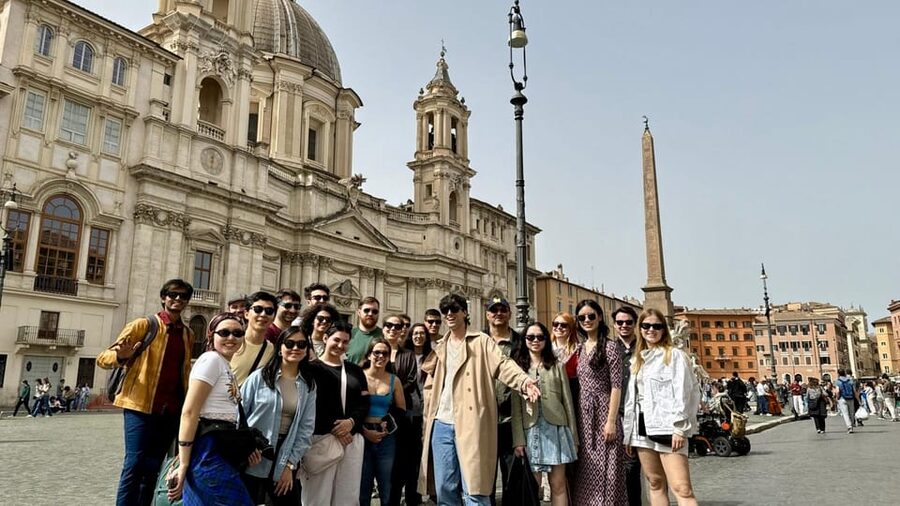
Rome’s best stories are often found between the famous sights. This 2.5-hour walk connects Trajan’s Column, Trevi Fountain, the Pantheon, and Piazza Navona with tales of dynasties, church politics, betrayals, scandals, and strange details most guidebooks skim past. It is less a march from monument to monument than a lesson in how power shaped the city.
I like the family-centered approach, which gives Rome’s churches, fountains, and palaces a human cast of popes, artists, rivals, and schemers. I also like the guides’ easy mix of facts and humor. Jacopo, Simone, Iris, Jacob, and others have been praised for clear English, lively storytelling, and patient answers.
The main thing to consider is the tip-based price. The advertised booking price is only $3.77 per person, but the guide works mainly for tips, commonly suggested at about €10 to $50. Your final cost depends on what you feel the walk delivered, so budget honestly rather than treating the small booking charge as the full price.
In This Review
- Key points at a glance
- Why this Rome walk feels different
- Starting beside Trajan’s Column
- Piazza Venezia and the city’s political center
- The secret stop and the monastery
- Trevi Fountain beyond the coin toss
- Sant’Ignazio and the art of illusion
- The Pantheon in a five-minute stop
- Finishing in Piazza Navona
- The guides and the importance of group size
- Pace, language, and practical planning
- Is the $3.77 price really the cost?
- Who should book this tour?
- Should you book it?
- FAQ
- How long does the walking tour last?
- What language is the tour offered in?
- Where does the tour begin?
- How do I find the guide?
- Where does the tour finish?
- Does the route visit Trevi Fountain?
- Are the Pantheon and Piazza Navona included?
- Is a local guide included?
- Is this a pay-what-you-want tour?
- Can I cancel the booking?
Key points at a glance
- Trajan’s Column sets the scene: Start beside an ancient monument that tells Rome’s imperial story in carved stone.
- The route mixes famous and overlooked places: You see Trevi Fountain, the Pantheon, and Piazza Navona, along with a monastery, church interiors, and a secret stop.
- Powerful families are the main characters: The walk explains how dynasties, popes, and political alliances shaped central Rome.
- Sant’Ignazio adds an art surprise: The church is known for its remarkable ceiling fresco and gives the tour a strong Baroque stop.
- The guides make the difference: Jacopo, Simone, Iris, Jacob, and other guides are praised for humor, energy, clear speech, and detailed answers.
- It ends in Piazza Navona: You finish near restaurants, cafés, and more central sights, making it easy to continue exploring.
Why this Rome walk feels different
Many introductory walks in Rome simply string together the city’s greatest hits. You take a picture, hear a date, and move on. This tour uses those same sights as evidence in a larger story about authority, money, faith, art, and family rivalry.
That approach works well in Rome because the city is full of layers. An ancient column may sit beside a church. A fountain may also be a political message. A grand façade may tell you who paid for it and what that person wanted remembered.
The guides focus especially on the families that controlled Rome at different points. That gives you a useful way to read the city. Instead of seeing a church only as a religious building, you begin to ask which patron funded it, which artist was hired, and what message the decoration was meant to send.
The tone is not solemn. Expect dark humor, politically incorrect jokes, stories of corruption, crime, murder, war, and betrayal, and plenty of room for questions. Iris has been praised for combining facts with humor, while Jacopo is often singled out for his storytelling and interest in family history. Simone is described as energetic, clear, and especially good at connecting old events to the streets around you.
This is a strong choice if you like history delivered as a story rather than a lecture. It is less suitable if you want a quiet, strictly academic presentation or a tour devoted only to ancient Rome.
More City Tours in Rome
- Rome: City Sightseeing Hop-on Hop-off Bus with Audioguide
★ 4.0 · 16,045 reviews - City Sightseeing Rome Hop-On Hop-Off Bus Tour
★ 3.5 · 5,446 reviews - Rome: Fettuccine Pasta Cooking Class in Rome’s City Center
★ 4.8 · 2,414 reviews
Starting beside Trajan’s Column
The meeting point is on the steps of Chiesa del Santissimo Nome di Maria al Foro Traiano, beside Trajan’s Column and Trajan’s Forum. Look for a guide holding a sign with the tour name.
This is a useful starting place. Trajan’s Column is one of Rome’s great visual history books, with a spiral relief showing scenes from the emperor’s campaigns. The stop lasts about 15 minutes and includes time for photos, explanation, and a short walk around the area.
The column also introduces the tour’s main idea: Rome was built to display power. Imperial monuments did not simply decorate the city. They announced military success, wealth, order, and the authority of the ruler who commissioned them.
The nearby forum helps you picture how much activity once filled this part of Rome. You will not receive a full archaeological excavation tour, but you get the political frame needed to understand the remains. If this is your first morning in Rome, the opening gives you useful bearings before the route moves into the later city.
Piazza Venezia and the city’s political center
The next brief stop is Piazza Venezia, where you have about five minutes for sightseeing and photographs. The square is a major traffic hub, so it can feel noisy and crowded compared with the quieter churches later in the route.
That contrast is part of the point. Rome’s center is not a museum sealed away from daily life. Ancient ruins, government buildings, traffic, shops, and religious sites all share the same streets. Your guide uses the square as a bridge between imperial Rome and the city shaped by later rulers.
Because the stop is short, do not expect an extended visit inside a building. Think of it as a quick orientation point and a chance to connect the monumental city with modern Rome.
The secret stop and the monastery
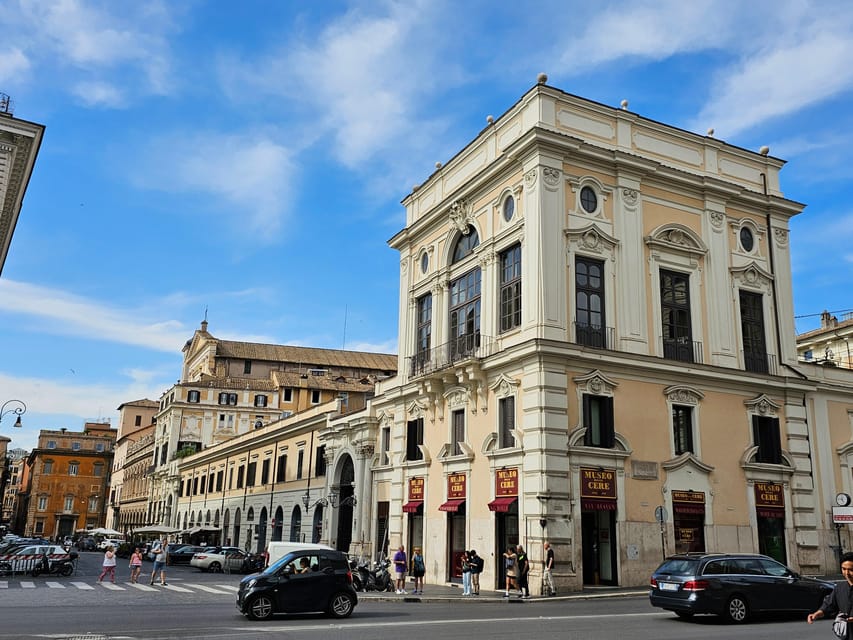
The itinerary includes a lesser-known stop of about five minutes, followed by roughly 25 minutes at a monastery. The exact identity of the secret stop is not specified, which is part of its appeal, but you should not book this expecting a guaranteed list of off-limits rooms or private sites.
The monastery is likely to be one of the more distinctive portions of the walk because it offers a break from the big postcard locations. The tour information says that private papal gardens are included, although the route details do not clearly identify where that access occurs. Treat this as a special possibility included in the experience, not as a promise of a lengthy private-garden visit.
One particularly useful detail comes from a group that saw something not normally open to the public after the guide persuaded a priest to allow access. That kind of moment may depend on permission and circumstances, so it cannot be guaranteed. Still, it shows why a live guide can take you beyond what you would notice alone.
Allow the guide to explain the setting rather than rushing through it for photos. These smaller places often reward attention to inscriptions, symbols, artwork, and the way religious buildings fit into Rome’s family and political story.
More Walking Tours in Rome
- Rome: Trastevere & Campo de Fiori Street Food Walking Tour
★ 4.9 · 2,768 reviews - Rome: Paranormal Night Walking Tour & Secret Backstreets
★ 4.9 · 1,921 reviews - Rome by Night Walking Tour – Legends & Criminal Stories
★ 4.5 · 1,003 reviews - Rome: Guided City Center Evening Sightseeing Walking Tour
★ 4.4 · 953 reviews
Trevi Fountain beyond the coin toss
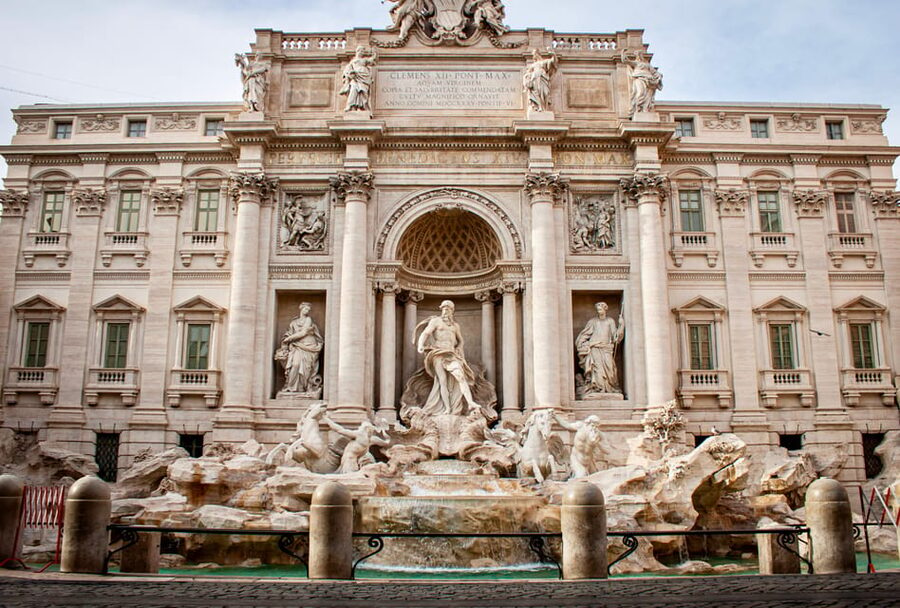
Trevi Fountain receives about 15 minutes, including a break, guided commentary, free time, and photos. This is the busiest stop on the route, and the space can be packed, especially at popular times.
You will see the fountain, but the value here is the context. The guide explains why Roman fountains became tools of public image and propaganda. Water, sculpture, engineering, and patronage came together to make a city statement, not merely a pretty backdrop.
The free time is useful. You can take your own pictures, catch your breath, and absorb the setting without having to listen every second. Still, 15 minutes is not long, and this is not a dedicated Trevi Fountain visit. If you want a calm photo session or time to explore the nearby streets, return later on your own.
The route’s interpretation also helps you look past the crowds. Instead of seeing only the familiar façade, you can consider the fountain as part of a long contest among powerful people to shape Rome’s public spaces.
Sant’Ignazio and the art of illusion
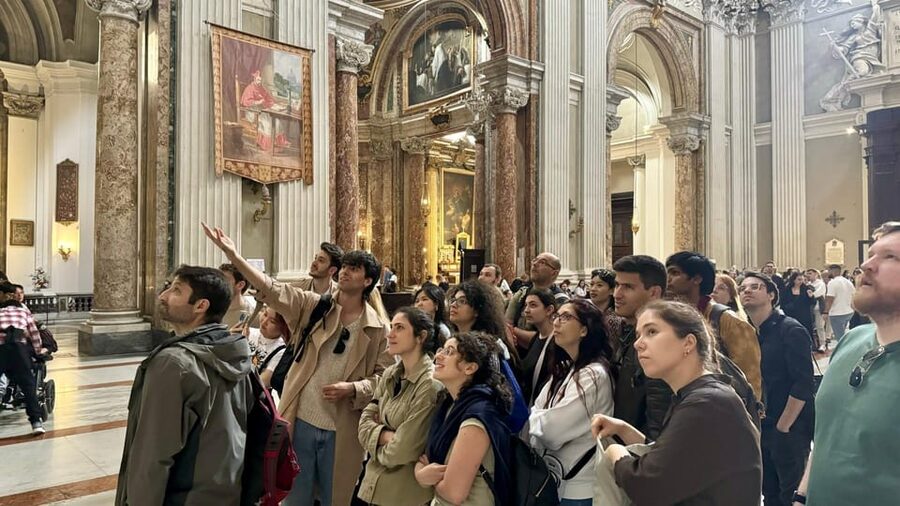
The Church of Sant’Ignazio di Loyola receives about 10 minutes. It is one of the most rewarding stops for anyone who enjoys art, architecture, or clever visual tricks.
The church is known for its ceiling fresco, and the guide draws attention to the way painted architecture creates an illusion of height and space. This is a fine example of how Baroque Rome used art to impress, persuade, and guide the eye.
I would make a point of looking upward before listening to every detail. Then let the guide explain how the image works. Simone has been praised for explaining architecture and church history in a way that makes the details easy to follow, while other guides have been noted for pointing out features you might miss when passing through alone.
Ten minutes is enough for a focused introduction, but not enough for a slow study of the whole church. If the ceiling catches your interest, return later when you can look without the group moving on.
The Pantheon in a five-minute stop
The Pantheon is included as a short, roughly five-minute stop with photos, guided explanation, and a walk onward. That timing is important. You will get a concise explanation of why the building matters, but you should not expect a full interior visit with time to examine every feature.
The stop works best as part of the larger route. The Pantheon shows another side of Rome’s ability to reuse and reinterpret older buildings. Its presence also reinforces the tour’s central theme: the city’s past is not separated into neat periods. Ancient, Christian, Renaissance, and modern Rome overlap in the same few blocks.
If you want to enter and spend time inside, plan a separate visit. The tour gives you context and a photo opportunity, not an extended Pantheon session. This is one of the clearest tradeoffs in the itinerary: you cover more ground, but each major monument receives only a short explanation.
Finishing in Piazza Navona
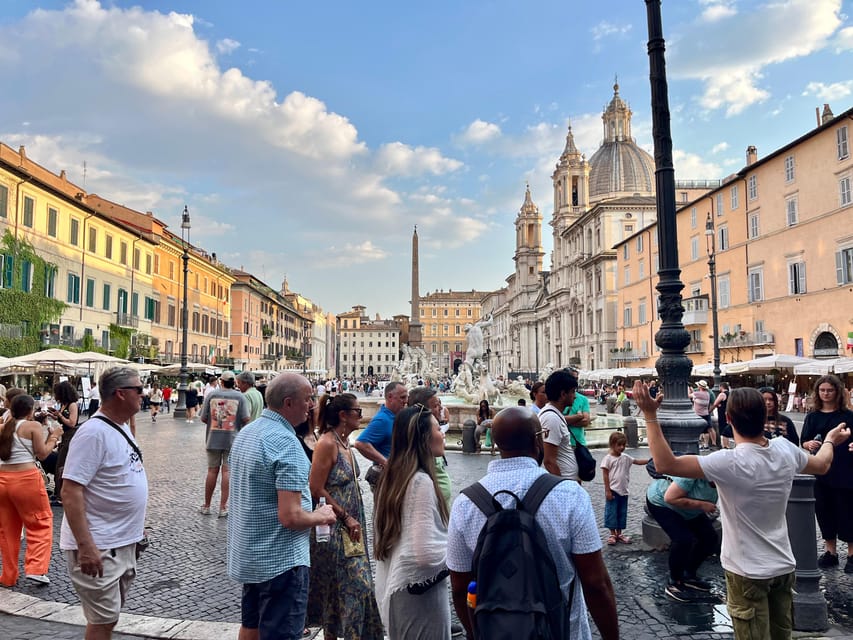
The walk ends in Piazza Navona after about 15 minutes of sightseeing, photos, and guided commentary. The square is a fitting finale because it brings together ancient foundations, Baroque design, fountains, churches, public life, and the legacy of powerful patrons.
The guide explains why fountains became symbols of control and prestige, and how art helped rulers and families shape the city’s identity. By this point, you should be better prepared to read the square as a political stage rather than simply a pleasant place for a drink.
Ending here is practical. You can continue toward the river, return to the Pantheon area, look for food, or use the square as a meeting point for your next plan. Several guides also offer suggestions for later stops. Jacopo, in particular, has been praised for recommending places to see on a future visit, while another guide gave out a postcard at the end.
The guides and the importance of group size
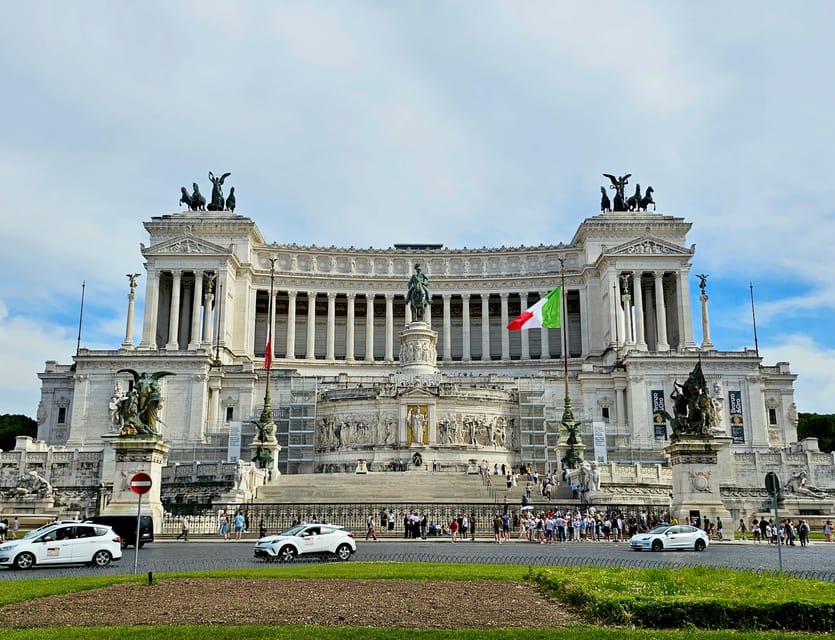
Guide quality is the strongest part of this experience. Jacopo is repeatedly described as charismatic, funny, and especially strong on ancient Roman family history. Simone is praised for energy, clear English, passion, and the ability to answer questions. Iris is noted for animation and humor, and Jacob for an easy-to-understand accent and a comfortable pace.
Names and styles may vary by departure. You may get Jacopo, Simone, Iris, Jacob, or another member of the team, so book for the tour’s approach rather than one guaranteed individual guide.
The walk appears to work well with small groups. One booking had only a single participant, allowing a relaxed pace and plenty of questions. Another group appreciated the intimate size and the guide’s care in moving around crowds without making anyone feel rushed.
There is also no stated use of headphones. One person specifically appreciated being able to speak face to face with the guide rather than listening through a headset. That can make the walk feel more like a conversation, although a very large group or a noisy street could make hearing harder.
Pace, language, and practical planning
The tour lasts 2.5 hours and is conducted in English or Spanish. You move between central sights on foot, with several short stops and one longer monastery visit.
Wear comfortable shoes. Rome’s center involves steady walking, uneven surfaces, crowds, and frequent stops. Bring water, especially in warm weather, and keep your schedule flexible at the end because a good question-and-answer session may run slightly differently from a tightly timed sightseeing circuit.
The meeting point is easy to identify if you use the full church name and look for the guide’s sign. Do not confuse the starting church with the Pantheon area. The tour finishes in Piazza Navona, not back at the beginning.
Cancellation is allowed up to 24 hours before the start for a full refund, and you can reserve now while paying later. Languages and starting times should be checked for your chosen date.
Is the $3.77 price really the cost?
The small booking price makes this look almost free, but the tip system needs a clear explanation. The guides work for tips alone, and the suggested range is usually €10 to $50. In practice, you should decide what the tour is worth after considering the guide’s time, the group size, the amount of detail, and any unusual access.
That can be excellent value for a lively introduction to central Rome. A traditional paid walking tour may cost more upfront, but it also gives you a fixed price. Here, you have more control, but also more responsibility.
I would carry a way to tip by cash or card. One guide has accepted either. Do not wait until the last minute to decide your budget. If the guide spends the full time answering questions, adjusts the pace for the group, and adds special access or useful recommendations, a higher tip may feel fair.
Who should book this tour?
I would choose this walk for a first visit if you want to understand the city before exploring its museums and major monuments in detail. The route gives you a strong introduction to Rome’s ancient remains, churches, Baroque art, fountains, family politics, and local traditions.
It also suits repeat visitors. One person who had already seen Rome’s major sights used the tour to find new places and build a list for a future visit. The emphasis on dynasties, scandal, and lesser-known details keeps familiar monuments from feeling routine.
Families with older children and teenagers may enjoy the crime stories, jokes, and dramatic rivalries. The tour is also a good fit for anyone who prefers a guide who talks with the group instead of delivering a formal lecture.
I would skip it if you want long interior visits, a tightly fixed archaeological route, or a tour devoted only to ancient monuments. The Pantheon and Trevi Fountain stops are short, and the private or off-limits access can depend on circumstances.
Should you book it?
Book this tour if you want Rome explained through people and power, not just dates and buildings. The strongest feature is the storytelling, especially with guides such as Jacopo, Simone, or Iris, who bring humor and strong subject knowledge to the walk.
Just remember that $3.77 is not the full financial picture. Plan for a tip, wear good shoes, and treat the major monuments as brief stops within a wider story. For an affordable, lively first look at central Rome, this is a smart choice.
FAQ
How long does the walking tour last?
The tour lasts 2.5 hours.
What language is the tour offered in?
The live tour guide is available in English or Spanish.
Where does the tour begin?
It begins on the steps of Chiesa del Santissimo Nome di Maria al Foro Traiano, beside Trajan’s Column and Trajan’s Forum.
How do I find the guide?
The guide will hold a tour sign with the name of the tour.
Where does the tour finish?
The tour finishes in Piazza Navona.
Does the route visit Trevi Fountain?
Yes. The route includes a guided stop at Trevi Fountain with photos, free time, and a short break.
Are the Pantheon and Piazza Navona included?
Yes. Both are included as guided sightseeing stops with time for photos.
Is a local guide included?
Yes. A local guide and the walking tour are included.
Is this a pay-what-you-want tour?
Yes. The guide works for tips, and you decide what to give at the end. The usual tip is stated as between €10 and $50.
Can I cancel the booking?
You can cancel up to 24 hours in advance for a full refund. You can also reserve now and pay later.
Recently reviewed around Rome
- Ancient Rome at Twilight Walking Tour★ 5.0 · 276 reviews
- Domus Aurea Guided Tour: The Golden House of Nero★ 4.5 · 199 reviews
- Early Vatican Museums & Sistine Chapel Small Group Tour★ 4.5 · 314 reviews
- Early Vatican Museums Tour: The Best of the Sistine Chapel★ 4.5 · 900 reviews
- Jewish Ghetto & Piazza Navona: Food, Wine & Sightseeing Rome Tour★ 5.0 · 460 reviews
- 3 Days in Sorrento, Capri & Pompeii: la Dolce Vita★ 4.0 · 595 reviews
- Tivoli Villas Full Day Trip From Rome with Lunch★ 4.0 · 443 reviews
- Cook With Us in Rome: A Hands-On Cooking Experience 09:20AM class★ 5.0 · 234 reviews
Walking Tours, compared.
Guided Walking Tour & Last Supper Visit with Ticket
Read our review →
Rialto Bridge & Offbeat Unusual Venice Walking Tour
Read our review →
Private 3 hrs Venice Tour: St Mark’s, Walking tour & Boat tour
Read our review →
Skip the line: Uffizi and Accademia Small Group Walking Tour
Read our review →
Trastevere & Campo de Fiori Street Food Walking Tour
Read our review →Browse the lists this tour appears in