
Review · WALKING TOURS
Bologna: City Center Walking Tour
Bologna’s best introduction comes on foot, among its arcades, medieval towers, market lanes, and broad central squares. This tour links the city’s major sights into one clear story, from Neptune’s Fountain and Piazza Maggiore to San Petronio and the Two Towers. I like that you see the famous landmarks while also getting a feel for how Bologna works as a living city.
I especially like the Quadrilatero Market, where history and everyday food culture meet, and the strong record of guides who bring real personality to the walk. Guides including Victoria, Maria, Riccardo, Nicola, and Michaela have been singled out for clear explanations, humor, and useful food advice. The main consideration is pace and group size: most walks are easy, but one group reached 28 people, and a few guides packed in so much information that it could be hard to absorb.
In This Review
- Key points
- Why this Bologna walk works so well
- Meeting Neptune at the Fountain
- Palazzo d’Accursio and the civic center
- Piazza Maggiore and the scale of San Petronio
- The market lanes of the Quadrilatero
- Piazza della Mercanzia and the city’s medieval towers
- Santo Stefano and Bologna’s contrasting churches
- The guide makes the difference
- Pace, headphones, and group size
- Is $26 a fair price?
- Who should book this walk?
- Should you book the Bologna City Center Walking Tour?
- FAQ
- How much does the Bologna City Center Walking Tour cost?
- How long does the walking tour last?
- What languages are available?
- Where does the tour meet?
- What sights are included on the route?
- Does the tour include a certified guide?
- Is this available as a small-group tour?
- Is food or wine included?
- What should I wear?
- Is the tour suitable for people with mobility impairments?
Key points
- A useful first-day orientation: The route covers Bologna’s main center sights in about two hours, giving you a solid plan for the rest of your stay.
- The city’s signature buildings: You’ll see San Petronio, Palazzo d’Accursio, Piazza Maggiore, Santo Stefano, and the Two Towers.
- Market life, not just monuments: The Quadrilatero adds food shops, local flavor, and practical restaurant suggestions to the usual sightseeing route.
- Strong guide-led storytelling: Guides such as Riccardo, Maria, Victoria, and Nicola are praised for history, humor, and lively delivery.
- Headphones may help: Some tours use headphones, letting you take a few steps away for photos without losing the commentary.
- Dress with churches in mind: Long sleeves are required, and shorts, miniskirts, short skirts, vests, and tops are not suitable for places of worship.
Why this Bologna walk works so well
Bologna can seem confusing at first. Its center has a large main square, several connected lanes, market streets, churches, university buildings, and a pair of famously leaning towers. A map gets you from point to point, but a good guide explains why the pieces belong together.
That is the real value here. For $26, you are not paying for a ticket-heavy attraction or a special performance. You are paying for a local guide who gives structure to two or three hours of walking. You learn where the central sights are, hear stories that are easy to miss on your own, and finish with a better sense of what deserves a return visit.
I would take this tour early in a Bologna stay. It gives you a practical framework for the city, along with suggestions about restaurants, shops, and places to explore later. One guide, Leonardo, was especially good at mixing food and history, while other guides have pointed people toward local restaurants in the market area.
The tour earns a 4.5 rating from 3,478 reviews, with repeated praise for guide enthusiasm and clear storytelling. That consistency matters more than any single guide name, though your experience will still depend on the person leading your group.
More Bologna & Emilia walks with a guide:
- Bologna: Walking Food Tour with a Local Guide
★ 4.8 · 882 reviews - Private Half Day Parma Food Walking Tour
★ 5.0 · 561 reviews - Ferrara: City Highlights Walking Tour with Local Guide
★ 4.6 · 219 reviews
Meeting Neptune at the Fountain
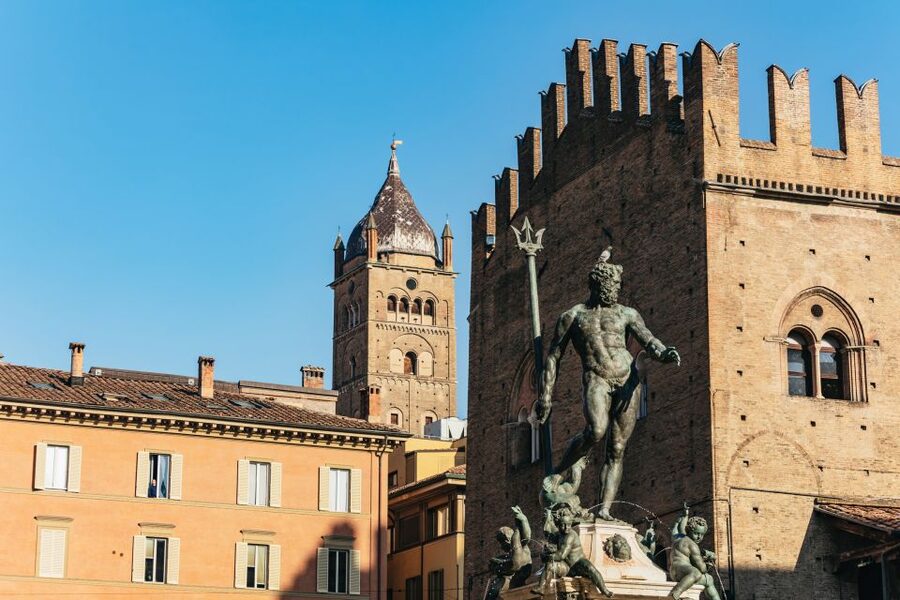
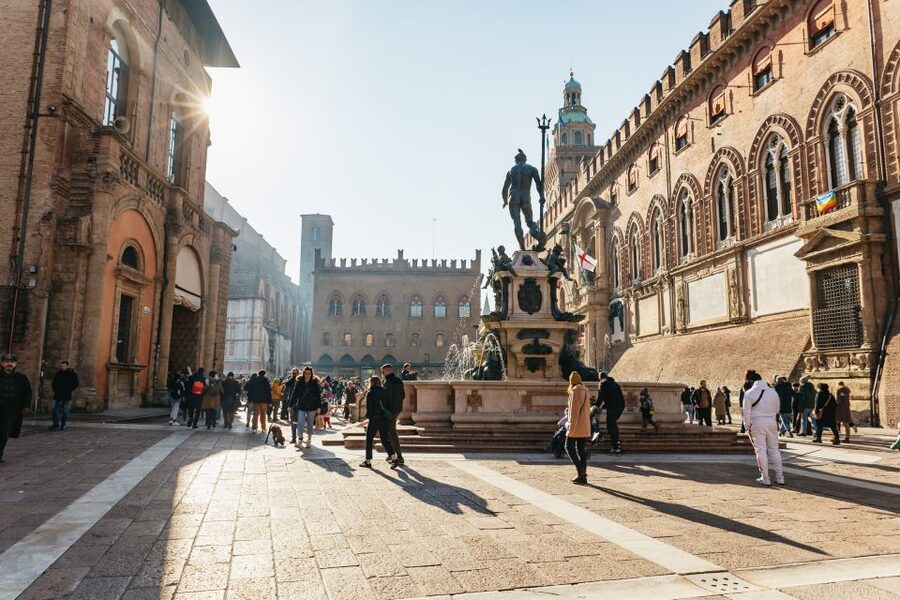
The tour begins at Fountain of Neptune, also called Neptune’s Fountain or Fontana del Nettuno. This is one of Bologna’s easiest meeting points because it sits in the heart of the center and near several major sights.
The fountain is more than a quick photo stop. Your guide explains its place in the city and shares the local wish-making tradition. You get a chance to make your own wish, then look closely at the sculpture and the surrounding square before moving on.
The exact meeting point can vary with the option you book, so check your confirmation carefully. The listed choices all point toward the same central area, but you should not assume that every departure begins at precisely the same spot.
From Neptune’s Fountain, the route quickly puts you in the middle of Bologna’s civic heart. This is a good opening because you are not wasting time on transport or a long walk from the edge of town.
Palazzo d’Accursio and the civic center
Palazzo d’Accursio introduces Bologna as a city shaped by public life, government, and long-running institutions. From here, the guide connects the building to the larger setting of Piazza Maggiore.
This part of the walk is useful for orientation. Instead of seeing isolated monuments, you begin to understand the main square as a group of buildings with different roles and periods. The guide also helps you notice architectural details that can disappear when you are focused only on taking photos.
One guide was praised for spending a little too much time early in the tour near Palazzo Re Enzo. That is a fair reminder that the balance of stops can vary by guide. Some people will enjoy extra explanation at the opening buildings, while others may wish for more time inside the churches later.
Piazza Maggiore and the scale of San Petronio
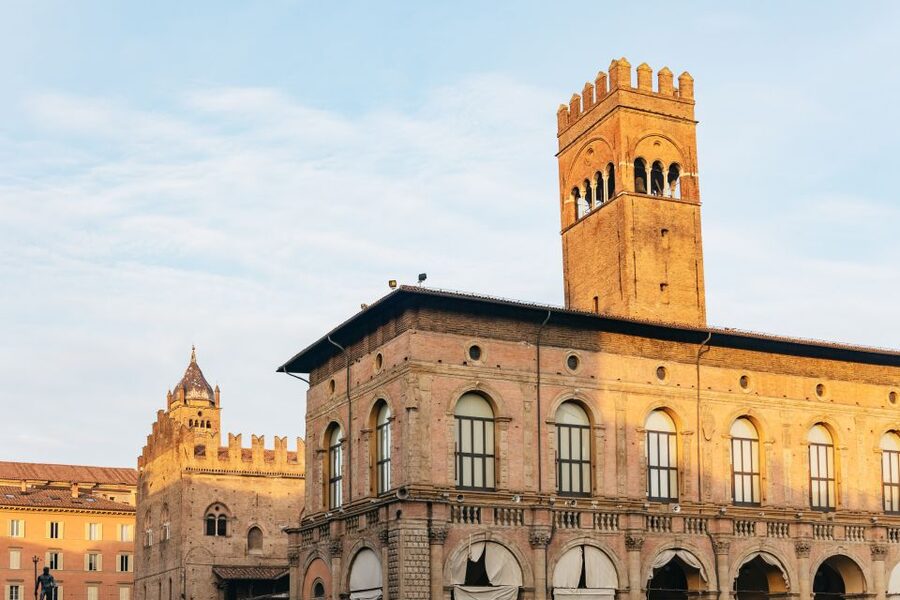
Piazza Maggiore is the tour’s central stage. The square gives you room to take in Bologna’s public architecture before entering the Basilica of San Petronio.
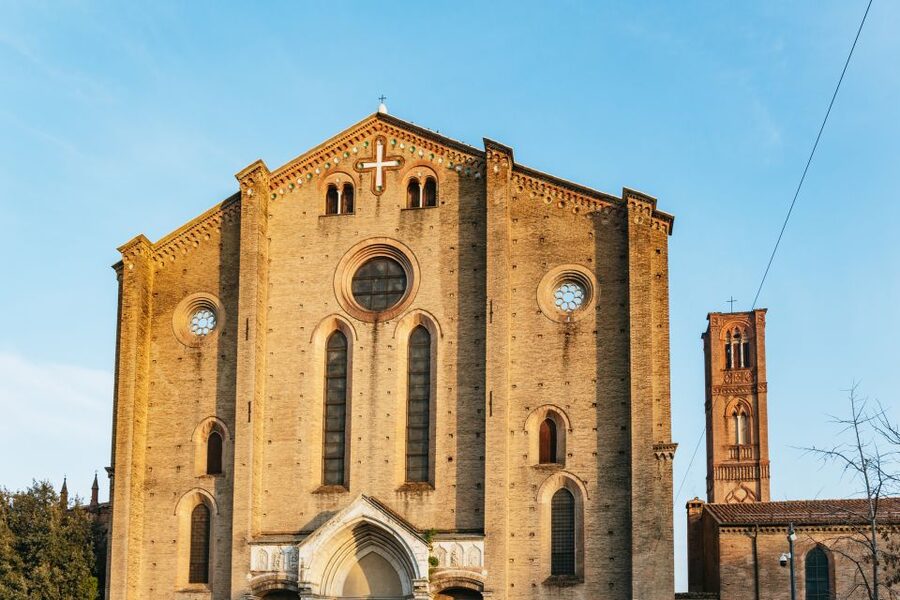
San Petronio is the major visual payoff for many people. Its huge unfinished facade and broad interior make a strong impression, and the guide places the basilica in the context of Bologna’s ambition and civic identity. You are not simply told that the church is important. You get the story behind why it matters.
The basilica is also where clothing rules become important. You need appropriate clothing for a place of worship: long sleeves are required, and vests, tops, shorts, miniskirts, and short skirts are not allowed. Bring a long-sleeved shirt even on a warm day, since being turned away or unable to enter would undercut one of the tour’s main stops.
Access inside religious buildings can depend on conditions at the time of the tour. The route is designed to welcome you into Bologna, but the precise amount of time inside each place may vary.
More Bologna & Emilia trips worth a second look
- Bologna: Open Bus City Tour and Local Food Tasting
★ 3.7 · 550 reviews - Bologna: City Center Guided Wine Walking Tour
★ 4.9 · 210 reviews - Parma: City Walking Tour
★ 4.2 · 203 reviews - Rome: City Sightseeing Hop-on Hop-off Bus with Audioguide
★ 4.0 · 16,045 reviews
The market lanes of the Quadrilatero

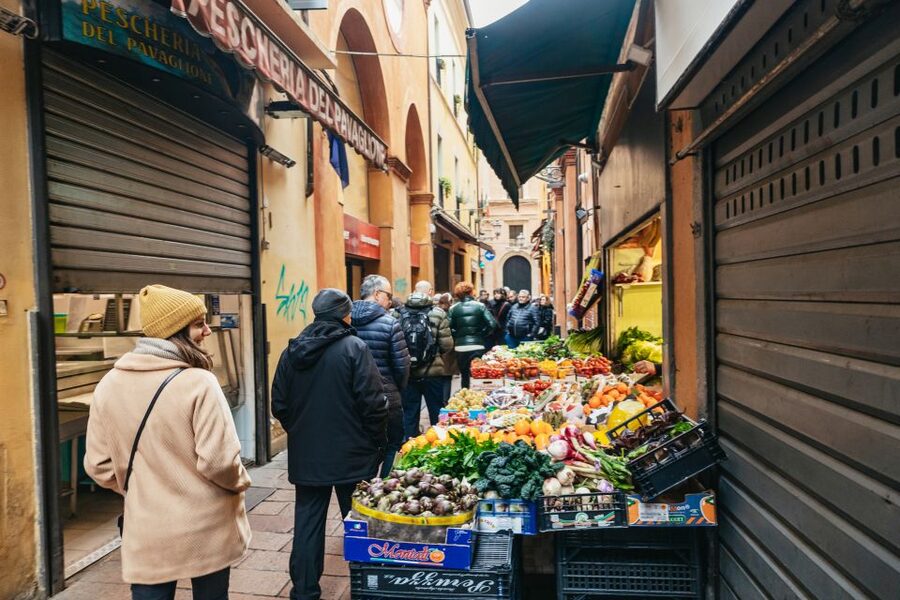
The Quadrilatero Market is one of the most useful parts of the experience because it shifts the focus from grand buildings to daily life. Its narrow streets are lined with food shops and places to eat, giving you a better sense of Bologna’s culinary identity.
Here, listen for practical advice. Guides have recommended restaurants and local shops, and one tour included traditional food and wine tasting. That tasting is not listed as a standard inclusion, so do not book this walk expecting food or wine to be guaranteed. The reliable benefit is the guide’s commentary and the chance to identify places you may want to return to.
I like the market stop because it helps you use the rest of your trip better. A church can be admired once, but a good food suggestion may shape an entire evening. If you are interested in the local cooking scene, pay attention to the names and streets your guide points out, then ask follow-up questions before leaving the area.
The lanes can be crowded, and this is where staying close matters. A small group is easier to manage, but larger departures are possible. One group had 28 people, and the guide still kept everyone together, but a crowd that size naturally makes it harder to hear and move freely.
Piazza della Mercanzia and the city’s medieval towers
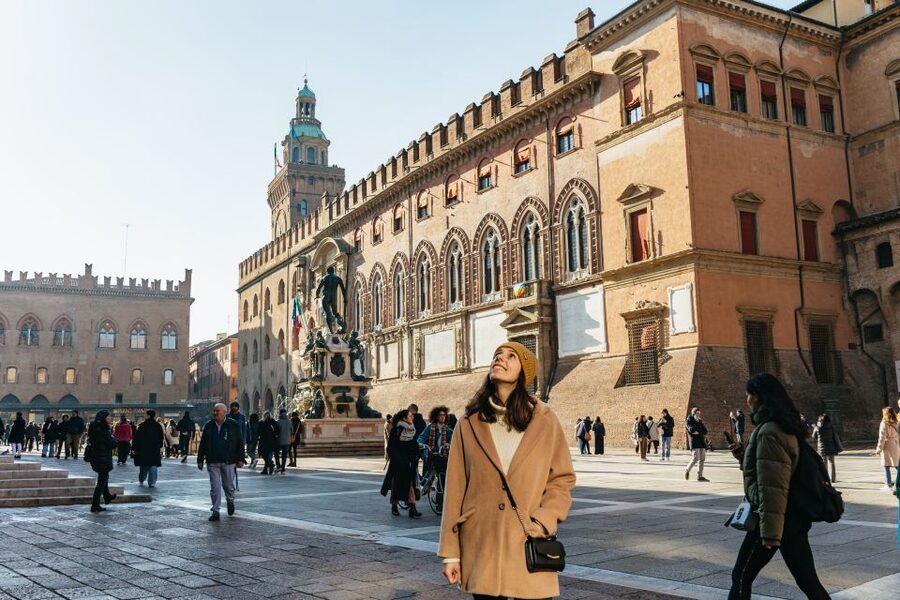
The route continues toward Piazza della Mercanzia and Bologna’s Two Towers. These towers are among the city’s most recognizable sights, and the Asinelli Tower is the one specifically highlighted by the tour.
The guide explains the towers’ height, purpose, and importance to Bologna’s past. You do not need to climb them to appreciate their effect. From street level, their lean and scale make the surrounding buildings feel small.
This stop is particularly good for visitors who have seen photos of Bologna but do not yet understand the city’s medieval character. The towers are not isolated curiosities. They help explain the old city’s competitive building culture and the way Bologna’s skyline once reflected the power of prominent families.
The route around the towers can be busy. This is another reason to wear comfortable shoes and stay alert to the group’s position. You may have time to take photos, but the experience is a guided walk rather than a dedicated photography session.
Santo Stefano and Bologna’s contrasting churches
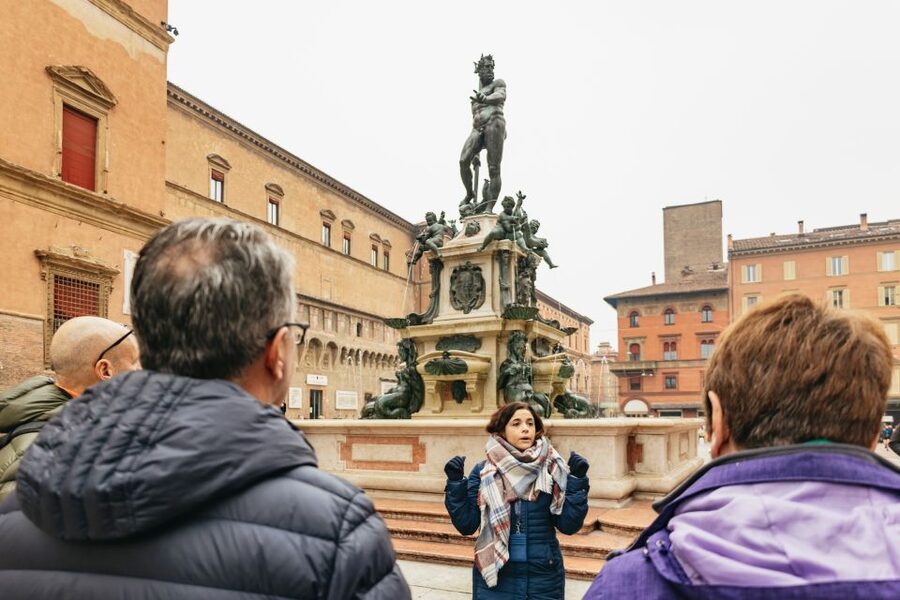
Piazza Santo Stefano provides a change of mood after the crowded market and tower area. The square is known for the Basilica Santuario Santo Stefano, a church complex that gives the tour a more reflective stop.
Several guides have been praised for showing contrasting churches during the walk. That comparison is valuable. You see that Bologna’s religious architecture is not all one grand style, and the differences make the city more interesting than a simple checklist of monuments.
Time can be the tradeoff. One participant would have preferred more time at Santo Stefano and less time earlier at Palazzo Re Enzo. If you care deeply about church interiors, ask your guide how much access and time the group will have. The walking tour gives you an introduction, not a long architectural study.
Some departures have also included access to the Archiginnasio Palace, the historic seat of Bologna’s university. The building was a pleasant surprise for one participant, who particularly valued seeing its halls and marks left by important figures. Since it is not presented as a guaranteed stop in the core itinerary, treat this as a possible addition rather than a promise.
The guide makes the difference
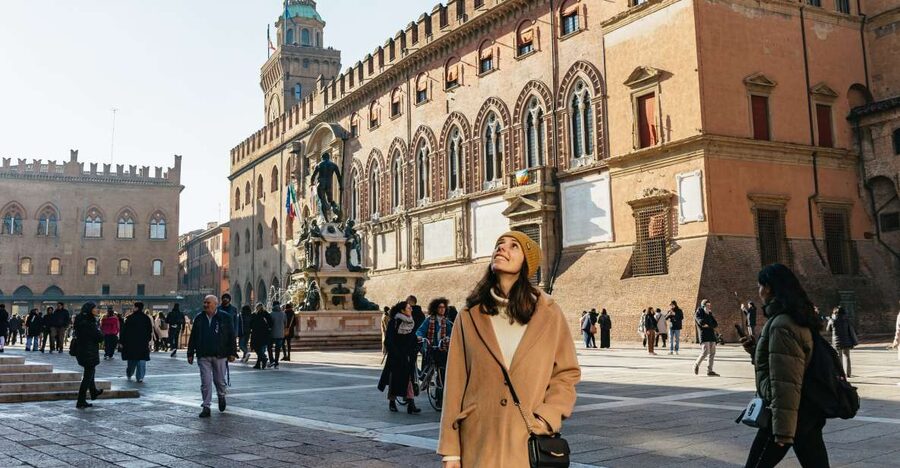
The strongest part of this experience is the human element. Guides are not simply pointing out buildings and reciting dates. The best ones connect history, architecture, food, local habits, and politics in a way that keeps you looking up.
Riccardo received especially strong praise for his depth of knowledge and passion, though one person found that he spoke too quickly and delivered more information than was easy to absorb. Maria has been praised for detailed explanations and a warm presentation. Victoria was noted for her storytelling and command of the city center.
Nicola, Michaela, Leonardo, and Matteo also received praise for friendly, engaging walks. Matteo’s tour included traditional food and wine, while Leonardo was appreciated for getting the balance between food and history right. These details show how much the tone can shift from one departure to another.
You should ask questions. The guides have been useful sources of restaurant advice, later sightseeing ideas, and context about places that are not obvious from the street. If the presentation moves too fast, say so politely. A good guide can usually adjust the level.
Pace, headphones, and group size
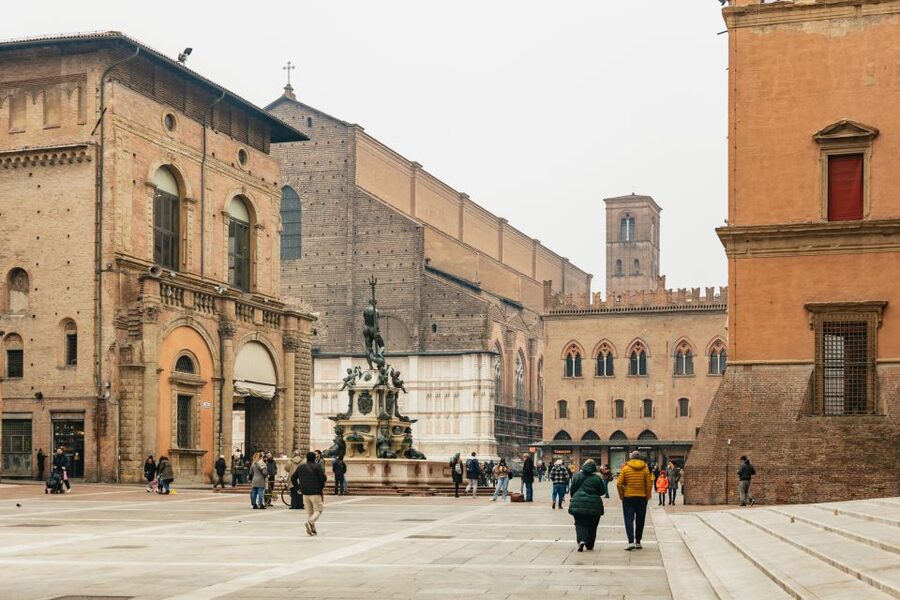
The walk lasts two to three hours. That is long enough to cover the center without turning into a full-day commitment, and many people find that the time passes quickly. The route includes frequent stops, and one participant described it as not strenuous.
Still, this is a walking tour over city streets and crowded public areas. It is not recommended for people with limited mobility, and the provider specifically excludes people with mobility impairments. Comfortable shoes are essential, even though the walk is not described as strenuous.
Some departures provide headphones. This is a worthwhile feature because you can step aside for a photograph or look more closely at a building while still hearing the guide. Do not assume every booking option has the same equipment, but if headphones are available, they make a noticeable difference in busy areas.
Small groups are available and are the better choice if you want more chances to ask questions or prefer easier movement through narrow lanes. Larger groups can still work, especially with a strong guide, but you will need to stay close and may have less time for individual conversation.
Is $26 a fair price?
At $26 per person, the tour is priced reasonably for a guided introduction to Bologna’s center. The value comes from coverage and orientation rather than admission tickets. You see the main public sights, receive live commentary, and get suggestions that can improve the rest of your visit.
I would consider it good value if this is your first time in Bologna, if you have only a short stay, or if you want historical background before exploring independently. It is less essential if you already know the center well and prefer to wander at your own pace.
The price does not appear to include food, drinks, or a guaranteed special entry. One tour included tasting, but that should be treated as an occasional feature rather than part of the standard package. The certified guide and welcome staff are included.
Free cancellation up to 24 hours before the start gives you some flexibility, and you can reserve now and pay later. Starting times vary, so check availability when choosing a date.
Who should book this walk?
I would recommend it to first-time visitors, solo travelers who want an easy orientation, couples, families with older children, and anyone who likes history delivered with a little humor. It also suits food-focused visitors because the Quadrilatero and guide suggestions add useful local direction.
The tour is a good fit for someone who wants the major sights without spending an entire day inside museums. It is also useful at the start of a trip, when you need to learn the layout before deciding where to return.
You may want another format if you have limited mobility, dislike group walking, or want long interior visits at each church. People who prefer silence and independent wandering may find the steady commentary too much, especially with a guide who speaks quickly.
Should you book the Bologna City Center Walking Tour?
Book it if you want a well-priced first look at Bologna with the city’s main sights tied together by a lively guide. San Petronio, the market, Neptune’s Fountain, Santo Stefano, and the Two Towers make a sensible route, and the guide’s food advice can be as useful as the historical background.
Choose a small-group option if available, wear comfortable shoes, bring long sleeves, and check the meeting point. I would take it near the beginning of your stay, then return to the market, churches, or Archiginnasio Palace with more time afterward. For most visitors, this is a practical and enjoyable way to get oriented before exploring Bologna on your own.
FAQ
How much does the Bologna City Center Walking Tour cost?
The tour costs $26 per person.
How long does the walking tour last?
The tour lasts between two and three hours. Starting times vary, so check availability for your chosen date.
What languages are available?
The live guide is available in Italian, English, Spanish, and French.
Where does the tour meet?
The meeting point may vary by booking option. Listed starting points include Fountain of Neptune, Neptune’s Fountain, and Fontana del Nettuno.
What sights are included on the route?
The route includes Palazzo d’Accursio, Piazza Maggiore, the Basilica of San Petronio, Piazza della Mercanzia, Piazza Santo Stefano, the Two Towers, and Neptune’s Fountain.
Does the tour include a certified guide?
Yes. A certified tour guide and Bologna tour welcome staff are included.
Is this available as a small-group tour?
Yes. A small-group option is available, although group size can vary by departure.
Is food or wine included?
Food and wine are not listed as standard inclusions. One experience included traditional local food and wine, but you should not assume tasting is guaranteed.
What should I wear?
Wear comfortable shoes and bring a long-sleeved shirt. Appropriate clothing is required for places of worship, with no vests, tops, shorts, miniskirts, or short skirts permitted.
Is the tour suitable for people with mobility impairments?
No. The tour is not recommended for people with limited mobility and is not suitable for people with mobility impairments.
Recently reviewed around Bologna & Emilia
- Guided group tour TastyBus: Parmesan Cheese and Parma Ham★ 5.0 · 241 reviews
- Tour Parmigiano Reggiano dairy and Parma ham★ 5.0 · 601 reviews
- Tasting and Biking Parma★ 5.0 · 218 reviews
- Private Half Day Parma Food Walking Tour★ 5.0 · 561 reviews
- Cavedoni Balsamic Vinegar Tour: The Oldest in Modena★ 5.0 · 267 reviews
- Bologna on the plate, Cooking Class with Alessia★ 5.0 · 260 reviews
- Bologna Private Highlights & Hidden Gems Tour with a Local★ 5.0 · 359 reviews
- Bologna Local Pasta Cooking Class, Ragu, Spritz, Wine & Gelato★ 5.0 · 527 reviews
Walking Tours, compared.
Guided Walking Tour & Last Supper Visit with Ticket
Read our review →
Rialto Bridge & Offbeat Unusual Venice Walking Tour
Read our review →
Private 3 hrs Venice Tour: St Mark’s, Walking tour & Boat tour
Read our review →
Skip the line: Uffizi and Accademia Small Group Walking Tour
Read our review →
Trastevere & Campo de Fiori Street Food Walking Tour
Read our review →
Browse the lists this tour appears in