
Review · TRAIN EXPERIENCES
Cagliari: Conti Vecchi Salt Flats Train and Tour
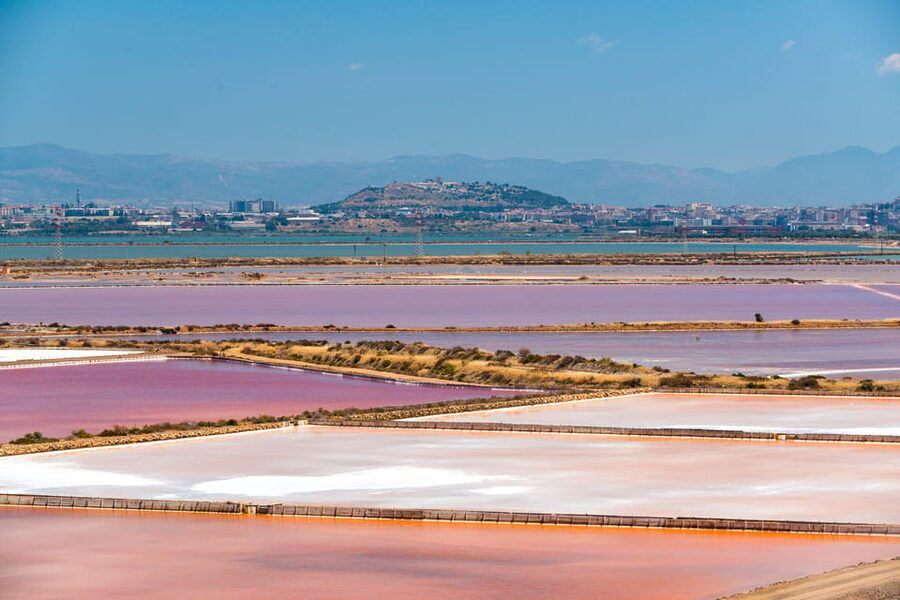
The brightest surprise here is the sight of pink flamingos beside giant white salt mountains. The Conti Vecchi Saltworks turns a working industrial site into a clear, two-hour introduction to Sardinia’s salt trade, complete with a museum, old work buildings, videos, and a train ride through the Santa Gilla Basin.
I like the way the tour connects machinery and documents with ordinary salt-worker life. I also like the low $14 price, which covers entry, the guide, and an hour on the train. The main catch is language: the live tour is in Italian, and some English-speaking visitors found the English commentary brief or hard to hear from the rear carriage.
In This Review
- Key points
- Why a saltworks belongs on your Cagliari plans
- Reaching the Conti Vecchi Saltworks
- The museum explains the white gold trade
- Luigi Conti Vecchi and the making of Macchiareddu
- One hour by train through the salt pans
- Flamingos and wetland wildlife
- What the tour feels like in Italian
- Is two hours the right length?
- Wheelchair access and practical comfort
- What you get for $14
- Who should book this salt-flats tour?
- Should you book the Conti Vecchi Salt Flats?
- FAQ
- Where is the Conti Vecchi Saltworks?
- Is parking available?
- How long does the experience last?
- What language is the live tour in?
- Can I see flamingos?
- Is the train wheelchair accessible?
- Is the old building wheelchair accessible?
- Is hotel transportation included?
- Can I cancel for a refund?
Key points
- Pink flamingos in the Santa Gilla Basin: Keep your eyes on the shallow water and salt pans during the train ride.
- A working salt plant with a past: See tools, documents, a vintage workshop, and a restored chemical laboratory.
- An hour on the saltworks train: The ride gives you a broad view of the salt pans and production areas without a long walk.
- Luigi Conti Vecchi’s story: Learn how one engineer helped turn salt production into an engine of local development.
- Italian-led and wheelchair accessible: The train is accessible, and the old building can be visited by wheelchair users on its first floor.
- A strong-value short outing: At $14 per person, this is an affordable choice for a half-day near Cagliari.
Why a saltworks belongs on your Cagliari plans
Cagliari is often treated as a gateway to Sardinia’s beaches, but the Conti Vecchi Saltworks shows you another side of the island. Here, salt is not just something on a restaurant table. It shaped work, industry, transport, and the growth of the area around Cagliari.
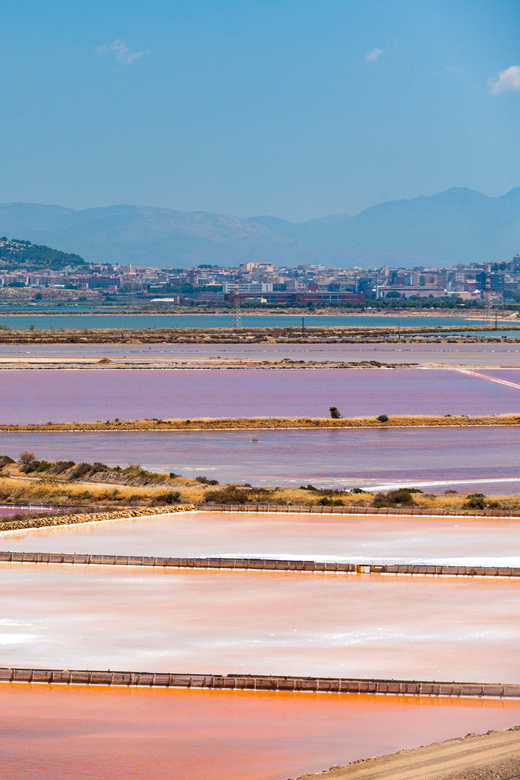
The site sits in the Santa Gilla Basin, one of Sardinia’s most important wetlands. It is both a working industrial area and a habitat for birds. That mix gives the outing its appeal. You are not touring a preserved building in isolation. You are seeing an operating salt plant beside old structures and broad water-filled pans.
I would not book this expecting a polished theme-park ride or a long walking tour. It is a compact educational visit with a calm pace. The reward comes from looking closely, listening to the story, and watching the changing colors of the salt and water.
More Cagliari trips worth a second look
- Bernina Red Train, Swiss Alps & St Moritz From Milan
★ 5.0 · 2,954 reviews - Swiss Alps Bernina Red Train and St.Moritz Tour from Milan
★ 4.5 · 2,369 reviews - Sorrento: Skip-the-Line Pompeii Express Tour by Train
★ 4.8 · 2,038 reviews
Reaching the Conti Vecchi Saltworks
The saltworks are in the industrial area of Assemini and Macchiareddu, outside central Cagliari. There is free parking inside the industrial site. After parking, you walk to the bookshop at the main entrance.
This setting matters. You do not arrive at a postcard village or a grand museum entrance. The approach is functional and industrial, which fits the subject. Give yourself enough time to find the entrance and walk from the parking area rather than assuming you can stop directly beside the bookshop.
There is no hotel pickup or drop-off. You need to arrange your own transport to the saltworks, so this outing is easiest if you already have a car. The location also makes it useful for a day built around the Cagliari area rather than a central sightseeing schedule.
The museum explains the white gold trade
The visit begins at the operational salt plant and museum. The phrase white gold makes sense once you see how much land, labor, engineering, and equipment are tied to salt production.
Inside the older buildings, you learn about the development of the saltworks and the people who worked there. The displays include historical documents and tools, along with a vintage workshop and a restored chemical laboratory. These details give the site human scale. Instead of seeing only broad white piles from a distance, you get clues about the daily tasks behind them.
Two short videos add background before or during the visit. One documentary shown here has English subtitles, which helps if you do not speak Italian. The films are useful because they explain Sardinia’s salt industry and place the Conti Vecchi works within the wider story of Cagliari.
I particularly like this beginning because it gives the train ride a purpose. Without the museum, you might see pink water, machinery, and salt piles without understanding what you are looking at. The old documents and tools help you read the site as a workplace, not just a scenic stop.
Luigi Conti Vecchi and the making of Macchiareddu
A central part of the story is Luigi Conti Vecchi, the engineer linked with the development of the saltworks and the surrounding area. His work helped drive economic growth in the region, and the tour explains how the success of salt production affected Cagliari.
You also hear about Macchiareddu, the historic salt-mining village. This is one of the more useful parts of the visit for anyone interested in local history. The saltworks were not only a set of pans and machines. They supported a community and gave structure to the lives of the workers who lived and worked there.
The presentation also looks at daily life. That means you are not limited to technical terms about evaporation and production. You get a sense of the work behind the final product, the role of the plant, and the way industrial success brought prosperity to the area.
The exact amount of spoken detail can depend on the guide and the language of the tour. Elena has led the visit with warmth and energy, but the live guiding is in Italian. If you understand Italian, you will get the fullest explanation. If you do not, the museum, videos, and visual setting still carry much of the experience, but you should not assume a full English-language tour.
A different way to spend the day, same part of Italy:
- Cagliari: Underground Cagliari Walking Tour
★ 4.7 · 2,329 reviews - Cagliari: Devil’s Saddle Boat Tour with Spritz and Chips
★ 4.9 · 1,193 reviews - Cagliari: Boat Tour with 4 Swim Stops, Snorkeling & Prosecco
★ 4.9 · 865 reviews - Cagliari: Walking Tour of the Old City
★ 4.8 · 560 reviews
One hour by train through the salt pans
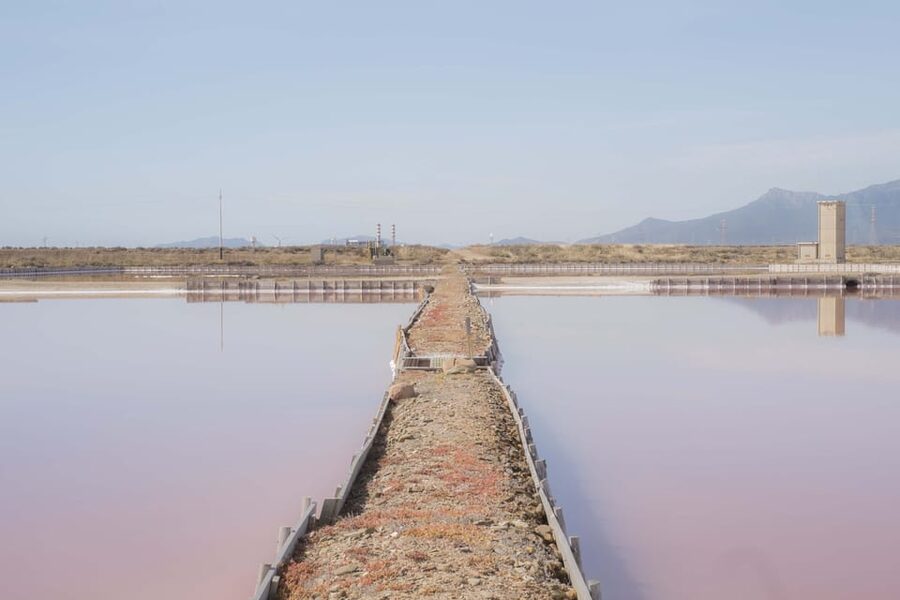
The train ride is the heart of the visit. It lasts about one hour and carries you into the Santa Gilla Basin, through the salt flats and natural area.
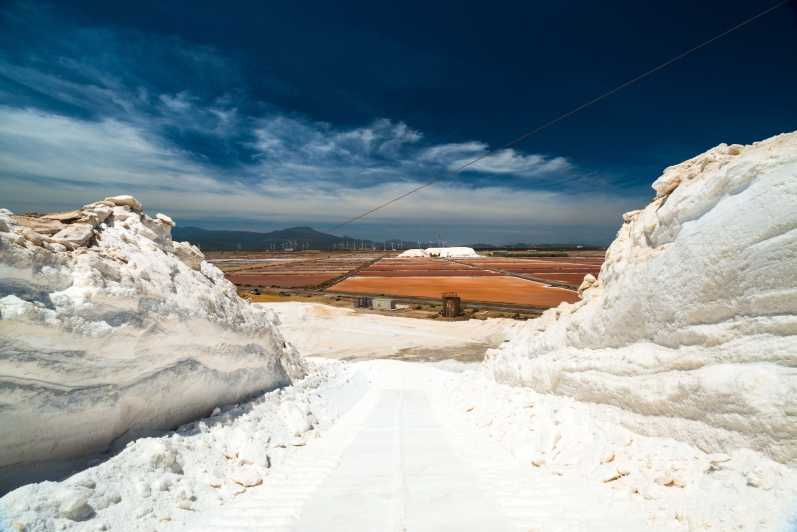
This is not a fast thrill ride. Think of it as a slow viewing platform with a roof and seats. You can watch the salt process, the broad pans, and the plant’s different areas without walking across exposed ground for an hour. The train also helps you grasp the scale of the operation. From ground level, the saltworks can feel like a collection of separate ponds and buildings. From the train, the parts connect.
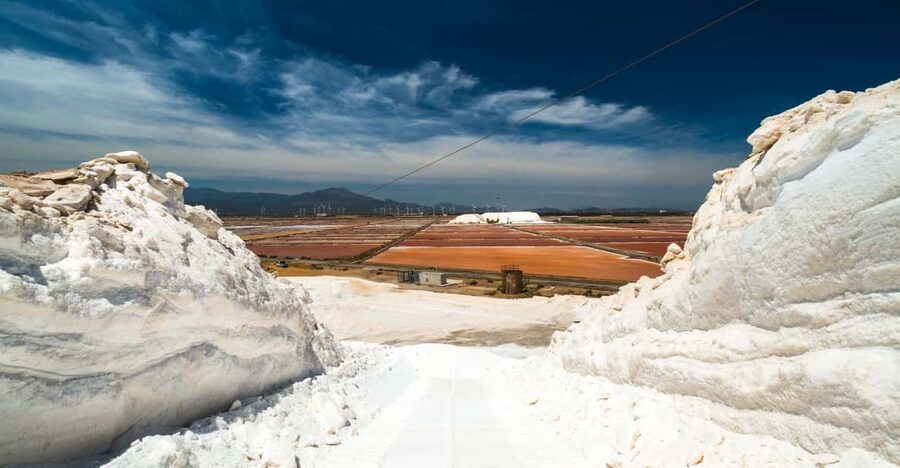
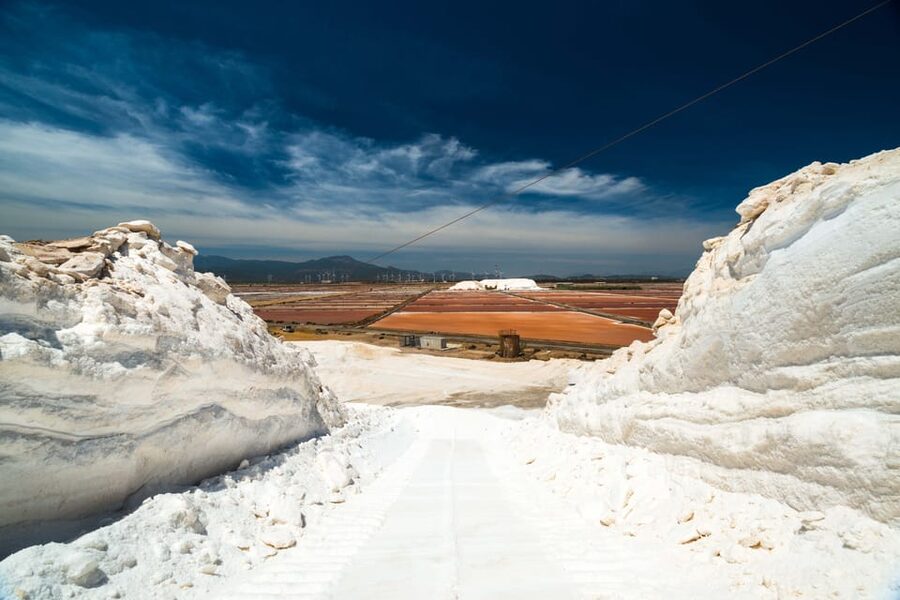
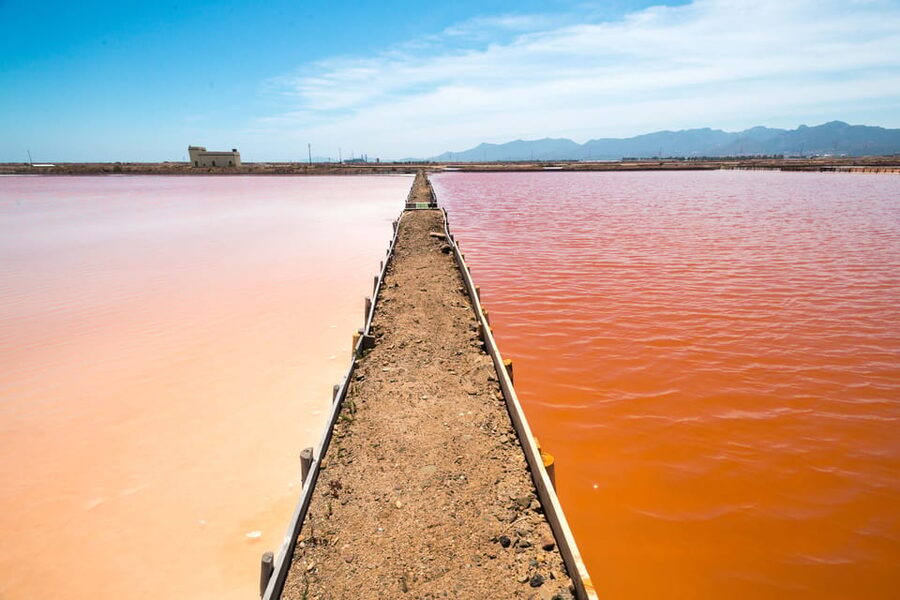
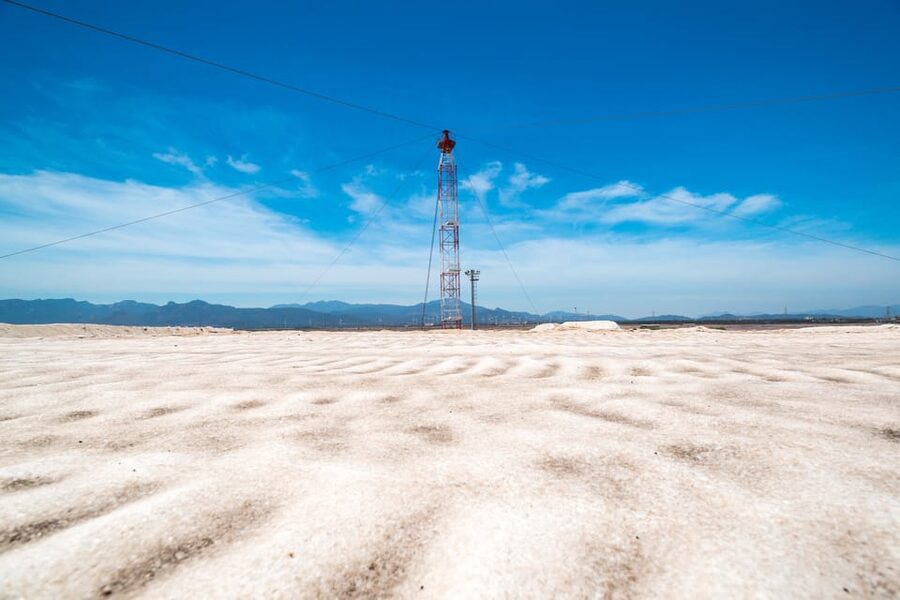
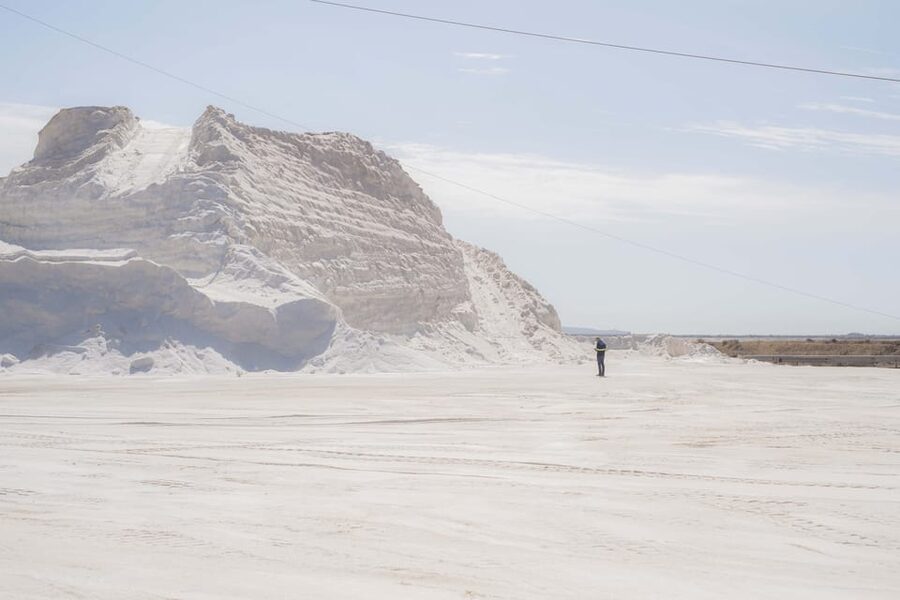
You may see water in shades of pink, bright salt deposits, and towering mountains of white salt. The color changes are one of the reasons to bring a camera. The contrast between the white salt, reflective water, industrial structures, and birds makes this an unusual photo stop near Cagliari.
The train is wheelchair accessible, a useful feature for visitors who might find a full walk across the salt flats difficult. The old building is accessible on its first floor. Ask locally about the exact route through any other areas, since the provided access information specifically covers the train and that floor of the building.
One practical drawback is the sound system. The train shakes and can be noisy, and the speaker in the second carriage has been difficult to hear. If spoken information matters to you, sit as close to the guide or the main speaker as you can. The Italian commentary may also contain more detail than any short English explanation.
Flamingos and wetland wildlife
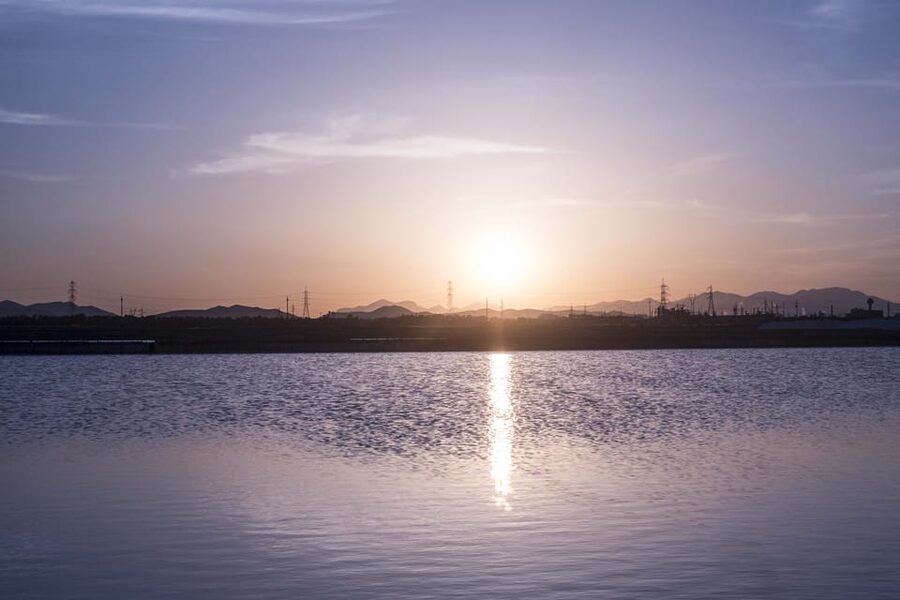
The Santa Gilla Basin is a major reason to choose this outing. The salt pans provide a setting for wildlife as well as salt production, and pink flamingos are the star sight.
You may see flamingos feeding or resting in the shallow water, sometimes against the white salt piles. The birds are in their natural habitat, so sightings and viewing time are not fully controlled. Keep your attention outside the carriage rather than expecting a formal birdwatching session.
This distinction is important. The tour gives you a chance to see flamingos, but it is not built around extended wildlife observation. The train keeps moving, and you might want more time to watch the birds than the schedule allows. One visitor specifically wished for a longer birdwatching stop, and another suggested allowing people to leave the train briefly to experience the salt environment more closely.
I would bring binoculars if you already have a pair, but I would not book this as a specialist birding tour. It works better for you if you want wildlife as part of a wider visit that includes industry, local history, and scenery.
Weather can also affect this section. During one storm, the train had to turn back early, and the group saw little of the flamingos. That was not a fault with the staff, but it shows why the outdoor portion is best enjoyed with reasonable weather.
What the tour feels like in Italian
The official live guide language is Italian. That is the clearest practical point to settle before booking.
If you speak Italian, the visit should feel more complete because the guide can explain the salt process, the buildings, the workers, and the wetland as you move along. If you speak English only, you can still use the museum and the films, including a documentary with English subtitles, then enjoy the visual side of the train ride.
The gap between languages can matter. English-speaking visitors have found that the English explanation on the train was much shorter than the Italian version and was sometimes delivered after the train had already passed the relevant location. The building tour has offered stronger explanation by comparison.
I would treat the experience as partly self-guided if you need English. Read the available material carefully, watch both videos, and position yourself near the guide if possible. The setting itself is easy to understand visually, but you should not pay expecting a detailed English narration throughout.
The staff can be friendly and welcoming. A resident cat has also become part of the welcome at the site, adding a small bit of charm to an otherwise industrial visit.
Is two hours the right length?
Two hours is enough to cover the museum, old buildings, videos, and one hour on the train without turning the visit into a full-day commitment. That makes it easy to fit around other Cagliari plans.
The train ride takes roughly half the total time. The rest goes toward the museum and the introductory material. You get a useful overview rather than a slow, exhaustive study of every building and salt pan.
The short duration is a strength if you want an affordable outing or need a break from city sightseeing. It is a limitation if you want to walk among the pans, stop for long periods with the birds, or study each industrial object in detail. The train generally keeps the experience moving, and there is no stated stop where you can leave the carriage and wander through the salt flats.
Wheelchair access and practical comfort
The train is wheelchair accessible, and the first floor of the old building is accessible by wheelchair. This makes the main parts of the experience available to many visitors with limited mobility.
The site is outdoors and sits in an industrial area, so comfort may depend on the weather. The train provides shelter, but storms can change the route or cut short the outdoor viewing. In hot or bright conditions, the white salt and open basin may feel intense, so bring the usual sun protection and water for a two-hour visit.
The activity does not include hotel transfers. Parking is free, but you must walk from the parking area to the bookshop at the main entrance. Build that short walk into your timing.
Cancellation is flexible up to 24 hours before the start for a full refund, and you can reserve while paying later. Those terms are useful if your Cagliari plans depend on weather, especially since the wildlife viewing is outdoors.
What you get for $14
At $14 per person, this is one of the easier Cagliari-area activities to justify. The fee includes admission to the saltworks, the guide, the old buildings, two videos, and the one-hour train ride.
The value is strongest if you are interested in more than scenery. You are paying for access to a working industrial site, a museum-style presentation, local economic history, and a wetland outing. Comparable sightseeing experiences often charge more simply for a vehicle ride, while this one adds context and a distinct sense of place.
The value is weaker if you need a full English-language tour or want a dedicated birdwatching session. In that case, the limited English commentary and fixed train route may leave you wanting more. Still, the low price makes it a fairly safe choice for an afternoon, especially if you are already driving near Assemini or Macchiareddu.
Who should book this salt-flats tour?
I would recommend it to you if you enjoy industrial archaeology, local stories, working sites, unusual scenery, or short outings with a clear structure. Families may like the train format, and anyone who wants to see flamingos without committing to a long nature excursion should consider it.
It is also a good fit for you if you have already seen Cagliari’s main historic sights and want something different. The saltworks explains how the region functioned beyond churches, old streets, and beaches.
I would hesitate if your main goal is close-up bird photography, a long walk through the pans, or a detailed English-language lecture. The tour may still be worthwhile, but you should book it for the combined experience of salt production, local history, train views, and possible flamingos.
Should you book the Conti Vecchi Salt Flats?
Book it if you want a low-cost, unusual two-hour excursion that links Sardinian industry with wetland wildlife. The strongest parts are the white salt mountains, pink flamingos, museum objects, and train ride, all backed by the story of Luigi Conti Vecchi and the Macchiareddu community.
Before reserving, accept two limits: you need your own way to the industrial-area entrance, and the live guide speaks Italian. With those points understood, the Conti Vecchi Saltworks offers a memorable change from standard Cagliari sightseeing and very good value for $14.
FAQ
Where is the Conti Vecchi Saltworks?
The saltworks are in Sardinia’s Cagliari area, in the industrial zone of Assemini and Macchiareddu.
Is parking available?
Yes. You can leave your car in the free parking area inside the industrial site, then walk to the bookshop at the main entrance.
How long does the experience last?
The full experience lasts about two hours. The train ride inside the saltworks and natural area lasts about one hour.
What language is the live tour in?
The live tour guide speaks Italian. A documentary shown during the visit has English subtitles.
Can I see flamingos?
You may see pink flamingos in their natural habitat in the Santa Gilla Basin. Sightings and viewing time depend on conditions, and the tour is not a dedicated birdwatching session.
Is the train wheelchair accessible?
Yes. The train is wheelchair accessible.
Is the old building wheelchair accessible?
The old building is wheelchair accessible on the first floor.
Is hotel transportation included?
No. Hotel pickup and drop-off are not included, so you must make your own way to the saltworks.
Can I cancel for a refund?
Yes. You can cancel up to 24 hours in advance for a full refund. You can also reserve now and pay later.
Recently reviewed around Cagliari
- 4×4 Mountains And Beaches – Chia area★ 5.0 · 330 reviews
- Small-Group Food and Wine Tour from Cagliari★ 5.0 · 237 reviews
- Boat Tour at Devil’s Saddle: 4 Swim Stops, Snorkeling & Prosecco★ 5.0 · 263 reviews
- Catamaran tour stops bathing and snorkeling toast with prosecco★ 5.0 · 214 reviews
- Cagliari Vintage Tour★ 5.0 · 185 reviews
- Guided Electric Bicycle Tour in Cagliari★ 5.0 · 320 reviews
- Cagliari: Sailing Tour with 4 Stops, Snorkeling and Prosecco★ 4.8 · 341 reviews
- Cagliari: Walking Tour of the Old City★ 4.8 · 560 reviews
Train Experiences, compared.
Bernina Red Train, Swiss Alps & St Moritz From Milan
Read our review →
Swiss Alps Bernina Red Train and St.Moritz Tour from Milan
Read our review →
Rome to Pompeii Guided Tour with Wine & Lunch by High Speed Train
Read our review →
Small-Group Lake Como & Lugano by Swiss Train + Boat Cruise
Read our review →
Guided tour of Pompeii skip-the-line and round-trip train
Read our review →
Intimate Small-Group Bernina UNESCO Scenic Train on Swiss Alps
Read our review →Browse the lists this tour appears in