
Review · SICILY TOURS
Catania: Underground Catania Tickets and Guided Tour
Catania has another city below the one you see from Via Etnea. Lava, Roman masonry, buried churches, springs, and old passageways sit beneath the streets. This 2.5-hour underground tour brings four of those places together, including a prehistoric lava cave and an ancient Roman monument.
I like the way the tour links natural disasters to daily life, showing how Mount Etna’s eruptions changed Catania over the centuries. I also like that several sites are not obvious from street level, so a guide adds real value. The main caution is the walking: you’ll cross central Catania between stops and climb some uneven, possibly wet steps.
In This Review
- Key points at a glance
- What lies below Catania
- The Black Amphitheater and Catania’s Roman layer
- Lava caves shaped by Mount Etna
- Following the Amenano underground river
- Church crypts and unsettling stories
- Walking between sites on Via Etnea
- The guide makes the difference
- Is $29 a fair price?
- Who should book this experience?
- Practical tips for a better visit
- Should you book Underground Catania?
- FAQ
- How long does the Underground Catania tour last?
- How many underground places are included?
- What sites can I expect to visit?
- Is the tour offered in English?
- Where does the tour begin?
- Is hotel pickup included?
- Are there many stairs?
- Is the tour suitable for wheelchair users?
Key points at a glance
- Four underground sites: Visit a lava cave, Roman remains, and subterranean spaces connected with churches and springs.
- Etna beneath the city: Learn how volcanic eruptions helped shape Catania’s streets, buildings, and buried layers.
- The Amenano river: Follow the underground waterway into a cave near the Amenano springs.
- A central-city walk: Move between sites along Via Etnea, with Baroque churches and aristocratic palaces above ground.
- Guide-led access: The guide explains places you would likely miss on your own and manages entry to four sites.
- Practical limits: The tour is not suitable for wheelchairs, people with claustrophobia, or anyone uncomfortable with irregular steps.
What lies below Catania
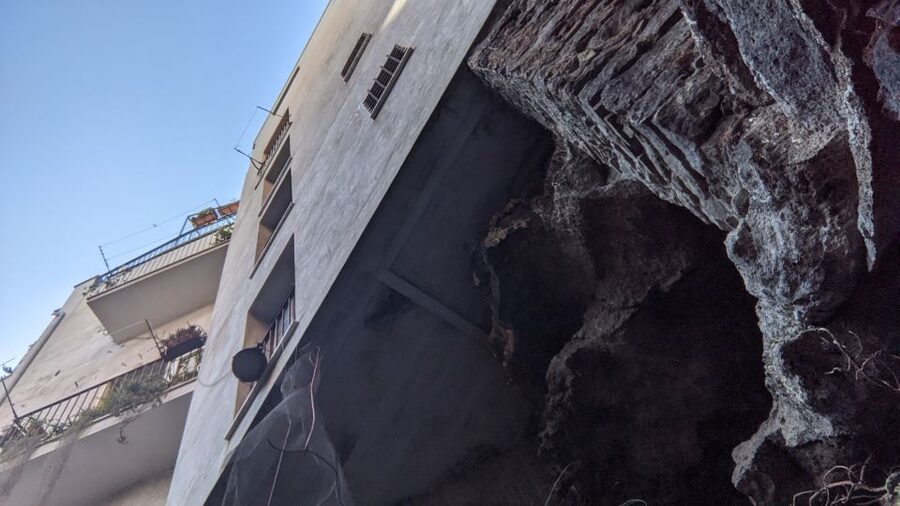
Catania is a city built and rebuilt on top of itself. Its underground spaces show the results in a way that ordinary sightseeing cannot. You see volcanic rock beside Roman construction, water flowing below public squares, and churches with lower chambers tied to older religious traditions.
The tour begins near the ruins of the Black Amphitheater, a Roman building once able to hold about 15,000 people. This is a useful starting point because it puts the city’s ancient past right in front of you before the group heads below street level.
From there, the route connects four separate sites. This is not one long tunnel system where you remain underground for the whole morning. Instead, you visit individual places and walk through the center of Catania between them.
That arrangement works well. The above-ground sections help you understand how the buried spaces fit into the modern city. You pass along Via Etnea, Catania’s main street, while the guide points out late Baroque churches and grand palaces. The contrast is part of the lesson: the city’s polished facades sit above layers of lava, stone, and older buildings.
More Catania trips worth a second look
- Mount Etna: Return Funivia dell’Etna Cable Car Ticket
★ 4.0 · 240 reviews - Vatican: Museums & Sistine Chapel Entrance Ticket
★ 4.5 · 144,003 reviews - Milan: Cathedral and Duomo’s Terraces Entrance Ticket
★ 4.6 · 61,054 reviews
The Black Amphitheater and Catania’s Roman layer
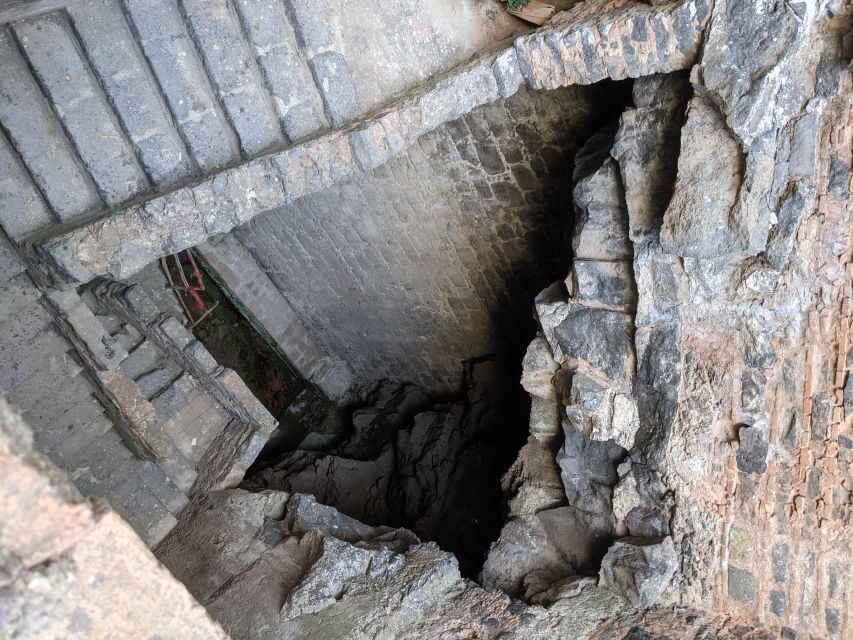
The Roman amphitheater is more than a meeting point. It introduces the scale of ancient Catania and gives the guide a place to explain how Roman buildings became part of the modern city’s foundations.
The monument is known as the Black Amphitheater because of its dark volcanic stone. Its original capacity, around 15,000 people, hints at the importance of Roman Catania. Today, only part of the structure is visible, while other sections remain beneath later buildings and streets.
This stop helps you read the rest of the tour. Underground Catania is not simply a collection of mysterious rooms. It is a record of repeated rebuilding after earthquakes, eruptions, fires, and other disasters. The guide connects these events to the remains around you, rather than treating each site as an isolated curiosity.
Entry to the Roman monument is included with the tour. That adds value, especially if you want a short introduction to Catania’s ancient architecture without arranging several separate admissions.
Lava caves shaped by Mount Etna
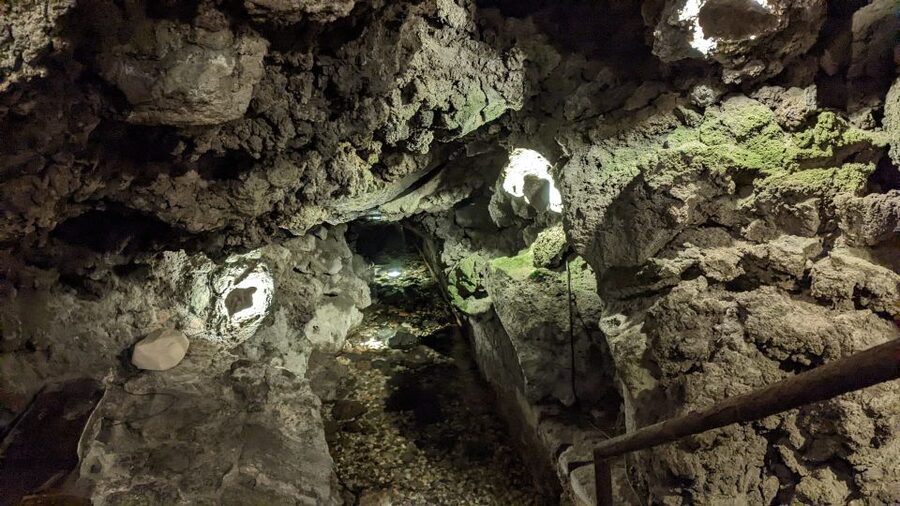
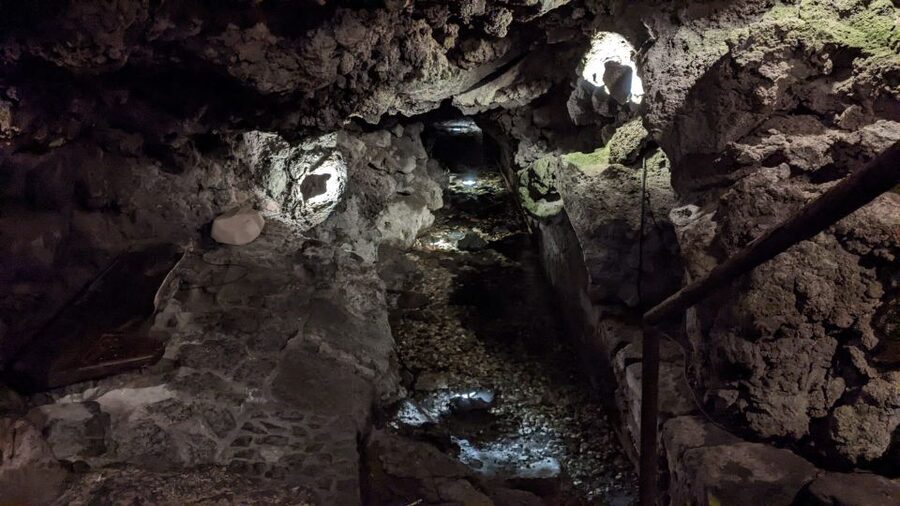
One of the most memorable parts of the tour is a prehistoric lava cave. Here, the force of Etna feels close, even though you are beneath the city. The cave shows how molten rock once moved through the area and later hardened into the volcanic material on which Catania was rebuilt.
The guide uses the cave to explain eruptions and their effect on the city. This is a stronger experience than simply looking at Etna from a distant viewpoint. You get a physical sense of the rock itself, along with an explanation of how lava flows altered streets and buildings over time.
The cave is also a welcome break in warm weather. The underground sites remain cool, and one stop along the route may include time for a drink. Still, bring sensible shoes. The ground can be uneven, and the route includes steps.
Do not expect a polished museum setting. These are old, raw spaces, and their appeal comes from the rough stone and awkward corners. If you prefer wide paths, bright lighting, and modern displays, this tour may feel basic. If you enjoy archaeology and geology, the lack of polish is part of the charm.
Following the Amenano underground river
The Amenano is one of Catania’s most intriguing natural features. The underground river is linked to the Amenano springs, and the tour follows its course into a cave.
Water has always shaped the city, even when it disappears from view. The river helps explain why some parts of Catania feel built over hidden channels and why certain lower spaces have a damp, enclosed character.
This stop adds variety to the tour. The Roman amphitheater gives you architecture, the lava cave gives you geology, and the Amenano offers a look at the natural water system beneath the city. Together, these sites make the underground feel like a living part of Catania rather than a pile of disconnected ruins.
You should expect some wet or slippery sections. One person specifically advised wearing good shoes because several steps were wet and irregular. That is practical advice, not a minor footnote. Lightweight trainers may be fine for many people, but shoes with a secure sole are the wiser choice.
A different way to spend the day, same part of Italy:
- Catania: Mount Etna Morning or Sunset Day Trip with Tasting
★ 4.8 · 4,028 reviews - Catania: Sunset Jeep Tour of Mount Etna and Lava Flow Caves
★ 4.8 · 2,113 reviews - Sicily: Etna and Alcantara Gorges Full-Day Tour with Lunch
★ 4.8 · 1,766 reviews - Catania: Etna Sunset Tour with Pickup and Drop-off
★ 4.8 · 1,348 reviews
Church crypts and unsettling stories
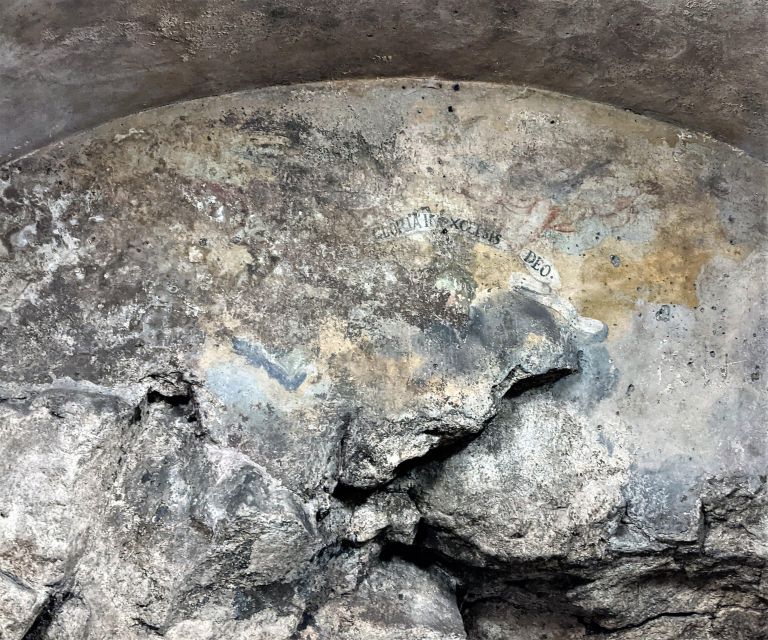
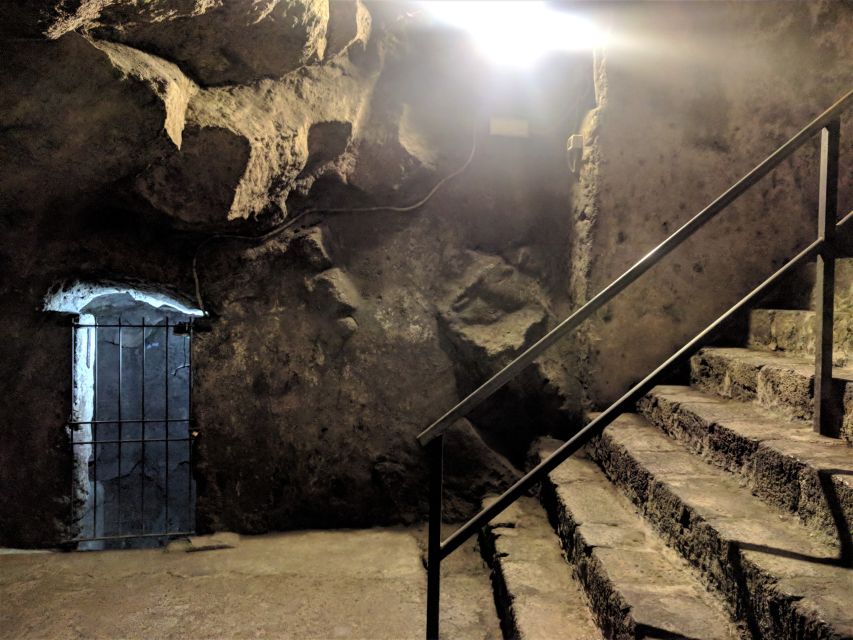
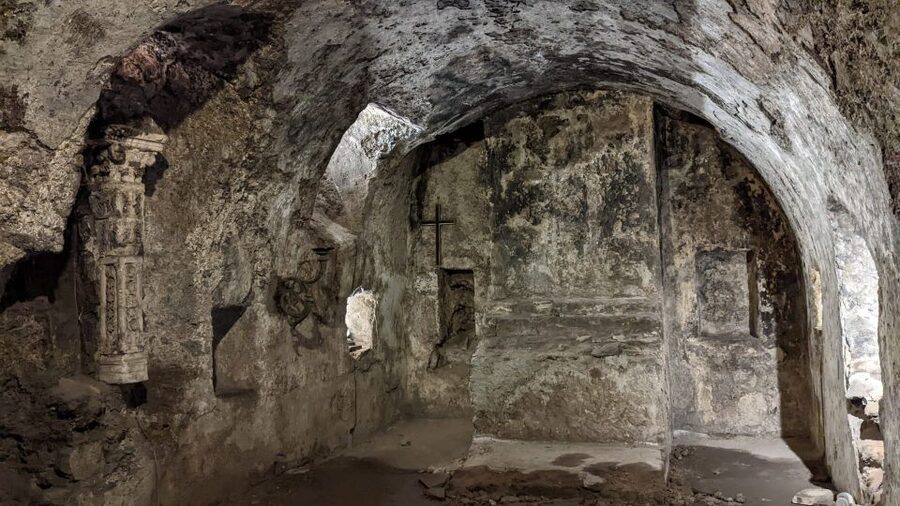
The tour also enters underground areas beneath historic churches. One cave is connected with the early keeping of Saint Agatha’s relics. Another lies beneath the bombed-out Church of Saint Euplius.
These places carry a different mood from the lava cave and Roman remains. The rooms are tied to worship, burial, destruction, and changing religious traditions. The lower spaces can feel eerie, particularly beneath a damaged church where the signs of war and loss remain part of the story.
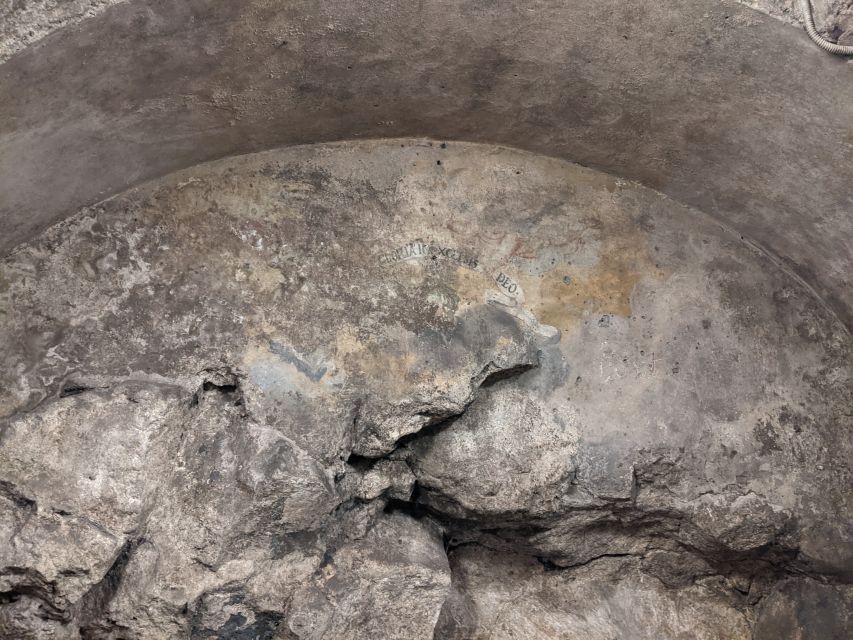
The late Baroque church stop is especially useful for understanding Catania above ground. The city is famous for its ornate architecture, but the spaces beneath those grand interiors tell a less polished story. The guide may draw your attention to frescoes, unusual details, and local legends before leading the group below the floor.
This is where the quality of the guide matters most. A bare room or short tunnel can be difficult to interpret by itself. Guides such as Oreste have been praised for combining archaeology, art history, and entertaining local stories. The best explanations connect the physical place with the people who used it.
Walking between sites on Via Etnea
The tour is partly underground sightseeing and partly a guided walk through central Catania. You move from one site to the next on foot, usually along Via Etnea and nearby streets.
That walking gives you a chance to see Catania’s late Baroque face. Look up as you go. Aristocratic palaces, churches, and volcanic-stone details are easy to miss when you are focused on traffic and shopfronts.
The route also means you should not book this as a sit-down activity. You will spend time standing, walking, listening, and climbing. One participant described the walking as substantial, especially after already spending a morning on foot.
The pace is generally manageable, and the full duration is about 2.5 hours. Still, the experience will feel more tiring in hot weather or if you have mobility problems. The cool underground rooms provide some relief, but they do not remove the need for steady walking above ground.
The guide makes the difference
The guide is the main reason to choose this experience instead of simply visiting Catania’s better-known monuments. The underground places are not always easy to identify from the street, and some are not available for casual open sightseeing.
Oreste is named repeatedly in the feedback and is described as friendly, entertaining, and strong in archaeology and art history. Other guides have also been praised for explaining the material clearly, answering questions, and keeping the group together through crowded streets.
Language needs careful attention when you book. The activity is offered in Italian and English, but some departure times may be primarily Italian. At several Italian-language departures, guides translated into English for the non-Italian speakers. That accommodation was appreciated, but bilingual guiding can slow the pace and make the explanation feel divided.
One participant found a group of nearly 30 people too large, especially when the guide had to switch between Spanish and English. Another found it hard to hear in some underground spaces because of the acoustics. If a smaller group or fully English presentation matters to you, check the exact option and language before paying.
Even with that caution, the guide-led format is important. You get the context of Greek and Roman Catania, the effects of Etna, the city’s religious past, and the story of its buried spaces in one connected visit.
Is $29 a fair price?
The listed price is $29 per person. For that amount, you receive entry to four underground locations and a live guide. One of the attractions, the Roman amphitheater, is normally a paid sight, while some other spaces may not be accessible without organized entry.
That makes the tour good value for people who would otherwise spend time trying to locate several lesser-known sites. You are also paying for interpretation, not just admission. A cave or underground chamber can be interesting, but the details about lava flows, Saint Agatha, Roman construction, and Catania’s disasters give each stop meaning.
The value is less obvious if you only want a quick look at one monument. You will be walking between several places, so this is not the fastest way to see the city. It is a strong choice for anyone who wants the city’s buried layers explained in one outing.
At $29, I would treat it as a history and geology tour with four admissions included. That is a better way to judge it than comparing it with a single church visit.
Who should book this experience?
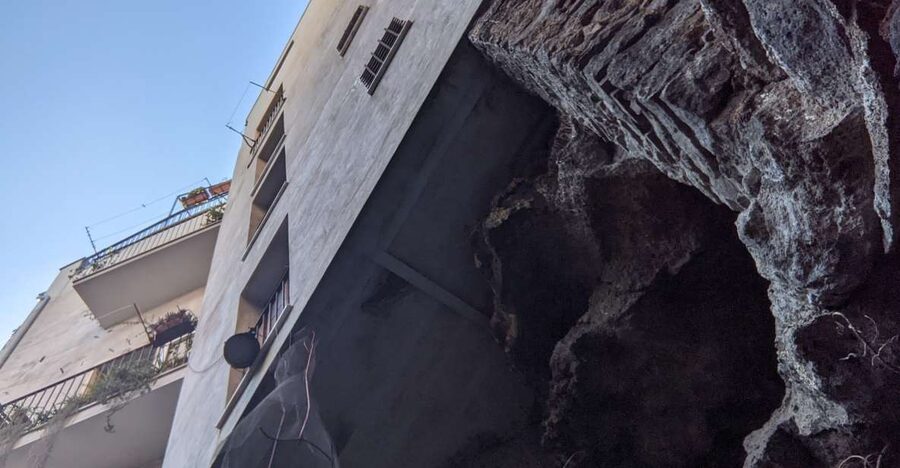
I would recommend it to you if you enjoy archaeology, local history, geology, unusual religious sites, or city walks with a clear theme. It is particularly good for a first visit to Catania because it introduces several eras at once and helps explain why the city looks the way it does.
It also suits repeat visitors. One person who grew up in Catania had never seen the underground locations before. That tells you how easy these places are to miss, even if you already know the city above street level.
Families with older children may enjoy the Roman ruins, caves, and darker church stories, but the route is not designed for strollers or wheelchairs. People with claustrophobia may find the enclosed spaces uncomfortable. The activity is also listed as unsuitable for people with motion sickness, mobility impairments, and anyone weighing more than 280 pounds, or 127 kilograms.
Leave large bags and luggage behind. Weapons, sharp objects, alcohol, drugs, and fireworks are not allowed. The tour runs in rain or shine, though the organization may cancel or change the route if conditions make a site unusable. If one location is unavailable, it can be replaced by another underground site.
Practical tips for a better visit
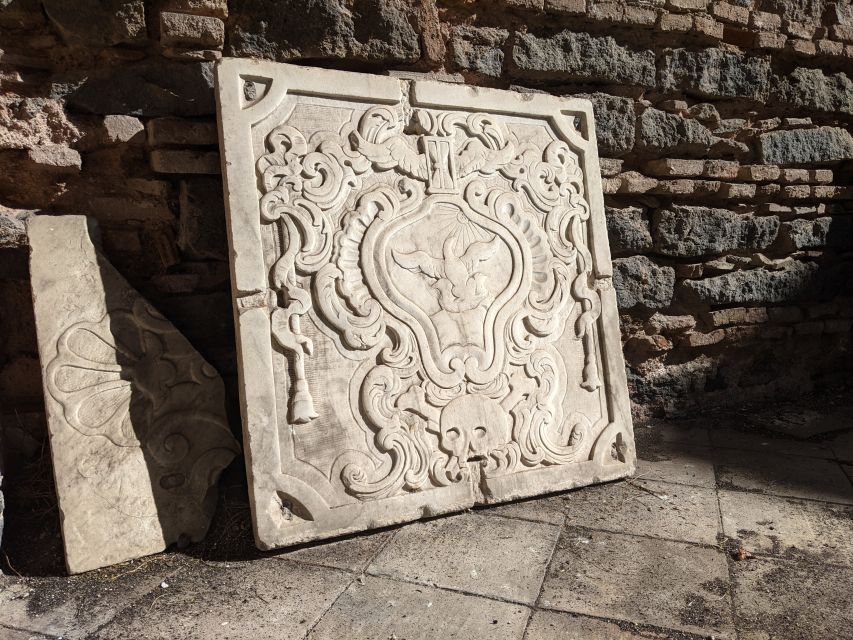
Wear sturdy, closed shoes. A few steps may be irregular, and some can be wet. This is the single most useful preparation you can make.
Bring a light layer. The underground sites are cool, while the walk through central Catania may feel warm. The temperature change is pleasant, but you will be happier with an extra layer you can carry.
Do not bring a large suitcase or oversized bag. The restrictions are sensible for narrow spaces, and luggage would make the walking and entry process harder.
Arrive ready to walk between sites. Hotel pickup and drop-off are not included, and the meeting point can vary by the option booked. Check your confirmation carefully so you do not head to the wrong part of central Catania.
If you do not speak Italian, confirm the language of your departure. English may be available, but the guide may need to translate during an Italian-led tour. That can work well with a small group, but it can take longer with a large one.
Expect the itinerary to change if a site is closed or unsafe. The replacement will be another underground location selected by the organization, so the exact four stops are not guaranteed in every circumstance.
Should you book Underground Catania?
Book it if you want to understand Catania from below, not just photograph its Baroque squares. The combination of lava cave, Roman ruins, Amenano waterway, and church spaces gives you a clear sense of how nature, religion, war, and rebuilding shaped the city.
Skip it if you dislike enclosed spaces, uneven steps, or walking tours with frequent stops. Also think twice if you need a strictly English-language tour or a very small group, and check those details before booking.
For most history-minded visitors, $29 is a sensible spend. You see four unusual sites, receive the background that makes them meaningful, and gain a view of Catania that is hard to find by wandering alone.
FAQ
How long does the Underground Catania tour last?
The tour lasts about 2.5 hours.
How many underground places are included?
Entry to four different underground places is included.
What sites can I expect to visit?
The experience includes a prehistoric lava cave, an ancient Roman monument, a cave connected with the Amenano underground river, and underground spaces linked with historic churches. The exact site may change if a location is unavailable.
Is the tour offered in English?
The activity lists Italian and English as available languages. Some departures may be primarily Italian, with the guide translating into English when needed. Check the language option before booking.
Where does the tour begin?
The guide meets you near the ruins of the Black Amphitheater, but the meeting point can vary depending on the option booked. Check your booking details for the confirmed location.
Is hotel pickup included?
No. Hotel pickup and drop-off are not included.
Are there many stairs?
You will climb some steps to reach the different sites, and some steps may be irregular or wet.
Is the tour suitable for wheelchair users?
No. The activity is not suitable for wheelchair users, people with mobility impairments, or people with claustrophobia. It is also listed as unsuitable for people with motion sickness and people over 280 pounds, or 127 kilograms.
Recently reviewed around Catania
- Etna, Wine and Alcantara Tour – From Taormina★ 5.0 · 464 reviews
- The Original Catania Street Food and Market Tour by Streaty★ 5.0 · 345 reviews
- The Godfather Movie Tour★ 5.0 · 275 reviews
- Syracuse, Ortigia and Noto walking tour from Catania★ 5.0 · 273 reviews
- Etna and Alcantara Gorges Excursion★ 4.5 · 256 reviews
- Etna Tour in 4×4★ 5.0 · 583 reviews
- Etna Morning Jeep Tour★ 4.5 · 241 reviews
- Mt. Etna and Taormina village full day tour from Catania★ 5.0 · 1,155 reviews
Sicily Tours, compared.

Mount Etna Morning or Sunset Day Trip with Tasting
Read our review →
Mount Etna: Guided Volcano Summit Hiking Tour with Cable Car
Read our review →
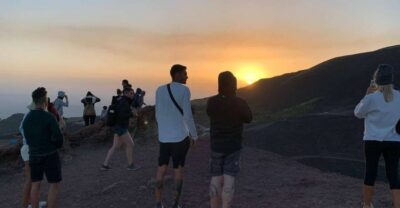
Sunset Jeep Tour of Mount Etna and Lava Flow Caves
Read our review →
Palermo Original Street Food Walking Tour by Streaty
Read our review →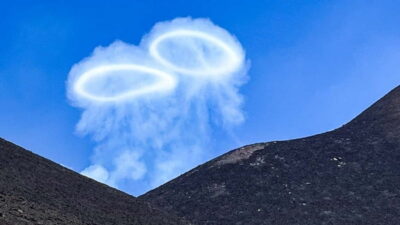
Mount Etna: Trek to 3000m with cable car and jeep
Read our review →Browse the lists this tour appears in