
Review · WALKING TOURS
Florence: Renaissance and Medici Tales Guided Walking Tour
Florence’s greatest story is how money, politics, art, and family ambition met in one compact city. This Medici and Renaissance walking tour follows that story from San Lorenzo to the Uffizi, with stops at the Duomo, Palazzo Vecchio, Ponte Vecchio, and several less obvious details along the way.
I like the way the tour uses storytelling instead of a list of dates, and I like that guides such as Chiara, Michele, Glenda, Fabio, and Angela add practical advice about food, drinks, shopping, and what to see next. The main consideration is that this is an exterior walking tour, so entrance tickets to the Duomo, Uffizi, or other sights are not part of the price.
In This Review
- Key points to know before you book
- Why the Medici story makes Florence easier to understand
- Meeting the guide at San Lorenzo
- Palazzo Medici Riccardi and the family behind the city
- The Duomo, Giotto’s Bell Tower, and Brunelleschi’s Dome
- Dante, civic power, and Piazza della Signoria
- Ponte Vecchio and the walk toward the Uffizi
- How much walking and time to allow
- The free-tour price and the tip question
- Who will get the most from this Florence walk
- Practical strengths and small limitations
- Should you book the Renaissance and Medici Tales tour?
- FAQ
- Where does the Florence walking tour start?
- Where does the tour finish?
- How long does the tour last?
- Which languages are available?
- Is the tour wheelchair accessible?
- Does the tour include entry tickets?
- Does the tour run in bad weather?
- What should I bring?
- How does the price and cancellation policy work?
Key points to know before you book
- The route connects Florence’s big sights: San Lorenzo, Palazzo Medici Riccardi, the Duomo, Dante’s house, Palazzo Vecchio, Ponte Vecchio, and the Uffizi.
- The Medici family is the main thread: You learn how several generations shaped Florence’s politics, buildings, art, and public life.
- The guides rely on memorable tales: Chiara, Michele, Glenda, Fabio, Angela, and other guides are praised for clear delivery, humor, and strong storytelling.
- It is useful on your first day: The route gives you a working map of central Florence and suggestions for eating, drinking, and shopping.
- Expect roughly two to two and a quarter hours on foot: Wear comfortable shoes and bring water, a camera, and clothing for the weather.
- The low price needs context: The advertised cost is $2.36 per person, but the free-tour model also relies on a tip at the end.
Why the Medici story makes Florence easier to understand
You can walk through Florence and see one famous building after another without grasping how they fit together. This tour gives the city a clear plot. The Medici family provides the central thread, while the Renaissance artists, poets, architects, and political figures fill out the story.
That approach matters because Florence is not simply an open-air art catalogue. The city’s churches, palaces, squares, and bridges reflect competition for power as much as artistic taste. A guide can point out how a building or symbol relates to a family, a civic struggle, or a changing idea of public life.
The tour also looks at the symbols found around the city. You are not just shown a facade and given its construction date. You are encouraged to notice emblems and images, then consider what they communicated to people who lived in Florence generations ago.
Several guides receive especially warm praise for making this material easy to follow. Chiara is repeatedly described as engaging and patient, Michele as an enthusiastic storyteller, and Glenda as detailed and clear. Fabio, Angela, Antonio, Ricardo, and others are also praised for bringing the subject to life without turning the walk into a dry lecture.
More Walking Tours in Florence
- Florence: Guided Walking Tour
★ 4.5 · 3,334 reviews - Skip the line: Uffizi and Accademia Small Group Walking Tour
★ 4.5 · 3,135 reviews - Florence: Guided Walking Tour
★ 4.6 · 1,602 reviews
Meeting the guide at San Lorenzo
The starting point is Florence Free Tour-Tale, in Piazza di San Lorenzo. Look for the green umbrella in front of the stairs leading to the main entrance of the Basilica of San Lorenzo.
This is a sensible place to begin. San Lorenzo gives you an immediate lesson in Florence’s mixed architectural character, with Renaissance and Romanesque elements side by side. The basilica is also closely linked to the Medici family, so the first stop introduces both the city’s art and its ruling family.
I like starting here because you are quickly placed in the historic center, rather than spending precious tour time walking in from the edge of town. The square can be busy, so arrive with enough time to locate the green umbrella and settle in before the group moves off.
The tour is offered in English and Spanish. Some guides use a microphone and earpieces, a useful feature in narrow streets or around busy squares. Ask at the start if you are unsure how the audio system works.
Palazzo Medici Riccardi and the family behind the city
From San Lorenzo, the story moves to Palazzo Medici Riccardi. This is where the tour begins to show how the Medici family turned influence into a lasting physical presence.
The important point is not only that the family was wealthy. The Medici used patronage, political alliances, and public projects to shape the city’s identity. Their support helped create the conditions in which artists and thinkers could work, while their buildings made their authority visible.
You will hear tales of family rivalry, ambition, and political maneuvering. These stories are one of the strongest reasons to choose this walk. Florence’s past can feel remote when presented as a chain of names, but the Medici material gives it human motives: loyalty, fear, pride, rivalry, and the need to control public opinion.
The guide’s role is especially valuable here. You can see the palace on your own, but you may miss why its location and appearance mattered. The tour does not treat the building as an isolated sight. It places it within the larger contest for control of Florence.
The Duomo, Giotto’s Bell Tower, and Brunelleschi’s Dome
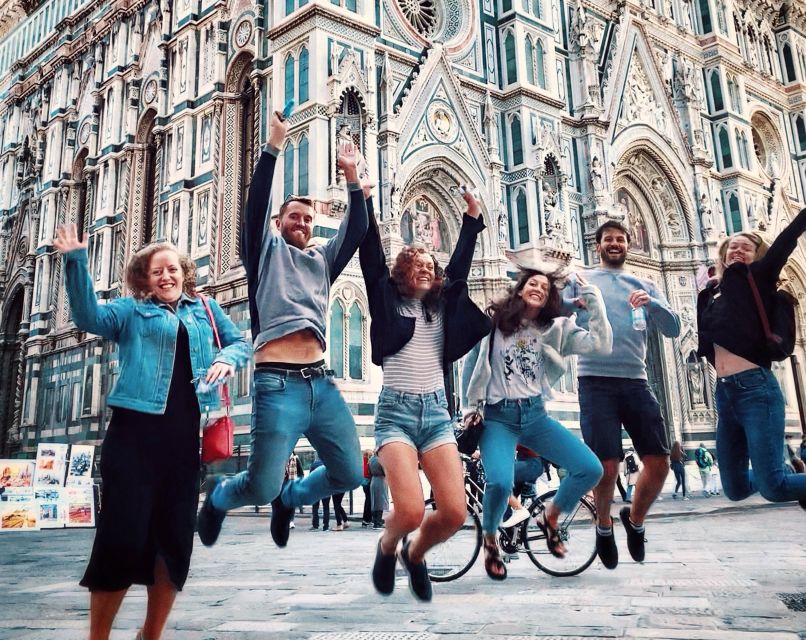
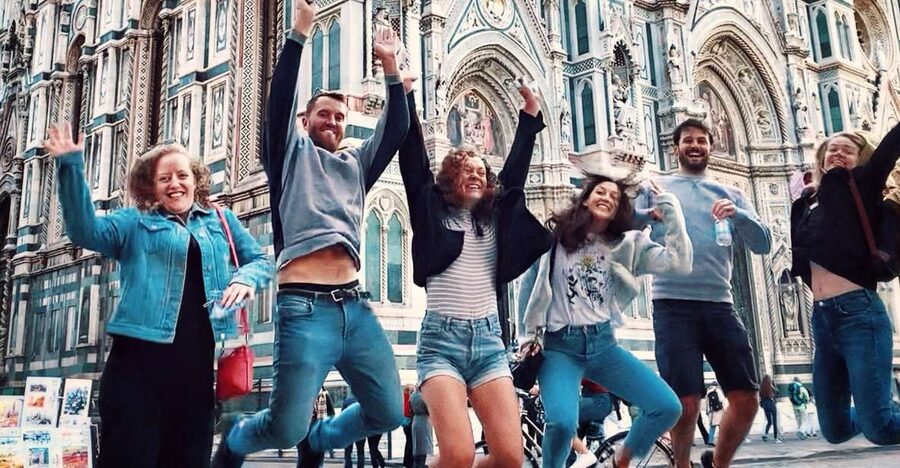
The route then reaches the Florence Duomo complex, including Giotto’s Bell Tower and Brunelleschi’s Dome. These are among the city’s most recognizable sights, but a good explanation adds much more than another photograph.
The Cathedral of Santa Maria del Fiore represents Florence’s ambition on a grand scale. Brunelleschi’s Dome is not just a striking roof. It is an engineering and civic story, tied to the city’s desire to prove what it could achieve.
A guide can also help you read the Duomo complex as a group rather than as separate monuments. The cathedral, bell tower, and dome form one powerful visual statement. Looking at them together makes the city’s artistic confidence easier to grasp.
This is a guided exterior visit, not a dome climb or cathedral entry. That distinction matters. No admission tickets are listed as included, and the walk does not replace a separate visit inside the cathedral complex. If you want to climb Brunelleschi’s Dome or explore the interior, you will need to arrange that independently.
Still, the stop works well for orientation. You get time to take in the scale, hear the story behind the dome, and learn what details to watch for when you return on your own.
More Florence walks with a guide:
- Florence: Uffizi & Accademia Small Group Walking Tour
★ 4.7 · 1,380 reviews - Skip-the-Line Florence Highlights and David Walking Tour
★ 5.0 · 1,127 reviews - Florence: Dark Mysteries and Legends Guided Walking Tour
★ 4.6 · 1,081 reviews - Florence in a Day: Michelangelo’s David, Uffizi and Guided City Walking Tour
★ 4.5 · 1,048 reviews
Dante, civic power, and Piazza della Signoria
The itinerary continues to the House of Dante, Palazzo Vecchio, Piazza della Signoria, and Loggia dei Lanzi. Here the emphasis broadens from the Medici to Florence’s literary and civic life.
Dante helps connect the city to a period before the Renaissance reached its height. His story also reminds you that Florence’s history includes conflict and exile, not only artistic success. The House of Dante stop is presented as a place to hear about the poet and his link to the city, rather than as a full museum visit.
Palazzo Vecchio brings the focus back to government and public power. Its location in Piazza della Signoria makes the connection plain. This was a place where Florence’s political life played out in front of the public.
Loggia dei Lanzi adds an art-history layer to the square. The open arcade and its sculptures show how public spaces could also act as galleries and political statements. Your guide can help you look beyond the most photographed statue and notice the way the entire square was designed to communicate strength.
This portion of the route is useful if you want more than a Medici family biography. You see how writers, rulers, artists, and ordinary civic space fit into the same story.
Ponte Vecchio and the walk toward the Uffizi
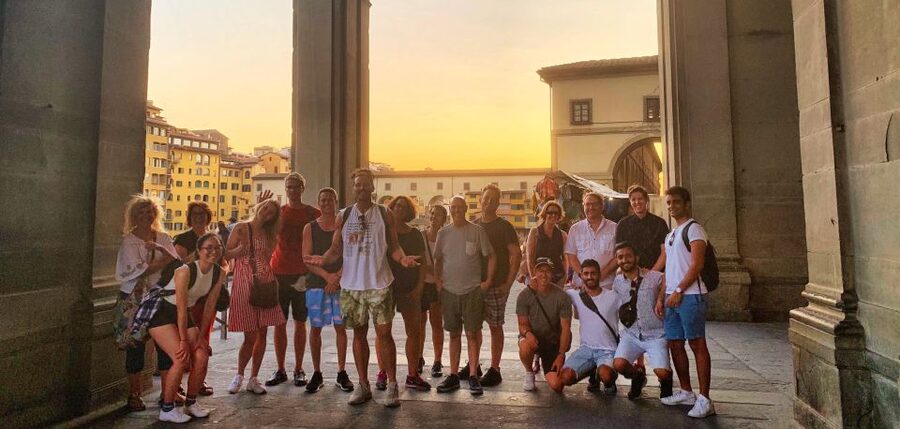
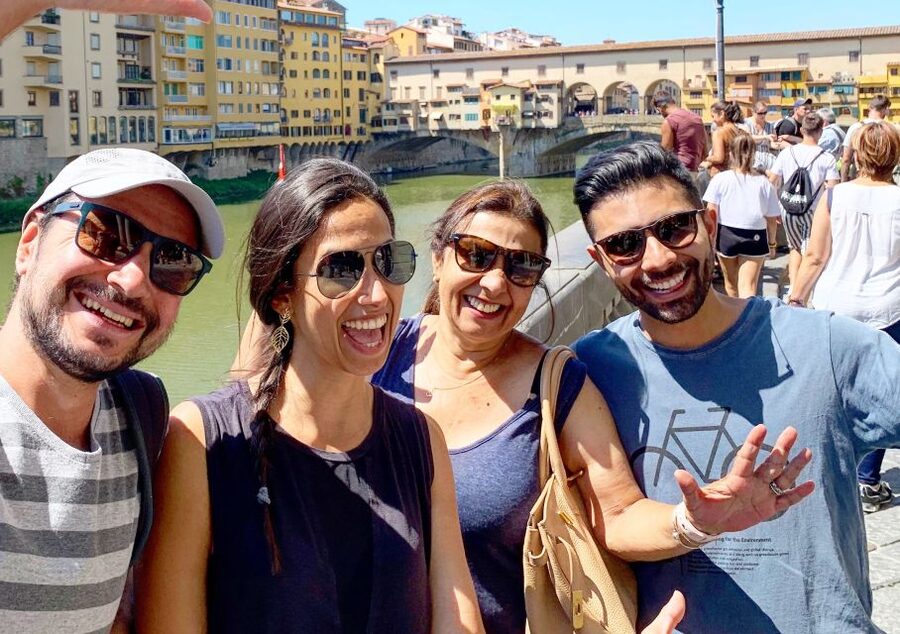
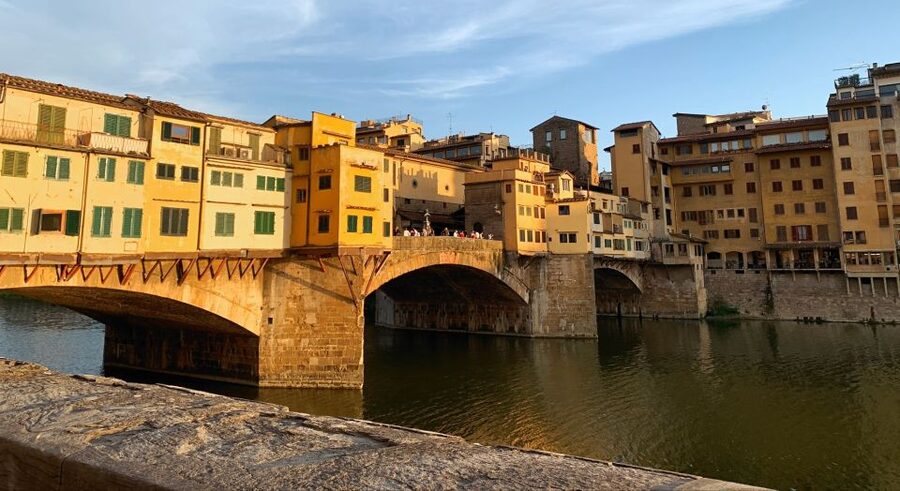
The final major stop is Ponte Vecchio, followed by the finish outside the Uffizi Gallery. The bridge is an easy place to take a picture, but it also gives the guide another chance to explain how Florence’s commercial and political center developed around the Arno.
The walk to this point helps you connect the northern and southern sides of the central city. You are not being driven between isolated attractions. You are learning the relationships between them by walking through the streets.
Ending outside the Uffizi is practical. You can continue with a scheduled museum visit, pause for photos, or follow the guide’s suggestions for the rest of the day. The tour itself does not include Uffizi admission, so do not assume you will enter as part of the walk.
I especially like the ending because the guide’s local advice comes at the right moment. You can ask where to eat, have a drink, or shop after you have already seen the main landmarks. Several guides, including Michele and Glenda, are praised for offering useful recommendations rather than simply ending the tour at the final monument.
How much walking and time to allow
The advertised duration is two hours, while the detailed route gives a guided time of about two and a quarter hours. In practical terms, plan for a little more than two hours from start to finish.
The route covers a substantial part of central Florence, but it is paced as an orientation walk rather than a march between every sight. One guide was praised for slowing down so the group could understand the important places, while other comments describe the pace as steady and comfortable.
You will be standing often, listening in squares and streets, then walking onward. Comfortable shoes are essential. Bring water, a camera, and clothing suited to the forecast.
The tour runs rain or shine. That is worth taking seriously in Florence, where wet stone streets and crowded covered areas can make listening harder. A light rain layer and shoes with a good grip will make the walk more pleasant.
The route is listed as wheelchair accessible. Because this is a city walking tour through historic streets and public spaces, it is still sensible to confirm current conditions if you have specific mobility needs.
The free-tour price and the tip question
At $2.36 per person, the listed price is remarkably low for a guided orientation lasting about two hours. But this operates on a free-tour model. One booking described a payment of 4.90 euros followed by a tip based on satisfaction, and another specifically advised bringing cash for the guide.
So think of the booking price as access to the reservation rather than the complete expected cost. You decide the tip, but tipping is an important part of how this kind of tour works. If you value the guide’s time and stories, be prepared to contribute at the end.
That structure can be good value, especially if you want an affordable introduction before spending money on museum entries or longer paid tours. It also lets you keep your plans flexible, since you can reserve now and pay later, with free cancellation up to 24 hours before the start for a full refund.
The tradeoff is less price certainty. If you prefer a fixed all-inclusive tour with admission tickets and no tip decision, this is not that product.
Who will get the most from this Florence walk
I would choose this tour for a first day in Florence. It gives you a map of the central sights, explains why the Medici matter, and helps you decide which places deserve a return visit.
It also suits families with older children and teenagers. The stories about power, artists, rivalry, and Florence’s rulers can hold attention better than a sequence of technical art terms. One family found the tour particularly successful with teenagers, who preferred its narrative approach.
You do not need a specialist interest in Renaissance art. The material covers Florence across several periods and includes Dante, Michelangelo, architecture, politics, and daily recommendations. That makes it a useful crash course for a first-time visitor.
I would be less likely to choose it if you have already spent several days on guided tours of the Duomo, Medici sites, and Palazzo Vecchio. In that case, the broad overview may repeat material you already know. It is also not the right pick if your priority is entering monuments, climbing the dome, or spending long periods inside museums.
Practical strengths and small limitations
The strongest feature is the guide-led storytelling. Names and dates become easier to remember when attached to a family quarrel, a political decision, an artist’s work, or a symbol on a building.
The second strength is the route. It includes major sights without pretending that Florence can be fully explained in one afternoon. San Lorenzo, the Medici palace, the Duomo, Dante’s quarter, Piazza della Signoria, Ponte Vecchio, and the Uffizi give you a useful framework for later exploring.
The third strength is the local advice. Guides have suggested places to eat, drink, and shop, and that information can be just as useful as the formal history when you are planning the rest of your stay.
The limitations are clear. You will not get extended interior visits or included admissions. The group may need to listen in crowded streets, although audio equipment is sometimes used. Weather can also affect comfort because the tour continues in rain.
The overall rating is 4.8 from 1,549 reviews, and the praise is unusually consistent around storytelling, enthusiasm, clear English, and useful orientation. I would still treat the individual guide as part of the equation, since the experience depends heavily on who leads your departure.
Should you book the Renaissance and Medici Tales tour?
Book it if you want a lively first look at Florence, especially if the Medici, Renaissance art, architecture, and city politics all appeal to you. The price is low, the route is well chosen, and the practical advice can improve the rest of your stay.
Go in expecting a walking introduction, not a museum tour. Wear proper shoes, bring water and weather protection, and allow for a tip. If you accept those terms, this is a smart way to get your bearings before returning to the Duomo, Palazzo Vecchio, the Uffizi, or other sites for a closer look.
FAQ
Where does the Florence walking tour start?
Meet at Florence Free Tour-Tale in Piazza di San Lorenzo. The meeting point is under the green umbrella in front of the stairs leading to the main entrance of San Lorenzo Church.
Where does the tour finish?
The walk ends outside the Uffizi Gallery.
How long does the tour last?
The activity is advertised as lasting two hours. The detailed guided route lists approximately two and a quarter hours, so allow a little more than two hours.
Which languages are available?
The tour is offered in English and Spanish.
Is the tour wheelchair accessible?
Yes, the activity is listed as wheelchair accessible.
Does the tour include entry tickets?
No entry tickets are listed among the inclusions. The activity includes the walking tour and guide, and the stops are presented as guided visits to the sites along the route.
Does the tour run in bad weather?
Yes. The tour takes place rain or shine. Bring weather-appropriate clothing and comfortable shoes.
What should I bring?
Bring comfortable shoes, water, a camera, and clothing suited to the weather.
How does the price and cancellation policy work?
The listed price is $2.36 per person, and the tour uses a free-tour model in which a tip is expected according to your satisfaction. You can reserve now and pay later, and cancellation up to 24 hours in advance qualifies for a full refund.
Recently reviewed around Florence
- Walking Food Tour of Florence with Tastings and Wine★ 5.0 · 518 reviews
- Florence Sunset Food Tour with Wine & Dine at a Tuscan farmhouse★ 5.0 · 194 reviews
- Wine Experience In Chianti Hills from Florence★ 4.5 · 195 reviews
- Wine Tasting Experience in Ponte Vecchio: Best Tuscany selection!★ 5.0 · 197 reviews
- Uffizi Gallery Timed Entry Admission Tickets★ 4.0 · 392 reviews
- Val d’Orcia Brunello Wine Tour with Montalcino and Montepulciano★ 4.5 · 359 reviews
- Uffizi Gallery Small Group Tour with Guide★ 4.5 · 879 reviews
- Early Access Guided Uffizi Gallery Tour Skip-the-Line Small Group★ 4.5 · 707 reviews
Walking Tours, compared.
Guided Walking Tour & Last Supper Visit with Ticket
Read our review →
Rialto Bridge & Offbeat Unusual Venice Walking Tour
Read our review →
Private 3 hrs Venice Tour: St Mark’s, Walking tour & Boat tour
Read our review →
Skip the line: Uffizi and Accademia Small Group Walking Tour
Read our review →
Trastevere & Campo de Fiori Street Food Walking Tour
Read our review →Browse the lists this tour appears in