

Review · MUSEUMS
Florence: Timed Entrance Ticket to San Marco Museum
The most moving part of San Marco is not a grand hall but a set of quiet friars’ cells, each decorated with a simple fresco by Beato Angelico. You walk through a working Dominican convent, then come face to face with the cell of Girolamo Savonarola, the fiery preacher who ended his life at the stake.
I like the calm, intimate scale of this museum, and I like that the ticket lets you step beyond Florence’s busiest headline sights into a place where art and religious life remain closely linked. The main drawback is that this is an unguided visit, and some displays may offer limited English information.
In This Review
- Key points to know before you go
- Why San Marco feels different from Florence’s big museums
- Entering through Piazza San Marco
- The cloister and Michelozzo’s convent
- Fra Angelico’s cells and the famous Annunciation
- Savonarola’s cell and Florence’s religious conflict
- The Great Refectory, kitchen, and service areas
- How much time should you allow?
- Is the $15 ticket good value?
- Who should book San Marco Museum?
- Should you book this timed ticket?
- FAQ
- Where is the San Marco Museum?
- What does the timed ticket include?
- How much does admission cost?
- How long is the ticket valid?
- Can I arrive at any time during the day?
- Is the museum wheelchair accessible?
- Can I cancel the booking?
- Do I need to pay at the time of booking?
- Are accompanying people admitted with one ticket?
Key points to know before you go
- Fra Angelico’s frescoes give the convent its emotional center, especially the Annunciation.
- Savonarola’s cell adds a sharp political and religious story to the art.
- Michelozzo’s 15th-century convent is as important as the paintings inside it.
- The Dominican community still lives here, so the building feels less like a display case than a former religious home.
- Timed entry costs $15 per person and includes the booking fee, but not a guide or audio tour.
- The visit is valid for one day, though your selected date and time slot are binding.
Why San Marco feels different from Florence’s big museums
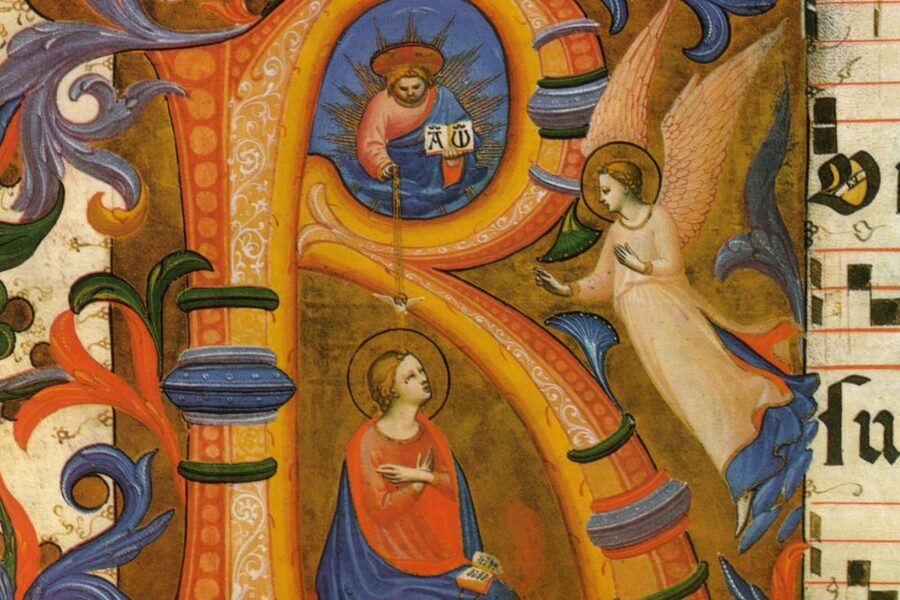
Florence can make art viewing feel like a race. You queue for the Uffizi, angle through rooms of Botticelli, then try to keep your bearings among crowds near the Duomo. San Marco offers a slower rhythm.
The museum occupies a church and a 15th-century Dominican convent. Its rooms are not just containers for paintings. They show how art worked inside a religious community, where images were meant for prayer, teaching, and daily reflection.
That setting changes the way you see Fra Angelico. His work is not gathered in a distant gallery and stripped from its original purpose. Many frescoes remain in the spaces where friars once lived and prayed. The result is quiet and personal, sometimes austere, and often more affecting than a larger collection.
The museum’s rating of 4.6 from 396 reviews fits the experience well. San Marco is not Florence’s biggest attraction, but it can become one of the city’s most memorable stops if you care about early Renaissance painting, religious art, or the texture of old buildings.
More Museum Tours in Florence
- Florence: Skip-The-Line Uffizi Gallery Timed Entry Ticket
★ 4.5 · 27,832 reviews - Florence: Leonardo Interactive Museum Entry Ticket
★ 4.5 · 11,763 reviews - Florence Accademia Gallery Tour with Entrance Ticket Included
★ 4.5 · 6,148 reviews
Entering through Piazza San Marco

Your visit begins at the museum ticket office inside San Marco, at Piazza San Marco 3. Before entering, pause in front of the exterior. The building has a stately, restrained appearance that prepares you for the convent within.
Your timed ticket matters. The date and time you select are binding, and you can be refused entry if you arrive outside the allotted slot. That makes this a useful booking for a tightly planned Florence day, but it also means you should not treat the time as a loose suggestion.
The ticket is designed to let you skip the ticket line. It does not turn the visit into a guided tour. You enter on your own, and the activity ends back at the museum rather than continuing to another sight.
The entrance arrangement is straightforward. Keep your digital voucher ready and allow enough time to reach Piazza San Marco without rushing. One practical advantage here is that you do not need to meet a guide elsewhere in the city.
The cloister and Michelozzo’s convent
The convent was renovated by Michelozzo, one of the leading architects of the Renaissance, under the patronage of Cosimo de’ Medici, Grand Duke of Tuscany. The architecture is measured and elegant, with a sense of order that suits the Dominican setting.
The Cloister of St. Anthony is an early highlight. Its open space gives you a chance to settle into the visit before moving toward the painted rooms. Look closely at the old doors and the fresco decoration around them. These details can be easy to pass when you are focused on famous names, but they help explain how thoroughly art was woven into the convent.
San Marco also retains the feel of a religious house. Dominican monks still live there, and the building’s apartments and service areas make the place feel different from a museum built solely for public display. You may find the atmosphere spare rather than lavish. That is part of the appeal.
The architecture rewards patience. You do not need to know every technical term to appreciate the clean proportions, pale surfaces, cloistered design, and transition from public religious areas to private cells. The museum’s best moments come when you notice how the building guides you from one kind of space to another.
Fra Angelico’s cells and the famous Annunciation

The central reason to visit San Marco is the work of Fra Angelico, also known as Beato Angelico. He was a Dominican friar and one of the major painters of the Florentine Renaissance.
His frescoes in the convent’s cells are not built for theatrical effect. They are small, quiet images intended for contemplation. Their placement matters. A friar did not view them in a crowded gallery while hurrying toward the next masterpiece. He encountered them as part of daily religious life.
The Annunciation is the work many people will want to see first, and it is worth giving it time. The scene is restrained, clear, and devotional. Its power comes from the calm exchange between the figures and from the way the fresco belongs to the convent architecture around it.
As you continue through the cells, watch how the images work with simple rooms. The limited setting puts attention on gesture, expression, and spiritual focus rather than spectacle. I find this makes San Marco a better place for close looking than for ticking off a long list of objects.
The cells also reveal the convent’s original purpose. These were living and working spaces, not grand display rooms. The scale can feel almost austere, but that simplicity is exactly what gives the paintings their force.
English information is not guaranteed beside every work. Some exhibition text may be in Italian only, so you will get more from the visit if you already know a little about Fra Angelico or use a guidebook. Since no guided tour is included, independent preparation can make a real difference.
More Florence museums and collections:
- Uffizi Gallery Small Group Tour with Guide
★ 4.5 · 4,923 reviews - Florence: Accademia Gallery Guided Tour
★ 4.6 · 4,156 reviews - Florence: Accademia Gallery Guided Tour with Entry Ticket
★ 4.6 · 2,253 reviews - Golf Cart Tour to Fiesole Roman Theatre and Museum
★ 4.5 · 2,039 reviews
Savonarola’s cell and Florence’s religious conflict
The visit also takes you to the cell associated with Girolamo Savonarola. His story gives San Marco a very different tone from Fra Angelico’s gentle devotional art.
Savonarola was a Dominican friar and a passionate preacher. He spoke against corruption and declining morals among the clergy, gaining a powerful following in Florence. His religious and political influence eventually collapsed, and he was hanged and burned at the stake in Piazza della Signoria.
Seeing the cell where he lived makes that story more immediate. You are not simply looking at a portrait or reading a date. You are standing in the convent that shaped his daily life and his public voice.
This stop is especially useful if you plan to visit Piazza della Signoria later. The cell and the square connect two parts of Florence: the private religious world of San Marco and the public political drama at the heart of the city.
Do not expect a large Savonarola exhibition based on the information provided. The value is the setting itself and the chance to place his life within the Dominican community. If your main interest is political history, you may want additional material beyond this ticket.
The Great Refectory, kitchen, and service areas
The route continues through the Great Refectory, the old kitchen, and other service spaces. These rooms show the practical side of convent life, which is easy to miss when the famous frescoes take center stage.
The refectory was where the community ate. Its scale and decoration help you imagine the convent as a functioning institution rather than a collection of sacred images. The kitchen and service areas add another layer, showing the work required to support the friars’ religious routine.
You will also see paintings by Fra Bartolomeo, another important painter and Dominican monk who lived at San Marco in the early 16th century. His presence broadens the visit beyond Fra Angelico and shows that the convent remained linked to significant Florentine art after Angelico’s time.
One painting that deserves attention is the Last Supper in the main-floor area. It may not have the fame of the Annunciation, but it helps connect the refectory to the religious scenes that decorated communal spaces.
This part of the museum is valuable because it gives you a fuller picture. You see art, architecture, monastic rooms, and practical spaces in one compact visit. The trade-off is that not every area may be open at every moment. Two rooms were reported closed during one visit, so do not assume every displayed section will be accessible on your date.
How much time should you allow?
The ticket is valid for one day, but the information does not set a fixed visit length. Your pace will depend on how closely you study the frescoes and how much time you spend with the architecture.
You can move through the museum fairly directly, but I would not treat San Marco as a quick photo stop. The small cells reward a pause, and the convent’s quiet character can disappear if you rush from room to room.
A morning slot may work well if you want to pair San Marco with other central Florence sights. One visitor found a 10 a.m. visit uncrowded, though conditions can vary. Advance booking may be less essential during a quiet period, but the timed ticket gives you certainty and avoids depending on luck.
Plan your day around the booked time rather than trying to squeeze San Marco into an open gap. Since late arrival can mean refused entry, the flexibility of a one-day ticket applies to the validity period, not to changing your appointed entrance time.
Is the $15 ticket good value?
At $15 per person, the ticket is reasonably priced for Florence, especially if you want a focused museum visit rather than another enormous collection. The cost includes the booking fee and timed admission.
The value is strongest for people who already appreciate Renaissance painting, religious architecture, or Florence’s political and church history. You receive access to Fra Angelico’s convent frescoes, the cloisters, Savonarola’s cell, Fra Bartolomeo’s paintings, and the convent’s refectory and service areas.
The value is less clear if you want a guided interpretation. There is no guided tour included, and an audio guide option is not provided in the available details. Some wall text may not be in English, so visitors who want a full explanation of every painting may find the ticket incomplete on its own.
The booking also includes a 10 percent discount at the Hard Rock Shop and Hard Rock Cafe Restaurant on Via dei Brunelleschi in Piazza della Repubblica. The shop discount excludes limited-edition and charity items, while the restaurant discount applies to the à la carte menu and excludes alcohol. These extras should not influence your decision much unless you already plan to visit those businesses.
Free cancellation is available up to 24 hours before the visit, and you can reserve now and pay later. That helps if your Florence plans are still shifting, but the chosen time remains fixed once booked.
Who should book San Marco Museum?

I would choose this experience if you want:
- A quieter art stop than the Uffizi or Accademia
- Close contact with Fra Angelico’s frescoes
- A real convent setting rather than a purpose-built gallery
- A link between Renaissance art and Dominican religious life
- A manageable museum visit in central Florence
- A self-guided experience at a moderate price
Families with older children may find the Savonarola story useful, especially if you later walk through Piazza della Signoria. Art students and readers interested in early Renaissance painting will have plenty to examine.
I would think twice if you need a guide to explain each room, if you dislike religious art, or if your schedule cannot handle a binding timed entry. The museum is wheelchair accessible, which makes it practical for visitors who need step-free access, though the supplied information does not describe every internal route.
Should you book this timed ticket?
Book it if you want Florence to slow down for an hour or two around quiet frescoes, cloisters, and monastic rooms. San Marco offers something the city’s larger museums cannot: art that remains tied to the rooms and religious purpose for which it was made.
Do not book it expecting a guided tour or a huge collection. Instead, arrive on time, read a little about Fra Angelico and Savonarola beforehand, and give the small cells the attention they deserve. For $15, this is a strong choice for an independent visitor who values atmosphere and original setting as much as famous names.
FAQ
Where is the San Marco Museum?
The museum is at Piazza San Marco 3, 50121 Florence, Tuscany. You start at the ticket office inside the museum.
What does the timed ticket include?
It includes timed entrance to the San Marco Museum and the booking fee. It does not include a guided tour.
How much does admission cost?
The listed price is $15 per person.
How long is the ticket valid?
The ticket is valid for one day. You must still enter during the specific date and time slot selected when booking.
Can I arrive at any time during the day?
No. The selected date and time slot are binding. You may be refused entry if you do not respect the allotted entrance time.
Is the museum wheelchair accessible?
Yes, the activity information identifies San Marco Museum as wheelchair accessible.
Can I cancel the booking?
Yes. You can cancel up to 24 hours in advance for a full refund.
Do I need to pay at the time of booking?
Not necessarily. The reserve-now-and-pay-later option lets you book your spot and pay later.
Are accompanying people admitted with one ticket?
No. Accompanying persons must purchase their own admission ticket.
Recently reviewed around Florence
- Walking Food Tour of Florence with Tastings and Wine★ 5.0 · 518 reviews
- Florence Sunset Food Tour with Wine & Dine at a Tuscan farmhouse★ 5.0 · 194 reviews
- Wine Experience In Chianti Hills from Florence★ 4.5 · 195 reviews
- Uffizi Gallery Timed Entry Admission Tickets★ 4.0 · 392 reviews
- Val d’Orcia Brunello Wine Tour with Montalcino and Montepulciano★ 4.5 · 359 reviews
- Wine Tasting Experience in Ponte Vecchio: Best Tuscany selection!★ 5.0 · 197 reviews
- Uffizi Gallery Small Group Tour with Guide★ 4.5 · 879 reviews
- Early Access Guided Uffizi Gallery Tour Skip-the-Line Small Group★ 4.5 · 707 reviews
Museums, compared.

Vatican: Museums & Sistine Chapel Entrance Ticket
Read our review →
Vatican Museums & Sistine Chapel Tour with Optional Basilica
Read our review →
Vatican Museums, Sistine Chapel & St Peter’s Basilica Guided Tour
Read our review →
Skip-The-Line Uffizi Gallery Timed Entry Ticket
Read our review →
Vatican Museums, Sistine Chapel & Basilica Tour
Read our review →
Vatican Museums & Sistine Chapel Skip-the-Line Entry Ticket
Read our review →Vatican Museums, Sistine Chapel & Basilica Tour
Read our review →
Vatican Museums & Sistine Chapel Guided Tour
Read our review →Browse the lists this tour appears in