
Review · TRAIN EXPERIENCES
From Rome: Ostia Antica Guided Half-Day Trip by Train
Ostia Antica gives you something central Rome cannot: a chance to walk through an entire Roman town, not just admire one grand monument. Along the Decumanus Maximus, you pass shops, taverns, baths, warehouses, theaters, and public toilets, getting a grounded picture of ordinary Roman life.
I like the easy train ride from Piramide and the small group, limited to 12 people. I also like the tour’s focus on daily routines, with stops at the communal Forica and the Baths of Neptune rather than only the usual marble statues and emperors. The main consideration is the amount of walking across an open archaeological site, with little shade in hot weather.
In This Review
- Key points to know
- Why Ostia Antica is one of Rome’s best half-day trips
- Meeting at Cafe Piramide
- The quick train ride from Rome
- Entering a Roman town at Ostia Antica
- The Baths of Neptune and their sea-god mosaic
- The amphitheater and the public Forica
- What the guide adds to the ruins
- Staying for the museum, modern Ostia, or the beach
- Is the $58 price good value?
- Who should book this half-day trip?
- My verdict on Ostia Antica from Rome
- FAQ
- How long does the Ostia Antica tour last?
- Where does the tour meet in Rome?
- Is the train ticket included?
- Can I stay in Ostia after the guided tour?
- Is the tour conducted in English?
- What should I bring?
- Can wheelchair users or people with baby strollers join?
Key points to know
- A full Roman port town: Explore streets, shops, baths, warehouses, theaters, and homes across a large archaeological park.
- Short train ride from Rome: The journey takes about 15 minutes outbound, making this a practical half-day escape.
- Small English-speaking group: A maximum of 12 people makes it easier to hear the guide and ask questions.
- Best stops: See the Baths of Neptune mosaic, the 3,500-seat amphitheater, and the unusual communal Forica.
- Flexible finish: Return to Rome with the guide, or stay on for the museum, modern Ostia, or a nearby beach.
- Strong guiding matters: Guides including Rob, Cat, Alberto, Laura, Caterina, and Roberto have been praised for clear storytelling and lively explanations.
Why Ostia Antica is one of Rome’s best half-day trips
Ostia Antica was founded in the fourth century BC as Rome’s harbor town. Its position near the mouth of the Tiber made it vital to Rome’s growth. Ships, merchants, soldiers, workers, and families passed through here, and the town developed into a busy commercial and military port.
The site is valuable because it lets you see how a Roman town worked from street level. At the Colosseum, you picture crowds gathered for a spectacle. At Ostia, you can picture someone stopping at a tavern, a porter moving goods from a warehouse, or a resident heading to the baths.
The remains are unusually broad and well preserved. The town once had more than 100,000 residents, and its scale becomes clear as you walk through the long streets and past walls that still suggest the height of the original buildings.
I find this more useful than a quick collection of ruins. Ostia shows how Roman infrastructure supported daily life. It was not simply a place of grand temples. It was a working town that helped feed and finance Rome.
More Rome trips worth a second look
- Rome to Pompeii Guided Tour with Wine & Lunch by High Speed Train
★ 5.0 · 1,379 reviews - Ancient Ostia Antica Semi-Private Day Trip from Rome by Train with Guide
★ 4.5 · 579 reviews - Rome: Pompeii Tour with Wine and Lunch by High Speed Train
★ 4.8 · 485 reviews
Meeting at Cafe Piramide
The tour begins at Cafe Piramide, beside the Piramide Metro Station on Line B, Rome’s blue line. When you face the metro station, the cafe is on your right, close to the train tracks and the railway exit. Look for the white umbrellas and the City Wonders sign.
Give yourself time to find the cafe. One practical warning is that white umbrellas across the street can look like the meeting point, so check the cafe beside the station rather than crossing over. If you are coming from Termini by metro, allow extra time for the crowds and the transfer through the station.
This is a city meeting point, not a hotel pickup. You need to make your own way there, but Piramide is well connected by metro and train. Your guide provides the return train ticket and gathers the group before departure.
The small group size is a real help from the start. With no more than 12 people, the guide can keep track of everyone on the platforms and explain the plan without shouting across a crowd.
The quick train ride from Rome
The train journey to Ostia Antica takes about 15 minutes. That short ride is one of the strongest practical reasons to choose this excursion. You leave the city without spending half the day in a coach or dealing with a complicated transfer.
The guide accompanies you on the outward journey and explains what to expect at the site. The return train is different: train tickets are supplied, but the return journey is unescorted if you come back to Rome after the tour.
The tour service ends back at Piramide Metro Station at about 1:00 PM. If you decide to remain at Ostia, your guide gives instructions for getting back later. The journey from the Ostia station to the archaeological entrance is less than five minutes on foot, which keeps the arrival simple.
In the rare event of a public transport strike or another problem affecting the system, a minibus is provided at no extra cost. That backup is reassuring, though the normal experience is a straightforward local train trip.
Entering a Roman town at Ostia Antica
The guided visit lasts about three hours. That may sound long for one archaeological site, but Ostia is large, and a guide helps you use the time well.
You walk along the main Decumanus Maximus, the town’s principal thoroughfare. Roman statues line parts of the route, while the surviving walls and paving give the street a strong sense of structure. I like this opening because it gives you a framework for the rest of the visit. You are not looking at isolated stones. You are moving through the town’s main spine.
The guide explains Ostia’s rise and decline while pointing out the buildings around you. The best guides, including Rob, Cat, Alberto, and Laura, use stories and occasional acting to make the remains easier to picture. That style matters here because many buildings need explanation before their purpose becomes clear.
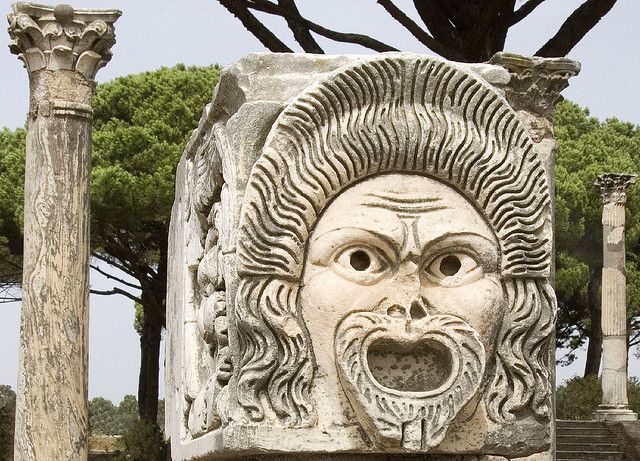
You will see taverns, warehouses, thermal baths, theaters, and commercial spaces. These are the places that reveal work and routine. A warehouse tells you about trade. A tavern suggests where people ate and drank. A bath complex shows how public facilities shaped social life.
The site can be quiet, especially compared with Rome’s major monuments and, at times, Pompeii. That calm is part of the appeal. You can stop to listen without the constant crush of tour groups, though quiet does not mean the site is small. Wear shoes that can handle uneven surfaces and a long walk.
A different way to spend the day, same part of Italy:
- Vatican: Museums & Sistine Chapel Entrance Ticket
★ 4.5 · 144,003 reviews - Vatican Museums & Sistine Chapel Tour with Optional Basilica
★ 4.3 · 67,413 reviews - Colosseum, Roman Forum & Palatine Guided Tour
★ 4.7 · 63,148 reviews - Vatican Museums, Sistine Chapel & St Peter’s Basilica Guided Tour
★ 4.5 · 39,149 reviews
The Baths of Neptune and their sea-god mosaic
The Baths of Neptune are one of the tour’s visual highlights. Their most striking feature is a large mosaic showing Neptune being pulled by a four-horse chariot.
The mosaic helps explain why a guide is useful. You do not just see a patterned floor. You learn how the baths functioned and why decoration mattered in Roman public spaces. The image of the sea god also fits Ostia’s role as a port town, linking the artwork to the city’s wider identity.
The baths are a good place to slow down and look carefully. Mosaics can be easy to miss when you are moving through a large site, especially when the sun is bright or the group is eager to cover more ground. A guide draws your attention to the details that give the building meaning.
In warm weather, the open site can be tiring. Guides may seek out shade when possible, but you should bring water, a hat, and sun protection. There is a toilet break and time for a snack or drink at the snack bar, but this is not a tour built around frequent indoor stops.
The amphitheater and the public Forica
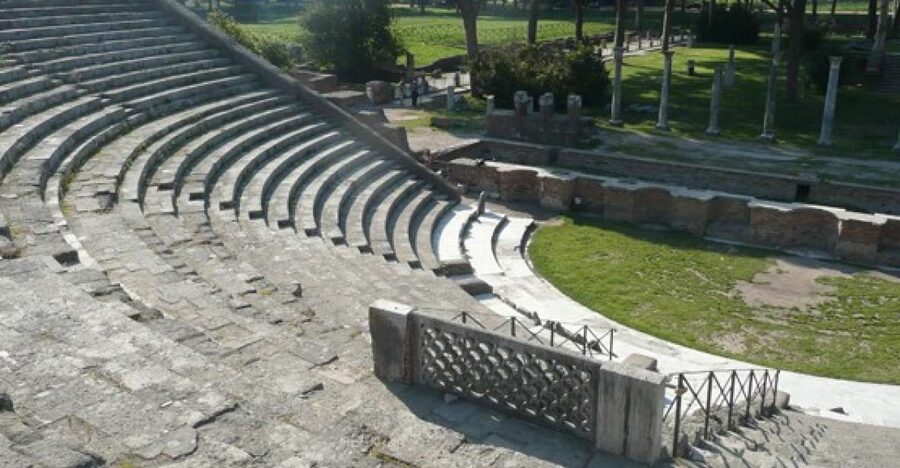
Ostia’s amphitheater was first built in 12 BC and held about 3,500 spectators. Taking a seat in the surviving stands gives you a direct sense of the venue’s size and purpose.
This is not the Colosseum, and that is exactly why it works so well. The smaller scale makes it easier to imagine a local audience gathering for entertainment. The guide helps turn the curved rows and stage area into a functioning public building rather than a photogenic ruin.
The communal Forica offers a very different kind of historical detail. It was a public washroom with a marble bench and 20 evenly spaced openings along four walls of a large room.
It is an amusing stop, but it is also genuinely useful. The Forica brings Roman life down to a human level. Ancient cities needed sewers, toilets, water systems, and places for people to gather. Seeing this room reminds you that history is not only about rulers and battles.
The Forica may get a laugh, but I would not skip it. It is one of the clearest examples of the tour’s central idea: Ostia is about how regular people lived.
What the guide adds to the ruins
You can visit Ostia Antica independently, but the site is large and many of its buildings are not immediately self-explanatory. A guide gives you a route, selects the key stops, and supplies the social context that signs alone may not provide.
The strongest praise for this experience has focused on guiding. Rob is known for lively stories, clear explanations, and playful reenactments. Cat has been praised for a well-judged pace, strong answers to questions, and a friendly manner. Alberto is often noted for combining humor with careful explanations and for watching out for the group in hot weather.
Caterina, Laura, Roberto, Liv, and other City Wonders guides have also led this route. The individual guide you receive will vary, so you should not book expecting a particular person. Still, the repeated pattern is clear: storytelling is a major part of the value.
A good guide also keeps the group moving without turning the tour into a race. You may get short periods to look around on your own, and the tour can finish near the museum, giving you time to continue exploring independently.
Staying for the museum, modern Ostia, or the beach
The organized portion ends after the guided visit, but you have choices. You can return to Rome with the supplied ticket, remain in the archaeological park, visit the museum, explore the modern town of Ostia, or continue toward a nearby beach.
Staying longer makes sense if you enjoy archaeology and want to see more at your own pace. The site has more to offer than can fit into a three-hour guided route. One useful seasonal detail is that the museum may close early in winter, around 1:30 PM, so check it first if it is a priority.
The modern town and beach option changes the character of the outing. You can turn a history morning into a longer day by the coast, but the return journey is then your responsibility. Bring a towel, beachwear, and sports shoes only if you plan to use that option. These items are listed as recommended things to bring, but beach time is not part of the guided visit.
If you return to Rome, the service ends at Piramide at about 1:00 PM. That leaves the afternoon open for another Rome sight, lunch, or a slower stroll through the city.
Is the $58 price good value?
At $58 per person, the tour includes the return train ticket, entry to Ostia Antica, and an English-speaking guide. For a four-hour experience, that is a fair price, especially if you value historical explanation and do not want to work out the train and site route alone.
The ticket itself is not the main reason to book. Ostia Antica is accessible by public transport, so an independent visit may cost less. The extra money pays for structure, transport coordination, site knowledge, and the chance to ask questions as you walk.
I think the price works best for a first visit. The archaeological park is broad, and you could miss important buildings or fail to understand what you are seeing without context. If you already know the site well and prefer a slow solo visit, the guided format may feel restrictive.
The free cancellation policy allows a full refund up to 24 hours before departure, and you can reserve without paying immediately. Those terms make the booking less risky when your Rome schedule is still changing.
Who should book this half-day trip?
I would recommend it to anyone interested in Roman society, archaeology, architecture, or the practical side of ancient life. It also suits people who have already seen the Forum and Colosseum and want a different view of how Rome functioned.
Families can benefit from the storytelling, especially when the guide explains what happened inside a tavern, bath, theater, or public toilet. The tour is conducted in English, so everyone in the group needs to be comfortable following an English-speaking guide.
This is also a good choice if you dislike packed attractions. Ostia is often much quieter than Rome’s headline sites, and the open setting gives the visit a calmer rhythm.
It is less suitable for anyone who struggles with extended walking or uneven archaeological ground. Wheelchair users cannot join this activity, and baby strollers are not allowed. In summer, heat can be a bigger concern than crowds, so early timing, water, comfortable shoes, and sun protection matter.
My verdict on Ostia Antica from Rome
I would book this tour if I wanted to understand ordinary Roman life rather than collect another photograph of a famous monument. The short train ride, included entry, and small group make the morning easy, while the Baths of Neptune, amphitheater, Decumanus Maximus, and Forica give the visit a strong range of sights.
The tour is not ideal if you want a private experience, dislike walking, or plan to spend only a few minutes at each ruin. You also need to remember that the return train is unescorted if you come back after the guided portion.
For most first-time visitors, though, the guide is worth the $58. Ostia Antica is large enough to reward expert direction and quiet enough to let the place speak once you know what you are looking at. Stay afterward if you want a museum or beach outing, or return to Rome for an early afternoon with plenty of time left.
FAQ
How long does the Ostia Antica tour last?
The experience lasts four hours. The outward train ride takes about 15 minutes, the guided visit lasts about three hours, and the return train takes about 20 minutes.
Where does the tour meet in Rome?
Meet at Cafe Piramide beside Piramide Metro Station on Line B. When facing the metro station, the cafe is on your right, near the train tracks and railway exit. Look for the white umbrellas and the City Wonders sign.
Is the train ticket included?
Yes. A return train ticket from Rome to Ostia Antica is included. The guide accompanies you on the outward journey, but the return journey is unescorted if you go back to Rome after the tour.
Can I stay in Ostia after the guided tour?
Yes. You may remain at Ostia Antica, explore the modern town of Ostia, or go to a nearby beach. You are also free to return to Rome with the provided train ticket.
Is the tour conducted in English?
Yes. The live tour guide conducts the experience in English.
What should I bring?
Bring comfortable shoes. If you plan to continue to the beach, bring a towel, beachwear, and sports shoes. You should also allow for a toilet break and snack or drink stop during the visit.
Can wheelchair users or people with baby strollers join?
No. The activity is not suitable for wheelchair users, and baby strollers are not allowed.
More 1-Day Tours in Rome
- From Rome: Pompeii, Amalfi Coast, and Sorrento Day Trip
★ 4.6 · 7,031 reviews - From Rome: Pompeii, Amalfi Coast and Positano Day Trip
★ 4.6 · 6,620 reviews - Pompeii, Amalfi Coast and Positano Day Trip from Rome
★ 4.5 · 6,250 reviews - Pompeii and Mount Vesuvius Day Trip from Rome with Pizza Lunch
★ 4.5 · 6,151 reviews
Recently reviewed around Rome
- Ancient Rome at Twilight Walking Tour★ 5.0 · 276 reviews
- Early Vatican Museums Tour: The Best of the Sistine Chapel★ 4.5 · 900 reviews
- Domus Aurea Guided Tour: The Golden House of Nero★ 4.5 · 199 reviews
- Early Vatican Museums & Sistine Chapel Small Group Tour★ 4.5 · 314 reviews
- Jewish Ghetto & Piazza Navona: Food, Wine & Sightseeing Rome Tour★ 5.0 · 460 reviews
- 3 Days in Sorrento, Capri & Pompeii: la Dolce Vita★ 4.0 · 595 reviews
- Tivoli Villas Full Day Trip From Rome with Lunch★ 4.0 · 443 reviews
- Cook With Us in Rome: A Hands-On Cooking Experience 09:20AM class★ 5.0 · 234 reviews
Train Experiences, compared.
Bernina Red Train, Swiss Alps & St Moritz From Milan
Read our review →
Swiss Alps Bernina Red Train and St.Moritz Tour from Milan
Read our review →
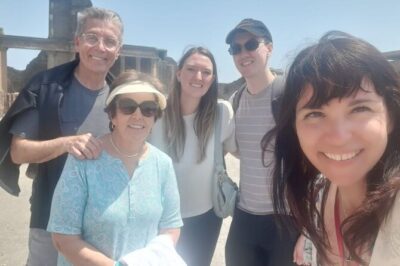
Rome to Pompeii Guided Tour with Wine & Lunch by High Speed Train
Read our review →
Small-Group Lake Como & Lugano by Swiss Train + Boat Cruise
Read our review →
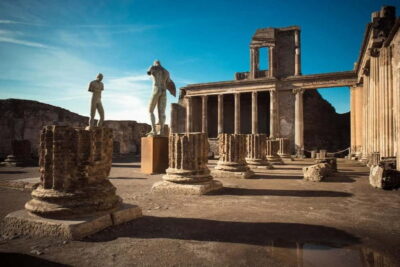
Guided tour of Pompeii skip-the-line and round-trip train
Read our review →
Intimate Small-Group Bernina UNESCO Scenic Train on Swiss Alps
Read our review →Browse the lists this tour appears in