
Review · WINE TOURS
Genova: Homemade Pasta & Pesto Local Chef Class with Wine
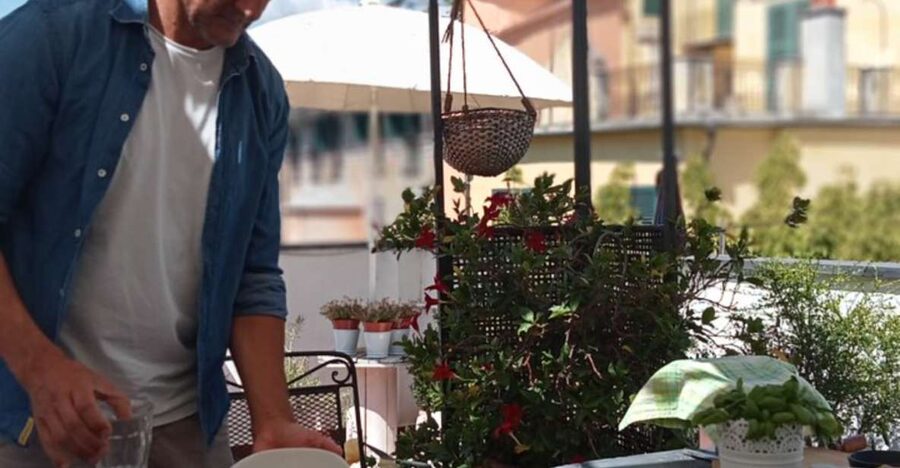
Genoa’s most famous sauce tastes better when you make it by hand. In Chef Alberto’s home in the old city, you grind basil, garlic, pine nuts, salt, cheese, and olive oil into pesto, then shape fresh pasta known locally as crazy napkin pasta. I like the hands-on work and the chance to eat a proper meal afterward, not just sample a bite. I also like the rooftop setting, with its city views and relaxed, home-hosted feel.
The main drawback is practical: the apartment is on the fifth floor with no elevator, and the meeting point can take a little patience to find in Genoa’s narrow historic center. The class is not suitable for wheelchair users, so plan accordingly.
In This Review
- Key points at a glance
- A Genoese cooking class with a view
- Finding Vico inferiore Valoria
- What happens before the cooking begins
- Making pesto with mortar, basil, and patience
- Mixing, rolling, and shaping fresh pasta
- The meal makes the $105 price easier to judge
- A rooftop terrace, with a sensible weather caveat
- Who will enjoy this class most
- Small details that improve the experience
- Should you book Chef Alberto’s pasta and pesto class?
- FAQ
- How long does the pasta and pesto class last?
- How much does the class cost?
- What food and drinks are included?
- Who teaches the class?
- How many people can join?
- Where is the meeting point?
- Is the apartment accessible by elevator?
Key points at a glance
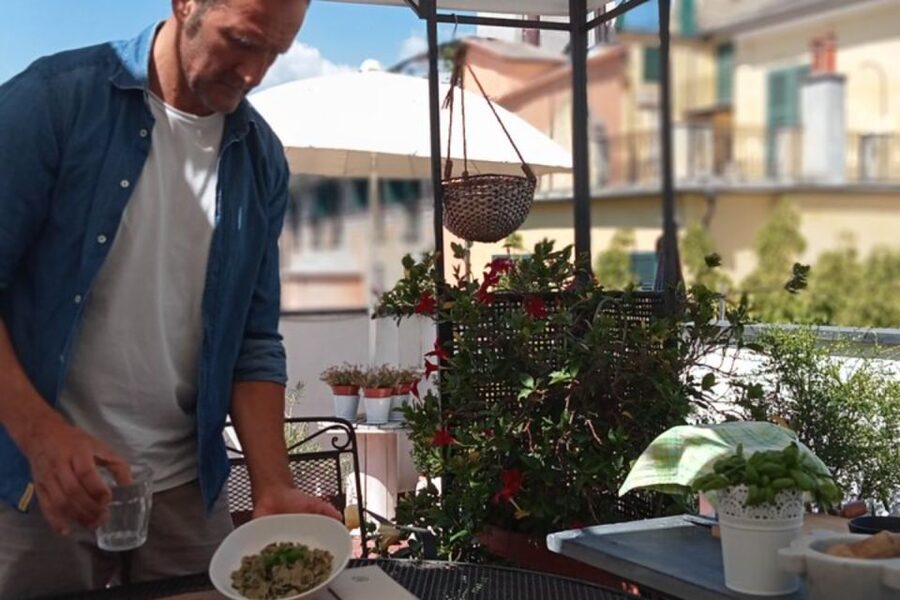
- Make pesto the Ligurian way: Use a mortar and pestle with basil, garlic, pine nuts, salt, hard cheese, and olive oil.
- Learn from Chef Alberto: He teaches in English and Italian, explaining both technique and the story behind Genovese food.
- Cook in a real home: The class takes place in a historic palazzo apartment, with access to a rooftop terrace when conditions allow.
- Eat more than pasta: Focaccia, aperitivo snacks, wine, a traditional Genoese dessert, and a local liqueur round out the meal.
- Keep it personal: The group is limited to eight, so you can get direct help with dough, rolling, and shaping.
- Take the recipes home: Alberto sends the recipes after the class, giving you a fair shot at repeating the meal.
A Genoese cooking class with a view
I like cooking classes that explain why a dish belongs to a place. This one connects each ingredient to Liguria, the coastal region around Genoa, instead of treating pasta and pesto as generic Italian food.
The setting helps. You meet at an apartment inside a historic palazzo in the old center, then move into a private home environment rather than a large culinary school. When the weather cooperates, the work and meal take place on a rooftop terrace overlooking the city. On rainy days, the class moves indoors, where the apartment provides the same welcoming atmosphere without the view.
That change of setting is worth noting. The terrace is an important part of the appeal, especially on a clear evening, but it is not guaranteed. You should book this for the cooking, food, and host first, with the rooftop as a pleasant bonus.
Chef Alberto leads the class in English and Italian. He is described as a warm teacher who explains each step clearly, answers questions, and shares stories about Genoa and Ligurian cuisine. His teaching style suits beginners, families, couples, solo visitors, and teenagers who want to do more than watch a demonstration.
More Genoa & Cinque Terre trips worth a second look
- Genoa: Food and Wine Tasting Walking Tour
★ 4.9 · 215 reviews - Genoa Food, Wine Tasting & History Walking Tour
★ 5.0 · 212 reviews - Tuscany Day Trip from Florence: Siena, San Gimignano, Pisa and Lunch at a Winery
★ 5.0 · 21,634 reviews
Finding Vico inferiore Valoria
The meeting point is Vico inferiore Valoria, Building 1, Apartment 11, under the name Granara. Genoa’s old center is made up of tight lanes and small squares, so this is not the sort of address you should try to locate at the last minute.
If your map has trouble with the apartment address, search for Cucina Valoria Restaurant. Once you reach the restaurant, look toward the left side of the square for the entrance to Vico inferiore Valoria. A small gate is on the left. Ring number 11, marked Granara.
Give yourself extra time. One useful piece of advice is to arrive with the directions already open on your phone, rather than expecting a taxi or a passing pedestrian to recognize the apartment name. The narrow-center location is part of the charm, but it can also make the first five minutes less smooth.
The apartment is on the fifth floor, and there is no elevator. This matters for anyone with mobility concerns, heavy luggage, or difficulty with stairs. The activity is specifically listed as unsuitable for wheelchair users.
What happens before the cooking begins
The class lasts three hours, which gives the food enough room to unfold at a comfortable pace. You are not rushed from one recipe to the next, and the meal afterward is part of the experience rather than an afterthought.
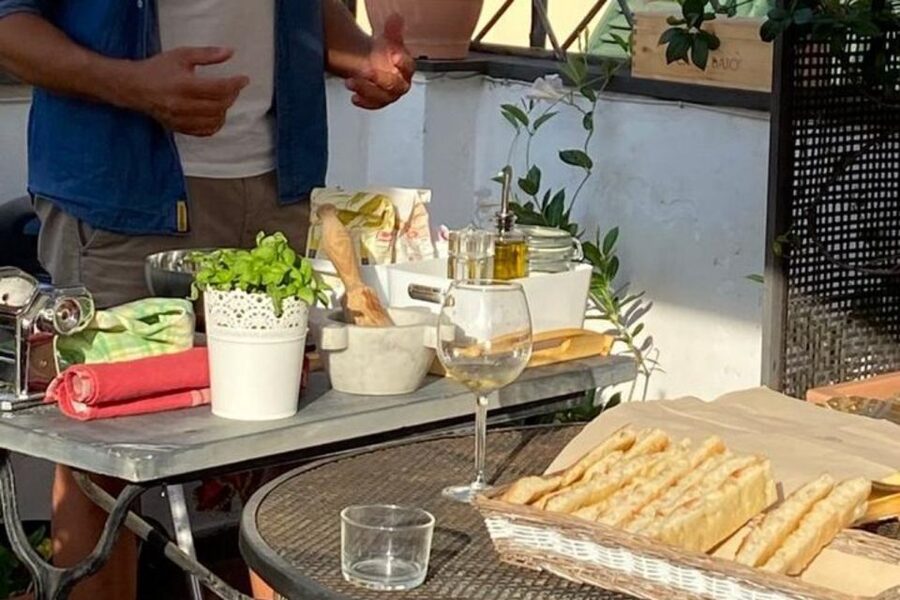
The welcome may include espresso, fresh orange juice, and focaccia. Focaccia is a Ligurian staple, and the class can include versions with different toppings, along with quiche and other small regional treats. These early bites give you a taste of the local style before you start handling flour and basil.
This opening also sets the social tone. You share a table and a kitchen with a small international group, limited to eight participants. That number is large enough for conversation but small enough for Alberto to check your dough, correct your technique, and help when the pasta begins sticking or tearing.
I see this as a good choice for people who do not want a formal, silent lesson. The class has a convivial feel, and the food comes with conversation about Genoa, its ingredients, and its traditions.
Making pesto with mortar, basil, and patience
Pesto is the natural first lesson in a Genoa cooking class. The classic Ligurian version uses basil leaves, garlic, European pine nuts, coarse salt, hard cheese such as Parmigiano-Reggiano, and olive oil.
The important point is that you prepare it from scratch. You are not simply mixing a ready-made sauce into pasta. You work through the ingredients and learn how the texture and balance come together. The mortar and pestle make the process slower than using a food processor, but that is exactly the lesson: pesto is about control, aroma, and restraint.
Alberto explains the role of the ingredients and the traditional method. You learn how the basil, garlic, nuts, cheese, and oil combine into a sauce that should taste fresh rather than heavy. The practical tips are useful at home because pesto is easy to make, but also easy to overpower with too much garlic, oil, or cheese.
I particularly like this part for visitors who have eaten pesto many times but never considered its regional identity. In Liguria, it is not just a green pasta topping. It is one of the foods most closely tied to Genoa, and preparing it by hand gives the dish a stronger sense of place.
A different way to spend the day, same part of Italy:
- Genoa: Aquarium of Genoa Entry Ticket
★ 4.5 · 10,075 reviews - Genoa: Full-Day Tour to Camogli, San Fruttuoso & Portofino
★ 4.4 · 3,295 reviews - La Spezia: Cinque Terre Tour by Boat
★ 4.4 · 2,611 reviews - Genoa: Hop-on Hop-off Tour Ticket
★ 4.0 · 1,524 reviews
Mixing, rolling, and shaping fresh pasta
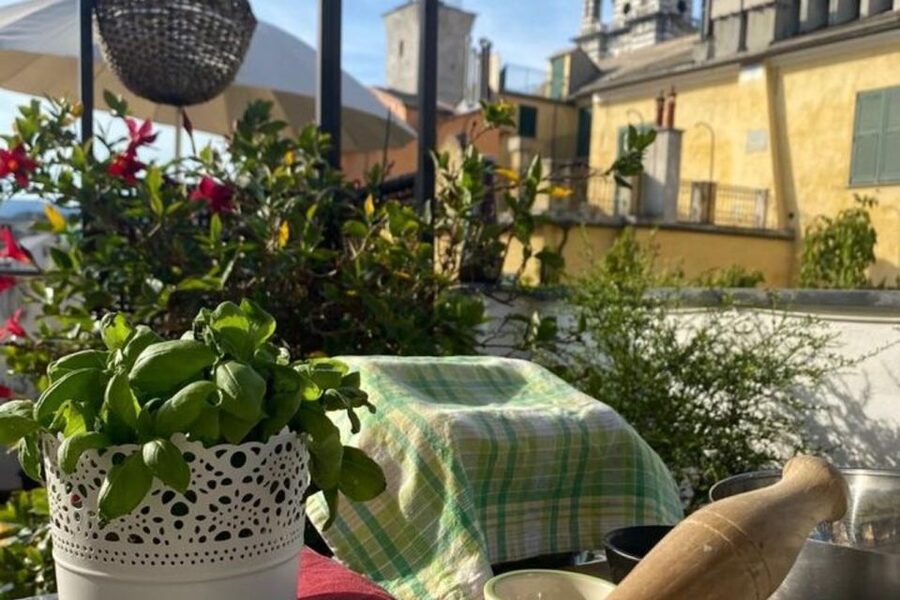
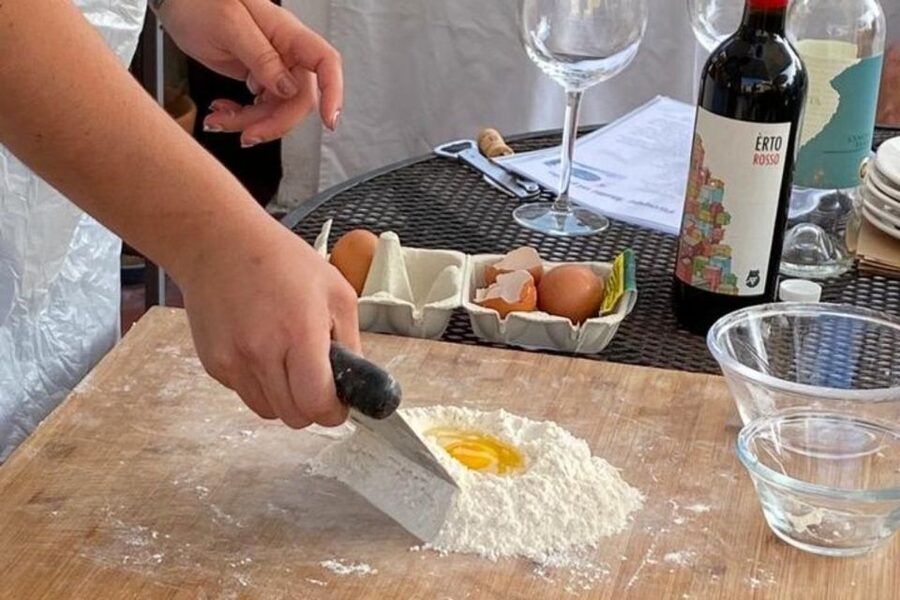
Next comes the pasta dough. The basic ingredients are flour, water, eggs, and seasoning, but the class focuses on the handling rather than just the list.
You learn how to bring the ingredients together, knead the dough, roll it out, and shape it. Alberto demonstrates the steps, then lets you work with the dough yourself. That hands-on format is valuable because the feel of pasta dough cannot be learned fully from a recipe card. You need to notice when it is too dry, too sticky, or ready to roll.
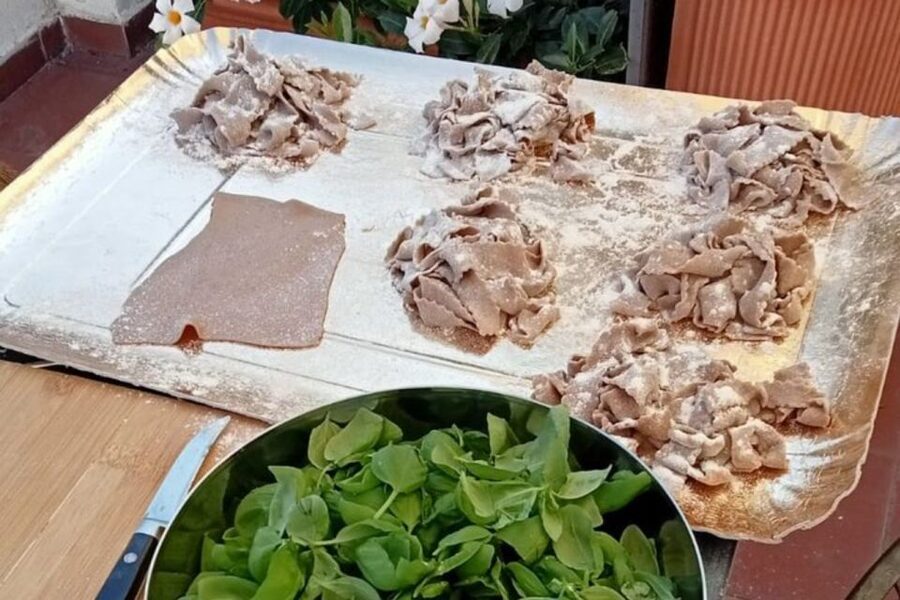
The class features a traditional Genoese pasta shape referred to as crazy napkin pasta. Several people describe this as a pasta they had not previously encountered, which is one reason the lesson feels more local than a standard tagliatelle workshop.
Do not expect every piece to look factory-perfect. That is part of the fun. You are learning a household technique, with guidance from someone who can show you how to adjust the dough and shape it properly. Beginners should feel comfortable, and teenagers have found the instructions clear enough to gain confidence.
The recipe is also practical. Alberto sends the recipes after the class, so you can try the dish again at home rather than leaving with only a pleasant memory and a full stomach.
The meal makes the $105 price easier to judge
At $105 per person, this is not the cheapest way to eat pasta in Genoa. It is also more than a short demonstration or a tasting. The fair comparison is a three-hour hosted meal that includes instruction, ingredients, wine, appetizers, dessert, and a local liqueur.
The value improves if you care about personal attention. With no more than eight people, Alberto can work with each participant rather than leaving you to copy a technique from the back of a crowded room. You are paying for the food, but also for the teaching, the home setting, and the time spent explaining Genoese culinary customs.
The meal normally begins with aperitivo items and regional snacks, then moves to the pasta and pesto you made. Wine is included, with local bottles such as wine from the Cinque Terre mentioned as part of the meal. Dessert may include tiramisu or a traditional Genoese sweet, followed by a typical Genoese liqueur.
You should not book this expecting a restaurant tasting menu with formal service. The appeal is the opposite: you enter a local home, help prepare the food, and sit down together to eat it. If that sounds better than a polished restaurant meal, the price is reasonable for Genoa.
A rooftop terrace, with a sensible weather caveat
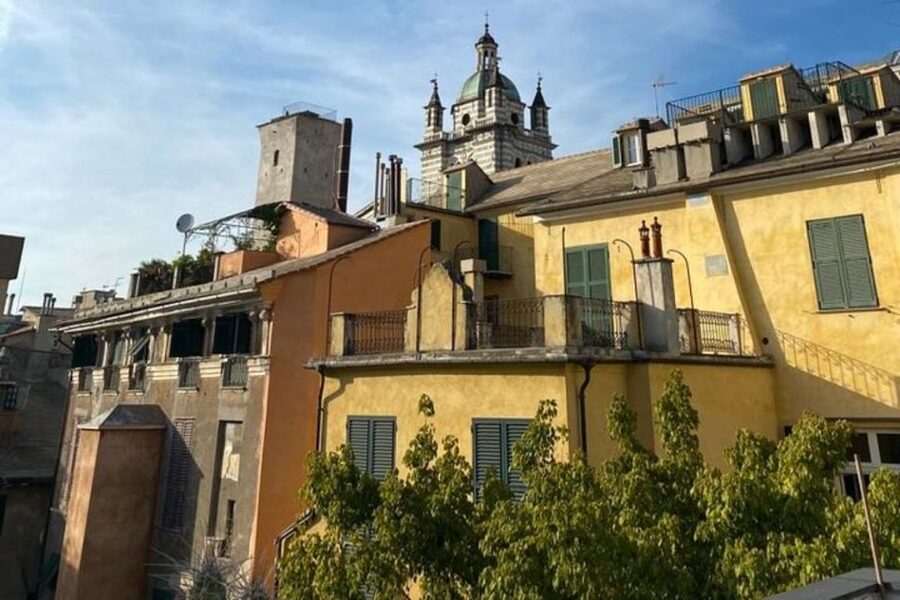
The terrace is one of the most memorable features. You get an elevated view over Genoa while making pasta and later eating the finished dish. The setting adds a calm pause to a city that can feel confusing when you first arrive, especially in the narrow lanes of the old center.
The terrace is described as shady and peaceful in good weather. That makes it especially appealing for an afternoon or evening session. You can enjoy the view without turning the class into a sightseeing tour. The focus stays on food, but the city remains present around you.
Rain changes the plan. The class can take place inside Alberto’s apartment instead. That is not a reason to cancel, since the cooking and meal continue, but you should keep your expectations realistic if the terrace is the feature that first caught your eye.
I would treat the rooftop as a setting rather than the main event. The strongest parts are still the direct teaching, the pesto, the unusual pasta shape, and the shared meal.
Who will enjoy this class most
I would recommend it to:
- Couples looking for a shared activity with dinner included
- Families with older children or teenagers
- Solo visitors who enjoy meeting a small group over food
- First-time cooks who want clear, guided instruction
- Food lovers interested in Ligurian ingredients and local traditions
- Visitors who prefer a home setting to a large commercial class
It also works well for people who want cultural context without signing up for a full-day food tour. The class connects food with Genoa, but keeps the focus narrow enough to fit comfortably into a three-hour visit.
You may want to choose another activity if climbing five flights of stairs is difficult, if you need wheelchair access, or if you want a strictly professional kitchen environment. This is a personal home class, and that means the atmosphere is informal.
Small details that improve the experience
Wear something comfortable and suitable for cooking. The available information does not specify an apron or dress code, so avoid clothing you would worry about around flour, oil, pesto, or sauce.
Plan your route before you leave. The old center’s lanes can be hard to read, and the exact entrance is a small gate by the square near Cucina Valoria Restaurant. Arriving early is better than using the first part of the class to search for the building.
If you have food allergies or dietary restrictions, ask before booking. The stated menu includes wheat, eggs, dairy, pine nuts, garlic, wine, and other ingredients, but no specific substitutions are promised.
The class is taught in English and Italian. English-speaking participants have found the instructions easy to follow, but you should still pay attention during the hands-on steps. Alberto’s demonstrations are useful, yet the dough improves fastest when you copy the technique and ask for corrections.
Free cancellation is available up to 24 hours before the activity for a full refund. You can also reserve now and pay later, which is useful when your Genoa plans are still shifting.
Should you book Chef Alberto’s pasta and pesto class?
I would book it if you want to learn a local dish, eat a generous meal, and spend time in a real Genoese home. The combination of mortar-and-pestle pesto, handmade crazy napkin pasta, regional snacks, wine, dessert, and a rooftop terrace gives the class a clear local identity.
The decision comes down to priorities. For $105, you receive much more than a recipe lesson, but you are also committing to a fifth-floor apartment with no elevator and a meeting point that requires careful navigation. The terrace depends on the weather, while the cooking and meal remain available indoors.
For most visitors who can manage the stairs, this is a strong way to spend three hours in Genoa. I would especially choose it early in a stay, since the food stories and ingredient tips may help you understand the city’s cuisine for the rest of your trip.
FAQ
How long does the pasta and pesto class last?
The activity lasts three hours. Starting times vary, so check availability when booking.
How much does the class cost?
The listed price is $105 per person.
What food and drinks are included?
The class includes the cooking lesson, the food you prepare, wine, and additional food and drinks. These can include focaccia, aperitivo items, a traditional Genoese dessert, and a typical Genoese liqueur.
Who teaches the class?
Chef Alberto teaches the class. Instruction is available in English and Italian.
How many people can join?
The class is limited to eight participants, making it a small-group activity.
Where is the meeting point?
Meet at Vico inferiore Valoria, Building 1, Apartment 11, under the name Granara. If needed, search for Cucina Valoria Restaurant. In front of the restaurant, on the left side of the square, find the entrance to Vico inferiore Valoria, then ring the small gate marked number 11.
Is the apartment accessible by elevator?
No. The apartment is on the fifth floor of a historic palace and has no elevator. The activity is not suitable for wheelchair users.
More Workshops in Genoa & Cinque Terre
- Homemade Pasta and Pesto Class with a Local Chef in Genoa
★ 5.0 · 305 reviews - Levanto: Pesto-Making Class
★ 4.8 · 196 reviews - Genoese cooking lesson in the with lunch in the terrace
★ 5.0 · 189 reviews - Florence: Pasta Cooking Class with Unlimited Wine
★ 4.9 · 10,285 reviews
Recently reviewed around Genoa & Cinque Terre
- Rafting Sesia★ 5.0 · 304 reviews
- Cinque Terre Sunset Boat Tour Experience★ 5.0 · 402 reviews
- Kayak experience with Carnassa Tour in Cinque Terre + Snorkeling★ 5.0 · 359 reviews
- Cinque Terre Sunset Cruise with Aperitif from Monterosso★ 5.0 · 258 reviews
- Cinque Terre Small Group or Private Day Tour from Florence★ 4.5 · 1,248 reviews
- Cinque Terre Private Boat Tour★ 5.0 · 202 reviews
- Private Tour to Cinque Terre from Florence★ 5.0 · 343 reviews
- Cinque Terre Sunset Tour by Boat★ 5.0 · 274 reviews
Wine Tours, compared.
Tuscany Day Trip from Florence: Siena, San Gimignano, Pisa and Lunch at a Winery
Read our review →
Small-Group Wine Tasting Experience in the Tuscan Countryside
Read our review →
Pasta & Tiramisu Cooking Class with Unlimited Wine
Read our review →
Pisa, Siena and San Gimignano Day Trip with Lunch & Wine Pairing
Read our review →
Tuscany & Montepulciano Day Trip with Lunch & Wine Tasting
Read our review →Browse the lists this tour appears in