
Review · WALKING TOURS
Haunted Rome Ghost Night Walking Tour
Rome’s darker side begins in a lively square once used for public executions. From Campo de’ Fiori, this night walk leads through old prisons, suspicious deaths, secret passages, fatal beauty treatments, and the grim world of Rome’s executioner, Mastro Titta. The final stop is Castel Sant’Angelo, where the city’s beauty and cruelty meet.
I like the way the tour uses real places and old scandals instead of relying on actors or cheap frights. I also like the route itself: Campo de’ Fiori, Ponte Sisto, Via Giulia, and Castel Sant’Angelo give you an unusual evening look at central Rome.
The main consideration is that this is more a dark-history walk than a full theatrical ghost show. One small group reported trouble hearing the guide over street noise, so stay close and ask questions if needed.
In This Review
- Key points to know before you book
- Why this is a different Rome night walk
- Campo de’ Fiori and Piazza Farnese: a sinister opening
- Via del Mascherone and Vicolo dei Venti: watch for the little Madonnas
- Ponte Sisto and Fontana del Mascherone: danger beside the water
- Santa Maria dell’Orazione e Morte: Rome’s most direct reminder
- Via di Monserrato and the Spanish church: prison, passion, and scandal
- Via Giulia: when beauty products become deadly
- Arco dei Banchi and Mastro Titta: meeting Rome’s executioner
- Castel Sant’Angelo: a dramatic finish on the Tiber
- What the guides do best
- Price, timing, and who gets the best value
- Should you book the Haunted Rome Ghost Night Walking Tour?
- FAQ
- How long does the Haunted Rome Ghost Night Walking Tour last?
- Where does the tour start?
- Where does the tour end?
- What language is the tour offered in?
- How many people can join the group?
- Is there a private tour option?
- Are admission tickets included at the stops?
- Can I cancel for a full refund?
Key points to know before you book
- The stories are historical first: Expect executions, crime, religious intrigue, prisons, and family tragedy, with ghostly touches rather than staged scares.
- The route crosses central Rome: You walk from Campo de’ Fiori to Castel Sant’Angelo in about two hours.
- The hidden Madonnas add a sharp local detail: Small street shrines appear along the route and connect Rome’s religious life with old efforts to discourage crime.
- The guides make a major difference: Ana, Youssef, Domenica, Dinara, Anna, Antonio, and others have been praised for humor, energy, and clear storytelling.
- The group can reach 20 people: That keeps the price low, but it can make hearing harder in noisy streets.
- The $35.07 price is fair for an evening walk: There are no paid admissions listed, so you are paying for the route, research, and guide rather than entry tickets.
Why this is a different Rome night walk
Rome after dark can feel like a new city. The heat drops, the day crowds thin, and familiar streets take on a more serious mood. This tour makes good use of that change by showing you places that can look ordinary in daylight but carry grim stories underneath.
The route is not built around famous monuments alone. You will pass through squares, lanes, bridges, churches, and old houses. The guide points out details you could easily walk past, including the small madonelles, or street images of the Virgin Mary.
Those images are not just decoration. They connect to stories about public behavior, crime, and the hope that a watchful religious figure might stop people from doing wrong. That kind of detail gives the walk a local feel. You are not simply moving between major sights. You are learning how Rome once tried to control its streets.
The experience is offered in English and lasts about two hours. The listed group limit is 20 people, which is manageable for a walking tour, though not intimate. A private upgrade is available if you want more room for questions or a more tailored pace.
More Walking Tours in Rome
- Rome: Trastevere & Campo de Fiori Street Food Walking Tour
★ 4.9 · 2,768 reviews - Rome: Paranormal Night Walking Tour & Secret Backstreets
★ 4.9 · 1,921 reviews - Rome by Night Walking Tour – Legends & Criminal Stories
★ 4.5 · 1,003 reviews
Campo de’ Fiori and Piazza Farnese: a sinister opening
The tour starts at Campo de’ Fiori, one of central Rome’s best-known piazzas. Today, the square is lined with bars and restaurants and often feels social and easygoing. Its past is much harsher. It was once an execution site, making it an effective place to begin a tour about Rome’s public punishments.
That contrast is part of the appeal. You can look at a square full of evening life while hearing how the same space once served as a stage for death. The guide sets the tone here, turning a familiar stop into a place with moral and political weight.
After roughly ten minutes, you continue to Piazza Farnese. The square is handsome, but its story is less peaceful than its appearance. You hear about an old party center, a secret passage, and a scandal involving two popes.
This is a good early stop because it shows the range of the tour. The subject is not only ghosts. It includes power, lust, religion, secrecy, and the ability of wealthy people to hide their private dealings behind grand buildings.
Via del Mascherone and Vicolo dei Venti: watch for the little Madonnas

The walk then threads through Via del Mascherone and Vicolo dei Venti. Here, the focus shifts from executions and papal scandal to the small religious images tucked into Rome’s streets.
These Madonnas are easy to miss if you move quickly. Your guide points them out and explains how they were linked to the idea of preventing crime. I like this part because it trains you to look up and around, not just at the large churches and fountains that usually dominate a first visit.
The stop also adds a quieter mood. Not every story needs a dramatic murder or a ghostly appearance. A tiny shrine, set into an old wall, can tell you plenty about the fears and beliefs of the people who lived here.
If you take the tour early in your stay, you can keep looking for these images afterward. One guide even encouraged that habit, giving the rest of the evening a small treasure hunt quality without turning the walk into a game.
Ponte Sisto and Fontana del Mascherone: danger beside the water
At Ponte Sisto, the darker side of Rome becomes more physical. The bridge is described as the oldest in Rome, and its past includes accidents, struggles for power, theft, and suspicious deaths.
Bridges make strong storytelling sites because they are places of movement and exposure. People cross them, flee across them, fall from them, and sometimes become trapped on them. The guide uses that setting to connect the bridge to the dangers of earlier Rome.
Next comes Fontana del Mascherone, a fountain with a warning for anyone tempted to drink from it. Unlike the grand fountains that fill guidebooks and postcards, this one gets attention because of its message and its unusual character.
The stop is brief, about ten minutes, but it keeps the route moving. You are never parked in one place for too long. That helps the walk feel like an evening outing rather than a lecture in a square.
More Rome walks with a guide:
- Rome: Guided City Center Evening Sightseeing Walking Tour
★ 4.4 · 953 reviews - Best of Rome Walking Tour including Trevi Fountain
★ 4.5 · 923 reviews - Rome: Under the Moonlight Evening Walking Tour
★ 4.8 · 852 reviews - Rome: Forbidden History Walking Tour & Pub Crawl with Drinks
★ 4.9 · 688 reviews
Santa Maria dell’Orazione e Morte: Rome’s most direct reminder
The church of Santa Maria dell’Orazione e Morte brings the tour’s theme into sharp focus. This seventeenth-century church is decorated with human remains from long ago. Its name and decoration both point toward a religious world that treated death as a constant presence.
This is one of the more intense stops. It is not a haunted-house effect. The subject is actual death and the way people once used churches, symbols, and human remains to remind the living of their own mortality.
You should know that the tone can be macabre. The tour is suitable for many families, and several guides have kept younger participants engaged, including children around 11 and 13 and teenagers. Still, anyone sensitive to death-related imagery should understand that the stories can be grim.
Via di Monserrato and the Spanish church: prison, passion, and scandal
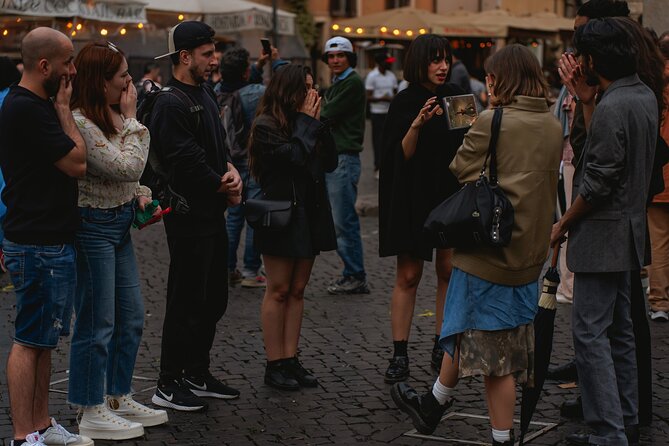
Via di Monserrato brings another change of mood. A building that is now an apartment block once occupied the site of one of Rome’s worst prisons. The guide uses the street to discuss confinement and the people caught in the city’s old justice system.
This is where the tour works best as a lesson in ordinary streets. You are not entering a famous dungeon or walking through a preserved torture chamber. Instead, you stand outside a building that has changed use while its past remains attached to the address.
Nearby, Chiesa di Santa Maria in Monserrato degli Spagnoli adds a story with the energy of a television drama. The Spanish church has a saucy tale involving relationships and religious life. It gives the middle of the walk a lighter, more scandalous tone after the prison story.
The guides are generally praised for making these shifts without becoming silly. Ana, Youssef, Sarah, Dinara, and Domenica are among the guides singled out for strong storytelling, humor, warmth, or the ability to keep a mixed-age group involved. Your exact guide depends on the departure, but the experience clearly relies heavily on the person leading it.
Via Giulia: when beauty products become deadly
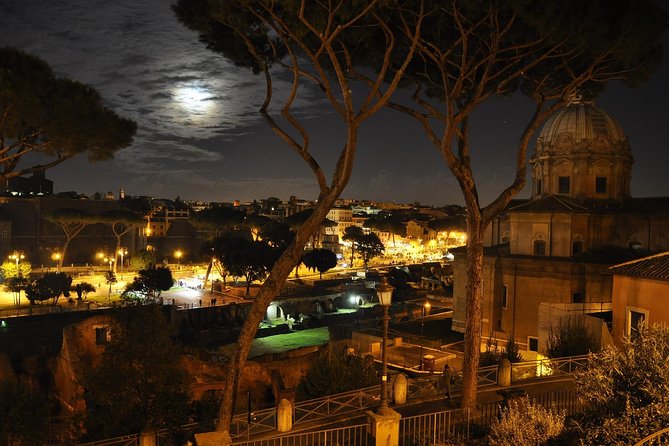
Via Giulia is one of Rome’s elegant historic streets, but this tour approaches it from an unexpected angle. A former bar here had an even earlier life as a beauty shop. The story centers on cosmetics that could kill.
It is a useful reminder that old dangers did not always look dangerous. Beauty products, medicines, and household substances could contain harmful ingredients, and a person might suffer because of vanity, bad advice, or deliberate poisoning.
This stop also shows why a night walking tour can add value after you have already seen the major churches and monuments. You may pass along Via Giulia during the day and notice its architecture. At night, you get a story that changes how you read the street.
Arco dei Banchi and Mastro Titta: meeting Rome’s executioner
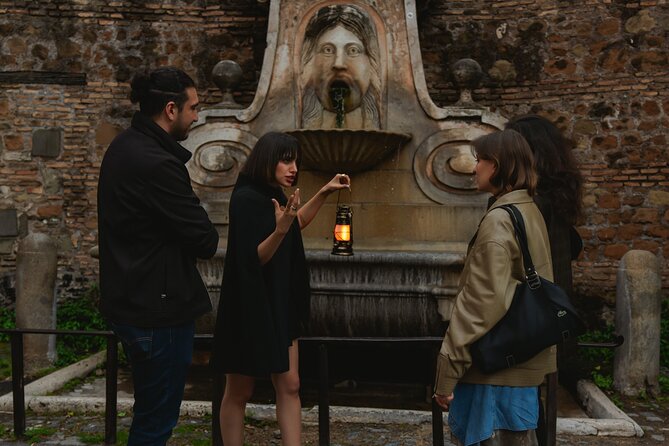
The route continues to Via dell’Arco dei Banchi, where a seemingly quiet house was once associated with Rome’s most famous executioner, Mastro Titta.
The point is not just the man’s name. It is the chance to think about how public punishment worked. Rome needed someone to carry out executions, yet that person lived on the edge of respectable society. The ordinary-looking house creates a strong contrast with the gruesome job connected to it.
This is one of the tour’s more memorable historical characters. A good guide can make Mastro Titta feel like a person within a system, not just a villain in a spooky tale. You hear about the machinery of justice, the public display of death, and the uneasy role of the executioner.
If you prefer stories with real historical stakes, this section may be among your favorites. If you want supernatural encounters, it may feel more like a history walk than a ghost tour.
Castel Sant’Angelo: a dramatic finish on the Tiber
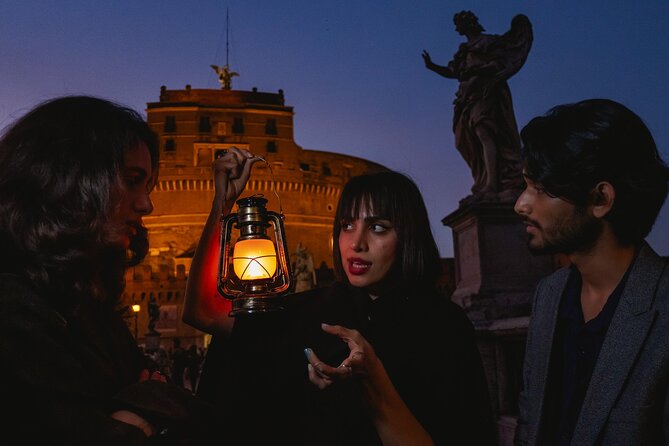
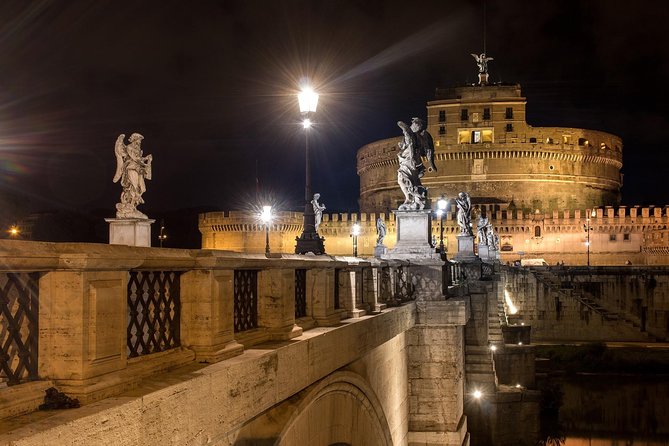
The final stop is Castel Sant’Angelo, reached by way of the bridge lined with angel statues. The bridge once served a grim purpose: the bodies of executed people were displayed there as a warning to others.
Today, the statues and river setting make the area one of Rome’s most striking evening scenes. The beauty does not erase the past. It makes the contrast sharper.
The guide closes with the story of the Cenci family and their fatal end. It is a fitting finale because the tale brings together wealth, family conflict, violence, punishment, and the city’s long fascination with tragedy.
The tour ends at Castel Sant’Angelo rather than returning to Campo de’ Fiori. That is useful. You can continue your evening in the area instead of retracing the route. It also means you should plan your onward journey before setting out, especially if you are tired after a full day of sightseeing.
What the guides do best
The strongest part of this experience is the storytelling. Guides named Ana, Youssef, Domenica, Dinara, Anna, Antonio, Sarah, Maham, Simon, and others have been praised for keeping the walk funny, clear, and engaging.
Ana is often described as energetic and warm. Youssef is noted for humor, patience, and kindness, including helping with an umbrella in the rain. Domenica is praised for holding attention from start to finish and taking time to answer questions.
Those details matter because a two-hour street walk can easily lose its shape. You are outside, surrounded by traffic, restaurants, and other people. A good guide needs to project a voice, keep the group together, and make each stop feel connected to the next.
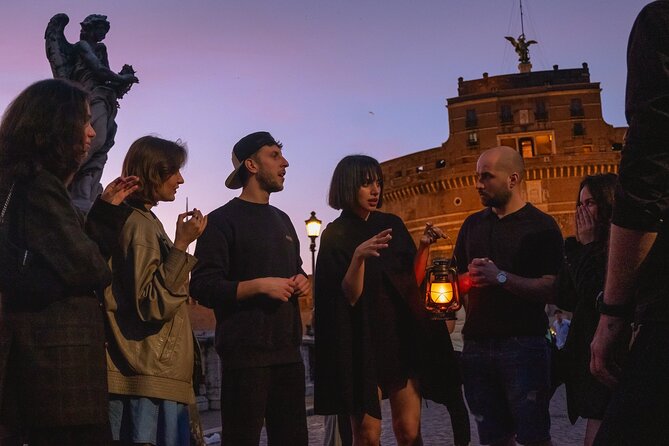
One practical weakness is sound. At least one participant found the guide hard to hear because of road noise and conversation within the group. The group limit of 20 is not huge, but it is large enough to affect the experience. Stand near the guide, especially at busy streets, and speak up if you are missing parts of the story.
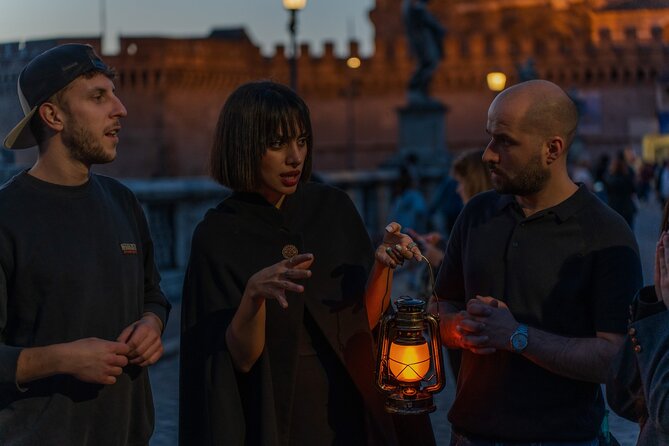
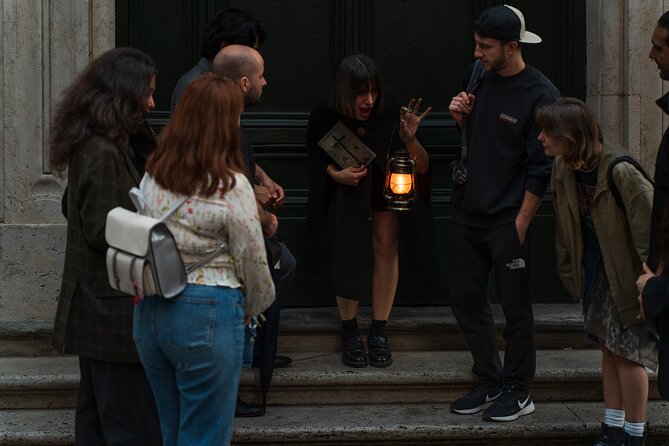
The walk is also less theatrical than some ghost tours. Your guide may wear ordinary clothes and simply tell the stories. That is a benefit if you dislike costumes and forced scares, but a drawback if you expect actors, props, or staged paranormal effects.
Price, timing, and who gets the best value
At $35.07 per person, the tour offers fair value for an evening of guided sightseeing. The listed stops have free admission, so the fee covers the guide’s time, route planning, storytelling, and local context rather than tickets.
You are also getting a route that would be difficult to recreate well on your own. You could find Campo de’ Fiori, Ponte Sisto, Via Giulia, and Castel Sant’Angelo without help. The harder part is knowing which small streets, houses, fountains, and church exteriors carry the best stories.
The two-hour length is another advantage. It is long enough to feel substantial but short enough to fit after dinner or on a busy Rome day. Night timing helps you avoid the worst heat and gives central Rome a different mood.
The tour suits you best if you:
- Like history with a dark edge
- Want to see central streets beyond the standard sightseeing circuit
- Enjoy stories about crime, religion, politics, and old justice
- Are traveling with teenagers who can handle macabre subjects
- Prefer a guide-led walk without paid site admissions
- Want an unusual first-night introduction to Rome
You may want something else if you need a highly theatrical ghost show or if your main goal is to enter historic buildings. Most of the experience takes place outdoors, and the emphasis is on stories told at locations rather than formal indoor visits.
The walk is offered in English, and most people can participate. It is near public transportation, though the supplied information does not give a specific accessibility grade or walking surface details. Wear comfortable shoes and dress for the season. In colder months, bring an extra layer. In rainy weather, an umbrella can make the walk much easier.
Free cancellation is available if you cancel at least 24 hours before the start time. A cancellation made later than that is not refunded, and changes inside that window are not accepted.
Should you book the Haunted Rome Ghost Night Walking Tour?
I would book this if you want Rome to feel less polished and more human. The tour shows how public squares, churches, bridges, and quiet homes were tied to executions, prison life, family violence, religious fear, and political power.
The best reason to go is not the promise of seeing a ghost. It is the chance to notice the city differently afterward. You will look for the small Madonnas, think twice about ordinary fountains, and see the angel bridge as more than a beautiful photo stop.
Book it early in your stay if possible. That gives you time to revisit Via Giulia, Castel Sant’Angelo, or the old streets around Campo de’ Fiori with the stories fresh in your mind.
If you want a spooky evening that remains grounded in Rome’s past, the $35.07 price is sensible. If you expect a theatrical haunted attraction, choose with care. This is a guided history walk with chills, not a stage production.
FAQ
How long does the Haunted Rome Ghost Night Walking Tour last?
The tour lasts approximately two hours.
Where does the tour start?
It starts at Piazza Campo de’ Fiori, P.za Campo de’ Fiori, 00186 Roma RM, Italy.
Where does the tour end?
The walk ends at Castel Sant’Angelo, Lungotevere Castello, 50, 00193 Roma RM, Italy.
What language is the tour offered in?
The tour is offered in English.
How many people can join the group?
The maximum group size is 20 travelers.
Is there a private tour option?
Yes. You can upgrade to a private tour for a more personal experience.
Are admission tickets included at the stops?
The listed stops have free admission tickets. The tour focuses on outdoor locations and guided storytelling.
Can I cancel for a full refund?
Yes, if you cancel at least 24 hours before the experience start time. Cancellations made less than 24 hours in advance are not refunded.
More Evening Experiences in Rome
- Rome: City Highlights Open-Top Bus Night Tour
★ 4.1 · 2,038 reviews - Vespa Sidecar Tour By Night with Pickup
★ 5.0 · 1,803 reviews - Rome by Night – Ebike Small Group Tour – Food and Wine (Option)
★ 5.0 · 1,275 reviews - Colosseum Sunset Tour with Entry
★ 4.5 · 1,230 reviews
Recently reviewed around Rome
- Rome Private Tour: Highlights and Hidden Gems★ 5.0 · 374 reviews
- Haunted Rome Ghost Tour – The Original★ 4.5 · 668 reviews
- Hadrian’s Villa and Villa d’Este Half-Day Trip from Rome★ 3.5 · 808 reviews
- Super Fun Pasta & Gelato Class by Vatican with Wine + Oil Tasting★ 5.0 · 726 reviews
- Rome Golf Cart Tour : Half-Day Private or Small Group Sightseeing★ 5.0 · 528 reviews
- Guided Tour Vatican Museums & Sistine Chapel with Basilica Access★ 5.0 · 309 reviews
- Rome: Skip-the-Line Vatican Museums and Sistine Chapel Tour★ 4.5 · 241 reviews
- Graffiti art tour in Rome★ 5.0 · 714 reviews
Walking Tours, compared.

Guided Walking Tour & Last Supper Visit with Ticket
Read our review →
Rialto Bridge & Offbeat Unusual Venice Walking Tour
Read our review →
Private 3 hrs Venice Tour: St Mark’s, Walking tour & Boat tour
Read our review →

Skip the line: Uffizi and Accademia Small Group Walking Tour
Read our review →
Trastevere & Campo de Fiori Street Food Walking Tour
Read our review →Browse the lists this tour appears in