
Review · WALKING TOURS
Perugia: Old Town Walking Tour, Piazza IV Novembre
Perugia’s past is stacked one layer over another, from the 3rd-century BC Etruscan Arch to Roman rule, medieval streets, and the underground remains of a fortress built for papal power. This compact walk gives you that whole story without asking you to spend half a day in a museum.
I especially like the stop at Piazza IV Novembre, where the Gothic Fontana Maggiore makes history feel tangible, and the views toward Mount Subasio and Assisi give the tour a welcome breath of open air. The main drawback is the Italian-only guiding. If you need English, this is not the right booking.
In This Review
- Key points
- Why this short walk works in Perugia
- Meeting at the cathedral cloister
- Piazza IV Novembre and the Fontana Maggiore
- The Etruscan Arch and ancient Perugia
- Stories of Romans, popes, and medieval rulers
- Views across Umbria toward Assisi
- Below ground in Rocca Paolina
- What the guide adds
- Is $35 a fair price?
- Who should book this Perugia walk?
- Practical details before you go
- My recommendation
- FAQ
- Where does the Perugia Old Town walking tour meet?
- How long does the tour last?
- What language is the tour conducted in?
- What does the $35 price include?
- Is food or drink included?
- Which major sights are included?
- Can I cancel for a full refund?
- Is the tour affected by weather?
Key points
- The Etruscan Arch dates from the 3rd century BC, making it one of the tour’s clearest links to ancient Perugia.
- Piazza IV Novembre brings together the cathedral, Fontana Maggiore, and the city’s central public life.
- Rocca Paolina includes underground passages and exhibitions, not just a quick look at an old wall.
- Small-group walking keeps the focus on stories, details, and questions, rather than a fixed sightseeing script.
- Views reach from Mount Subasio toward Assisi, giving you a strong sense of Umbria’s hill-country setting.
- The tour costs $35 and lasts 1.5 hours, a useful introduction before exploring more of Perugia on your own.
Why this short walk works in Perugia
Perugia can be hard to read at first. Its streets climb and twist, its modern city sits above older layers, and important sights can be easy to pass without knowing what you are seeing. A local guide helps turn those fragments into a clear sequence.
The route covers the Etruscans, Romans, medieval Perugia, and the long period of papal control. That range matters because the city is not defined by one famous building. Its character comes from the overlap of different powers and periods.
At 1.5 hours, this is an introduction rather than a full study of the city. I see that as a strength if you are arriving in Perugia, want a useful orientation, or have limited time. If you already know the Old Town well, the short format may feel less substantial.
The group is described as small, which should make it easier to hear the guide and ask about details along the way. The experience is conducted in Italian, so you should be comfortable following historical explanations and anecdotes in that language.
More Italy walks with a guide:
- Milan: Guided Walking Tour & Last Supper Visit with Ticket
★ 4.7 · 5,409 reviews - Naples: Street Food Walking Tour with Local Guide
★ 4.8 · 4,256 reviews - Venice Walking Tour and Gondola Ride
★ 3.5 · 3,630 reviews
Meeting at the cathedral cloister
The meeting point is easy to misunderstand, so take care. You do not meet inside the church of St. Lawrence Cathedral. You meet in its cloister, reached through a large portal on Piazza IV Novembre.
Stand with the Fontana Maggiore and cathedral in front of you, then walk to the left side of the square. Look for the large entrance with red signs reading Perugia Sotterranea and Museo del Capitolo. Go through that portal to reach the cloister and the meeting point.
This is a practical detail worth checking before you arrive. Piazza IV Novembre is the sort of square where it is easy to pause for photographs, watch people pass, and lose a few minutes looking for the correct door. Give yourself enough time to find the portal without rushing.
The cloister setting also gives you an appropriate start. You are not gathering beside a generic street corner. You begin beside one of Perugia’s central religious and civic spaces, with the first chapter of the city’s story already around you.
Piazza IV Novembre and the Fontana Maggiore
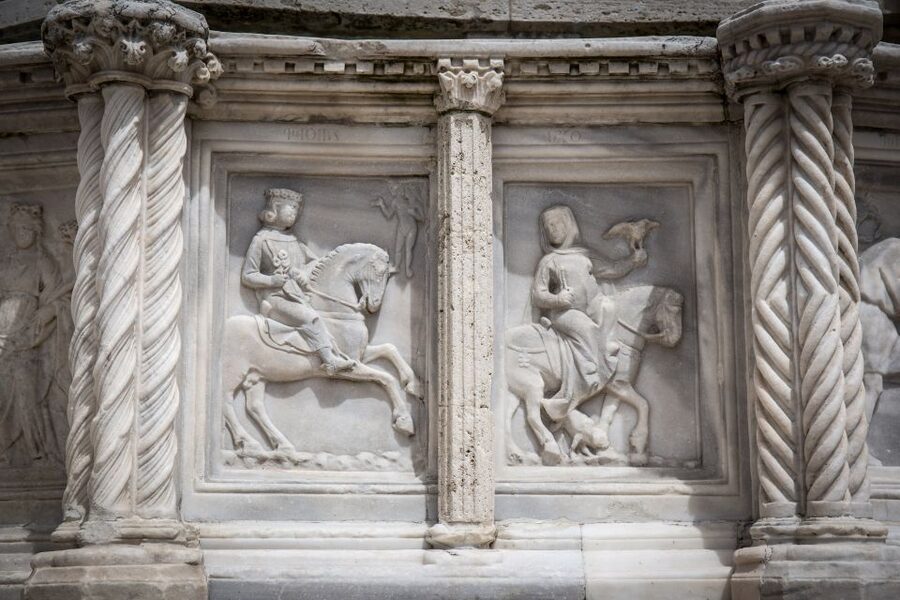
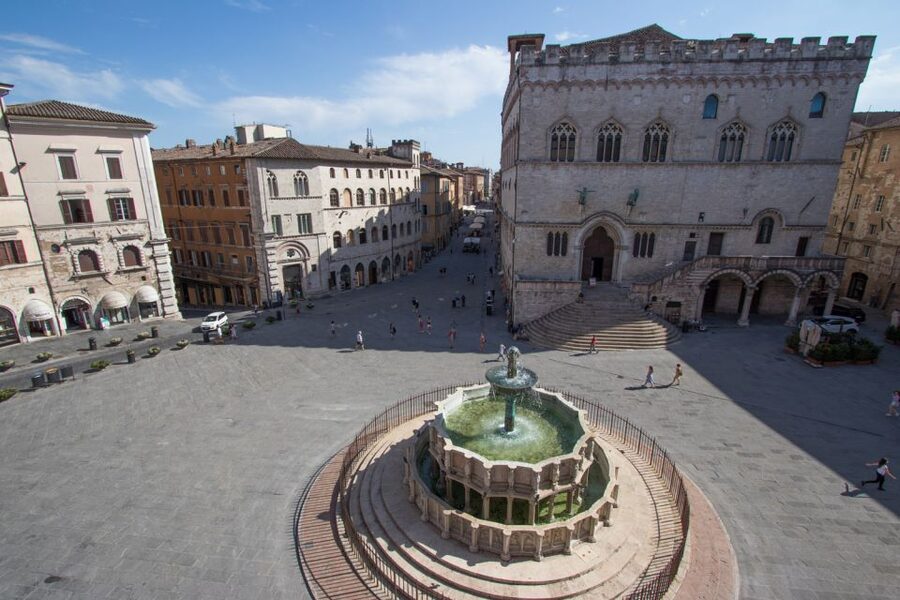
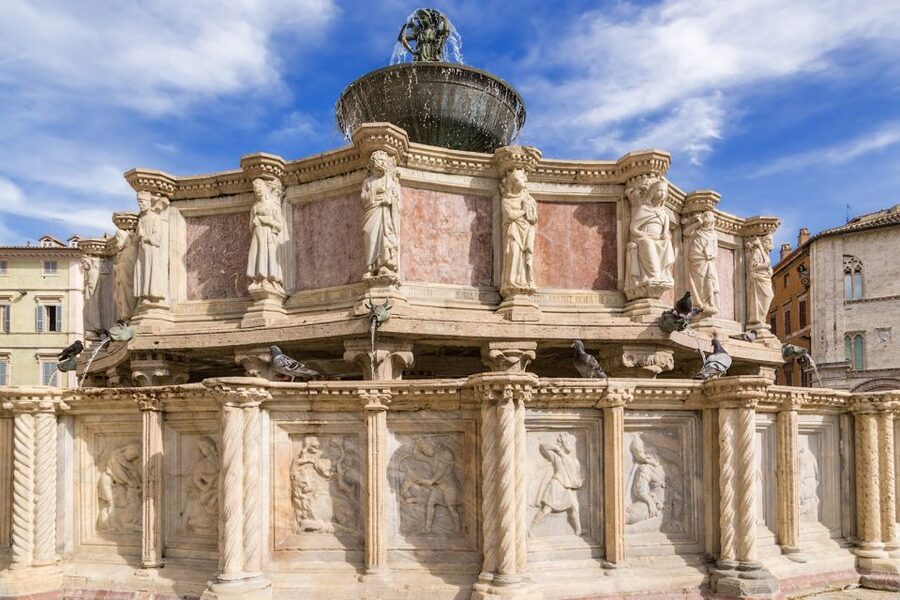
Piazza IV Novembre is the tour’s main visual stop. The square brings together St. Lawrence Cathedral and the Fontana Maggiore, a medieval fountain known for its engineering and Gothic sculpture.
The fountain deserves more than a quick photograph. Its design reflects the importance of water, public works, religion, and civic pride in medieval cities. Your guide points out the parts that can blur together when you are simply crossing the square, helping you notice how sculpture and structure work together.
This is also a good place to hear how Perugia developed as a city. The square is not just a pretty center. It is a place where religious authority, public ceremony, and urban life meet. The guide connects those themes to the larger story of Perugia’s changing rulers.
Expect some of the tour’s most useful historical explanation here, but do not expect a long, quiet stop with no interruptions. A central square is an active public place, and the group may need to adjust position so everyone can see and hear.
The Etruscan Arch and ancient Perugia
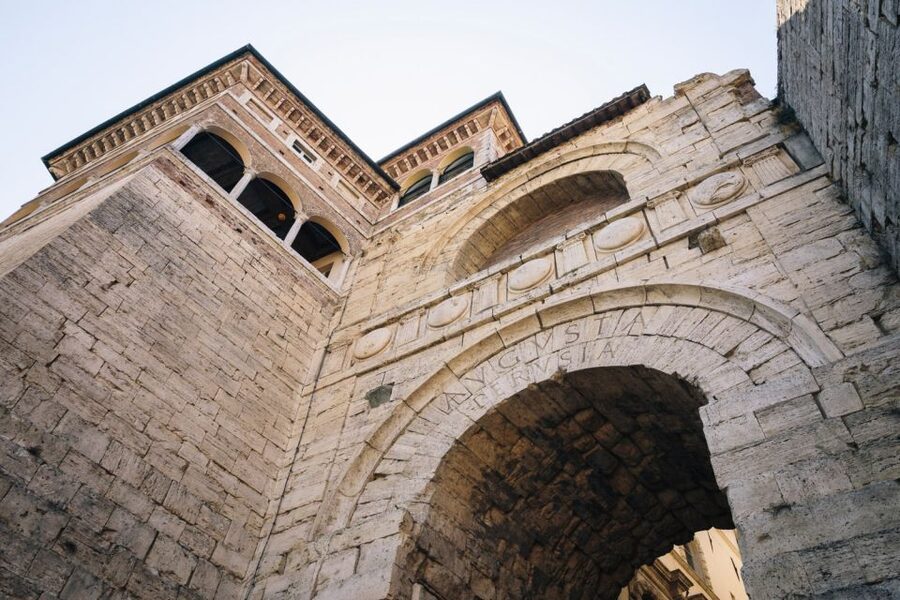
The Etruscan Arch is one of the clearest reasons to take a guided walk. Built in the 3rd century BC, it reminds you that Perugia was already an important settlement long before the Roman and papal periods.
Ancient gates are easy to treat as background scenery. Here, the guide gives the arch a place in the city’s long timeline. You can connect the surviving stonework to the Etruscan origins of Perugia, then follow the later Roman and medieval changes that shaped the streets around it.
The value is not only the date. The arch helps explain why Perugia feels older than many Umbrian towns. You are looking at part of the city’s defensive and urban framework, not a modern reconstruction made for display.
This stop also shows the advantage of walking. On a bus or a broad sightseeing route, you would likely see the arch for a moment and move on. On foot, you can slow down, hear the story, and notice how ancient material sits beside later buildings.
A different way to spend the day, same part of Italy:
- Vatican: Museums & Sistine Chapel Entrance Ticket
★ 4.5 · 144,003 reviews - Vatican Museums & Sistine Chapel Tour with Optional Basilica
★ 4.3 · 67,413 reviews - Colosseum, Roman Forum & Palatine Guided Tour
★ 4.7 · 63,148 reviews - Milan: Cathedral and Duomo’s Terraces Entrance Ticket
★ 4.6 · 61,054 reviews
Stories of Romans, popes, and medieval rulers
The tour’s history moves from the Etruscans to the Romans, then through the Middle Ages and papal dominations. That is a lot for 90 minutes, so the guide has to choose the most useful points rather than explain every event.
For you, the benefit is a framework. You learn why Perugia contains signs of different political and cultural eras, and you hear anecdotes about the people and events connected to the city. The guide also draws attention to architectural features you might otherwise miss.
I like this approach because Perugia rewards context. A narrow passage, an old wall, or a grand public building can seem disconnected until someone explains what came before it. The tour gives you a set of questions to carry into the rest of your visit.
Do keep your expectations realistic. This is not a specialist archaeology course, and the experience cannot cover every layer in detail. It is best for building a strong first understanding, then returning later to the places that catch your interest.
Views across Umbria toward Assisi
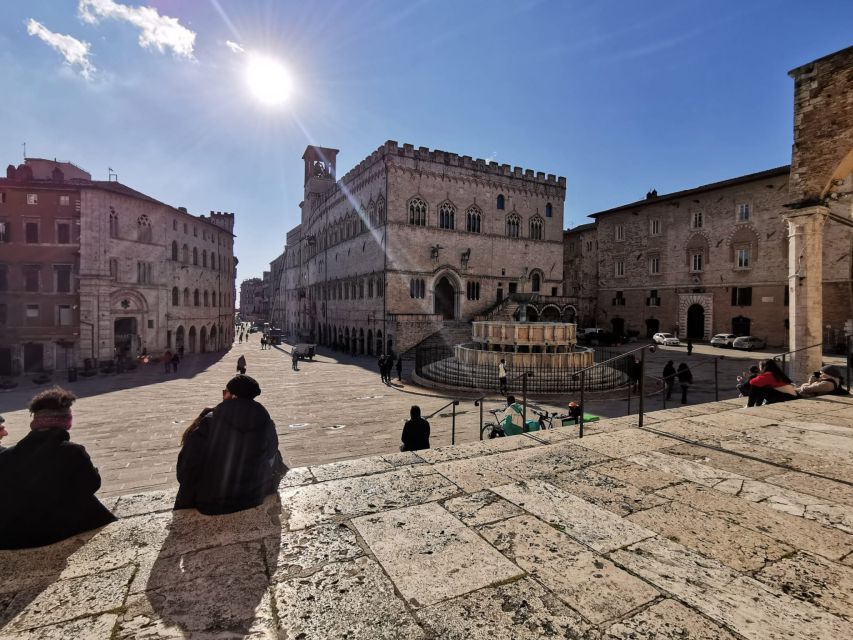
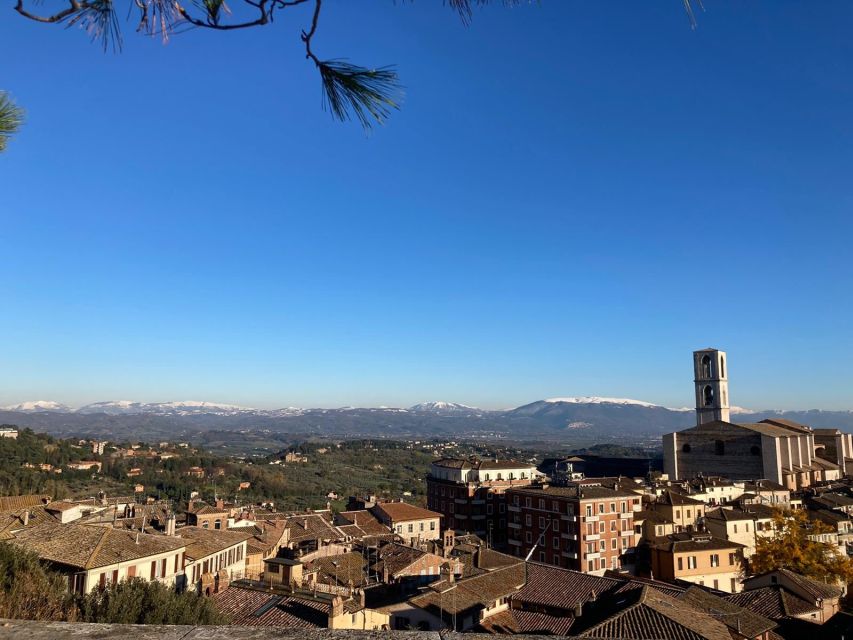
Perugia’s position on the hills gives the tour a visual break from stone streets. Along the route, you can look across rolling countryside toward Mount Subasio and Assisi. On a clear day, snowy peaks may be visible.
These views help you understand the city’s setting. Perugia is not an isolated old town placed on a flat plain. It is part of a wider Umbrian scene of hills, distant settlements, and changing weather.
Bring a camera if you enjoy broad views, but do not count on identical conditions every day. The tour is subject to weather, and clouds or rain can reduce the distant outlook. The guide can still explain the city’s position, but the photographic part depends on visibility.
This is one reason the walk works well early in a Perugia visit. You see the city from inside its streets and then look outward toward the region. That combination gives you a better sense of place than a string of indoor stops would.
Below ground in Rocca Paolina
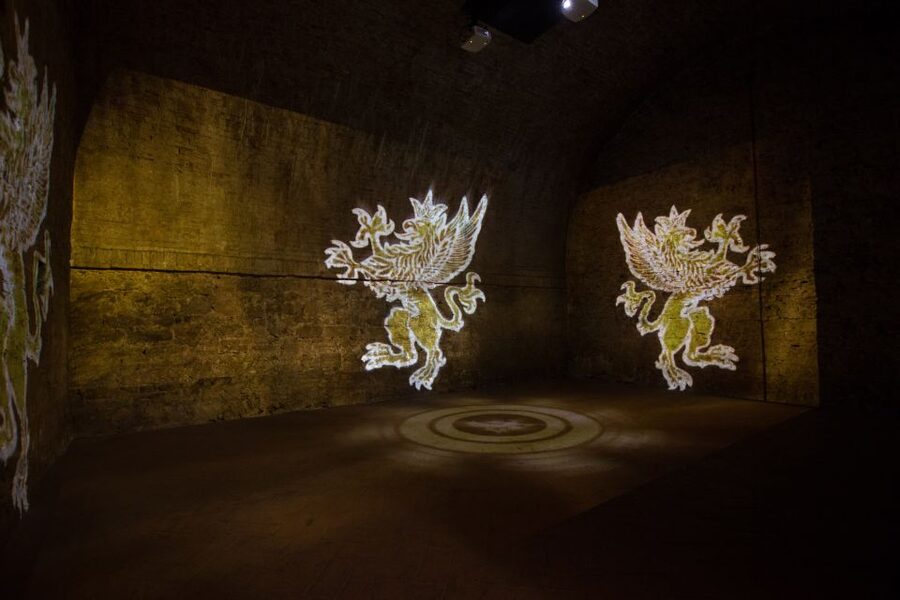
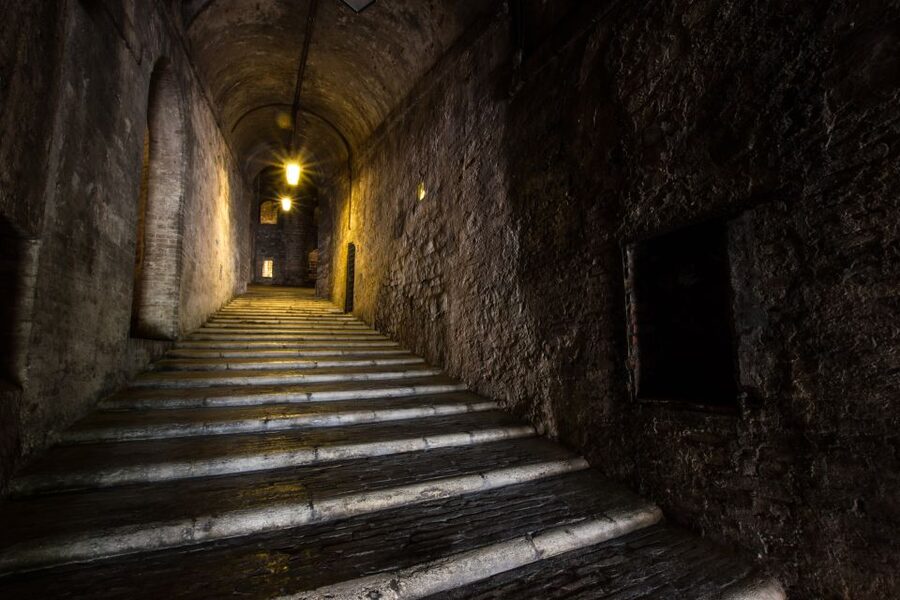
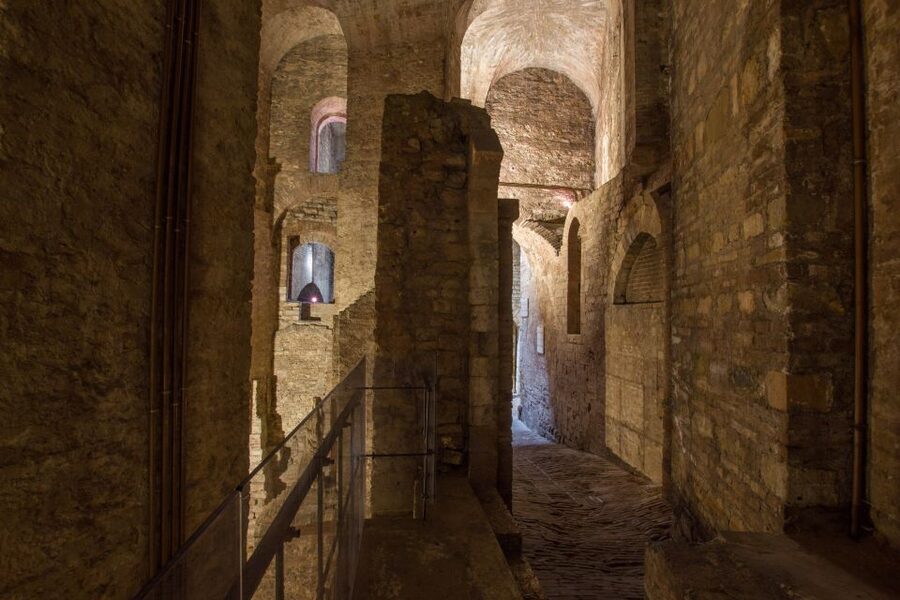
Rocca Paolina is the tour’s most unusual stop. The route takes you underground into the remains of the historic fortress, a symbol of papal power in Perugia.
This is not simply an exterior viewing stop. You walk around the old fortress area below the modern city and see exhibitions on display there. The experience gives you a physical sense of how one period of power was built over another.
The underground setting is especially useful for understanding Perugia’s complicated relationship with papal rule. Stone passages and old structures make the political story less abstract. You are not only hearing about authority and control. You are standing inside the space that represented it.
The exhibitions may change, so do not book this expecting one fixed display. Their presence adds interest, but the main value is the fortress setting itself and the chance to see the city’s buried layers.
Rocca Paolina also changes the pace of the walk. After open squares, street views, and the Etruscan Arch, the underground route feels enclosed and atmospheric. Wear sensible shoes for a walking tour, since the experience includes movement through old fortress spaces rather than a single seated presentation.
What the guide adds
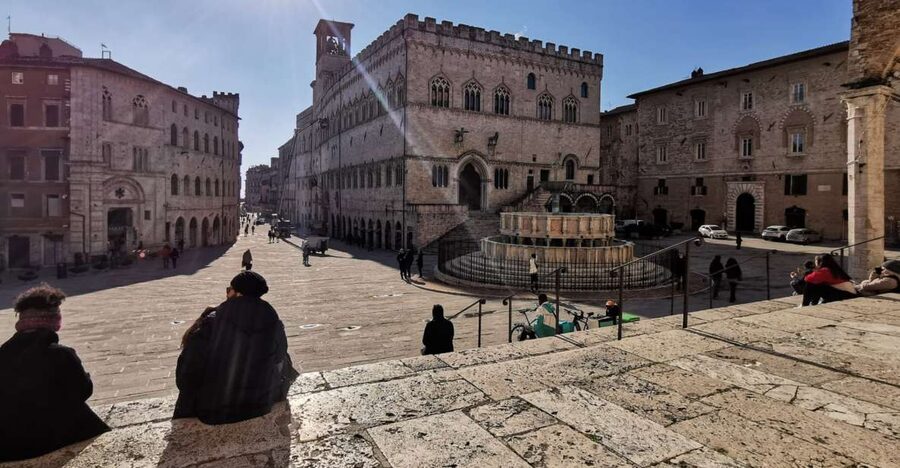
A good local guide is important here because several stops are valuable mainly through explanation. The Fontana Maggiore, Etruscan Arch, and Rocca Paolina all reward a closer look, but the details are easy to miss if you only have a map.
The guide also shares curiosities about Perugia’s characters, architecture, and past events. Those smaller stories can keep the tour from becoming a list of dates. The strongest guide style for this experience is likely warm, clear, and able to hold attention in a busy historic center.
Elena is one guide associated with the experience. A recent Italian-language booking singled out her empathy, ability to maintain attention, and skill at creating interest. You cannot assume she will lead every departure, but her mention gives you a useful picture of the kind of personal guiding the experience aims to provide.
Because the tour is in Italian, the guide’s delivery matters even more. If your Italian is basic, you may catch the names and broad themes but miss the finer anecdotes. I would choose this walk only if you can follow spoken Italian with reasonable comfort.
Is $35 a fair price?
At $35 per person, the value depends on how much you want from a short orientation. The fee includes a local guide and entrance to Rocca Paolina. Food and drinks are not included, but that is hardly a surprise for a 90-minute city walk.
The price makes sense if you want the historical framework, a guided look at several major sights, and entry to the underground fortress without arranging each stop yourself. You are paying for interpretation and access, not transportation or a meal.
I would compare it with the cost of spending your first hours wandering without context. Perugia’s Old Town is enjoyable on its own, but the city’s ancient and papal layers are easier to understand with someone explaining them as you go.
The value is weaker if you speak no Italian, dislike group walks, or prefer to spend time inside each sight at your own pace. You will cover several places, but the tour is designed to introduce them rather than provide long visits at each one.
Who should book this Perugia walk?
I would recommend it to first-time visitors who want a clear start in Perugia. It is also a good fit if you have only part of a day and want to see the central square, Etruscan remains, major views, and Rocca Paolina in one organized outing.
History fans will appreciate the broad timeline from Etruscan origins through Roman and medieval periods to papal control. Photographers should like the mix of stone details, public architecture, underground passages, and views toward Assisi.
Families and mixed-interest groups may find the 1.5-hour length manageable, though the information is delivered in Italian. The short duration leaves room for lunch, independent sightseeing, or a return to the places that interest you most.
I would skip it if your main goal is food, shopping, or a relaxed stroll with little historical commentary. I would also skip it if you need English or another language, since Italian is the stated tour language.
Practical details before you go
The tour offers free cancellation up to 24 hours before the start time, with a full refund. You can also reserve now and pay later, which helps if your Umbria plans are still shifting.
Check the available starting times when booking. The duration is fixed at 1.5 hours, but the departure time is not stated here. Weather can affect the experience, especially the outdoor walking and distant views.
Rocca Paolina admission is included, and the activity offers skip-the-ticket-line access. Since food and drinks are not included, plan a café stop before or after the walk if you want refreshments.
My recommendation
Book this tour if you want a brisk, story-led introduction to Perugia and can follow Italian. The strongest combination is the ancient Etruscan Arch, the art and engineering of Fontana Maggiore, the views toward Assisi, and the underground Rocca Paolina.
The $35 cost is reasonable for a small-group walk with a local guide and fortress admission. Just remember that 90 minutes goes quickly, and the Italian-only format is a firm limitation. For the right visitor, this is a smart way to get your bearings before exploring Perugia at your own pace.
FAQ
Where does the Perugia Old Town walking tour meet?
The meeting point is in the cloister of St. Lawrence Cathedral, not inside the church. Enter through the large portal on Piazza IV Novembre marked with red Perugia Sotterranea and Museo del Capitolo signs.
How long does the tour last?
The walking tour lasts 1.5 hours.
What language is the tour conducted in?
The live tour guide speaks Italian.
What does the $35 price include?
The price includes a local guide and entrance to Rocca Paolina.
Is food or drink included?
No. Food and drinks are not included in the tour price.
Which major sights are included?
The tour includes Piazza IV Novembre, Fontana Maggiore, the Etruscan Arch, and Rocca Paolina, along with views toward Mount Subasio and Assisi.
Can I cancel for a full refund?
Yes. You can cancel up to 24 hours in advance for a full refund.
Is the tour affected by weather?
Yes. The activity is subject to weather conditions.
Recently reviewed around Italy
- Ancient Rome at Twilight Walking Tour★ 5.0 · 276 reviews
- Domus Aurea Guided Tour: The Golden House of Nero★ 4.5 · 199 reviews
- Early Vatican Museums & Sistine Chapel Small Group Tour★ 4.5 · 314 reviews
- Early Vatican Museums Tour: The Best of the Sistine Chapel★ 4.5 · 900 reviews
- Jewish Ghetto & Piazza Navona: Food, Wine & Sightseeing Rome Tour★ 5.0 · 460 reviews
- 3 Days in Sorrento, Capri & Pompeii: la Dolce Vita★ 4.0 · 595 reviews
- Tivoli Villas Full Day Trip From Rome with Lunch★ 4.0 · 443 reviews
- Cook With Us in Rome: A Hands-On Cooking Experience 09:20AM class★ 5.0 · 234 reviews
Walking Tours, compared.
Guided Walking Tour & Last Supper Visit with Ticket
Read our review →
Rialto Bridge & Offbeat Unusual Venice Walking Tour
Read our review →
Private 3 hrs Venice Tour: St Mark’s, Walking tour & Boat tour
Read our review →
Skip the line: Uffizi and Accademia Small Group Walking Tour
Read our review →
Trastevere & Campo de Fiori Street Food Walking Tour
Read our review →Browse the lists this tour appears in