Review · ROME TOURS
Rome: Appian Way, Aqueducts, and Catacombs Tour
Rome’s ancient Appian Way and aqueducts offer a welcome change from the Colosseum and Vatican crowds. You walk on old Roman paving stones, pause beside Cecilia Metella’s huge tomb, then head into the countryside-like Aqueducts Park before finishing underground in a catacomb.
I like the comfortable air-conditioned transport between sites, and I like the final catacomb visit when the day’s crowds have thinned. Guides such as Federico, Antonella, Silvia, and Chiara have been especially good at turning stones and tunnels into understandable stories. The main drawback is that the Appian Way can feel less remote than expected, with active traffic and rough roads, while the outdoor stops can be very hot in summer.
In This Review
- Key points to know before booking
- Why this tour gets you beyond central Rome
- Walking the Appian Way for 25 minutes
- Seeing Cecilia Metella’s round mausoleum
- Standing beneath the Aqueducts Park arches
- Entering the catacombs after closing time
- Why the air-conditioned vehicle matters
- What your guide adds to the experience
- Who should book this Rome outing?
- Should you book the Appian Way and Catacombs Tour?
- FAQ
- How long does the tour last?
- Where does the tour meet?
- Which catacombs does the tour visit?
- Can I take photographs inside the catacombs?
- What should I wear?
- Is the tour suitable for wheelchair users or people with claustrophobia?
Key points to know before booking
- The catacombs come last: You enter San Sebastiano or Domitilla as the final visitors of the day, a quieter time for the underground passages.
- The Aqueducts Park gets the longest outdoor stop: Allow about 45 minutes beneath the giant arches and prepare for full sun.
- You walk on the original Appian Way: The old road is atmospheric, but parts are uneven and still used by vehicles.
- Cecilia Metella’s tomb is a quick but striking stop: The round first-century BCE mausoleum gives you a clear sense of Roman power and family status.
- Transport saves your legs: The private, air-conditioned vehicle links scattered sites that are awkward to combine on foot.
- Dress for a religious site: You need long trousers or a long skirt and covered shoulders. Photography is not allowed inside the catacombs.
Why this tour gets you beyond central Rome
The historic center gives you Rome’s famous monuments, but it can also give you sore feet and a steady stream of tour groups. This three-hour-and-fifteen-minute outing shifts the focus to roads, tombs, water engineering, and early Christian burial sites.
The route begins at Piramide metro station, across from Piazzale Ostiense. From there, you ride out toward the Appian Way, with short walks at each stop rather than one long march through the city. That balance matters. You see a good amount, but you are not asked to spend the entire afternoon walking between widely separated ruins.
At $64 per person, the price makes sense if you value transport and a guide. You are paying for access to several far-flung places in one outing, plus entry to the catacombs and the help of an expert catacomb guide. If you already plan to reach the Appian Way on your own and only want a short walk, the price may feel less attractive. For most visitors, the vehicle is the practical part of the package.
The tour is available as a private experience or in a small group. Group size can vary, but one reported outing had 18 people and still felt fairly personal. The transport is one of the strongest features, especially after several days of walking through Rome.
Other Rome days travellers weigh against this one:
- Vatican: Museums & Sistine Chapel Entrance Ticket
★ 4.5 · 144,003 reviews - Vatican Museums & Sistine Chapel Tour with Optional Basilica
★ 4.3 · 67,413 reviews - Colosseum, Roman Forum & Palatine Guided Tour
★ 4.7 · 63,148 reviews
Walking the Appian Way for 25 minutes
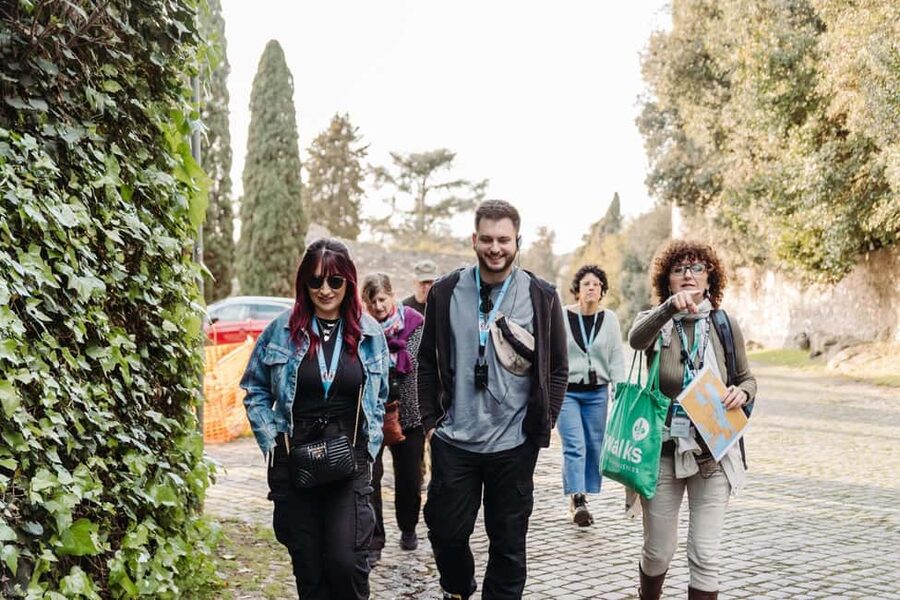
The Appian Way was one of ancient Rome’s earliest major roads. Roman legions, merchants, and other travelers used it to move through and beyond the city. Today, you walk a short section with centuries-old paving stones beneath your feet while your guide explains how the road helped Rome extend its reach.
Do not picture a completely empty country lane. A section of the road remains active, and traffic can surprise you. The stone surface is also uneven, so wear shoes with a firm sole and watch your footing rather than trying to hurry.
The appeal is not one single monument. It is the feeling of walking along a route built for a very different Rome. Tombs and scattered ruins appear beside the road, and the setting feels less polished than the major archaeological sites in the center. That roughness is part of the charm.
Your guide gives the road a human scale. Instead of seeing paving stones as a static ruin, you can picture soldiers, traders, and families passing along the same route. Guides including Antonella, Marie Anne, and Federico have been praised for explaining not only the road itself but also nearby sights seen from the vehicle.
The 25-minute stop is enough for a taste, not a full exploration. If you hoped to spend hours walking the Appian Way, this tour will feel too brief. If you want a manageable introduction without sacrificing the other sites, the timing works well.
Seeing Cecilia Metella’s round mausoleum
The next stop brings you to the Mausoleum of Cecilia Metella, an imposing circular tomb from the first century BCE. Its size and sturdy form make the purpose clear: this was not a modest family marker. It was a public statement about status, wealth, and the family’s place in Roman society.
You have about 25 minutes here for a guided visit, sightseeing, and photographs. The mausoleum is visually simple compared with Rome’s later churches, but that simplicity helps you notice its scale. The thick round structure has survived while much of the surrounding ancient world disappeared.
This is one of those stops where a good explanation matters more than a long visit. Your guide can connect the tomb to Roman burial customs and the powerful family behind it, giving meaning to what might otherwise be a quick photo stop.
The stop also breaks up the road walk nicely. You are not standing in one place for too long, and the vehicle is close by when it is time to continue. The itinerary keeps moving at a brisk pace, so listen closely and ask questions as you go.
Standing beneath the Aqueducts Park arches
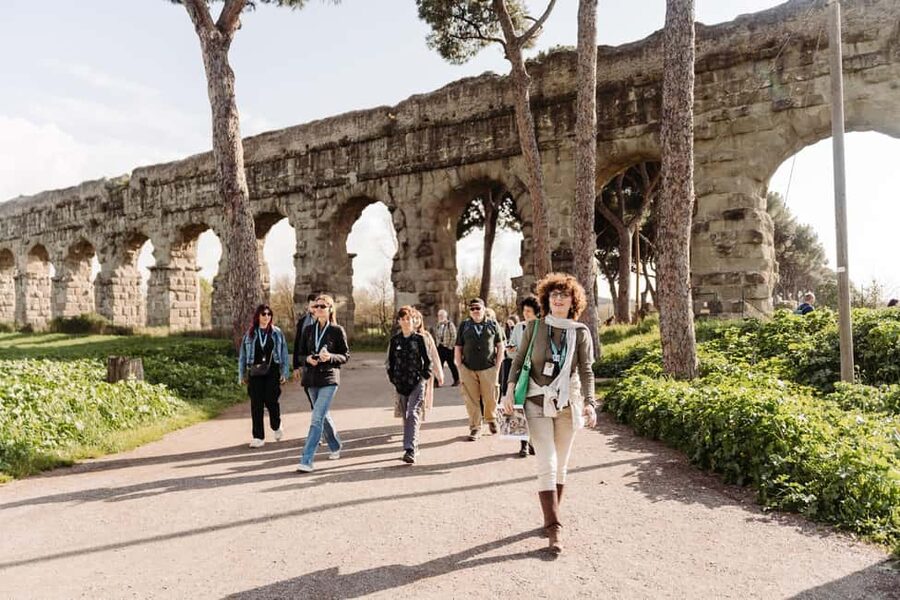
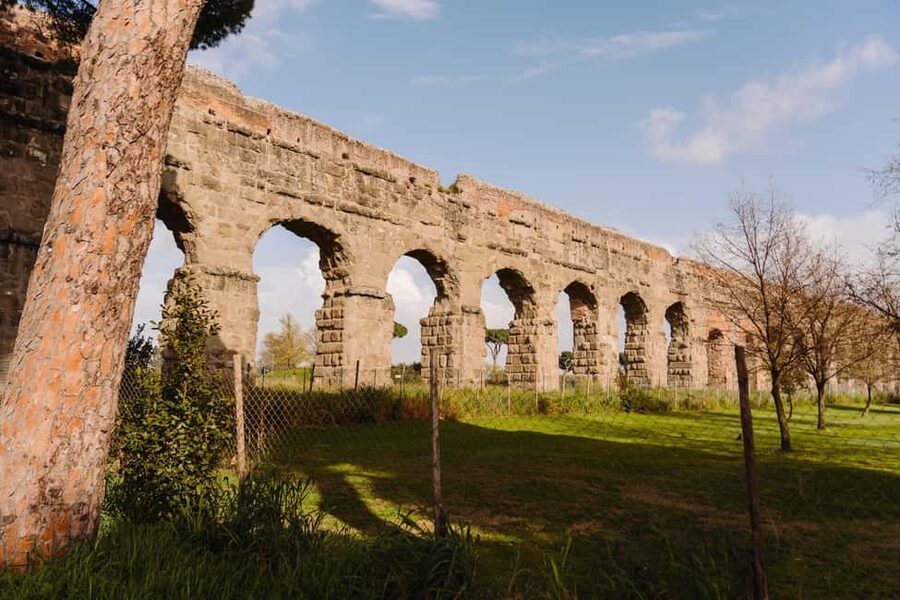
For many people, the Aqueducts Park is the high point of the outing. You get about 45 minutes here, the longest outdoor stop, and the giant remains are easy to appreciate even if you are not an engineering enthusiast.
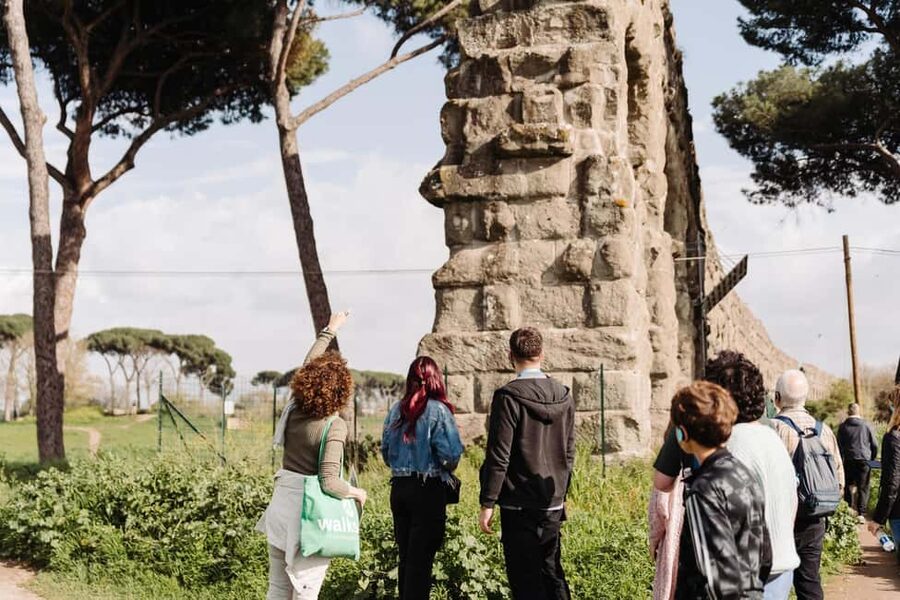
The aqueducts once carried fresh water toward ancient Rome. Their tall arches show how Roman builders used careful planning and gravity to supply a growing city. Beneath them, the scale is impressive. You can look along the line of arches and see how far the structure once reached.
I like this stop because it combines open space with a major piece of Roman infrastructure. The Colosseum tells you about spectacle. The aqueducts tell you how ordinary city life worked: drinking water, fountains, baths, and public systems all depended on this kind of engineering.
The park setting also gives you a breather from Rome’s hard stone streets. It feels open and airy, and the countryside view makes the ancient city seem larger than its central monuments suggest. Several guides have used this stop to explain the water system in clear, memorable terms, and the broad setting makes it easier to understand the scale.
There is a catch. In warm months, you spend much of this time outdoors with limited shade. A June visit reached 36 degrees Celsius, and even a considerate guide could only manage the heat by keeping the group in shade when possible. Bring water, wear a hat, and consider booking at a cooler time of day if your schedule allows.
One visitor wished for more time at the aqueducts, and I understand why. Forty-five minutes gives you a solid introduction, but photographers and history fans may want to linger. The tour has to protect time for the catacombs, so the park cannot become a long free-form visit.
A different way to spend the day, same part of Italy:
- Vatican Museums, Sistine Chapel & St Peter’s Basilica Guided Tour
★ 4.5 · 39,149 reviews - Rome: Colosseum, Palatine Hill and Roman Forum Guided Tour
★ 4.8 · 32,814 reviews - Rome: Guided Tour of Colosseum, Roman Forum & Palatine Hill
★ 4.7 · 27,897 reviews - Rome: Colosseum & Forum with Audio Guide App -Optional Arena
★ 4.2 · 24,770 reviews
Entering the catacombs after closing time
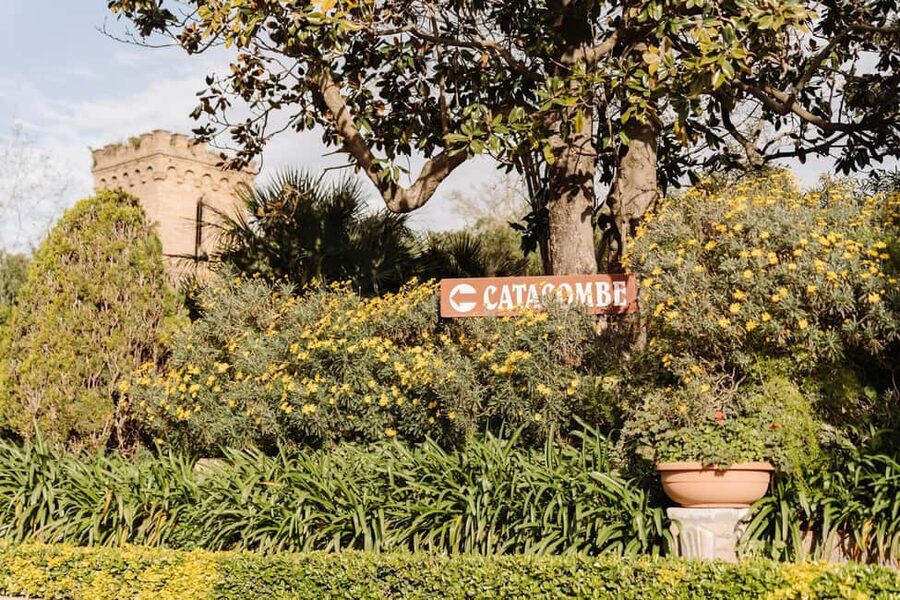
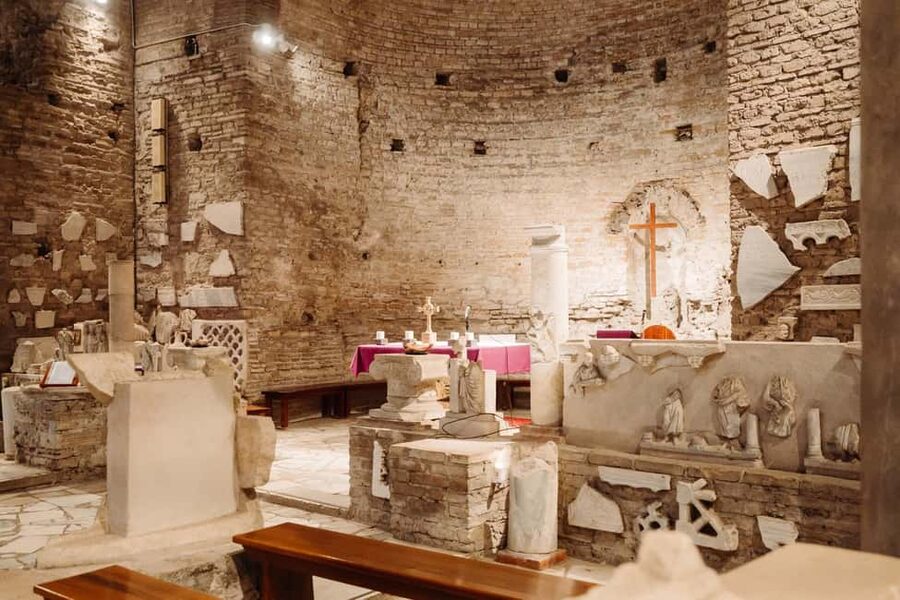
The final major stop is the underground portion, lasting about 80 minutes. Depending on the day, you visit the Catacombs of San Sebastiano or the Catacombs of Domitilla. The exact site is not guaranteed, so book this tour for the experience of visiting a Roman catacomb rather than for one specific name.
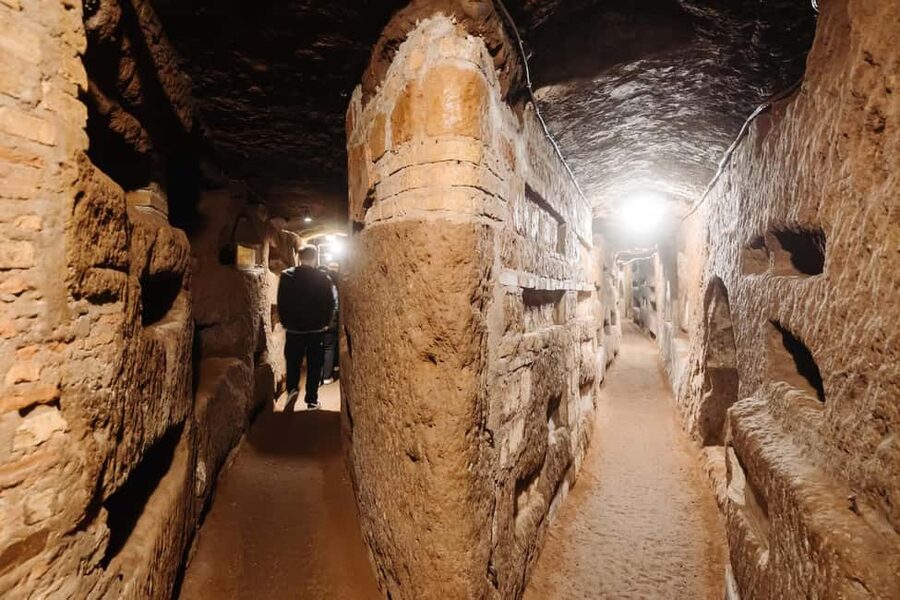
The timing is a real advantage. You enter as the last visitors of the day, which generally means a calmer atmosphere and fewer people moving through the narrow passages. After the bright open park, the change is dramatic: you go underground into a quieter world of tunnels, early Christian burial places, and ancient frescoes.
The catacomb portion includes a dedicated catacomb guide. That guide takes over inside and explains the burial areas and religious setting. This change of guide works well because the specialist can focus on the underground site rather than trying to cover every subject from the Appian Way to early Christianity.
Expect a serious historical visit, not a theatrical haunted attraction. The passages are tight, and the atmosphere can feel eerie, but the importance lies in what they reveal about Roman burial customs and early Christian communities. The catacombs do not resemble the Paris underground ossuaries filled with exposed bones. If that is what you expect, you may be surprised. Here, the interest is in the tunnels, spaces, paintings, and history.
You cannot take photographs inside, and cameras are not allowed. A useful practical point: the gift shop may be closed when you come out, so if you want a book or printed reminder, do not assume you can buy one afterward.
The underground route is not suitable for anyone with claustrophobia. Mobility is also a concern. You need to walk at a moderate pace, manage uneven surfaces, and cope with the narrow nature of the site. Wheelchair users, people with mobility impairments, and families using strollers should choose another activity.
Why the air-conditioned vehicle matters
The sites are spread out, and public transport would make this combination more complicated. The private, air-conditioned vehicle takes you from Piramide to the Appian Way, then onward to Cecilia Metella, the Aqueducts Park, and the catacombs.
That arrangement gives you more sightseeing time and less time figuring out connections. It also helps in July and August, when a short outdoor walk can feel much longer than it looks on paper. The ride back to Piramide takes about 20 minutes.
The roads can be bumpy, especially near the old road. One practical advantage of the vehicle is that you can rest between stops instead of walking every connection. Drivers have also had to adjust routes around city protests, so a little flexibility is sensible.
Hotel pickup and drop-off are not included. You meet at Piramide metro station, not simply somewhere in the wider Ostiense area. If you use a taxi app, enter the metro station itself. Some taxi journeys have ended about 10 minutes away because the destination was entered too broadly.
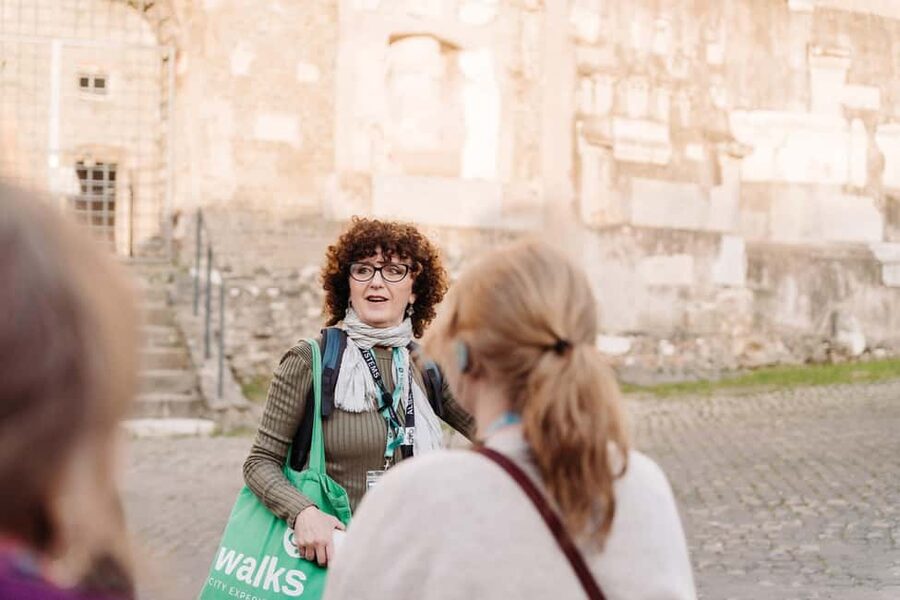
Arrive 15 minutes early and look for the guide holding a green Walks sign. This is a small detail, but it prevents a stressful start in a busy part of Rome.
What your guide adds to the experience
The quality of the guiding makes a large difference here. There are no grand interiors at every stop, so the story has to carry the visit. The strongest guides connect the monuments to Roman habits, politics, engineering, and religion rather than simply naming dates.
Federico has been especially effective at bringing early Roman history to life with humor and clear explanations. Antonella has been praised for her energy, care, and ability to adjust to hot weather. Silvia, Chiara, Paris, and Annamaria have also been singled out for warm, engaging presentations.
Your guide may also respond to the interests of the group. One group had a driver reroute around protests, while another found the guide attentive to questions and specific interests. That flexibility is useful on a route with several unrelated subjects.
The catacomb guide is separate, which helps keep the final section focused. You get one guide for the surface sites and another specialist for the underground visit. It is a good format for a tour that moves from Roman roads to imperial infrastructure and then to early Christian burial.
Who should book this Rome outing?
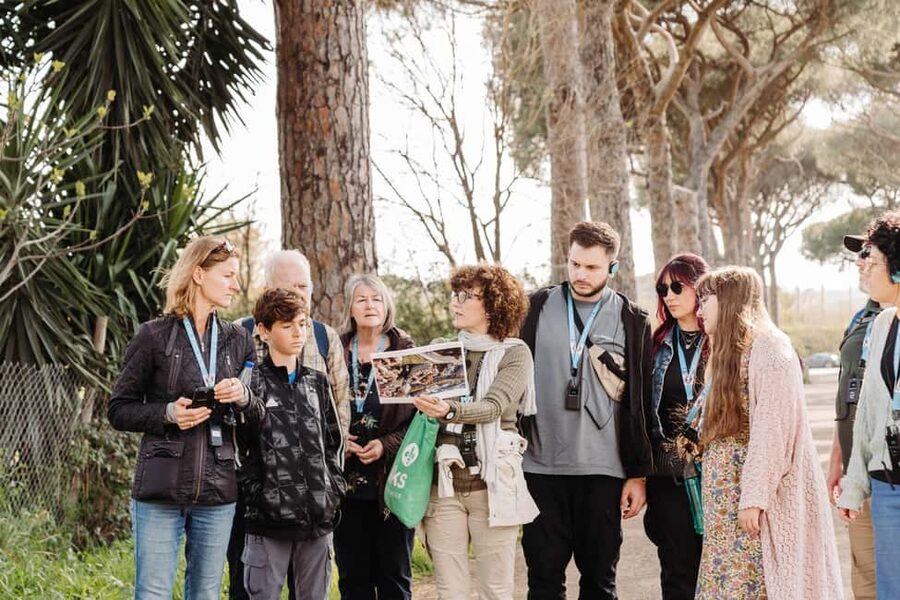
I would choose this tour if you have already seen several central monuments and want a change of pace. It gives you fresh air, open space, a historic road, and an underground site in one compact outing.
It also suits you if you want ancient Rome explained rather than simply photographed. The guide’s role is central, and the best experience comes from listening, asking questions, and noticing how the road, tomb, aqueducts, and catacombs fit into different chapters of Roman life.
Families with older children may enjoy the variety, but the underground passages and walking pace still matter. This is not suitable for strollers, wheelchairs, or anyone who struggles with moderate walking. People who dislike confined spaces should skip the catacomb tour.
Dress carefully. You need your knees and shoulders covered for the religious site, so long trousers and a long-sleeved shirt are the safest choice. A scarf can provide an extra layer, but do not rely on it as your only plan.
The outdoor sections need similar preparation. Wear sturdy shoes, bring water, and protect yourself from the sun. The road is uneven, the Aqueducts Park can be hot, and the vehicle’s air conditioning does not change the fact that you will spend substantial time outside.
Should you book the Appian Way and Catacombs Tour?
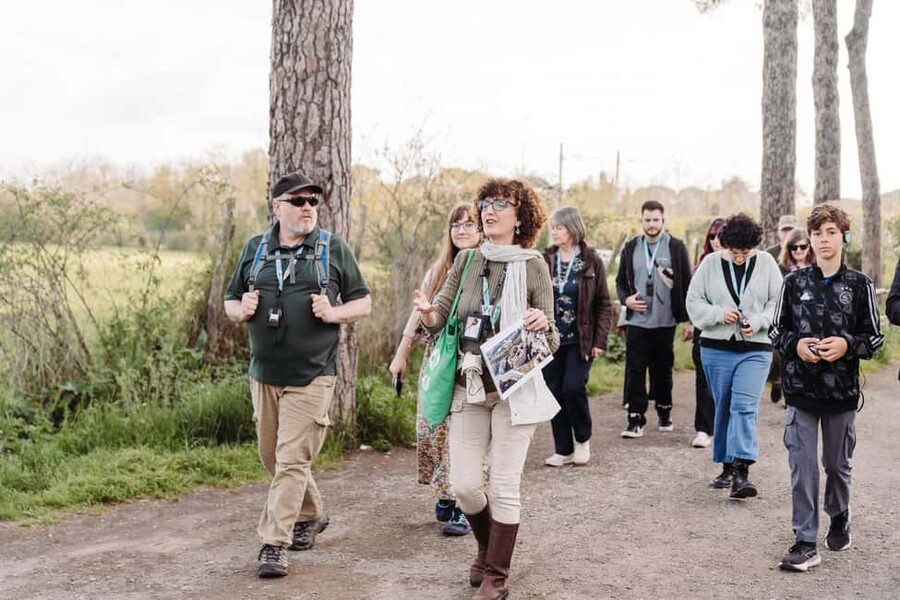
Book it if you want to see a quieter side of Rome and value the ease of air-conditioned transport. At $64, the combination of four major stops, catacomb entry, guiding, and transport is good value for a first visit to this part of Lazio.
The best reasons to go are the Aqueducts Park, the end-of-day catacomb access, and the chance to walk a piece of the Appian Way without planning a complicated route yourself. The main compromises are the short Appian Way visit, possible traffic, bumpy roads, summer heat, and the fact that the catacomb site changes between San Sebastiano and Domitilla.
If you want a long archaeological walk, photography inside the catacombs, or a bone-filled underground experience, this is not the right choice. If you want a well-paced history outing that gets you away from central Rome for a few hours, I would put it high on your list.
FAQ
How long does the tour last?
The tour lasts 195 minutes, or three hours and fifteen minutes. This includes the visits and the return journey to Piramide.
Where does the tour meet?
You meet in front of Piramide metro station, across from Piazzale Ostiense. Arrive 15 minutes before departure and look for the guide holding a green Walks sign.
Which catacombs does the tour visit?
The tour visits either the Catacombs of San Sebastiano or the Catacombs of Domitilla, depending on the day.
Can I take photographs inside the catacombs?
No. Photography is not allowed inside, and cameras are listed among the items not permitted.
What should I wear?
Wear long trousers or a long skirt and a long-sleeved top. Your shoulders and knees must be covered because the catacombs are a religious site.
Is the tour suitable for wheelchair users or people with claustrophobia?
No. The tour is not suitable for wheelchair users, people with mobility impairments, stroller users, or people with claustrophobia. You should also be able to walk at a moderate pace.
Recently reviewed around Rome
- Haunted Rome Ghost Night Walking Tour★ 5.0 · 495 reviews
- Rome Private Tour: Highlights and Hidden Gems★ 5.0 · 374 reviews
- Haunted Rome Ghost Tour – The Original★ 4.5 · 668 reviews
- Hadrian’s Villa and Villa d’Este Half-Day Trip from Rome★ 3.5 · 808 reviews
- Super Fun Pasta & Gelato Class by Vatican with Wine + Oil Tasting★ 5.0 · 726 reviews
- Rome Golf Cart Tour : Half-Day Private or Small Group Sightseeing★ 5.0 · 528 reviews
- Guided Tour Vatican Museums & Sistine Chapel with Basilica Access★ 5.0 · 309 reviews
- Rome: Skip-the-Line Vatican Museums and Sistine Chapel Tour★ 4.5 · 241 reviews
Rome Tours, compared.

Vatican: Museums & Sistine Chapel Entrance Ticket
Read our review →
Vatican Museums & Sistine Chapel Tour with Optional Basilica
Read our review →
Colosseum, Roman Forum & Palatine Guided Tour
Read our review →
Vatican Museums, Sistine Chapel & St Peter’s Basilica Guided Tour
Read our review →
Colosseum, Palatine Hill and Roman Forum Guided Tour
Read our review →
Guided Tour of Colosseum, Roman Forum & Palatine Hill
Read our review →
Colosseum & Forum with Audio Guide App -Optional Arena
Read our review →