Review · PRIVATE
Rome: Caracalla Baths & Circus Maximus — Private or Shared
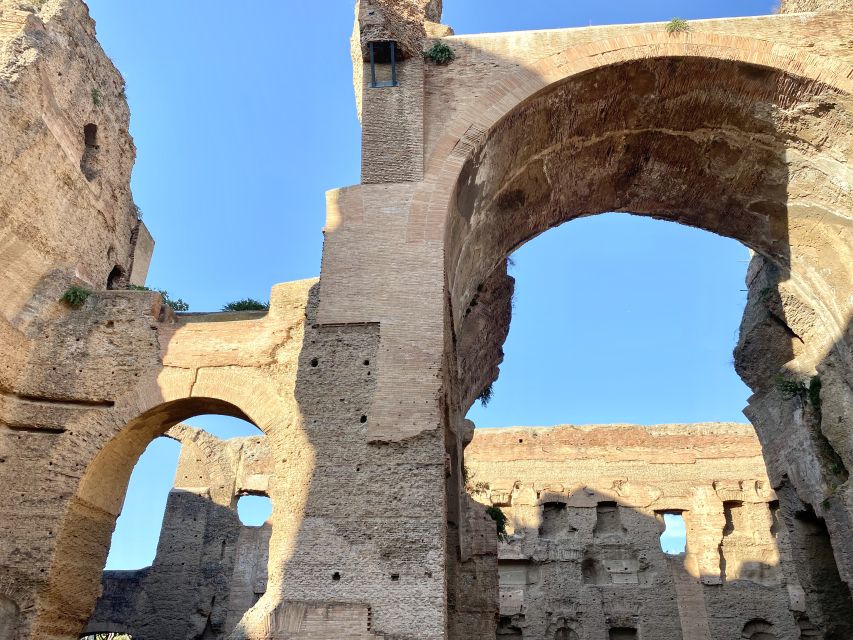
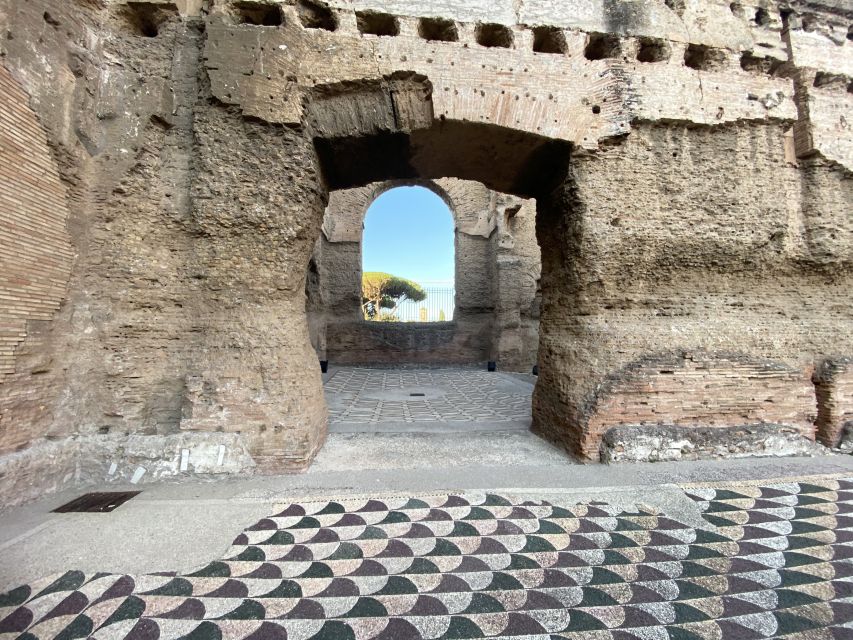
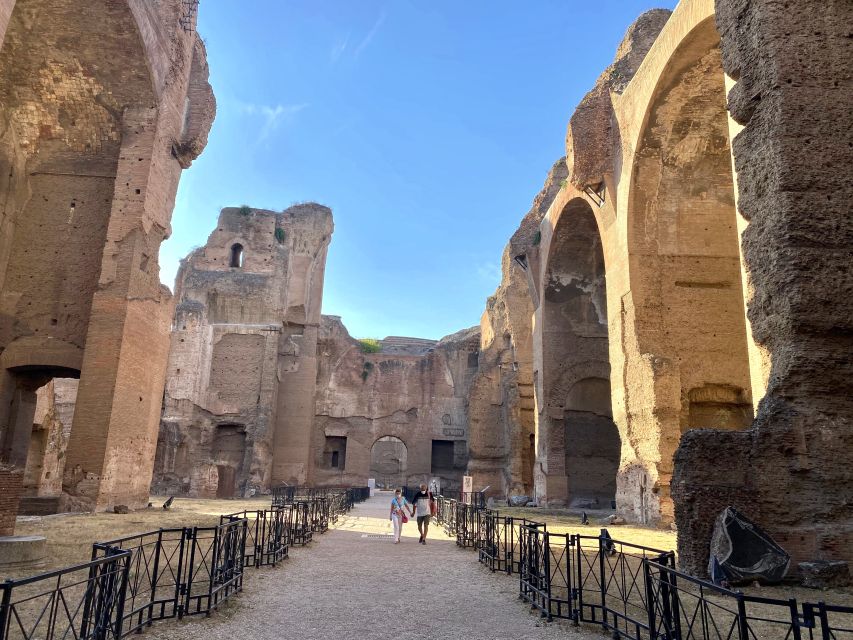
The Baths of Caracalla are the real prize here: huge brick walls, handsome mosaics, and enough surviving structure to show how an ordinary Roman leisure day once unfolded. You do not just look at ruins. You follow the path from changing rooms through heated halls and learn how thousands of people could use this vast public complex.
I like the small groups of up to 10 and the live archaeologist guides, including frequently praised guides such as Chiara, Francesca, Lars, Mario, Samuele, and Anestis. I also like the calm setting, just beyond the Colosseum crowds. The main consideration is Circus Maximus, where the open field leaves much to your imagination and offers far less to see than the baths.
In This Review
- Key points at a glance
- Why the Baths of Caracalla deserve your time
- Reading the baths through Roman engineering
- What you will see during the one-hour bath visit
- Circus Maximus, where the stories do more work
- The value of an archaeologist guide
- Private, semi-private, or shared: which format fits?
- Meeting point and timing
- Languages, ages, and access
- Who will enjoy this tour most?
- How this compares with visiting alone
- Should you book the Baths of Caracalla and Circus Maximus tour?
- FAQ
- How long does the tour last?
- Where does the tour meet?
- Is admission to the Baths of Caracalla included?
- What languages are available?
- Can I cancel for a refund?
- What should I bring, and what is not allowed?
Key points at a glance
- Caracalla’s surviving mosaics: See sections of geometric flooring and enormous walls that make the baths’ scale easy to grasp.
- Roman heating explained: Learn how hot air moved beneath floors and how different rooms were kept at different temperatures.
- A quieter side of central Rome: Visit an archaeological area close to the Colosseum but generally calmer and less crowded.
- Circus Maximus in 30 minutes: Hear about chariot races, gladiatorial events, public celebrations, and the site’s legendary beginnings.
- Private or small-group format: Choose a private, semi-private, or shared visit, with groups capped at 10.
- Useful flexibility: You can cancel up to 24 hours before the start for a full refund and reserve without paying immediately.
Why the Baths of Caracalla deserve your time
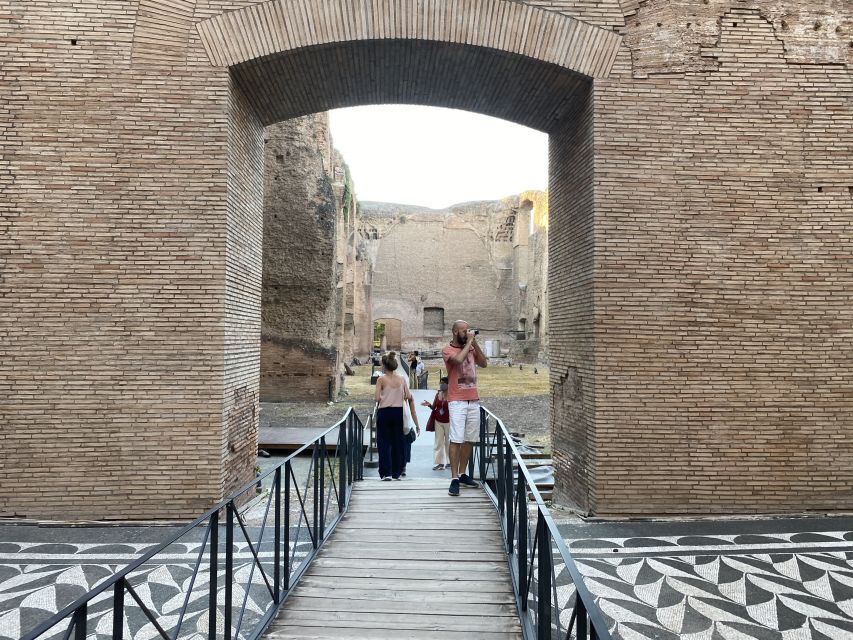
Rome has no shortage of ruins, but the Baths of Caracalla are unusually easy to picture. Their walls still rise high above you, and the surviving rooms show the building’s scale in a way that a low foundation rarely can.
The complex was not simply a place to wash. It offered exercise, social time, rest, reading, and grooming. Your guide explains the likely order of a visit in the third century AD, helping you imagine how a Roman might move through the bathing halls during a normal day.
That human detail matters. Without it, the site can feel like a maze of brick and stone. With a good guide, the rooms become part of a working public center where architecture served both the body and the mind.
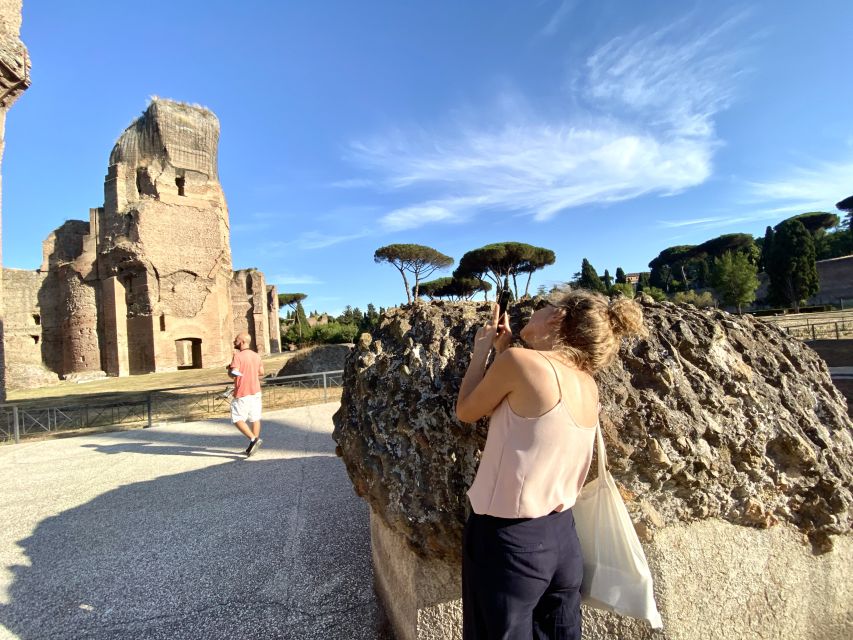
The setting also gives this tour a different mood from the Colosseum. The baths occupy a broad archaeological area with greenery around the ruins. You still remain close to Rome’s center, but the atmosphere is usually more peaceful, making it easier to listen and notice details.
More Rome trips worth a second look
- Rome by Golf Cart Private Tour: Beyond the Landmarks
★ 5.0 · 4,361 reviews - Early Morning Vatican, Sistine, St. Peter’s Semi or Private Tour
★ 5.0 · 3,779 reviews - Rome on a Golf Cart Semi-Private Tour Max 6 with Private Option
★ 5.0 · 2,502 reviews
Reading the baths through Roman engineering
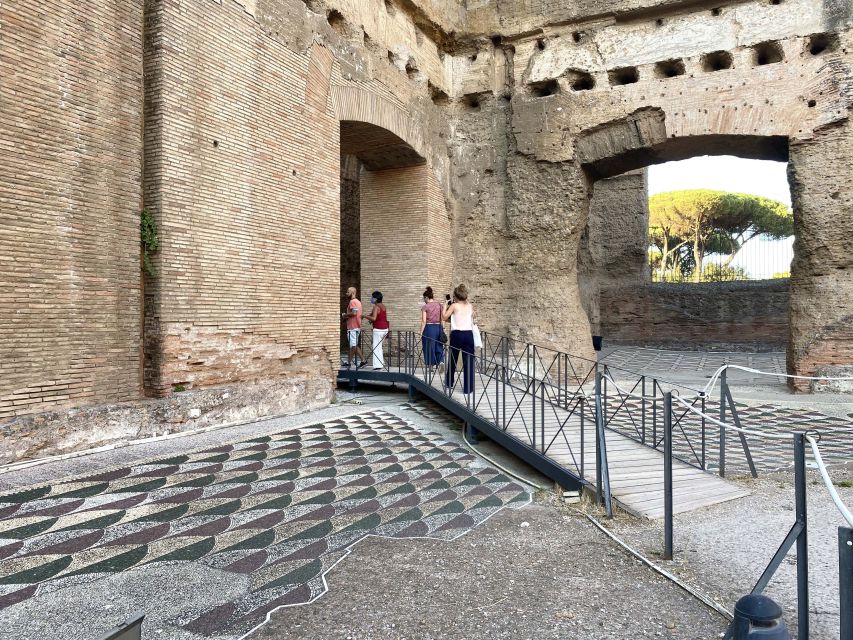
One of the best parts of the tour is the explanation of the heating system. The Romans used an underfloor arrangement that allowed hot air to circulate beneath rooms. It required major labor, careful construction, and a steady supply of fuel.
You learn how the builders aimed to keep each room at its intended temperature. The guide connects the engineering to the layout, so the technology is not treated as an isolated fact. You can see why the baths needed thick walls, large service areas, and a complex plan.
This is the sort of information that makes a guided visit worth considering. You could walk through the site alone and admire the brickwork, but you might miss why the floors were built as they were or how the different spaces worked together.
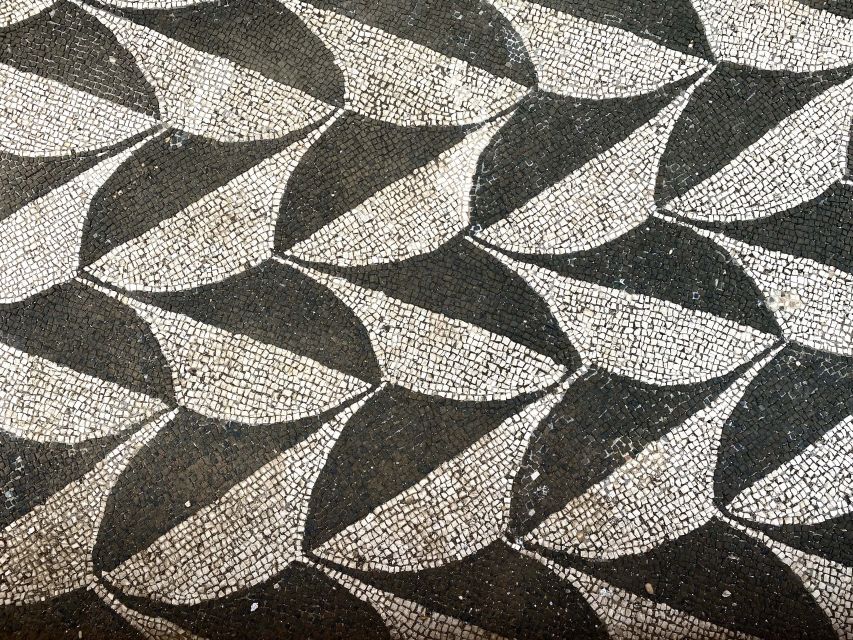
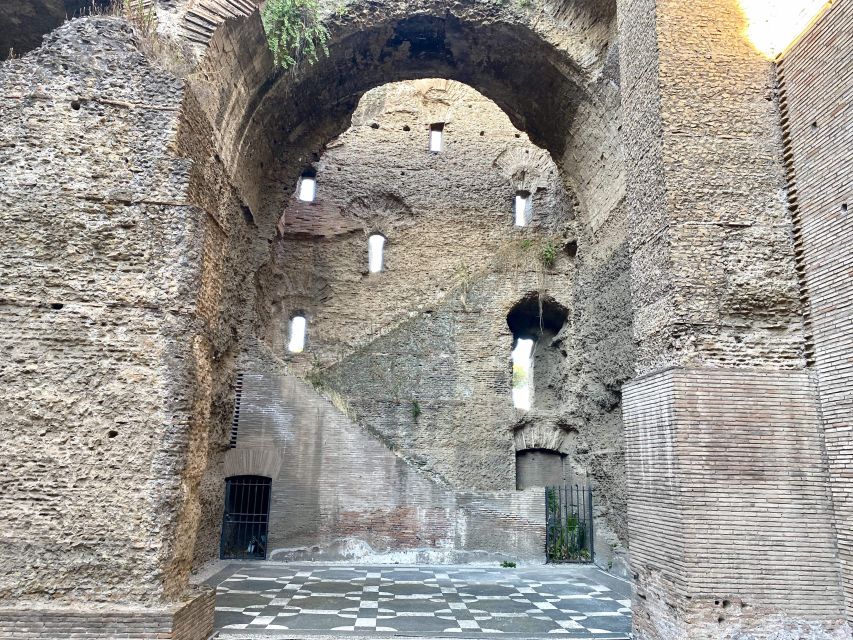
The scale is also startling. The remains give you a sense of the grand Imperial project behind the baths, from the vast halls to the decorative surfaces. The surviving geometric mosaics are among the most memorable details, especially because they add pattern and color to such massive construction.
What you will see during the one-hour bath visit
The first hour is devoted to the Baths of Caracalla. Expect a walking tour through the monumental rooms, with stops to discuss their original purpose, decoration, construction, and later condition.
Your guide may point out the remains of mosaics and fresco decoration, including areas where color and detail remain surprisingly clear. The ruins are not intact in the way a restored building is intact, but enough survives to help you understand the original design.
The visit is not built around a long list of isolated facts. The guide is meant to connect the rooms into a typical Roman routine. You hear about bathing, exercise, conversation, and the wider range of services available at this ancient spa.
The site is fairly manageable compared with some of Rome’s more demanding archaeological visits, but you will still be on your feet and walking over an ancient monument. Comfortable shoes are essential. The tour information also says the site is wheelchair accessible, though strollers, trolleys, large backpacks, luggage, pets, and drones are not allowed inside the monuments.
Circus Maximus, where the stories do more work
After the baths, the tour continues to Circus Maximus for about 30 minutes. This was the great public-games site associated with chariot races and large Roman celebrations. The area was capable of holding enormous crowds, and it is considered to have been the largest structure ever built for public games.
The key difference is physical. At the baths, the architecture carries much of the story. At Circus Maximus, the open ground and remaining traces provide a setting, but not a complete monument.
Your guide fills that gap with stories about the Roman Ludi, public celebrations that could continue for several days and include more than one type of event. You hear about chariot races, gladiatorial contests, the noise of the crowd, and the social importance of public entertainment.
The site also reaches back into Rome’s early myths and gods. Your guide explains how the circus is linked to the period before Rome became the city we know, when legend and early religious tradition shaped the story of its beginnings.
I would set your expectations carefully. If you want dramatic ruins at both stops, Circus Maximus may feel thin. If you enjoy historical explanation and can use your imagination, the stop gives useful context and helps explain how Roman public life worked.
A different way to spend the day, same part of Italy:
- Vatican: Museums & Sistine Chapel Entrance Ticket
★ 4.5 · 144,003 reviews - Vatican Museums & Sistine Chapel Tour with Optional Basilica
★ 4.3 · 67,413 reviews - Colosseum, Roman Forum & Palatine Guided Tour
★ 4.7 · 63,148 reviews - Vatican Museums, Sistine Chapel & St Peter’s Basilica Guided Tour
★ 4.5 · 39,149 reviews
The value of an archaeologist guide
The strongest part of this experience is the guiding. The overall rating is 4.7 from 835 reviews, and the praise is unusually consistent around clear explanations, warmth, humor, and the ability to answer questions.
Guides named in the feedback include Chiara, Francesca, Lars, Mario, Samuele, Anestis, Cynthia, Alicia, and Sam. Their styles differ, but the recurring strength is the same: they make the ruins easier to picture without turning the visit into a dry lecture.
Several guides have been praised for extending the tour when time allowed. One visit lasted an extra half hour because the guide wanted to continue sharing material. That should not be treated as a guaranteed feature, but it suggests that the private format can offer more room for questions and conversation.
A small group also makes a practical difference. With no more than 10 participants, you can usually stay close to the guide and ask about details that interest you. Some scheduled small-group visits may become private when few people book, and this has happened without the tour being canceled or the price changing.
That is especially useful for families and curious first-time visitors. A private visit can also make it easier to adjust the pace, clarify unfamiliar Roman terms, or connect the site to other monuments you plan to see.
Private, semi-private, or shared: which format fits?
At $77 per person, this is not the cheapest way to see the baths. The entrance fee, headset, on-site assistance, and an archaeologist guide are included, but food, drinks, and hotel transport are not.
I think the price makes the most sense if you care about interpretation. The baths are large enough that a guide can add real value by explaining the heating system, room sequence, mosaics, and daily use. If you are happy reading signs and taking in the ruins without much context, the cost may feel high.
The shared option is the sensible choice for many people. It keeps the cost lower while preserving the live guide and small maximum group. The private option suits families, couples, or anyone who wants more freedom to ask questions.
There is also an unusual upside when demand is light. The tour may run with only one booking, creating a private-style visit rather than a cancellation. That is not something to count on, but it has happened often enough to be worth noting.
Meeting point and timing
You meet at the exit of the Circo Massimo Metro station, in the direction of Laurentina, in front of the FAO building. Look for a yellow label with the local partner’s name.
Arrive at least five minutes early. The sign-up process takes place before the walk begins, and the meeting point is easiest when you leave yourself time to identify the correct station exit.
The tour lasts 1.5 hours: about one hour at the baths and 30 minutes at Circus Maximus. Starting times vary, so check availability for your date before planning nearby activities.
There is no hotel pickup or drop-off. You will need to reach the meeting point yourself, and you should bring only what you need. Large bags, luggage, trolleys, and large backpacks are not permitted inside the monuments.
The tour can be canceled in unfavorable weather. If that happens, you receive the choice of another date or a full refund. You can also cancel up to 24 hours before the start for a full refund, and the reserve-now, pay-later option helps if your Rome plans are still changing.
Languages, ages, and access
Guided visits are available in English, Italian, French, Portuguese, Spanish, and German. Make sure you select the language you want when booking, since the experience is built around spoken explanation.
Participants under 18 must carry an official document or a digital copy. European citizens under 25 must also carry proof of age and eligibility. This is easy to forget, so keep the document accessible rather than buried in luggage.
The tour is listed as wheelchair accessible. The ban on strollers and large bags still applies, so families with young children should plan around those restrictions.
Pets, weapons, sharp objects, and drones are not allowed. Comfortable walking shoes are the one item specifically recommended, and they are good advice for any visit through ancient ruins.
Who will enjoy this tour most?
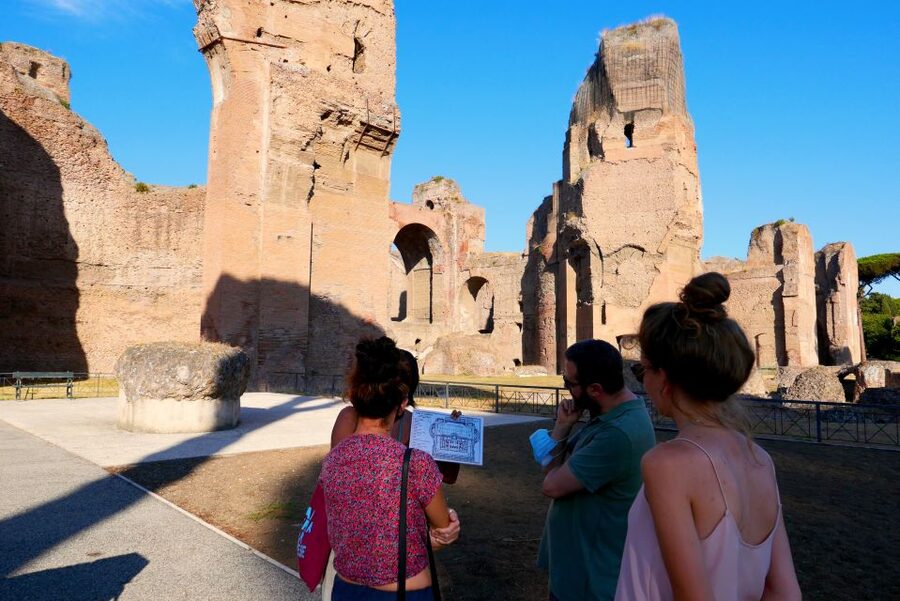
I would choose this experience if you have already seen the Colosseum and want a less crowded way to meet ancient Rome. It works particularly well for people interested in architecture, Roman daily life, engineering, or archaeology.
It is also a good final-days-in-Rome activity. The visit is relatively short and relaxed, yet it adds a useful layer to the city’s story. After several packed museum visits, the open setting and manageable schedule can feel welcome.
Families may appreciate the guide’s ability to turn the baths into a sequence of rooms and activities rather than a list of dates. First-time visitors can also use the tour as a bridge between Rome’s famous monuments and its quieter archaeological sites.
I would hesitate if your top priority is seeing two fully preserved monuments. The Baths of Caracalla deliver impressive remains, but Circus Maximus is mostly a historical setting. The second stop depends heavily on storytelling.
How this compares with visiting alone
A self-guided visit gives you control over timing, but the baths reward explanation. The heating system, room functions, and public services are not always obvious from the walls alone.
A guide also helps you notice details such as the geometric mosaics and the relationship between grand decoration and practical engineering. You can then spend the rest of your Rome trip recognizing similar Roman building methods elsewhere.
The trade-off is that a guided schedule moves at a set pace. A private tour offers more flexibility, while a shared tour may require you to follow the group’s rhythm. Since the entire visit lasts only 90 minutes, the structure is useful, but it leaves little time for wandering after the formal explanation.
Should you book the Baths of Caracalla and Circus Maximus tour?
Book it if you want the Baths of Caracalla explained by an archaeologist and prefer a small group near central Rome. The baths are the clear highlight, with imposing walls, surviving mosaics, and a practical look at Roman heating and leisure.
Choose the shared option for better value, or pay more for private attention if your group enjoys questions and conversation. Go in expecting Circus Maximus to be a story-led stop rather than a ruin-packed attraction.
For a quieter alternative to Rome’s busiest monuments, this is a strong choice. Just remember that you are paying mainly for the guide’s interpretation and the access to the baths, not for two equally substantial sites.
FAQ
How long does the tour last?
The tour lasts 1.5 hours. About one hour is spent at the Baths of Caracalla and about 30 minutes at Circus Maximus.
Where does the tour meet?
Meet at the exit of the Circo Massimo Metro station in the direction of Laurentina, in front of the FAO building. Look for a yellow label with the local partner’s name.
Is admission to the Baths of Caracalla included?
Yes. The entrance fee to the Baths of Caracalla is included, along with a sterilized headset and on-site assistance.
What languages are available?
The live guide service is available in English, Italian, French, Portuguese, Spanish, and German.
Can I cancel for a refund?
Yes. You can cancel up to 24 hours before the tour for a full refund. The activity also offers reserve now and pay later booking.
What should I bring, and what is not allowed?
Bring comfortable walking shoes. Pets, weapons, sharp objects, baby strollers, luggage, large bags, trolleys, large backpacks, and drones are not allowed inside the monuments.
Recently reviewed around Rome
- Ancient Rome at Twilight Walking Tour★ 5.0 · 276 reviews
- Domus Aurea Guided Tour: The Golden House of Nero★ 4.5 · 199 reviews
- Early Vatican Museums & Sistine Chapel Small Group Tour★ 4.5 · 314 reviews
- Early Vatican Museums Tour: The Best of the Sistine Chapel★ 4.5 · 900 reviews
- Jewish Ghetto & Piazza Navona: Food, Wine & Sightseeing Rome Tour★ 5.0 · 460 reviews
- 3 Days in Sorrento, Capri & Pompeii: la Dolce Vita★ 4.0 · 595 reviews
- Tivoli Villas Full Day Trip From Rome with Lunch★ 4.0 · 443 reviews
- Cook With Us in Rome: A Hands-On Cooking Experience 09:20AM class★ 5.0 · 234 reviews
Private, compared.

Como & Bellagio with Private Lake Como Cruise
Read our review →
Murano & Burano Islands Guided Small-Group Tour by Private Boat
Read our review →
Rome by Golf Cart Private Tour: Beyond the Landmarks
Read our review →
Early Morning Vatican, Sistine, St. Peter’s Semi or Private Tour
Read our review →
Private 3 hrs Venice Tour: St Mark’s, Walking tour & Boat tour
Read our review →