
Review · CYCLING TOURS
Rome: City Highlights Electric Bike Tour
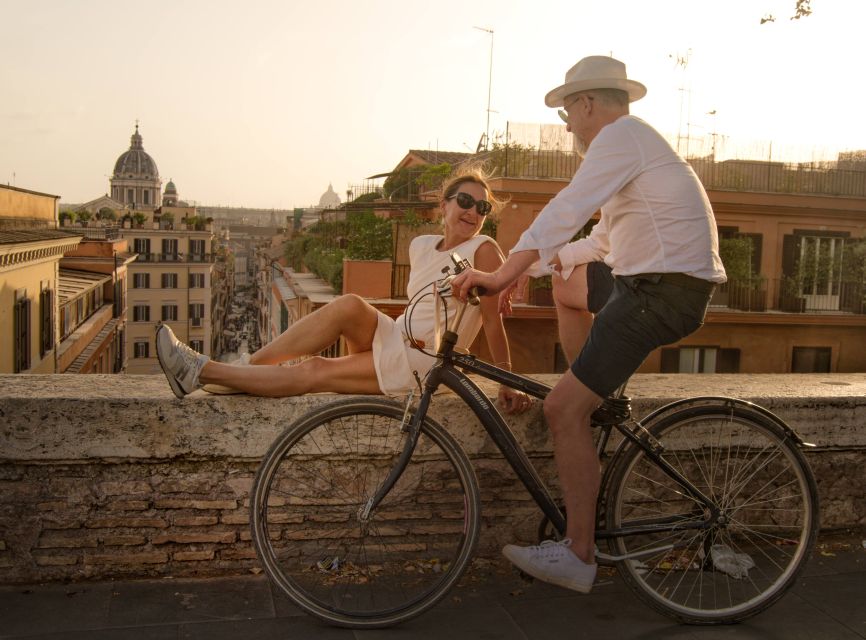
Rome reveals itself quickly from an electric bike. In four hours, you can roll from Tiber Island to the Colosseum, Trevi Fountain, and St. Peter’s Basilica, then still have time for quieter corners that a bus tour would pass without notice. The route uses the Tiber bike path, parks, side streets, and selected roads in the historic center.
I like two things in particular: the small groups, limited to eight people per guide, and the way local guides such as Daniela, Fabio, Giorgio, and Alessio adjust the pace and route to the group. I also like the practical sightseeing value. You cover a lot of ground without giving your feet another hard day on Rome’s ancient paving stones.
The catch is simple: this is still a real bike ride. You must pedal, manage crowds, and handle occasional traffic. The guide gives you a short riding test before departure and can refuse participation if you cannot ride safely or have health concerns, with no refund.
In This Review
- Key points to know before you book
- Why an electric bike works so well in Rome
- Tiber Island sets the tone
- Circus Maximus and the Colosseum
- Piazza Venezia and the Jewish Ghetto
- Campo de’ Fiori and Piazza Navona
- Castel Sant’Angelo and St. Peter’s Basilica
- The Pantheon and Trevi Fountain
- Piazza di Spagna and Piazza del Popolo
- What the guides add
- Safety, weather, and comfort
- Is $80 a fair price?
- Who should book this Rome bike tour?
- FAQ
- How long is the Rome electric bike tour?
- What sights are included?
- Does the tour include entry to the Colosseum or St. Peter’s Basilica?
- Do I need to be an experienced cyclist?
- What is the minimum age for riding an e-bike?
- Are children or infants allowed?
- What happens if it rains or the route changes?
Key points to know before you book
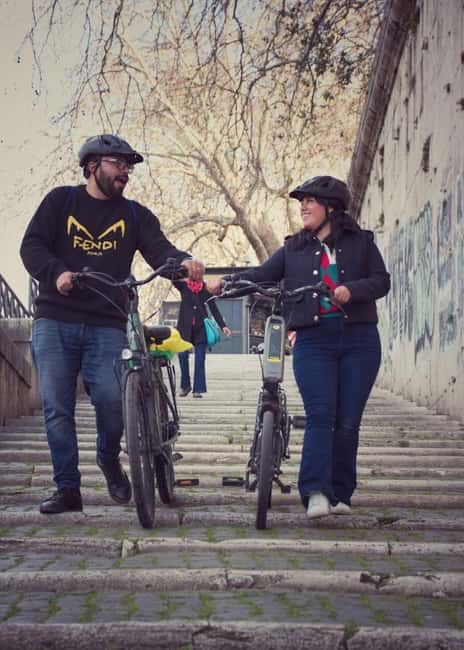
- About 17 kilometers is possible: One recorded outing covered roughly 17 kilometers, so plan for an active morning or afternoon.
- The route mixes famous sights and quieter lanes: You ride beside the Tiber and through back streets, but some surface traffic and crowded walking areas cannot be avoided.
- The bikes require pedaling: Electric assistance makes the ride easier, but this is not a motorized sightseeing vehicle.
- Groups stay small: The normal limit is eight people per guide, with private tours also available.
- Guides shape the experience: Daniela, Fabio, Giorgio, Alessio, Marco, and others are praised for history, photos, safety, and adapting the route.
- The tour is an overview, not an entry ticket: You stop for views and explanations outside major sights, rather than touring the Colosseum or Vatican Museums indoors.
Why an electric bike works so well in Rome
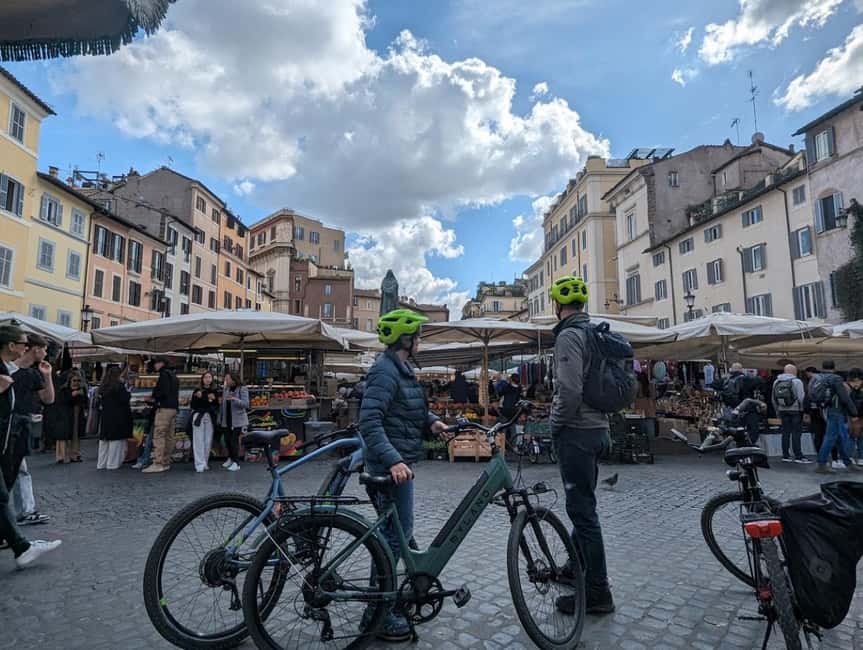
Rome is spread out, and its best sights do not line up neatly along one pedestrian street. The Colosseum, Piazza Navona, the Vatican, the Trevi Fountain, and Piazza del Popolo are all manageable in one day, but walking between them can eat up hours and leave you worn out before dinner.
The electric bike solves part of that problem. You still pedal, but the battery assistance helps with distance and makes the ride less tiring. Several guides use quiet roads and the Tiber cycle path to reduce contact with traffic. You may still cross busy streets, and you will likely walk the bike in crowded areas near the Colosseum or major squares.
I would not call this a lazy sightseeing option. You need a basic cycling level, balance, and enough stamina for a four-hour outing. But compared with covering the same route on foot, it is a smart way to save your legs while seeing how Rome’s neighborhoods connect.
The bikes have generally been described as good quality and easy to use. Still, one important detail is easy to miss when booking: an e-bike does not move on its own. You must keep pedaling, even with the electric motor helping you.
More Bike Tours in Rome
- Rome EBike Tour: Appian Way, Catacombs & Roman Aqueducts
★ 5.0 · 1,766 reviews - Rome: Top Highlights & Hidden Gems Tour by Cannondale E-Bike
★ 4.9 · 1,760 reviews - Rome: Appian Way, Catacombs, & Roman Aqueducts E-bike Tour
★ 4.9 · 1,421 reviews
Tiber Island sets the tone
The meeting point is on Lungotevere delle Armi, though the exact location can vary with the option you book. From there, the route heads toward the Tiber and Tiber Island, one of Rome’s most atmospheric spots.
Tiber Island is a useful early stop because it shows how the city’s river shaped its growth. You get a short guided visit and a chance to settle into the bike before the route reaches the busiest sights. The river path also provides a calmer start than plunging straight into central traffic.
Your guide explains how to handle the bike, checks that you are comfortable, and watches the group closely. This early test matters. If you are nervous about riding in Rome, say so at once. Guides have adjusted routes for beginners, but they need to know your ability before the group gets deeper into the city.
Circus Maximus and the Colosseum
Circus Maximus is a broad, open stop with room for a photo and a quick explanation. The ancient stadium once hosted chariot races and public spectacles, and its size is easier to grasp from the open ground than from a tight museum display.
From there, you continue toward the Colosseum. This is one of the tour’s strongest sightseeing moments, but keep your expectations in check. You stop outside for photos and commentary. The tour does not include entry to the Colosseum, so you will need a separate ticket and visit if you want to see the interior.
The benefit is speed. You can admire the amphitheater, hear the basic story of its construction and use, and move on without spending half the day in a security line. In crowded areas, you may have to walk your bike. That is less exciting than riding, but it is the sensible choice when pedestrians fill the streets.
Piazza Venezia and the Jewish Ghetto
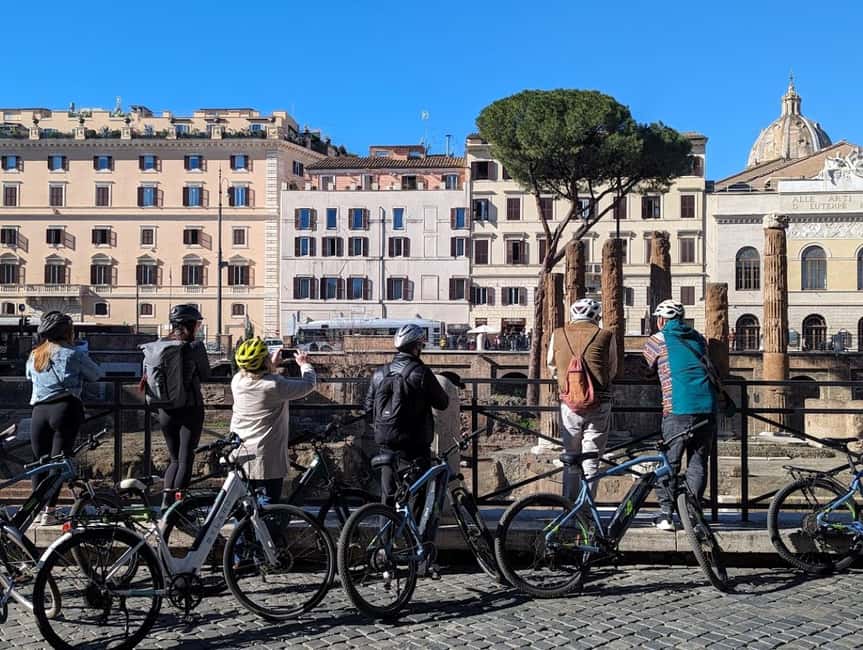
Piazza Venezia brings you into the political heart of central Rome, with the huge Victor Emmanuel II monument dominating the view. It is a quick photo stop, not a long monument visit. Your guide can help you understand how modern Italian national identity is tied to this part of the city.
The route then moves through the Jewish Ghetto. This is one of the places where the tour becomes more than a checklist of famous landmarks. Narrow streets, old walls, and small details reward a slower look, and a local guide can point out things you would probably miss from a taxi or sightseeing bus.
This area also helps break up the grand-monument rhythm. Rome is not only marble facades and ancient ruins. Its character often appears in ordinary lanes, old neighborhood corners, and the way modern life occupies spaces built centuries ago.
More City Tours in Rome
- Rome: City Sightseeing Hop-on Hop-off Bus with Audioguide
★ 4.0 · 16,045 reviews - City Sightseeing Rome Hop-On Hop-Off Bus Tour
★ 3.5 · 5,446 reviews - Rome: Fettuccine Pasta Cooking Class in Rome’s City Center
★ 4.8 · 2,414 reviews - Vatican City: Vatican Museums & Sistine Chapel Entry Ticket
★ 4.3 · 2,185 reviews
Campo de’ Fiori and Piazza Navona
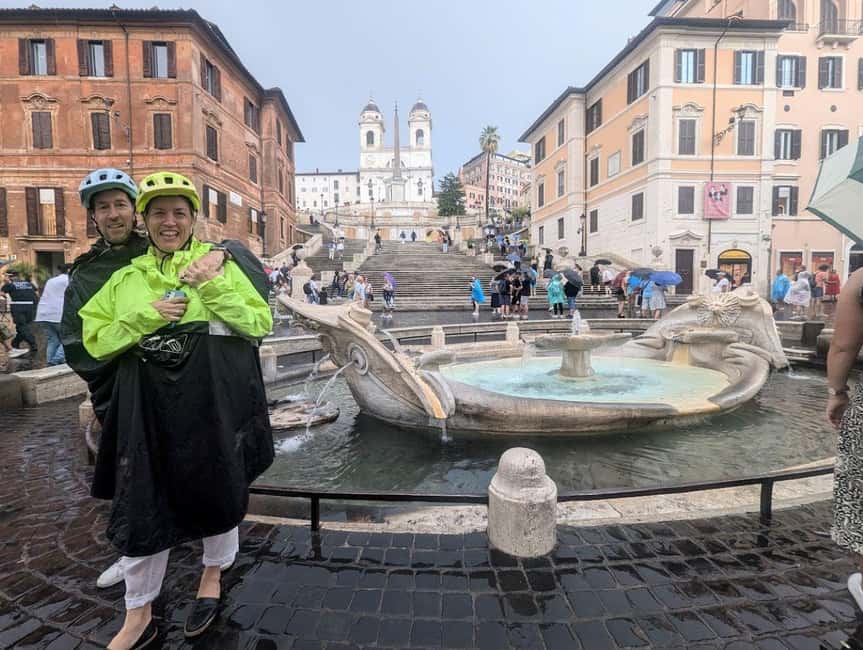
Campo de’ Fiori is another photo stop, placed in the middle of one of Rome’s best-known public squares. Depending on the time of day, the square can feel very different, but the tour gives you a quick look at its shape and role in city life.
Piazza Navona follows. The long oval plan preserves the footprint of an ancient Roman stadium, while the Baroque fountains and church create the theatrical setting Rome does so well. You do not have time for a full art lecture, but the guide’s short stories and observations help turn a photo stop into a useful introduction.
This is also a point where crowd control becomes important. You may ride close to the square, then dismount and walk. A four-hour bike tour cannot promise uninterrupted cycling through every famous piazza. The tradeoff is that you see more places overall.
Castel Sant’Angelo and St. Peter’s Basilica
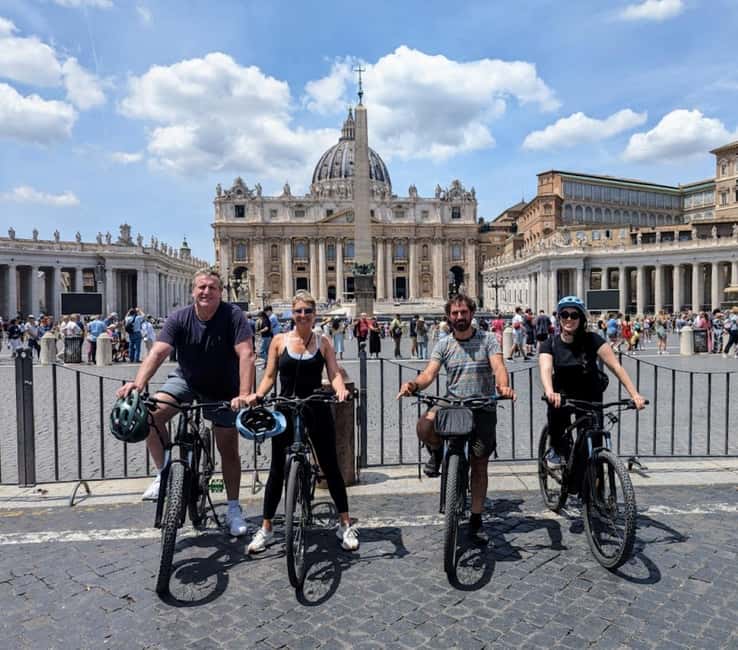
Castel Sant’Angelo makes a strong visual stop beside the Tiber. Originally built as a mausoleum, it later became a fortress and papal refuge. From outside, you can take in its unusual round form and its connection to the Vatican area.
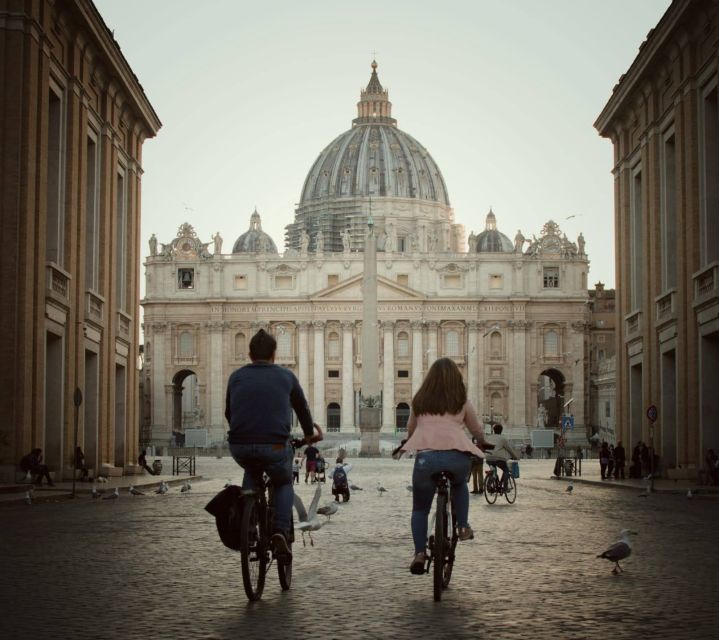
The route continues to St. Peter’s Basilica. Again, the emphasis is on the exterior and the surrounding view, not an interior visit. If St. Peter’s is a priority, schedule a separate visit when you can allow time for security and crowds.
The bike is especially useful here because the Vatican area sits apart from many of Rome’s ancient and Baroque sights. You get a sense of the city’s scale without spending a long stretch walking along busy avenues. Guides also keep an eye on the group at crossings, which makes this section more comfortable for riders who are new to city cycling.
The Pantheon and Trevi Fountain
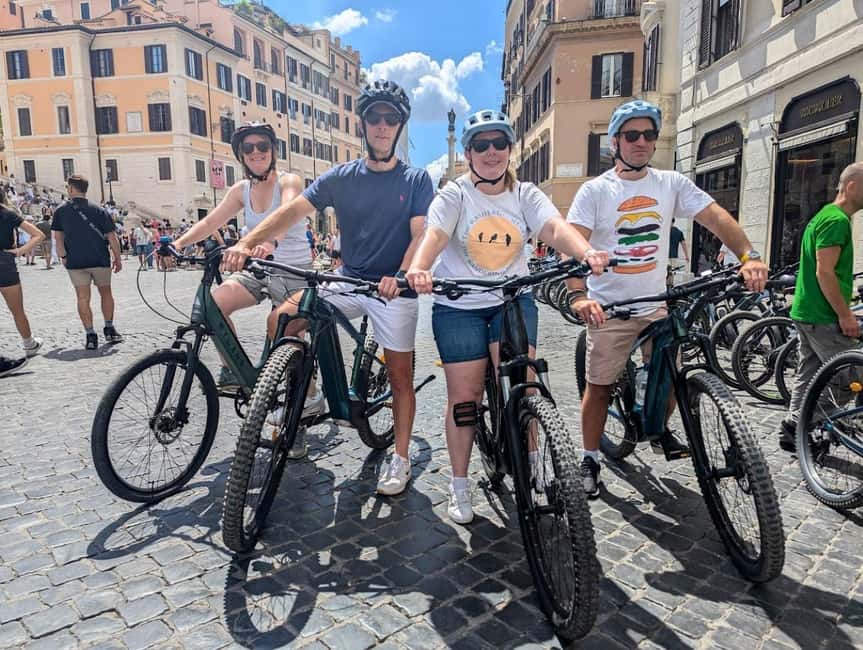
The Pantheon is one of the tour’s most rewarding stops because its exterior still conveys the engineering ambition of ancient Rome. The building’s massive columns and unmistakable facade make a memorable photo, even during a short visit.
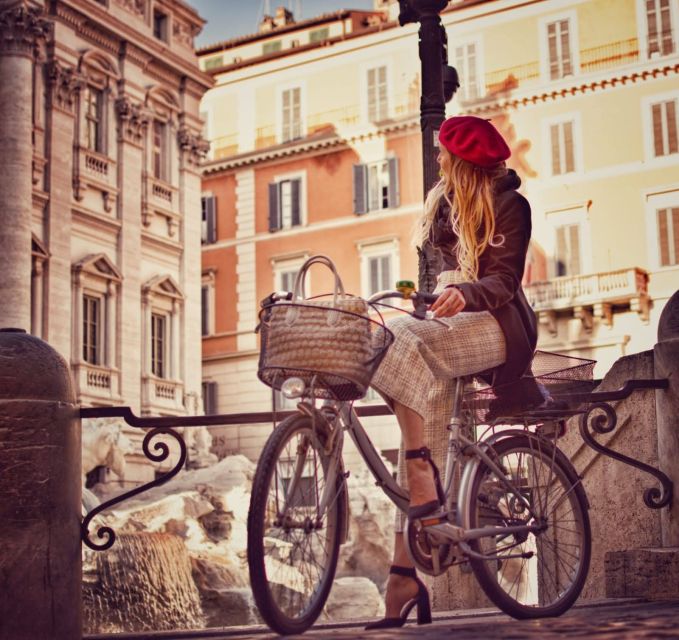
The Trevi Fountain is another high point, but expect crowds. The guide may take your photo and explain the fountain’s story, yet you will not have much personal space. One guide even supplied change for the fountain, a small practical touch if you want to follow the coin-toss tradition.
A useful detail from the route is the chance to notice less obvious Roman infrastructure. One outing included a look at ancient aqueduct remains inside a shopping mall near the Trevi area. That kind of surprise is one reason to choose a guided ride instead of simply following a map between major sights.
Piazza di Spagna and Piazza del Popolo
Piazza di Spagna is a natural stop for the Spanish Steps and the busy shopping streets around them. The bike lets you approach without committing to a long walk from another district, but the area is often too crowded for riding. Be ready to dismount.
Piazza del Popolo closes the sightseeing loop with one of Rome’s grandest open spaces. Its broad layout gives the group room to pause after the tighter streets around Trevi and the Spanish Steps.
The exact order or selection of sights can change for public events and safety reasons. That flexibility is sensible in Rome, where a procession, road closure, or packed square can alter the best route at short notice. You should think of the itinerary as a well-planned framework, not a guarantee that every stop will receive the same amount of time.
What the guides add
The guide is the most important part of this experience. The route itself is useful, but a good guide turns the ride into a connected story rather than a race between monuments.
Daniela is repeatedly singled out for energy, local insight, route planning, and taking excellent photos. Fabio is described as relaxed, patient, and clear without overloading the group with facts. Giorgio is known for an engaging style and pride in Rome. Alessio has taken groups through back roads and adjusted the tour to their interests and ability.
Other guides named on different departures include Marco, Noam, Ilenia, Ricardo, Adriana, Alberto, Azzurra, Philippe, Manuel, and Judith. The available language options are English, Spanish, French, and Italian.
A strong feature is the guide’s ability to ask what you have already seen and what you plan to visit later. That helps avoid repeating a morning’s sightseeing and can add small places you might otherwise miss. Private tours offer more control if you have a short list of priorities or want a slower pace for your family.
Safety, weather, and comfort
The operator favors quiet roads and the Tiber path, but no central Rome cycling route can eliminate traffic. You should be comfortable with crossings, pedestrians, uneven surfaces, and stopping quickly. The guide stays with the group and provides safety instructions, but you remain responsible for controlling the bike.
You receive a helmet cover and a poncho if rain arrives. That is useful because Roman weather can change, and several departures have continued through light rain. If heavy rain makes riding unpleasant, a guide may pause at a cafe or adjust the route.
Wear comfortable clothes and bring water. One outing covered about 17 kilometers, and summer heat can make that feel longer. Closed, secure footwear is the practical choice, even though the official requirement only specifies comfortable clothing.
The tour is not suitable for people who cannot ride, those with low fitness, vertigo, mobility limitations, recent surgery, heart problems, or pregnancy. It is also not suitable for anyone over 220 pounds, or 100 kilograms, according to the stated limits.
Infants up to 20 kilograms can ride free in a provided child seat. Children under 139 centimeters must use a bike extension, such as a tag-along or trailer. Riders must be at least 12 years old to operate an e-bike themselves. Pets are not allowed.
Is $80 a fair price?
At $80 per person, this is not the cheapest way to see Rome. You are paying for four hours, a guide, bike use, a helmet cover, rain poncho, and a route that links many distant sights.
I think the value is strongest if you have only a short stay, limited walking ability, teenagers in the group, or a first day in Rome when you want to understand the city’s layout. A normal walking tour would cover fewer districts, while a bus would not give you the same access to side streets and river paths.
The price is less attractive if you want long visits inside monuments. This is an orientation tour, not a substitute for the Colosseum, Pantheon, St. Peter’s Basilica, or Vatican Museums. Pair it with separate timed entries for the sights you most want to explore indoors.
The small group limit also matters. Eight people per guide is far more manageable than a large coach group, and the private option can be worthwhile for families or friends who want to set the pace.
Who should book this Rome bike tour?
I would recommend it to confident cyclists who want a broad first look at Rome without spending the entire day on foot. It works particularly well for mixed-age families, including teenagers and adults, because the electric assistance keeps the ride from becoming a test of endurance.
It also suits people who have only half a day in the city. You will not study every monument, but you can see the major symbols of Rome and get a feel for several neighborhoods in one outing.
I would be cautious if you have knee trouble, poor balance, low fitness, or anxiety around city traffic. The route is designed to reduce traffic, not remove it. If you cannot comfortably ride and pedal for several hours, choose a walking, taxi, or bus-based option instead.
Book it as one of your first activities if you want ideas for the rest of your stay. You will see places to revisit, learn which areas deserve more time, and get useful restaurant suggestions from the guide. Free cancellation up to 24 hours before departure and the option to reserve now and pay later make planning less rigid, while the tour requires at least four participants to operate.
FAQ
How long is the Rome electric bike tour?
The tour lasts four hours. One recorded route covered about 17 kilometers, so you should be prepared for a substantial ride rather than a short city spin.
What sights are included?
The route can include Tiber Island, Circus Maximus, the Colosseum, Piazza Venezia, the Jewish Ghetto, Campo de’ Fiori, Piazza Navona, Castel Sant’Angelo, St. Peter’s Basilica, the Pantheon, Trevi Fountain, Piazza di Spagna, and Piazza del Popolo.
Does the tour include entry to the Colosseum or St. Peter’s Basilica?
No. These locations are photo and sightseeing stops from outside. Separate admission is needed for interior visits.
Do I need to be an experienced cyclist?
You need a minimum cycling level and must be able to pedal and control the bike safely. The guide conducts a pre-departure test and may deny participation if you are not able to ride or have health concerns.
What is the minimum age for riding an e-bike?
You must be at least 12 years old to operate an e-bike. Children under 139 centimeters must use a bike extension, such as a tag-along or trailer.
Are children or infants allowed?
Infants up to 20 kilograms can ride free in a provided child seat. Children under 139 centimeters must use a bike extension. The supplied information does not state a separate minimum age for children riding as passengers.
What happens if it rains or the route changes?
A poncho is provided in case of rain, and the guide may adjust the route for weather, public events, or safety. Quiet roads and the Tiber path are favored, but some light traffic can still occur.
More E-Bikes in Rome
- Appian Way, Catacombs and Aqueducts Park Tour with Top E-Bike
★ 5.0 · 735 reviews - Rome: Appian Way E-Bike Tour Catacombs, Aqueducts & Picnic
★ 4.6 · 727 reviews - Rome: Appian Way & Catacomb Sunset E-bike Tour with Aperitif
★ 4.5 · 682 reviews - Appian Way & Aqueducts small group e-bike tour(catacombs & food)
★ 5.0 · 531 reviews
More E-Bike Tours in Rome
- Rome City Small Group Bike Tour with quality Cannondale EBike
★ 5.0 · 1,380 reviews - Rome by Night – Ebike Small Group Tour – Food and Wine (Option)
★ 5.0 · 1,275 reviews - Rome:Appian Way E-bike Tour with Catacombs, Aqueducts & Food
★ 4.9 · 1,210 reviews - Rome: E-Bike Night Tour with Food and Wine Tasting
★ 4.9 · 1,131 reviews
Recently reviewed around Rome
- Ancient Rome at Twilight Walking Tour★ 5.0 · 276 reviews
- Domus Aurea Guided Tour: The Golden House of Nero★ 4.5 · 199 reviews
- Early Vatican Museums & Sistine Chapel Small Group Tour★ 4.5 · 314 reviews
- Early Vatican Museums Tour: The Best of the Sistine Chapel★ 4.5 · 900 reviews
- Jewish Ghetto & Piazza Navona: Food, Wine & Sightseeing Rome Tour★ 5.0 · 460 reviews
- 3 Days in Sorrento, Capri & Pompeii: la Dolce Vita★ 4.0 · 595 reviews
- Tivoli Villas Full Day Trip From Rome with Lunch★ 4.0 · 443 reviews
- Cook With Us in Rome: A Hands-On Cooking Experience 09:20AM class★ 5.0 · 234 reviews
Cycling Tours, compared.
Rome EBike Tour: Appian Way, Catacombs & Roman Aqueducts
Read our review →
Top Highlights & Hidden Gems Tour by Cannondale E-Bike
Read our review →
Appian Way, Catacombs, & Roman Aqueducts E-bike Tour
Read our review →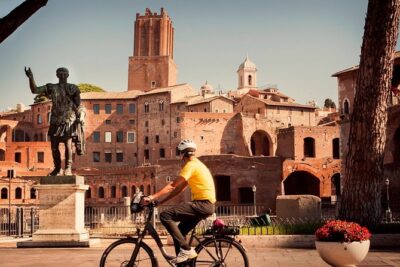
Rome City Small Group Bike Tour with quality Cannondale EBike
Read our review →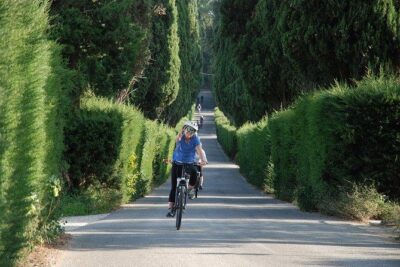
Tuscany Bike Tours Through the Chianti Hills with Wine Tasting
Read our review →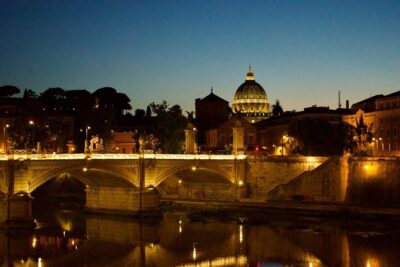
Rome by Night – Ebike Small Group Tour – Food and Wine (Option)
Read our review →
Appian Way E-bike Tour with Catacombs, Aqueducts & Food
Read our review →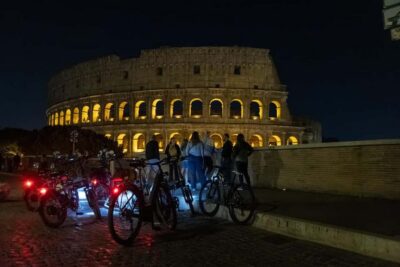
Browse the lists this tour appears in