
Review · WALKING TOURS
Rome: City Walking Tour in English or Spanish
Rome reveals itself best on foot, and this tour gives you a useful first look at the city’s historic center in just two to two and a half hours. You’ll move from imperial monuments to Baroque piazzas, with stops at Trevi Fountain, Trajan’s Column, Galleria Sciarra, Sant’Ignazio, and the Pantheon.
I like the mix of famous sights and quieter corners, and I like that the guide leaves time for questions and restaurant advice. The price, about $28, is fair for a compact introduction. The trade-off is pace: you see many places from the outside, but this is not a ticketed entry tour.
In This Review
- Key points at a glance
- Why this short Rome walk works well
- Starting at Piazza d’Aracoeli or Piazza di Pasquino
- Piazza Venezia and Trajan’s Column
- Trevi Fountain in a 30-minute stop
- Galleria Sciarra, a small surprise in the center
- Sant’Ignazio di Loyola and Rome’s church art
- Passing the Pantheon, then choosing your next visit
- Finishing near Piazza Navona or the Colosseum
- The guides make the difference
- What the $28 price really buys you
- How to get the most from the walk
- Who should book this Rome walking tour?
- Should you book it?
- FAQ
- How long does the walking tour last?
- Is the tour available in English and Spanish?
- Where does the tour start?
- Does the tour include entry to the monuments?
- Does the tour include hotel pickup?
- Can I cancel or pay later?
Key points at a glance
- A strong first-day orientation: Cover several central Rome sights before deciding where to return for a longer visit.
- Two starting points: Meet at Piazza d’Aracoeli or Piazza di Pasquino, depending on the option you book.
- Story-led sightseeing: Guides such as Dan, Domenica, Paulina, Anna, Dinara, and Vlad have been praised for clear explanations and lively storytelling.
- Famous sights plus overlooked corners: The route includes major monuments along with Galleria Sciarra and Sant’Ignazio di Loyola.
- English or Spanish: A live guide leads the walk in your selected language.
- Useful local advice: The tour finishes around Piazza Navona or the Colosseum, and guides can suggest places to eat and other sights to visit.
Why this short Rome walk works well
Rome can feel like one enormous open-air museum. You turn a corner and find a column from ancient Rome, a Baroque fountain, or a church interior that deserves a full visit. That abundance is exciting, but it can also leave you unsure how the pieces fit together.
This walk gives you a basic map in your head. You hear about Rome from the Roman Empire through the modern city while walking between central landmarks. I see it as an orientation tour rather than a full archaeological lesson or an in-depth art tour.
The route is especially useful at the start of a trip. You can note the places you want to revisit, ask about neighborhoods and meals, and spend the next few days choosing deeper visits based on what caught your eye.
The experience costs about $28 per person. For that price, I think the value comes from the guide’s explanations and the route planning, not from admission tickets. You are paying to make sense of Rome while covering a lot of ground without arranging the route yourself.
More City Tours in Rome
- Rome: City Sightseeing Hop-on Hop-off Bus with Audioguide
★ 4.0 · 16,045 reviews - City Sightseeing Rome Hop-On Hop-Off Bus Tour
★ 3.5 · 5,446 reviews - Rome: Fettuccine Pasta Cooking Class in Rome’s City Center
★ 4.8 · 2,414 reviews
Starting at Piazza d’Aracoeli or Piazza di Pasquino
You have two possible meeting areas: Piazza d’Aracoeli or Piazza di Pasquino. Check the option you book carefully, since the meeting point can vary.
Piazza d’Aracoeli places you near the Capitoline area and the broad space around Piazza Venezia. Piazza di Pasquino puts you closer to the historic center around Navona and the Pantheon. These are not interchangeable locations if you are running late, so allow time to reach the correct square.
The meeting instructions matter even more for an evening departure. One useful point from the feedback is that a guide can be hard to spot in darker conditions if there is no bright clothing or distinctive marker. I would arrive early, keep the guide’s contact details handy, and look for the group rather than rushing in at the stated start time.
Comfortable shoes are essential. Rome’s central streets require steady walking, and the tour does not include hotel pickup or drop-off. You make your own way to the start and continue on foot.
Piazza Venezia and Trajan’s Column
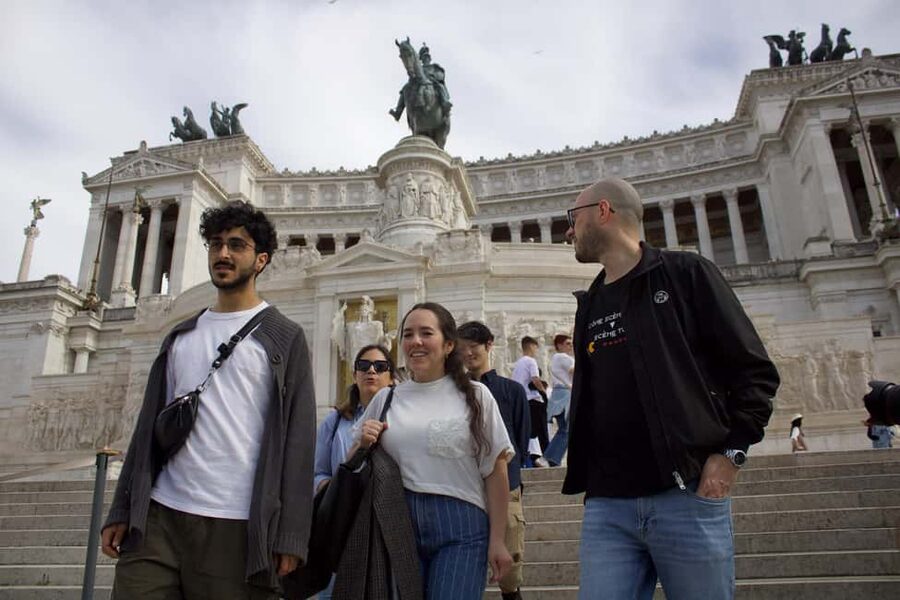
Piazza Venezia is one of Rome’s great orientation points. It is broad, busy, and hard to miss, with major streets radiating through the center. The guide spends about 20 minutes here, explaining the square and its place in Rome’s story.
From there, the walk reaches Trajan’s Column. The column’s carved spiral tells a military story in stone, and it is a good place to see how Roman monuments used public art to record power and victory. Your guide helps turn a tall, weathered monument into something readable rather than just another ancient object in the street.
These first stops provide useful context for the rest of the walk. You are not simply checking off landmarks. You are learning how ancient Rome, later political Rome, and today’s city overlap in a surprisingly small area.
Expect outdoor commentary rather than an interior visit. If you want to study the column closely, take photographs, or ask several questions, the group may need to move on to keep the route within its planned time.
Trevi Fountain in a 30-minute stop
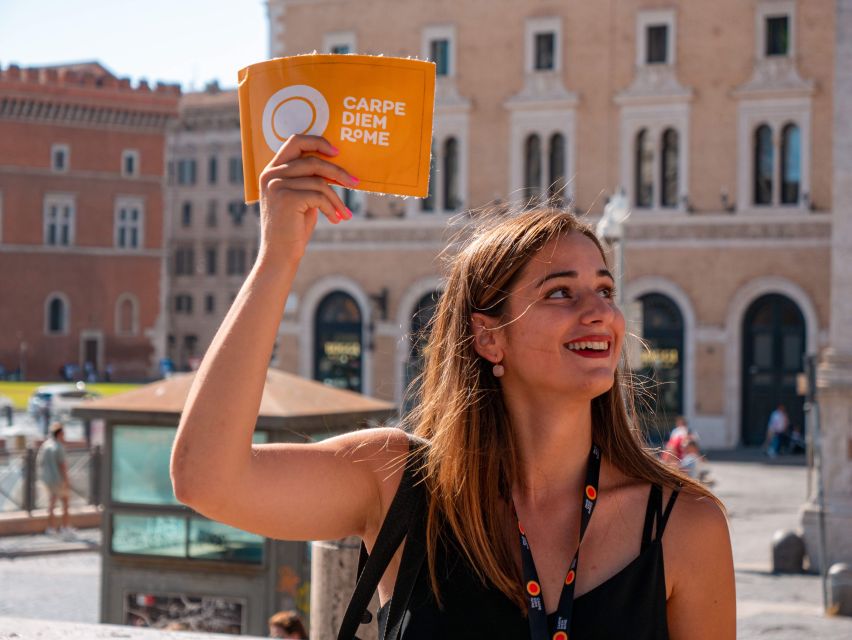
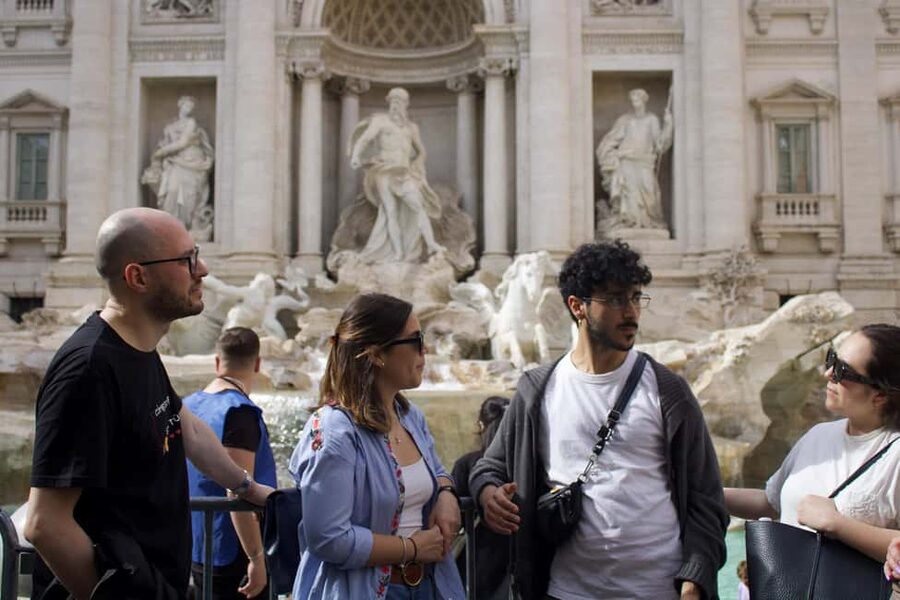
Trevi Fountain gets the longest stop, about 30 minutes, and that makes sense. It is one of Rome’s major sights, and a rushed glance is not enough to take in the sculpture, water, and tight urban setting around it.
The guide explains the fountain’s place in Rome’s culture and history, then gives you time to look around. This is also one of the points where crowd levels can affect the experience. The route may take you to an easier viewing position, but the fountain itself is a popular gathering spot, so do not expect solitude.
A guide adds value here by pointing out details you might otherwise miss and by giving the fountain a story beyond the familiar coin-toss tradition. You can also use the pause to ask about nearby sights and food.
Keep your belongings secure in crowded areas. That is ordinary Rome advice, not a special warning about this tour. It is also worth remembering that the fountain is a viewing stop, not a reserved entry experience.
More Walking Tours in Rome
- Rome: Trastevere & Campo de Fiori Street Food Walking Tour
★ 4.9 · 2,768 reviews - Rome: Paranormal Night Walking Tour & Secret Backstreets
★ 4.9 · 1,921 reviews - Rome by Night Walking Tour – Legends & Criminal Stories
★ 4.5 · 1,003 reviews - Rome: Guided City Center Evening Sightseeing Walking Tour
★ 4.4 · 953 reviews
Galleria Sciarra, a small surprise in the center
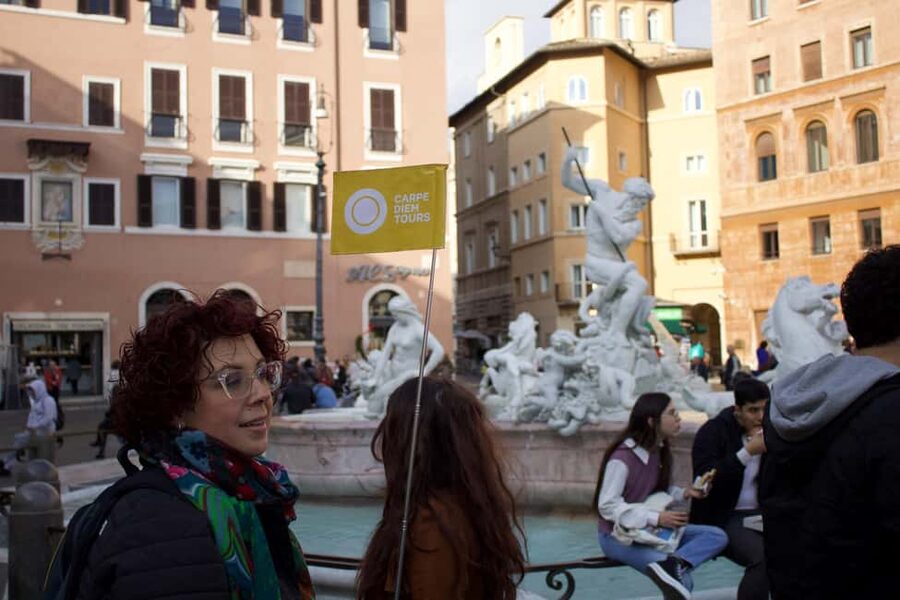
Galleria Sciarra is one of the route’s more distinctive stops. It is easy to walk past if you are focused only on Rome’s headline monuments, yet its decorative interior gives you a different view of the city.
The guide spends about 20 minutes here. This is the kind of stop that makes a walking tour more useful than a simple list of famous places. You get a break from the biggest crowds and see an architectural detail that may not have been on your personal plan.
I particularly like this part for repeat visitors. If you have already seen the Trevi Fountain and Pantheon, an elegant passage such as Galleria Sciarra can add freshness to a familiar center.
The route information does not promise an extended interior visit or special access. Think of it as a guided look at a notable passage, subject to the normal realities of an operating city site.
Sant’Ignazio di Loyola and Rome’s church art
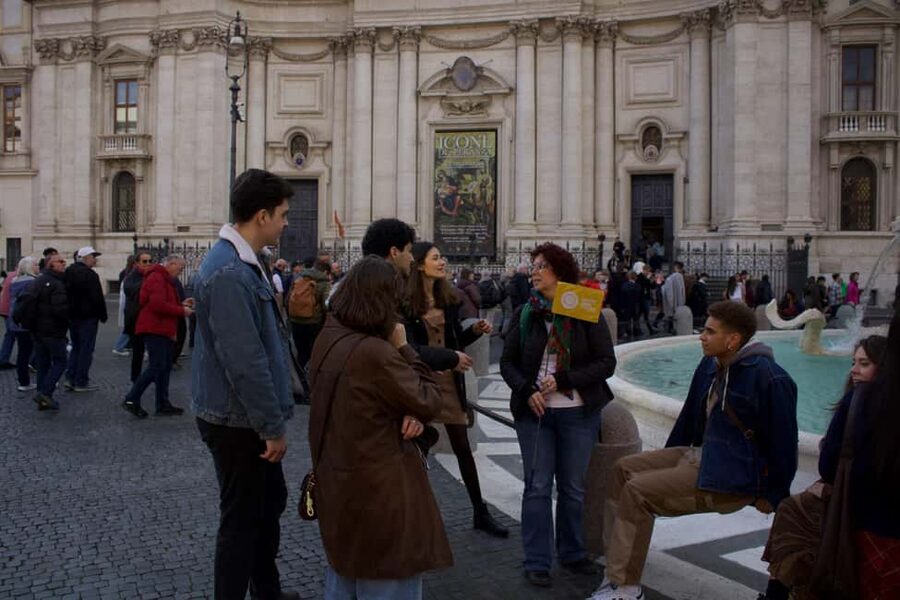
The Church of Sant’Ignazio di Loyola receives another 20-minute guided stop. Rome’s churches are part of the city’s everyday fabric, and this visit shows why you should not judge them from the outside.
Your guide sets the church within Rome’s religious and artistic story. The stop also breaks up the ancient-monument sequence, giving you a look at a later period of the city’s development.
This is a good moment to ask questions. Several guides have been praised for answering extra questions clearly and for staying available while the group walks between locations. That personal contact is important on a short tour, where the best information often comes during the transition from one stop to the next.
Dress comfortably and respectfully for a church visit. The supplied information only specifies comfortable clothes, so I would still use ordinary good judgment when entering a religious building.
Passing the Pantheon, then choosing your next visit
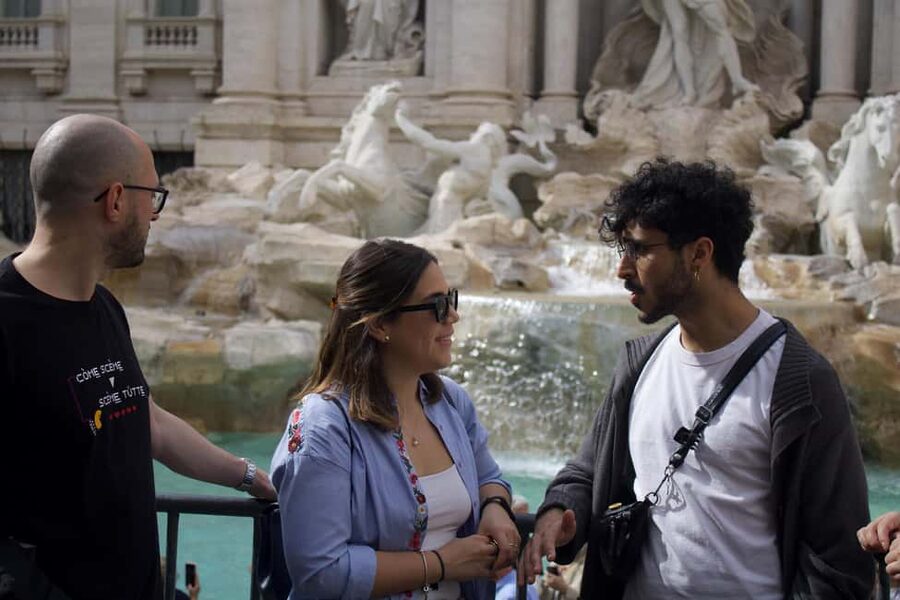
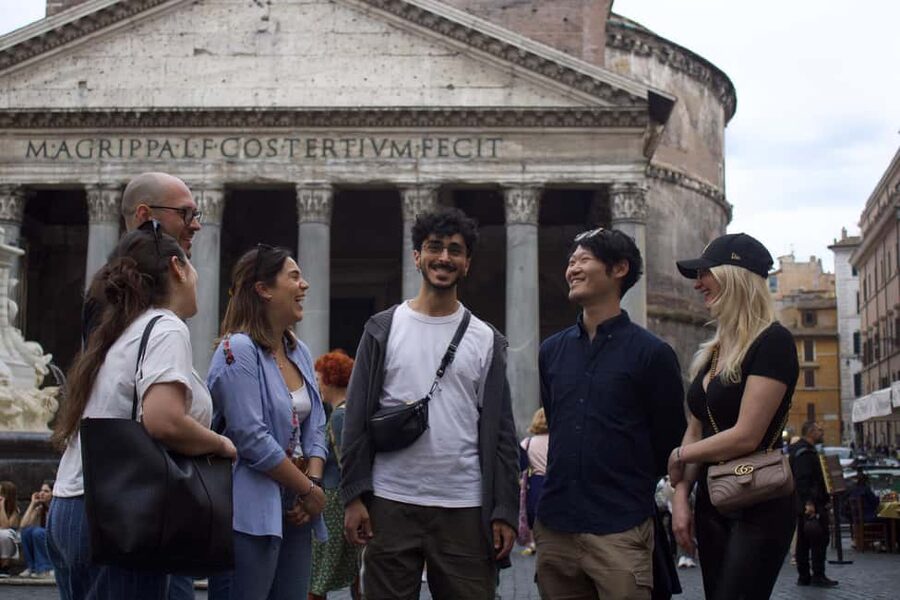
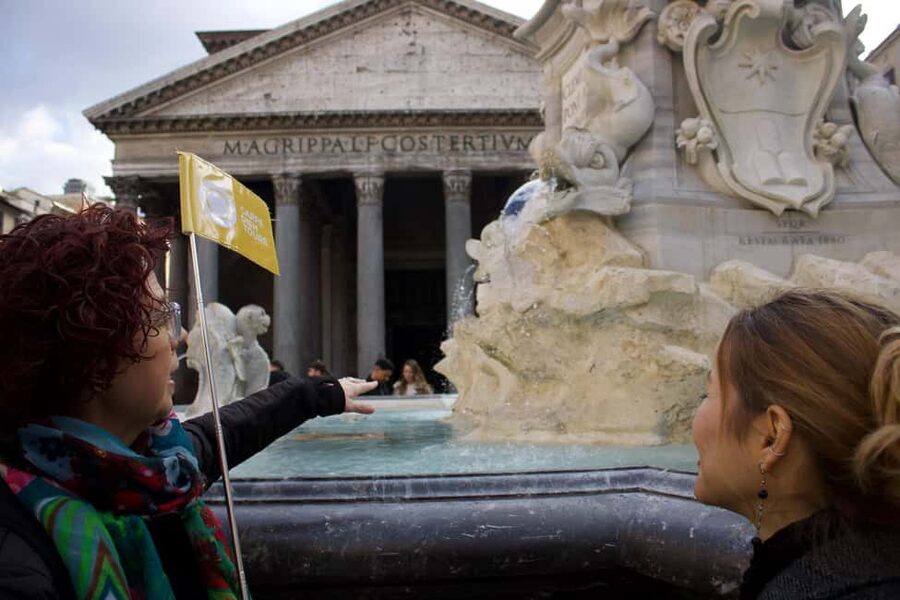
The Pantheon is included as a pass-by stop for about 20 minutes. That wording matters. You should expect an exterior explanation and a chance to see this celebrated building in its setting, not a guaranteed interior tour.
For many people, the Pantheon will be the place they most want to revisit. If that is you, make a note of it and return at a time that suits your schedule. The walking tour is doing a broad job here: connecting the Pantheon to the surrounding streets and monuments rather than spending the whole afternoon inside one site.
A guide can also help you understand why the Pantheon matters, which makes a later self-guided visit more rewarding. I prefer this approach for a first walk because it gives you choices instead of locking the entire experience around one attraction.
Finishing near Piazza Navona or the Colosseum
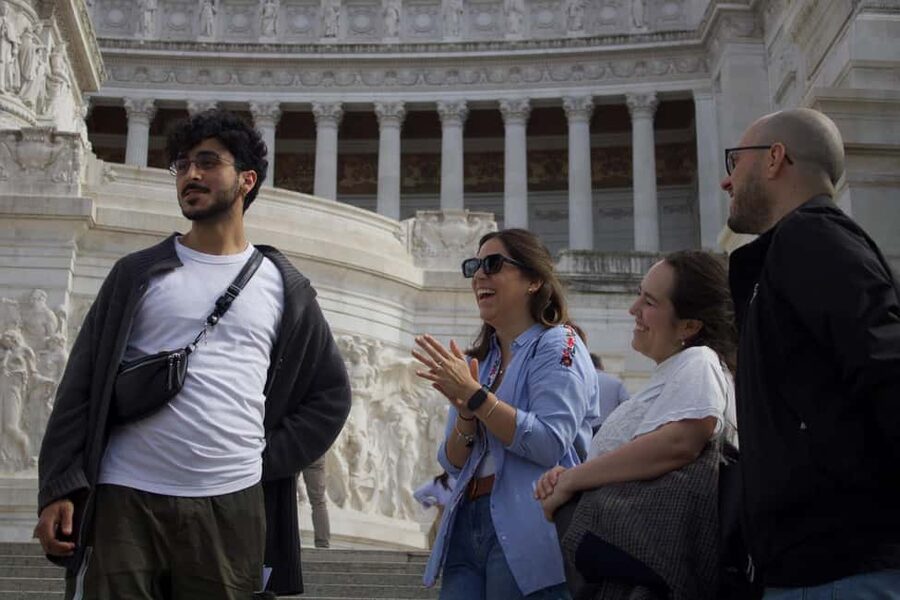
The route has three listed drop-off choices, including Piazza Navona and the Colosseum, with Piazza Navona appearing as the main finishing area in the tour description. Check your selected option for the exact ending point.
Piazza Navona is a practical place to finish. It is surrounded by places to eat, bars, and rooftop terraces, and it gives you an easy base for continuing your evening. Ask the guide for restaurant suggestions before the group separates. That final exchange can be as useful as the formal commentary, especially if you are still trying to understand Rome’s central neighborhoods.
The Colosseum option is useful if you want to continue toward the ancient Roman area. Since the experience does not include entry tickets, you would arrange any Colosseum visit separately.
The ending is not a hotel transfer. You remain responsible for getting back to your accommodation, but the central locations make it easy to continue exploring on foot or make your own onward arrangements.
The guides make the difference
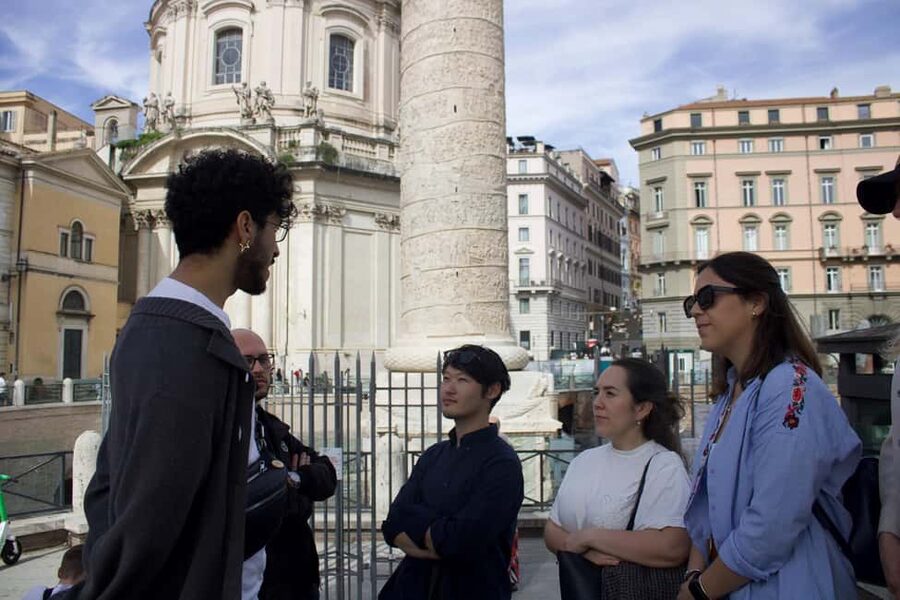
The strongest part of this experience is the live guide. The tour has been praised for clear English, friendly delivery, humor, good pacing, and strong storytelling. Names that appear repeatedly in the feedback include Domenica, Dan, Paulina, Anna, Dinara, Vlad, and Sela.
You cannot necessarily request a particular guide when booking, so treat those names as examples of the type of guide you may receive, not a promise. Dan, in particular, has been praised for combining academic training with a friendly, accessible style. Vlad has been noted for humor, organization, and the use of headphones with a small group.
Paulina and Anna have drawn praise for an easy walking pace and informative explanations. Dinara has been praised for clear English and a pleasant manner. Sela has been singled out for making the walk feel personal and fun.
The common thread is not simply facts. It is delivery. Rome’s history can become a blur of emperors, popes, columns, and dates. A guide who tells stories, answers questions, and keeps the group together helps you remember what you saw.
Headphones may be provided in some groups, but the basic inclusions only promise a local guide, so I would not book this specifically expecting audio equipment. Group size can also vary, though a private group option is available.
What the $28 price really buys you
At $28, this is a low-cost way to get a human introduction to Rome’s center. You see several major sights and receive background that would take time to assemble from guidebooks, maps, and online research.
The value is strongest if you are visiting Rome for the first time, have limited time, or want help deciding what deserves a longer visit. It is also useful for anyone who likes asking questions instead of reading plaques and signs alone.
The value is weaker if you want entry to the Pantheon, a reserved view at Trevi Fountain, or a specialist art and archaeology lecture. Food, drinks, transport, and hotel pickup are not included. You should budget separately for those needs.
I would also keep the pace in mind. The tour lasts two to two and a half hours and covers a number of stops. You get a broad look, not long stretches at each monument. That is a reasonable trade for an affordable city introduction.
How to get the most from the walk
I would book this near the beginning of your Rome stay, then use the guide’s suggestions to shape later days. Mark the Pantheon, Trevi Fountain, Galleria Sciarra, and Sant’Ignazio for return visits if you want more time.
Wear shoes you can walk in comfortably and clothes suited to a long urban stroll. Bring water if you normally need it, since food and drinks are not included.
Arrive at the correct meeting point early. Piazza d’Aracoeli and Piazza di Pasquino are separate locations, and a last-minute dash through Rome’s streets is an avoidable way to begin.
Stay close enough to hear the guide and speak up when you have a question. Several guides have been praised for keeping a good pace and making themselves available between stops. Use that access. A short question about a nearby restaurant, church, or later visit can save you time.
If you prefer a quieter, more personal experience, check the private group option. The standard format may suit you perfectly, but a private group gives you more control over questions and pacing.
Who should book this Rome walking tour?
I would recommend it to first-time visitors, couples, families with older children, and anyone who wants a clear introduction without spending a full day on a formal sightseeing program. It is also a good choice for repeat visitors who want to find places such as Galleria Sciarra and Sant’Ignazio that may not be on their usual route.
It suits people who enjoy stories and conversation more than a silent photo walk. The guide is central to the experience, and the best value comes from explanations, questions, and practical recommendations.
I would choose another format if you need wheelchair-specific planning, guaranteed indoor access, or a highly specialized tour of one monument. The supplied details do not provide accessibility information, so contact the provider before booking if that affects your decision.
The tour is offered in English or Spanish. Check availability for the starting time, and remember that guide assignment, meeting point, and ending option depend on the booking choice.
Should you book it?
Book this tour if you want to get your bearings in Rome quickly, see a strong selection of central sights, and hear the city explained by a live guide. The $28 price is sensible for a two to two and a half hour orientation, especially when the guide is as engaging and helpful as Domenica, Dan, Paulina, Anna, Dinara, Vlad, or Sela.
Skip it if you want long visits inside monuments or prefer to explore every site at your own pace. For everyone else, this is a practical first walk, with enough famous Rome to feel satisfying and enough less obvious stops to keep it from becoming a simple landmark checklist.
FAQ
How long does the walking tour last?
The tour lasts approximately two to two and a half hours. Starting times vary, so check availability when choosing your date.
Is the tour available in English and Spanish?
Yes. A live guide leads the experience in English or Spanish.
Where does the tour start?
The available starting points are Piazza d’Aracoeli and Piazza di Pasquino. The exact meeting point depends on the option booked.
Does the tour include entry to the monuments?
No entry tickets are listed as included. The Pantheon is a pass-by stop, and the other locations are experienced through outdoor or guided viewing during the walk.
Does the tour include hotel pickup?
No. Hotel pickup and drop-off are not included. You make your own way to the meeting point and continue independently after the tour.
Can I cancel or pay later?
You can cancel up to 24 hours in advance for a full refund. The reserve-now, pay-later option allows you to hold a place without paying immediately.
Recently reviewed around Rome
- Ancient Rome at Twilight Walking Tour★ 5.0 · 276 reviews
- Domus Aurea Guided Tour: The Golden House of Nero★ 4.5 · 199 reviews
- Early Vatican Museums & Sistine Chapel Small Group Tour★ 4.5 · 314 reviews
- Early Vatican Museums Tour: The Best of the Sistine Chapel★ 4.5 · 900 reviews
- 3 Days in Sorrento, Capri & Pompeii: la Dolce Vita★ 4.0 · 595 reviews
- Tivoli Villas Full Day Trip From Rome with Lunch★ 4.0 · 443 reviews
- Jewish Ghetto & Piazza Navona: Food, Wine & Sightseeing Rome Tour★ 5.0 · 460 reviews
- Cook With Us in Rome: A Hands-On Cooking Experience 09:20AM class★ 5.0 · 234 reviews
Walking Tours, compared.

Guided Walking Tour & Last Supper Visit with Ticket
Read our review →
Rialto Bridge & Offbeat Unusual Venice Walking Tour
Read our review →
Private 3 hrs Venice Tour: St Mark’s, Walking tour & Boat tour
Read our review →

Skip the line: Uffizi and Accademia Small Group Walking Tour
Read our review →
Trastevere & Campo de Fiori Street Food Walking Tour
Read our review →Browse the lists this tour appears in