
Review · WALKING TOURS
Rome: Fountains and Squares Small-Group Walking Tour
Rome’s grandest sights unfold at street level on this walking tour, from Bernini’s half-sunken boat at the Spanish Steps to the painted illusion inside Sant’Ignazio Church. The route links Baroque fountains, Renaissance churches, and ancient Roman monuments in a compact morning or afternoon.
I like the small maximum group of 20, though groups of around 10 are easier to hear and follow. I also like the guide-led access to the Pantheon, since this is more than a quick fountain checklist. The main drawback is simple: you walk for roughly two to two and a half hours, with no food, drinks, stroller, or wheelchair access, and bad weather can make the outing hard work.
In This Review
- Key points at a glance
- A smart first walk through central Rome
- Meeting at the Spanish Steps
- Bernini’s sinking boat at Piazza di Spagna
- Piazza Navona and the former Stadium of Domitian
- Inside the Pantheon
- Marcus Aurelius and Rome’s film connections
- Sant’Ignazio and the painted dome illusion
- Ending at the Trevi Fountain
- What the guides add to the experience
- Weather, clothing, and walking effort
- Is $45.55 good value?
- Who should book this Rome walking tour?
- FAQ
- How long is the Rome fountains and squares tour?
- What language is the tour conducted in?
- Where does the tour start?
- How early should I arrive?
- What sights are included?
- Can I enter the Pantheon?
- Does the tour include food or drinks?
- Is the tour suitable for wheelchair users or strollers?
- Can children join the tour?
- What happens if I need to cancel?
- Should you book it?
Key points at a glance
- Spanish Steps starting point: Meet by the Keats and Shelley Museum, near the Acqua di Parma store.
- Bernini’s Fontana della Barcaccia: See the half-sunken boat at Piazza di Spagna before climbing toward Trinità dei Monti.
- Pantheon interior: Go inside one of Rome’s best-preserved ancient temples.
- Piazza Navona: Explore the former Stadium of Domitian and Bernini’s Fountain of the Four Rivers.
- Sant’Ignazio Church: Look up at a famous trompe-l’oeil dome that creates the illusion of architecture where there is only painted space.
- English-speaking local guides: Stefano, Bruno, Matteo, Paolo, and Andrea are among the guides associated with the tour.
A smart first walk through central Rome
This is a useful introduction to Rome because it connects famous sights by foot instead of treating them as isolated photo stops. You move through the historic center at a human pace, with time to hear how ancient Roman spaces were reused by Renaissance and Baroque artists.
The price is listed at $45.55 per person. That is fair if your guide gives the route the lively storytelling and helpful orientation described by the experience. You are paying for a licensed English-speaking guide and a small-group format, not meals, transport, or special extras.
The route is also a good choice early in your stay. One guide can point out other places to visit, and the walk helps you understand how the Spanish Steps, Pantheon, Piazza Navona, and Trevi Fountain fit together. You should still leave time for independent visits later, since this tour gives you an overview rather than a long museum-style examination of every site.
The advertised duration is 2.5 hours, while the route description refers to a two-hour walk. Allow the full two and a half hours so you are not rushing to your next booking.
More Walking Tours in Rome
- Rome: Trastevere & Campo de Fiori Street Food Walking Tour
★ 4.9 · 2,768 reviews - Rome: Paranormal Night Walking Tour & Secret Backstreets
★ 4.9 · 1,921 reviews - Rome by Night Walking Tour – Legends & Criminal Stories
★ 4.5 · 1,003 reviews
Meeting at the Spanish Steps
You begin at the bottom of the Spanish Steps, beside the entrance to the Keats and Shelley Museum. Look for the guide near the Acqua di Parma store, wearing a GETYOURGUIDE badge or holding a sign with the matching logos.
Arrive 10 minutes early. One particularly useful practical point is that late arrivals may not be able to join once the group has set off, so this is not the place to cut your timing close. The meeting point is central and easy to recognize, but the base of the Spanish Steps can be crowded, so give yourself enough time to identify the museum entrance.
The steps themselves lead up to Trinità dei Monti, a late Renaissance church with a commanding position above the piazza. The walk does not treat the staircase as just a backdrop. You begin with the shape of Rome in front of you, then move into the city’s layers of art and architecture.
Bernini’s sinking boat at Piazza di Spagna
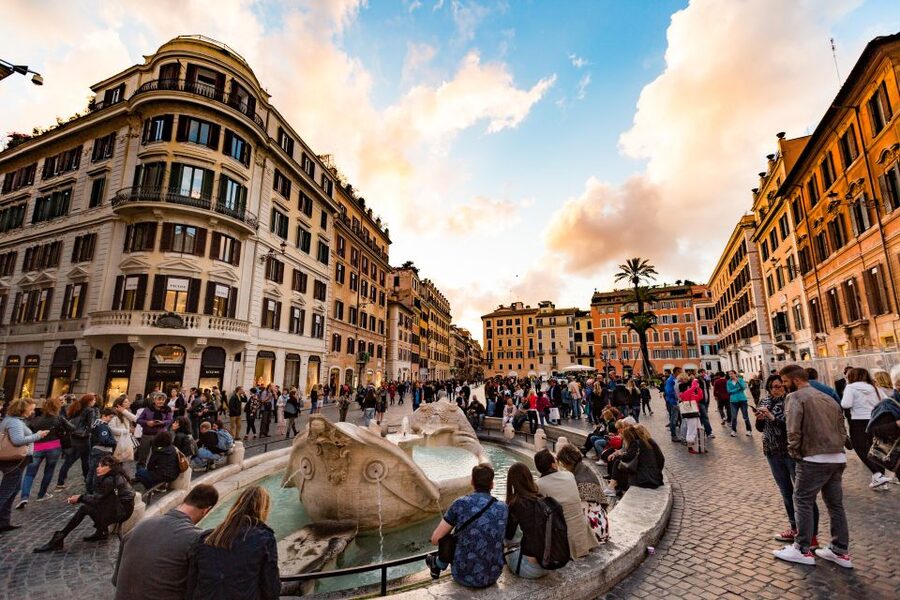
At Piazza di Spagna, you see Bernini’s Fontana della Barcaccia, the famous fountain shaped like a boat sitting low in the water. It is a small work compared with the Trevi Fountain, but its unusual form is exactly why it catches your eye.
This is a good early lesson in Rome’s Baroque style. The fountain is playful and theatrical, yet it also responds to the piazza and the staircase above it. A guide can help you notice details that are easy to miss when you are focused on taking a photograph.
From here, the route follows the historic center toward its larger set pieces. You should wear shoes with good support. The walk includes stairs, uneven city surfaces, and plenty of standing while the guide explains each monument.
Piazza Navona and the former Stadium of Domitian
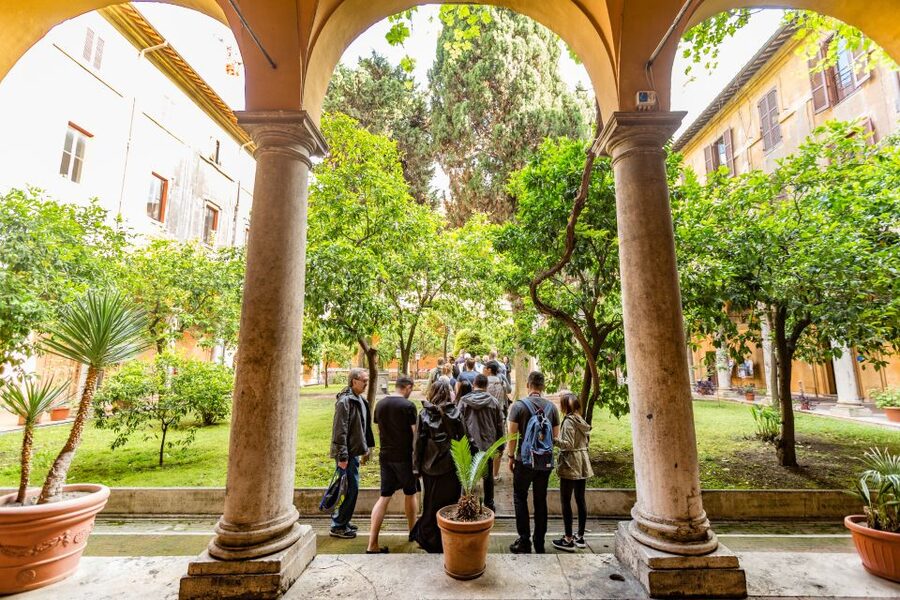
Piazza Navona is the visual heart of the tour. Its long, open shape follows the footprint of the Stadium of Domitian, built in 85 A.D. for athletic contests. The modern piazza still hints at that earlier shape, even though the buildings around it belong to later periods.
This is where the tour’s ancient and Baroque themes meet most clearly. The square is associated with major artists including Gian Lorenzo Bernini and Francesco Borromini, whose work helped shape the Rome you see today.
Bernini’s Fountain of the Four Rivers is the main attraction. Four large figures represent great rivers from different parts of the world, gathered around a rocky central structure topped by an obelisk. It is grand, busy, and meant to be read from several angles.
Piazza Navona is also one of the stops where the guide’s timing matters. The square is broad, but the details are high and spread out. A good explanation keeps you from merely walking around the fountain and moving on. Guides such as Stefano have been praised for using humor and historical detail to keep the information moving at a comfortable pace.
More Rome walks with a guide:
- Rome: Guided City Center Evening Sightseeing Walking Tour
★ 4.4 · 953 reviews - Best of Rome Walking Tour including Trevi Fountain
★ 4.5 · 923 reviews - Rome: Under the Moonlight Evening Walking Tour
★ 4.8 · 852 reviews - Rome: Forbidden History Walking Tour & Pub Crawl with Drinks
★ 4.9 · 688 reviews
Inside the Pantheon
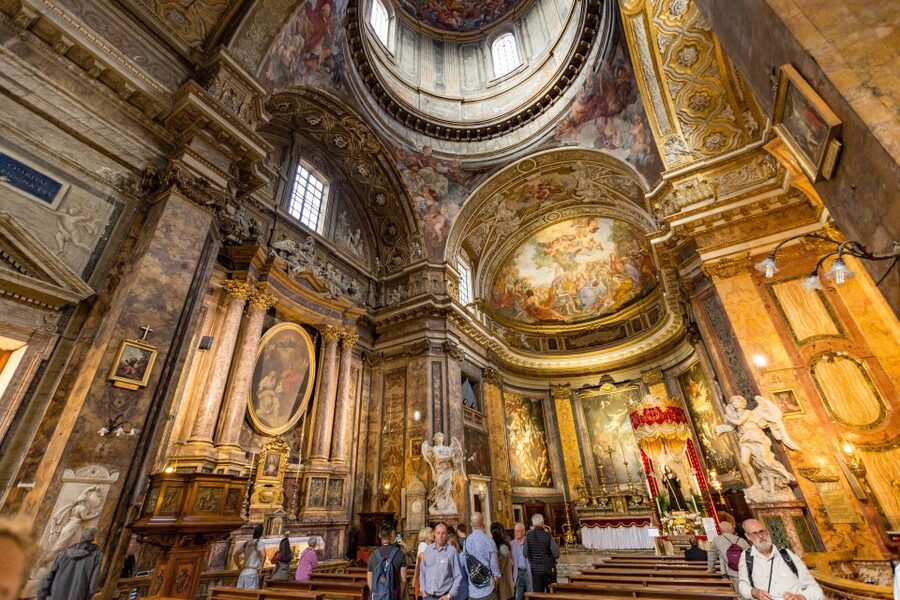
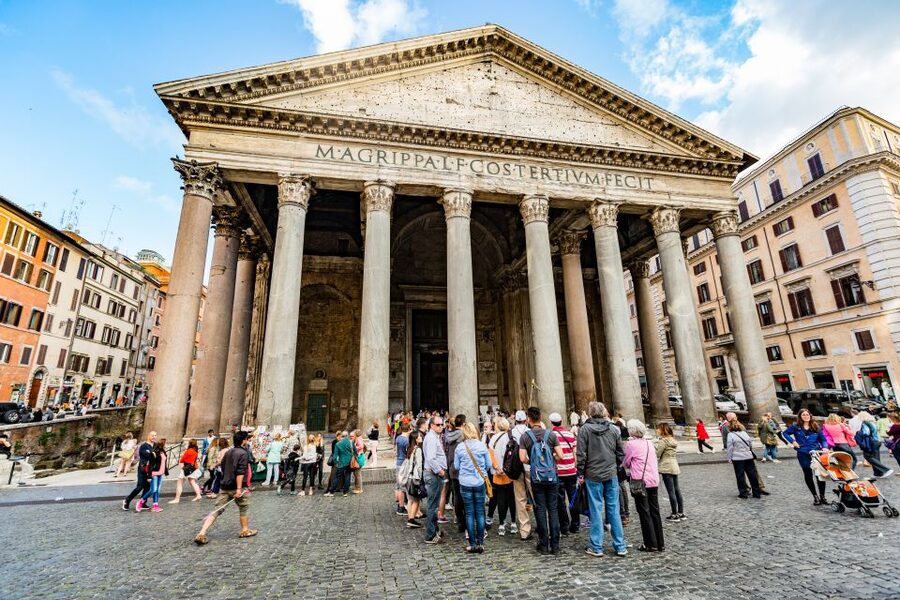
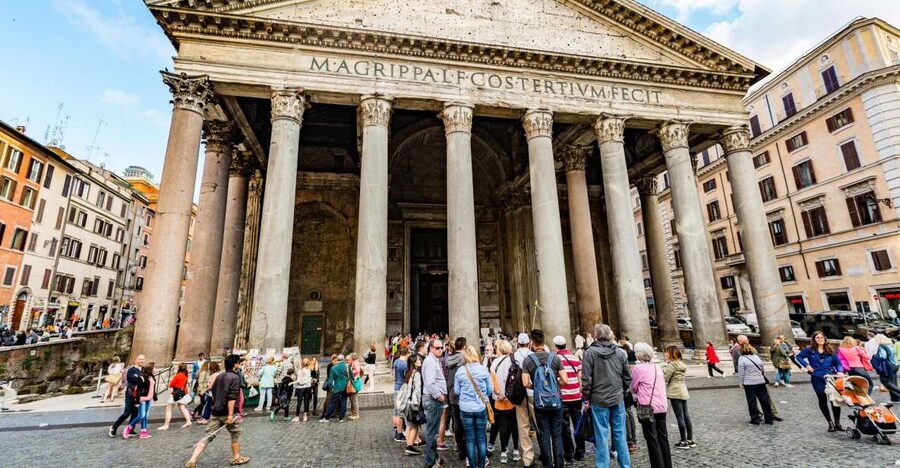
The Pantheon is the tour’s most important interior visit. You go inside a remarkably intact Greek-Roman temple, a rare chance to experience ancient Roman architecture as a real enclosed space rather than as scattered ruins.
The building’s massive scale is easy to understand once you are standing beneath its dome. The guide can explain how the temple functioned in ancient Rome and help you read the structure rather than simply admire its age.
The tomb of Raphael is also part of the experience. The Renaissance painter was buried here, adding another layer to a building already tied to ancient Roman engineering and later Christian use.
The Pantheon stop makes this tour more valuable than a walk focused only on fountains. You get a chance to step indoors, pause, and compare the clean power of Roman construction with the dramatic movement of the Baroque churches and fountains outside.
Entry inside a functioning religious site requires suitable clothing. Bring something that covers your shoulders and knees. Shorts, short skirts, and sleeveless shirts are listed as unsuitable for the churches and monuments on the route.
Marcus Aurelius and Rome’s film connections
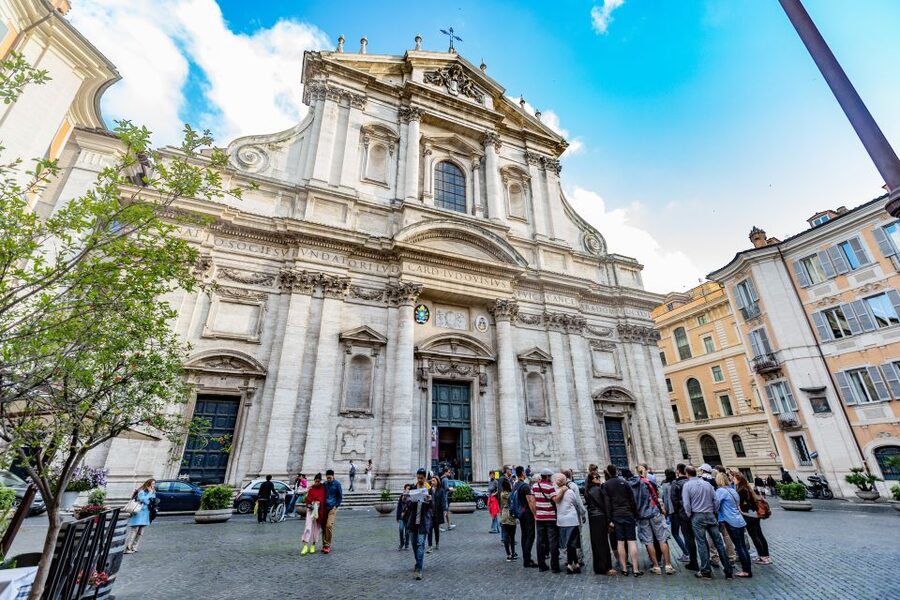
The walk continues to the carved Column of Marcus Aurelius. Its reliefs show scenes from the emperor’s military campaigns, winding upward around the column in a style designed to be viewed from below.
The route also points out original scenes associated with the film Gladiator. This adds a modern screen connection to the ancient setting, but it should be treated as a small part of the walk rather than its main theme.
This section is useful for readers who enjoy seeing how Rome functions as both an archaeological city and a living backdrop. The guide’s role is to connect what you see in front of you with the stories, images, and later uses that have shaped how people picture ancient Rome.
Sant’Ignazio and the painted dome illusion
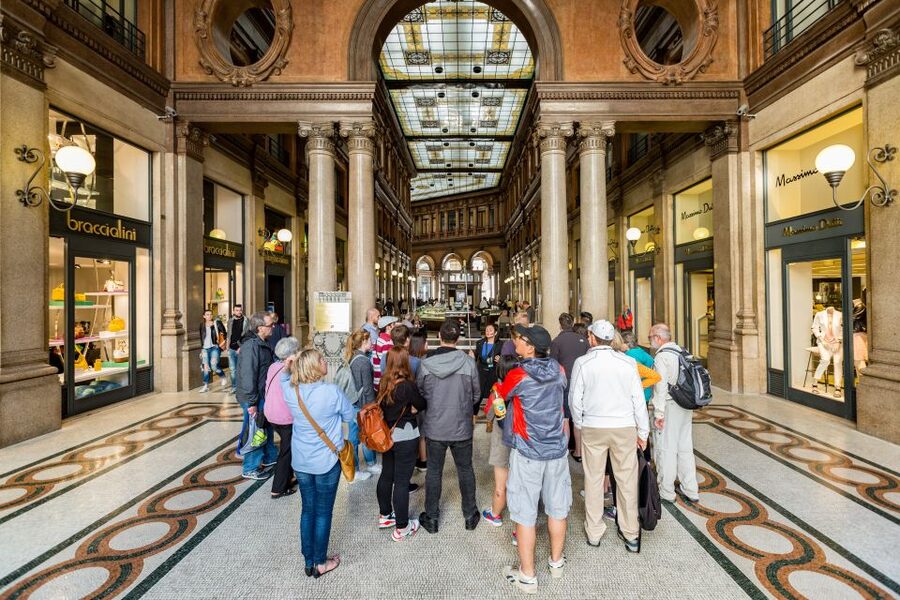
Sant’Ignazio Church is one of the tour’s more surprising stops. Its trompe-l’oeil work creates a convincing illusion of a dome and soaring architecture, even though the painted effect solves a real design problem.
Look up slowly. From the right position, painted lines and shading make the flat surface appear to open into a much deeper space. This is not as instantly famous as the Trevi Fountain, but it rewards attention and gives the tour an artistic twist.
I especially like this stop because it shows how Rome’s churches compete for your eye in different ways. Bernini uses sculpture and water at the fountains. Sant’Ignazio uses paint, perspective, and controlled viewing angles. You are not just collecting monuments. You are seeing several ways artists tried to make stone, water, and paint appear more dramatic than they really were.
The church visit also explains why clothing matters. Pack a light cover-up if you are visiting Rome in hot weather. The tour rules prohibit food and drinks during the walk, and smoking is not allowed.
Ending at the Trevi Fountain
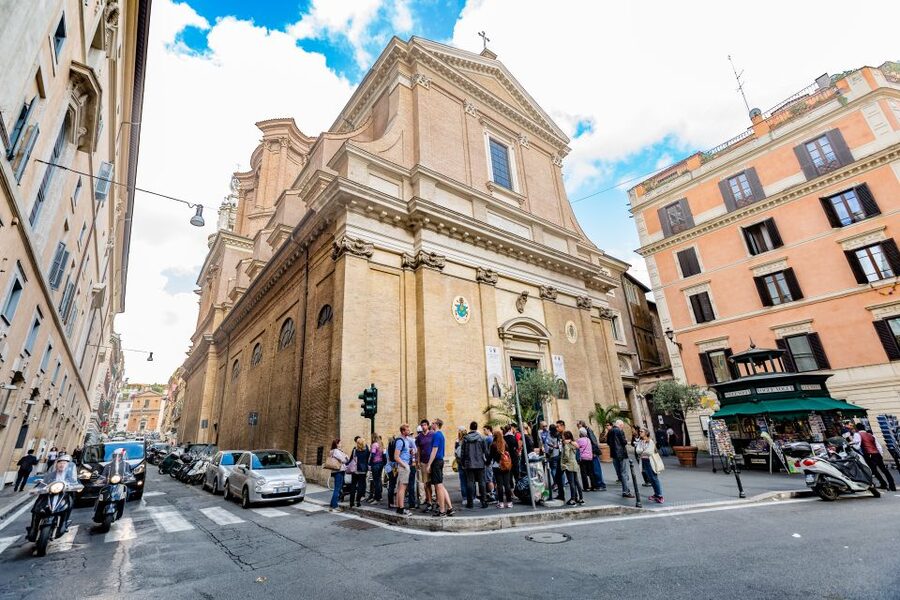
The tour finishes at the Trevi Fountain, Rome’s great Baroque water spectacle. By this point, you have seen a smaller Bernini fountain, a major square fountain, church decoration, and ancient architecture. Trevi brings the sequence to a theatrical close.
The traditional coin toss is included in the experience. Throw one coin into the fountain with the familiar hope of returning to Rome. It is a small ritual, but it gives the ending a cheerful sense of occasion.
You may not get unlimited time at Trevi. One account of the route found the final stop a little rushed, possibly because of rain and the need to keep to schedule. If Trevi is especially important to you, plan to return independently for photographs and a slower look.
The supplied meeting details also contain a point worth checking before booking: the route description says the walk ends at Trevi Fountain, while the activity details say it ends back at the meeting point. Confirm the precise end location for your chosen departure.
What the guides add to the experience
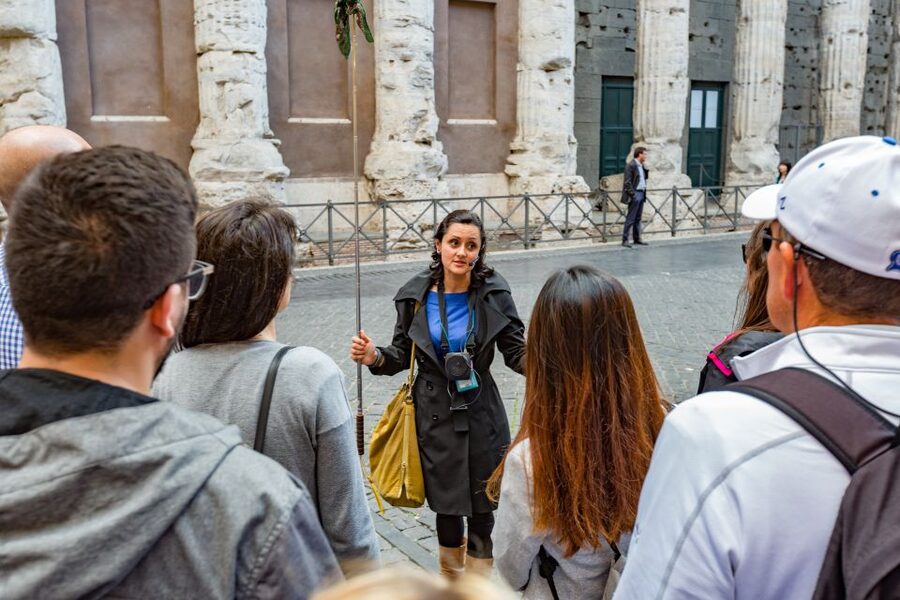
The tour is offered in English with a licensed live guide. Names connected with the guiding team include Stefano, Bruno, Matteo, Paolo, and Andrea, though you should not assume you will receive a particular person unless the booking system says so.
The strongest guiding style on this route is lively rather than academic. Stefano is described as funny, enthusiastic, patient, and full of information. Bruno is noted for a personal, friendly approach, including an unexpected tiramisu treat on one occasion. Another group ended up with only two people, turning the scheduled small-group walk into a private-style outing.
Group size can change the feel of the tour. The maximum is 20, but a group of about 10 is easier to hear and gives you more space around fountains and church interiors. In especially small groups, you may have more freedom to ask questions and move at a relaxed pace.
The guide may also suggest other places to visit and where to find good gelato. Food and drinks are not included, so treat those suggestions as useful local advice rather than part of the ticket.
Weather, clothing, and walking effort
The route operates outdoors for much of its length. A cold, rainy morning can make the tour demanding, even when the guide keeps the mood light. Bring weather protection and wear comfortable shoes, because you will spend most of the time walking or standing.
Rome can be hot, but church dress rules still apply. Keep your shoulders and knees covered, or carry a scarf and light layer. Do not bring large bags, oversize luggage, baby strollers, or food and drinks.
The route is not suitable for children under 10, wheelchair users, or people bringing strollers. Pets are not allowed. These restrictions matter because the itinerary moves through stairs, narrow areas, churches, and uneven streets.
The tour does not allow translation during the walk. If members of your group need regular interpretation, this format will not work well. It is designed for one English-speaking group moving together at the guide’s pace.
Is $45.55 good value?
At $45.55, the tour makes sense if you want structure and context during your first look at central Rome. The Pantheon interior, licensed guide, and small-group setting help justify the cost, especially if you would otherwise spend the same morning wandering between the sights without understanding their connections.
The value is lower if you prefer to move slowly, take many photographs, or stop for coffee whenever you like. This is a timed group walk, not a private custom tour. You also pay separately for anything you eat or drink, and no transport is included.
Free cancellation up to 24 hours before the start gives you some flexibility, and the reserve-now, pay-later option can help if your schedule is still changing. Still, reserve only after checking the starting time and allowing room for the full advertised duration.
Who should book this Rome walking tour?
I would choose this tour for a first visit, a short stay, or an arrival day when you want to get your bearings fast. It suits adults and families with children aged 10 or older who enjoy history, architecture, and a steady walk.
It is also a good match if you want the Pantheon explained from the inside and would probably miss Sant’Ignazio on your own. The combination of famous stops and smaller artistic details gives you more variety than a basic Trevi and Spanish Steps stroll.
I would skip it if you need wheelchair access, are traveling with a stroller, dislike fixed group timing, or want a food-focused tour. I would also avoid scheduling it immediately before another important activity, since the duration can run to 2.5 hours and the Trevi ending may need confirmation.
For the best experience, book it near the start of your Rome stay, arrive early at the Keats and Shelley Museum, dress for church entry, and keep the rest of the day flexible. If you enjoy the guide’s work, a tip is welcomed.
FAQ
How long is the Rome fountains and squares tour?
The activity is listed as lasting 2.5 hours, while the route description refers to a two-hour walk. Allow up to 2.5 hours.
What language is the tour conducted in?
The live tour guide speaks English. Translation during the tour is not allowed.
Where does the tour start?
Meet by the entrance of the Keats and Shelley Museum at the bottom of the Spanish Steps, in front of the Acqua di Parma store.
How early should I arrive?
Arrive 10 minutes before the scheduled starting time. Late arrival may prevent you from joining the group.
What sights are included?
The route includes the Spanish Steps, Trinità dei Monti, Piazza Navona, the Stadium of Domitian, the Pantheon, the Column of Marcus Aurelius, Sant’Ignazio Church, and the Trevi Fountain.
Can I enter the Pantheon?
Yes. Going inside the Pantheon is part of the described itinerary.
Does the tour include food or drinks?
No. Food and drinks are not included, and eating or drinking during the tour is not allowed.
Is the tour suitable for wheelchair users or strollers?
No. The activity is not suitable for wheelchair users, and strollers cannot join because of the route.
Can children join the tour?
Children under 10 are not permitted. The provided information does not specify a maximum age.
What happens if I need to cancel?
You can cancel up to 24 hours in advance for a full refund. The reserve-now, pay-later option is also available.
Should you book it?
Book this walk if you want Rome’s famous fountains and squares explained in one well-packed outing, with the added benefit of entering the Pantheon and Sant’Ignazio Church. The strongest reasons to go are the lively English-speaking guides, the compact route, and the mix of ancient, Renaissance, and Baroque sights.
Skip it if mobility limits, church clothing rules, rain, or a fixed pace will make the walk uncomfortable. For most able walkers visiting Rome for the first time, $45.55 is a sensible price for a guided orientation, especially when booked early in the trip.
Recently reviewed around Rome
- Ancient Rome at Twilight Walking Tour★ 5.0 · 276 reviews
- Domus Aurea Guided Tour: The Golden House of Nero★ 4.5 · 199 reviews
- Early Vatican Museums & Sistine Chapel Small Group Tour★ 4.5 · 314 reviews
- Early Vatican Museums Tour: The Best of the Sistine Chapel★ 4.5 · 900 reviews
- Jewish Ghetto & Piazza Navona: Food, Wine & Sightseeing Rome Tour★ 5.0 · 460 reviews
- 3 Days in Sorrento, Capri & Pompeii: la Dolce Vita★ 4.0 · 595 reviews
- Tivoli Villas Full Day Trip From Rome with Lunch★ 4.0 · 443 reviews
- Cook With Us in Rome: A Hands-On Cooking Experience 09:20AM class★ 5.0 · 234 reviews
Walking Tours, compared.

Guided Walking Tour & Last Supper Visit with Ticket
Read our review →
Rialto Bridge & Offbeat Unusual Venice Walking Tour
Read our review →
Private 3 hrs Venice Tour: St Mark’s, Walking tour & Boat tour
Read our review →

Skip the line: Uffizi and Accademia Small Group Walking Tour
Read our review →
Trastevere & Campo de Fiori Street Food Walking Tour
Read our review →Browse the lists this tour appears in