
Review · WINE TASTINGS
Rome: Jewish Ghetto & Campo de Fiori by Night Food Wine Tour
Rome’s best food tours do more than move you from one plate to the next. This four-hour evening walk connects Roman cooking with the Jewish Ghetto, Campo de’ Fiori, Piazza Navona, and ancient ruins, so you eat your way through the city while learning why these neighborhoods matter.
I like the seven tasting stops and the small groups of up to 14 people. I also like that the meal builds slowly, from snacks and drinks to pasta, dessert, espresso, and gelato. The main drawback is dietary: vegetarian choices are available, but the tour cannot accommodate vegan, gluten-free, or dairy-free diets, and it is not a kosher food tour.
In This Review
- Key points to know before booking
- A Roman dinner that keeps moving
- Starting at the Turtle’s Fountain in the Jewish Ghetto
- Ancient Rome between the plates
- Piazza Navona and the Baroque center
- Campo de’ Fiori after the market day
- What you actually eat and drink
- Why the seven-stop format offers good value
- The guides make or break the evening
- Walking, weather, and practical limits
- Who should book this Rome food tour?
- Should you book it?
- FAQ
- Where does the Rome food and wine tour begin?
- How long does the tour last?
- How many food stops are included?
- Are drinks included?
- Can vegetarians join the tour?
- Is this a kosher food tour?
Key points to know before booking
- Seven food and drink stops: Expect up to 15 samples, including Roman dishes, homemade pasta, pastries, wine, beer, soft drinks, espresso, and dessert.
- A history walk with dinner: You pass the Theatre of Marcellus, Temple of Apollo, Portico of Octavia, Pompey Theatre, and major Baroque landmarks.
- A strong first-night choice: The route helps you get your bearings in several central neighborhoods while giving you restaurant ideas for later.
- Small-group feel: Groups are limited to 14 people except by special arrangement, which makes it easier to ask questions and stay connected.
- Come genuinely hungry: The portions add up to a full progressive dinner, not a few token bites.
- Rain or shine: Wear comfortable walking shoes and bring weather protection. The tour continues in poor weather.
A Roman dinner that keeps moving
This is best understood as a progressive dinner on foot. The first tastings are spread through the walk, with short stops for food, wine, and local stories. By the later courses, you are sitting down for more substantial plates and probably wondering why you thought a pre-tour snack was a good idea.
The evening begins at Piazza Mattei, beside the Turtle’s Fountain in the Jewish Ghetto. From there, you move through old squares, narrow streets, restaurants, markets, fountains, and archaeological remains. The route ends after a generous run of food and drink, rather than after a single formal meal.
I like this format because Rome can feel scattered at first. Instead of spending an evening in one restaurant, you see how food fits into the city around it. You also get a practical introduction to places you may want to revisit, including the Jewish Ghetto and Campo de’ Fiori.
Guides vary by departure, but the strongest names in the feedback include Marco, Fabrizia, Andrea, Maria, Matteo, Julia, and Isabel. The repeated praise is not just for their food knowledge. Guides such as Marco and Fabrizia are especially good at joining the historical details to the dishes in front of you, while Maria is noted for keeping a steady pace without making the group feel hurried.
More Food Tours in Rome
- Rome: Tuscany & Montepulciano Day Trip with Lunch & Wine Tasting
★ 4.5 · 5,232 reviews - Winner 2025 Rome Twilight Trastevere Food Tour by Eating Europe
★ 5.0 · 5,157 reviews - Rome: Trastevere or Jewish Quarter Street Food Tour
★ 4.8 · 3,839 reviews
Starting at the Turtle’s Fountain in the Jewish Ghetto
Piazza Mattei is a pleasant place to begin. The Turtle’s Fountain gives you an easy landmark, and the square feels more manageable than meeting beside one of Rome’s giant monuments or on a busy traffic street.
The Jewish Ghetto is not simply a backdrop for dinner. It gives the tour a clear cultural focus from the first few minutes. You learn about the Jewish community of Rome and walk streets shaped by centuries of religious, social, and political change.
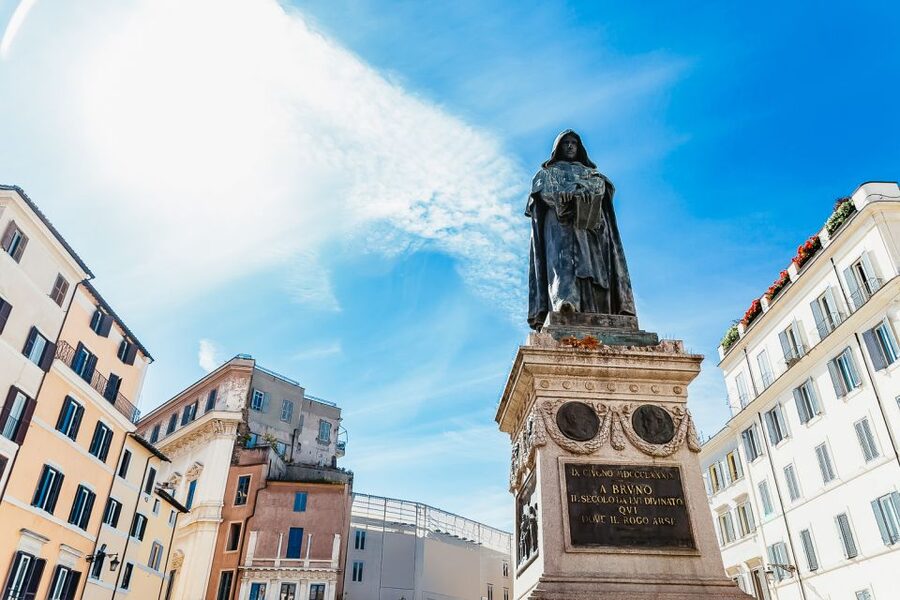
Food from this part of Rome often reflects both Roman and Jewish traditions. One specialty frequently included in the tastings is the fried artichoke, a dish that has become closely linked with Roman Jewish cooking. You may also receive other Jewish-Roman appetizers, depending on the evening’s food arrangements.
This portion of the walk is valuable even if you already have major Roman sights on your schedule. Many first-time visitors rush between the Colosseum, Trevi Fountain, and Vatican Museums, then miss the smaller central districts where daily life and local eating are easier to see.
The tour also includes lesser-known points of interest, such as a hidden Virgin Mary mural mentioned by one group. Exact stops can change, so do not treat every food or art stop as guaranteed. The wider promise is a mix of familiar monuments and places you might not notice on your own.
Ancient Rome between the plates
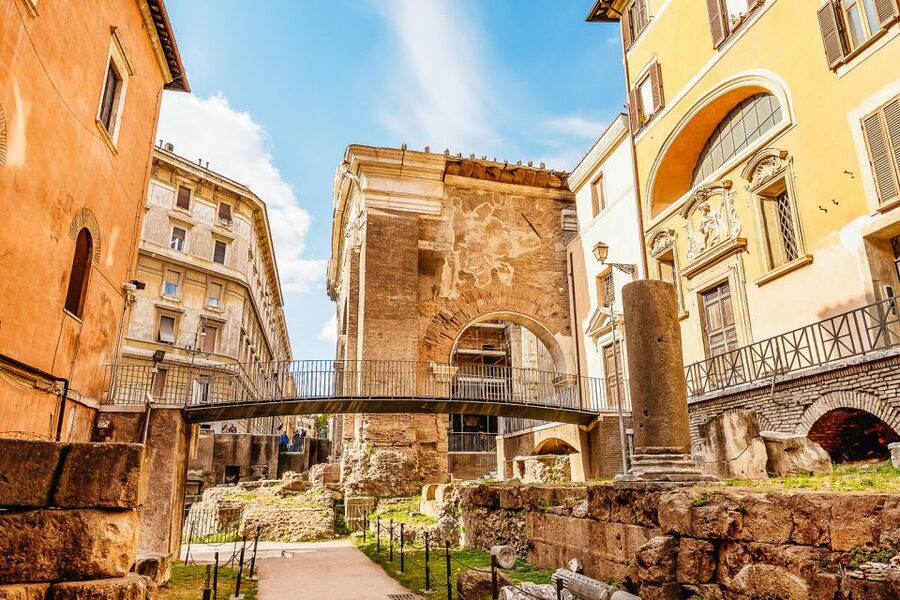
The route links the Jewish Ghetto with some of the oldest surviving Roman sites in the city center. You pass the Theatre of Marcellus, the Temple of Apollo, and the Portico of Octavia, all reminders that Rome’s past is not confined to a single archaeological park.
You also hear about Pompey Theatre, associated with the death of Julius Caesar. The story gives the walk a useful sense of scale. Rome’s streets are not just pretty routes between restaurants. They sit over layers of republican, imperial, medieval, Jewish, papal, and modern life.
I appreciate that the history breaks up the eating without taking over the evening. The best guides keep the explanations short enough to hold your attention, then let the next tasting bring the group back into the present. Andrea, Matteo, Isabel, and Julia were repeatedly praised for balancing facts with a relaxed, social tone.
This is not the tour for someone seeking a detailed archaeological lecture. It is a food walk with a strong historical thread. You get enough context to understand the neighborhoods and monuments, but the evening remains centered on eating, walking, and conversation.
Piazza Navona and the Baroque center
Piazza Navona is one of the route’s big visual moments. Built on the site of the Stadium of Domitian, the long oval piazza later became a market area and now presents some of Rome’s finest Baroque architecture.
The star attraction is Bernini’s Fountain of the Four Rivers, surrounded by grand buildings and open space. At night, the square has a different mood from the daytime market crowds. The fountains and statues are easier to appreciate when you are not trying to cross the piazza through a solid stream of sightseeing groups.
Your guide explains the connection between the square’s ancient use, later market life, and Baroque design. That context makes the monument more than a quick photo stop. You begin to see how Rome repeatedly reused the same urban spaces rather than replacing them entirely.
The tour does not claim to provide entry to monuments or museums. This is an outdoor walking route, so you should think of Piazza Navona as part of the sightseeing between tastings, not as a formal guided visit inside a landmark.
More Wine Tastings in Rome
- Pasta Making & Wine Tasting with Dinner in Frascati from Rome
★ 5.0 · 1,326 reviews - Rome: E-Bike Night Tour with Food and Wine Tasting
★ 4.9 · 1,131 reviews - Rome: Trastevere Guided Food and Wine Tour with 20+ Tastings
★ 4.9 · 1,022 reviews - Rome: Pasta Making with Wine Tasting and Dinner in Frascati
★ 4.9 · 979 reviews
Campo de’ Fiori after the market day
Campo de’ Fiori is another important stop. The square began as a medieval market area and remains one of the best-known gathering places in central Rome.
By evening, its character changes. The daytime market activity gives way to restaurants and social life, and the square becomes a useful place to understand how Rome’s public spaces work after dark. The tour highlights the local atmosphere rather than treating Campo de’ Fiori as a quick landmark to photograph.
The guide also discusses the square’s past and its place in Roman life. I like this stop because it connects food directly to the setting. A market square is not an abstract historical idea when you are walking through it on the way to a tasting.
Do not expect the evening market stalls to be operating as they would earlier in the day. The value here is the square, its history, and its restaurant scene at night.
What you actually eat and drink
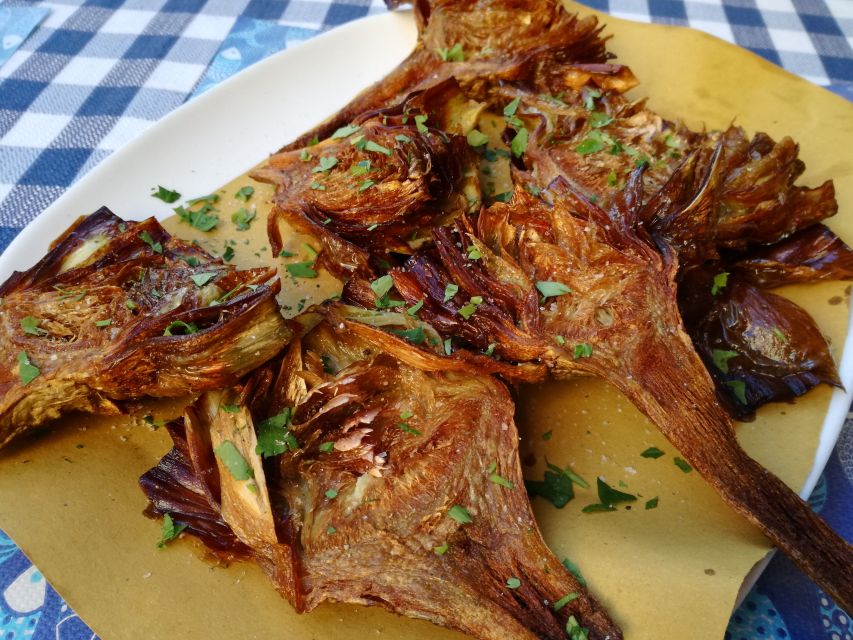
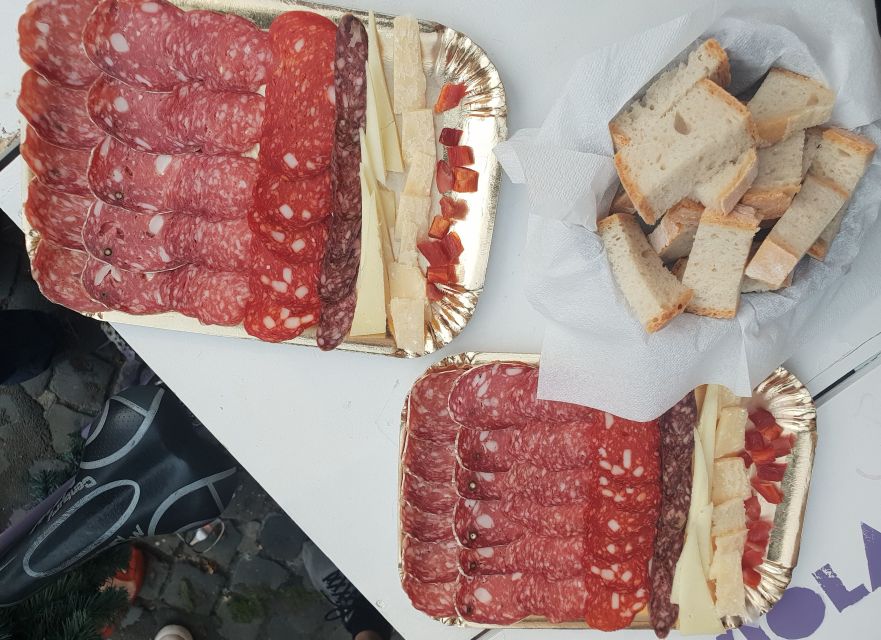
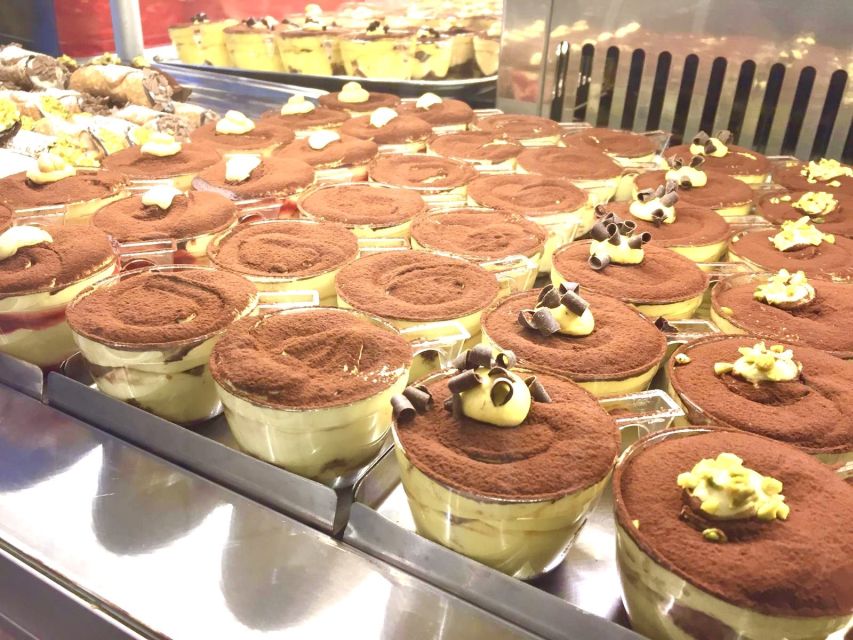
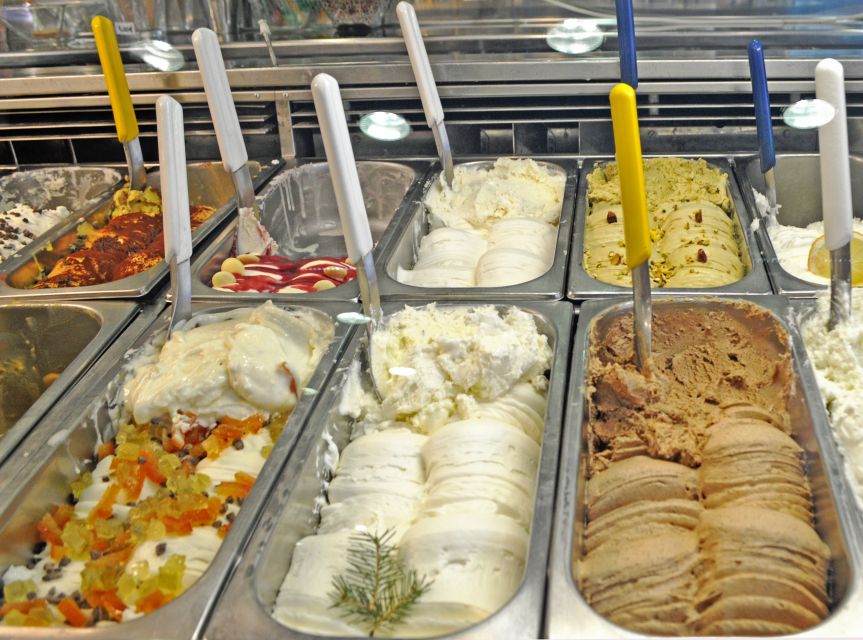
The tour includes several different food tastings, with up to 15 samples in all. Exact dishes can vary, but the food described across the experience includes Roman Jewish appetizers, fried artichokes, pizza, homemade pasta, pastries, tiramisu, gelato, and espresso.
Wine is part of the experience, along with beer and soft drinks. That makes the tour more flexible for people who do not want wine at every stop. The drinks also help turn the route into a social evening rather than a series of hurried samples.
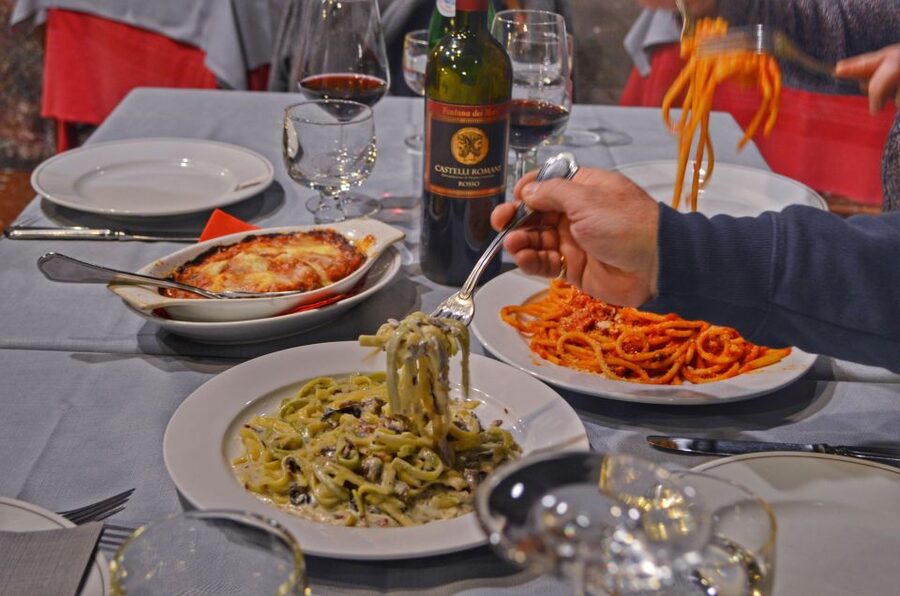
The pasta course is often the most substantial part of the meal. Several departures include a sit-down dinner featuring a variety of pasta dishes, sometimes as the sun is going down. This is where the progressive-dinner format becomes clear: you may begin with small bites, but the later courses are proper food.
Dessert is not an afterthought. Tiramisu and gelato have both been singled out as memorable parts of the evening, with espresso helping close the meal in classic Italian fashion. I would avoid planning a late restaurant reservation afterward. The portions are generous enough that many people finish full.
The tasting venues include restaurants, delicatessens, and other food businesses. You meet people who take pride in making or serving traditional products, and guides explain recipes passed through local families and businesses. That human connection is one reason the tour feels more useful than a simple checklist of Roman dishes.
Why the seven-stop format offers good value
At $105 per person, this is not a cheap snack walk. It is a four-hour experience with food, alcoholic and nonalcoholic drinks, a guide, and a full route through several central neighborhoods.
The value improves if you treat the tastings as dinner. You are not paying only for a slice of pizza and a spoonful of gelato. You receive a series of samples, multiple drink servings, a sit-down pasta course, and enough food to leave satisfied. Several groups found the quantity far greater than expected.
The food also has an educational purpose. A guide can tell you how a Roman specialty fits into the city’s culture, point out why a neighborhood matters, and take you to places you might not select from a map. That saves you the cost of trial and error during your first nights in Rome.
I especially like the way the route doubles as restaurant research. One couple returned to the Jewish Ghetto for lunch the next day, and another group went back to several places during the rest of the trip. You are not simply fed for one evening. You are introduced to addresses that may improve the rest of your stay.
Still, value depends on your appetite and interests. If you want a short street-food sampler, four hours may feel long. If you prefer a full dinner, several drinks, and cultural explanation, the price is easier to justify.
The guides make or break the evening
Food quality matters, but the guide controls the pace and keeps the group together across seven stops. The strongest guides turn Rome’s history into stories you can follow without making the evening feel like school.
Marco was praised for warmth, humor, and handling unexpected questions. Fabrizia was especially effective on the history of the Jewish Ghetto and continued guiding the group during heavy rain. Andrea appears in several strong departures and is noted for combining food, Roman culture, and city history in a friendly way.
Maria was praised for keeping the walk moving while still allowing time for questions. Julia handled a meeting mix-up and showed the group around at a comfortable pace. Matteo was singled out for making people feel at ease while explaining the area.
Guide assignments can change, so you cannot book a specific person based on these names unless the operator confirms it. What you can reasonably expect is an English-speaking foodie guide who leads the walk and explains the food, neighborhoods, and monuments.
The small maximum group size helps. Fourteen people is not private, but it is small enough for conversation and questions. It also makes the multiple restaurant visits easier to organize than they would be with a large coach group.
Walking, weather, and practical limits
There is no transportation included. You walk for the full four hours between squares, food stops, and monuments, so comfortable shoes are essential. The route includes city streets and historic areas, and the experience is not suitable for wheelchair users.
Tours operate rain or shine. That can be a drawback during a wet evening, but the guides have continued with stories under bridges and umbrellas when rain became heavy. You should still bring a compact rain jacket or umbrella, especially outside the dry summer months.
The meeting point is Piazza Mattei by the Turtle’s Fountain. Give yourself enough time to find the square, since central Rome’s streets can be confusing and meeting areas may be busy. The operator provides the guide, walking tour, tastings, wine, beer, and soft drinks, but not transportation.
Vegetarians can be accommodated. Vegans, and people avoiding gluten or dairy, should not book this tour expecting substitutions. It is also not a kosher food tour, despite the focus on the Jewish Ghetto and Jewish-Roman food traditions.
Free cancellation is available up to 24 hours before the start time, and you can reserve now and pay later. Check the available starting time for your date, since this is an evening activity and the schedule can change.
Who should book this Rome food tour?
I would choose this tour for a first or second night in Rome. It gives you a useful map of the center, introduces several neighborhoods, and provides enough food to serve as dinner.
It suits couples, friends, and families with older children who can manage four hours of walking. A small group and the steady movement between stops also help teenagers stay interested, especially when the history is tied to something they can eat.
Food-focused visitors will get the most from it, but you do not need to be an expert. The variety is the point: Roman pasta, Jewish-Roman dishes, pizza, sweets, wine, and gelato all appear within one evening.
I would skip it if you need a wheelchair-accessible route, follow a vegan or strict allergen-free diet, or want a quiet, seated meal in one restaurant. It is also not the right fit if you dislike group tours or prefer to choose every dish yourself.
Should you book it?
Yes, if you want one evening that combines Roman food with the Jewish Ghetto, Campo de’ Fiori, Piazza Navona, and ancient sites. The seven-stop structure, full portions, and capable guides make $105 reasonable when you count it as dinner plus a four-hour walking tour.
Book it early in your Rome stay so you can return to favorite food stops later. Arrive hungry, wear good shoes, and do not expect kosher, vegan, gluten-free, or dairy-free coverage. For most visitors who can handle the walking and broad menu, this is a well-rounded way to get acquainted with Rome after dark.
FAQ
Where does the Rome food and wine tour begin?
Meet the guide at Piazza Mattei, beside the Turtle’s Fountain in the Jewish Ghetto.
How long does the tour last?
The tour lasts four hours. Starting times vary, so check availability for your chosen date.
How many food stops are included?
The route visits seven different tasting venues, including restaurants, delicatessens, and other food businesses. You can receive up to 15 food samples.
Are drinks included?
Yes. Wine, beer, and soft drinks are included in the experience.
Can vegetarians join the tour?
Yes, vegetarian options are available. The tour does not accommodate vegan, gluten-free, or dairy-free diets.
Is this a kosher food tour?
No. Although the route explores the Jewish Ghetto and includes Jewish-Roman food traditions, it is not a kosher food tour.
More Food in Rome
- Rome: Trastevere & Campo de Fiori Street Food Walking Tour
★ 4.9 · 2,768 reviews - Rome Street Food Tour with Local Guide
★ 5.0 · 2,361 reviews - Rome: Award Winning Trastevere Group Food Tour with Wine
★ 5.0 · 2,273 reviews - Rome: Guided Food Tour in Trastevere
★ 4.8 · 2,266 reviews
More Wine Tours in Rome
- Rome: Pasta & Tiramisu Class with Fine Wine by the Vatican
★ 4.9 · 4,852 reviews - Rome Food Tour: Unlimited Tastings with Fine Wine & Barolo
★ 5.0 · 3,365 reviews - Rome: Pasta Making Class with Wine, Limoncello, and Dessert
★ 4.9 · 3,177 reviews - Rome: Trastevere Food tour with Free-Flowing Fine Wine
★ 5.0 · 2,853 reviews
Recently reviewed around Rome
- Ancient Rome at Twilight Walking Tour★ 5.0 · 276 reviews
- Domus Aurea Guided Tour: The Golden House of Nero★ 4.5 · 199 reviews
- Early Vatican Museums & Sistine Chapel Small Group Tour★ 4.5 · 314 reviews
- Early Vatican Museums Tour: The Best of the Sistine Chapel★ 4.5 · 900 reviews
- Jewish Ghetto & Piazza Navona: Food, Wine & Sightseeing Rome Tour★ 5.0 · 460 reviews
- 3 Days in Sorrento, Capri & Pompeii: la Dolce Vita★ 4.0 · 595 reviews
- Tivoli Villas Full Day Trip From Rome with Lunch★ 4.0 · 443 reviews
- Cook With Us in Rome: A Hands-On Cooking Experience 09:20AM class★ 5.0 · 234 reviews
Wine Tastings, compared.
Tuscany Day Trip from Florence: Siena, San Gimignano, Pisa and Lunch at a Winery
Read our review →
Small-Group Wine Tasting Experience in the Tuscan Countryside
Read our review →
Tuscany & Montepulciano Day Trip with Lunch & Wine Tasting
Read our review →
SMALL-GROUP Wine Safaris: Tuscan Wine Tasting Tours from Florence
Read our review →
Winner 2025 Florence Sunset Food & Wine Tour by Eating Europe
Read our review →
Siena, San Gimignano, Pisa & Lunch at Winery
Read our review →
San Gimignano, Siena, Monteriggioni, Chianti Day Trip with Lunch & Wine Tasting
Read our review →Browse the lists this tour appears in