
Review · SIENA & TUSCAN HILL TOWNS TOURS
Siena: Siena Cathedral and Piccolomini Library Entry Ticket
Siena’s cathedral is not a quick look at a pretty church. It is a full-on display of striped marble, carved figures, painted ceilings, and one of Italy’s most remarkable floors. I especially like the Piccolomini Library, where Pinturicchio’s frescoes turn a compact room into a colorful storybook, and the fast-track entry, which can save valuable time in Siena’s busy center.
The main catch is that fast-track does not mean walking straight from your phone to the cathedral door. You must first exchange your voucher at the cathedral ticket counter, and finding the correct counter may take a little hunting. The audio guide is digital rather than live, so bring a charged phone and headphones if you want more than a quick look.
In This Review
- Key points to know before you go
- Why Siena Cathedral deserves your time
- Collecting your ticket without losing time
- The cathedral interior: marble, paint, and sculpture
- Siena’s remarkable marble floor
- Inside the Piccolomini Library
- Getting the most from the phone audio guide
- How long should you plan?
- Is $9 good value?
- Who should book this experience?
- My practical verdict
- FAQ
- What does this Siena Cathedral ticket include?
- Is a guided tour included?
- How do I use the audio guide?
- Do I enter directly with my voucher?
- How long is the ticket valid?
- Can opening hours change?
- What artists can I see inside the cathedral?
- Can I cancel the booking?
Key points to know before you go
- See Pinturicchio’s ten frescoes: The Piccolomini Library presents scenes from the life of Pope Pius II in a single richly decorated room.
- Study Siena’s marble floor: The cathedral floor uses elaborate mosaic designs, though some sections may be covered at certain times.
- Look for famous sculptors: The interior includes works linked to Michelangelo, Donatello, and Nicola Pisano.
- Save time at the ticket stage: Exchange your voucher first, then use the ticket for fast-track entry rather than joining the regular ticket queue.
- Use the QR-code audio guide: The official guide opens on your phone after you scan the code on the ticket.
- Plan around church services: Opening hours can change because of liturgical activities.
Why Siena Cathedral deserves your time
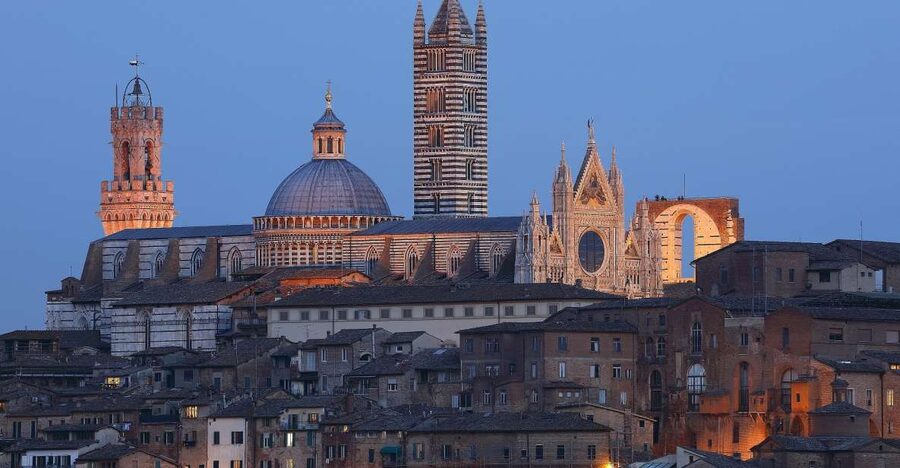
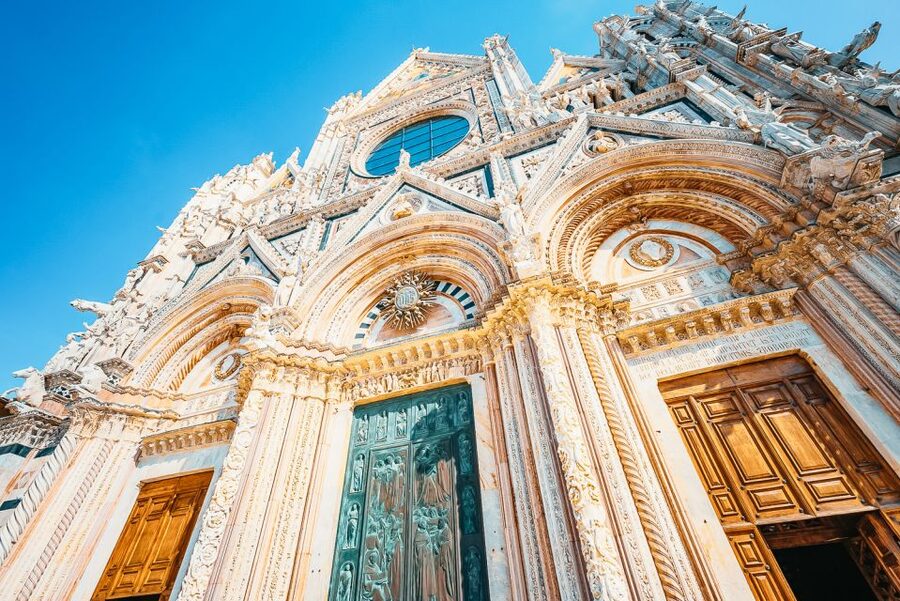
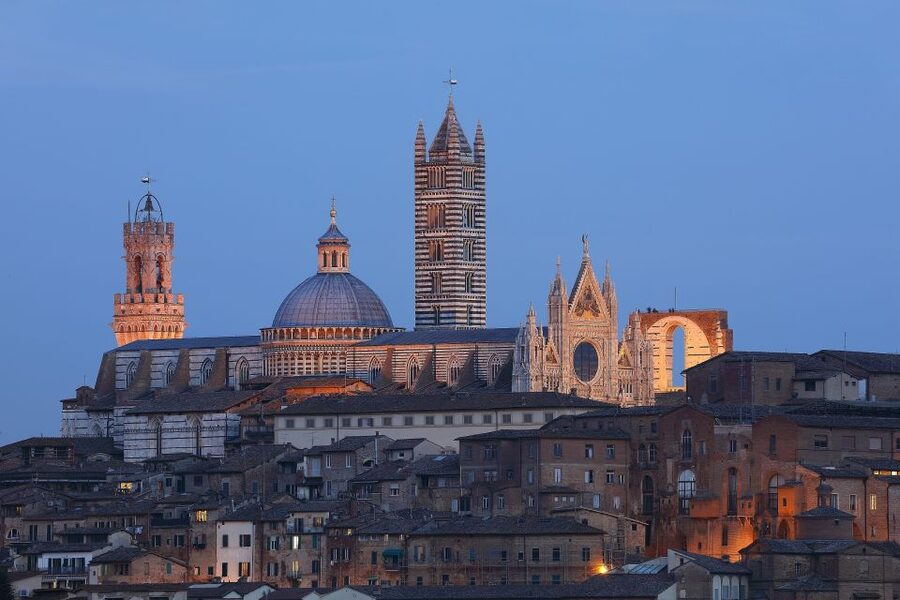
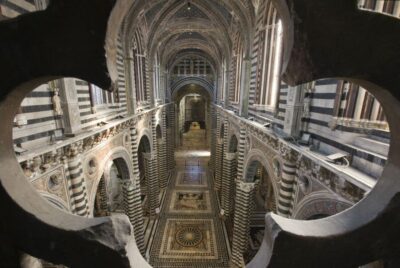
Siena Cathedral, or the Duomo, is the kind of building that makes you adjust your idea of what a church can be. Its exterior is already striking, with patterned marble and Gothic detail, but the interior is the real prize. Black-and-white bands run across the walls and columns, while sculpture, painting, and carved decoration compete for your attention at every turn.
I like the fact that this ticket focuses on the cathedral and the Piccolomini Library rather than bundling in every possible site. At $9 per person, it gives you access to the most important interior spaces without forcing you to pay for a larger package. That makes sense if your day in Siena is already full or if you mainly want to see the Duomo’s best-known art.
You should still allow yourself enough time to look carefully. The visit is valid for one day, but there is no stated guided-tour duration. You can move at your own pace, which is useful here because the building rewards slow looking. A rushed walk through the nave will leave you remembering only that it was beautiful. A slower visit lets you notice how the floor, ceiling, sculpture, and chapels work together.
More Siena & Tuscan Hill Towns trips worth a second look
- Siena: Walking Tour and Skip-the-Line Duomo Tickets
★ 4.8 · 1,116 reviews - Vatican: Museums & Sistine Chapel Entrance Ticket
★ 4.5 · 144,003 reviews - Milan: Cathedral and Duomo’s Terraces Entrance Ticket
★ 4.6 · 61,054 reviews
Collecting your ticket without losing time
Your phone voucher is not the final admission ticket. You need to redeem it at the cathedral ticket counter before entering through the fast-track route. This is the most important practical detail in the whole booking process.
Once you reach the cathedral area, look for the ticket office and check the signs carefully. The regular ticket line and the voucher exchange line may not be obvious from a distance. A few minutes spent confirming the correct counter can save you from standing in the wrong queue.
After you receive the physical or official entry ticket, follow the instructions for the reserved or fast-track entrance. The value here depends on the crowd. If the cathedral is quiet, the saving may be modest. If a long ticket line has formed, the $9 price can feel like a sensible trade for a faster start.
I would not describe this as a guided tour. There is no guide leading you from stop to stop, and no transport is involved. You arrive at the meeting point, collect your ticket, and explore independently.
The cathedral interior: marble, paint, and sculpture
The first major impression comes from the scale of the decoration. Siena’s Duomo is not plain or restrained. The walls, columns, chapels, altars, and ceiling are all part of an elaborate visual program.
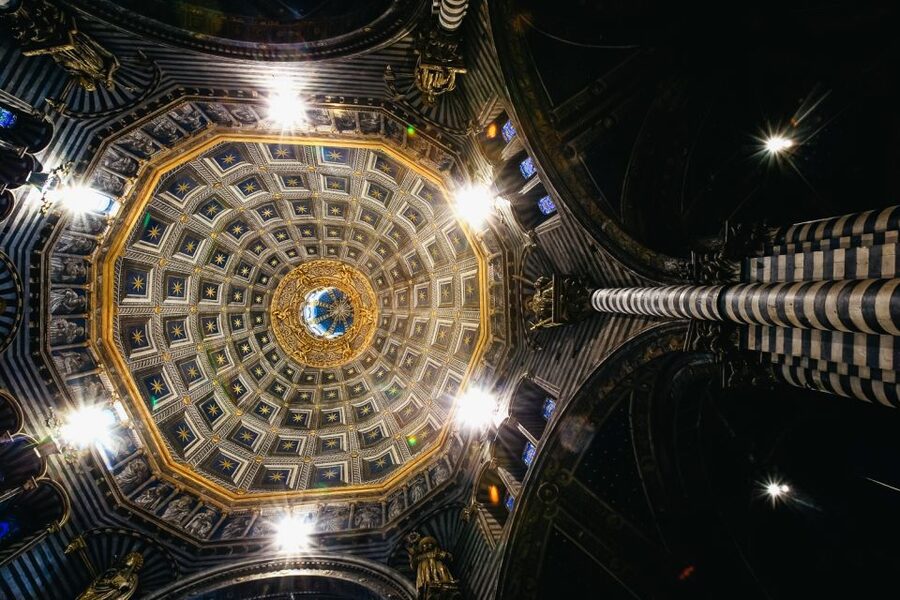
The large dome draws your eyes upward. Complex patterns and mosaics cover its surfaces, creating a strong contrast with the darker stripes of the lower interior. You may find yourself looking up so often that you miss the art at eye level, so it helps to pause and scan the cathedral in sections.
The sculpture is another reason to buy an interior ticket instead of admiring only the outside. The cathedral contains work associated with Michelangelo, Donatello, and Nicola Pisano. These names matter, but the practical point is simpler: you are looking at major Italian sculpture in the setting for which it was made, not in a detached gallery room.
Michelangelo’s presence is easy to miss if you enter with your eyes fixed only on the nave. Look toward the side areas around the Piccolomini section, where several sculptures connected with him can be seen. This is a good place to use the audio guide, since a few minutes of explanation can help you understand what you are seeing.
The cathedral’s altarpieces and smaller works also deserve attention. You will see religious scenes, carved figures, and decorative details spread across the building rather than concentrated in one single gallery. If you enjoy art but do not know all the artists, the phone guide can give the visit some structure.
Siena’s remarkable marble floor
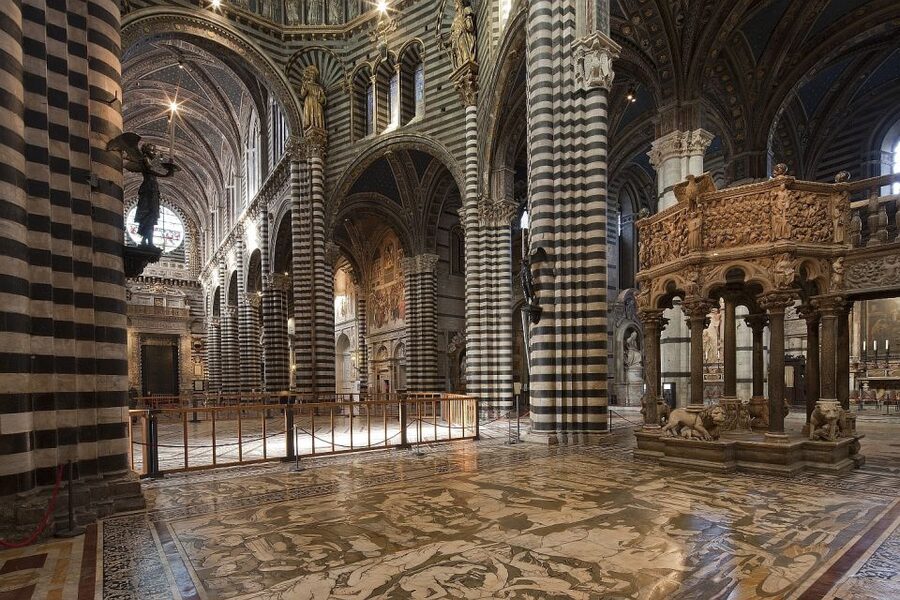
The floor may be the feature that surprises you most. It is not merely a surface beneath your feet. Large marble panels form pictures and patterns across the cathedral, with scenes and designs that reward a close look.
This is one of the reasons I would avoid treating the Duomo as a ten-minute photo stop. The floor is best viewed from several angles, and the changing perspective helps you understand how much work went into it. Some panels may be protected or covered at certain times, so you should not assume that every section will always be visible.
The floor can also be hard to photograph clearly because of the cathedral’s scale and the people moving through it. Take a moment to look down without trying to record every panel. The experience is stronger when you let your eyes follow the design across the marble.
A different way to spend the day, same part of Italy:
- From Florence: San Gimignano, Siena, and Chianti Wine Tour
★ 4.5 · 3,762 reviews - Siena: Cathedral Complex Pass with Audio Guide (OPA SI PASS)
★ 4.4 · 2,773 reviews - Small-Group Brunello di Montalcino Wine-Tasting Trip from Siena
★ 5.0 · 952 reviews - From Siena: Chianti and Castles Tour with Wine Tastings
★ 4.6 · 631 reviews
Inside the Piccolomini Library
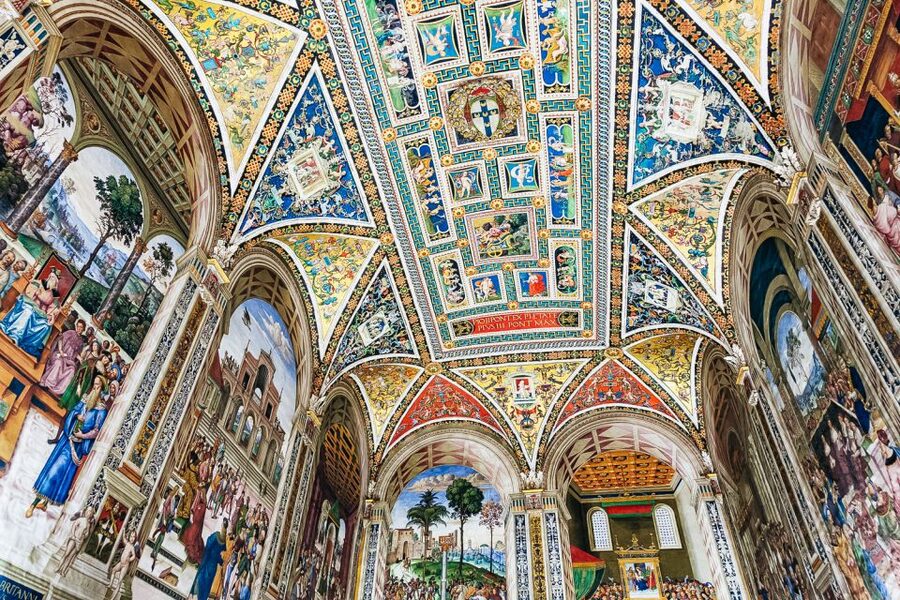
The Piccolomini Library is the most focused part of this visit. Instead of the cathedral’s broad sweep of sculpture and architecture, you enter a more contained room where the walls and ceiling tell a connected story.
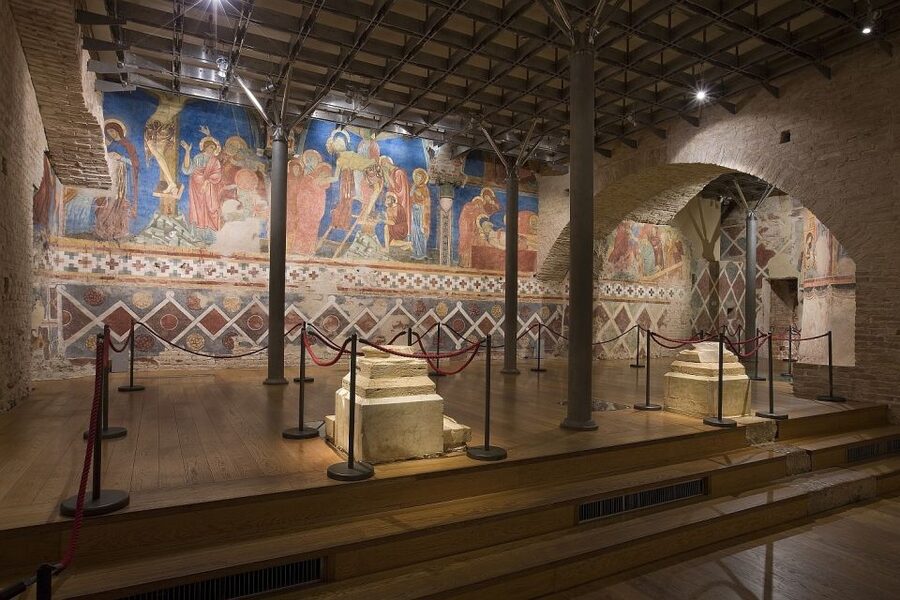
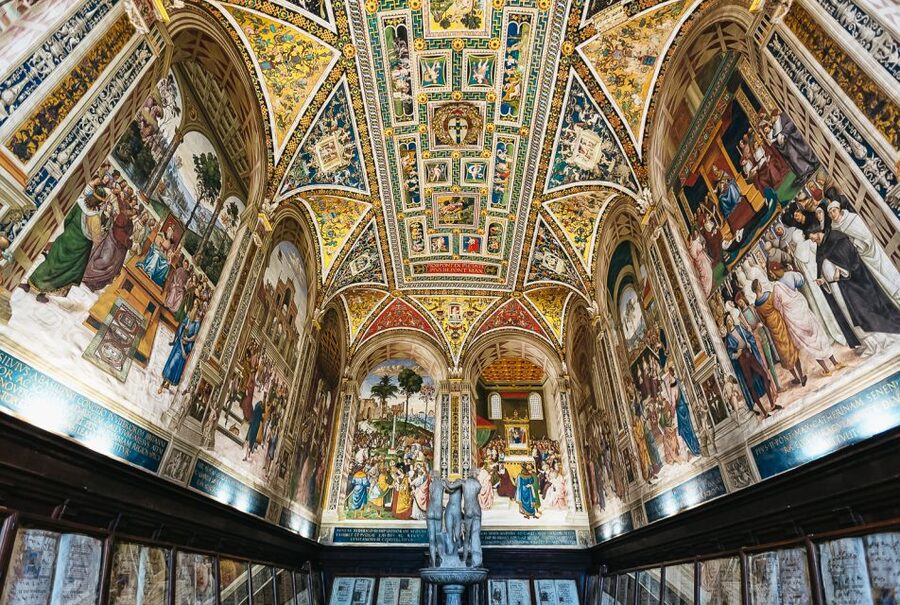
Pinturicchio created ten frescoes showing episodes from the life of Pope Pius II. The scenes are colorful and detailed, and the room’s size makes the decoration feel immediate. You can stand close enough to inspect faces, clothing, buildings, and small background details without the space feeling like a vast hall.
Look up as well as around. The domed ceiling carries intricate patterns and additional scenes tied to the pope’s life. The effect is carefully planned, with the walls, ceiling, and surrounding decoration working as one complete room.
The library also relates to a collection of illuminated books and manuscripts. You may see illustrated books displayed for viewing, adding a quieter scholarly note to the painted room. It is a useful contrast with the cathedral itself. The Duomo overwhelms you through size and quantity, while the library gives you one concentrated artistic experience.
The library is especially worthwhile if you like Renaissance painting. If your main interest is architecture, you may spend more time in the cathedral. If you enjoy painted narratives, this room may become the high point of the ticket.
Getting the most from the phone audio guide
The digital audio app is included, but it is not a traditional headset tour with a person speaking to your group. You access the official audio guide by scanning a QR code on the ticket you receive at the counter.
This arrangement keeps the visit flexible. You can listen to selected sections, pause when you want, and move on when a particular subject does not interest you. It also means you should prepare your phone before entering. A charged battery, mobile data or a working connection, and headphones will make the experience easier.
Audio equipment can sometimes take a few minutes to set up. Give yourself time to scan the code and test the sound rather than waiting until you are already in the middle of the cathedral. If you prefer your own research, you can also explore independently, but the official guide is useful for identifying artists and explaining the cathedral’s design.
Do not expect every detail to be explained automatically. This is still a self-guided visit. The guide can add context, but you need to choose where to stop and what to study. That is a strength for independent visitors and a weakness for anyone who wants a fully organized tour with questions answered on the spot.
How long should you plan?
The ticket is valid for one day, and the activity does not give a fixed visit length. That flexibility works well in Siena, where you may be fitting the cathedral between a city walk, a meal, and other sights.
A very quick visit can cover the main interior, the floor, and the library. I would plan extra time if you want to use the audio guide properly or examine the sculpture. The cathedral has enough decoration to reward more than one pass through the nave.
The timing matters most if you have a tight schedule. Voucher redemption, entry, and audio setup all take some time, even with fast-track access. If you have only thirty minutes before a bus or another appointment, collect your ticket as early as possible and know where the ticket counter is before you arrive.
Opening times may change because of services and other liturgical activities. Check the available time information for your chosen date, then remain flexible. A church is an active place of worship, not only a museum.
Is $9 good value?
At $9 per person, this is a reasonably priced way to see Siena’s principal church interior and the Piccolomini Library. The strongest part of the value is not simply admission. It is the chance to avoid the regular ticket line when demand is high.
That said, onsite prices can sometimes be lower than an advance voucher price. One person reported finding a cheaper cathedral price at the building itself, so you should compare the current official rate if saving every euro matters. The advance option is easier to justify when your schedule is tight or the queue is long.
The ticket does not include a guided tour, transportation, or extra cathedral complex sites not named here. If you want panoramic views or a museum, check whether a different ticket is needed. One visitor upgraded separately to include the museum and found the city views worthwhile, but that is not part of this basic entry.
For a first visit to Siena, I think the ticket makes sense when you value time and want the two central highlights: the cathedral and the library. If you are happy to wait and want the lowest possible price, buying onsite may be worth checking.
Who should book this experience?
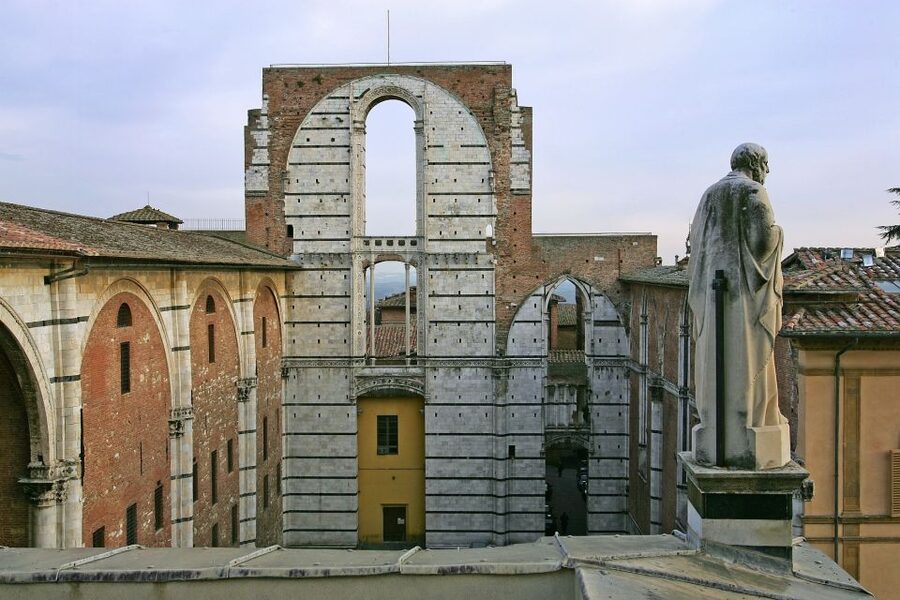
I would choose this ticket for independent visitors who want to set their own pace. It suits art lovers, architecture fans, and anyone who would rather read or listen than follow a group leader.
It also fits a short Siena stop. Fast-track access can help if you are working around a tour bus, a train connection, or a packed day in the old town. The ticket gives you a clear target and avoids spending part of your visit in a ticket queue.
Families and mixed-interest groups may also find the flexible format useful. One person can study the floor while another listens to the audio guide or moves ahead to the library. The main limitation is that everyone must manage the visit independently.
I would look for a guided option if you want a specialist to explain the symbolism of the floor, identify every major sculptor, or answer questions as you go. This ticket gives you access and information through your phone, but not the personal attention of a live guide.
My practical verdict
Book it if you want a simple, low-cost way into Siena Cathedral and the Piccolomini Library, especially on a busy day. The best reasons are the cathedral’s unusual marble floor, the large dome, the major sculpture, and Pinturicchio’s ten frescoes in the library.
Before you go, save the voucher on your phone, find the ticket counter, and leave enough time to exchange it for the actual entry ticket. Bring headphones and do not count on every floor panel being uncovered.
Skip this option if you want a live guide or if you are focused on the absolute lowest admission price and do not mind waiting. For most independent visits, though, the combination of important art, flexible timing, and fast-track entry makes this a strong $9 stop in Siena.
FAQ
What does this Siena Cathedral ticket include?
It includes fast-track entry to Siena Cathedral, entry to the Piccolomini Library, and access to a digital audio app.
Is a guided tour included?
No. This is a self-guided visit with an official digital audio guide accessed through your phone.
How do I use the audio guide?
After exchanging your voucher for the official entry ticket, scan the QR code on that ticket with your phone. The instructions are provided on the ticket.
Do I enter directly with my voucher?
No. You must first redeem the voucher at the Siena Cathedral ticket counter. After that, use the ticket for fast-track entry.
How long is the ticket valid?
The ticket is valid for one day. Available starting times depend on the date you select.
Can opening hours change?
Yes. Opening times may vary because of liturgical activities.
What artists can I see inside the cathedral?
The cathedral includes sculptures associated with Michelangelo, Donatello, and Nicola Pisano. The Piccolomini Library contains ten frescoes by Pinturicchio.
Can I cancel the booking?
Yes. You can cancel up to 24 hours in advance for a full refund. You can also reserve now and pay later.
Recently reviewed around Siena & Tuscan Hill Towns
- Total Immersion Wine Tour in Chianti★ 4.9 · 430 reviews
- From Siena: Pienza and Montepulciano Small-Group Tour★ 4.9 · 220 reviews
- Siena: Walking Tour and Skip-the-Line Duomo Tickets★ 4.8 · 1,116 reviews
- Siena Walking Tour with Cathedral and Crypt & Museum Option★ 4.9 · 380 reviews
- Discover Siena: Guided Walking Tour and Cathedral Visit★ 4.3 · 314 reviews
- Siena: Pasta and Tiramisu Cooking Class with Wine★ 4.8 · 274 reviews
- Siena: Educational Wine Tour & Tasting★ 5.0 · 203 reviews
- Siena: San Gimignano, Chianti & Montalcino Small-Group Tour★ 4.6 · 195 reviews
Siena & Tuscan Hill Towns Tours, compared.
Cathedral Complex Pass with Audio Guide (OPA SI PASS)
Read our review →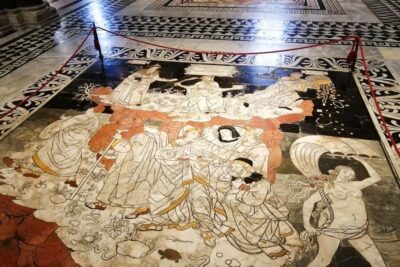
Small-Group Brunello di Montalcino Wine-Tasting Trip from Siena
Read our review →


3h Private City Walking Tour with Optional Cathedral
Read our review →Browse the lists this tour appears in